
Can Dogs Eat Cucumbers? A Crunchy Low-Calorie Treat
Cucumber is the treat that barely counts: almost all water, a few calories per slice, and a crunch most dogs enjoy. The only rules are cutting it to a safe size and keeping the pickled kind for humans.
The SniffScroll desk
Reviewed by Dr Emily Carter, BVSc MRCVS
Published 10 October 2026
Dr Emily Carter, BVSc MRCVS
The short version
- Cucumbers are safe for dogs and one of the lowest-calorie treats available.
- Cut them into slices
- spears or cubes sized for your dog; a whole cucumber is a choking and blockage risk.
- The skin is fine for most dogs; peel it for sensitive stomachs.
- Pickles and gherkins are not cucumber as far as dogs are concerned: too salty
- and often made with garlic.
- Even a watery treat can cause loose stools if a dog eats too much at once.
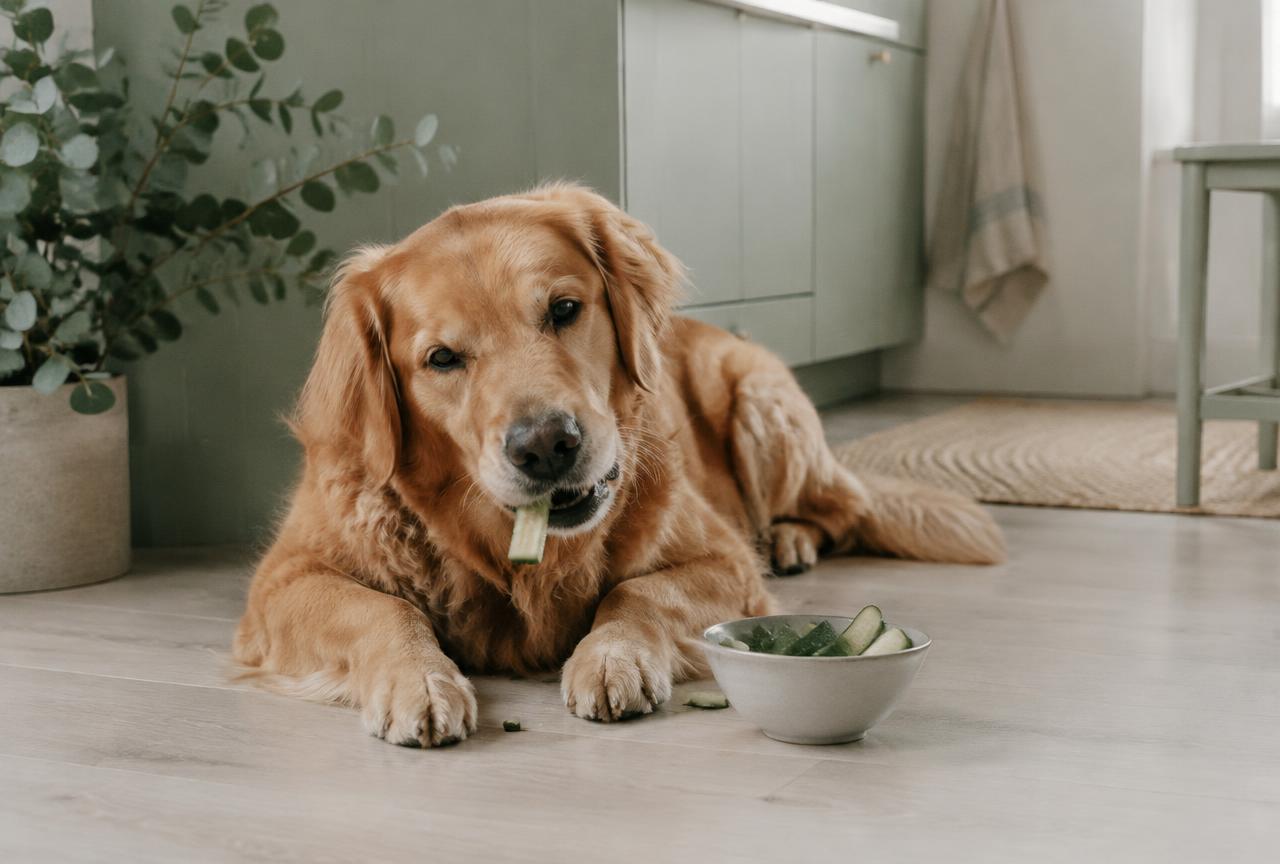
Yes, dogs can eat cucumbers, and they are one of the best treats in the kitchen for a dog watching their weight. Cucumber is about 96% water, has barely any calories, and most dogs enjoy the crunch. The only real rules are cutting it up and keeping the pickled kind for humans.
Are cucumbers good for dogs?
Cucumber is a genuinely useful treat: around 8 calories per half cup of slices, hydrating, and containing small amounts of vitamin K, potassium and magnesium.
The headline is the calorie count. A Labrador on a weight-loss plan does not care whether the treat is a biscuit or a cucumber slice; the ritual is the reward. Swapping to cucumber cuts the treat calories to almost nothing while keeping the ritual intact, which is why vets so often recommend it.
It is not a health food in any meaningful sense: a dog on a complete diet needs nothing from a cucumber. What it offers is volume, crunch and hydration at almost no caloric cost, and that is exactly what a good treat should be.
How much cucumber can a dog eat?
Cucumber is forgiving, but it still belongs inside the 10% treat allowance, and too much watery vegetable at once can mean loose stools.
| Dog size | Example weight | Cucumber per serving |
|---|---|---|
| --- | --- | --- |
| Toy | Under 5 kg | 2 to 3 thin slices or small cubes |
| Small | 5 to 10 kg | 4 to 6 slices |
| Medium | 10 to 25 kg | 6 to 8 slices or a few spears |
| Large | Over 25 kg | Up to a quarter of a cucumber, cut up |
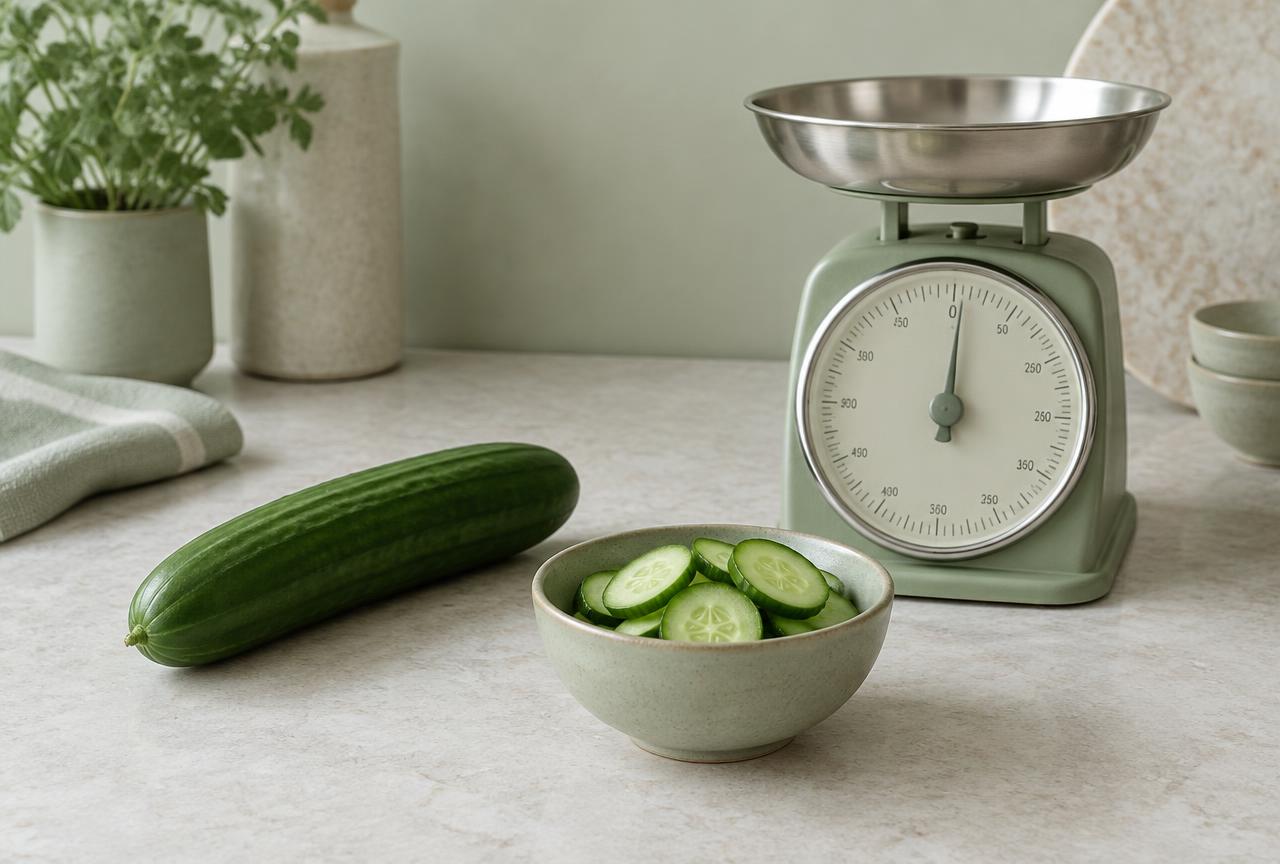
If you have never worked out your dog's daily calories, the portion calculator and the ideal weight tool show what the treat budget really is.
How to cut cucumber safely
Cut cucumber into slices, spears or cubes matched to your dog's size, and never hand over a whole cucumber.
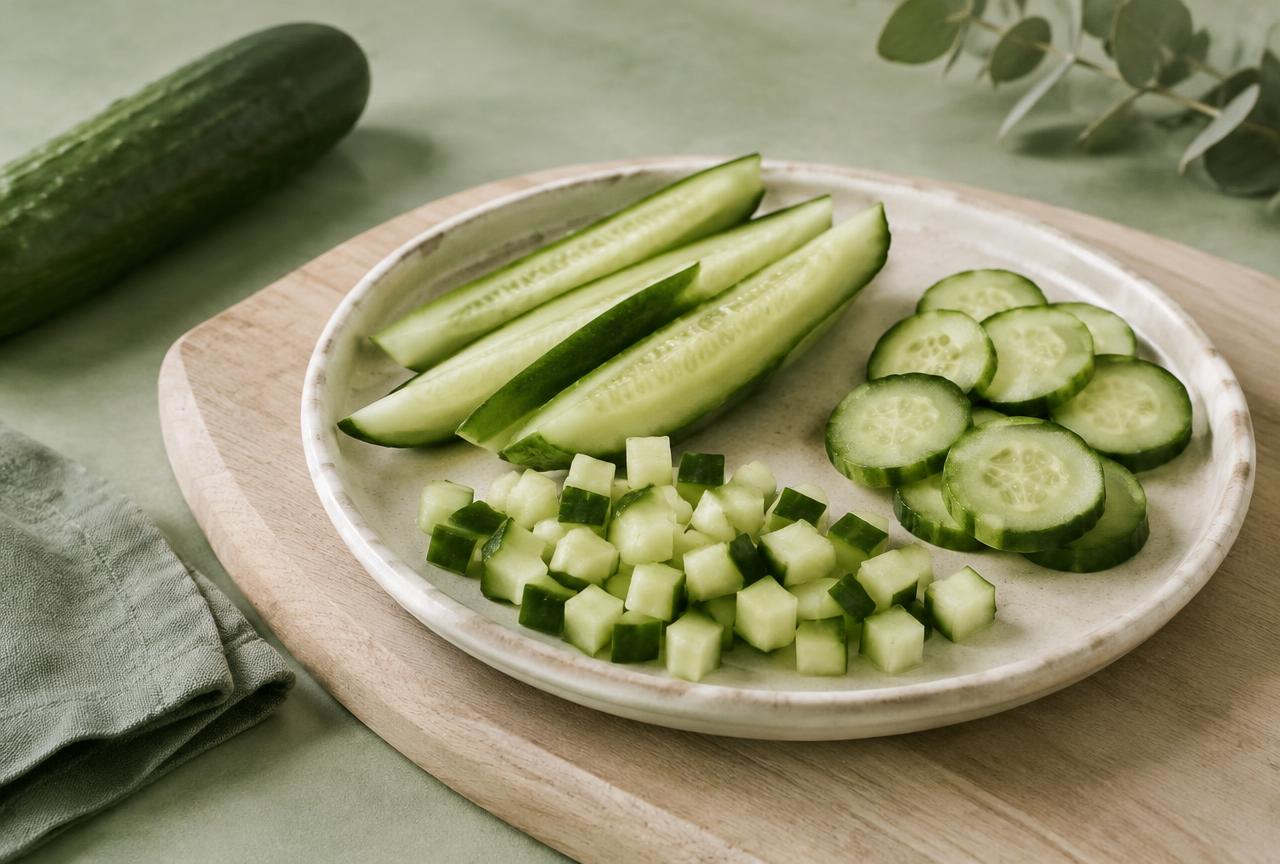
A whole cucumber is a choking hazard and, if a determined dog swallows large pieces, a blockage risk. The cut guide:
- Toy breeds and puppies: thin slices or small cubes.
- Small and medium dogs: rounds or short spears.
- Large dogs who chew: thick spears are fine; gulpers still get smaller pieces.
The skin is safe for most dogs and holds most of the fibre; wash it well. Peel it for dogs with sensitive stomachs. The seeds are soft and harmless.
Cucumber is the rare treat where the only way to get it wrong is the size of the piece or the jar it came out of.
Can puppies eat cucumber?
Puppies can try cucumber once weaned: a thin slice or small cube to start, then watch the stools for a day.
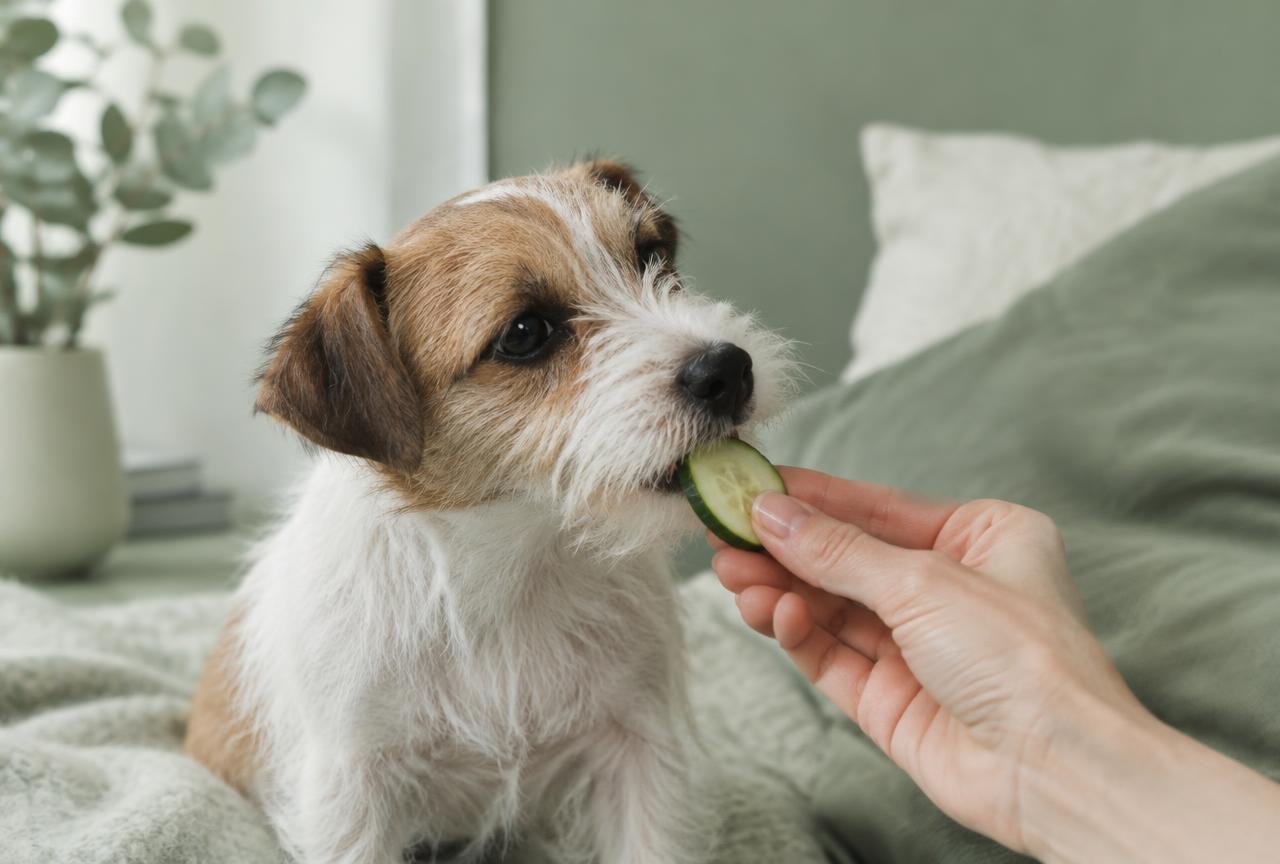
Puppies are enthusiastic and not careful chewers, so keep the pieces small and supervise. A chilled cucumber slice can also soothe teething gums, in the same way a chilled carrot works; our puppy teething guide covers the full timeline.
Pickles are not cucumbers
Pickles and gherkins are cucumbers preserved in salt, vinegar and often garlic or spices, and none of that suits a dog.
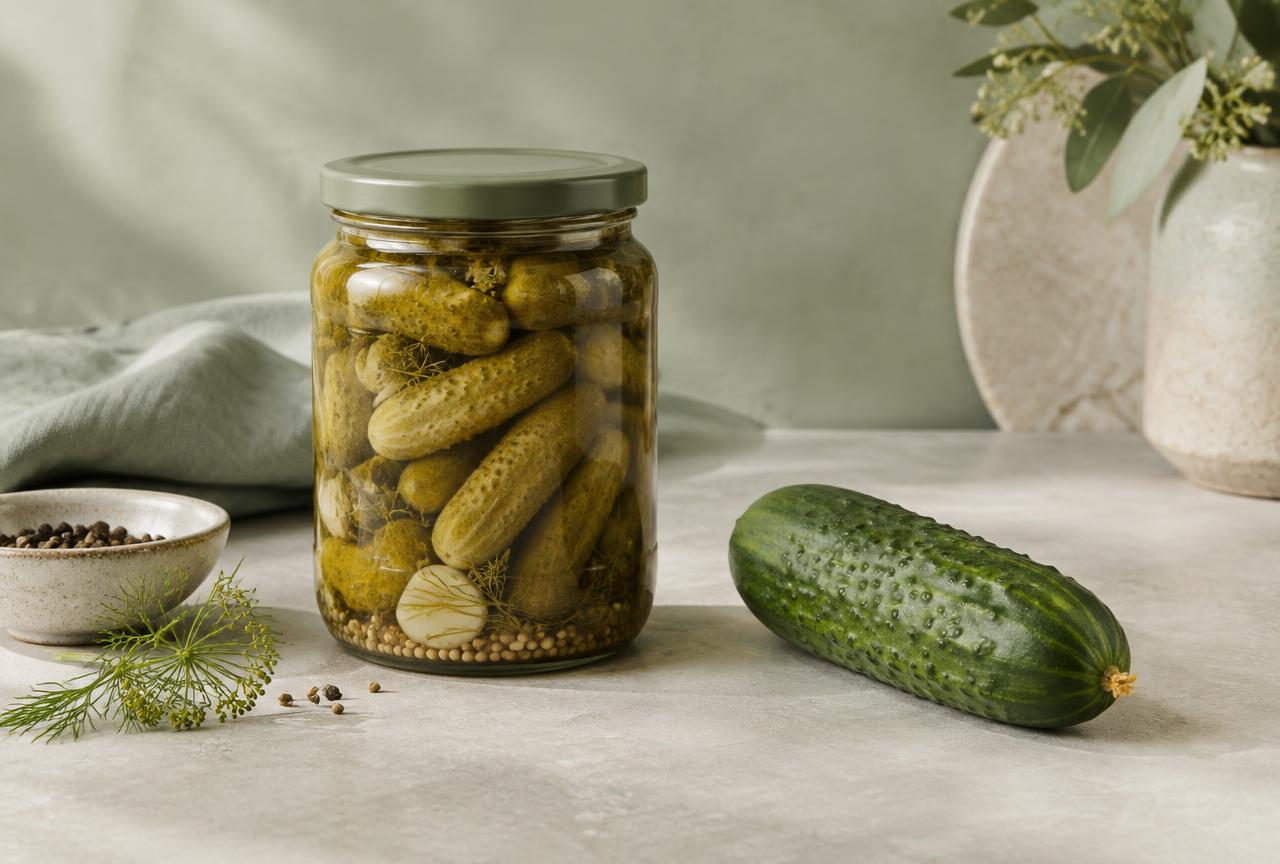
The salt load is the main problem, and garlic, a common pickling ingredient, is toxic to dogs. A stolen slice of pickle is unlikely to cause harm, but do not share them on purpose, and if a dog raids a jar, offer fresh water and phone the vet if you see vomiting, diarrhoea or unusual thirst. The same logic applies to any preserved or seasoned vegetable: the fresh version is the dog version.
Cucumber in training and weight loss
Cucumber slices work well as everyday, low-stakes rewards, and they are the single easiest swap in a weight-loss plan.
For training at home, cut cucumber into small cubes and keep a box in the fridge. Outdoors, most dogs want something smellier for high-distraction work, so think of cucumber as the kitchen currency and save the good stuff for the park. For enrichment, scatter slices in the garden or a snuffle mat for a gentle sniffing game.
For weight loss, the swap is powerful precisely because it is boring: replace every biscuit with a cucumber slice for a month, measure meals properly with the portion calculator, and the scales usually move. Our guide to how much to feed a dog covers the full plan.
A simple cucumber plan
- 1Wash the cucumber; peel only if your dog has a sensitive stomach.
- 2Cut to a size your dog can chew: cubes for toy breeds, spears for big chewers.
- 3Offer a few pieces the first time and watch the stools the next day.
- 4Settle into the portion for your dog's size, within the 10% treat allowance.
- 5Keep pickles and seasoned cucumber for the humans.
- 6Rotate with other safe options such as carrots and the fruits in our fruit guide.
Interactive tool
Cucumber portion checker
Dog size and preparation in, portion guidance out.
Your plan
- For a medium dog, a serving is about six to eight slices or a few spears, within the day's 10% treat allowance.
- Wash the cucumber; the skin is fine for most dogs, but peel it if your dog has a sensitive stomach.
- Cucumber is about 96% water and very low in calories, which makes it one of the best treats for dogs watching their weight.
- Introduce it gradually: too much watery veg at once can mean loose stools.
A great low-calorie treat
Cucumber is one of the safest, lowest-calorie treats you can share. The only real rules are cutting it up and skipping the pickled kind.
When to see a vet
Cucumber is not toxic. Call the vet if your dog chokes or gags on a piece, has vomiting, diarrhoea or straining that lasts beyond a day after eating a large amount, or if a dog has eaten a large quantity of pickles and shows vomiting, diarrhoea or unusual thirst.
Cucumber for dogs with health conditions
Cucumber is one of the few treats that suits almost every dog, including many with health restrictions, but a few situations still deserve a thought.
For dogs on vet-prescribed diets, even cucumber should be cleared with the vet first, because prescription diets are calculated tightly. For dogs with kidney or heart conditions, cucumber's low sodium makes it one of the better treat choices, though the vet's plan still rules. For diabetic dogs, cucumber is one of the safest options available: virtually no sugar, no meaningful carbohydrate load. And for dogs with pancreatitis history, where fat is the enemy, cucumber is about as safe as a treat gets. When in doubt, the vet who manages the condition is the one to ask.
Common myths about dogs and cucumber
"Cucumber has no value, so there is no point." The value is the treat ritual at almost no caloric cost. For an overweight dog, that is the entire point.
"The seeds are dangerous." Cucumber seeds are soft, small and harmless. Unlike apple pips or stone fruit, there is nothing in a cucumber seed to worry about.
"Dogs cannot digest vegetables." Dogs digest cucumber perfectly well; the pieces you may see in the stool are the fibrous skin passing through, which is normal and not a sign of a problem.
"Organic cucumber is necessary for dogs." A thorough wash is all a cucumber needs. Your dog will not know the difference, and neither will their stomach.
Using cucumber for hydration and hot days
Because cucumber is about 96% water, it doubles as a small hydration top-up, which makes it a useful summer treat.
On hot days, chilled cucumber slices are a gentle way to get extra water into a dog who is not drinking enough, and frozen slices give teething puppies and hot dogs something to work on. They are not a substitute for fresh water, which should always be down, but they are a pleasant supplement. In hot weather, our heat and panting guides cover the bigger picture of keeping a dog cool and recognising when panting has tipped into trouble.
If your dog eats too much cucumber
The realistic worst case of a cucumber raid is a loose stool or two and a dog who feels very pleased with itself.
If your dog eats a whole cucumber, the fibre and water load may cause soft stools or mild stomach gurgling for a day. Offer water, feed a lighter meal, and watch. The genuine worries are mechanical, not chemical: a dog who swallowed large pieces whole and is now gagging, retching, drooling or uncomfortable needs the vet, because that is a blockage pattern, not a food problem. This is why the cutting rule exists, and why gulpers get their pieces small.
Cucumber versus the other crunchy options
Cucumber is the lightest of the crunchy vegetables, and it helps to know where it sits among the alternatives.
Carrots are the other everyday star: slightly more calories, more sugar, more fibre, and a better chew for teeth and teething. Our carrot guide covers them in full. Apples bring more sugar and need coring. Celery is stringy and harder to cut safely. Cucumber's niche is the dog who needs volume and crunch with almost nothing else: the dieter, the pancreatitis survivor, the dog whose treat budget is already spent by lunchtime. Rotating between cucumber and carrots gives you the two best options covering different jobs.
A note on shop-bought "vegetable" treats
If cucumber works this well, it is fair to ask why the pet shop sells vegetable-based treats at all. The honest answer is convenience and shelf life, and the trade-offs are real: dried vegetable chews are more calorie-dense than fresh, some contain added glycerine, salt or flavourings, and none of them are fresher than the cucumber in your fridge. Fresh cucumber slices, cut and kept in a box in the fridge, are cheaper, cleaner and lower in calories than almost anything in a packet. The packet has its place on days when the fridge is empty; the fridge wins the rest of the time.
Building the habit
The dogs who benefit most from cucumber are the ones whose households use it consistently, which means making it easy. Keep a washed cucumber in the fridge. When you slice one for a salad, cut the dog's portion first and put it in a small box. When the treat tin would normally come out, reach for the box instead. Within a fortnight the swap is automatic, the dog is just as delighted, and the calorie saving has quietly accumulated. Weight management for dogs is rarely about one big change; it is about a dozen small, boring, repeatable ones, and this is one of the easiest.
A note on buying and storing
Any cucumber works: the value range is identical to the premium one, and your dog will not know the difference. A whole cucumber keeps in the fridge for about a week; once cut, keep the dog's slices in a sealed box of water and change the water every couple of days so they stay crisp. And one last repetition, because it is the only rule that can actually hurt a dog: the hazard is never the cucumber, it is the size of the piece and the speed of the eater. Cut small, supervise the gulpers, and cucumber remains what it should be, the easiest yes in the fridge.
The ten-second checklist
Before cucumber reaches the dog: is it fresh rather than pickled, washed, and cut to a size this dog can chew rather than swallow whole? Three questions, ten seconds, and they cover every realistic way a cucumber can go wrong. There is no toxicity to check, no season to avoid, no part to trim, which is exactly why cucumber earns its place as the default treat in so many households. The dogs who have problems with cucumber are the gulpers who met a whole one, and the checklist exists for them.
The bottom line
Cucumber is one of the safest, cheapest, lowest-calorie treats you can share. Cut it to size, keep it fresh rather than pickled, and let it do the heavy lifting in the treat budget.
Questions people actually ask
Are cucumbers good for dogs?
Yes. Cucumber is about 96% water, very low in calories and contains small amounts of vitamin K, potassium and magnesium. It is one of the best treat choices for overweight dogs, as long as it is cut to a safe size.
How much cucumber can a dog eat?
As a guide: two or three thin slices for toy dogs, up to a quarter of a cucumber cut into pieces for large dogs. Even low-calorie treats belong inside the 10% treat allowance, and too much watery veg at once can cause loose stools.
Can dogs eat cucumber skin?
Yes, the skin is safe for most dogs and contains most of the fibre. Wash it well, and peel it if your dog has a sensitive stomach or finds it hard to digest.
Can puppies eat cucumber?
Yes, once weaned: a thin slice or small cube to start, then watch the stools for a day. Cut pieces small, because puppies are enthusiastic and not careful chewers.
Can dogs eat pickles or gherkins?
No. Pickles are preserved in salt and vinegar and often contain garlic or spices. The salt load is too high for dogs and garlic is toxic. A stolen slice is unlikely to cause harm, but do not share them on purpose.
Can cucumber help my dog lose weight?
It can help as a swap: replacing biscuits with cucumber slices cuts treat calories dramatically while keeping the treating ritual. Real weight loss comes from the overall calorie budget, so pair the swap with measured meals.
Sources
Breeds mentioned

Labrador Retriever
Britain's most popular family dog: biddable, food driven and built for an active household.

Beagle
A merry, sociable scenthound with a powerful nose and a mind of its own outdoors.

Golden Retriever
A gentle, biddable gundog famed for its patience with children and its glossy golden coat.
Put it into practice
Read next
Can Dogs Eat Oatmeal? Cooked, Raw and Flavoured
Plain oatmeal cooked in water is safe for dogs in small servings and its soluble fibre can help mild diarrhoea. Avoid flavoured sachets, raw oats and porridge made with milk or sugar.


