
Can Dogs Eat Broccoli? Florets, Stems and Portions
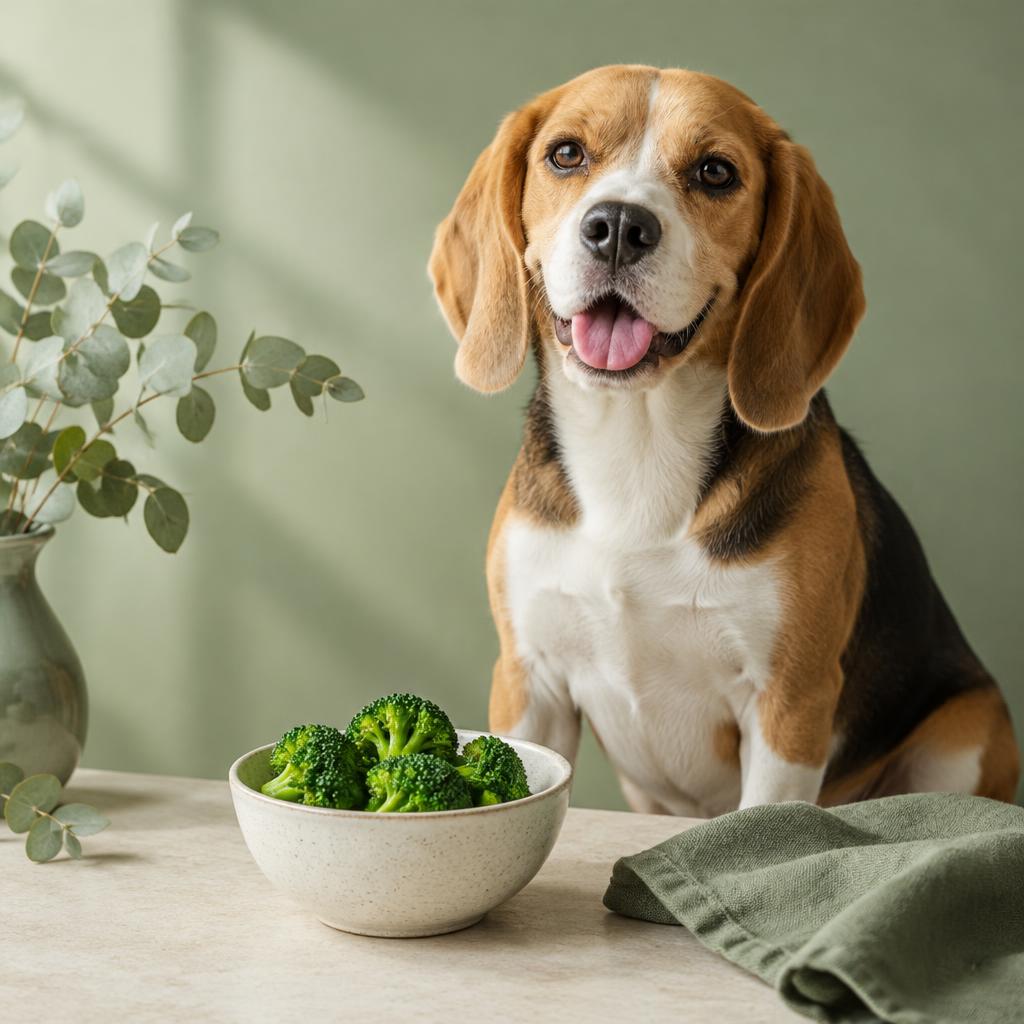
Yes, dogs can eat broccoli in small amounts, and it is one of the better vegetables to share. The catch is portion size, preparation and the fibrous stems.
The SniffScroll desk
Published 11 October 2026
The SniffScroll editorial team
The short version
- Dogs can eat broccoli: it is non-toxic, low in calories and a reasonable occasional treat.
- Keep broccoli, like all treats, under 10% of the day's calories, and introduce it slowly.
- Serve it plain: steamed, boiled or raw in small pieces, with no garlic, onion, butter or seasoning.
- Stems are fibrous and a choking hazard, especially for small dogs: peel, chop and cook them, or skip them.
- Large amounts can irritate the stomach because of natural compounds called isothiocyanates.
If you have ever chopped broccoli with a pair of hopeful eyes locked on the cutting board, the good news is that this is one of the safer vegetables to share. Dogs can eat broccoli, it is non-toxic, and plenty of dogs love the crunch. The details that matter are how much, how it is prepared and which part you are offering.
Can dogs eat broccoli?
Yes, dogs can eat broccoli in small amounts. It is one of the better vegetables to share: low in calories, high in fibre and free of anything toxic to dogs. Both the florets and, with care, the stems are safe, served plain.
That last word does a lot of work. Plain means no butter, no oil, no salt, no garlic, no onion and no cheese sauce. The broccoli itself is never the problem; what we cook it with often is. Garlic and onion are genuinely toxic to dogs, and rich, fatty preparations can trigger stomach upsets or worse in sensitive dogs.
Is broccoli good for dogs?
In moderation, broccoli is a genuinely useful treat. It brings fibre, vitamin C, vitamin K and folate to the bowl for around 30 calories per 100 grams, which is why it shows up in so many weight-management treat lists.
A few honest qualifications keep that in perspective. Your dog's complete food already covers their nutritional needs, so broccoli is a bonus, not a supplement. And the health halo disappears the moment portions creep up, because broccoli has a quirk most vegetables do not.
The isothiocyanate caveat
Broccoli florets contain natural compounds called isothiocyanates. In small amounts they are irrelevant; in large amounts they irritate the lining of the stomach and gut. This is why every veterinary source gives the same advice: broccoli is a treat, not a side dish. The practical rule is the standard one for all treats: keep broccoli and every other extra together under 10% of the day's calories.
Broccoli for puppies
Puppies can eat broccoli too, in even smaller amounts. A puppy's gut is more sensitive than an adult dog's, and their daily calories are precious: every bite should earn its place nutritionally. For a puppy, broccoli is an occasional taste rather than a regular treat: a floret the size of your thumbnail, cooked soft, once or twice a week at most. Introduce it after 12 weeks, one new food at a time, and watch the next day's stools before offering it again.
The bigger puppy risk is not the vegetable but the habit. Puppies learn fast what begging produces, and a pup who is fed from the chopping board becomes an adult dog who shadows every meal preparation. Feed broccoli from their own bowl, not from your hands at the counter.
Broccoli in the garden
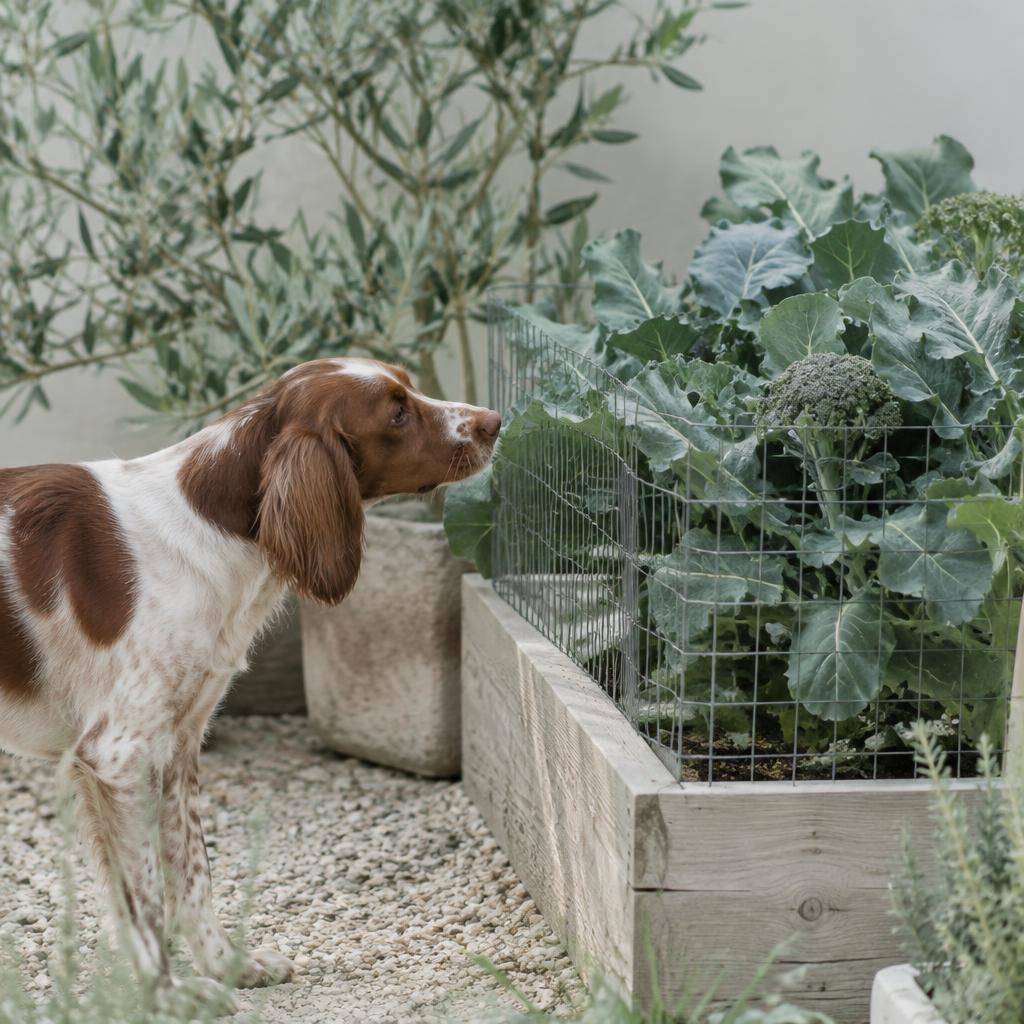
If you grow your own, the garden changes the risk picture. A dog with free access to the vegetable patch can help themselves to far more than the 10 per cent rule allows, and the plants themselves are the concern: leaves and stems carry more isothiocyanate than the florets, and a dog who grazes the row can take in enough to cause real stomach upset. Broccoli plants are not in the same danger class as onions or grapes, but they are not a free-for-all either.
The practical answer is the same as for the rest of the patch: a low fence or a raised bed keeps the harvest for the table and the dog out of trouble. If your dog has already raided the broccoli bed, watch for drooling, vomiting or diarrhoea over the next 24 hours, and call the vet if any of them appear or if the amount eaten was large.
How much broccoli can a dog eat?
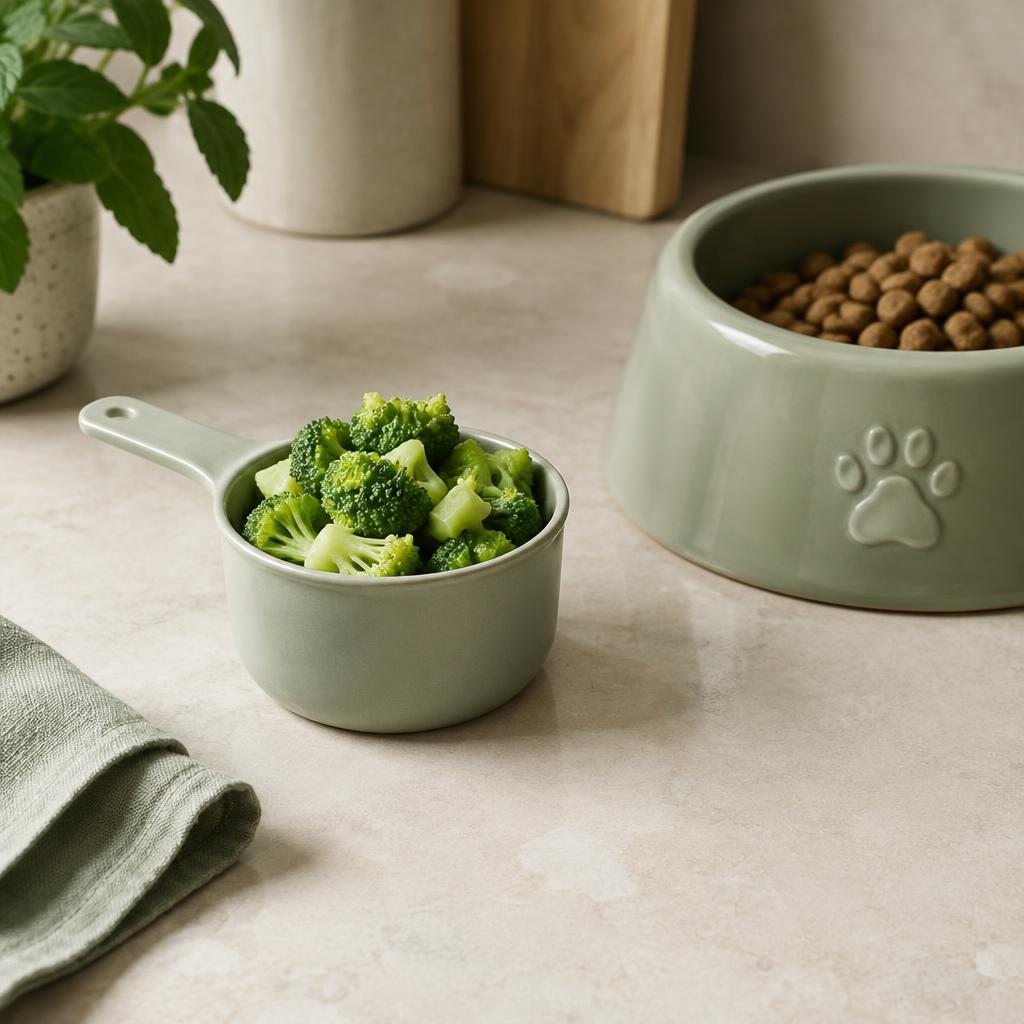
Portion size depends on your dog's size, and the 10% rule does the maths for you. As a rough guide:
| Dog size | Sensible broccoli portion | How often |
|---|---|---|
| --- | --- | --- |
| Toy (under 5 kg) | One or two small florets | A few times a week |
| Small (5 to 10 kg) | Two or three small florets | A few times a week |
| Medium (10 to 25 kg) | Three or four florets | A few times a week |
| Large (over 25 kg) | Four to six florets | A few times a week |
These are treat portions, not meal components. If your dog is on a veterinary diet, has a sensitive stomach or is prone to pancreatitis, check with your vet before adding anything new, even something as innocent as broccoli.
Interactive tool
Broccoli portion checker
Size, preparation and part in, a sensible portion out.
Your plan
- For a medium dog, a sensible portion is three or four florets, well within the 10% daily treat allowance.
- Plain steamed or boiled broccoli, cooled and unseasoned, is the gentlest way to serve it.
- Cut florets into bite-sized pieces for small dogs: whole florets can be gulped down whole.
- Broccoli contains isothiocyanates, which irritate the stomach in large amounts: keep it occasional and watch the stools the next day.
A sensible occasional treat
Broccoli is a healthy low-calorie treat in small amounts: plain, chopped and occasional is the rule.
Raw versus cooked: which is better?
Both are safe, and each has a trade-off. Raw broccoli keeps its crunch, which some dogs adore, but it is harder to digest and firmer going down, which raises the choking risk for dogs who gulp. Lightly steamed or boiled broccoli is softer, gentler on the stomach and easier to portion into safe sizes.
Whichever you choose, three rules apply. Cut it into pieces matched to your dog's mouth: a whole floret is a gulping hazard for a small dog. Let cooked broccoli cool completely. And skip the steamer basket leftovers from your own plate if they were cooked with anything seasoned.
The stem question
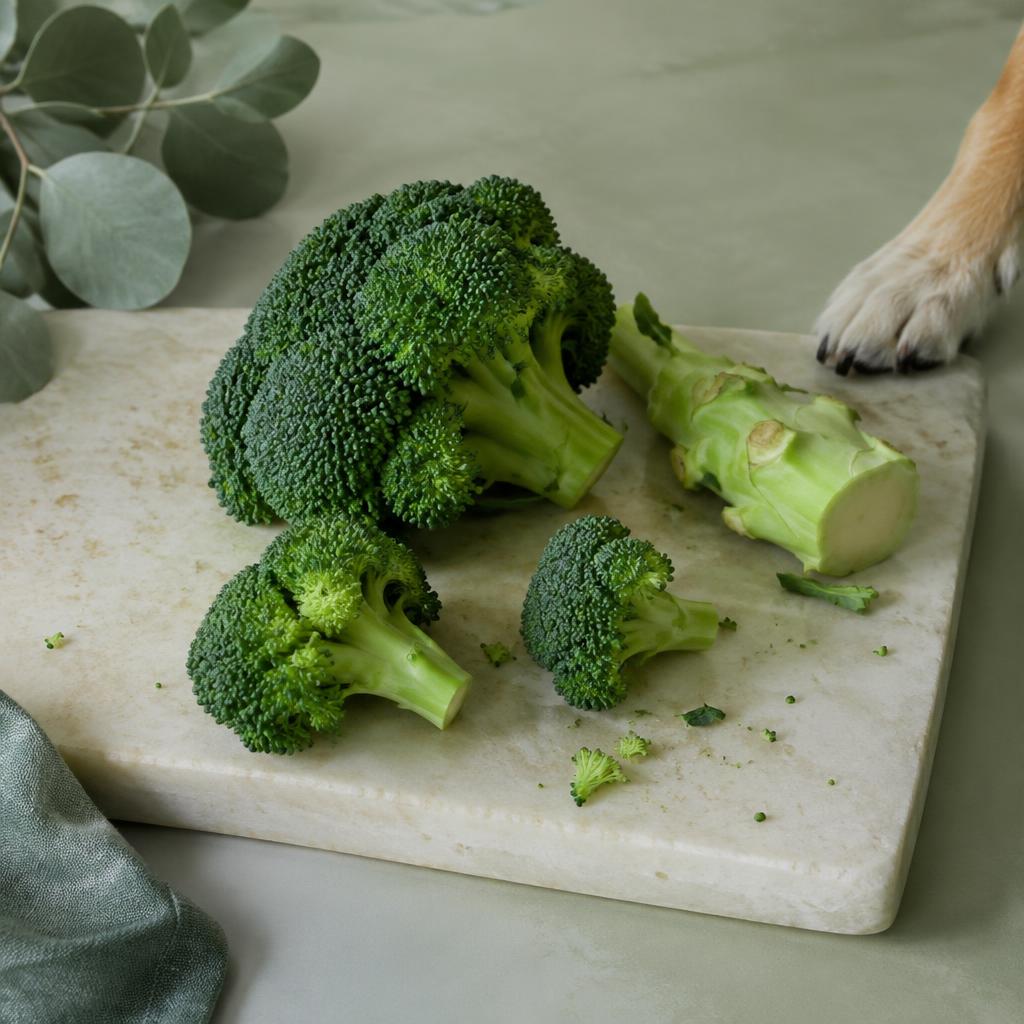
Can dogs eat broccoli stems? Technically yes, practically it depends on preparation. The stem is not toxic, but it is dense and fibrous, and a chunk of raw stem is one of the more convincing choking hazards in the vegetable drawer.
If you hate waste and want to use the stems, peel away the woody outer layer, chop the pale inside into small pieces and cook it until soft. For small dogs, terriers and known gulpers, the simpler answer is to stick to florets and compost the stems.

A simple way to introduce it
New foods go best when they arrive slowly. A calm first week with broccoli looks like this:
- 1Offer one small piece of plain, cooked, cooled broccoli as a treat.
- 2Watch for the next 24 hours: normal stools, no gas worth mentioning, no itching or vomiting.
- 3If all is well, offer it again a few days later, still small.
- 4Settle into a rhythm of a few pieces a few times a week, within the 10% treat allowance.
- 5Rotate with other safe vegetables like carrot, cucumber and green beans for variety.
If the first taste produces a gassy, uncomfortable evening, broccoli may simply not suit your dog. There is no need to push it; plenty of dogs do perfectly well without a single floret.
How broccoli compares to other greens
Owners often ask whether broccoli is the best green vegetable to share. The honest answer is that it is a good one, not the only one, and variety beats loyalty:
| Vegetable | Verdict | Watch for |
|---|---|---|
| --- | --- | --- |
| Broccoli | Good in small portions | Gas and stomach upset in quantity |
| Green beans | Excellent, very low calorie | Tinned versions with added salt |
| Cucumber | Excellent, hydrating | Choking on big chunks |
| Carrot | Excellent, great crunch | Calories add up in big dogs too |
| Spinach | Fine occasionally | Oxalates mean little and rarely |
| Peas | Fine in moderation | Calories and sugar creep up |
The pattern matters more than the league table: vegetables are treats and toppers, never the main event. A complete dog food already covers the nutrition; the greens are enrichment, crunch and a low-calorie way to say yes. If you are choosing vegetables partly for weight management, green beans and cucumber give the most crunch per calorie, while broccoli sits in the middle: worthwhile, but portioned.
When broccoli is a problem
The two genuine danger scenarios have nothing to do with plain florets. The first is seasoned broccoli: anything cooked with garlic, onion, heavy butter or rich sauces. Alliums are toxic to dogs, and fatty dishes can trigger pancreatitis in prone dogs. If your dog has raided the roasting tin, check what the broccoli was cooked with before deciding how worried to be.
The second is quantity. A dog who eats half a head of broccoli is likely in for a rough night of gas, cramping and possibly vomiting or diarrhoea, thanks to those isothiocyanates. It is miserable rather than dangerous for most dogs, but small dogs and puppies dehydrate faster, so take vomiting and diarrhoea in little dogs more seriously.
A quick safety checklist
- Plain only: no garlic, onion, butter, oil, salt or sauces
- Cut to a size your dog cannot gulp whole
- Cooled completely if cooked
- Within the 10% daily treat allowance
- Introduced slowly, one piece at a time
- Stems peeled, chopped small and cooked soft, or skipped
Broccoli is one of the few vegetables that earns its place in the treat rotation: cheap, crunchy, low in calories and safe, as long as it stays plain and occasional.
When to see a vet
Phone the vet if your dog has eaten broccoli cooked with garlic or onion in more than trace amounts, if a small dog has swallowed a large piece of raw stem, or if vomiting or diarrhoea after eating broccoli lasts more than a day, contains blood, or comes with lethargy or a painful, bloated belly. For a healthy adult dog who simply ate too much plain broccoli, a quiet evening, fresh water and a lighter next meal are usually all that is needed.
The bottom line
Can dogs eat broccoli? Yes, and for many dogs it is one of the best vegetable treats going: low calorie, crunchy and safe. Keep it plain, keep the pieces small, keep the stems soft or out of the picture, and keep the total under 10% of the day's food. Do that, and the hopeful eyes by the chopping board can be rewarded with a clear conscience.
If you are building a wider treat list, our guides to can dogs eat carrots and what human foods can dogs eat cover the rest of the vegetable drawer, and the portion calculator can help you work out what 10% of the day's calories actually looks like for your dog. Breeds with famously eager appetites, like the Labrador Retriever and the Beagle, benefit most from low-calorie treats like this one.
Questions people actually ask
Can dogs eat broccoli every day?
A small piece or two most days is fine for a healthy dog, as long as broccoli and all other treats together stay under 10% of the day's calories. Variety is better than the same vegetable daily, so rotate it with other safe options like carrot or cucumber.
Can dogs eat raw broccoli?
Yes, raw broccoli is safe, but it is harder to digest and a bigger choking risk than cooked. Chop it into small pieces appropriate for your dog's size, introduce it slowly, and expect slightly gassier results than with steamed.
Can dogs eat broccoli stems?
The stems are not toxic, but they are tough and fibrous, which makes them a genuine choking and blockage risk, especially for small dogs. If you want to use them, peel off the woody outer layer, chop the inside small and cook it soft. Florets are the easier, safer choice.
Is broccoli good for dogs?
In small amounts, yes. Broccoli offers fibre, vitamin C, vitamin K and folate for very few calories, which makes it a useful training treat for dogs watching their weight. It is a nice extra, not a nutritional need: a complete dog food already covers the basics.
Can broccoli be bad for dogs?
In large quantities, yes. Broccoli florets contain isothiocyanates, natural compounds that can irritate the stomach and cause gas, vomiting or diarrhoea when a dog eats a lot. Seasoned broccoli is the other danger: garlic and onion are toxic to dogs.
Can puppies eat broccoli?
Puppies can have a tiny taste of well-cooked, finely chopped broccoli once they are eating solid food comfortably. Their stomachs are more sensitive, so introduce it one small piece at a time and keep the main diet a complete puppy food.
Sources
Breeds mentioned

Beagle
A merry, sociable scenthound with a powerful nose and a mind of its own outdoors.

Labrador Retriever
Britain's most popular family dog: biddable, food driven and built for an active household.

English Cocker Spaniel
A merry, affectionate gundog with a soft, silky coat and a nose that never switches off.
Put it into practice
Read next
Can Dogs Eat Oatmeal? Cooked, Raw and Flavoured
Plain oatmeal cooked in water is safe for dogs in small servings and its soluble fibre can help mild diarrhoea. Avoid flavoured sachets, raw oats and porridge made with milk or sugar.


