
Why Do Dogs Tilt Their Heads? Curiosity, Ears and One Warning Sign
Most head tilts are curiosity working: dogs tilt to hear better and to read faces more clearly. The tilt that matters is the one that never rights itself.
The SniffScroll desk
Dog care editors
Published 9 October 2026
Reviewed against RVC, PDSA and VCA guidance
The short version
- Brief, alternating head tilts during listening are normal: dogs tilt to locate sound and to see past their muzzles.
- Floppy-eared breeds tilt more, because tilting changes what reaches the eardrum.
- Head tilting is heavily rewarded with attention, so dogs learn to produce it on demand.
- A persistent one-sided tilt, especially with stumbling or eye flicking, points to a vestibular or ear problem and needs a vet.
- Most vestibular episodes in older dogs improve within days once examined, so early assessment pays.
It is the most photographed behaviour in the dog world: the sideways head tilt, one ear cocked, as though the dog is trying to understand a sentence and finding it only half-sensible. Owners capture it, vets hear about it, and the internet is divided between the owners who find it adorable and the ones worried it means something is wrong.
Both camps are partly right, and the dividing line is precise. Most head tilts are ordinary curiosity, expressed through ears and eyes. A minority are the first visible sign of a vestibular or ear problem, and that minority is easy to identify once you know the two questions to ask: how long did the tilt last, and did the dog recover?
Why do dogs tilt their heads? The short answer
Dogs tilt their heads to locate sound more precisely, to see past their own muzzles, and because tilting has been rewarded with attention so often it has become a learned charm. Brief, symmetrical, self-correcting tilts during listening are normal. A tilt that persists, that stays on one side, or that comes with wobbliness is a medical sign and needs a vet.
The short version hides three separate mechanisms, and they explain why the same behaviour can look charming on Monday and alarming on Wednesday.
The listening tilt: what the ears are doing
Dogs locate sound with remarkable equipment and one known blind spot. Compared with humans, who use the tiny time difference between our two ears to work out where a sound comes from, dogs rely more on moving and positioning their ears, and the ear pinna itself can swivel independently. When a sound sits in a band the dog finds interesting, a high-frequency voice, a squeaky toy, a particular phrase with rising intonation, some dogs tilt the head to adjust the angle between ear and source.
The effect is strongest in dogs with floppy ears. A fixed ear flap dampens and muffles incoming sound, so tilting changes what reaches the eardrum: think of a Basset Hound or an English Cocker Spaniel turning its whole head to bring one ear into play. Owners of prick-eared breeds notice less tilting, which fits the theory: the equipment that needs adjusting simply is not there.
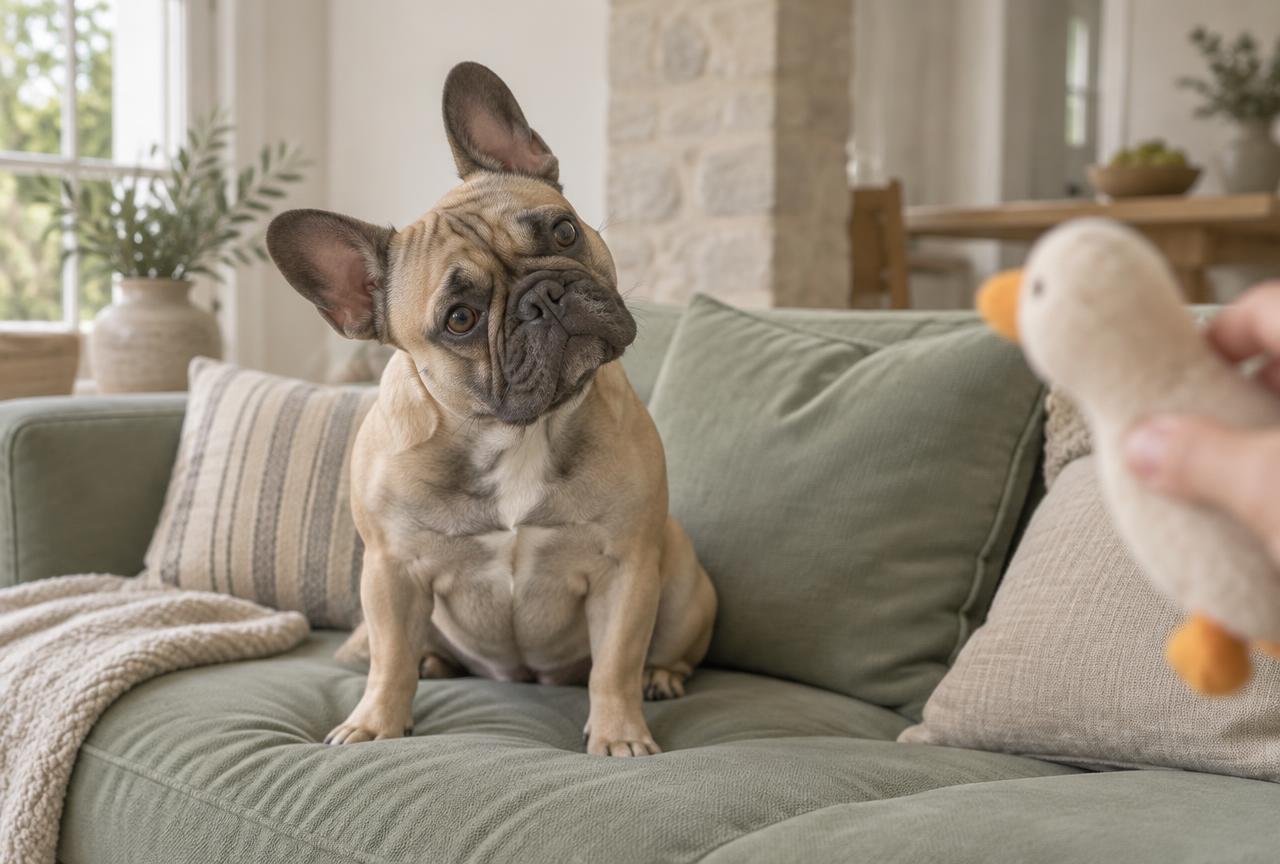
There is a social layer too. Dogs read faces asymmetrically: research on gazing behaviour suggests dogs attend more to the left side of a human face, where our emotional expressions are thought to be more visible. A tilt can re-centre the face in view, particularly for brachycephalic breeds whose shortened muzzles already block their lower visual field. It is a cheap trick of anatomy that produces the exact impression of a dog thinking hard about something.
The vision theory: seeing past the muzzle
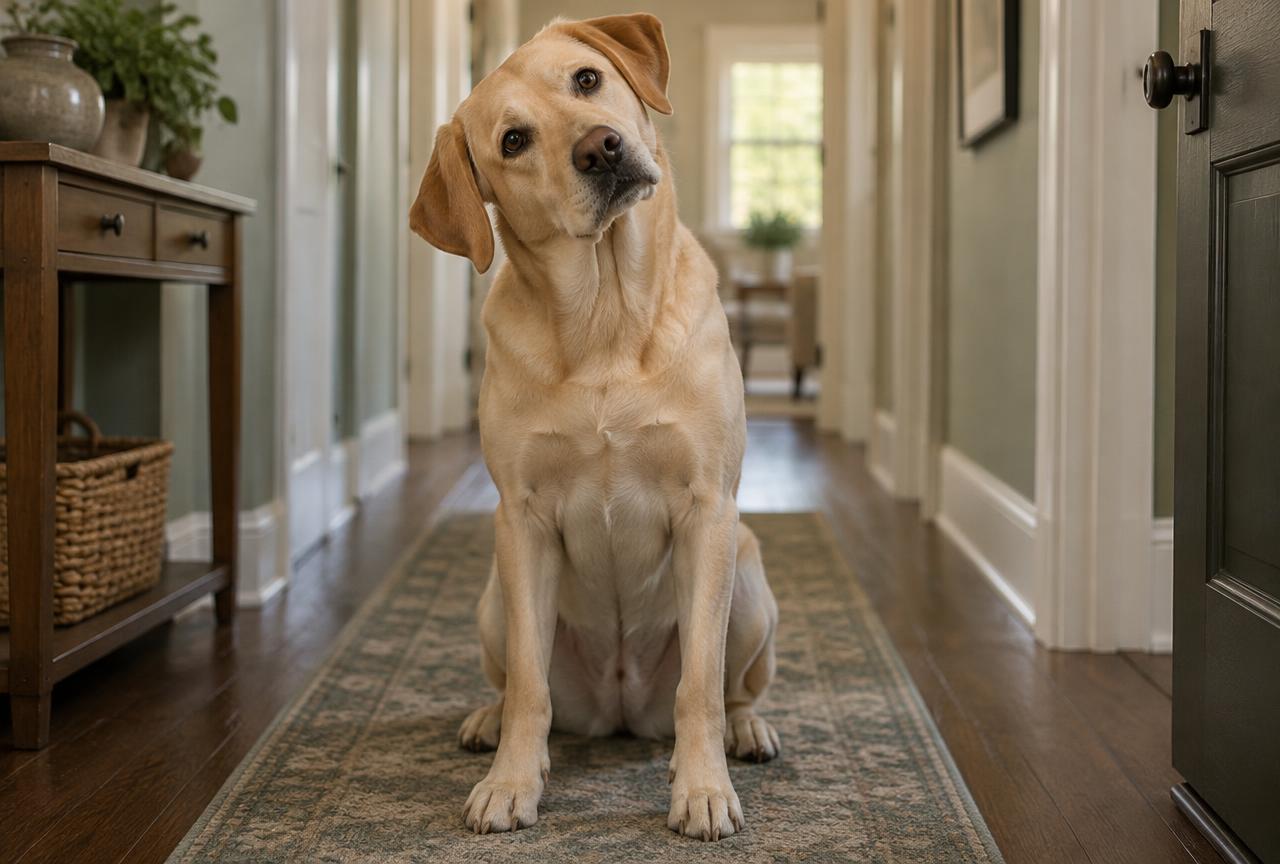
The second mechanism is visual, and it explains a puzzle: dogs tilt during speech, which they cannot fully understand, as though meaning were nearly within reach.
A dog's muzzle occupies the centre of its visual field. For longer-muzzled breeds, looking at something close and central means part of the view is occluded. Studies of object recognition suggest dogs tilt to reposition an object of interest into the best-resolved part of their retina, the same reason a bird turns its head sideways to look at you with its best eye. When you say walk, sit or dinner, you are simultaneously the object of visual attention and the source of sound, and the tilt serves both channels at once.
This is why tilts cluster around particular words. Many owners notice their dog tilts at certain phrases and not others, which is less about comprehension than about salience: the dog is attending maximally to a sound it has learned predicts something.
The learned tilt: attention training, by the dog
The third mechanism is the dog's own doing. Tilt a head and a human appears, almost always. We laugh, photograph, repeat the phrase and often hand over a treat. From the dog's side, head tilting is the most reliably rewarded behaviour in the entire household, and it costs nothing.
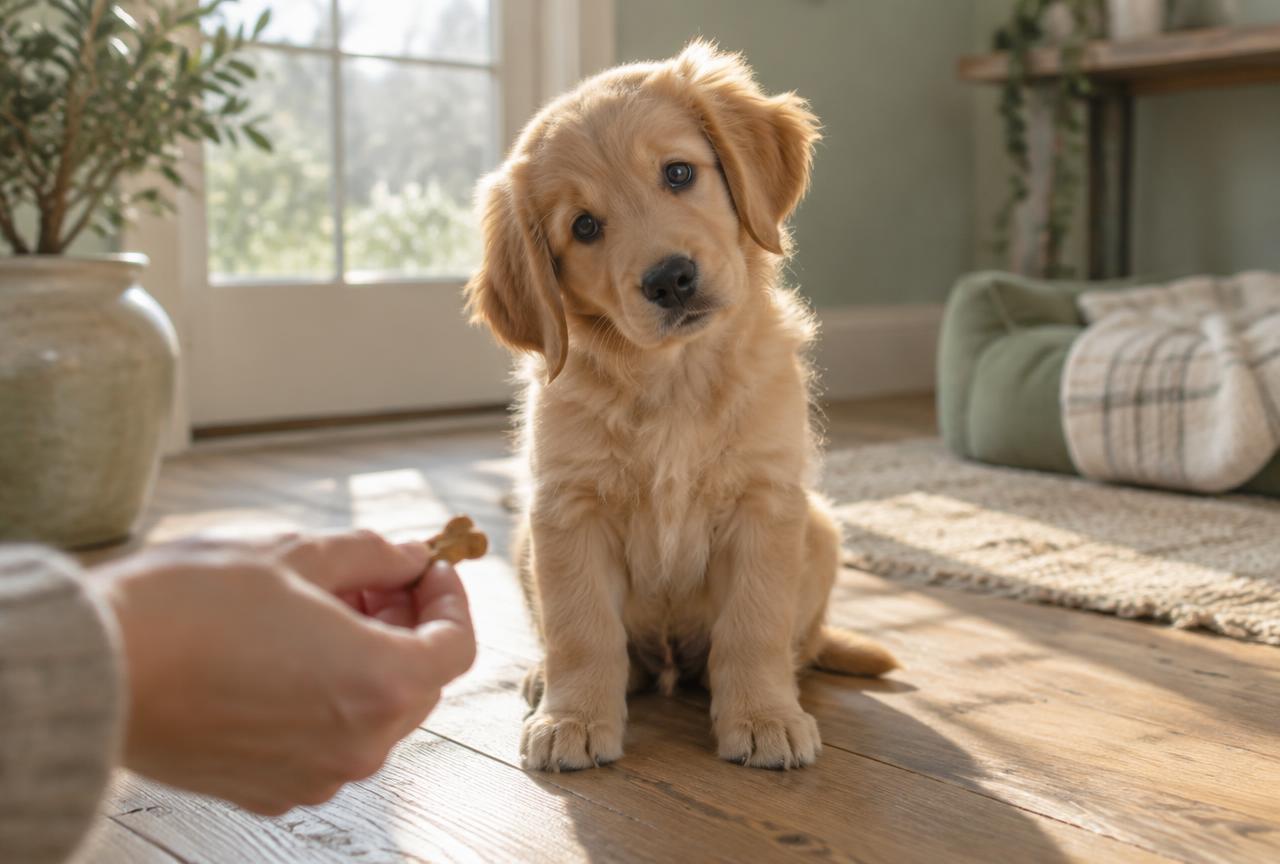
Over months, this turns a reflexive tilt into a professional one. Dogs that live with chatty owners, or owners who react strongly, tilt more. Puppies tilt more than adults, partly because everything is novel and partly because the behaviour is still being shaped. There is no downside to this at all, except the mild realisation that your dog may be managing you rather than confused by you.
The medical tilt: when it does not stop
Everything above describes tilts that last seconds. The warning sign is a tilt that persists.
| Feature | Curiosity tilt | Concerning tilt |
|---|---|---|
| --- | --- | --- |
| Duration | Seconds, ends when the stimulus ends | Persists for minutes, hours or days |
| Side | Either side, changes with interest | Usually the same side every time |
| Balance | Normal, dog moves normally | Stumbling, leaning, circling, falling |
| Eyes | Normal | Rapid flicking (nystagmus), squinting |
| Company | Triggered by speech, toys, treats | Often with nausea, vomiting, appetite loss |
| Aftermath | Dog resumes normal behaviour immediately | Dog struggles to settle, walks into walls |
A concerning tilt points to the vestibular system, the balance apparatus in the inner ear and brainstem. The two commonest causes in dogs are inner ear infections, where inflammation disrupts the balance signals on one side, and vestibular disease, an acute loss of balance that in older dogs often appears overnight and improves over days. Rarely, the cause is a mass, a toxin or an immune problem, which is why persistent tilts get examined rather than watched.
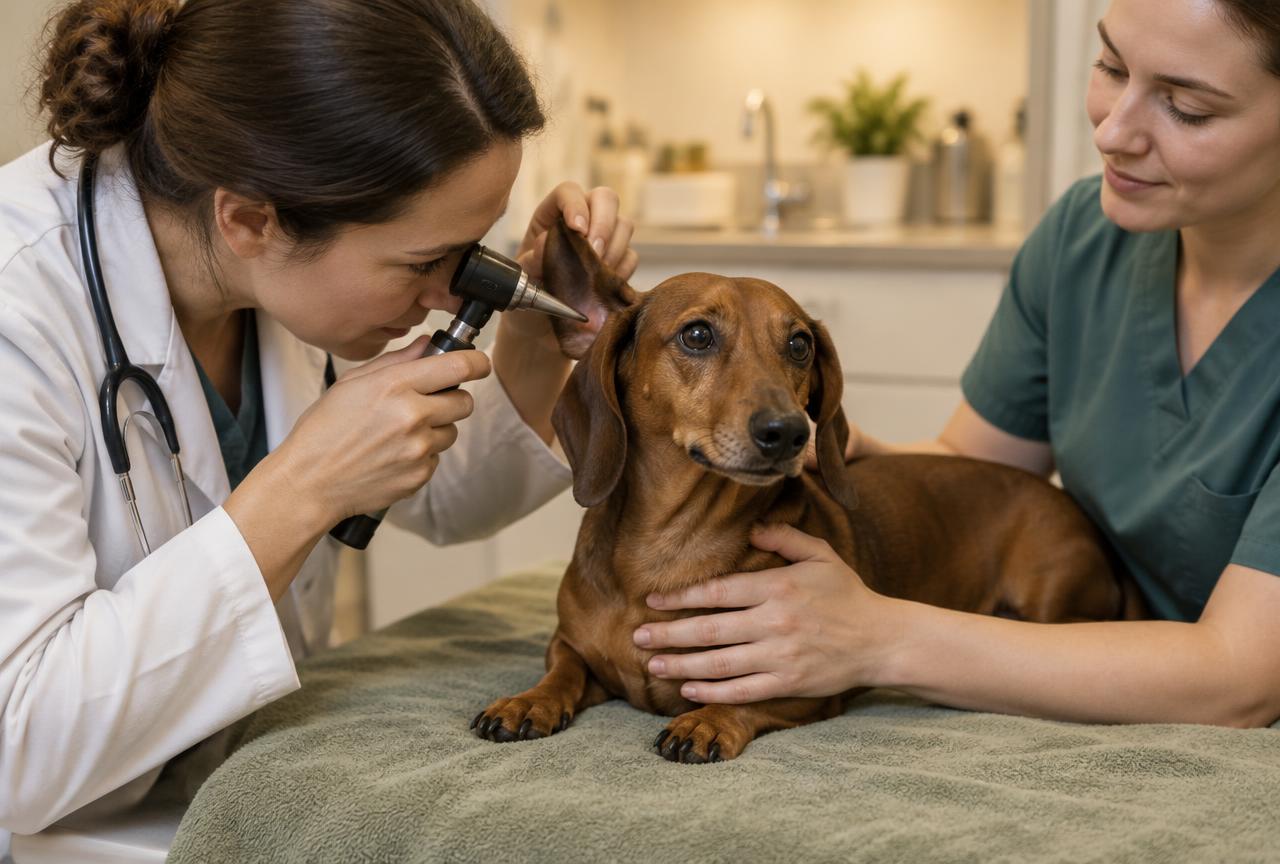
Vestibular disease is frightening to witness: the dog may be unable to stand, roll toward the affected side, and flick its eyes rapidly. The vocabulary for it, stroke, is nearly always wrong; true strokes are uncommon in dogs. Most cases begin to improve within seventy-two hours and resolve substantially within one to two weeks, with the head tilt often the last sign to clear. Our article on dog ear infections covers the ear side of this in detail, including the breeds most prone.
When to call your vet
Call the same day if the tilt is persistent, if your dog is stumbling, falling, rolling or flicking its eyes, if it is vomiting or refusing food alongside the tilt, or if the tilt appeared suddenly in an older dog. Call within a day or two if the tilt is mild but constant, or if it comes with scratching, head shaking or smelly ears, which points to the ear canal and responds to treatment. Any tilt after a possible head injury, or alongside new medication or ear drops, is also a call rather than a wait.
If a tilt worries you: a five-step plan
- 1Film the tilt for thirty seconds, including the dog standing and turning. Vets can triage far more accurately from a clip than from a description.
- 2Note the side, and whether it is the same side each time. A changing side is usually curiosity; a fixed side is usually medical.
- 3Check the ears. Look for redness, discharge or smell, and note whether the dog scratches or shakes its head.
- 4Time it. Note when the tilt started and whether it has improved, worsened or stayed constant over hours.
- 5Keep the dog safe meanwhile. Close stair gates, keep it off furniture and avoid stairs, because a vestibular dog cannot be trusted on edges, and book the appointment.
Interactive · head tilt checker
Cute tilt or medical sign?
Answer a few questions and we will tell you whether this tilt needs a video, a treat or a vet.
The charming kind of head tilt
Brief, symmetrical tilts while listening or working something out are normal. Dogs often tilt to hear better and to see past their muzzle.
This checker is a guide, not a diagnosis. Any tilt with vomiting, rolling or refusal to eat is a same-day vet call.
This checker runs the triage for you: it takes the pattern of the tilt, whether balance is affected, whether the ears are showing signs, and whether any medication changed recently, and it tells you whether you are looking at charm or at a vet appointment.
A tilt-owner's checklist
- The tilt is brief and ends when the stimulus ends.
- Your dog rights itself immediately and moves normally.
- The tilt switches sides with interest rather than favouring one.
- There is no head shaking, scratching or ear smell.
- Your dog eats, drinks and plays normally.
- Nothing has changed in medication or ear care recently.
All six ticks is a photo opportunity. Any miss, and the sections above explain which way to go first.
A tilt is the dog world's most photographed behaviour and its most easily misread. The charming kind lasts seconds. The worrying kind lasts hours, and always favours one side.
Head tilting through a dog's life
The tilt changes with age, and each life stage has its own notes. Puppies tilt the most, and it is charming by design: every sound is novel, every word is being decoded, and the attention reward arrives faster than it ever will again. Most of it fades naturally as novelty declines, though dogs with talkative owners keep the habit for life.
Adolescents and adults tilt for the practical reasons covered above: sound localisation, reading faces, and the words they have learned predict good things. The frequency drops but the quality improves; experienced dogs often tilt at the exact phrase that matters, which is less about comprehension than about a well-trained ear.
Seniors deserve the closest watch. An older dog whose tilt is new, persistent or increasingly one-sided should skip the charm explanation entirely: the vestibular system becomes less reliable with age, and inner ear disease, dental pain and blood pressure changes all present with head posture. There is also a benign version, the slightly stiff, arthritic neck that makes older dogs hold their heads at an angle rather than swing them; that one responds to pain management, not to behaviour advice. The discriminator is simple. If the tilt rights itself instantly and alternates, it is life as usual. If it is fixed, new or paired with wobbliness, it is a vet appointment, and at that age the appointment is worth keeping rather than postponing.
The verdict
Head tilting is mostly a story about excellent ears and good eyes being used in a slightly crooked way. Brief, alternating, self-correcting tilts during speech and play are normal, trainable and, in most dogs, more frequent than they need to be thanks to our enthusiastic responses. A persistent one-sided tilt, particularly with balance changes, is a different animal: it is the vestibular system asking for examination, and the same-day kind of examination when the dog cannot walk straight.
When to see a vet or behaviourist: persistent tilts, tilts with stumbling or eye flicking, tilts with vomiting or appetite loss, and any tilt that follows head trauma. Everything else is a photograph.
Questions people actually ask
Why do dogs tilt their heads when you talk to them?
Talking combines the two main triggers: a voice in the frequency range dogs tilt to hear better, and a human face the dog wants to read past its own muzzle. Some dogs have also learned that tilting reliably produces attention and treats, which explains the dogs who tilt professionally at every sentence.
Is head tilting a sign of intelligence in dogs?
Not exactly. Tilting reflects attention and sound processing rather than measured intelligence. That said, working and companion breeds that are highly attuned to human speech often tilt more, and the behaviour does show a dog that is engaged rather than worried. There is no evidence it signals how smart a dog is.
When should I worry about a dog head tilt?
Worry when the tilt persists for more than a few minutes, always favours the same side, or comes with stumbling, falling, eye flicking, vomiting or appetite loss. Those combinations point to the vestibular system or the inner ear and need examination, the same day if the dog cannot walk straight.
What is vestibular disease in dogs?
Vestibular disease is a sudden disruption of the balance system, usually in the inner ear. Dogs show a head tilt, stumbling, rolling and rapid eye flicking, and it is often mistaken for a stroke. Most cases, particularly in older dogs, improve substantially within days once the cause is treated or managed.
Do puppies tilt their heads more than adults?
Generally yes. Puppies encounter more novel sounds and are still learning which behaviours earn attention, so tilting is both more frequent and more reinforced. It settles as novelty fades, though dogs with attentive owners often keep the habit for life.
Can ear infections cause a head tilt?
Yes, and it is one of the commonest causes. Inflammation or infection in the middle or inner ear disrupts the balance signals on that side, producing a tilt, sometimes with head shaking, scratching or a smell from the ear. Our ear infection article covers the signs and treatment, and a vet can confirm the diagnosis with an examination.
Sources
- Head tilt in dogs, VCA Animal Hospitals
- Vestibular disease in dogs, Merck Veterinary Manual
- Dog behaviour advice, RSPCA
- Dog health advice, PDSA
Breeds mentioned
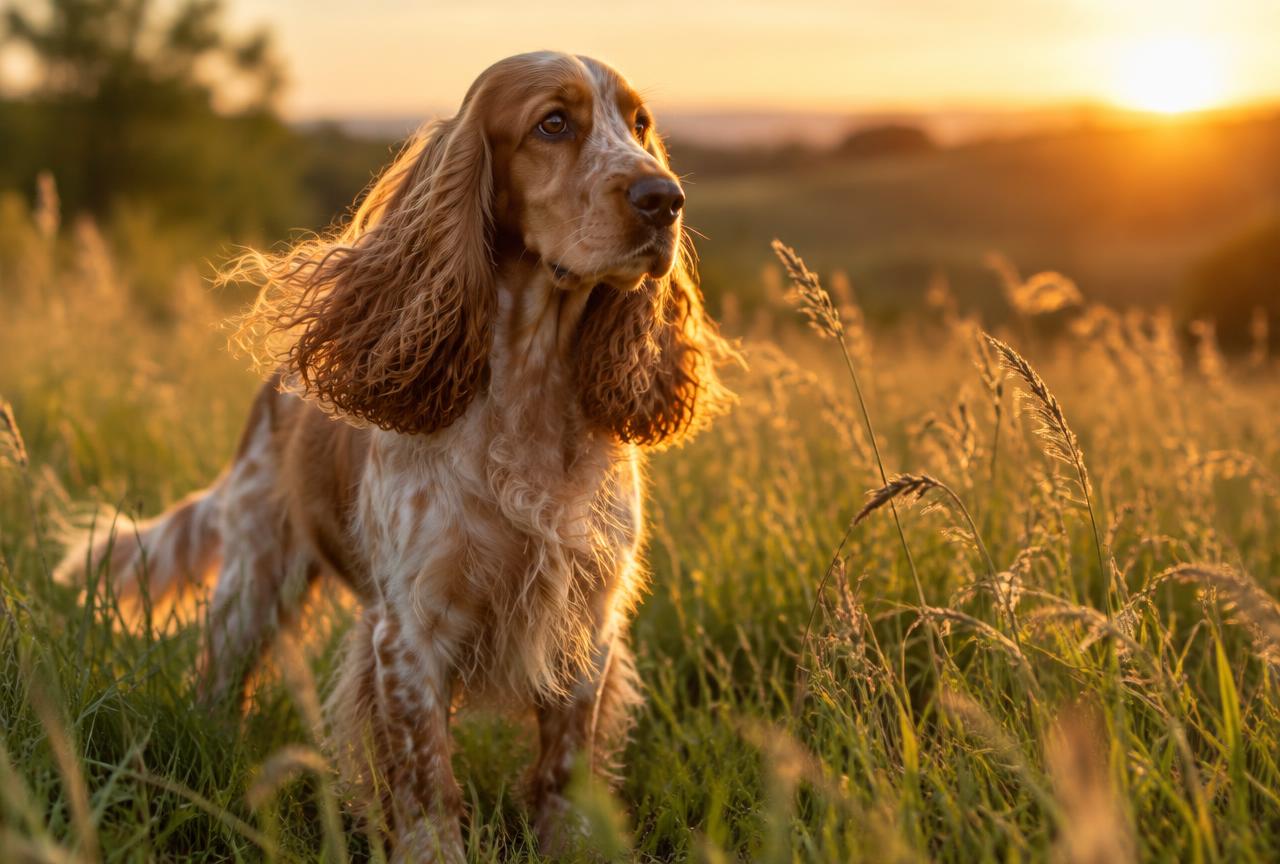
English Cocker Spaniel
A merry, affectionate gundog with a soft, silky coat and a nose that never switches off.
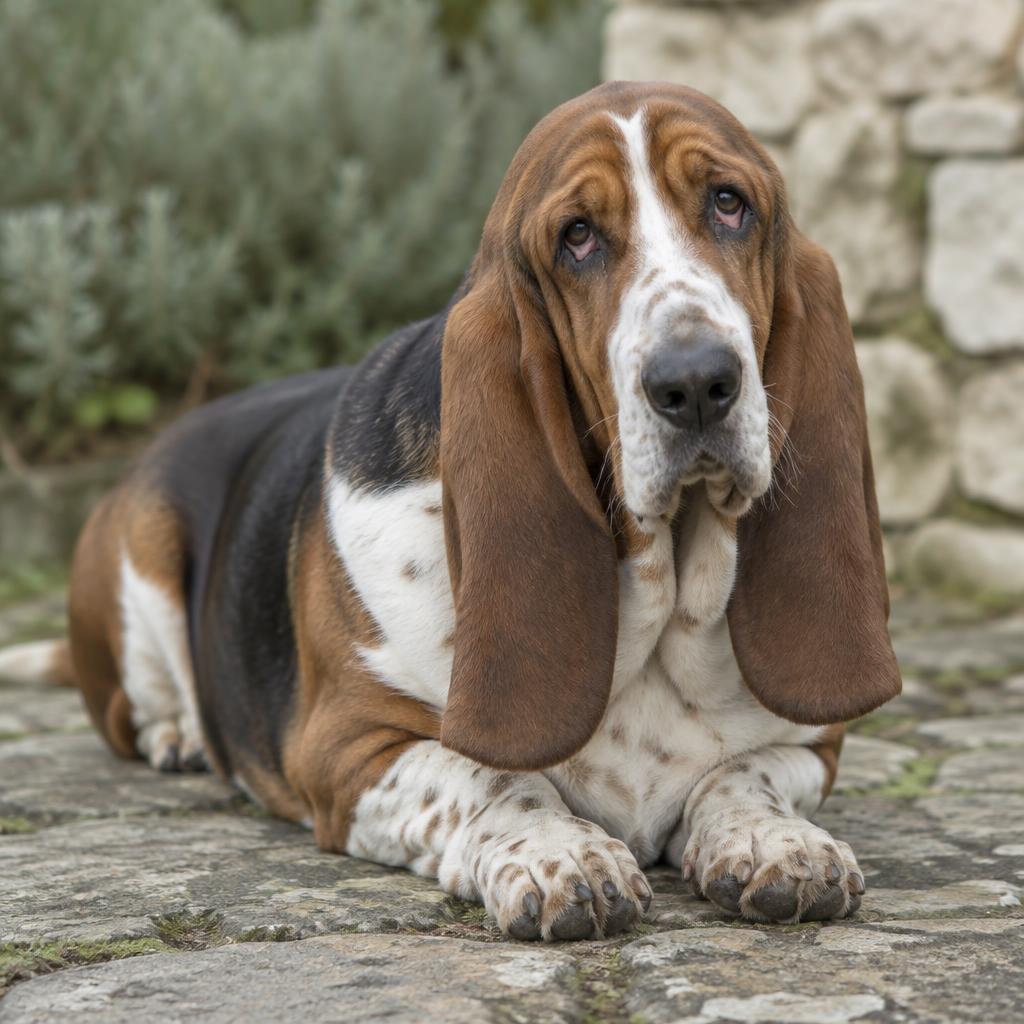
Basset Hound
A short legged French scenthound with a powerful nose, a deep bay and a stubborn streak worth respecting.

French Bulldog
A comic, affectionate companion built for city life, but with health needs that demand a careful breeder.
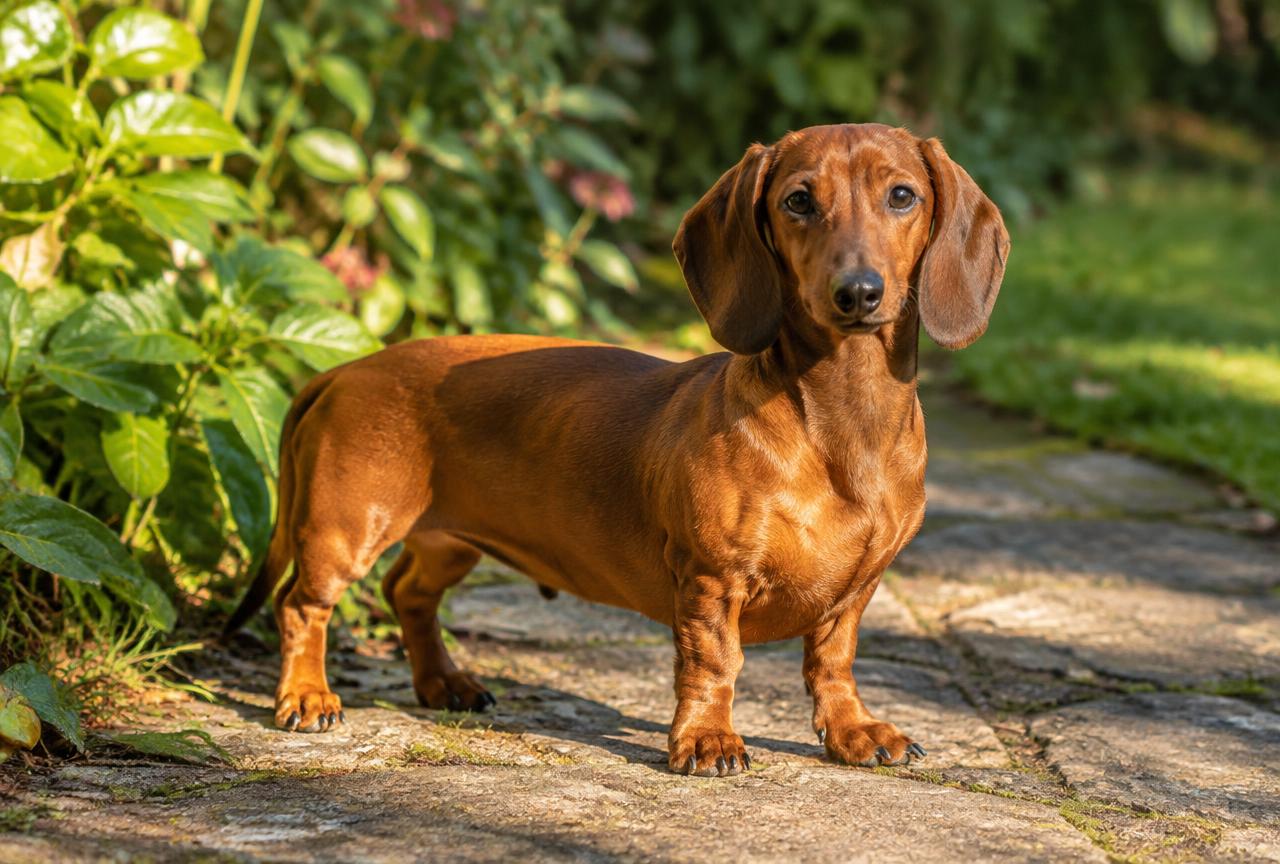
Dachshund
A bold, characterful hunting breed in a long, low body, needing careful back protection for life.
Put it into practice
Read next
Why Do Dogs Roll in Poop? The Instinct Explained
Why dogs roll in the worst smells they can find, what the behaviour is really about, and how to prevent it or at least clean up well afterwards.


