
Why Do Dogs Dig? Holes, Beds and How to Redirect It
Digging is instinct with a purpose: terriers hunt, hot dogs cool, and bored dogs excavate. Punishment never wins; a legal digging spot usually does.
The SniffScroll desk
Dog care editors
Published 9 October 2026
Reviewed against RVC, PDSA and Dogs Trust guidance
The short version
- Digging is normal, hard-wired behaviour with distinct causes: hunting instinct, cooling, burying, boredom and pre-bed nesting.
- Terriers dig by design; the instinct is load-bearing and should be redirected, not suppressed.
- Hot dogs dig to reach cool soil: shade, water and a paddling pool out-compete the hole.
- A designated dig pit with buried treasure solves more digging than any deterrent.
- Fence-line digging while alone points to frustration or separation distress and needs the alone-time plan, not garden fixes.
There are two kinds of digging owners. The first has a dog that excavates one glorious hole a week and could not care less. The second has a garden that looks archaeological, a fence line with its own trench system, and a mounting sense of personal failure. Both are living with the same behaviour, and the difference between them is usually one thing: whether the dog has been given somewhere legal to dig.
That is the uncomfortable summary of the whole topic. Digging is not a behaviour problem in the way pulling on the lead is. It is a normal, hard-wired behaviour with several distinct purposes, and it responds to redirection and management far better than to punishment. The owners who win at digging are the ones who stop fighting the instinct and start housing it.
Why do dogs dig? The short answer
Dogs dig for four main reasons: inherited hunting instinct, temperature control, burying food and treasures, and boredom or distress when left alone. Digging at beds and blankets before lying down is a fifth, largely harmless version. The fix depends entirely on the cause, which is why the first job is always identification, and why the same garden can hold two dogs digging for completely different reasons.
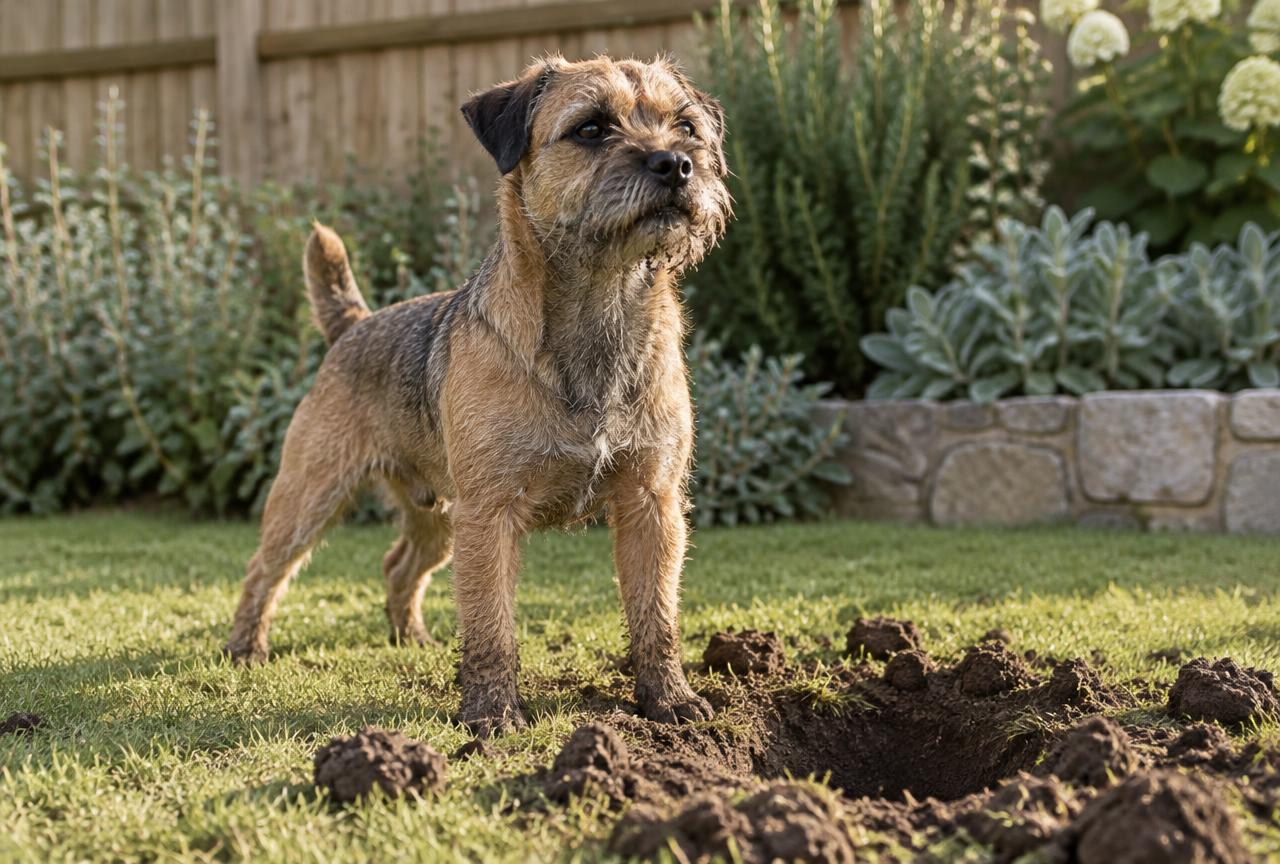
The terrier inheritance
Start with the breeds, because the strongest digging drive of all is written into their job description. Terriers were bred, for centuries, to go to ground: to follow foxes, rats and badgers into their burrows and hold them there. Digging fast was the point. A Border Terrier, Cairn Terrier or Rat Terrier in a garden is not misbehaving when it digs; it is performing the function its ancestors were paid for.
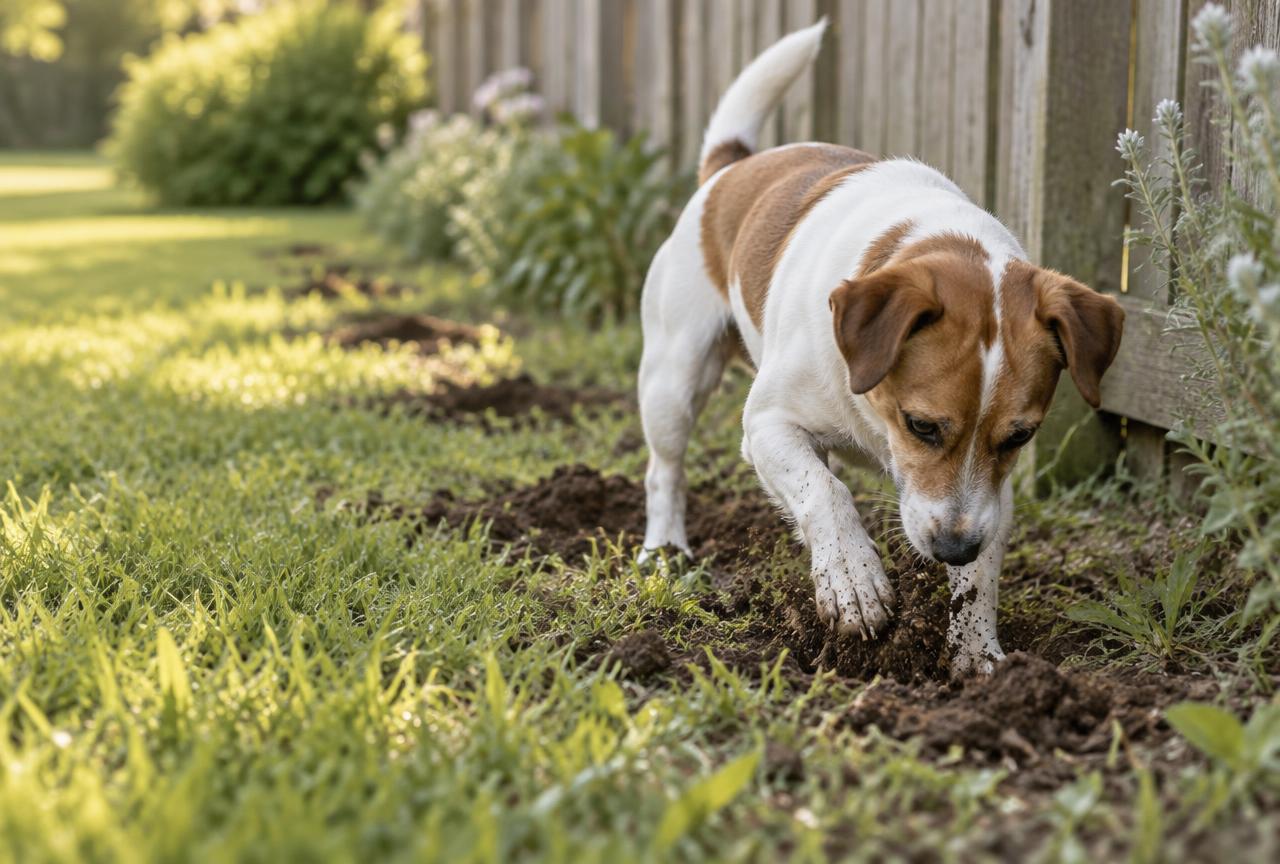
The tell is the digging style. Instinct digging is focused and purposeful: targeted at molehills, compost heaps, rodent runs and fence lines, intense in bursts, often with the nose leading the paws. Scent hounds and farm breeds, the Australian Cattle Dog among them, show a milder version. You will not train this out, and honestly you should not want to; the instinct is load-bearing for the breed. What you can do is give it employment elsewhere, which the plan below handles.
Digging to cool off and to den
The second cause is physics. Digging exposes cooler, damper soil, and a shallow dug bed in the shade can be several degrees cooler than the grass above it. In summer, a large dog lying in a fresh hole is making its own air conditioning, and no amount of telling-off will override thermoregulation.
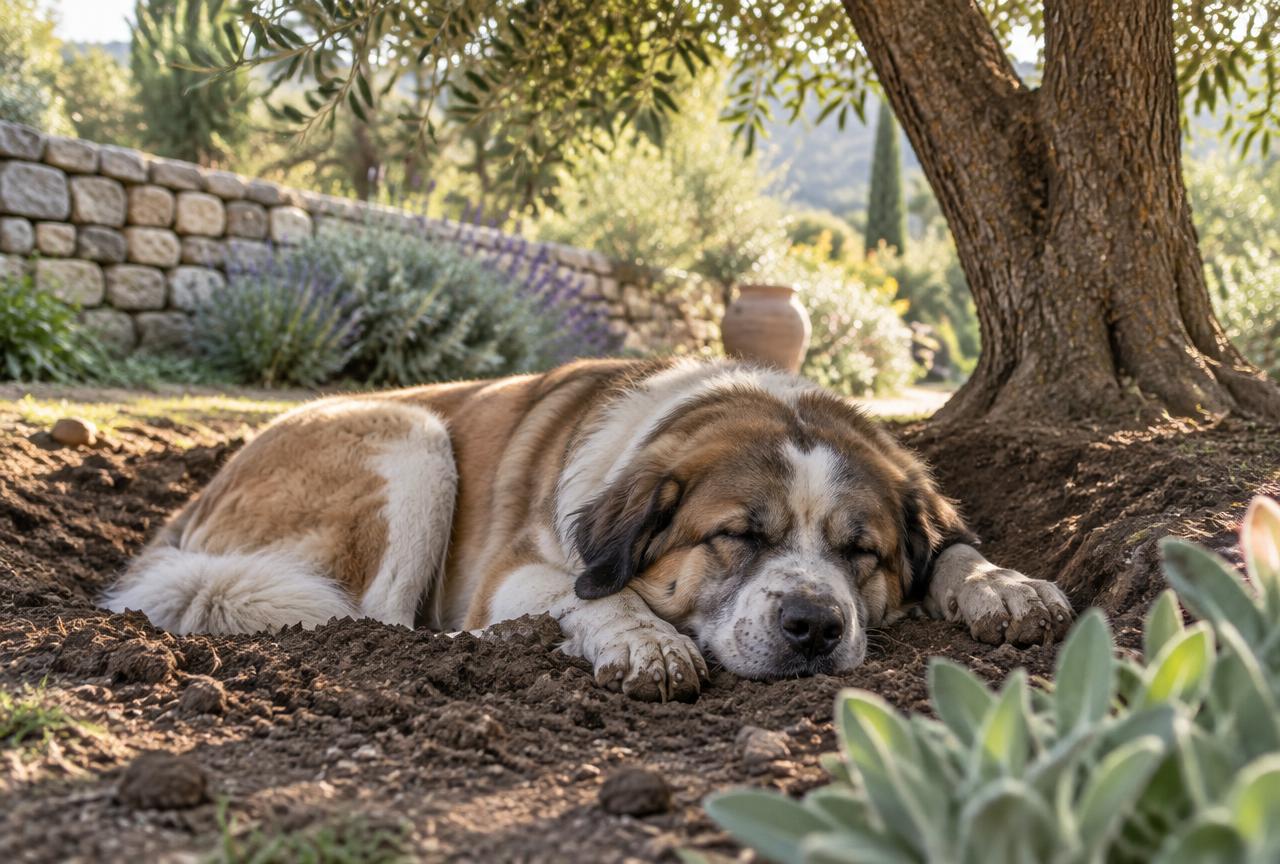
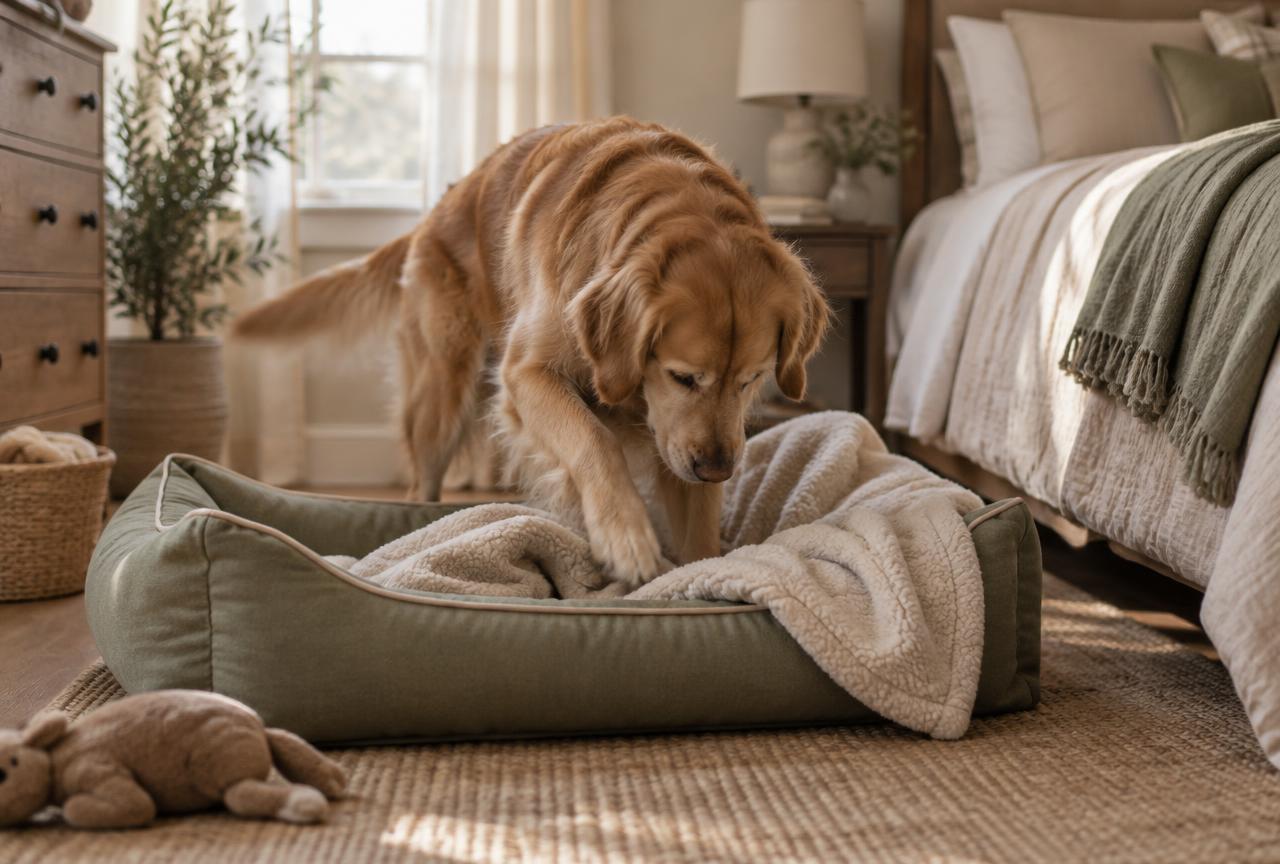
The fix is to win the competition rather than ban it. Deep shade, fresh water and a paddling pool or cooling mat near the favourite patch will usually out-compete the hole. A related version is den digging: dogs scratch and paw at bedding, blankets and even the sofa before lying down. This is nest-building, the same motion wild canids use to arrange a sleeping hollow, and it is harmless in almost every case. Watch the nails instead: overlong nails make the scratch more vigorous.
The pre-bed scratch: why dogs dig on beds and blankets
Owners of fluffy beds know this one well. The dog approaches its bed, paws at it, spins, paws again, and then collapses. This is den preparation, an inherited ritual, and it is most pronounced in breeds with thick double coats that would have scratched a hollow into snow or brush. It needs no correction. If the scratching is intense enough to damage the bed, the answer is a more durable bed cover or a blanket the dog is allowed to rearrange; scolding a nesting instinct is a losing game.
Burying, boredom and the fence-line digger
The remaining causes sort themselves by pattern.
Burying is food caching. Dogs bury bones, chews and occasionally toys, and digging them up weeks later is one of the great pleasures of dog ownership. It is normal. The redirect is a treasure chest: a spot where burial is welcome and rotation keeps it interesting.
Boredom digging is the excavation of last resort. A dog with energy to burn and nothing to do digs, chews, barks or paces; digging is simply the version it finds most satisfying. The pattern tells you: scattered holes appearing whenever the dog has been alone and under-stimulated. The fix is upstream: more exercise, more sniffing, food toys and structured play before the dog is left with a garden and a mission.
The fence-line digger deserves its own category, because it is the most consequential. Digging aimed at getting under a fence, especially when it happens while the dog is alone and there is something interesting on the other side, is frustration or distress, and patching the fence alone usually fails. The dog will find another spot. This is the one digging pattern that calls for the full separation-anxiety toolkit rather than a garden solution, and our article on dog separation anxiety covers it properly.
What does not work, and what does
The table below is the honest summary of two decades of owner reports and behaviourist advice.
| Approach | Verdict | Why |
|---|---|---|
| --- | --- | --- |
| Scolding after the fact | Fails | Dogs connect punishment to your presence, not to the digging |
| Filling holes with the dog's mess | Widely reported, unreliable | Some dogs dig elsewhere; most owners abandon it |
| Blocking access to the garden | Works short-term | The energy and instinct remain, and come back indoors as chewing |
| A designated dig pit | Works best | Gives the behaviour a legal home; instinct is satisfied, lawn survives |
| More exercise and scent work | Works | Reduces the boredom share of the digging |
| Burying deterrents in favourite spots | Mixed | Helps protect specific beds, rarely solves the whole garden |
The redirect plan
- 1Identify the cause. Use the patterns above: which spots, what time of day, whether it happens alone, whether the dog is hot, and whether the holes cluster at the fence.
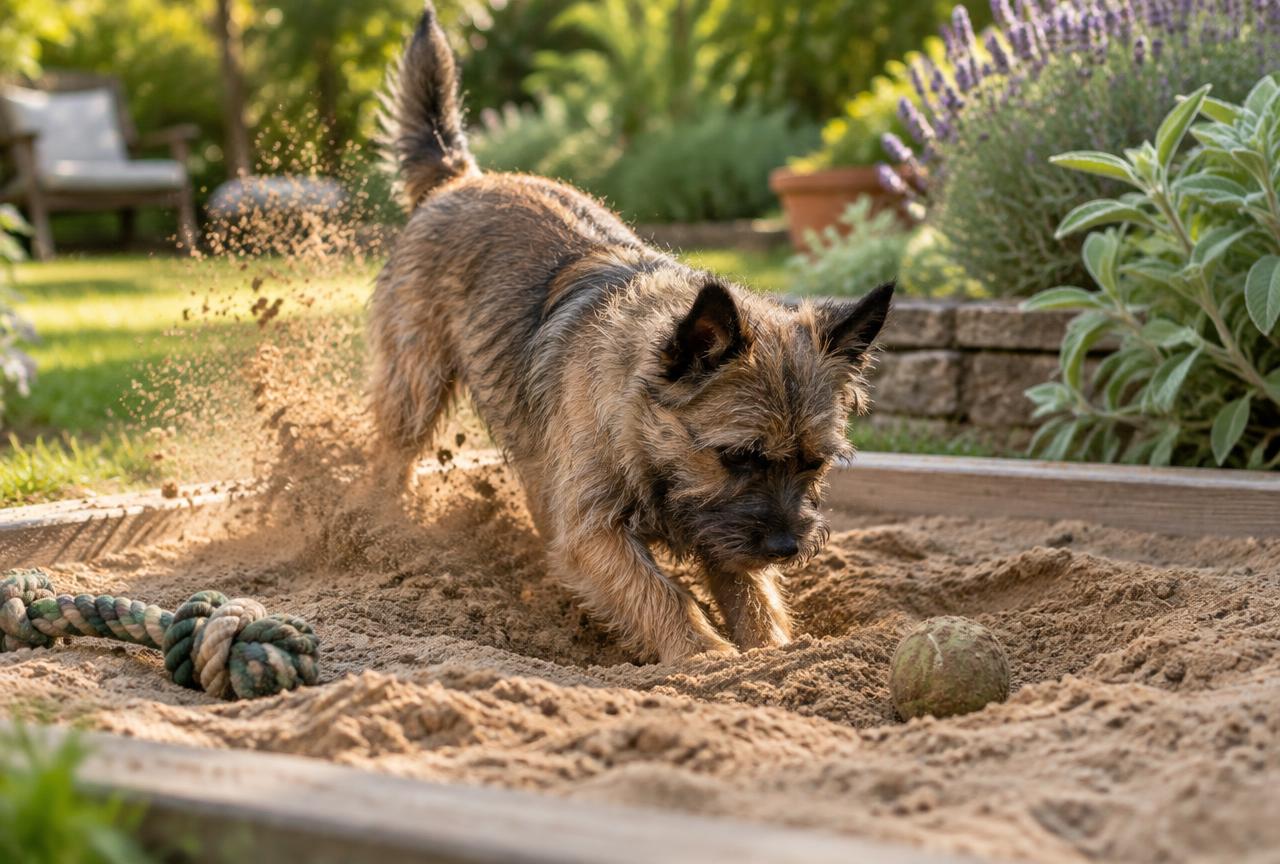
- 2Build the dig pit. A sandpit, a corner of loosened soil or a child's paddling pool filled with sand and earth. Make it the best digging in the garden: bury a favourite toy, a chew, and a handful of treats on the first day.
- 3Redesign the rest. For cooling diggers, provide shade and water. For hunters, walk the fence line and clear attractants. For buriers, open the treasure chest regularly.
- 4Manage the protected zones. Fencing, mulch or planting around beds you care about, paired with the pit being genuinely attractive, is what holds in practice.
- 5Exercise the instinct. Scent-work games, sniffing walks and digging sessions in the pit before unstructured garden time spend the itch before it spends your lawn.
- 6Expect relapses. Fresh digging weather, rain-softened soil and a new scent will all test the system. Re-bury treasure in the pit and the habit reattaches quickly.
Interactive · digging fixer
Why is your dog digging, and what then?
Tell us the pattern and we will build a redirect plan that works with the instinct, not against it.
Your redirect plan
- Build a dig pit: a sandpit or a corner of loosened soil, with toys and a buried treat to start it off.
- When digging happens elsewhere, calmly redirect: reward digging in the pit, block access elsewhere for a while.
- Add exercise and sniffing time before unstructured garden time, so the digging itch is already partly spent.
Give the digging somewhere legal to happen
Digging is normal dog behaviour, not spite. The reliable fix is never punishment: it is giving the behaviour a place, a time and a reason.
The digging fixer takes the pattern you are seeing, why the dog digs, where, your dog's breed type and whether it happens when the dog is alone, and returns a redirect plan matched to the cause, including when the fence-line version needs more than a garden answer.
A digging-owner's checklist
- I have identified which of the four causes my dog's digging fits.
- There is a legal digging spot, and it is more attractive than the lawn.
- I have never scolded a hole I did not catch being dug.
- My dog's nails are not so long that bed-scratching has become vigorous.
- Hot weather digging has a shade-and-water answer, not a punishment answer.
- Any fence-line digging while I am out is being treated as an alone-time problem.
You cannot delete a hundred centuries of instinct. You can only give it somewhere legal to happen, and a dog with a dig pit spends its enthusiasm there about as reliably as a dog with a bed sleeps in it.
Digging without a garden: flats, balconies and walks
Instinct does not check the deeds. Dogs without gardens dig at beaches, on walks, in planters and, in the most determined cases, at the carpet. The behaviour is the same; the management differs.
A balcony planter or a large tub of sand gives a flat-dwelling terrier a legal dig, and it is more use than a lecture. On walks, the beach or a sandy verge is the place to let the instinct run: a ten-minute dig is a legitimate form of exercise and one of the few that exhausts a determined earthdog. Sand gets everywhere; that is the price.
Indoor digging at carpets and sofas usually means one of two things: an unspent instinct, or anxiety. Check the timing first. Digging at the door while you are out belongs with the separation plan; digging before bedtime is nesting, which is harmless. A dog that paws at the ground mid-walk is often scent-focused rather than destructive, and worth a look before you call it back: sometimes it is right.
Day-care and friend visits help too, because a session with a digging-keen companion in a garden shares the instinct out. If indoor digging persists despite exercise and naps, film it and take the clip to a trainer, because the pattern usually holds the answer.
The verdict
Digging is one of the few behaviours where the humane answer and the effective answer are the same thing: redirect rather than suppress. Terriers will always dig; that is the breed. Hot dogs will always seek cool earth; that is physics. Bored dogs will always find something to do; that is your exercise plan talking. Meet the instinct with a pit, shade and employment, and even the most committed excavator leaves you a lawn you can mow.
When to call your vet or behaviourist: digging that starts suddenly in a dog that has never dug, digging aimed at escaping alongside attempts at gates and doors, digging with self-injury to paws or claws, and any fence-line campaign that continues after enrichment. Those patterns point past the garden, to anxiety or medical causes that deserve professional eyes.
Questions people actually ask
Why do dogs dig holes?
The four main causes are hunting instinct, temperature control, burying food or toys, and boredom or distress. Terriers and hounds dig most by design. The digging style tells you which cause applies: focused digging at fence lines and molehills is instinct, scattered holes after being left alone are usually boredom.
How do I stop my dog digging?
Redirection beats suppression. Build a dig pit of sand or loosened soil, bury toys and treats there, reward digging in the pit, and manage protected beds with fencing or mulch. Add exercise and scent games before garden time. Punishment after the fact teaches nothing, because dogs link it to your presence rather than to the digging.
Why does my dog dig on the bed?
Scratching and pawing at beds and blankets before lying down is nest-building, an inherited ritual from wild canids preparing a sleeping hollow. It is harmless. Give a durable cover or a blanket the dog may rearrange, keep nails trimmed, and skip the scolding, since it does nothing to reduce the behaviour.
Do certain breeds dig more?
Yes. Terriers top the list, bred for centuries to dig after rats and foxes, followed by hounds and some herding and farm breeds. Sighthounds dig far less but still enjoy a cool patch in summer. Breed tendency sets the baseline, not the outcome: with a dig pit even committed terriers leave lawns intact.
Should I punish my dog for digging?
No. Punishment after the fact fails because dogs cannot connect it to a hole dug minutes earlier. Punishment during digging suppresses the behaviour only while you are watching, and often increases anxiety. Redirection, a legal digging spot, and exercise before garden time achieve what punishment cannot.
Why does my dog dig at the fence?
Fence-line digging is usually driven by a scent on the other side, or by a dog trying to reach something or someone. Clearing attractants, blocking the view and adding scent-work games help. If it happens mainly while the dog is alone and continues despite enrichment, treat it as separation-related distress, which our separation anxiety article covers.
Sources
- Dog behaviour advice, RSPCA
- Behavioral problems of dogs, Merck Veterinary Manual
- Dog advice, Dogs Trust
- Digging, VCA Animal Hospitals
Breeds mentioned




Put it into practice
Read next
Why Do Dogs Roll in Poop? The Instinct Explained
Why dogs roll in the worst smells they can find, what the behaviour is really about, and how to prevent it or at least clean up well afterwards.


