
Hot Spots on Dogs: Causes, Treatment and Prevention
Hot spots are angry, wet patches of inflamed skin that can appear in hours and double in a day. Fast action at home works for small ones; the rest need a vet.
The SniffScroll desk
Dog care editors
Published 9 October 2026
Reviewed against RVC, BSAVA and PDSA guidance
The short version
- A hot spot is a patch of acute moist dermatitis: red, wet, itchy skin that dogs make worse by licking and chewing.
- They can grow from coin-sized to palm-sized within hours, so same-day action matters.
- Thick-coated and water-loving breeds like Golden Retrievers and Labradors are the classic victims, especially in warm, damp weather.
- Small, fresh hot spots can be managed at home by clipping the fur, gentle cleaning and stopping the licking.
- Oozing, smell, pain, rapid spread or a location near the eyes all mean a vet visit, usually for clipping, cleaning and medication.
A hot spot is the skin equivalent of a house fire: small at ignition, frighteningly fast to spread, and mostly fuelled by the occupant. The medical name, acute moist dermatitis, describes it well: a red, wet, inflamed patch of skin that the dog keeps licking, chewing and scratching, which damages the skin further, which makes it itch and hurt more, which makes the dog lick harder.
The single most important fact about hot spots is their speed. A patch the size of a two-pound coin at breakfast can be the size of your palm by dinner. That is why the rule with hot spots is simple: act today, not tomorrow.
What starts a hot spot
Every hot spot begins with an itch or an irritation. The common triggers:
| Trigger | Typical story |
|---|---|
| Flea bite | One bite near the tail base, dog chews it raw |
| Moisture in a thick coat | After swimming or a bath without thorough drying |
| Allergies | Seasonal pollen or food sensitivities causing itchy skin |
| A small wound or grass seed | Minor injury the dog will not leave alone |
| Matted fur | Tangle traps moisture and debris against the skin |
| Boredom or stress | Licking as a self-soothing habit |
The classic victims are dense-coated, water-loving breeds: Golden Retrievers, Labradors, German Shepherds and Bernese Mountain Dogs, especially in warm, humid weather.
Recognising one early
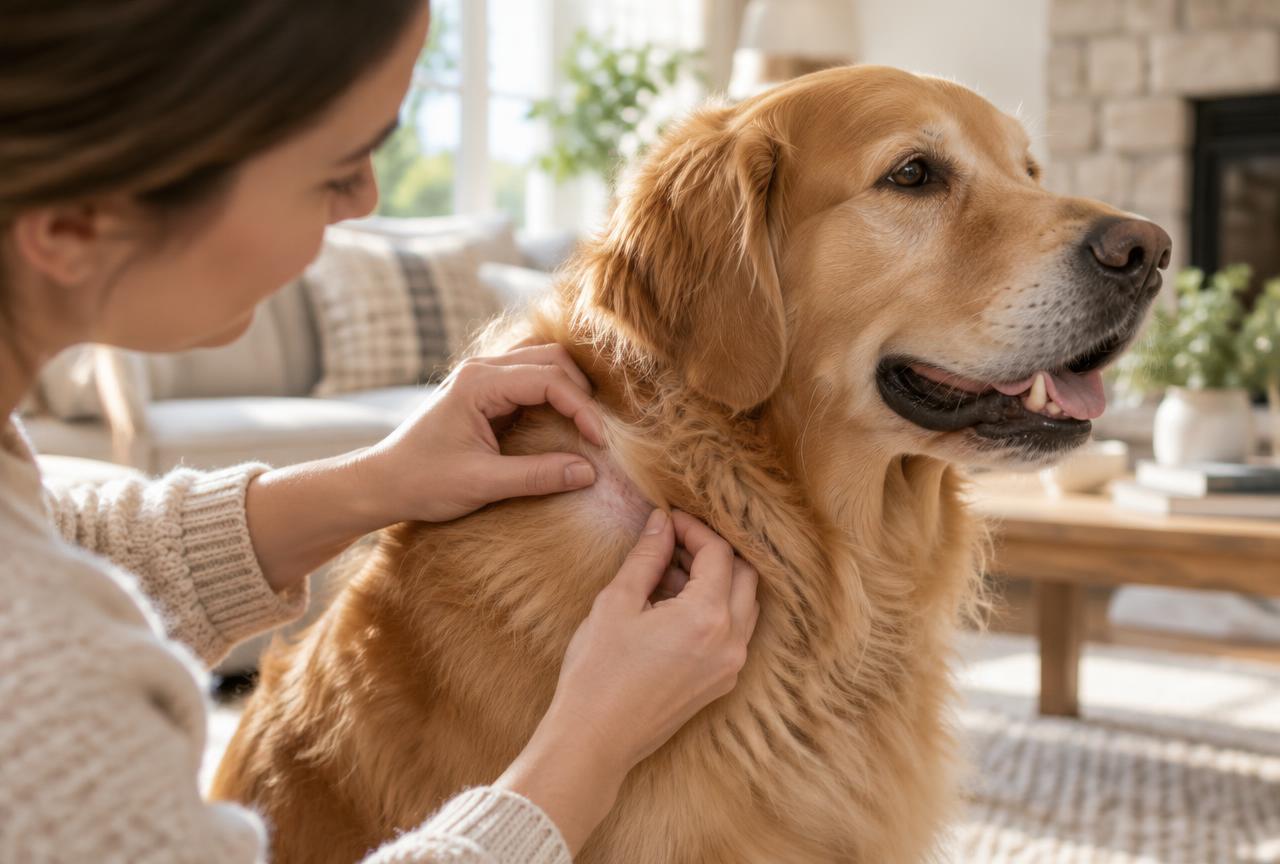
Part the fur and look. An early hot spot is a localised red patch, often with the fur over it looking darker or clumped from saliva. As it develops it becomes moist, glossy, sometimes oozing, and the surrounding fur mats with discharge. It is usually intensely itchy or painful, which is why the dog cannot leave it alone.
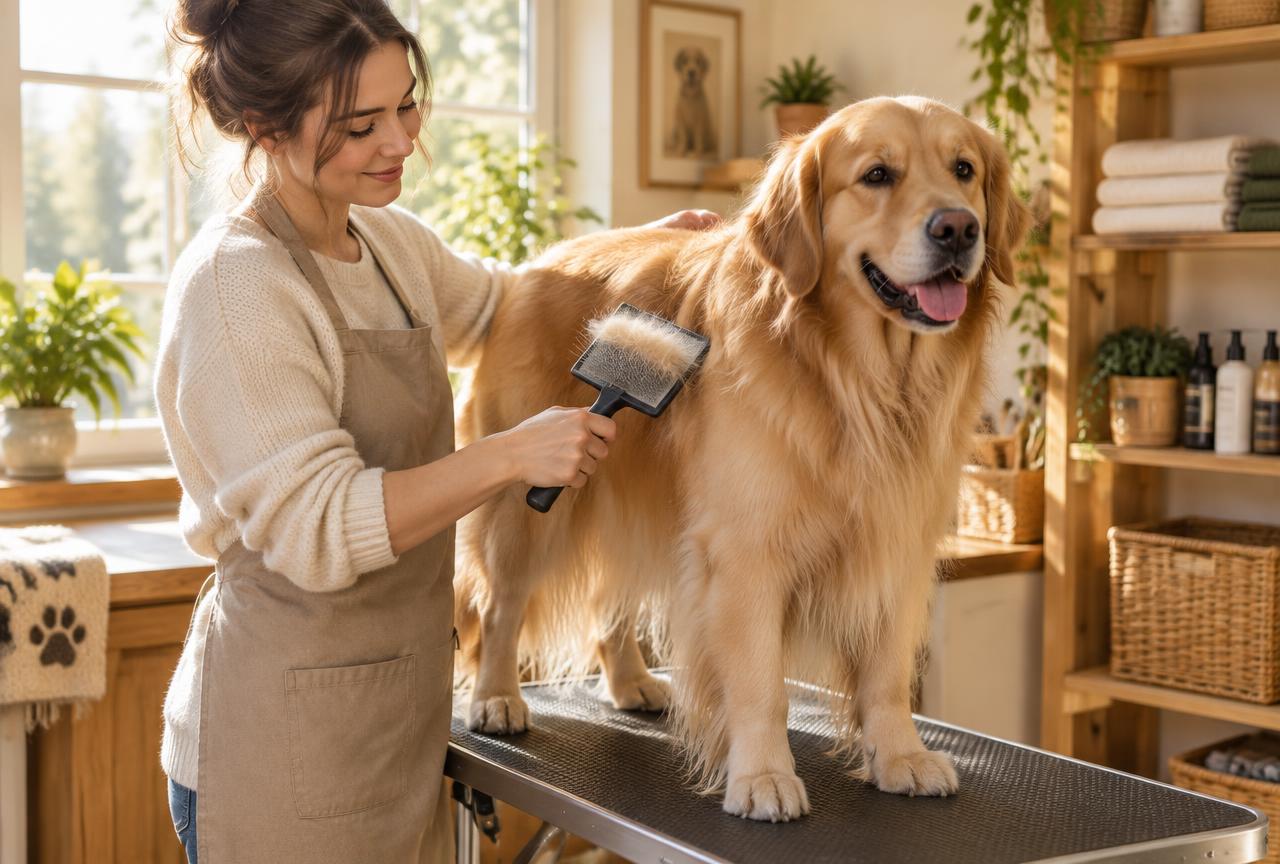
Run your fingers through the coat during brushing, especially behind the ears, under the collar, on the cheeks, and around the tail base and hips. These are the hotspot postcodes.
Treating a small one at home
For a small, fresh hot spot (smaller than a coin, no smell, no heavy oozing, dog otherwise well), this is the standard approach:
- 1Clip the fur around and over the lesion with blunt-nosed scissors or clippers, going a couple of centimetres beyond the red edge. Trapped fur keeps it wet.
- 2Clean gently with a vet-approved antiseptic such as diluted chlorhexidine, then pat dry. Do not use hydrogen peroxide or alcohol, which damage healing skin.
- 3Stop the licking. A recovery collar or soft cone is not optional; it is the treatment. Every lick resets the clock.
- 4Keep it dry. No swimming, no baths, and dry the coat properly if the dog gets wet.
- 5Check it twice a day. It should look drier and calmer within 24 hours. If it does not, it needs a vet.

Owners apologise for the cone. Vets prescribe it. The kindest thing you can do for a hot spot is make it unreachable.
When the vet is the right answer
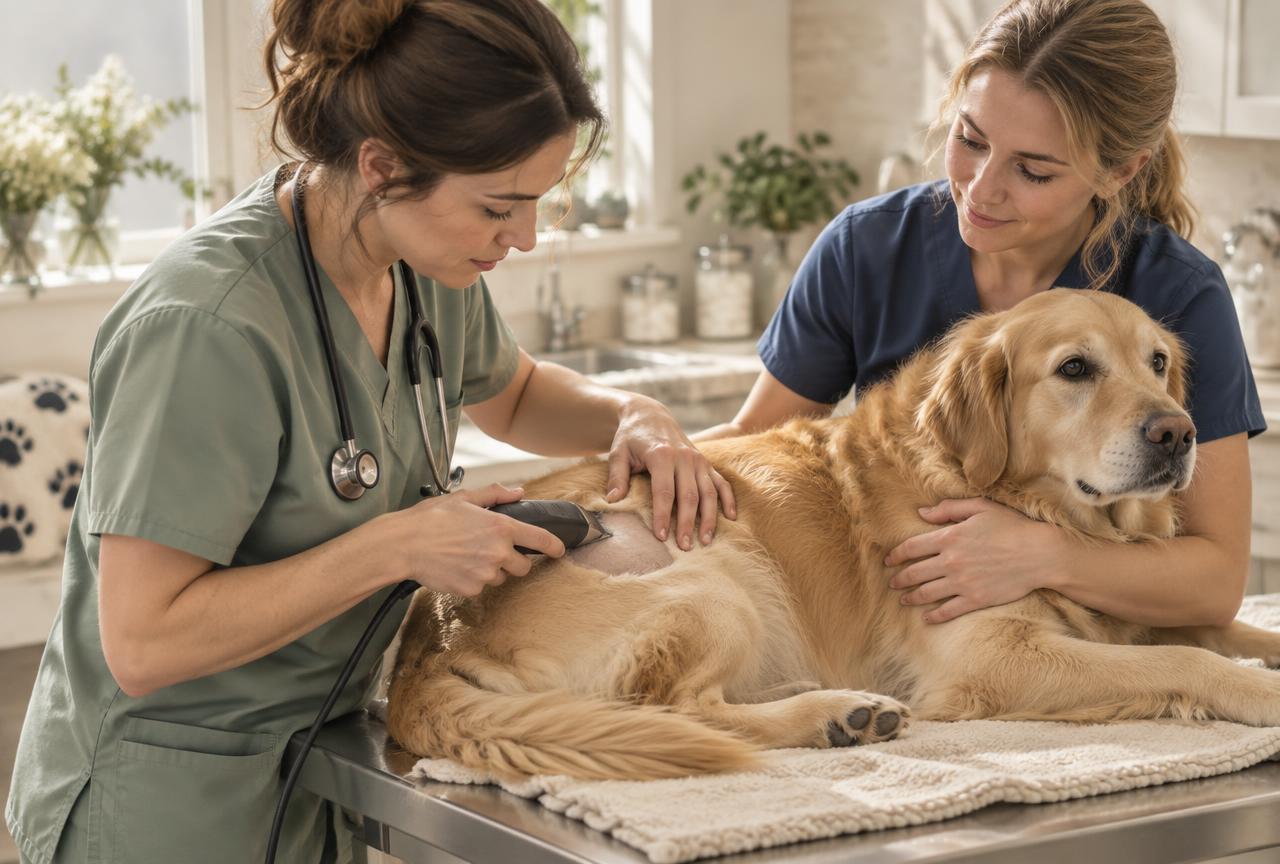
Most hot spots beyond the earliest stage need professional treatment, which typically means clipping and cleaning under sedation if the area is painful, plus anti-itch and antibiotic medication. Book promptly if you see:
- Oozing, pus or a noticeable smell
- A lesion larger than your palm, or visibly growing
- Pain: flinching, snapping or guarding the area
- A hot spot on the face or near the eyes
- Fever, lethargy or a dog that seems unwell
- No improvement after 24 hours of home care
Not sure how bad it is?
Because the home-care window is narrow and the spread is fast, a quick structured check helps. The tool below weighs size, oozing, smell, pain and location, and tells you which side of the vet line you are on.
Interactive · hot spot checker
How bad is this hot spot?
Hot spots can double in size within hours. Describe what you see to decide between home care and a vet visit.
Early stage, act today
A small, fresh hot spot caught early can often be managed by keeping the area dry, preventing licking with a recovery collar, and watching it hourly. If it is not clearly improving within 24 hours, see a vet.
What does a hot spot look like, day by day?
A hot spot, properly called acute moist dermatitis or pyotraumatic dermatitis, moves faster than almost any other skin problem in dogs. That speed is the defining feature, and it is why owners so often say it appeared overnight.
| Stage | Typical timing | What you see |
|---|---|---|
| --- | --- | --- |
| Trigger | Day 0 | Itch from a flea bite, wet coat, matted fur or allergy flare |
| Early lesion | First few hours | Red, warm, slightly damp patch; dog licks or nibbles one spot |
| Established | 12 to 24 hours | Hair loss, oozing, sticky matted fur over the top, strong smell |
| Spreading | 24 to 72 hours | Lesion doubles in size, edges raw, dog resents being touched |
| Healing | 7 to 14 days with care | Surface dries, crust forms, hair begins to regrow |
The matting over the top is the trap. Fur glued down by discharge can hide a lesion three times larger than it looks. If you part the coat and find the patch keeps going, that is your cue to call the vet rather than continue at home.
A hot spot is not the problem. It is the dog telling you, loudly, that something made them itch.
Which dogs get hot spots most?
Thick-coated and double-coated breeds top every list, because a dense undercoat holds water against the skin after swimming, rain or bathing. The Golden Retriever, Labrador Retriever, German Shepherd and Saint Bernard appear often in veterinary texts. Dogs with atopic dermatitis or food allergies are also over-represented, as are dogs with ear infections, which explains why so many hot spots appear on the cheek just below the ear.
Season matters too. Warm, humid weather, flea season and swimming season overlap neatly in late summer, and many practices see a seasonal rise. Dogs that are bored, anxious or under-exercised may lick more, and that licking alone can be enough to start the cycle.
Your home-care plan for a small, early spot
Only treat at home if the patch is smaller than a large coin, your dog lets you handle it calmly, and there is no fever, lethargy or deep wound. Otherwise go straight to the vet.
- 1Ask a helper to steady your dog and offer treats. Never risk a bite on a sore, painful area.
- 2Clip the hair around the lesion with blunt-ended scissors or clippers, so air reaches the skin. Leave a margin of clear skin around the edge.
- 3Clean gently with lukewarm water or a dilute antiseptic your vet has recommended, such as chlorhexidine. Pat dry with clean gauze.
- 4Do not use human creams, tea tree oil, hydrogen peroxide or alcohol. They sting, delay healing and some are toxic if licked.
- 5Stop the licking. A soft cone or a fitted recovery suit is usually more effective than any spray.
- 6Check twice daily. The patch should look drier and smaller within 24 to 48 hours. If it is larger or wetter, book an appointment.
The prevention checklist
- Towel and blow-dry thick coats on a cool setting after every swim or bath
- Brush out the undercoat weekly, daily during the moult, so mats never form
- Keep year-round flea prevention up to date for every pet in the home
- Treat ear infections promptly, because ear itch often leads to cheek hot spots
- Note the location of each hot spot; recurring spots in the same place suggest a local cause
- Talk to your vet about allergy testing if your dog has more than two or three a year
- Give enough exercise and enrichment to reduce boredom licking
Our guide to how often to bathe a dog covers drying technique in detail, and the ideal weight tool helps you check that skin folds in a heavier dog are not adding to the problem.
The verdict, by situation
First hot spot, small, dog otherwise well: clip, clean, cone and watch for 48 hours.
Large, spreading or painful: vet today. Most need clipping under sedation, plus medication to settle inflammation and sometimes antibiotics.
Recurring hot spots: the spot is a symptom. Ask your vet to look for fleas, allergies, ear disease or orthopaedic pain causing a dog to lick one area.
Swimmers and thick coats: the towel and the dryer are your best prevention, every single time.
Prevention: dry coats and flea control
Two habits prevent most hot spots. First, flea control kept rigorously up to date, because one flea bite is the most common ignition of all. Second, drying: after every swim, bath or wet walk, dry the coat properly down to the skin, especially in dense or double-coated breeds. A towel is not enough for a Golden Retriever in October; use a dryer on a cool setting.
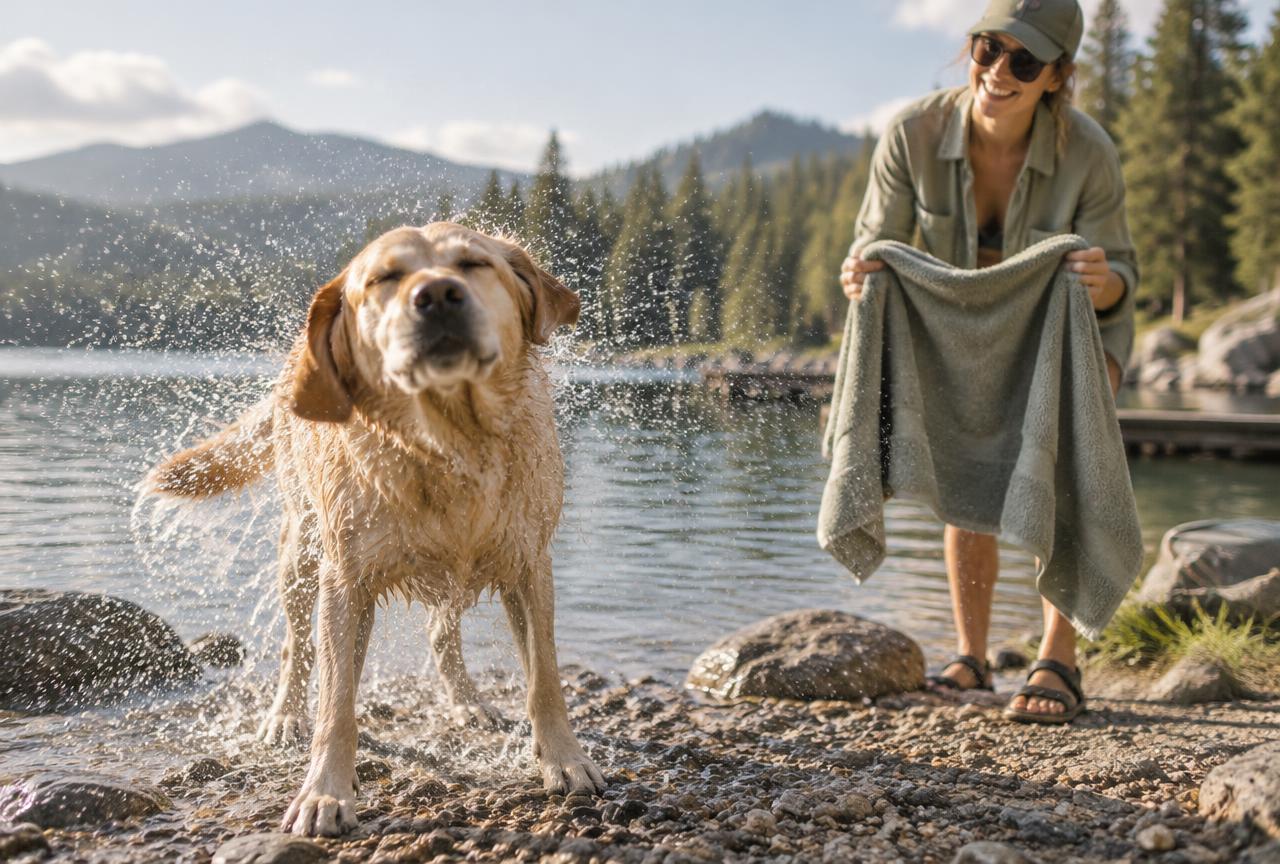
Add regular brushing to catch mats and seeds early, and give bored dogs more to do, and you have covered the main triggers. Hot spots are dramatic, but they are also one of the most preventable skin problems a dog can have.
Hot spot myths, checked
| Myth | What the evidence says |
|---|---|
| --- | --- |
| Hot spots are caused by heat | They are triggered by itch and licking; warm, humid weather simply helps |
| Shaving a double coat prevents them | Shaving can damage coat regrowth; regular brushing and drying work better |
| They always need antibiotics | Many small, superficial cases heal with clipping, cleaning and stopping the licking |
| A cone is cruel | A well-fitted cone or recovery suit is often the fastest route to healing |
| Once healed, the problem is solved | Recurrence is common unless the itch trigger is found and managed |
Treat every hot spot as a clue. The patch heals in a fortnight; the cause, if you find it, stays solved for years.
Questions people actually ask
What causes hot spots on dogs?
Anything that makes a dog lick, chew or scratch one spot: flea bites, allergies, a small wound, a grass seed, matted fur, or moisture trapped in a thick coat after swimming. The licking damages the skin, bacteria multiply, and the itch-pain cycle escalates fast.
Can I treat a dog hot spot at home?
A small, fresh hot spot (smaller than a coin, no smell, no heavy oozing) can be managed at home: carefully clip the fur around it, clean gently with a vet-approved antiseptic solution, keep it dry, and fit a recovery collar so the dog cannot lick. If it is not clearly improving within 24 hours, see a vet.
How fast do hot spots spread?
Alarmingly fast. A hot spot can go from a small red patch to a large, oozing lesion within 24 hours because the dog's own licking and chewing drives the damage. This is why same-day intervention, even just a recovery collar, matters so much.
Are hot spots contagious to other dogs or humans?
No. A hot spot is not an infection you can catch; it is an inflammatory skin lesion driven by the dog's own bacteria and self-trauma. The underlying cause, such as fleas, can of course affect other pets, so treat the cause.
Why does my dog keep getting hot spots?
Recurring hot spots usually mean an unmanaged underlying cause: fleas, food or environmental allergies, a dense coat that stays damp, or boredom-driven licking. Work with your vet to find the trigger; flea control and thorough drying after swims solve many repeat cases.
Should I shave my dog's hot spot?
Clipping the fur around the lesion lets it dry and lets you clean it, which is why vets do it. At home, use blunt-nosed scissors or clippers very carefully, as the skin is painful and easy to nick. If the dog resists or the area is large, let the vet do it.
How fast do hot spots spread on dogs?
Very quickly. A hot spot can appear and double in size within 24 hours, because licking and scratching keep damaging the skin. The matted fur over the top often hides the true size. If a patch is larger than a large coin, spreading, or your dog will not let you touch it, call your vet the same day.
Can I put human cream on my dog's hot spot?
It is best not to. Many human creams, antiseptics and essential oils sting, slow healing or are harmful if licked, and steroid creams can mask infection. Clip and gently clean the area with water or a vet-recommended antiseptic, stop the licking with a cone, and ask your vet before applying anything else.
Sources
- Hot spots on dogs, PDSA
- Acute moist dermatitis, VCA Animal Hospitals
- Pyotraumatic dermatitis, MSD Veterinary Manual
- Skin problems in dogs, Blue Cross
- Pyotraumatic dermatitis, MSD Veterinary Manual
- Fleas on dogs, RSPCA
Breeds mentioned

Golden Retriever
A gentle, biddable gundog famed for its patience with children and its glossy golden coat.

Labrador Retriever
Britain's most popular family dog: biddable, food driven and built for an active household.

German Shepherd
A loyal, capable working dog that needs a job to do and an owner ready to provide one.
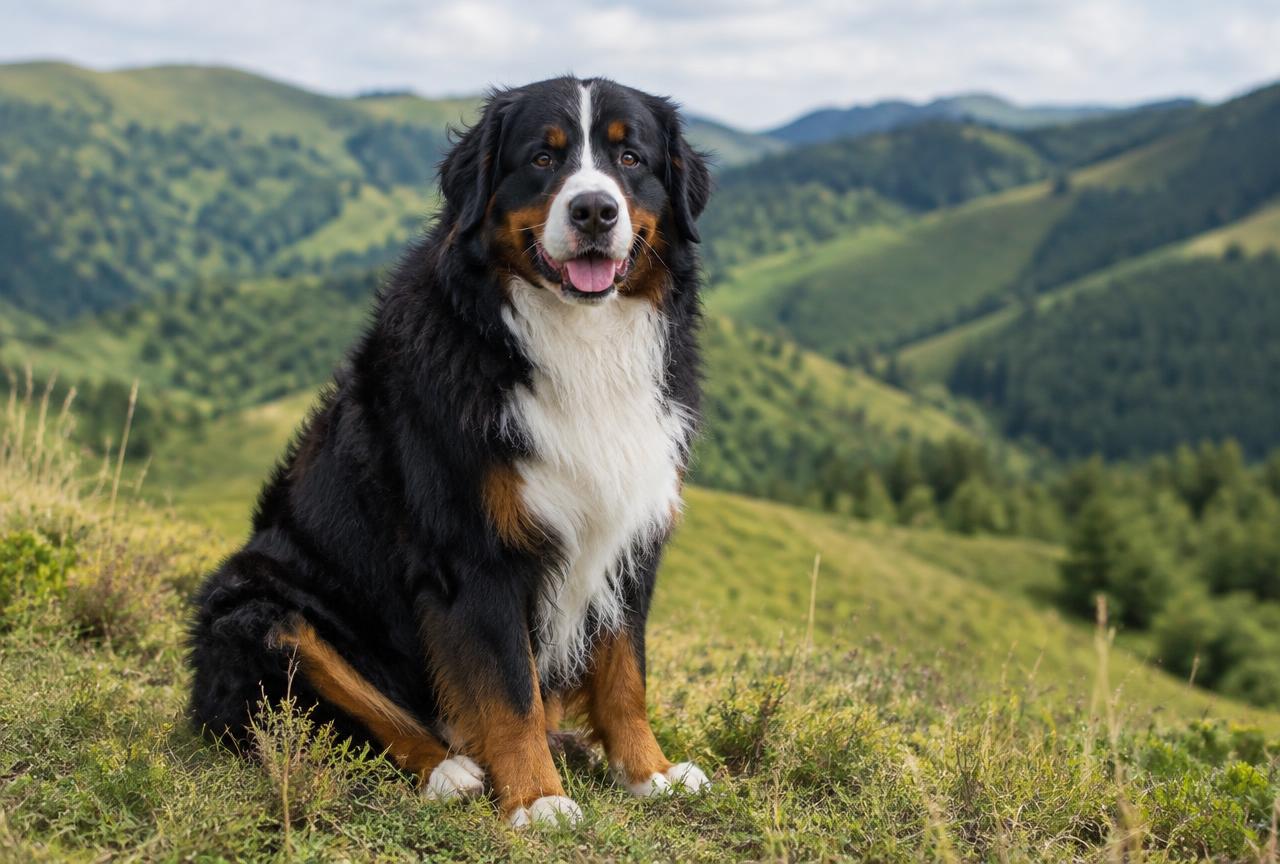
Bernese Mountain Dog
A striking tricolour giant from the Swiss Alps, devoted to family but burdened with a shortened lifespan.
Put it into practice
Read next
Dog Dry Heaving: Causes and When It Is an Emergency
Dog dry heaving is usually throat irritation or mild nausea, but repeated unproductive retching with a swollen, tight belly can be bloat (GDV), a life-threatening emergency.


