
Why Do Dogs Hump? Causes and How to Stop It
Mounting is normal dog behaviour, even if it is mortifying when a guest is the target. Most humping is excitement, play or stress, and calm redirection works far better than scolding.
The SniffScroll desk
Published 10 October 2026
Dr Emily Carter, BVSc MRCVS
The short version
- Humping is normal dog behaviour in both sexes and is rarely about dominance.
- Excitement, play, stress and attention-seeking are the most common causes.
- Neutering reduces hormone-driven mounting but rarely stops a learned or excitement habit alone.
- Interrupt calmly, redirect to a toy or a sit, and reward the calm choice; avoid scolding.
- Sudden or frequent humping with licking, straining or discomfort deserves a vet check.
Dog humping is normal behaviour, and it is rarely about dominance. Most mounting is driven by excitement, play, stress or a habit that has been rewarded with attention. Male and female dogs, neutered or not, all do it. The fix is almost never punishment: it is calm interruption, redirection and less over-arousal.
Why do dogs hump?
Dogs hump mainly because they are excited, playing, stressed or seeking attention; sexual motivation is only one cause, and in neutered dogs it is often not the main one.
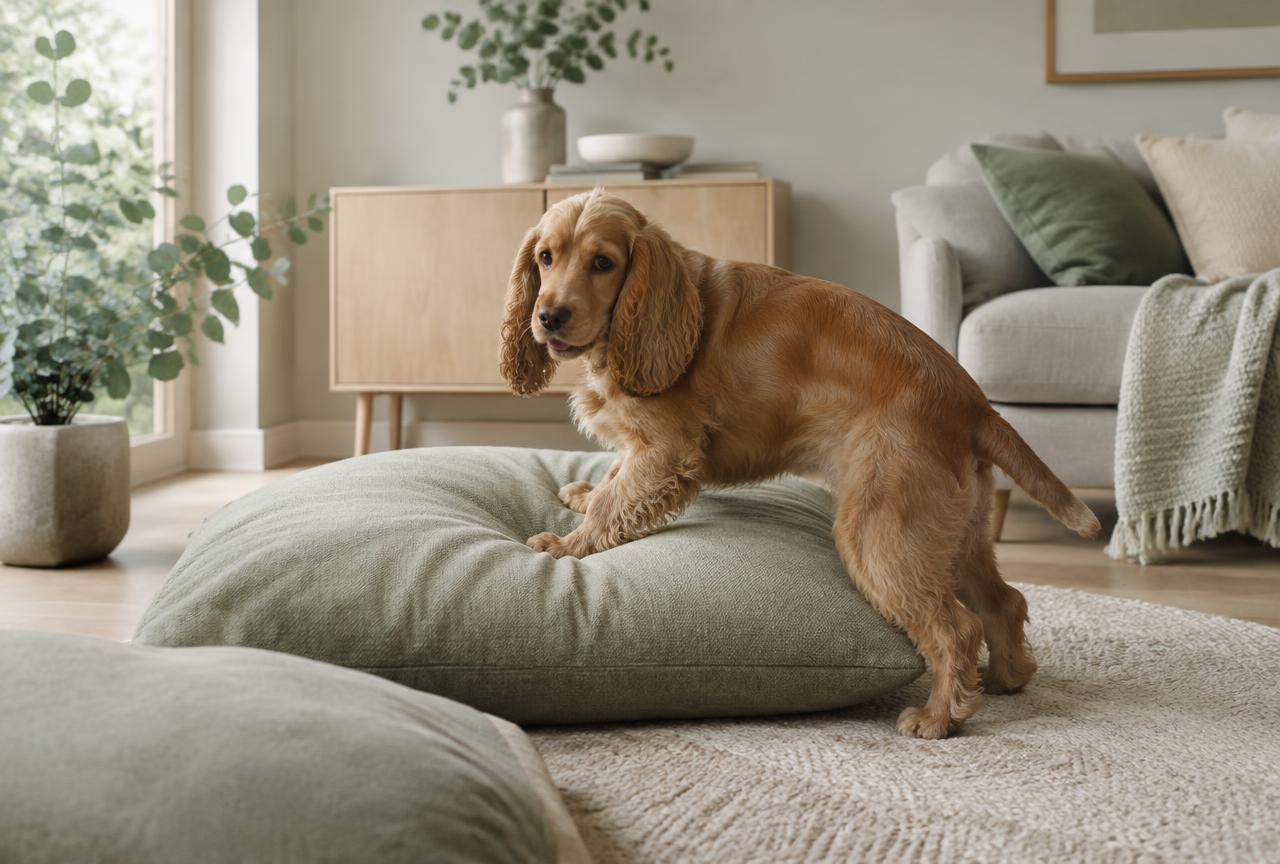
Mounting starts early: puppies mount littermates, toys and cushions weeks before they reach sexual maturity. It is part of how young dogs play and explore. As dogs grow, the behaviour tends to attach itself to particular emotional states.
| Cause | What it looks like | Typical trigger |
|---|---|---|
| --- | --- | --- |
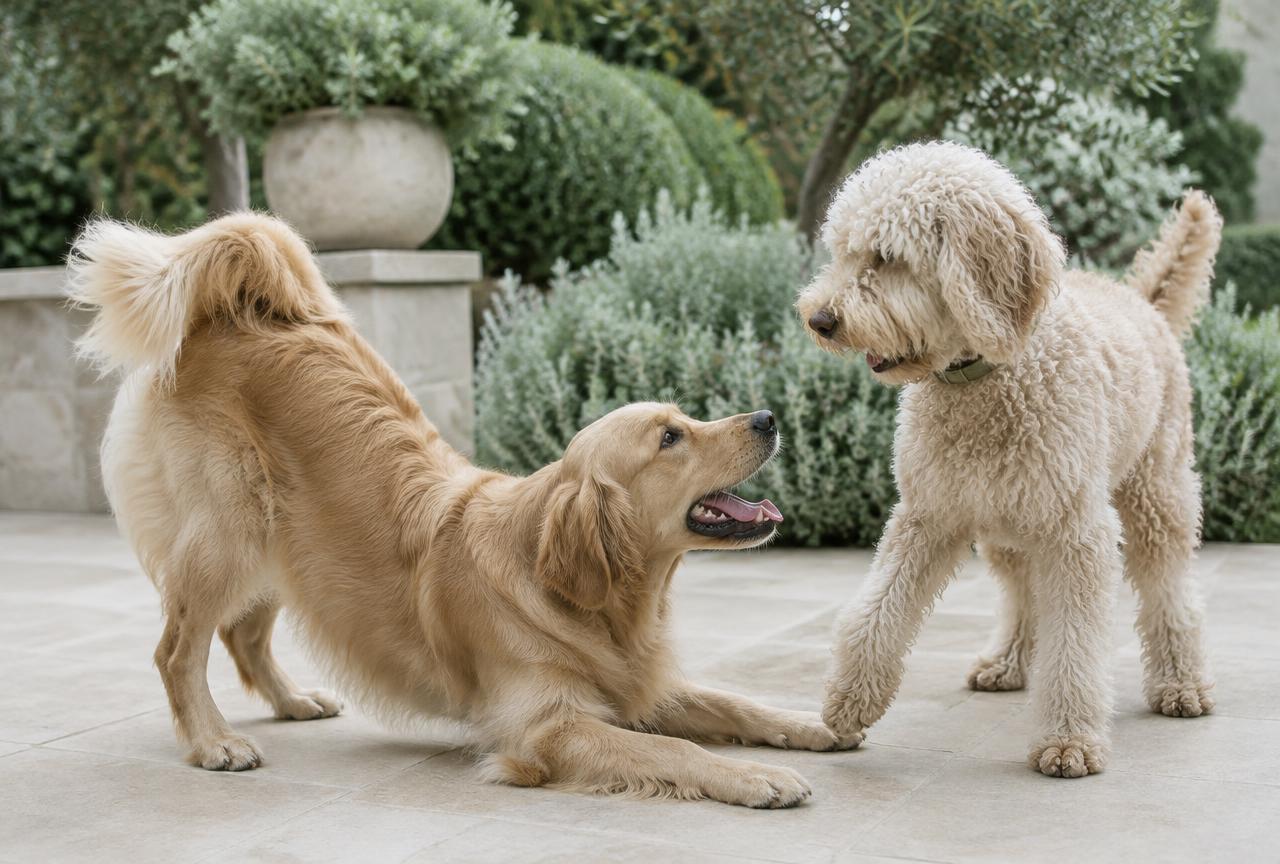
| Play and excitement | Mounting mid-game, often with play bows | Zoomies, wrestling, new playmates |
| Over-arousal | Mounting when guests or new dogs arrive | Doorbells, greetings, busy parks |
| Stress | Mounting in uncertain situations | New places, conflict, change |
| Attention-seeking | Mounting people, especially when ignored | A big reaction from humans |
| Sexual | Mounting with interest in females in season | Hormones, entire males |
| Medical | Sudden, frequent mounting plus licking or straining | Urinary, skin or prostate problems |
Is humping about dominance?
Almost never: behaviour scientists have moved away from explaining mounting as a dominance display, and treating it that way often makes things worse.
The old idea was that a dog mounting another dog, or a person, was asserting rank. Modern research on dog social behaviour shows a messier picture: mounting happens between dogs of every status, in play and in tension, and it tracks arousal far better than hierarchy. Treating it as a power struggle encourages confrontation, which raises the dog's stress, which can produce more mounting.
Why does my dog hump me, or guests?
Humping people is usually over-excitement or a learned way to get attention, and guests trigger it because greetings are the most arousing moments of a dog's day.
Picture the doorbell: noise, a new person, voices, a hand on the head. For a young Labrador that is a lot of emotion with nowhere to go, and mounting is one of the outlets. Then everyone shrieks and laughs, which, to a dog, is attention, and attention is a reward. Within a few visits the habit is set.
If humping gets a reaction, it gets repeated: the calmest response is usually the most effective one.
Does neutering stop humping?
Neutering reduces hormone-driven mounting in many males, but it rarely fixes humping driven by excitement, stress or habit on its own.
Neutering is worth discussing with your vet for health and welfare reasons, but it should not be sold as a cure for mounting. Studies of neutered dogs show mounting often persists, particularly where it has become a learned response. Behavioural work is what changes those patterns, whether or not the dog is neutered.
Female dogs hump too, for the same reasons: play, excitement, stress and habit. It is common and normal.
How to stop a dog humping: a calm plan
- 1Spot the build-up. Most humping follows predictable cues: rising excitement, a certain guest, wrestling that gets too wild. Step in before the mount, not during it.
- 2Interrupt calmly. A neutral "this way" or a light lure away is enough. No shouting, no pushing, no laughing.
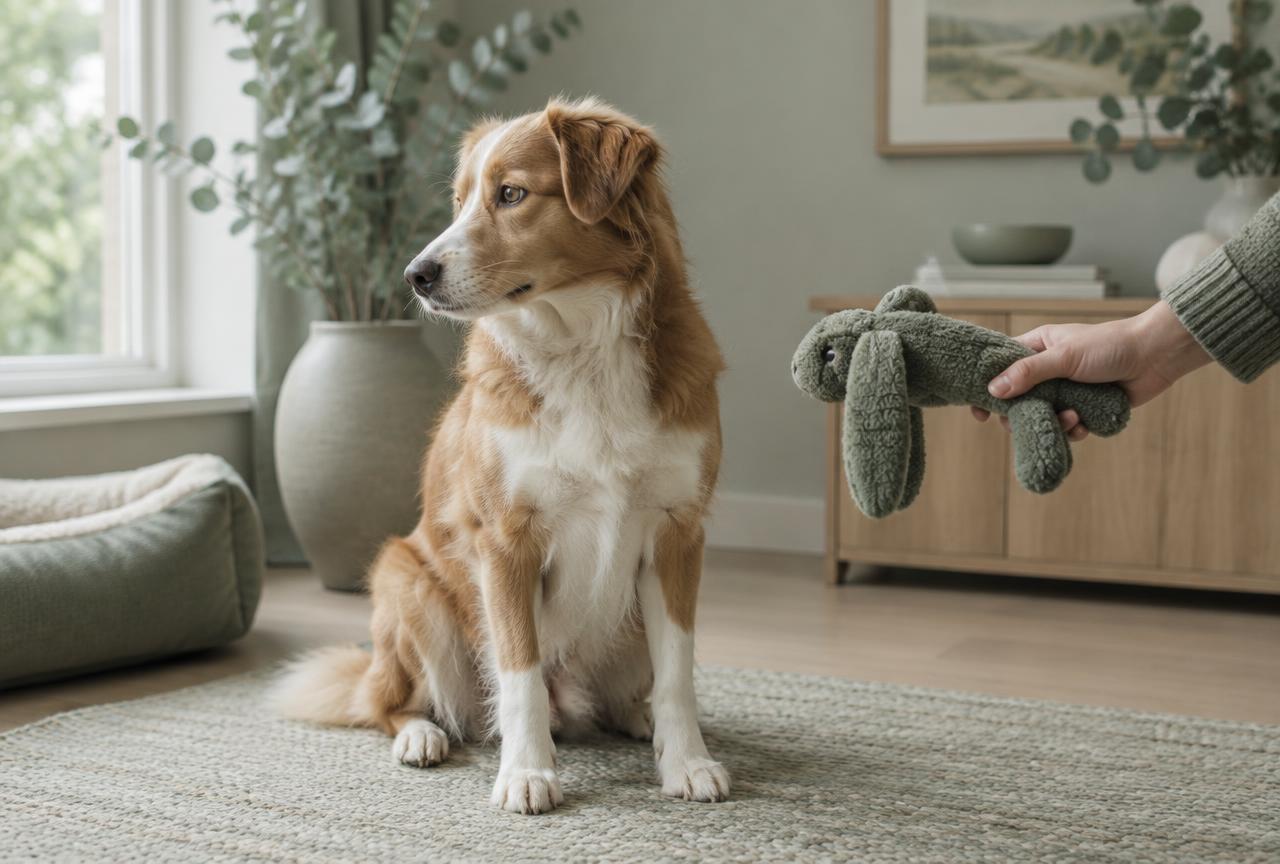
- 3Redirect. Give the dog something incompatible: a sit, a hand touch, a toy to carry, or a scatter of food to sniff.
- 4Reward the calm choice. When the dog settles, praise quietly or offer a treat.
- 5Reduce the overload. For guests, keep the dog on a lead or behind a gate for the first minutes. For play, build in short breaks.
- 6Meet the needs behind it. Bored, under-exercised dogs show more arousal behaviours. Training, sniff walks and puzzle feeders help more than any correction.
- 7Be consistent. Everyone in the house responds the same way, every time.
For dogs who mount at the park, our guide to introducing dogs covers how to read play and when to interrupt. If excitement spills over into frantic running too, see dog zoomies.
When humping is stress
Some dogs mount when they are unsettled rather than happy, and in those dogs the fix is reducing the stress, not the mounting.
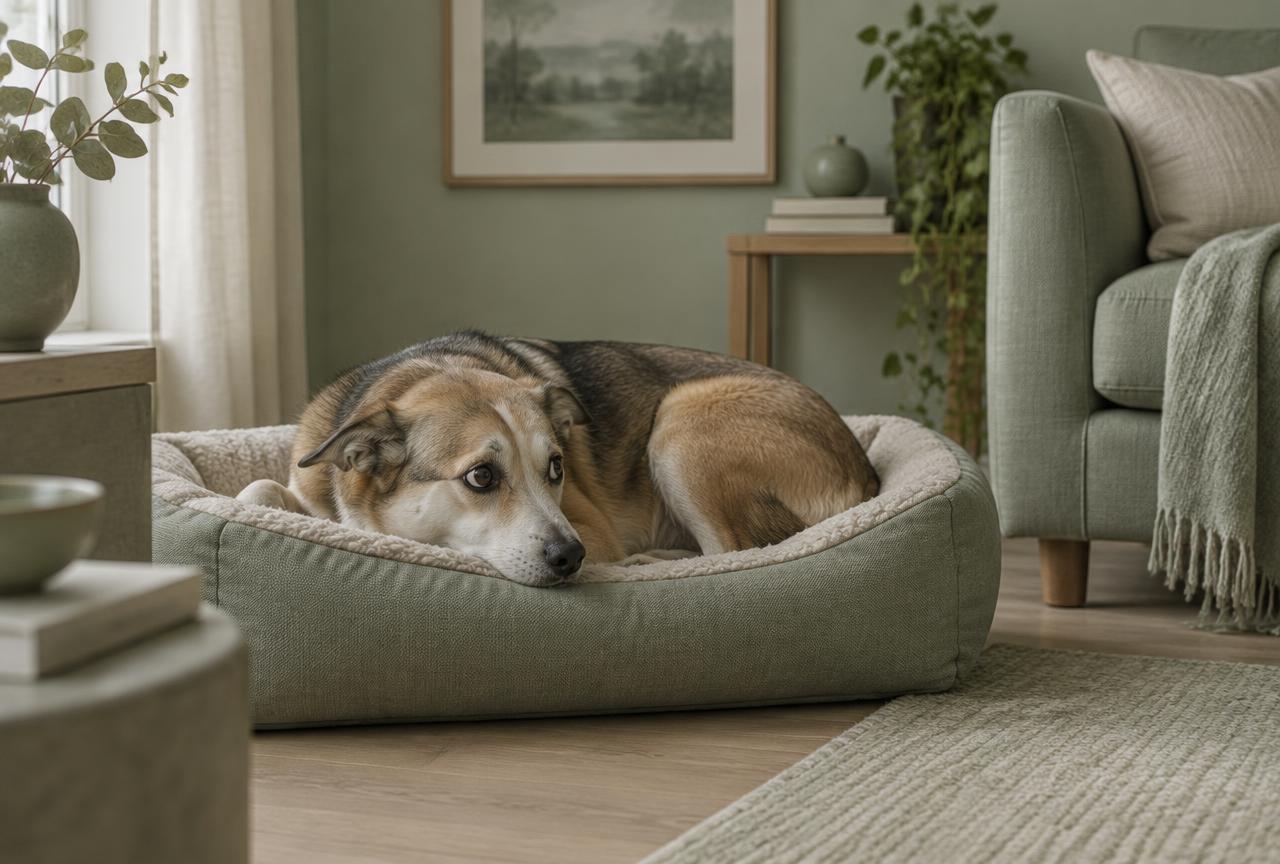
Look at the whole dog: lip licking, yawning, a tucked tail, whale eye or pacing alongside mounting suggest anxiety. Changes at home, a new baby, a move or conflict with another pet can all show up this way. A qualified behaviourist can help if the stress is persistent, and breeds with high sensitivity, such as the Border Collie, often benefit from extra quiet time and predictable routines.
Interactive tool
Humping decoder
Context, frequency and age in, likely cause and first steps out.
Your plan
- The likely driver here is excitement and play, the most common cause by far. Mounting is normal dog behaviour and is usually not about dominance.
- In adults, neutering reduces hormone-driven mounting but rarely fixes a learned or excitement-driven habit on its own.
- Occasional mounting needs a calm interrupt and redirect, not scolding: attention of any kind can reward it.
- See the vet if it is sudden and frequent in an older dog, or comes with licking, straining or discomfort: skin, urinary and prostate problems can all trigger it.
Normal behaviour, manageable
Mounting is normal canine behaviour. Calm, consistent redirection beats embarrassment and punishment every time.
When to see a vet
See your vet if humping starts suddenly, is very frequent, or comes with licking the genital area, scooting, straining, peeing more often, blood in the urine or signs of discomfort. Urinary infections, skin allergies, anal gland problems and, in males, prostate conditions can all trigger mounting. An older dog who begins humping out of character also deserves a check.
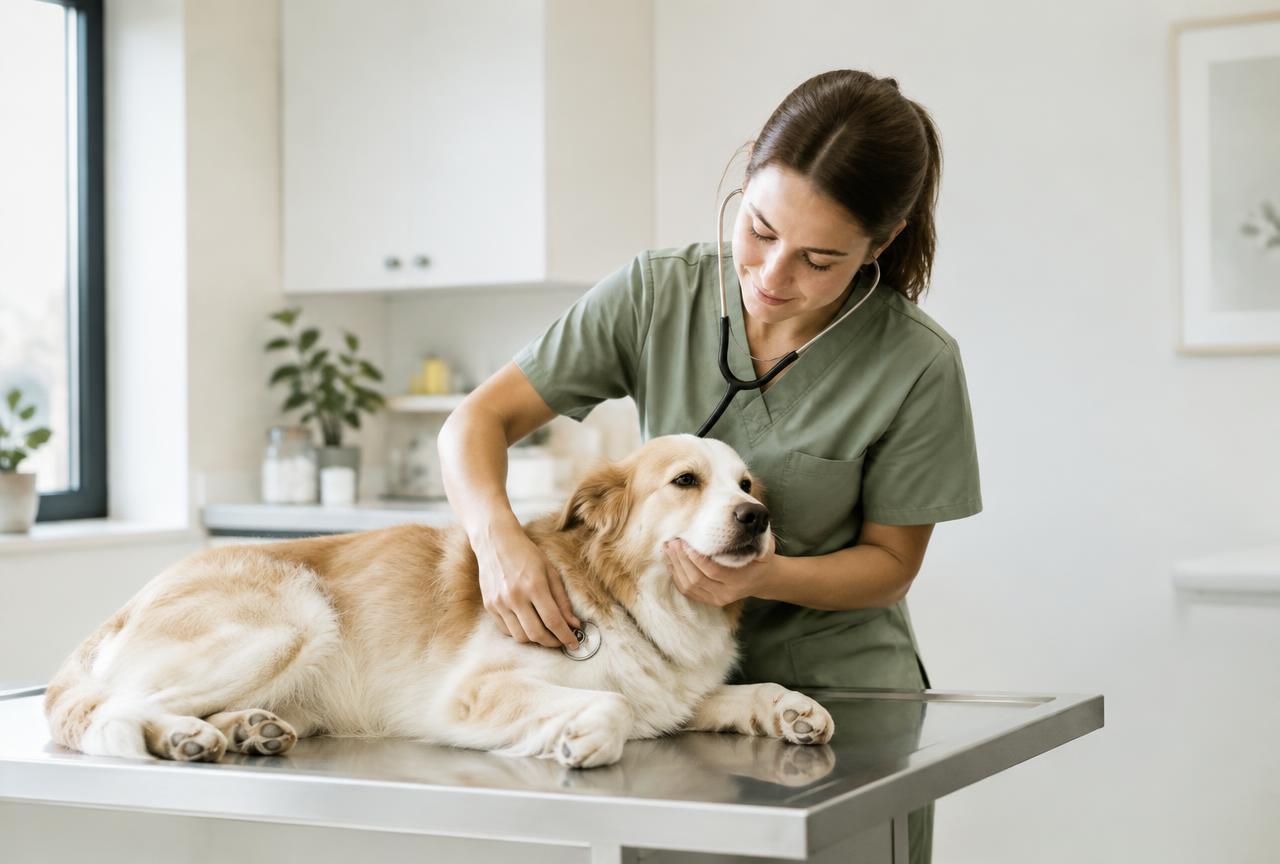
Humping at the dog park
Mounting between dogs at the park is common, and the right response is early, calm interruption before either dog gets frustrated.
Watch the play, not just the mount. In good play, dogs take turns, pause often, and both keep coming back for more. Mounting tends to appear when play tips into over-arousal: the game gets faster, the pauses disappear, and one dog starts doing too much. That is your cue. Call your dog away cheerfully, give them thirty seconds to settle, and let them return if both dogs still want to play.
If your dog is the one being mounted and looks uncomfortable, stepping in is kind, not precious. Many fights at dog parks start with one dog tolerating mounting until they do not. And if another owner's dog persistently mounts yours, a friendly "mine's had enough, we're taking a break" is usually better received than a lecture.
Dogs who mount at the park are often dogs who find groups overwhelming rather than dominant. Smaller playgroups, calmer playmates and shorter visits usually reduce it more than any correction. Our guide to socialising a puppy covers building calm play skills early.
Humping, adolescence and the teenage months
If humping appears or explodes between six and eighteen months, you are likely looking at adolescence: a normal, temporary surge of arousal and poor impulse control.
Adolescent dogs are a handful in general, and mounting is one of the ways it shows. Hormones are part of the picture, but so is a brain that is genuinely under construction: the parts responsible for self-control mature late. The teenager who humps every cushion, every visitor and every other dog is not being bad; they are broadcasting excitement with no filter.
The approach is the same as for any adolescent behaviour: manage the environment so the behaviour is practised less, redirect calmly every time, reward calm heavily, and keep training through the phase rather than waiting for it to pass. Most adolescent humping fades substantially by adulthood, especially in dogs whose humans stayed consistent. If your adolescent is also barking at everything or bouncing off the walls with the zoomies, the same advice applies: more sleep, more sniffing, calmer greetings, fewer opportunities to rehearse the chaos.
What not to do
The responses that feel natural, laughing, shouting, dragging the dog off by the collar, are the ones most likely to keep the behaviour going.
Laughing and shouting are attention, and attention rewards the behaviour. Physical corrections add stress, and stress is a cause of mounting. Alpha-roll style dominance responses are worse: they damage trust, raise anxiety, and address a cause that was probably never there. The dull, consistent alternative works better: interrupt, redirect, reward calm, manage the triggers, and give the behaviour nothing to feed on. It is less dramatic and it actually works.
Humping objects: cushions, toys and beds
Mounting cushions, soft toys and beds is usually self-soothing or leftover arousal, and it is the easiest kind of humping to live with.
A dog who humps a cushion in the evening is often just discharging the day's excitement, in the same family of behaviours as the zoomies. If it is occasional and the dog can be interrupted easily, you can simply let it be: it harms no one. If it is constant, treat it like any rehearsed habit. Pick up the cushion when you cannot supervise, redirect to a chew or a sniff game when it starts, and look at whether the dog's day contains enough exercise, training and calm. A dog with a full, balanced day rarely needs to hump the furniture.
One practical note: if the mounting is directed at a favourite soft toy and the dog becomes possessive or growly when you approach, do not reach in. Trade with a treat scattered away from the toy, and if resource guarding is a pattern, a qualified behaviourist is worth the call.
Getting help that actually helps
If humping is frequent, escalating or tangled up with other behaviour, the right professional is a qualified, reward-based behaviourist, and your vet is the route to one.
Start with the vet, because the medical causes, urinary infections, skin irritation, prostate problems, are quick to rule in or out. If the dog is physically well, ask for a referral to a behaviourist who uses reward-based methods. In the UK, bodies such as the ABTC register properly accredited professionals; elsewhere, your vet will know who is reputable locally.
Be wary of anyone who talks about showing the dog who is boss. The science has moved on, and dominance-based handling of a behaviour that is mostly about arousal and stress tends to make the underlying emotion worse. The good news is that humping responds well to patient, boring consistency: interrupt, redirect, reward calm, manage the triggers, and most dogs improve within weeks. It is not the most dignified problem in dog ownership, but it is one of the more fixable ones.
Living with it while you work on it
Behaviour change takes weeks, and in the meantime a few management habits keep life calm. Give guests a treat to offer so greetings have a job attached. Keep a toy by the door for dogs who mount from greeting excitement. Build a settle, on a mat, with a chew, into the evening routine so arousal has somewhere to go. And protect the dog's rehearsal opportunities: every unchallenged mounting session practises the habit. None of this is glamorous, and none of it requires force. It is the same patient pattern as every other behaviour fix on this site: manage, redirect, reward the alternative, repeat. Dogs who were mortifying at Christmas are usually unremarkable by spring.
The bottom line
Humping is normal, common and usually about emotion rather than status. Watch for the build-up, interrupt calmly, redirect, reward the calm alternative and meet your dog's need for exercise and enrichment. If it is sudden, frequent or comes with physical signs, let your vet rule out a medical cause.
Questions people actually ask
Why does my dog hump me?
Usually excitement, a bid for attention or a reaction to stress. If humping you reliably gets a big reaction, even a negative one, it can become a learned way to get attention. Calmly stand up, step away, and redirect to a toy or a sit.
Is dog humping a sign of dominance?
Rarely. Modern behaviour science has largely moved away from dominance explanations. Mounting is better understood as arousal, play, stress or habit.
Why does my neutered dog still hump?
Neutering removes most hormone-driven mounting, but humping linked to excitement, play or habit often continues. Behavioural redirection is what changes those patterns.
Why do female dogs hump?
For the same reasons males do: play, excitement, stress and habit. Female humping is common and normal, and only needs a vet check if it is sudden, frequent or accompanied by licking or urinary signs.
Should I stop my dog humping other dogs?
Yes, gently. Many dogs object to being mounted and it can start a scuffle. Interrupt early, call your dog away, and give them a break to settle before returning to play.
When is humping a medical problem?
If it appears suddenly, happens very often, or comes with licking the genital area, straining, more frequent urination or discomfort, see your vet. Urinary infections, skin irritation and prostate problems can all trigger mounting.
Sources
Breeds mentioned

Labrador Retriever
Britain's most popular family dog: biddable, food driven and built for an active household.

French Bulldog
A comic, affectionate companion built for city life, but with health needs that demand a careful breeder.

Border Collie
The world's most capable herding mind, needing an equally capable owner to match it.
Put it into practice
Read next
Why Do Dogs Roll in Poop? The Instinct Explained
Why dogs roll in the worst smells they can find, what the behaviour is really about, and how to prevent it or at least clean up well afterwards.


