
Can Dogs Eat Tomatoes? Ripe, Green and the Plant
The tomato is two foods in one: the ripe red flesh is a safe occasional treat, while the green fruit and the plant contain solanine and tomatine, which are harmful. Knowing which is which is the whole skill.
The SniffScroll desk
Reviewed by Dr Emily Carter, BVSc MRCVS
Published 10 October 2026
Dr Emily Carter, BVSc MRCVS
The short version
- Ripe red tomato flesh is safe for dogs in small
- occasional portions.
- Green tomatoes and the leaves
- stems and flowers of the plant contain solanine and tomatine: keep them away from dogs.
- Tomato sauces
- soups and ketchup usually contain onion or garlic
- which are toxic to dogs.
- Cut tomatoes into pieces sized for your dog; whole cherry tomatoes are a choking risk for small breeds.
- If your dog eats green tomatoes or any part of the plant
- phone the vet and watch for vomiting
- weakness or confusion.
Yes, dogs can eat tomatoes, with one crucial condition: only the ripe red flesh. Green, unripe tomatoes and the tomato plant itself contain solanine and tomatine, natural compounds that are harmful to dogs. The colour of the fruit is the safety rule.
Ripe versus green: the rule that matters
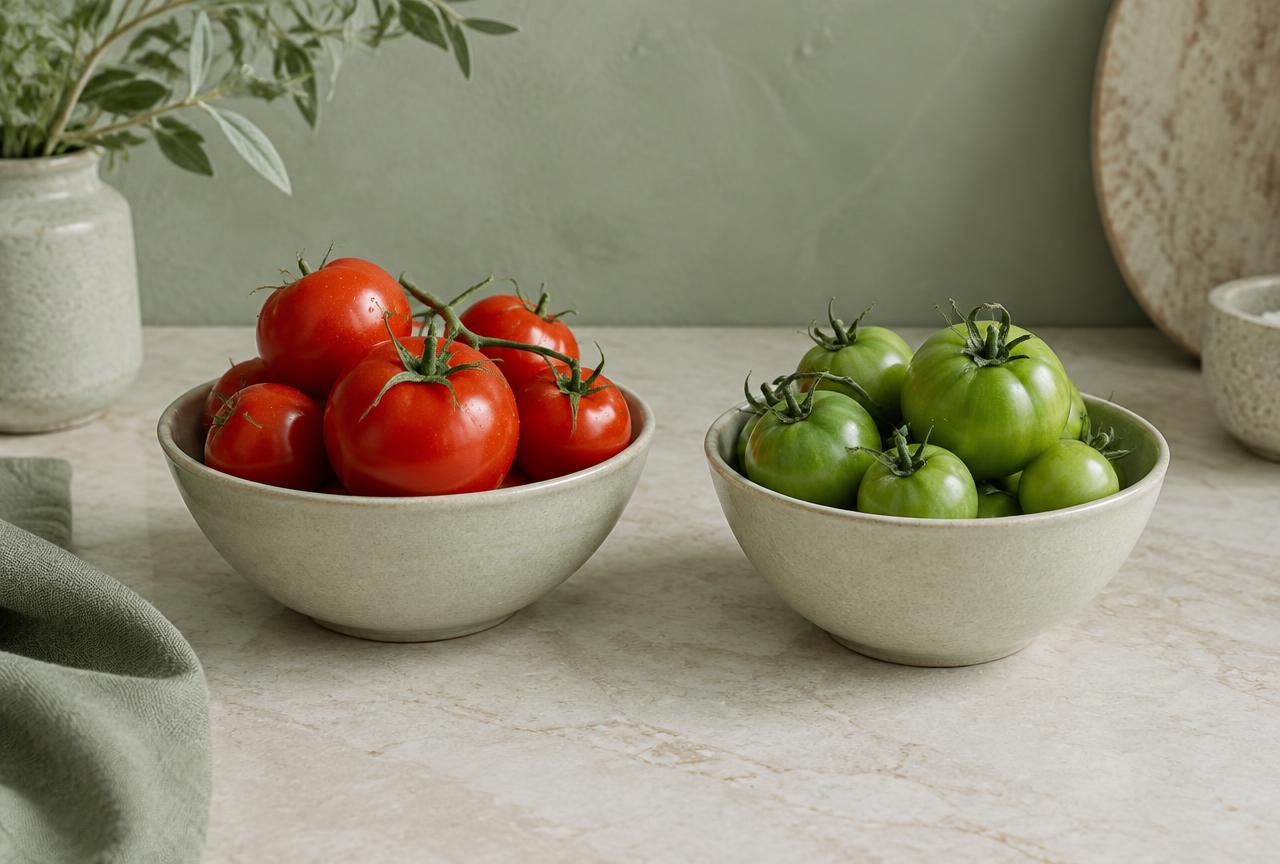
A fully ripe, red tomato has only trace amounts of tomatine left and is safe for dogs; green tomatoes and all parts of the plant contain enough to cause poisoning.
Tomatoes belong to the nightshade family, and the plant defends itself with tomatine, concentrated in the leaves, stems, flowers and unripe fruit. As the fruit ripens, the tomatine largely breaks down, which is why a red tomato and a green one are effectively two different foods for a dog.
| Part | Safe for dogs? | Why |
|---|---|---|
| --- | --- | --- |
| Ripe red flesh | Yes, in small amounts | Tomatine largely broken down |
| Green or unripe tomato | No | Contains solanine and tomatine |
| Leaves, stems, flowers | No | Highest tomatine concentration |
| Tomato sauce, ketchup, soup | No | Onion, garlic, salt, sugar |
| Sun-dried tomatoes | Avoid | Concentrated, often salted or in oil |
The garden problem
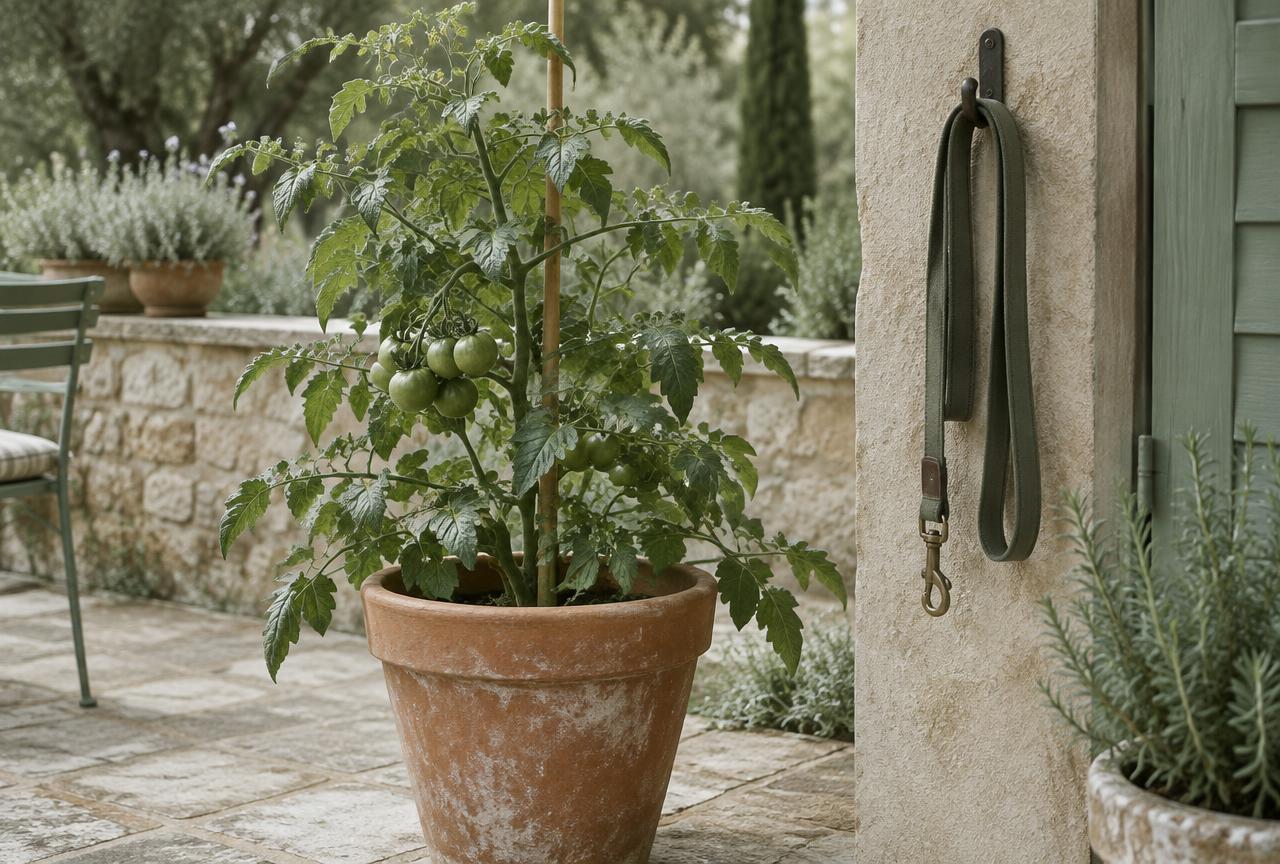
Tomato plants are the real risk for most dogs, because the leaves and stems are the most toxic part and gardens put them at nose height.
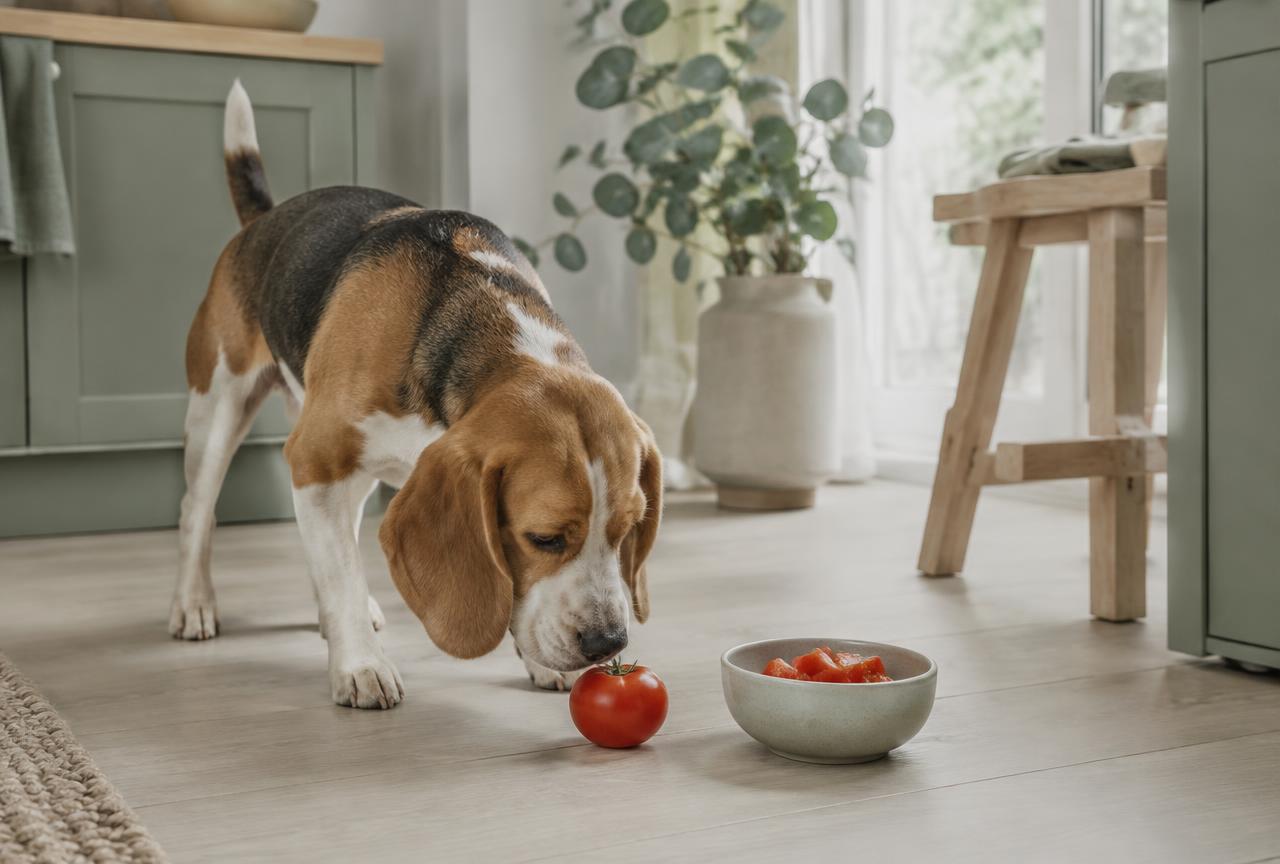
If you grow tomatoes and your dog grazes, fence the plants off or grow them in raised beds or pots out of reach. A Beagle patrolling a vegetable patch will sample everything once, and the green fruit drops before it ripens, so tidy up windfalls promptly.
Signs of tomatine poisoning include vomiting, diarrhoea, drooling, weakness, a slow heart rate, confusion and, in severe cases, tremors. If your dog has chewed a plant or eaten green tomatoes, phone the vet with roughly how much was eaten and when.
How to serve ripe tomato safely
Wash the tomato, remove the stem and any green shoulders, and cut the flesh into pieces matched to your dog's size.
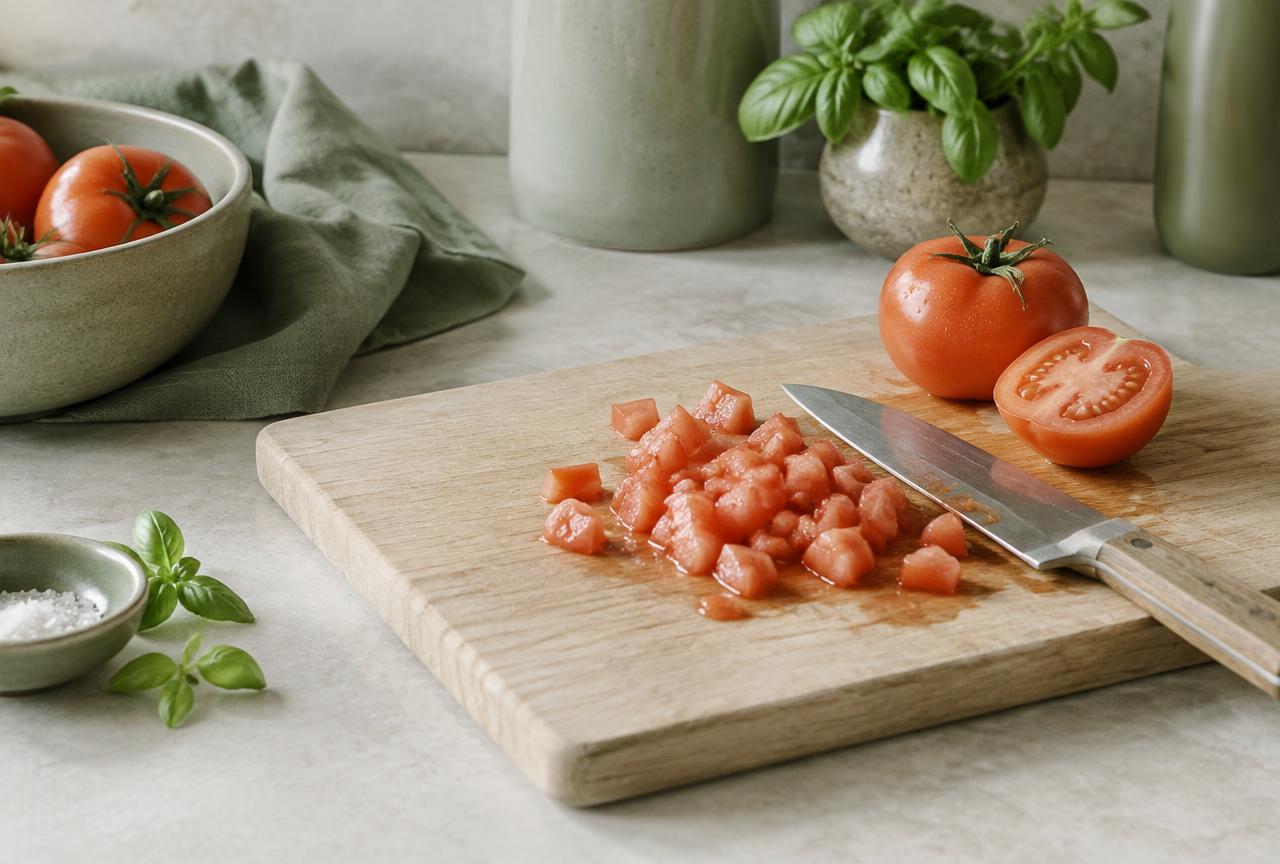
Cherry tomatoes are the choking trap: perfectly round and exactly throat-sized for a small dog. Halve or quarter them. For a French Bulldog or similar, a few small pieces of ripe tomato is a serving; a whole tomato is too much acid and fibre in one go.
Keep tomato within the 10% treat rule. It is mostly water and low in calories, but the acidity can irritate a sensitive stomach, so introduce it slowly and watch the stools the next day. Our portion calculator shows how much treat room your dog's day actually has.
With tomatoes, the traffic light is literal: red is fine in small pieces, green means stop.
Tomato products are a different food
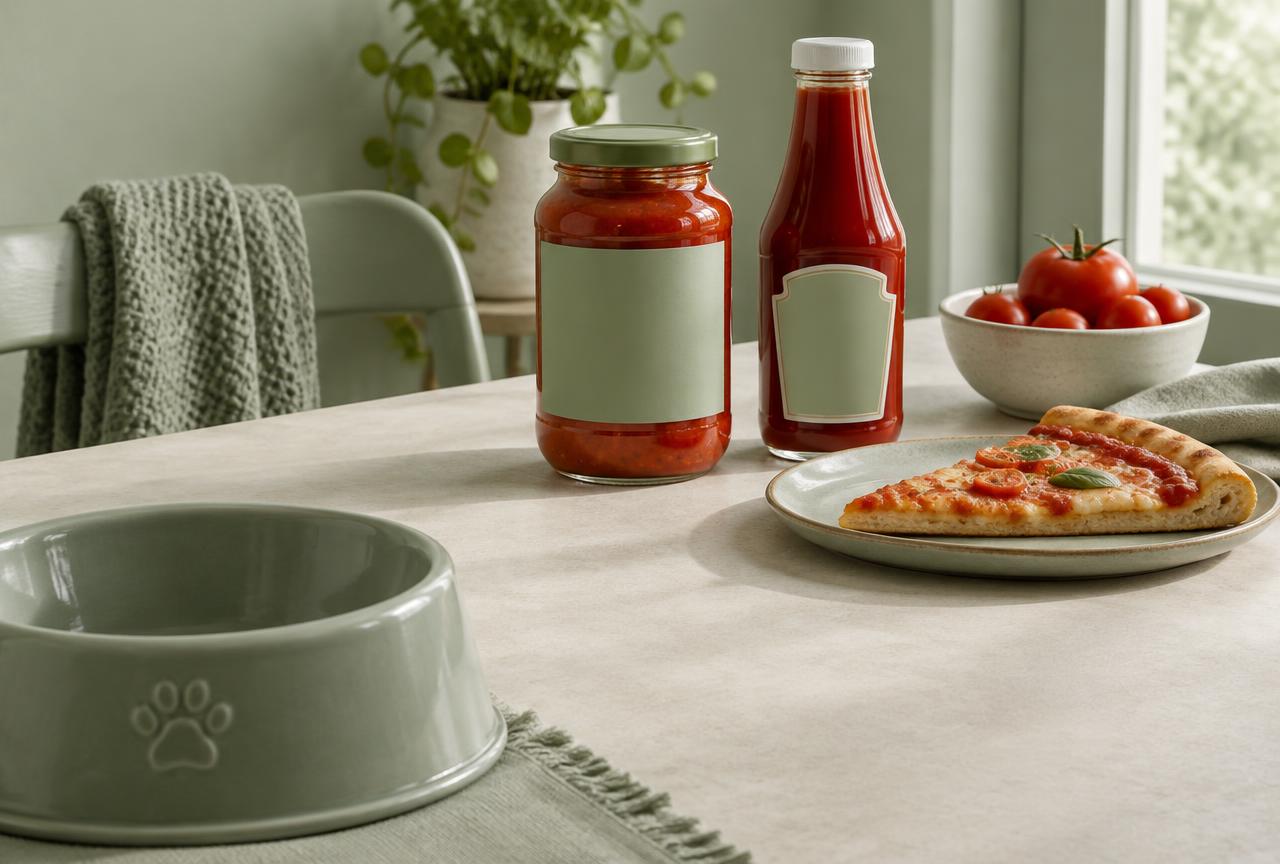
Sauces, soups, ketchup and pizza toppings are not tomato as far as your dog is concerned: they are onion, garlic, salt and sugar with tomato in them.
Onion and garlic are toxic to dogs, and they appear in almost every savoury tomato product. Even a plain-looking pasta sauce usually contains both. If your dog licks a plate, do not panic, but do not make a habit of sharing, and if a dog eats a meaningful amount of anything containing onion or garlic, phone the vet. Our guide to foods dogs must never eat covers the toxic list in full.
A simple tomato plan
- 1Check the colour: fully red and ripe only.
- 2Wash, remove the stem and trim any green parts.
- 3Cut into pieces sized for your dog; halve cherry tomatoes.
- 4Offer a few pieces the first time and watch the stools the next day.
- 5Keep it occasional, within the 10% treat allowance, alongside safer staples like cucumber and carrots.
- 6In the garden, fence the plants and clear fallen green fruit.
Interactive tool
Tomato safety checker
Ripeness, plant part and amount in, safe versus call the vet out.
Your plan
- Ripe red tomato flesh is safe for dogs. Wash it, remove the stem and any green parts, and cut it into pieces sized for your dog.
- A few small pieces of ripe tomato, within the day's 10% treat allowance, is a fine occasional treat.
- Introduce it slowly the first time and check the stools the next day.
- Cherry tomatoes should be halved or quartered for small dogs: the round shape is a choking hazard.
Safe in small amounts
With tomatoes, ripeness is everything: ripe red flesh is a safe occasional treat, green fruit and the plant are not.
When to see a vet
Phone the vet promptly if your dog eats green tomatoes or any part of the plant, or a product containing onion or garlic, and go straight in if you see vomiting, diarrhoea, drooling, weakness, a slow heart rate, confusion or tremors. A few pieces of ripe tomato need no action at all.
Tomatoes for puppies and seniors
Puppies and senior dogs follow the same rule as adults: ripe red flesh only, in small pieces, and even more cautiously.
A weaned puppy can try a small piece of ripe tomato, but there is no nutritional reason to rush it, and a puppy's stomach is easier to upset than an adult's. Introduce one piece, watch the stools for a day, and keep it an occasional thing. Senior dogs often have more sensitive digestion and sometimes kidney or heart conditions where extra acid or salt is unwelcome, so ripe tomato stays occasional for them too, and sauce stays off the menu entirely.
Common myths about dogs and tomatoes
"All tomatoes are toxic to dogs." Not true. The ripe red fruit is safe; it is the green fruit and the plant that carry the tomatine. The confusion is understandable, because the plant and the fruit share a name.
"A little sauce is fine because it is mostly tomato." The tomato is not the problem in sauce. Onion and garlic are, and they are toxic in forms that include cooked, powdered and dried. "Mostly tomato" is not a defence.
"Cooking green tomatoes makes them safe." Cooking does not reliably remove tomatine, so green tomatoes stay off the menu however they are prepared.
"Dogs know what is good for them." Dogs are opportunists with excellent noses and no judgement. A dog will happily eat the green tomato, the plant and the ketchup bottle if given the chance.
If your dog eats a green tomato
One green cherry tomato is unlikely to poison a large dog, but it is worth a phone call rather than a guess, because the dose depends on the dog's size and how much was eaten.
Note what was eaten, roughly how much and when. Phone the vet or a poison line with those details. Watch for vomiting, diarrhoea, drooling, weakness, a slow heart rate or confusion over the following hours, and go straight in if any appear. Do not try to make your dog vomit at home. Most single-green-tomato incidents end with advice to monitor, but that advice is the vet's to give, not yours to assume.
How tomatoes compare with other salad vegetables
If you are building a rotation of safe vegetables, ripe tomato sits in the middle: safe but acidic, and with a toxic plant behind it. Cucumber is the easiest yes in the fridge, carrots are the crunch that doubles as a chew, and ripe tomato is the occasional one that needs the colour check. Variety is genuinely useful for dogs who enjoy vegetables, because it spreads the nutrients and keeps the treat interesting, but every new item gets the same introduction: a small piece, a day of watching, then a place in the rotation.
Tomato by life stage and breed
The ripe-tomato rule is universal, but a few practical notes help by dog. Brachycephalic breeds such as the French Bulldog are gulpers by design, so their pieces go smaller and their servings get supervised. Scent hounds such as the Beagle are the dogs most likely to raid the vegetable patch, so the garden fence matters more than the kitchen rules. Giant breeds can manage a larger serving, but the acidity argues for keeping even their portions modest. And for any dog with a history of stomach sensitivity, tomato is one of the later vegetables to introduce, after the gentler options have proved themselves.
Serving ideas that work
Ripe tomato is best served plain and simple, but a few small variations keep it interesting.
- Chopped into dinner: a spoonful of diced ripe tomato over the evening meal adds moisture and interest for a dog who eats the same food daily.
- Frozen pieces in summer: small frozen cubes of ripe tomato are a cooling treat on a hot day, sized so they cannot be swallowed whole.
- Mixed into a rotation: alternate tomato days with cucumber and carrot days, so no single treat dominates and the diet stays varied.
What never works is seasoning: no salt, no oil, no herbs from the allium family, and nothing from a jar. The moment tomato becomes an ingredient rather than a vegetable, it stops being a dog food.
Reading your dog afterwards
The day after a first serving tells you whether tomato suits your dog. Normal stools, normal energy, no scratching: tomato can stay in the rotation. Soft stools or gurgling: the portion was too big or tomato is not for this dog. Vomiting, hives, facial swelling or anything beyond a mild stomach grumble is not a portion problem; it is a reason to phone the vet and retire tomato from the list. Most dogs tolerate ripe tomato well, but the individual dog is always the final authority, and the only way to learn is the small, watched first serving this article keeps recommending.
A note on growing your own
Home-grown tomatoes are where dogs and tomatoes most often collide, because the gardener's dog has access to the whole plant, not just the fruit bowl. If you grow tomatoes, decide on the boundary before the season starts: a low fence, a raised bed, pots on a wall, whatever suits your garden. Clear fallen fruit daily in the weeks before ripening, when every dropped tomato is a green one. And if your dog accompanies you while you garden, keep the prunings in a trug rather than dropped on the lawn, because a pile of tomato stems is an interesting pile to a dog. The harvest is worth the small amount of management, and the red bowl on the counter is the only part the dog should ever meet.
The ten-second checklist
Before any tomato reaches the dog, run the checklist: is it fully red, is the stem off, are the green parts trimmed, is it cut to a size this dog can chew, and is today's treat budget not already spent? Five questions, ten seconds, and they turn a vague sense of "tomatoes are complicated" into a routine you never think about. The dogs who get into trouble with tomatoes are almost never the ones whose owners checked the colour; they are the ones who met the plant, the green windfall or the pasta sauce. Keep the checklist, and tomato stays what it should be: a small, safe, occasional pleasure.
The bottom line
Ripe red tomato, washed and cut small, is a safe occasional treat. Green tomatoes and the plant are not, and tomato products are off the table because of what else is in them. When in doubt, wait for red.
Questions people actually ask
Can dogs eat ripe tomatoes?
Yes. Ripe red tomato flesh is safe for most dogs in small amounts. Wash it, remove the stem and any green parts, cut it to a safe size and keep it within the day's treat allowance.
Can dogs eat green tomatoes?
No. Unripe green tomatoes contain solanine and tomatine, which are harmful to dogs. If your dog has eaten green tomatoes, phone the vet with the amount and watch for vomiting, diarrhoea, weakness or confusion.
Are tomato plants toxic to dogs?
Yes. The leaves, stems and flowers of the tomato plant contain the highest concentrations of tomatine. Keep dogs away from tomato plants in the garden, and call the vet if your dog chews one.
Can dogs eat tomato sauce or ketchup?
No. Sauces, ketchup, soups and pizza toppings usually contain onion, garlic, salt and sugar. Onion and garlic are toxic to dogs, so these products should never be shared on purpose.
Can puppies eat tomatoes?
A small piece of ripe red tomato is safe for a weaned puppy, but puppies do not need it. Introduce one small piece, watch the stools for a day, and keep it occasional.
My dog ate a cherry tomato off the plant. What should I do?
If the tomato was ripe and red, one is unlikely to cause harm: watch for an upset stomach. If it was green, or your dog chewed the leaves or stems, phone the vet for advice straight away.
Sources
Breeds mentioned

Beagle
A merry, sociable scenthound with a powerful nose and a mind of its own outdoors.

Labrador Retriever
Britain's most popular family dog: biddable, food driven and built for an active household.

French Bulldog
A comic, affectionate companion built for city life, but with health needs that demand a careful breeder.
Put it into practice
Read next
Can Dogs Eat Oatmeal? Cooked, Raw and Flavoured
Plain oatmeal cooked in water is safe for dogs in small servings and its soluble fibre can help mild diarrhoea. Avoid flavoured sachets, raw oats and porridge made with milk or sugar.


