
Dog Diarrhoea: Causes, Home Care and When to Call the Vet
Most bouts of diarrhoea in dogs clear up within a day or two with simple home care. The skill is knowing which signs turn a messy inconvenience into a reason to phone the vet.
The SniffScroll desk
Dog care editors
Published 9 October 2026
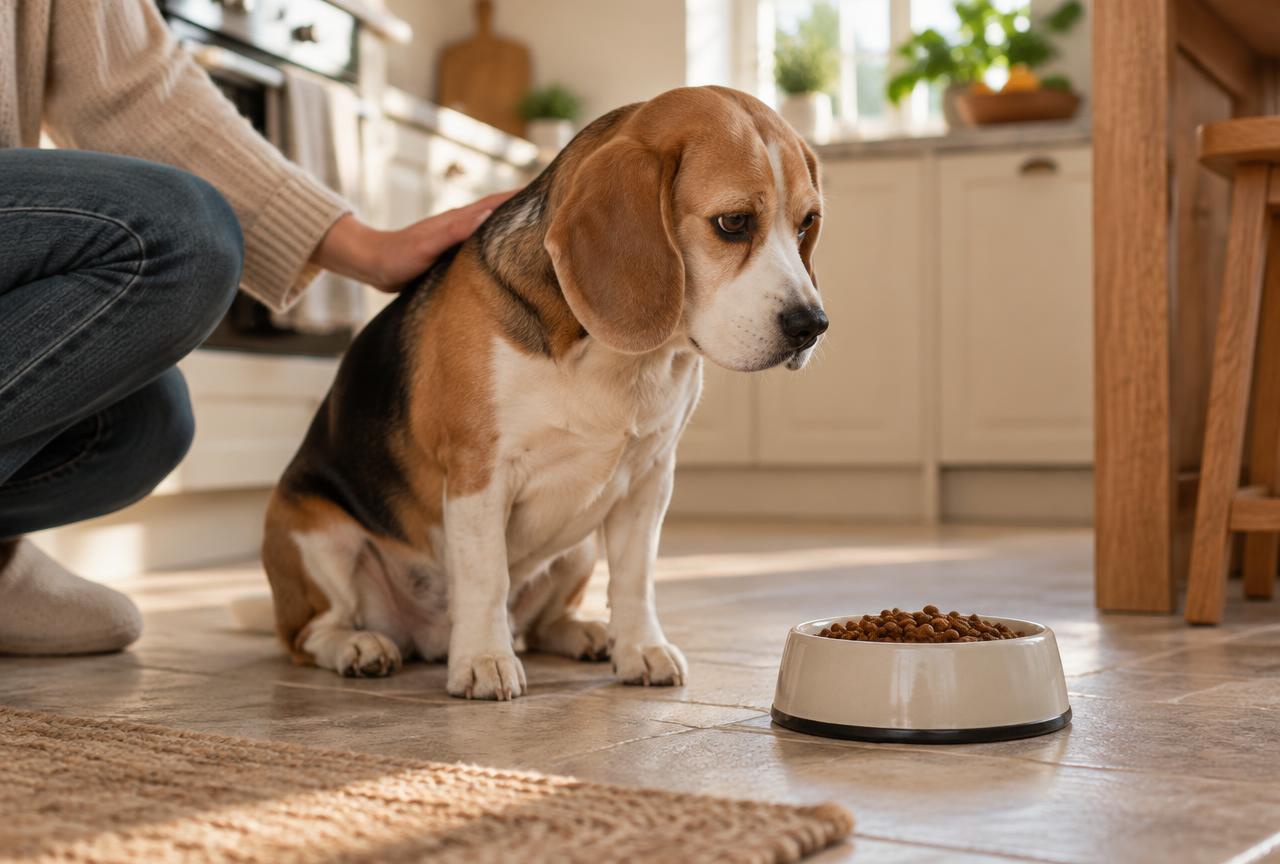
Reviewed against RVC, BSAVA and PDSA guidance
The short version
- A single episode of loose stool in a bright, eating dog is usually safe to manage at home for 24 to 48 hours.
- The classic bland diet is plain boiled chicken and white rice, fed little and often, not a fast followed by a huge meal.
- Blood in the stool, repeated vomiting, lethargy, or a puppy or senior dog with diarrhoea all justify a same-day vet call.
- Diarrhoea lasting more than 48 hours needs a vet even if the dog seems otherwise fine.
- Sudden food changes, scavenging and stress are the three most common triggers, and all three are preventable.
Dog diarrhoea is one of those problems every owner meets eventually, usually at an inconvenient hour. The good news is that the large majority of cases are mild, short-lived and caused by something the dog ate rather than anything sinister. The less good news is that diarrhoea is also a symptom of almost everything, which is why the real skill is not treating it but judging it.
This guide covers the common causes, a safe home-care plan that reflects current veterinary advice, and the specific signs that mean you should stop managing it yourself and phone the vet.
What actually causes diarrhoea in dogs
Vets group the causes into a few broad buckets, and the pattern your dog shows often hints at which bucket you are dealing with.
| Cause | Typical pattern | How common |
|---|---|---|
| Dietary indiscretion (scavenging, bin raids) | Sudden onset, dog otherwise bright | Very common |
| Sudden food change | Loose stool for a few days after switching | Very common |
| Stress (boarding, travel, fireworks) | Loose stool, sometimes with mucus | Common |
| Parasites (worms, giardia) | Recurring or intermittent, sometimes weight loss | Common in puppies |
| Infections (viral or bacterial) | Often with vomiting or low energy | Less common |
| Food intolerance or allergy | Chronic or recurring, may itch too | Less common |
| Something more serious (blockage, pancreatitis, organ disease) | Dog is unwell, not just loose | Uncommon but important |
Scavenging breeds such as Labradors and Beagles top the list for dietary indiscretion, for the simple reason that they eat first and think later. If your dog is a dedicated scavenger, our guide to why dogs eat grass covers some of the same ground.
The home-care plan, step by step
For an adult dog that is bright, drinking, and has no blood in the stool, this is the approach most vets suggest for the first 24 to 48 hours.
- 1Keep water available at all times. Diarrhoea drains fluid fast, and dehydration is the main risk of home management.
- 2Feed small, frequent meals of a bland diet: plain boiled chicken (no skin, no seasoning) with white rice, in roughly a one-to-two ratio. Four small meals beat one large one.
- 3Skip treats, chews, table scraps and rich food entirely until stools are firm again.
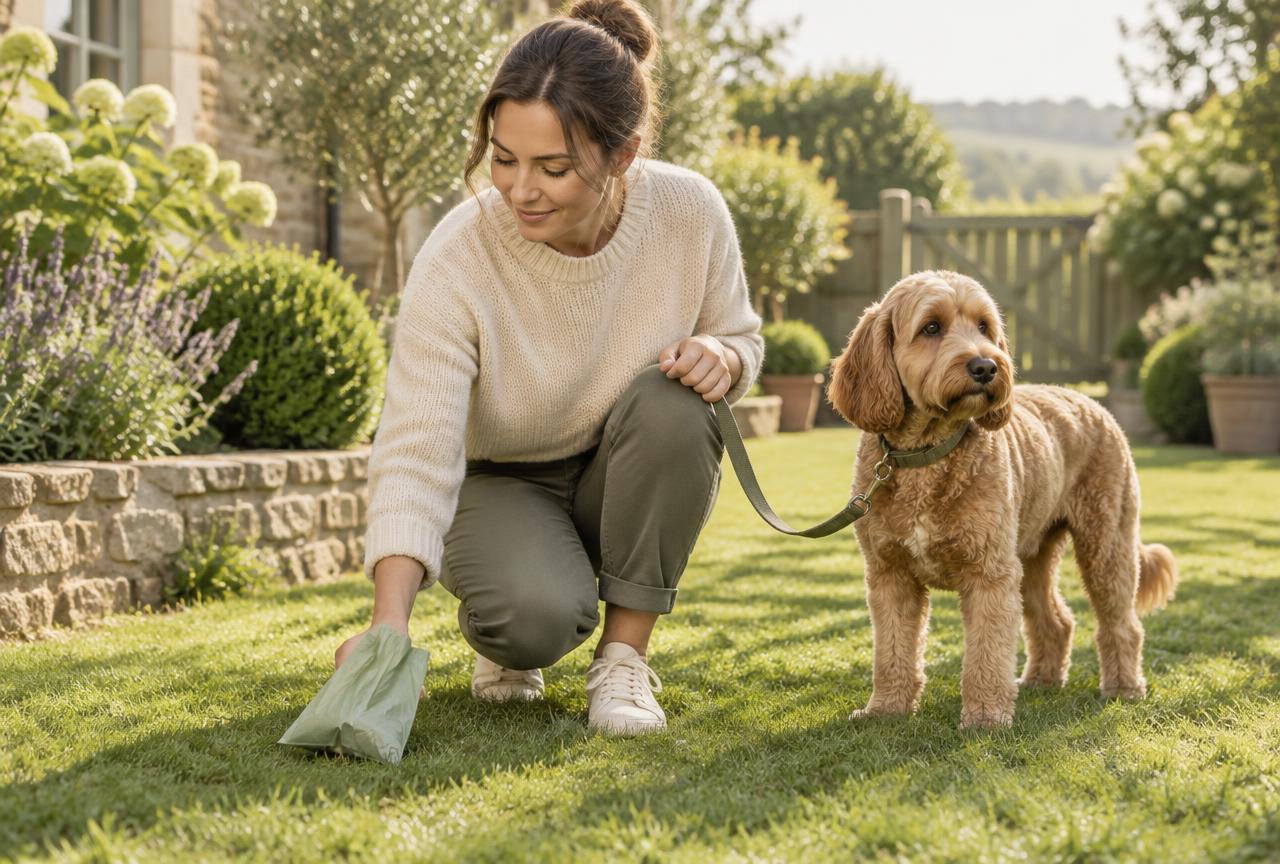
- 4Pick up promptly in the garden so you can monitor what is coming out, and so a recovering dog cannot reinvestigate it.
- 5After 24 to 48 hours of firming stools, reintroduce the normal food gradually over two to three days, mixing it into the bland diet in increasing proportions.
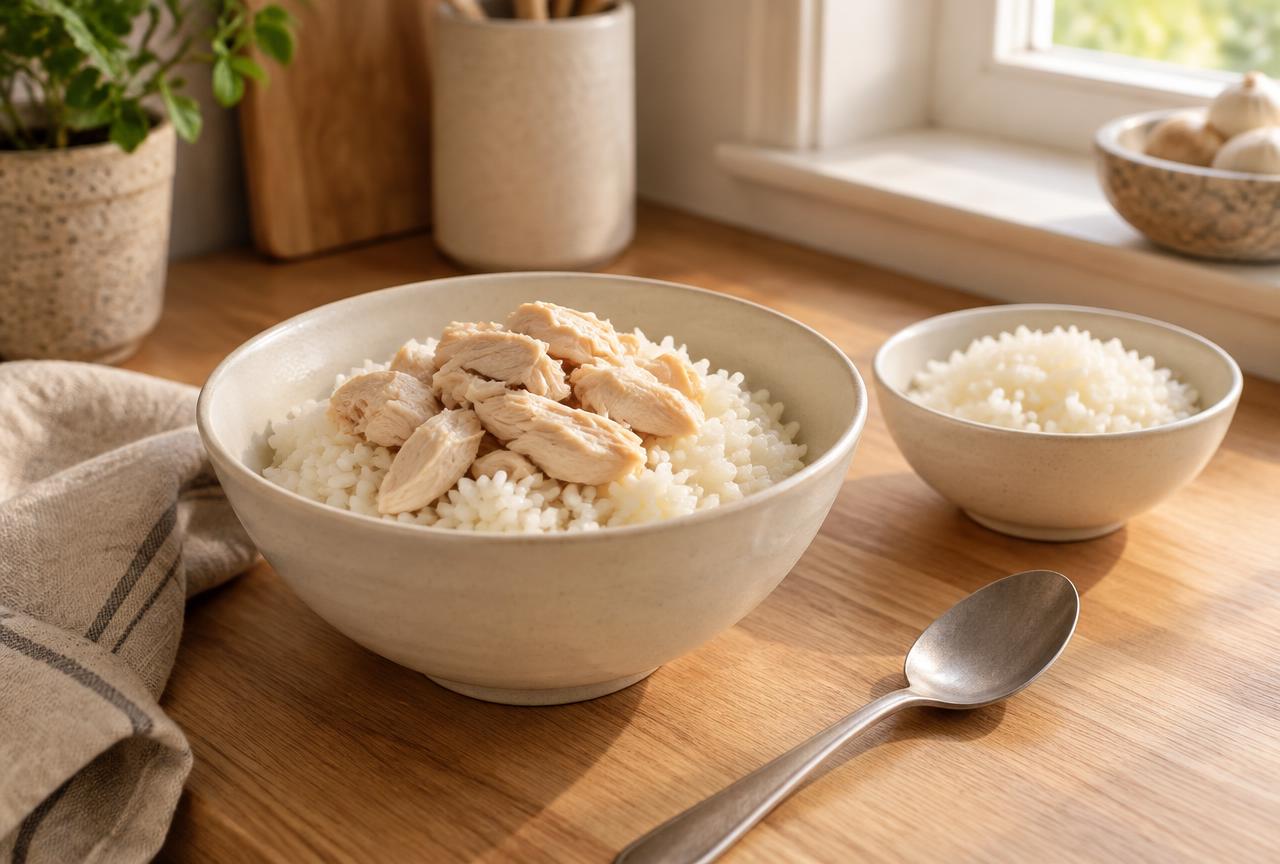
The old advice was to starve a dog for 24 hours. Current guidance is kinder and more effective: small, frequent bland meals support the gut lining while it heals.
One important exception: never fast a puppy, a toy breed, or a dog with diabetes without veterinary advice. These dogs can develop dangerously low blood sugar quickly.
Hydration matters more than food
A dog with diarrhoea can look perky while quietly becoming dehydrated. Check the gums: they should be pink and moist, not tacky or pale. The skin tent test, gently lifting the skin between the shoulder blades and watching it fall back, gives a rough idea; skin that stays tented is a red flag.
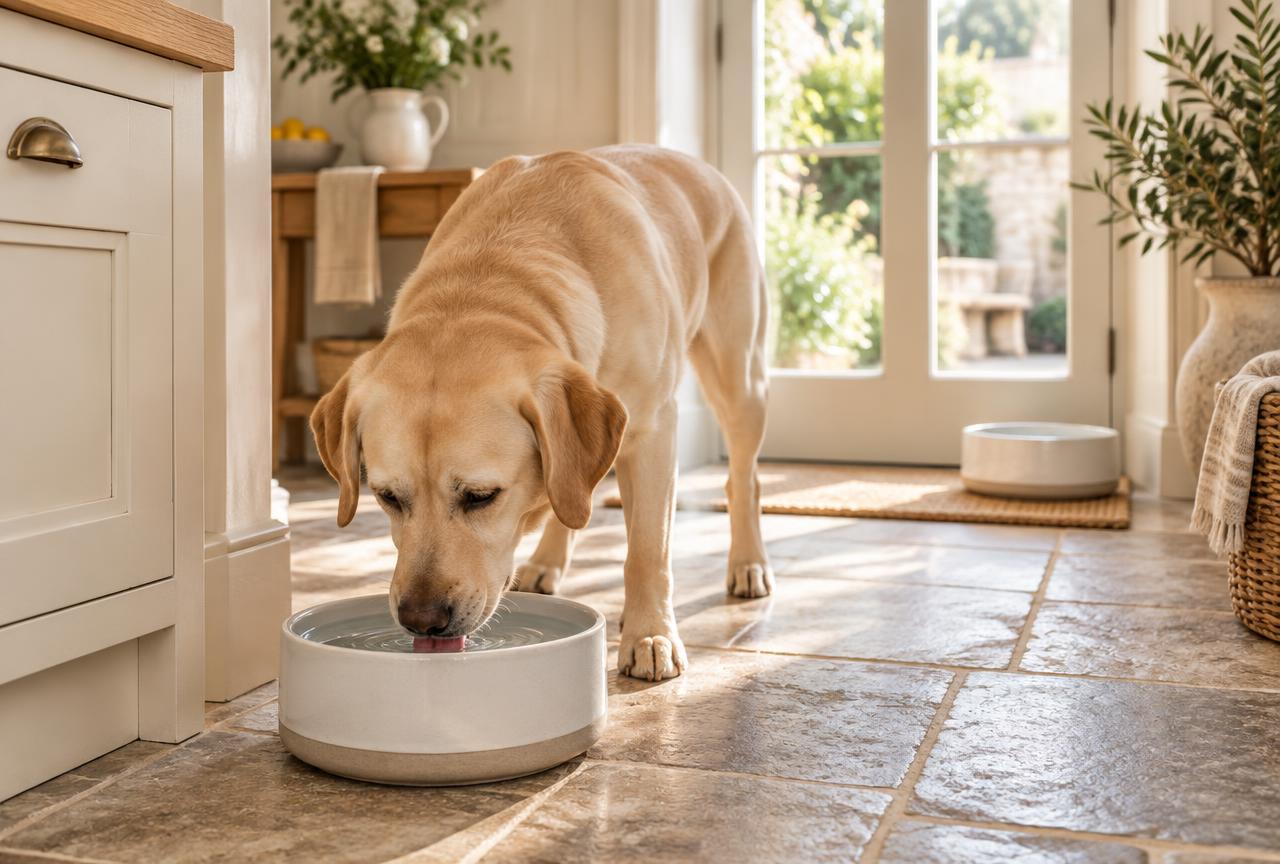
If your dog is not drinking, or is vomiting as well as having diarrhoea, home care stops being appropriate. Fluid loss from both ends is the combination that tips dogs into trouble, and small dogs tip fastest.
Use the triage checker
If you are unsure which side of the line your dog falls on, walk through the interactive checker below. It weighs the duration, the presence of blood or vomiting, and your dog's age and energy, then suggests whether home care, a routine appointment, or a same-day call is the right level of response.
Interactive · tummy triage
How serious is this bout of diarrhoea?
Most cases clear up at home, but a few signs change the answer. Walk through what you are seeing.
Home care is reasonable
A single day of loose stools in an otherwise bright, eating dog usually responds to a bland diet, small meals and plenty of water. Watch closely.
The signs that mean call the vet
Some patterns should end the home-care experiment immediately:
- Blood in the stool, or black, tarry stool
- Repeated vomiting alongside the diarrhoea
- Marked lethargy, weakness, or a painful, swollen belly
- A puppy under six months, a senior dog, or a dog with an existing condition
- No improvement after 48 hours of bland feeding
- Diarrhoea that keeps recurring over weeks, even if mild
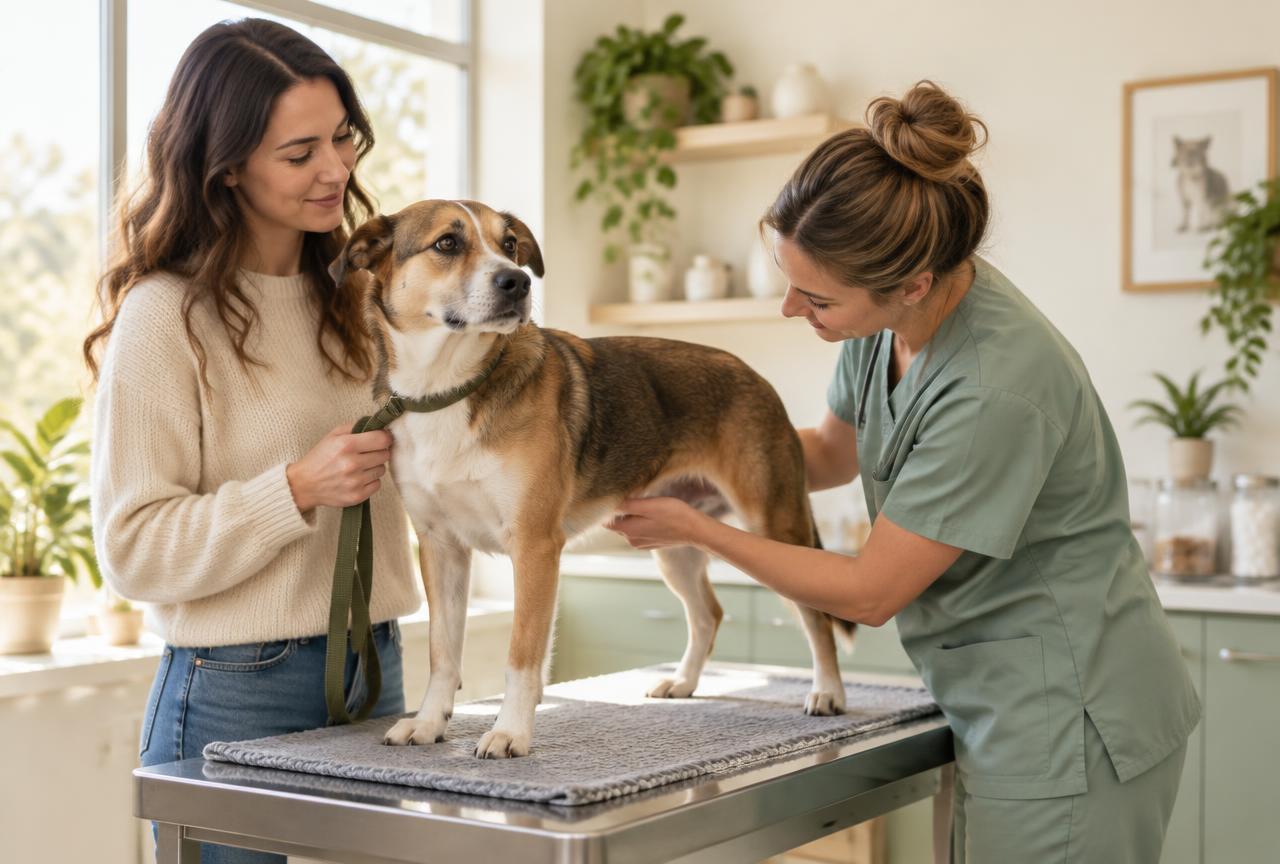
Recurring mild diarrhoea deserves a proper work-up rather than repeated bland diets. Parasites, giardia, food intolerance and inflammatory bowel disease all present this way, and all are manageable once identified. Your vet may suggest a stool sample, a worming protocol, or an elimination diet.
What does the colour and texture of dog diarrhoea mean?
Stools are information. You do not need to inspect them forensically, but noticing colour, consistency and frequency gives your vet a head start. Use this table as a guide only; it does not diagnose anything.
| What you see | Possible meaning | Urgency |
|---|---|---|
| --- | --- | --- |
| Soft, brown, a couple of times | Mild upset, often dietary | Watch at home for 24 hours |
| Watery, frequent | Small intestine upset, faster fluid loss | Call the vet if over 24 hours or in a puppy |
| Mucus, small amounts, straining | Large bowel irritation (colitis) | Monitor; call if persisting beyond two days |
| Fresh red blood streaks | Large bowel irritation | Call the vet if repeated or with other signs |
| Black, tarry | Possible bleeding higher in the gut | Same-day vet |
| Raspberry-jam appearance | Can indicate haemorrhagic gastroenteritis | Emergency vet now |
| Yellow or orange | Food moving quickly, sometimes liver or bile issues | Call if persisting |
| Grey and greasy | Possible digestion or pancreatic issue | Book an appointment |
Diarrhoea once is a story. Diarrhoea for three days is a conversation with your vet.
Small bowel or large bowel: why vets ask
When you call, your vet will often ask how many times your dog is going and how much comes out. That is because small and large intestine problems behave differently. Small bowel diarrhoea tends to mean larger volumes, fewer trips and sometimes weight loss or vomiting. Large bowel diarrhoea tends to mean small amounts, frequent urgency, straining, mucus and sometimes fresh blood, with the dog otherwise bright. Knowing which pattern you are seeing helps your vet decide whether to wait, test or treat.
Should I starve my dog with diarrhoea?
Advice has shifted. Older guidance often recommended withholding food for 24 hours. Many vets now prefer a shorter rest, or none at all for most adults, followed by small, frequent meals of a bland, easily digested diet. Research in human and veterinary gastroenterology suggests that nutrients reaching the gut lining help it recover. Puppies, toy breeds such as the Chihuahua and diabetic dogs should never be fasted without veterinary advice, because their blood sugar can drop.
Water is never withheld. If your dog drinks a lot and vomits it back, offer small amounts often and call the vet.
Your five-day recovery plan
- 1Day 1: fresh water always. Offer a bland diet in four to six small meals, roughly a quarter of the usual amount each time. Note how many stools and what they look like.
- 2Day 2: if stools are firming, keep going with bland meals. If not improving, or your dog is quieter, call the vet.
- 3Day 3: start mixing in a quarter of the normal food with three quarters bland.
- 4Day 4: half and half.
- 5Day 5 onwards: three quarters normal food, then back to normal. A vet-approved probiotic may help some dogs.
The portion calculator helps you work out daily food totals as you transition, and the ideal weight tool is worth checking a fortnight later if your dog seemed to lose condition.
Diarrhoea first-aid checklist
- Fresh water in two or three places, refreshed often
- Plain cooked chicken or white fish with white rice, or a veterinary gastrointestinal diet
- A note of when it started, number of episodes, colour and anything your dog may have eaten
- A fresh sample in a clean container, in case the vet asks for one
- Any medication names and doses your dog takes
- No human anti-diarrhoea medicines unless your vet specifically prescribes them
The verdict, by situation
Healthy adult, bright, one or two loose stools: bland diet, water, watch for 24 to 48 hours.
Puppy, especially unvaccinated: call the vet the same day. Parvovirus is a real possibility.
Senior dog or dog with a chronic condition: call early; they dehydrate faster.
Known scavenger: think about what they could have eaten, including bins and toxic foods. Our list of foods dogs must never eat is worth a look.
Breeds prone to sensitive stomachs, such as the [French Bulldog](/breeds/french-bulldog) and [Boxer](/breeds/boxer): keep a food diary to spot triggers.
Prevention: the three triggers you control
Most bouts come back to three avoidable triggers. First, food changes: switch foods gradually over seven to ten days, mixing old and new. Second, scavenging: a reliable "leave it", a well-fitted muzzle for determined bin-raiders on walks, and a secure kitchen bin remove most opportunities. Third, rich extras: fatty table scraps are a classic trigger for both diarrhoea and the more serious pancreatitis.
Keeping portions consistent helps too; the portion calculator gives you a daily target so well-meaning extras do not quietly become a second dinner. A stable gut, like a stable weight, is mostly built from boring consistency.
Diarrhoea myths, checked
| Myth | What the evidence says |
|---|---|
| --- | --- |
| Always starve for 24 hours | Many vets now prefer small, frequent bland meals for adults |
| Human anti-diarrhoea pills are fine | Some are unsafe for dogs and can mask serious disease |
| Rice water fixes everything | Hydration matters, but persistent diarrhoea needs a diagnosis |
| Changing food fixes upsets fast | Abrupt changes are a common cause; transition over a week |
Questions people actually ask
What can I give my dog for diarrhoea?
For a mild case in an otherwise well adult dog, offer small, frequent meals of plain boiled chicken and white rice for a day or two, with fresh water always available. Do not give human anti-diarrhoea medicines unless your vet has specifically told you to, as some are dangerous for dogs.
Why does my dog have diarrhoea but seem fine?
The most common causes are dietary indiscretion (eating something they should not have), a sudden food change, stress, or a mild gut bug. If the dog is bright, drinking and eating, and there is no blood, home care for 24 to 48 hours is usually reasonable.
How long is too long for a dog to have diarrhoea?
If loose stools continue beyond 48 hours, or keep returning over a week, book a vet appointment. Chronic or intermittent diarrhoea can point to parasites, food intolerance, or inflammatory bowel conditions that need proper diagnosis.
Should I starve my dog if it has diarrhoea?
The old advice to fast a dog for 24 hours is no longer recommended for most cases. Current veterinary guidance favours small, frequent bland meals to support the gut. Never fast a puppy, a toy breed, or a diabetic dog without veterinary advice, as they risk low blood sugar.
When is dog diarrhoea an emergency?
Treat it as urgent if you see blood or black tarry stool, repeated vomiting alongside the diarrhoea, a swollen or painful belly, marked lethargy or weakness, or if the dog is a young puppy, a senior, or has an existing illness. Dehydration can develop quickly in these cases.
Can stress cause diarrhoea in dogs?
Yes. Boarding, moving house, fireworks, a new pet or changes in routine can all trigger stress colitis, which often produces loose stool with mucus. It usually settles within a few days once the stressor passes, but mention it to your vet if it keeps recurring.
How long should dog diarrhoea last before going to the vet?
For a healthy adult dog that is bright and eating, it is reasonable to watch for 24 to 48 hours with a bland diet and plenty of water. Call your vet sooner for puppies, seniors, dogs with health conditions, any blood or black stools, vomiting, lethargy or signs of pain.
What colour diarrhoea is bad in dogs?
Black, tarry stools can indicate bleeding higher in the gut, and a raspberry-jam appearance can signal a serious condition called haemorrhagic gastroenteritis. Both need urgent veterinary attention. Repeated fresh red blood, grey greasy stools or persistent yellow diarrhoea should also be discussed with your vet.
Sources
- Diarrhoea in dogs, PDSA
- Gastroenteritis in dogs, VCA Animal Hospitals
- Feeding a dog with an upset stomach, Blue Cross
- Acute diarrhoea in dogs, MSD Veterinary Manual
- Diarrhoea in dogs, RVC VetCompass / Royal Veterinary College
- Diarrhoea in dogs, Blue Cross
Breeds mentioned

Labrador Retriever
Britain's most popular family dog: biddable, food driven and built for an active household.

Beagle
A merry, sociable scenthound with a powerful nose and a mind of its own outdoors.

French Bulldog
A comic, affectionate companion built for city life, but with health needs that demand a careful breeder.
Put it into practice
Read next
Dog Dry Heaving: Causes and When It Is an Emergency
Dog dry heaving is usually throat irritation or mild nausea, but repeated unproductive retching with a swollen, tight belly can be bloat (GDV), a life-threatening emergency.


