
Can Dogs Eat Avocado? Flesh, Skin, Stone and Guacamole
Avocado has a complicated reputation with dogs. The flesh is low risk in small amounts, but the stone, skin and anything with onion or garlic are genuine hazards. Here is the full picture.
The SniffScroll desk
Published 11 October 2026
Dr Emma Hartley MRCVS
The short version
- Ripe avocado flesh is low risk in small amounts; dogs tolerate persin far better than birds or horses.
- The stone is the real emergency: it can choke a dog or block the gut, so call the vet if one is swallowed.
- Guacamole is off-limits because of onion and garlic, not the avocado itself.
- Avocado is fatty, so dogs with pancreatitis history or on low-fat diets should skip it.
- Bin skins and stones securely; most avocado incidents are bin raids.
Can dogs eat avocado?
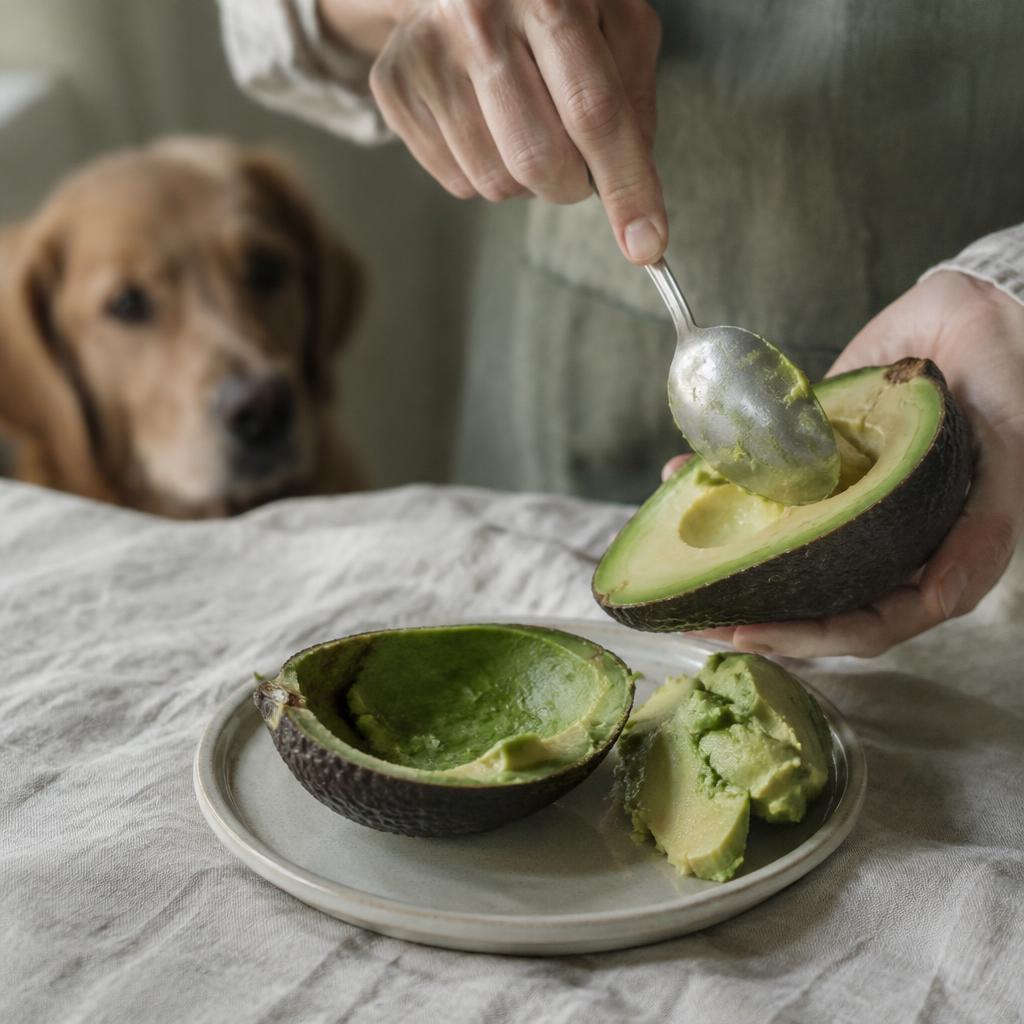
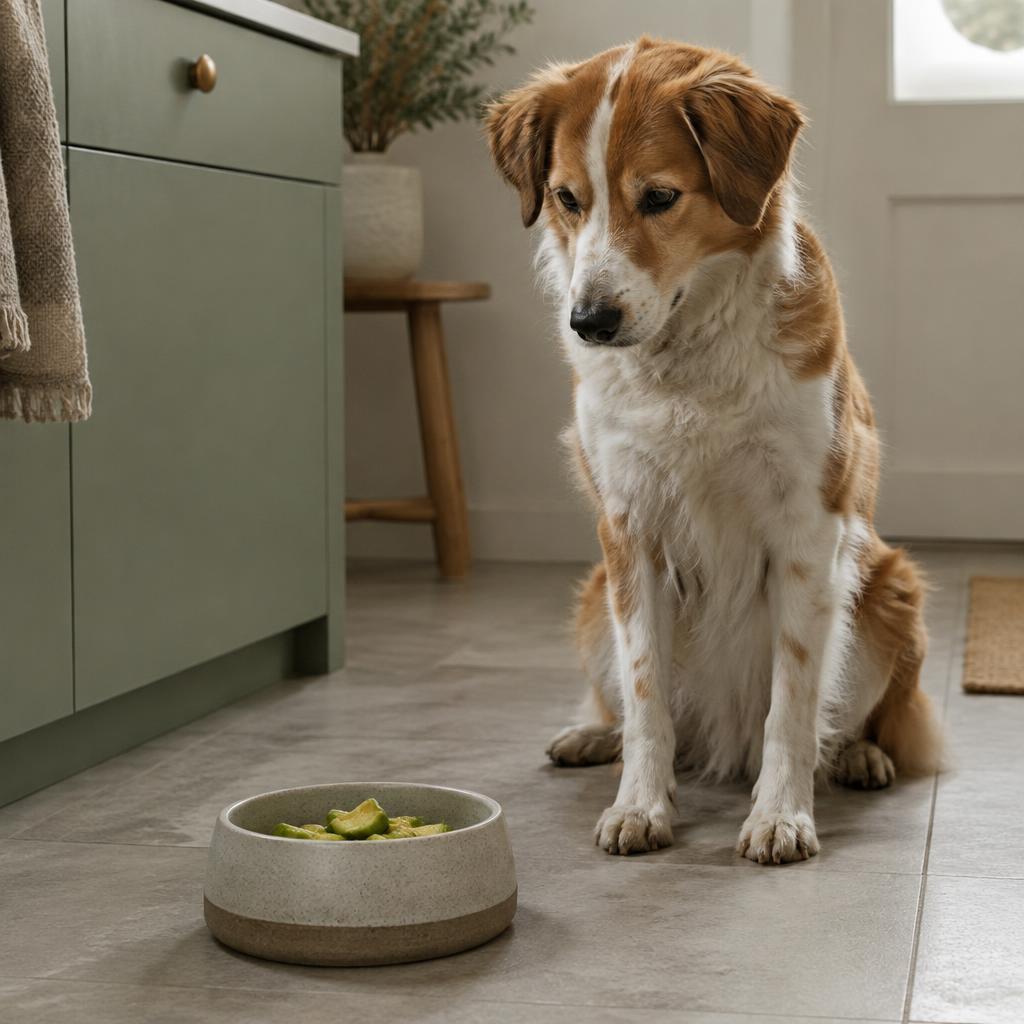
Yes, with care: a small amount of ripe avocado flesh is low risk for most healthy dogs, but the stone, the skin and guacamole are genuine hazards. Avocado contains persin, a natural fungicidal toxin, but the flesh of a ripe avocado holds very little of it, and dogs are far less sensitive to persin than birds, horses or rabbits. The bigger everyday dangers are the stone, which can choke a dog or block the gut, and the fat content, which can trigger pancreatitis in prone dogs.
So the honest answer is not a flat yes or no. It is: plain ripe flesh, a few cubes, occasionally, stone and skin removed. Everything else about the fruit deserves more caution.
What is persin, and should you worry?
Persin is an oil-soluble compound found throughout the avocado plant, concentrated in the leaves, bark, skin and the stone, with much lower levels in the ripe flesh. In birds, cattle, horses and rabbits it can be seriously toxic, causing heart and lung damage. Dogs, fortunately, are among the more resistant species, and documented persin poisoning in dogs from eating avocado flesh is rare.
That does not make avocado a free-for-all. The flesh still carries a meaningful fat load, the skin and leaves carry more persin and are tough to digest, and the stone is a mechanical hazard entirely separate from any chemistry. Think of persin as a reason for moderation rather than the main event.
The stone: the real emergency
An avocado stone is roughly the size and shape of a golf ball, smooth, hard and slippery, which makes it alarmingly easy for a dog to swallow whole. If it passes the throat, it can lodge in the stomach or intestine and cause a blockage, which is a surgical emergency. Signs of an obstruction include repeated vomiting, retching, drooling, a painful or swollen belly, loss of appetite and straining without producing anything.
If your dog has swallowed an avocado stone, call the vet straight away, even if they seem fine. Do not try to make your dog vomit at home; a stone coming back up can lodge in the throat. The vet may X-ray to see where the stone is and decide whether it is likely to pass or needs removing.
Skin, leaves and the bin raid
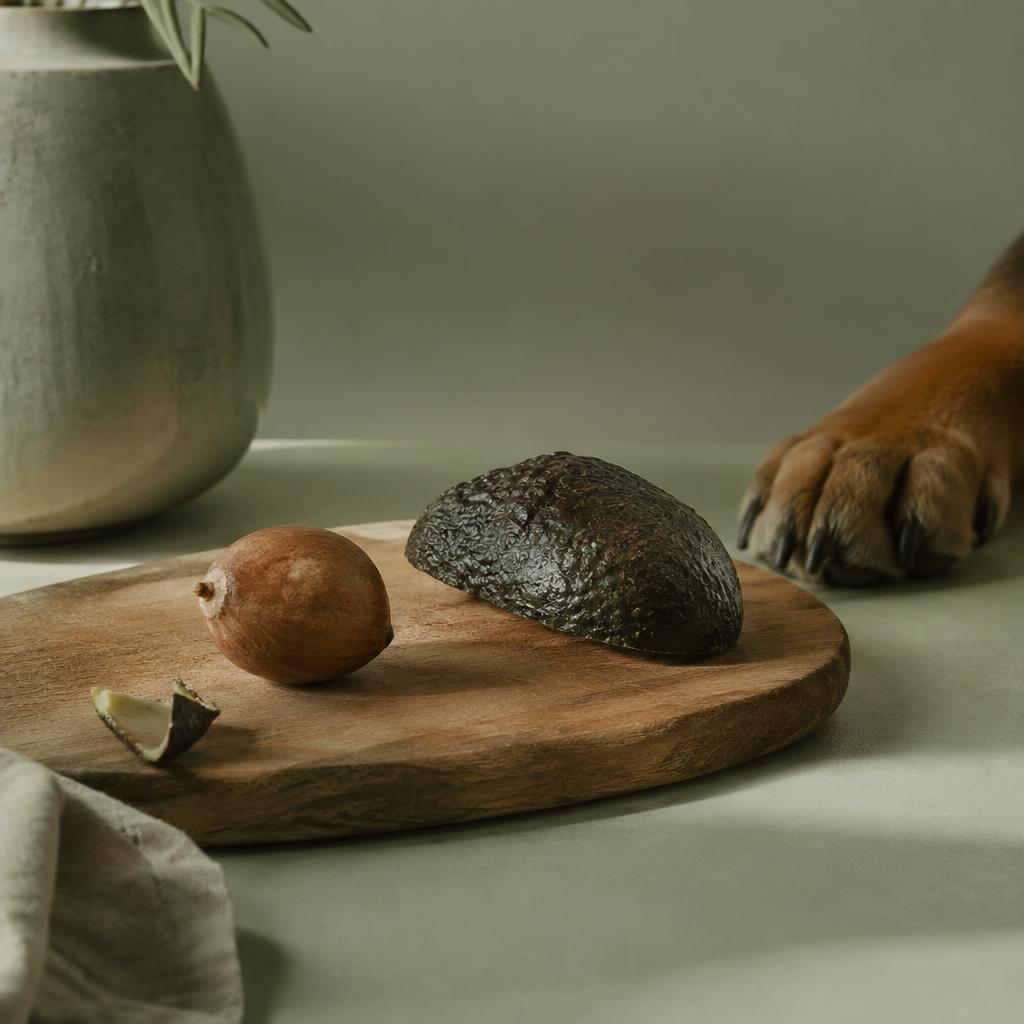
The skin and leaves contain more persin than the flesh, and the skin in particular is leathery and difficult to digest. A dog that chews a discarded skin is more likely to end up with an upset stomach than true poisoning, but a large amount of skin, or skin plus stone, deserves a phone call to the vet.
Most avocado incidents are bin raids. Dogs find the skin and stone irresistible because they smell of the flesh. The simple fix is a lidded bin, or taking the stone and skins straight outside. If your dog is a known scavenger, treat avocado waste like chicken bones: never left within reach.
Guacamole and prepared dishes: off-limits
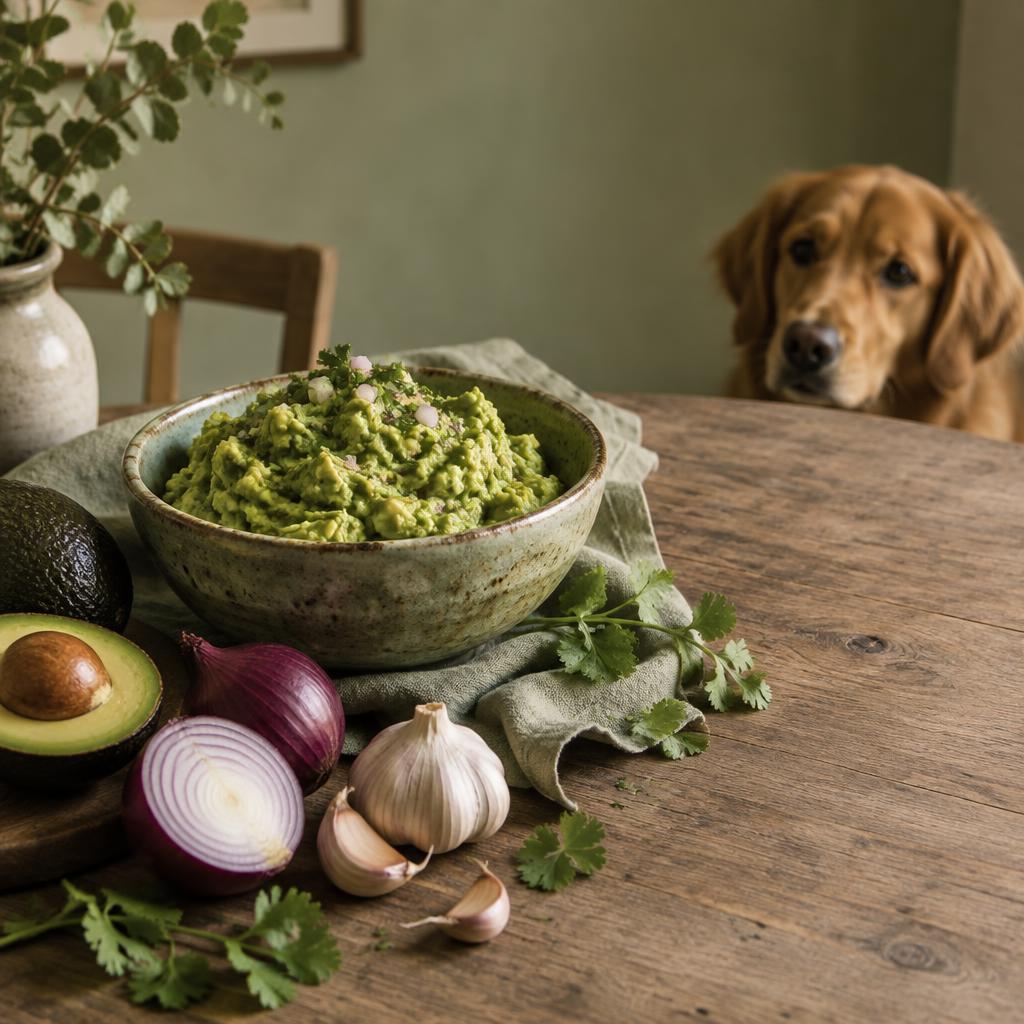
Guacamole is where avocado genuinely earns its bad reputation, but not because of the avocado. Classic guacamole contains onion and usually garlic, both of which are toxic to dogs and damage red blood cells, plus salt, lime juice and sometimes chilli. None of these belong in a dog.
If your dog has eaten guacamole, the amount of onion and garlic matters more than the avocado. Call the vet or a poison line, tell them roughly how much was eaten and when, and watch for drooling, vomiting, weakness or pale gums over the following days. Onion and garlic toxicity can take a few days to show, so a dog that seems fine tonight is not necessarily in the clear.
Fat, calories and pancreatitis
Avocado is one of the fattiest fruits around, and fat is the nutrient most likely to trigger pancreatitis in susceptible dogs. A healthy dog eating a few cubes of flesh is very unlikely to have a problem, but dogs with a history of pancreatitis, dogs on vet-prescribed low-fat diets, and breeds prone to the condition, such as the Cavalier King Charles Spaniel, should skip avocado entirely.
The same logic applies to weight. A whole avocado carries around 300 calories, more than many small dogs need in a day. If you share, share cubes, not halves, and count them inside the 10% treat allowance. Our portion calculator can help you see how quickly treats add up against your dog's daily calories.
How to serve avocado safely
- 1Choose a ripe avocado and wash the skin before cutting, so the knife does not carry anything through.
- 2Halve it, remove the stone, and scoop the flesh away from the skin.
- 3Cut the flesh into bite-size cubes appropriate for your dog's size.
- 4Serve plain: no salt, no seasoning, no toast attached.
- 5Bin the stone and skin immediately, somewhere your dog cannot reach.
| Part | Safe for dogs? | Why |
|---|---|---|
| --- | --- | --- |
| Ripe flesh, plain | Yes, in small amounts | Low persin, but fatty |
| Skin | No | More persin, hard to digest |
| Stone | No | Choking and obstruction hazard |
| Leaves and bark | No | Highest persin levels |
| Guacamole | No | Onion, garlic, salt and lime |
Interactive tool
Avocado safety checker
Dog size and the part in question, in. Clear guidance, out.
Your plan
- For a medium dog, a serving is about a few bite-size cubes of ripe flesh, inside the 10% treat allowance.
- Avocado is fatty, so keep it occasional, especially for dogs prone to pancreatitis or weight gain.
- Always remove the stone and skin first, and serve plain: no salt, no seasoning.
- Skip avocado entirely for dogs with a history of pancreatitis or on a low-fat diet.
A little plain flesh is low risk
Ripe flesh in small amounts is low risk for most dogs. The stone, the skin and anything with onion or garlic are the real problems.
My dog ate avocado: what now?
Work out which part and roughly how much. A few cubes of flesh: monitor at home for an upset stomach. A lot of flesh: watch for vomiting and greasy stools, and skip the next meal's fat. Skin or leaves: call the vet if it was more than a nibble. A stone: call the vet now. Guacamole: call the vet or a poison line and report the onion and garlic content. When in doubt, a two-minute phone call beats an evening of worry.
When to see a vet
Go the same day for a swallowed stone, repeated vomiting, a painful or swollen belly, or any guacamole consumption beyond a lick. Book a routine appointment if your dog has had pancreatitis before and you want to discuss which treats are safe, or if avocado seems to disagree with them repeatedly.
Avocado oil and dog foods containing avocado
Some premium dog foods and treats list avocado meal or avocado oil among their ingredients, which understandably worries owners who have heard the fruit is toxic. These products use processed avocado fractions with the persin largely removed, and they have been fed to dogs for years without a pattern of problems. A reputable complete food containing avocado derivatives is not a reason to panic. The caution in this article applies to the fresh fruit and its parts, not to regulated commercial foods.
Avocado oil as a cooking ingredient is a similar story: a lick of something cooked in it is not a concern, though there is no reason to add oils to your dog's bowl deliberately.
A word on portion maths
Treats of any kind, avocado included, should make up no more than 10% of your dog's daily calories. For a small dog that might mean two or three cubes of avocado is the whole treat budget for the day; for a giant breed it is still only a small handful. If your dog carries extra weight, or you are mid-way through a diet plan, avocado is an easy treat to drop entirely in favour of lower-calorie options like cucumber or carrot. When you are unsure what your dog's daily allowance looks like, our portion calculator does the maths for you.
The bottom line
Avocado is neither the poison the internet sometimes claims nor a health food your dog needs. Ripe flesh in small, occasional amounts is low risk for healthy dogs; the stone, skin and anything involving onion or garlic are not. Keep the fruit bowl and the bin secure, share cubes rather than halves, and dogs with pancreatitis history should admire avocados from a distance. For more on which fruits are safe, see our guides to fruit dogs can eat and the foods dogs must never eat.
Puppies and avocado
Puppies have smaller airways and smaller guts, so the stone risk that applies to every dog applies doubly to them, and their digestive systems are less forgiving of fatty, novel foods. Keep avocado away from puppies entirely until they are fully grown; there is no nutritional reason a puppy needs it, and plenty of safer training treats exist.
Frequently asked questions
Can dogs eat avocado flesh?
Yes, in small amounts. Ripe flesh contains very little persin and dogs tolerate it well. Serve a few plain cubes occasionally, stone and skin removed, and keep it inside the 10% treat allowance.
Is avocado poisonous to dogs?
Not in the way it is to birds or horses. The persin in ripe flesh is low and dogs are relatively resistant. The real dangers are the stone (obstruction), the fat content (pancreatitis risk) and prepared dishes like guacamole (onion and garlic).
My dog ate an avocado stone. What should I do?
Call the vet straight away, even if your dog seems fine. A stone can block the gut and may need surgical removal. Do not try to make your dog vomit at home, and watch for vomiting, drooling or a painful belly.
Can dogs eat guacamole?
No. Guacamole contains onion and usually garlic, which are toxic to dogs, plus salt and lime. If your dog has eaten some, call the vet or a poison line and say roughly how much and when.
How much avocado can a dog eat?
A few bite-size cubes for a medium dog, less for small dogs, and only occasionally. Avocado is fatty and calorie-dense, so it should never be a daily treat, and dogs with pancreatitis history should avoid it.
Are avocado trees dangerous to dogs?
The leaves, bark and skin hold the most persin, so a dog chewing fallen leaves or fruit skins in a garden with an avocado tree should be discouraged. Supervise, clear fallen fruit, and call the vet if your dog has eaten a lot of plant material.
Sources
- American Kennel Club, Can Dogs Eat Avocado?, akc.org
- VCA Animal Hospitals, Avocado Toxicity in Animals, vcahospitals.com
- Pet Poison Helpline, Avocado, petpoisonhelpline.com
- PDSA, Foods your dog should avoid, pdsa.org.uk
- Merck Veterinary Manual, Pancreatitis in Dogs, merckvetmanual.com
Questions people actually ask
Can dogs eat avocado flesh?
Yes, in small amounts. Ripe flesh contains very little persin and dogs tolerate it well. Serve a few plain cubes occasionally, stone and skin removed, and keep it inside the 10% treat allowance.
Is avocado poisonous to dogs?
Not in the way it is to birds or horses. The persin in ripe flesh is low and dogs are relatively resistant. The real dangers are the stone, the fat content and prepared dishes like guacamole.
My dog ate an avocado stone. What should I do?
Call the vet straight away, even if your dog seems fine. A stone can block the gut and may need surgical removal. Do not try to make your dog vomit at home.
Can dogs eat guacamole?
No. Guacamole contains onion and usually garlic, which are toxic to dogs, plus salt and lime. If your dog has eaten some, call the vet or a poison line and say roughly how much and when.
How much avocado can a dog eat?
A few bite-size cubes for a medium dog, less for small dogs, and only occasionally. Avocado is fatty and calorie-dense, so it should never be a daily treat.
Are avocado trees dangerous to dogs?
The leaves, bark and skin hold the most persin, so a dog chewing fallen leaves or fruit skins should be discouraged. Supervise, clear fallen fruit, and call the vet if your dog has eaten a lot of plant material.
Sources
Breeds mentioned


Put it into practice
Read next
Can Dogs Eat Oatmeal? Cooked, Raw and Flavoured
Plain oatmeal cooked in water is safe for dogs in small servings and its soluble fibre can help mild diarrhoea. Avoid flavoured sachets, raw oats and porridge made with milk or sugar.


