
Can Dogs Eat Corn? On the Cob, Kernels and Popcorn
Plain corn kernels are safe for dogs in small amounts. The cob is the danger: it is a leading cause of gut blockages and should never be given.
The SniffScroll desk
Published 11 October 2026

Reviewed by the SniffScroll editorial team
The short version
- Plain cooked corn kernels are safe for dogs in small amounts.
- Never give a dog a corn cob: it does not digest and is a leading cause of surgical gut blockages.
- If your dog eats a cob, phone the vet straight away, even if they seem fine.
- Plain air-popped popcorn is safe as a few pieces; buttered, salted or sweet popcorn is not.
- Keep portions small and count corn towards the 10% daily treat allowance.
Can dogs eat corn?
Yes, with one hard rule. Plain corn kernels, cooked and served off the cob, are safe for dogs in small amounts. The cob itself is never safe: it does not digest, it is exactly the wrong shape, and it is one of the most common causes of intestinal blockage seen in veterinary practice.
So the honest summary is: kernels yes, cob never. The same caution applies to anything a dog might swallow whole, as our guides to swallowed socks and chicken bones make clear.
Why the cob is so dangerous
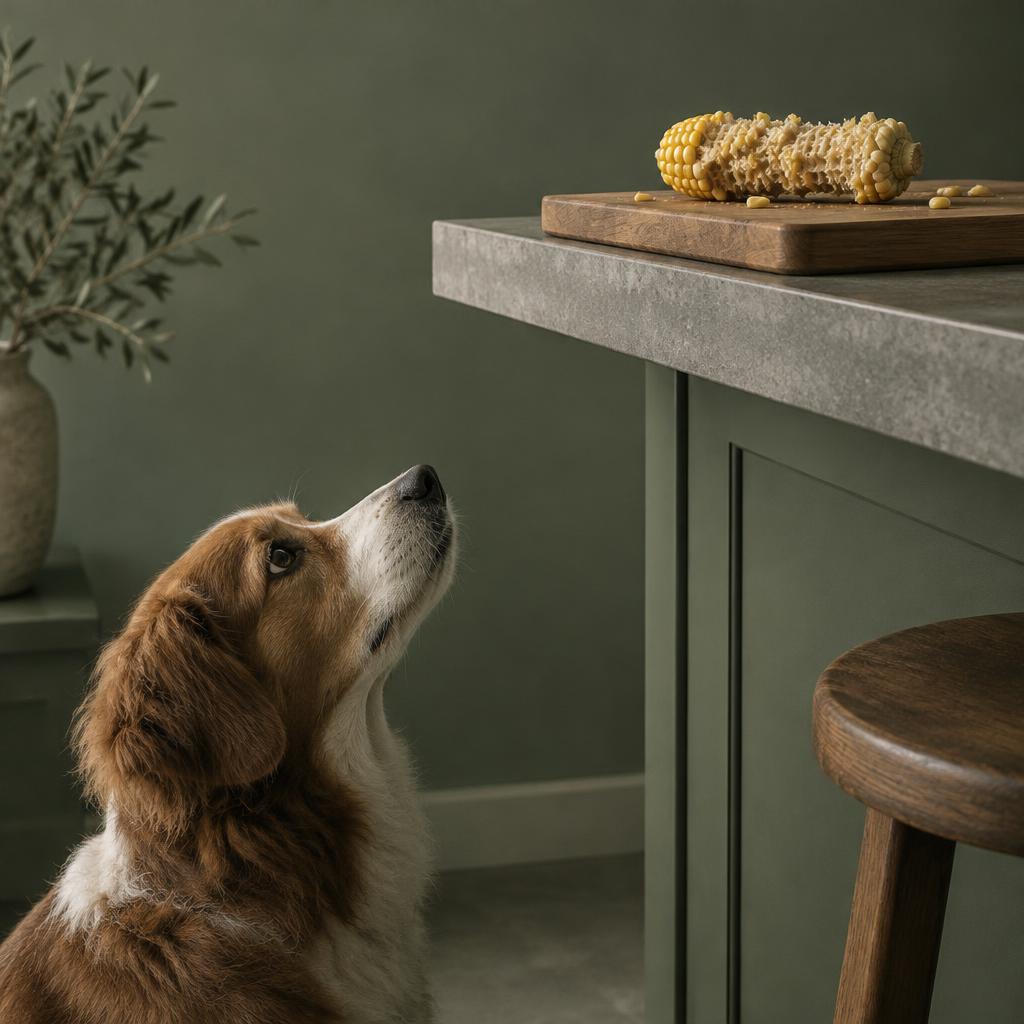
A gnawed corn cob is fibrous, rigid and sized to lodge in the small intestine. Dogs swallow chunks of it eagerly because it smells and tastes of butter and barbecue, but the gut cannot break it down. A lodged piece blocks the intestine, cuts off local blood supply and, without surgery, can be fatal.
What makes cobs especially treacherous is the delay. A dog can steal a cob at a Sunday barbecue and seem perfectly well until vomiting starts on Tuesday. If a cob goes missing, phone the vet that day. Do not make your dog sick at home: a cob coming back up can wedge in the oesophagus and turn one emergency into two.
Kernels, popcorn and everything in between
| Form | Safe? | Note |
|---|---|---|
| --- | --- | --- |
| Plain cooked kernels | Yes, small amounts | Fresh, frozen or tinned in water |
| Corn on the cob | Never | Blockage hazard, even when gnawed bare |
| Plain air-popped popcorn | Yes, a few pieces | Remove unpopped kernels |
| Buttered, salted or sweet popcorn | Avoid | Fat, salt and sugar |
| Creamed corn | Avoid | Added fat, salt and sugar |
| Corn chips and tortillas | Avoid | Salt, oil and seasoning |
| Corn in complete dog food | Fine | Properly cooked and milled, it is digestible |
How much corn can a dog eat?
Corn is mostly carbohydrate, so it sits inside the 10% daily treat allowance. As a guide:
- Toy dogs (under 5 kg): a teaspoon of kernels
- Small dogs (5 to 10 kg): one to two teaspoons
- Medium dogs (10 to 25 kg): a tablespoon
- Large dogs (over 25 kg): one to two tablespoons
Do not be alarmed to see whole kernels in the next day's stool: the outer hull often passes through undigested, which is normal and harmless.
Serving corn safely
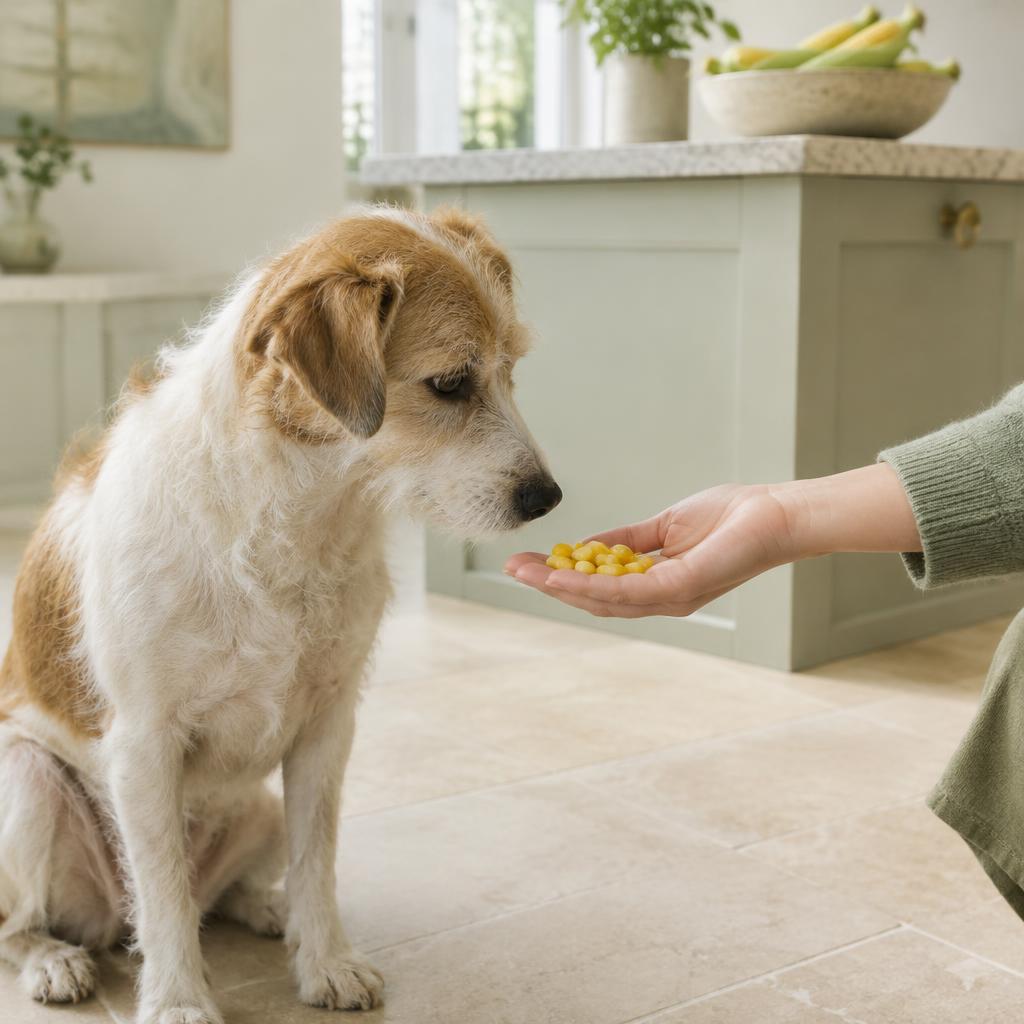
- 1Cook the corn plainly: boiled or steamed, no butter, salt or seasoning.
- 2Cut the kernels off the cob yourself, away from your dog.
- 3Put the bare cob straight into a lidded, dog-proof bin, ideally outside.
- 4Offer kernels as a sprinkle or a training treat, within the treat allowance.
- 5At barbecues, warn guests: the dropped cob under the table is the classic accident.
What about popcorn?
Plain air-popped popcorn is one of the better human snacks to share: a few pieces are light, crunchy and low in calories. The caveats are real, though. Unpopped and half-popped kernels are hard enough to crack a tooth and small enough to choke on, so sift them out. And the moment butter, salt, toffee or cheese powder is involved, it stops being a dog treat. Microwave and cinema popcorn are for the humans.

Is corn in dog food bad?
No, and this myth is worth correcting. Properly cooked and milled corn is a digestible source of energy, essential fatty acids and protein, and it has been used in complete dog foods for decades. True corn allergy in dogs is uncommon; food allergies are far more often linked to proteins such as beef, chicken or dairy. If your dog has ongoing itching or ear trouble, work through a proper elimination diet with your vet rather than singling out corn. Breeds with hearty appetites, Labradors, Beagles and terriers such as the Border Terrier, are simply the ones most likely to help themselves to the cob.
The kernel is a treat. The cob is a surgical emergency. Everything else is seasoning.
The barbecue problem
Ask any out-of-hours vet when they see corn cob cases and the answer is the same: barbecue season. The scenario repeats itself endlessly. Cobs are eaten outdoors, plates balance on knees, a cob slides under a chair, and the dog that has been waiting politely all afternoon finally gets its reward. By the time anyone notices, the cob is gone and the dog looks thrilled with itself.
Two habits break the pattern. First, give cobs a dedicated landing zone: a bowl or tray that goes straight back to the kitchen, not onto the ground or a low table. Second, brief your guests. People who do not own dogs genuinely do not know that a bare cob is dangerous, and a cheerful "please don't feed him, cobs can kill dogs" is a completely reasonable thing to say at your own barbecue.
What a blockage actually looks like
Owners who have never seen a gut blockage often imagine dramatic, instant illness. The reality is slower and easier to miss. A dog with a lodged cob typically starts with vomiting that does not settle, then goes off food, then becomes quiet and uncomfortable, often standing hunched or stretching repeatedly. The belly may feel tight. Straining produces little or nothing. By the time these signs are obvious, surgery is usually the only fix, which is why the phone call belongs to the day the cob disappeared, not the day the dog looks ill.
Corn in the bowl: the grain-free question
Corn's reputation has been dented by years of grain-free marketing, and it deserves a fairer hearing. Properly cooked and milled maize is a digestible ingredient that provides energy, linoleic acid and some protein, and it appears in many well-formulated complete diets. True corn allergy is uncommon; when vets run elimination diets, the usual culprits are proteins such as beef, chicken and dairy, not grains. If your dog has chronic itching or ear disease, the productive route is a structured elimination trial with your vet, not simply switching to a grain-free bag. And whatever the diet debate, it is separate from the treat question: a spoonful of plain kernels on top of dinner is fine for almost any healthy dog.
Sweetcorn, baby corn and corn products
Baby corn, the small spears served whole in stir-fries, is safe in small amounts if plain, though it should be cut into pieces for small dogs because the spear shape is a choking risk. Corn tortillas, corn chips, corn muffins and cornbread all fail on the same grounds: salt, fat and seasoning. Polenta and grits, cooked plainly with no butter or cheese, are safe in a spoonful, but at that point you are really just serving your dog bland carbohydrate, and their own dinner does the job better.
How vets remove a corn cob
Understanding the treatment explains the urgency. If a dog is seen within an hour or two of swallowing a cob, the vet may be able to bring it back up safely under supervision, and that can be the end of the story. Once the cob has moved into the intestine, the options narrow to endoscopy, possible only if the cob is still in the stomach, or surgery to open the intestine and remove it. Surgery for a foreign body is one of the most common emergency operations in small-animal practice, and corn cobs are perennially near the top of the list of items removed.
Recovery from a straightforward removal is usually good, but it is still days in hospital, a general anaesthetic and a significant bill, all from a cob that could have gone in a lidded bin. That is the comparison worth remembering at the next barbecue.
Corn and the overweight dog
Corn is not a free food. A hundred grams of sweetcorn kernels is around 85 to 90 calories, which is a meaningful chunk of a small dog's entire treat allowance. For dogs on a weight-loss plan, corn is a mediocre treat choice: it is calorie-dense for its size and easy to overfeed by the spoonful. Green beans, cucumber and carrot deliver more crunch and more volume for fewer calories, which is what a dieting dog actually needs from a treat.
For healthy dogs at a good weight, a measured spoonful of kernels a few times a week is perfectly reasonable, and many dogs find the sweetness motivating enough to work as a training reward.
A quick word on corn silk and husks
The husk and silk are not toxic, but they are fibrous and indigestible in quantity. A dog that raids the compost caddy after corn night can eat a surprising amount of husk, and while most passes through, large wads can contribute to a blockage in small dogs. The same rule as the cob applies: husks and silk go in a lidded bin, and the compost caddy needs a lid a dog cannot nose open.
A checklist for corn in a dog household
- Kernels are served plain: no butter, salt or seasoning.
- Portions are measured by the spoon, not poured from the tin.
- Cobs go straight into a lidded bin, ideally outside, the moment they are bare.
- Husks and silk go in a lidded bin or a compost caddy the dog cannot open.
- At barbecues, guests know not to feed the dog and cobs have a dedicated landing tray.
- Popcorn is plain and air-popped, with unpopped kernels picked out.
The pattern across all of these is the same: the kernels are easy, and everything else is about keeping the cob out of reach.
If your dog is a known scavenger
Some dogs treat every walk and every mealtime as a foraging opportunity, and for those dogs the cob risk extends beyond your own kitchen. Cobs turn up in park bins, on picnic lawns and beside benches all summer. A scavenging dog benefits from three things: a solid 'leave it' cue practised with real-world distractions, a basket muzzle for the worst offenders during peak picnic season, and the habit of scanning the ground ahead on walks in busy green spaces. It takes one retrieved cob, intercepted a metre before the grab, to pay for all of that effort. And if the worst happens despite it, you already know the rule: phone the vet the same day, signs or no signs.
When to see a vet
Call the vet immediately if your dog has eaten a corn cob or a large piece of one, even if they seem fine. Go urgently if you see vomiting, refusal to eat, a swollen or painful belly, straining without producing stool, or marked lethargy after a known or suspected cob. For plain kernels, the worst you will usually see is a mildly loose stool after too many, which settles on its own. Use the checker below to size a safe serving.
Interactive tool
Corn serving checker
Dog size and the form of corn in, serving guidance out.
Your plan
- For a medium dog, a serving is about a tablespoon of kernels, inside the 10% treat allowance.
- Use plain cooked, frozen or tinned kernels without added salt, cut fresh off the cob away from your dog.
- Corn is easy to digest for most dogs, but some kernels pass through whole, which is normal.
- Put the bare cob straight in a lidded bin your dog cannot reach.
Plain kernels are fine
Kernels are a fine treat. The cob is a genuine emergency risk and should never be given.
Questions people actually ask
My dog ate a corn cob. What should I do?
Phone the vet now, even if your dog seems completely well. Corn cobs do not break down in the gut and are one of the most common causes of intestinal blockage in dogs. Do not try to make your dog sick at home, as a cob can lodge in the oesophagus on the way back up.
Can dogs eat tinned sweetcorn?
Yes, plain tinned sweetcorn is fine in small amounts. Choose varieties in water with no added salt or sugar, and drain them. Creamed corn is best avoided because of the added fat, salt and sometimes sugar.
Can dogs eat popcorn?
Plain, air-popped popcorn with no salt, butter or oil is safe as a few pieces. Pick out unpopped kernels, which are hard on teeth and a choking risk for small dogs. Microwave, cinema and toffee popcorn are too salty, fatty or sweet to share.
Is corn in dog food a problem?
No. Corn is a digestible, useful ingredient when properly cooked and milled, and true corn allergies in dogs are uncommon. Despite the grain-free marketing debate, corn itself is not a filler to fear in a complete diet.
Can dogs be allergic to corn?
It is possible but uncommon. Food allergies in dogs are far more often linked to proteins such as beef, chicken or dairy. If your dog has chronic itching or ear problems, talk to your vet about a proper elimination diet rather than blaming corn by default.
What are the signs of a corn cob blockage?
Vomiting, refusal to eat, a painful or swollen belly, straining to pass stool or producing nothing, lethargy and restlessness. Signs can take a day or more to appear, which is why you call the vet when the cob disappears, not when the dog looks ill.
Sources
Breeds mentioned



Put it into practice
Read next
Can Dogs Eat Oatmeal? Cooked, Raw and Flavoured
Plain oatmeal cooked in water is safe for dogs in small servings and its soluble fibre can help mild diarrhoea. Avoid flavoured sachets, raw oats and porridge made with milk or sugar.


