
Can Dogs Eat Sweet Potato? Cooked, Raw and the Skin
Cooked, plain sweet potato is a safe and nutritious extra for most dogs. Raw chunks, seasoned dishes and big portions are where the problems live.
The SniffScroll desk
Published 11 October 2026
The SniffScroll editorial team
The short version
- Dogs can eat sweet potato: cooked, plain and in small portions it is a healthy extra.
- Never feed raw sweet potato: it is hard to digest and a choking and blockage risk.
- Peel the skin for most dogs: it is not toxic, but it is tough to chew and digest.
- Skip seasoned dishes entirely: butter, sugar, nutmeg, garlic and onion make them unsafe.
- Sweet potato is starchy and calorie-dense, so count it in the day's calories and ask the vet first for diabetic dogs.
Sweet potato turns up in dog treats, kibbles and home-cooked toppers everywhere, which raises a fair question: is it actually a good idea? The answer is yes, with structure. Cooked, plain sweet potato is safe and genuinely nutritious for most dogs. Raw chunks, seasoned dishes and generous portions are where owners get into trouble.
Can dogs eat sweet potato?
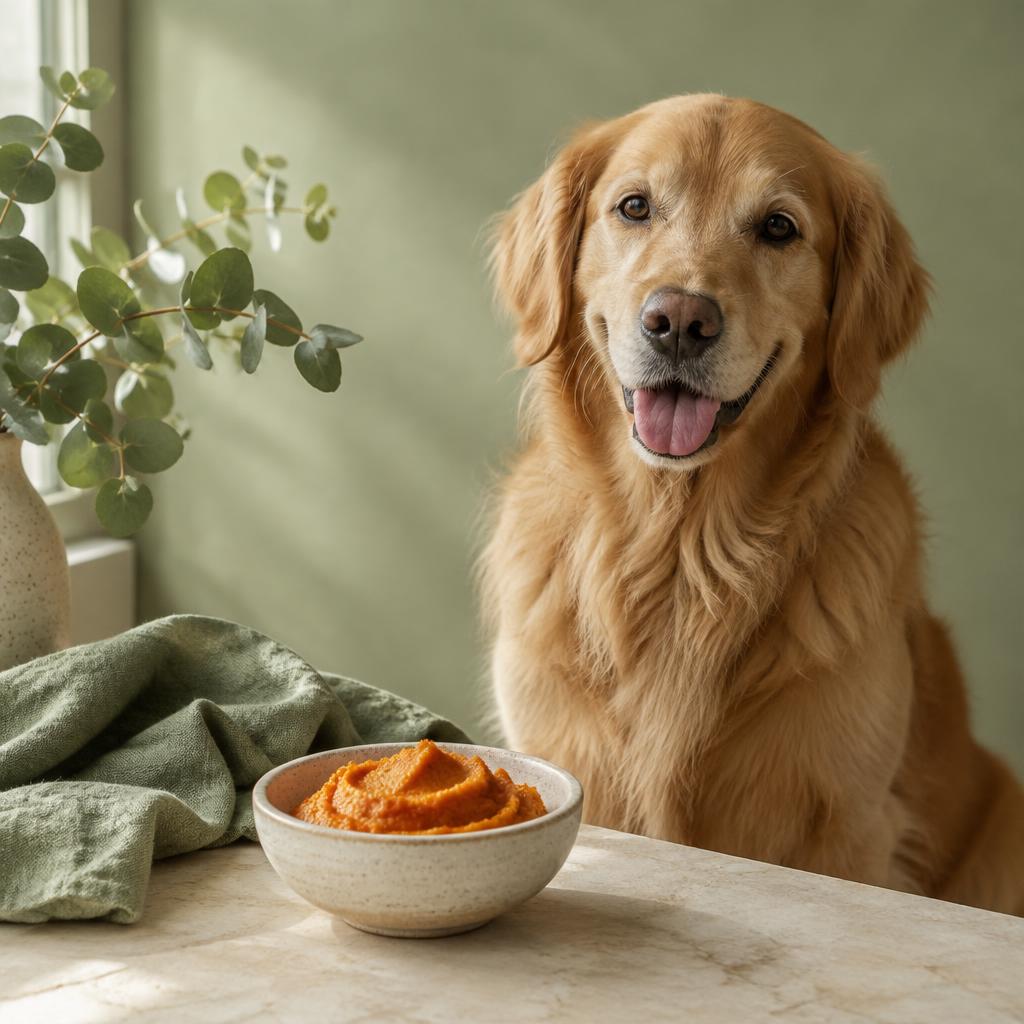
Yes, dogs can eat sweet potato when it is cooked and served plain. Boiled, steamed or baked with nothing added, it is a soft, digestible, nutrient-dense extra that most dogs find delicious. It should be a treat or small topper, not a staple.
Plain is the operative word. The moment sweet potato arrives as fries, pie, casserole or anything roasted with butter and seasoning, it stops being a dog food. Sugar, butter, salt, nutmeg, garlic and onion all belong to the human version, and several of them are harmful to dogs.
Why raw is off the menu
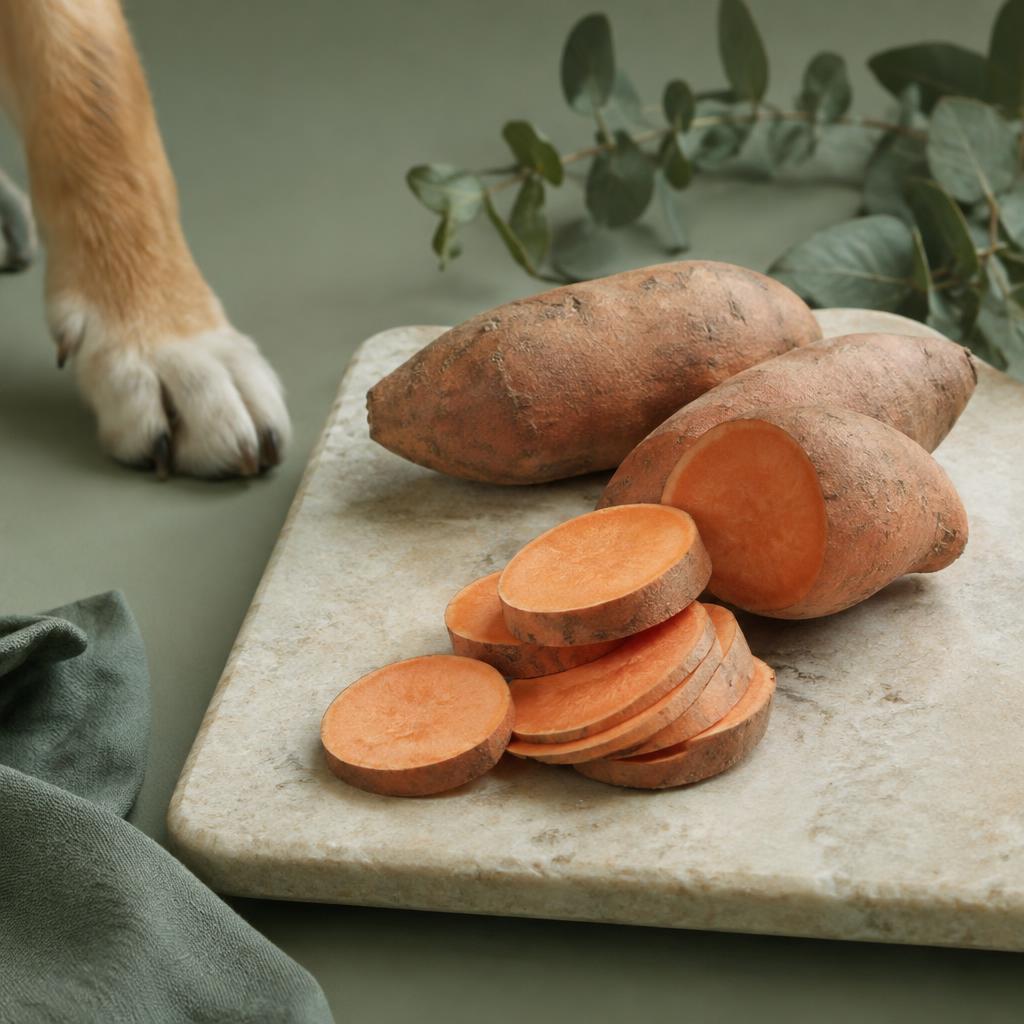
This is the one hard rule. Raw sweet potato is dense, starchy and very hard for a dog to break down. Swallowed in chunks, it is a real choking hazard, and larger pieces can cause an intestinal blockage, which is a surgical emergency.
If your dog has stolen a piece of raw sweet potato, the response depends on the size of the piece and the size of the dog. A small shaving is likely to pass with nothing more than some wind. A large chunk, especially in a small dog, warrants a phone call to the vet, and watch closely for gagging, vomiting, a painful or bloated belly, constipation or lethargy over the next few days. Any of those means straight to the vet.
Cooked sweet potato: the right way
The safe version could not be simpler. Peel, chop, boil or steam until soft, cool completely, and serve plain. Mash it, cube it small, or smear a spoonful inside a puzzle toy. That is the whole recipe.
Portion-wise, sweet potato is calorie-dense compared with vegetables like broccoli or cucumber, so the 10% treat rule bites sooner. As a rough guide:
| Dog size | Sensible serving of cooked sweet potato | How often |
|---|---|---|
| --- | --- | --- |
| Toy (under 5 kg) | One or two teaspoons, mashed | A few times a week |
| Small (5 to 10 kg) | A tablespoon or two | A few times a week |
| Medium (10 to 25 kg) | Two or three tablespoons or a few small cubes | A few times a week |
| Large (over 25 kg) | Up to a quarter of a cup | A few times a week |
Interactive tool
Sweet potato serving checker
Size and preparation in, a safe serving out.
Your plan
- For a medium dog, a sensible serving is two or three tablespoons or a few small cubes, within the 10% daily treat allowance.
- Serve it plain: boiled, steamed or baked, then mashed or cut into small cubes, with no butter, salt or seasoning.
- Let it cool fully before serving and introduce it slowly the first time.
- Sweet potato is starchy and calorie-dense: count it toward the day's calories and go easy with dogs who need to lose weight or have diabetes. Ask your vet first for diabetic dogs.
A nutritious occasional extra
Plain cooked sweet potato is a healthy extra in small amounts. Raw chunks and seasoned dishes are the ones to avoid.
What about the skin?
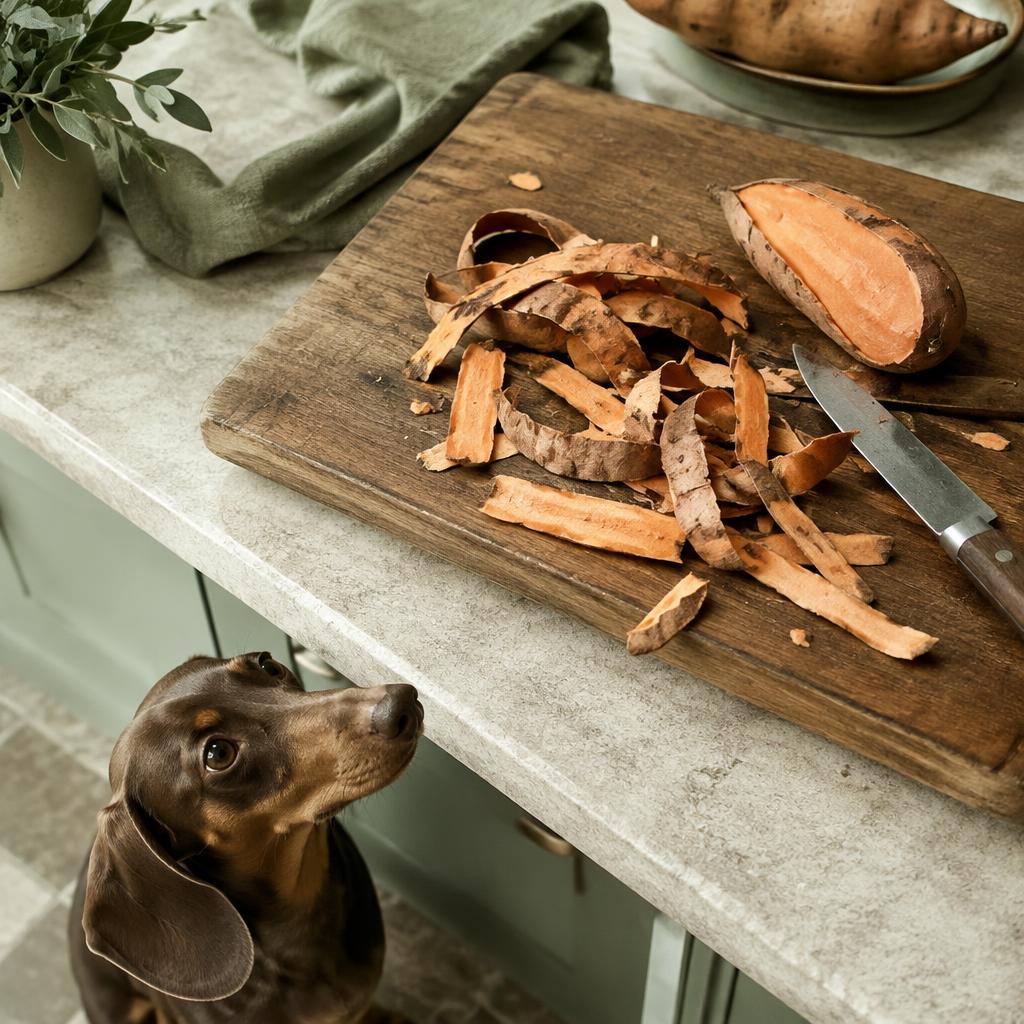
Sweet potato skin is not toxic, and a dog who eats a bit of cooked skin will almost certainly be fine. But it is tough, fibrous and hard to digest, and strips of skin are a choking risk for small dogs and gulpers. Peeling is the safer default. If you do leave the skin on, make sure it is thoroughly cooked and cut small, and skip it entirely for small breeds and dogs with sensitive digestion.
Is sweet potato actually good for dogs?
In treat quantities, yes. It brings fibre for digestion, beta-carotene (which the body converts to vitamin A), plus potassium and vitamin C. The fibre makes it a traditional home addition for mild digestive wobbles in either direction, though any ongoing digestive issue belongs with the vet, not the vegetable drawer.
Two groups of dogs need a conversation with the vet first. Diabetic dogs, because sweet potato is starchy and affects blood sugar. And dogs who need to lose weight, because it is easy to pour a lot of calories into a small orange cube. For those dogs, lower-calorie crunch like cucumber or carrot is the better treat.
The grain-free and DCM question
You may have seen headlines linking sweet potato to heart disease in dogs. The actual story is narrower and worth stating accurately. Since 2018, the FDA and veterinary researchers have been investigating a possible link between certain diets, typically grain-free foods listing legumes or potatoes high in the ingredients, and a heart condition called dilated cardiomyopathy (DCM). The research is ongoing, no causal proof has been established, and sweet potato itself has not been singled out as a cause.
The practical takeaway is proportion. A few spoonfuls of sweet potato as a treat is a completely different exposure from a diet where it is a primary ingredient, fed exclusively for years. If your dog eats a grain-free commercial diet, that is a sensible topic for your next vet visit, not a reason to panic about a cube of mash.
Sweet potato for puppies
Puppies can have sweet potato once they are happily eating solid food, but the rules tighten. Their stomachs are smaller and more reactive, and their growth diet is finely balanced, so treats of any kind should stay well under 10 per cent of daily calories. For a puppy that means a cube or two of plain, well-cooked sweet potato, offered occasionally rather than daily. Introduce it on its own, not mixed with other new foods, so that if the next day's stools are loose you know exactly what to blame.
One genuine puppy use: a little mashed sweet potato smeared inside a rubber chew toy and frozen makes an excellent teething-soother and settles a bored pup for a good while. Just count it toward the day's food.
Dried sweet potato chews
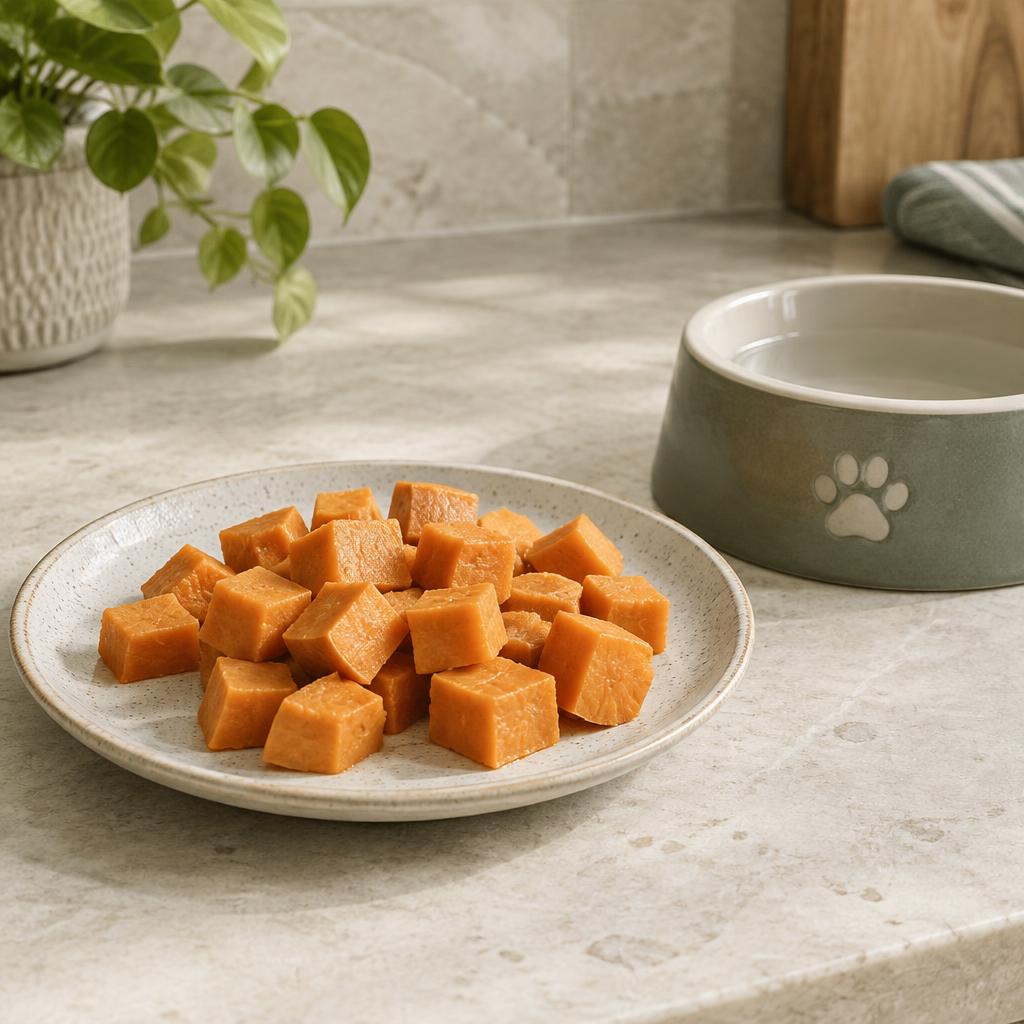
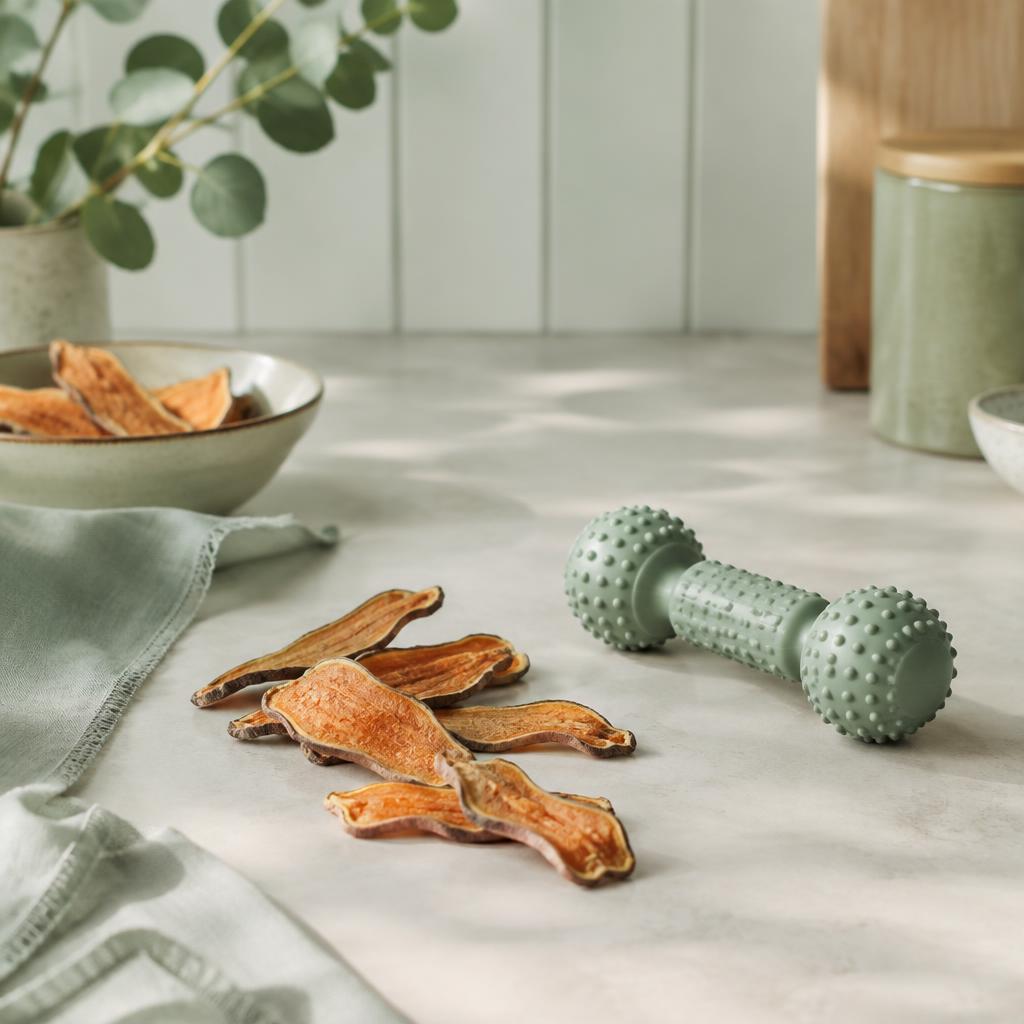
Dehydrated sweet potato chews are sold everywhere as a natural alternative to rawhide, and they are a genuinely better choice in one respect: no chemical processing, fully digestible. But two cautions apply. First, they are concentrated: drying removes the water, so a small chew carries the calories and sugar of a much larger piece of fresh sweet potato. Second, they are hard, and a dog who swallows a big chunk whole can end up with a gut problem of a different kind.
If you use them, buy chews sized for your dog, supervise while they are eaten, and count them in the treat budget. Home-dehydrating slices in a low oven works perfectly well and costs pennies.
Serving ideas that work
- A spoonful of plain mash mixed through dinner as an occasional topper
- Small cooked cubes used as training treats for food-motivated dogs
- A smear inside a rubber puzzle toy, frozen for a longer job
- Mashed and mixed with a little plain cooked pumpkin for a digestive-friendly topper
- Dehydrated plain slices, homemade, with nothing added, for a chewy treat
Skip entirely: fries, chips, pie, casserole, candied sweet potato, anything with marshmallow, and anything roasted with garlic, onion or heavy fat.
The rule with sweet potato is simple: cooked, plain, peeled and small. Break any one of those four and you have left the safe zone.
Sweet potato versus white potato
The question that always follows: what about ordinary white potatoes? The answer is stricter. White potatoes are nightshades, and raw white potatoes, green potatoes and the plant itself contain solanine, which is toxic to dogs. Plain, fully cooked white potato in small amounts is not poisonous, but it offers less than sweet potato nutritionally and carries more risk if preparation slips, so most vets steer owners toward sweet potato as the better default.
Two rules cover the whole topic neatly. First, never feed any potato raw, green or sprouted. Second, if you are going to share a potato at all, make it a sweet potato, cooked plain, skin off for most dogs. Our guide to foods dogs must never eat covers the genuinely dangerous list, and the tomatoes article explains the related green-potato family risk in more detail.
Buying and storing
Sweet potatoes keep well, which makes them an easy staple for dog households. Choose firm ones without soft spots or sprouting, store them somewhere cool and dark (not the fridge, which turns the texture hard and the flavour odd), and use them within a couple of weeks. If you are cooking for your dog regularly, batch-cook: roast or boil a few at the weekend, cube them, and keep them in a sealed box in the fridge for up to four days, or freeze portions for a month.
Skip the tinned sweet potato in syrup and anything pre-seasoned. Plain frozen sweet potato chunks with nothing added are fine and often the most convenient option of all.
Sweet potato in commercial dog food
If you read ingredient lists, you will have noticed sweet potato appearing in many complete dog foods, especially grain-free recipes. In a properly formulated complete food, it is a reasonable carbohydrate source, and its presence is not a problem in itself. The caveat is the DCM question covered earlier: when sweet potato, peas, lentils or other pulses dominate the top of the ingredient list in a grain-free diet, that is the pattern researchers have flagged. One starchy vegetable among several ingredients is a different picture from a food built on them.
For home feeding, the same principle scales down: sweet potato as an occasional topper or treat is a pleasure; sweet potato as a daily staple replacing proper dog food is an imbalance. Variety, moderation and a complete diet doing the heavy lifting is the formula that keeps this particular vegetable firmly in the treat column where it belongs.
When to see a vet
Go straight to the vet if your dog has swallowed a large piece of raw sweet potato and is gagging, retching, vomiting, or showing a painful or bloated belly. Phone for advice if a small dog has eaten any significant raw chunk, or if your dog has eaten a seasoned sweet potato dish containing garlic, onion, nutmeg or xylitol (check labels on anything sweetened). And if your dog is diabetic or on a prescription diet, ask before adding sweet potato at all.
The bottom line
Can dogs eat sweet potato? Happily, yes: cooked, plain and peeled, it is one of the more nutritious extras you can offer, and most dogs love it. Keep portions small, keep it occasional, keep the raw tuber and the holiday casserole out of reach, and it earns its place in the treat rotation.
For the rest of the carbohydrate and vegetable shelf, see our guides to can dogs eat rice and can dogs eat fruit, and use the portion calculator to see how treats fit into your dog's daily calories. Breeds that gain weight easily, like the Labrador Retriever and the Dachshund, do best with the smaller end of the serving range.
Questions people actually ask
Can dogs eat sweet potato every day?
A small spoonful most days is fine for a healthy dog if it stays within the 10% treat allowance, but sweet potato is starchy and calorie-dense, so daily feeding adds up quickly. For most dogs it works better as an occasional extra than a daily habit.
Can dogs eat raw sweet potato?
No. Raw sweet potato is very hard to digest, and chunks of it are a genuine choking and intestinal blockage risk. Always cook it: boiled, steamed or baked, with nothing added.
Can dogs eat sweet potato skin?
The skin is not toxic, but it is tough, fibrous and hard to digest, and it can be a choking hazard for small dogs. Peeling is the safer default, especially for small breeds and dogs with sensitive stomachs.
Is sweet potato good for dogs?
In small amounts, yes. It offers fibre, beta-carotene, vitamin A and potassium. The caveat is that it is starchy: it is a treat or a small meal topper, not a health food your dog needs, and it is easy to overfeed.
Can dogs eat sweet potato fries or pie?
No. Fries are fried in fat and salted, and sweet potato pie or casserole usually contains sugar, butter, nutmeg and sometimes marshmallow. Nutmeg is harmful to dogs, and rich fatty dishes can trigger pancreatitis. Plain cooked sweet potato only.
Does sweet potato cause heart disease in dogs?
The link being investigated is between certain grain-free diets heavy in legumes and potatoes and a heart condition called dilated cardiomyopathy (DCM). Research is ongoing and no firm conclusion has been reached. Feeding small amounts of sweet potato as a treat is a very different exposure from a diet built on it, but if your dog eats a grain-free diet, it is worth discussing with your vet.
Sources
Breeds mentioned

Golden Retriever
A gentle, biddable gundog famed for its patience with children and its glossy golden coat.

Dachshund
A bold, characterful hunting breed in a long, low body, needing careful back protection for life.

Labrador Retriever
Britain's most popular family dog: biddable, food driven and built for an active household.
Put it into practice
Read next
Can Dogs Eat Oatmeal? Cooked, Raw and Flavoured
Plain oatmeal cooked in water is safe for dogs in small servings and its soluble fibre can help mild diarrhoea. Avoid flavoured sachets, raw oats and porridge made with milk or sugar.


