
Can Dogs Eat Rice? White vs Brown and When It Helps
Rice is one of the few human foods that earns its place in a dog's bowl: plain, cooked and unseasoned, it is gentle, useful and safe. The skill is knowing when it helps, when it is just filler, and when the upset stomach behind it needs a vet.
The SniffScroll desk
Published 10 October 2026
Reviewed against guidance from VCA, PDSA, AKC, Merck and the RSPCA
The short version
- Dogs can eat plain cooked rice: it is safe, digestible and a useful meal topper or bland-diet base.
- White rice is the gentle choice for upset stomachs; brown rice suits healthy dogs but is richer in fibre.
- Serve it plain: no salt, butter, stock, onion or garlic.
- A bland diet of rice and boiled chicken is a one-to-two-day bridge, not a long-term diet.
- If diarrhoea lasts past 48 hours, or comes with vomiting, blood or lethargy, call the vet rather than reaching for more rice.
Yes, dogs can eat rice. Plain, cooked, unseasoned rice is one of the safest human foods a dog can share, and one of the few with a genuine job to do: it is the base of the classic bland diet for an upset stomach, and a gentle, digestible topper for healthy dogs. The rules are short. Cook it, keep it plain, keep the portion modest, and know when the problem behind the rice bowl needs a vet instead.
Is rice good for dogs?
Rice is useful rather than essential. It is an easily digested carbohydrate that gives energy without asking much of the gut, which is exactly why vets reach for it when a stomach is misbehaving. For a healthy dog, a spoonful of rice through dinner adds variety and a few calories; for a dog with a simple upset stomach, it is a soft landing while things settle.
What rice is not is a diet. It lacks the protein, fat, vitamins and minerals a dog needs long-term, so it only ever plays a supporting role next to a complete food. A dog fed mostly rice will eventually be a malnourished dog.
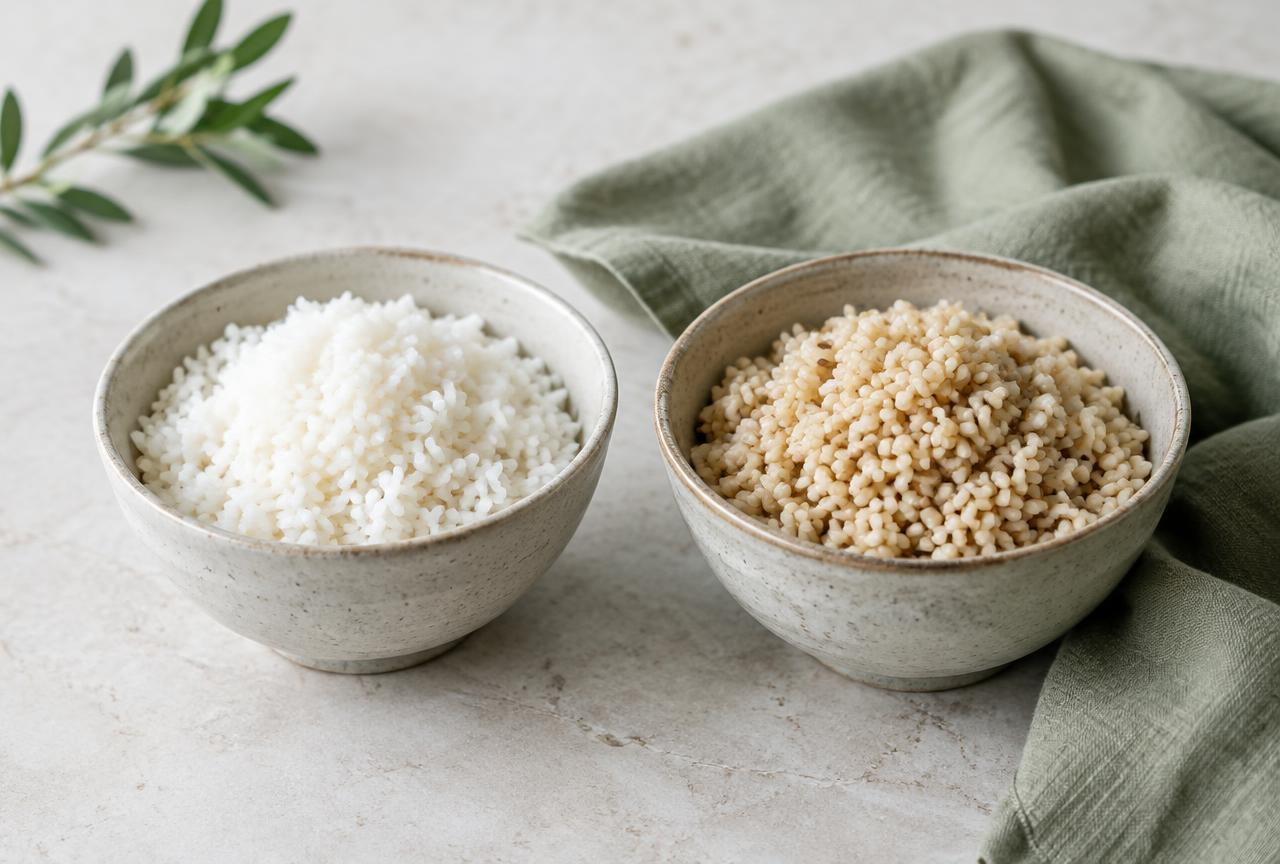
White rice vs brown rice
Both are safe; they suit different situations.
| White rice | Brown rice | |
|---|---|---|
| --- | --- | --- |
| Digestibility | Very high, gentle on the gut | Lower, the bran layer slows digestion |
| Fibre | Low | Higher |
| Nutrients | Fewer, the bran is milled away | More: B vitamins, magnesium, manganese |
| Best for | Upset stomachs, bland diets | Healthy dogs as an occasional topper |
The short version: brown rice is the more nutritious grain, white rice is the more useful medicine. When a stomach is upset, you want the one that asks the least of it, and that is white.
Rice for a dog with diarrhoea: the bland diet, done properly
The classic vet-suggested bland diet is plain boiled white rice with plain boiled, skinless chicken, in roughly equal parts, served as small meals through the day. It gives the gut something easy to work on while it recovers from a simple dietary indiscretion: the stolen sandwich, the bin raid, the sudden food change.
Done properly, it looks like this:
- 1Rest and water first. For a bright adult dog with one loose stool, make sure fresh water is always available. Do not withhold water.
- 2Serve small, frequent meals. Three to four small portions of rice and chicken through the day, not one big bowl.
- 3Bridge back. Once stools firm up, mix the normal food back in over two to three days.
- 4Stop at 48 hours. If things have not clearly improved in two days, the answer is a vet, not another day of rice.
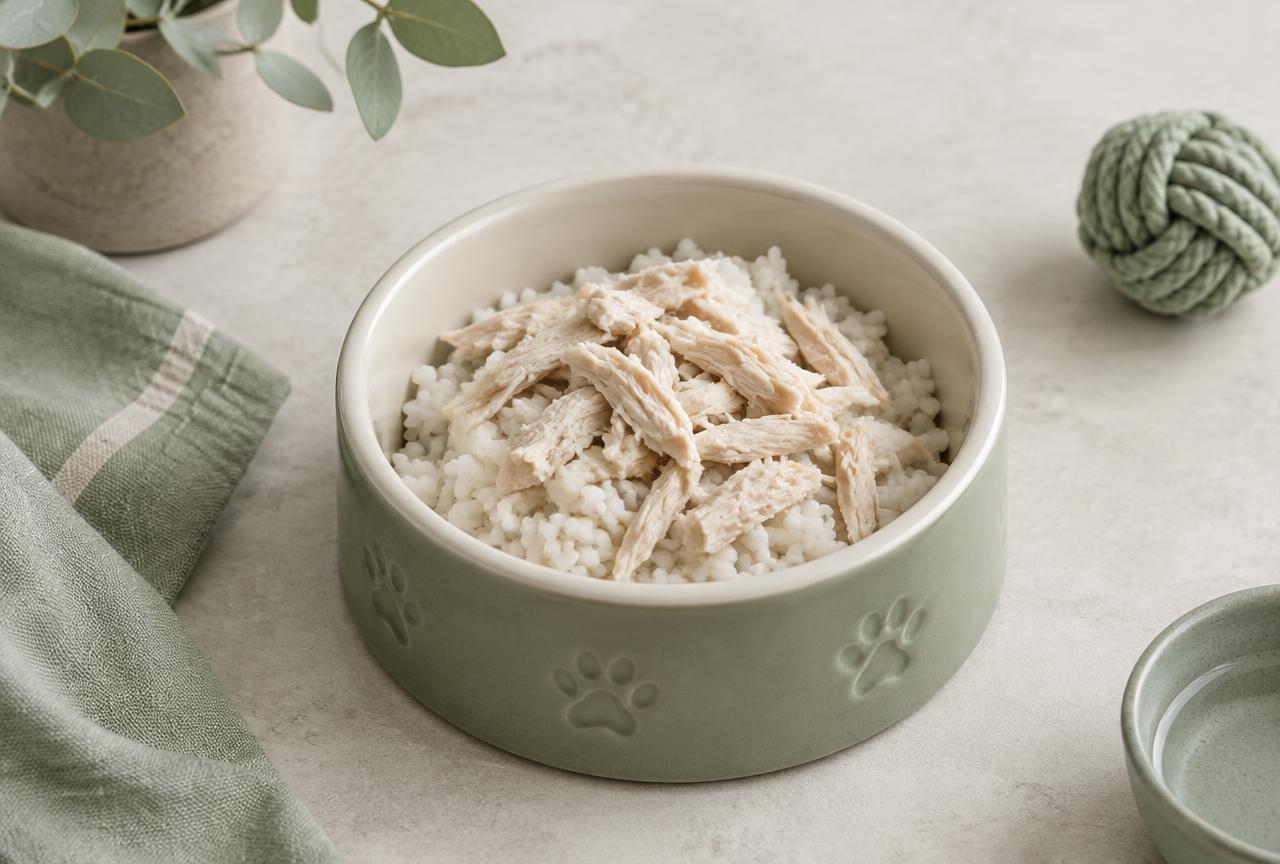
The bland diet is for the bright, otherwise-normal adult dog with a mild upset. It is not for puppies, seniors, dogs with existing conditions, or any dog with vomiting, blood in the stool, lethargy or pain: those go straight to the vet. Our guide to dog diarrhoea walks through the red flags in detail.
How much rice to feed a dog
As a topper on a complete food:
| Dog size | Example weight | Cooked rice topper |
|---|---|---|
| --- | --- | --- |
| Toy | Under 5 kg | 1 tablespoon |
| Small | 5 to 10 kg | 1 to 2 tablespoons |
| Medium | 10 to 25 kg | 2 to 4 tablespoons |
| Large | Over 25 kg | Up to half a cup |
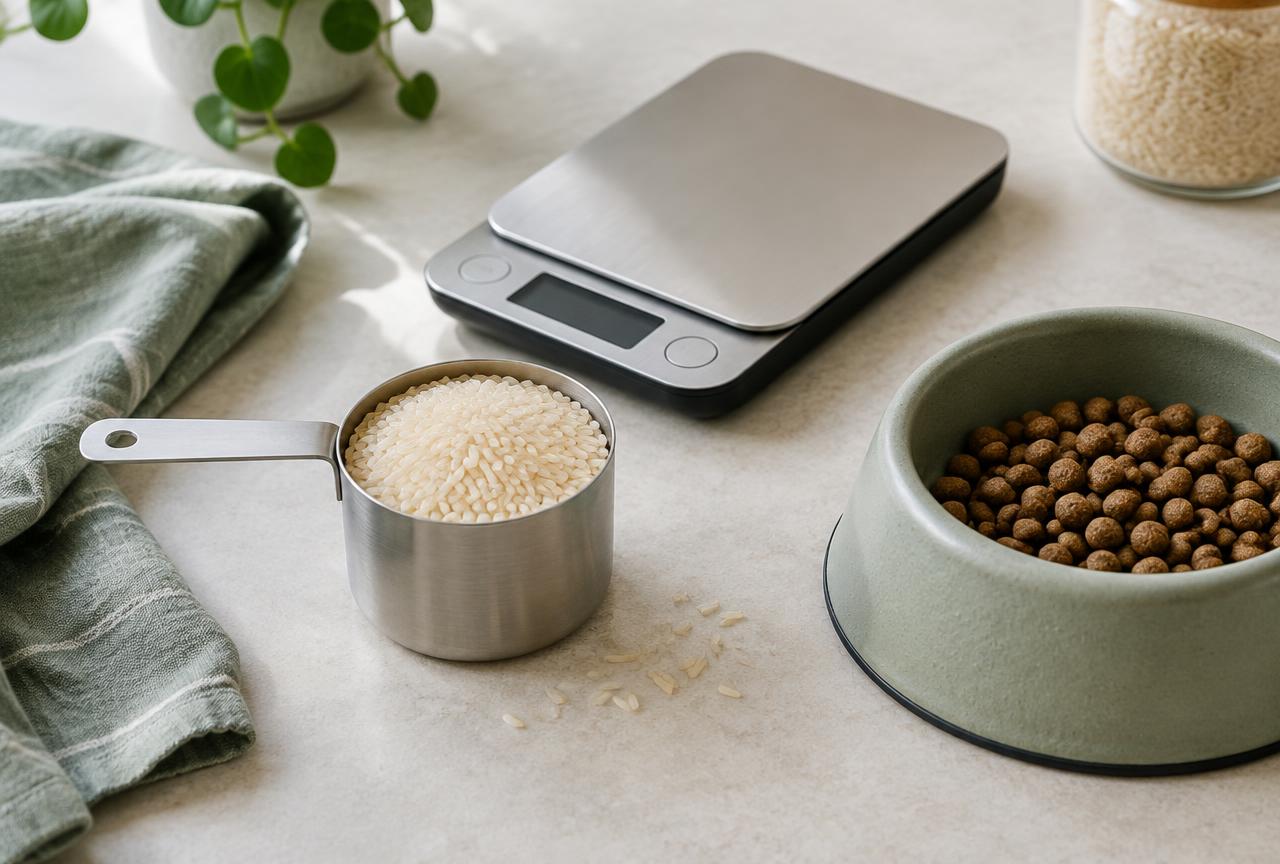
Rice is about 130 calories per 100 grams cooked, so a daily topper adds up. If rice becomes a habit, trim the main food slightly to keep the day's calories level, or keep rice to a few times a week. Breeds with famously efficient metabolisms and famous appetites, the Labrador Retriever being the obvious one, will not do the trimming for you.
How to cook rice for your dog
Boil it in plain water until soft, then cool it. That is the whole recipe. Specifically not:
- No salt. Dogs do not need it and do not miss it.
- No butter or oil. Added fat is the last thing an upset stomach needs.
- No stock cubes. Most contain onion powder, which is toxic to dogs.
- No fried rice, pilau or takeaway rice. Seasoned, fatty and often onion-adjacent.
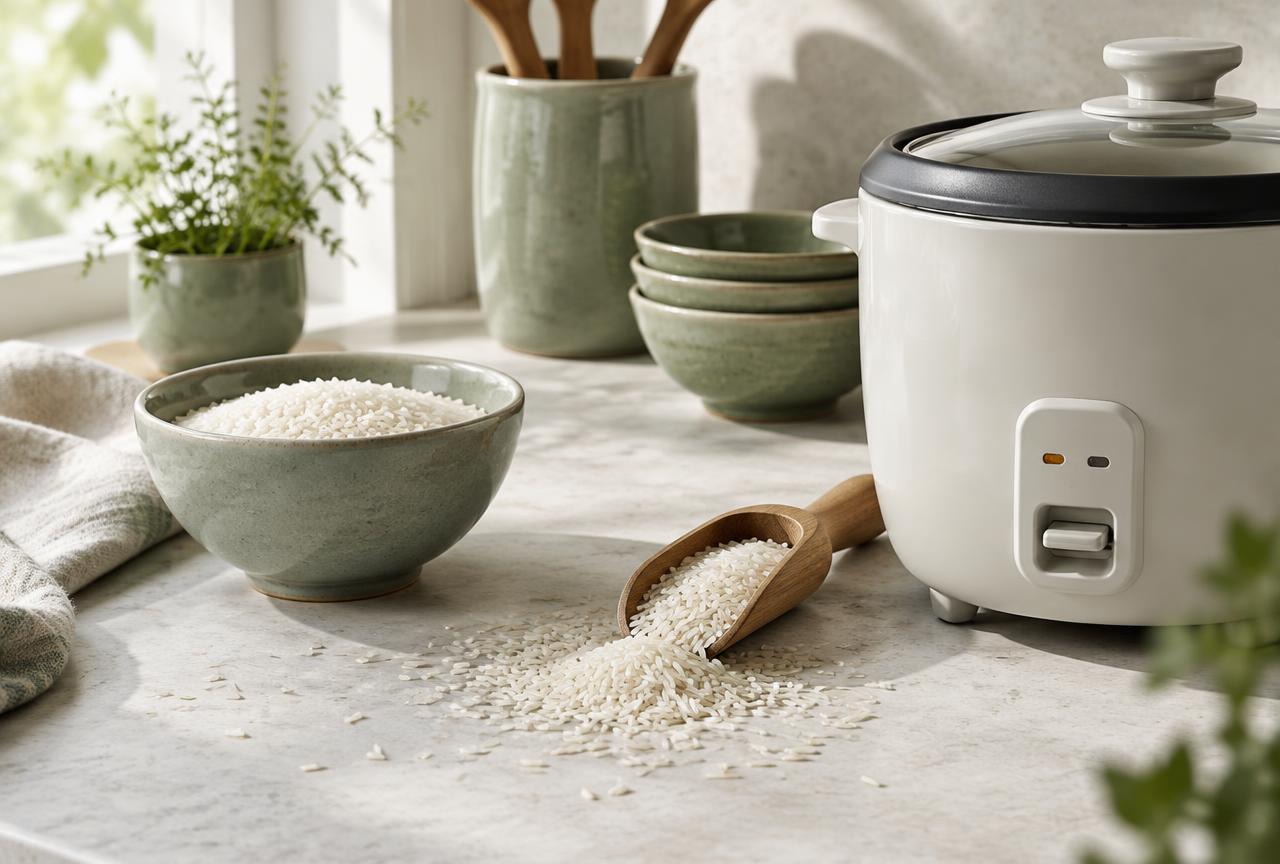
Uncooked rice is off the menu too: it is hard to digest and can swell in the stomach. Cooked rice keeps in the fridge for a day or two; reheat or serve at room temperature, and throw out leftovers past that, as cooked rice grows bacteria quickly.
When rice is the wrong answer
Rice has limits, and knowing them matters more than the recipe. Skip the home remedy and call the vet when:
- Diarrhoea lasts beyond 48 hours, or is severe or contains blood
- Vomiting comes with it, or the dog cannot keep water down
- The dog is a puppy, a senior, or has a condition like diabetes or kidney disease
- The dog seems flat, painful or feverish
Diabetic dogs are a special case: white rice is high on the glycaemic index and can spike blood sugar, so it belongs in a vet-agreed plan only.
For portion maths across the whole diet, the portion calculator gives a daily target by size and activity, and the tummy triage tool in our diarrhoea guide helps you decide between home care and the vet.
Interactive tool
Rice portion checker
Dog size, purpose and frequency in, portion guidance out.
Your plan
- As a topper, a medium dog can have about two to four tablespoons of cooked rice mixed into a normal meal.
- A few times a week, counted in the day's calories, suits most healthy dogs.
- Serve it plain: no salt, butter, stock cubes, onion or garlic.
- Brown rice is fine for healthy dogs but richer in fibre; white rice is the gentler choice for a sensitive stomach.
A sensible topper
Plain cooked rice is safe for dogs and useful in the right situations. It is a supporting act, never the whole diet.
When to see a vet
Rice is a home remedy for the mildest, simplest upset stomachs in otherwise healthy adult dogs. Call the vet if symptoms pass 48 hours, if there is vomiting, blood, lethargy or pain, or if the dog is very young, very old or managing another condition. A bland diet buys a day or two of comfort; it never replaces a diagnosis.
Rice vs other bland-diet options
| Option | Digestibility | Notes |
|---|---|---|
| --- | --- | --- |
| White rice + boiled chicken | Excellent | The classic, and still the default |
| Plain boiled potato | Good | Peeled, boiled, unseasoned |
| Plain pasta | Good | A reasonable stand-in when the rice jar is empty |
| Pumpkin (plain, cooked) | Good | Gentle fibre, helps both directions of upset |
| Brown rice | Moderate | Too much fibre for an already-upset gut |
A bland-diet checklist
- Dog is a bright, otherwise normal adult
- No vomiting, blood, lethargy or pain
- Fresh water always available
- Rice boiled in plain water, chicken boiled and skinless
- Small meals, three to four times a day
- Normal food mixed back in over two to three days once stools firm
- Vet called if there is no clear improvement by 48 hours
The verdict, by situation
Healthy dog, variety topper: a spoonful of plain rice through dinner a few times a week is fine. Mild one-off diarrhoea in a bright adult: the rice and chicken bridge is exactly right, for a day or two. Puppy with diarrhoea: skip the home remedy and call the vet; puppies dehydrate fast. Diabetic dog: white rice spikes blood sugar, so it only belongs in a vet-agreed plan. Chronic soft stools: rice masks rather than fixes; the cause needs finding.
Rice is the fire blanket of dog feeding: exactly right in a small emergency, not something you live under.
Common myths, cleared up
"Rice cures diarrhoea." It rests the gut; it does not treat infection, parasites or disease. "Grain is bad for dogs." The grain-free trend outran the evidence, and some grain-free diets have been linked to heart disease in dogs. Plain rice, in moderation, is not the enemy. "Dogs cannot digest carbohydrate." They can: domestic dogs carry multiple copies of the amylase gene, a legacy of ten thousand years beside our cooking fires.
Rice in commercial dog food: what the label means
Rice appears in plenty of complete dog foods, and its presence is not a red flag. In a formulated food, rice is a digestible carbohydrate source balanced against protein, fat and everything else the dog needs; the balance is the manufacturer's job and the recipe is tested to be complete. That is a different situation from home feeding, where rice is whatever proportion you scoop. The practical takeaway: rice in a complete food needs no thought, rice added at home needs portion sense, and a home-cooked diet built around rice needs a veterinary nutritionist's recipe, because "chicken and rice" as a permanent diet is missing most of what a dog needs.
Cooking and storing rice safely
Cook rice in plain water until soft, with nothing added, and let it cool before serving. The food-safety rule for people applies to dogs too: cooked rice grows Bacillus cereus quickly at room temperature, so refrigerate leftovers within an hour or two, keep them no more than a day or two, and reheat thoroughly or serve at room temperature. When in doubt, throw it out and cook fresh; rice is cheap and a stomach bug is not. If you are cooking rice regularly for a bland diet, a small rice cooker earns its space: plain rice, no seasoning, no thinking.
The bottom line
Rice is the reliable supporting act of dog feeding: a gentle topper for healthy dogs, a short-term bridge for simple upset stomachs, and never the whole diet. Keep it plain, keep the portions honest, and keep the 48-hour rule: a stomach that has not settled in two days belongs to the vet, not to another bowl of rice.
A note on the calories
Rice is easy to serve and easy to over-serve, because a scoop looks small and acts large. Cooked white rice runs to about 130 calories per 100 grams, so half a cup, a routine large-dog topper, is around 100 calories, or a tenth of a 20 kg dog's entire day. That is fine when it is planned and the main bowl shrinks to match; it is a slow weight gain when it is added on top of everything else. The kitchen scale settles the question in seconds, and a monthly weigh-in confirms it. Dogs do not count calories, which is why we have to.
If your dog will not eat it
A healthy dog who turns away from plain rice is not missing anything essential, and there is no need to make it palatable with butter, stock or gravy, all of which defeat the point. For the topper role, a little of the dog's own wet food stirred through does the job honestly. For the bland-diet role, a dog who refuses rice and chicken while unwell is telling you something: a sick dog off even bland food is a vet call, not a recipe problem.
Questions people actually ask
Can dogs eat rice every day?
A small amount of plain cooked rice mixed into a complete dog food is fine for most healthy dogs, but rice should never replace a balanced diet. Daily rice adds calories without the full range of nutrients, so keep it as a topper and adjust the main food accordingly.
Is white or brown rice better for dogs?
It depends on the job. White rice is more digestible and is the right choice for a bland diet when a stomach is upset. Brown rice keeps its bran layer, so it has more fibre and nutrients, and suits healthy dogs as an occasional topper.
How much rice should I feed my dog?
As a topper: a tablespoon for a toy dog up to half a cup for a large dog, mixed into a normal meal. As part of a vet-suggested bland diet: roughly equal parts rice and plain boiled chicken, split into small meals for a day or two.
Does rice help a dog with diarrhoea?
Plain white rice with boiled chicken is the classic short-term bland diet and can firm up a mild, simple upset stomach. It is a bridge for 24 to 48 hours. If the diarrhoea is severe, contains blood, or lasts beyond two days, the dog needs a vet, not more rice.
Can dogs eat uncooked rice?
No. Uncooked rice is hard to digest, can swell in the stomach and may carry Bacillus cereus spores. Always cook rice plainly in water before serving, and never season it.
Can puppies eat rice?
Yes, plain cooked rice is safe for puppies and is often part of a vet-recommended bland diet for a puppy with a mild upset stomach. Puppies dehydrate fast, so any puppy with diarrhoea that lasts more than a few hours, or who seems flat, should see a vet promptly.
Sources
Breeds mentioned



Put it into practice
Read next
Can Dogs Eat Oatmeal? Cooked, Raw and Flavoured
Plain oatmeal cooked in water is safe for dogs in small servings and its soluble fibre can help mild diarrhoea. Avoid flavoured sachets, raw oats and porridge made with milk or sugar.


