
Can Dogs Eat Pears? Core, Seeds and Portions
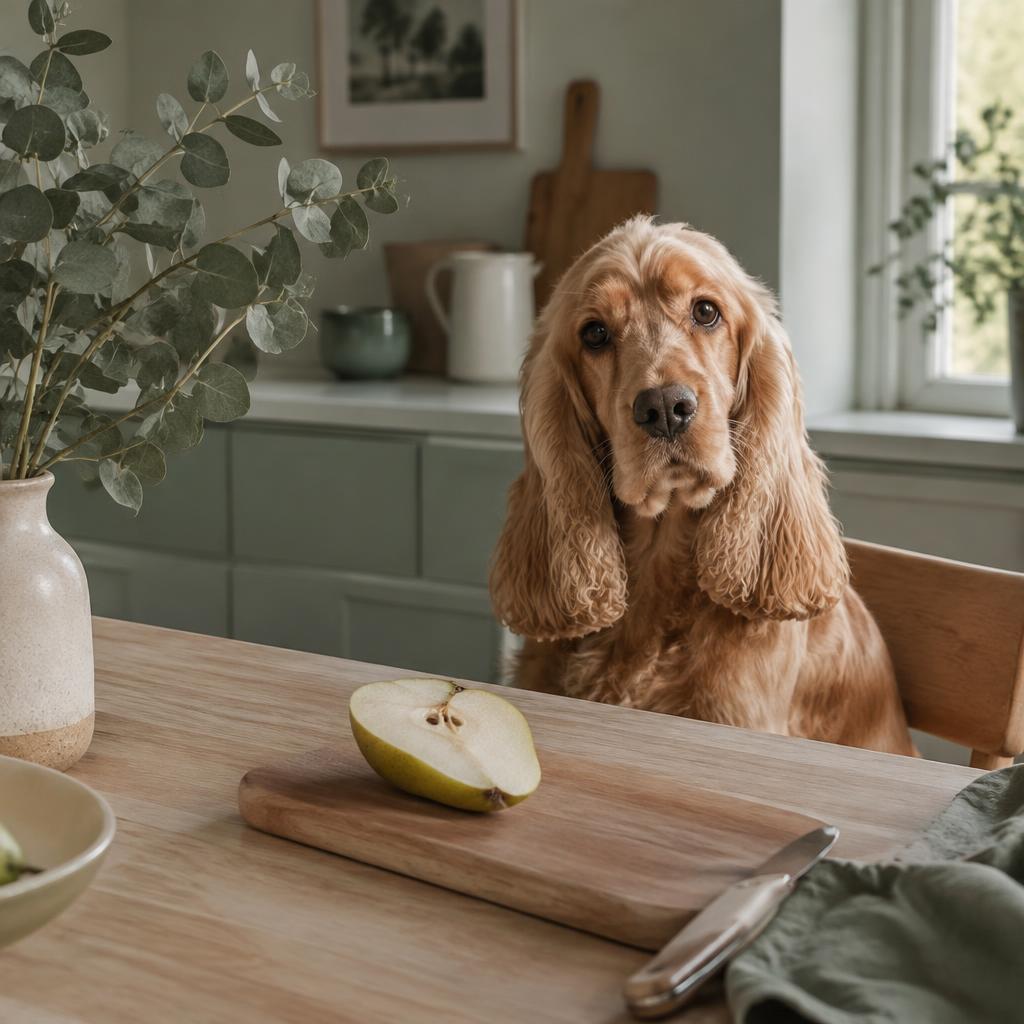
Fresh pear is one of the better fruit treats for dogs: sweet, hydrating and full of fibre. The core and seeds need to come out first, and portions stay small. Here is the full picture.
The SniffScroll desk
Published 11 October 2026
Dr Emma Hartley MRCVS
The short version
- Fresh pear flesh is a safe, hydrating, fibre-rich treat once the core and seeds are removed.
- Pear seeds contain trace cyanide compounds and the core is tough and hard to digest.
- A medium dog can have a small handful of cubes a few times a week, inside the 10% treat allowance.
- Tinned pears in syrup and dried pears are too sugary; check labels for xylitol.
- Windfall fermenting pears can cause stomach upsets or worse: rake them up.
Can dogs eat pears?
Yes, dogs can eat pears, and pears are honestly one of the better fruits to share. The flesh is sweet, juicy, high in fibre and water, and gentle on most stomachs. As with apples, the rule is simple: the flesh is the treat, the core and seeds are not. Remove them, cube the fruit, and you have a healthy little snack most dogs will take enthusiastically.
The two cautions are the seeds, which contain trace amounts of cyanide compounds, and the sugar content, which keeps portions small. Neither is a reason to avoid pears altogether; both are reasons to prepare them properly.
Why the core and seeds come out
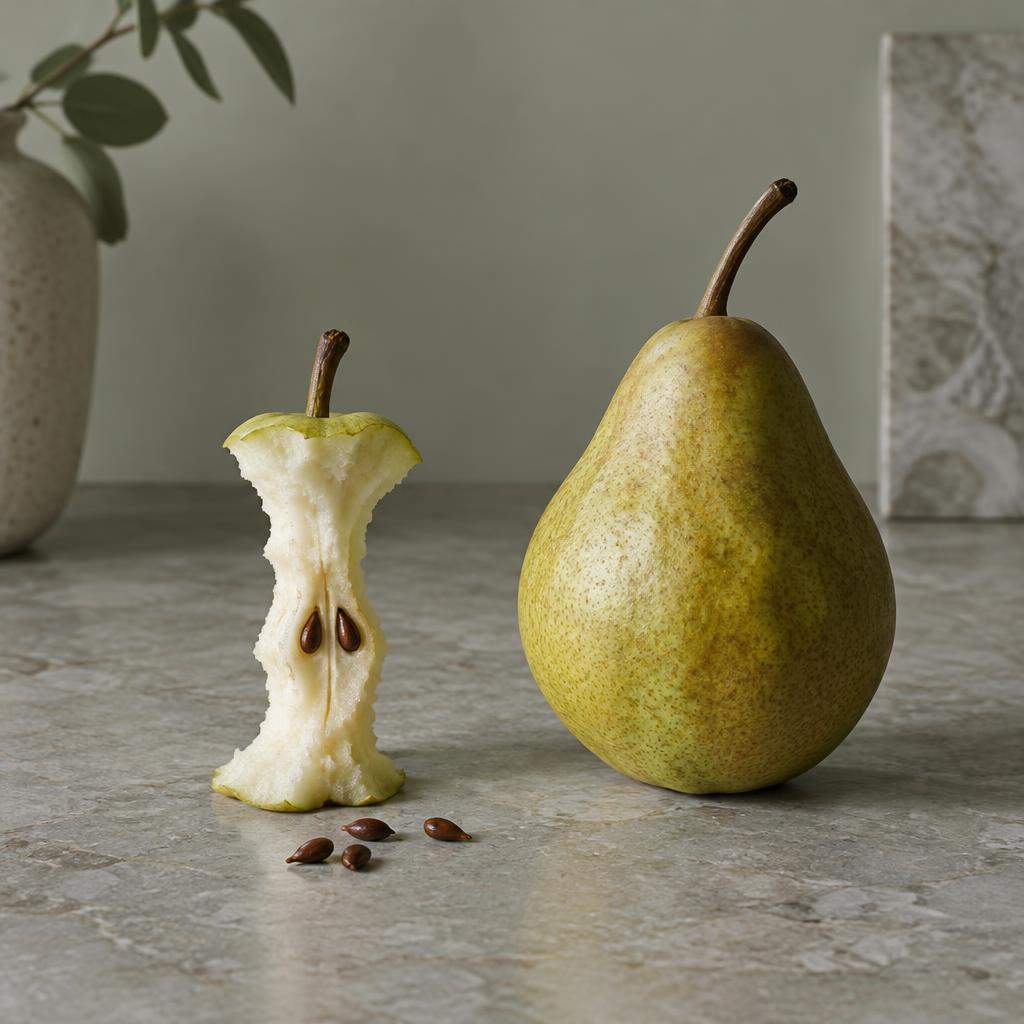
Pear seeds, like apple pips, contain amygdalin, which releases cyanide when chewed and digested. A dog would need to crunch through a large number of seeds to reach a harmful dose, so a swallowed seed or two is not a crisis. The core is the more practical problem: it is tough, fibrous and hard to digest, and in a small dog a whole core can be a choking hazard or a gut irritant.
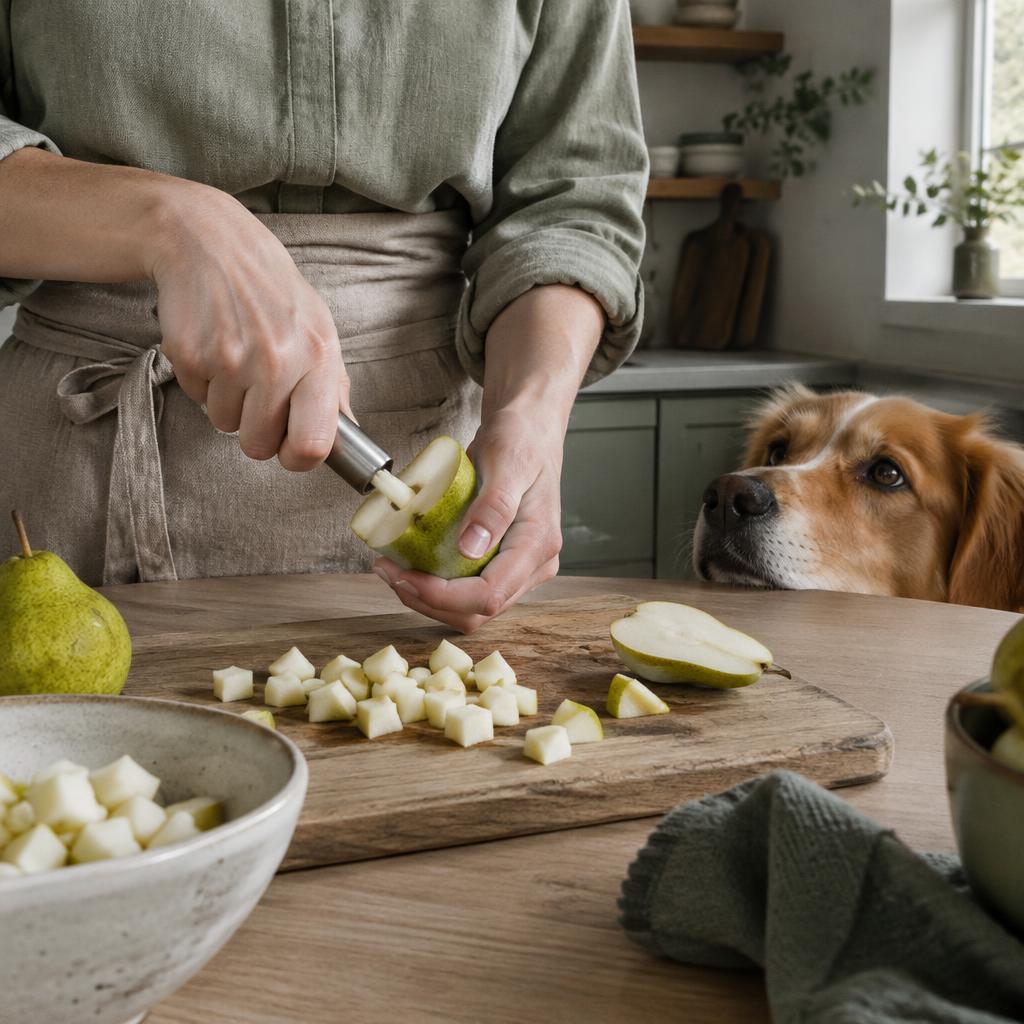
The habit to build is the same one you would use for yourself: quarter the pear, cut the core out in one V-shaped slice, and check no seeds remain before the fruit goes anywhere near the dog.
How much pear can a dog eat?
Pears are about 10% sugar, so the 10% treat rule keeps servings modest. A medium pear is roughly 100 calories, which is a meaningful chunk of a small dog’s day:
| Dog size | Sensible serving | How often |
|---|---|---|
| --- | --- | --- |
| Toy (under 5 kg) | 1 to 2 bite-size cubes | A few times a week |
| Small (5 to 10 kg) | 2 to 3 bite-size cubes | A few times a week |
| Medium (10 to 25 kg) | A small handful of cubes | A few times a week |
| Large (25 kg plus) | Half a pear, cubed | A few times a week |
| Giant breeds | Half a large pear, cubed | A few times a week |
Pear is high in fibre, which is a benefit in small amounts and a laxative in large ones. Introduce it slowly, and if you see loose stools, cut the portion back.
Tinned, dried and cooked pears
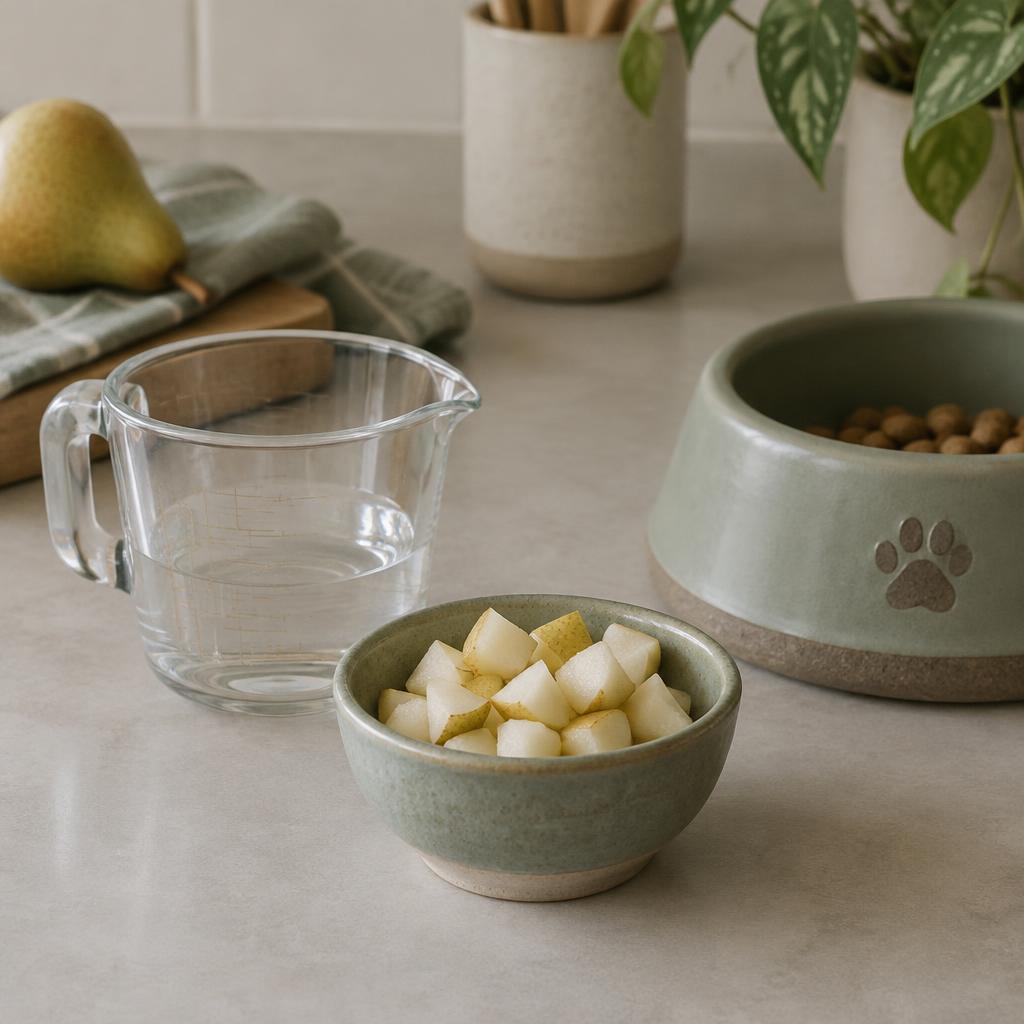
Tinned pears in syrup are best avoided: the syrup doubles the sugar load and can upset the stomach. Check any tinned fruit label for xylitol, which is toxic to dogs and means an immediate vet call if eaten. Pears tinned in juice, drained and rinsed, are acceptable as an occasional stand-in, but fresh ripe pear is better in every way.
Dried pear concentrates the sugar and often comes with added preservatives, so skip it. Poached pears in syrup, pear crumble and pear tart all arrive with sugar, butter and pastry attached, so those are for the humans only.
Are pears good for dogs?
In treat-sized amounts, yes. Pears bring vitamin C, vitamin K, copper, a useful amount of fibre, and a high water content that makes them hydrating on warm days. They are lower in calories per gram than most commercial treats, so a few cubes are a sensible swap for a biscuit.
As with all fruit, the honest framing is that your dog’s complete food already covers their nutritional needs. Pear is a pleasure with benefits, not a supplement, and it earns its place as a treat rather than a health strategy.
How to serve pear safely
- 1Choose a ripe but not mushy pear and wash it well.
- 2Quarter it and cut out the core and seeds.
- 3Cube the flesh into bite-size pieces for your dog’s size.
- 4Leave the skin on: it is safe, and most dogs handle it well.
- 5Serve fresh, or freeze cubes for a cooling summer treat.
Very ripe, fermenting windfall pears are a different matter: the natural sugars begin to turn to alcohol, and a dog that gorges on fallen fruit can end up with a stomach upset or worse. If you have a pear tree, rake up the windfalls.
My dog ate a pear core: what now?
A single core, seeds included, will almost always pass through a medium or large dog without trouble. Watch for vomiting, gagging, a painful belly or straining over the next 48 hours, and phone the vet if any appear. For toy breeds, or a dog that has eaten several cores, a quick call to the vet for advice is the sensible move. There is no need to panic, and no need to make your dog sick at home.
Interactive tool
Pear portion checker
Dog size and preparation in, portion guidance out.
Your plan
- For a medium dog, a serving is about a small handful of cubes, inside the 10% treat allowance.
- Wash, quarter, core and cube the pear; the skin is fine to leave on.
- Pear is high in fibre, so introduce it slowly to avoid loose stools.
- Keep portions modest for overweight or diabetic dogs, as pears are sugary.
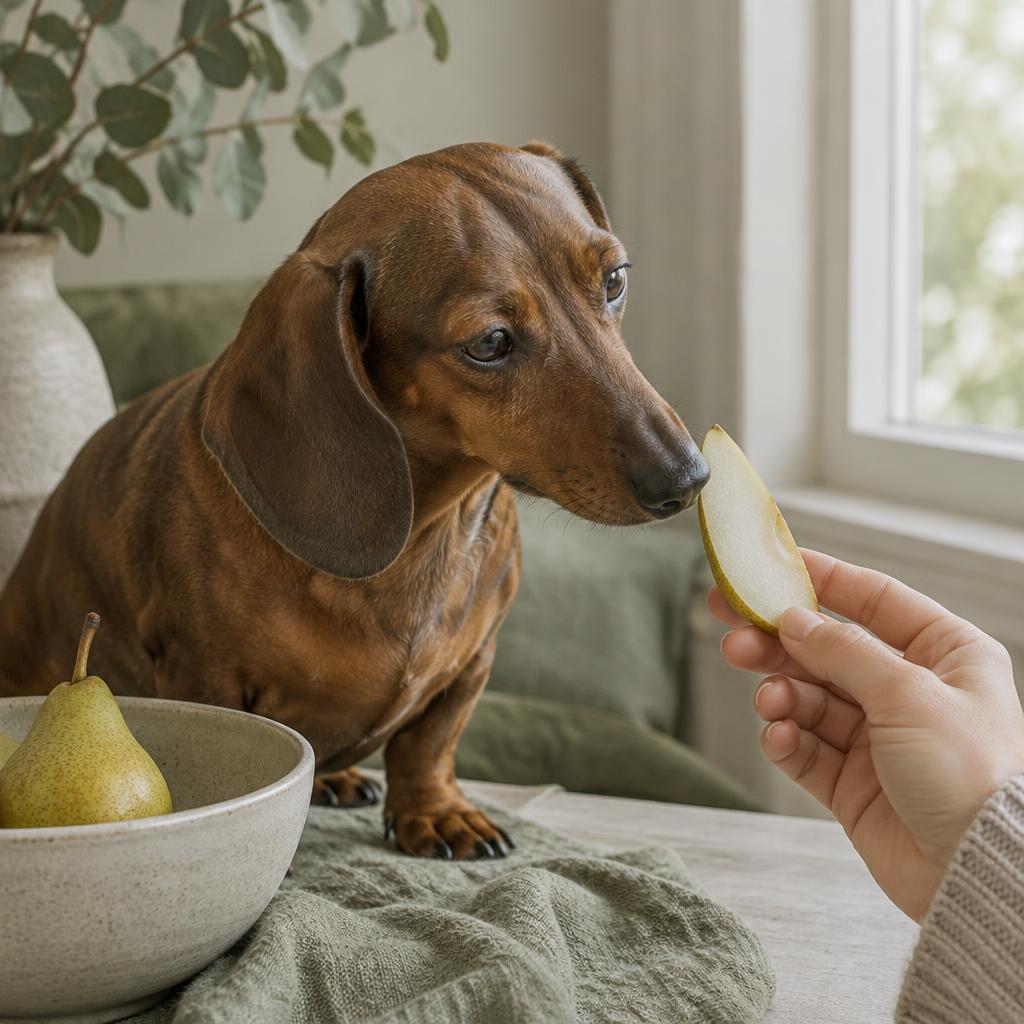
Cored fresh pear is a great treat
Fresh cored pear is one of the better fruit treats. Remove the core and seeds, and skip the syrup.
Choosing and storing pears for your dog
The best pear for sharing is ripe but not soft: it should give slightly at the neck when pressed. Under-ripe pears are hard, starchy and more likely to cause stomach grumbles, while over-ripe pears are sweeter and messier. Conference, Bartlett and Anjou types are all fine; variety makes no difference to safety. Store pears in the fruit bowl or fridge well back from the edge, because a ripening pear smells wonderful to a dog, and a counter-surfing Labrador does not wait for the core to be removed. If your dog does steal a whole pear, the guidance in the core section above applies.
When to see a vet
See the vet promptly if your dog shows choking signs, repeated vomiting, a painful or swollen belly, or straining after eating cores or a whole pear. For ordinary over-indulgence in flesh, expect a soft stool or two and see the vet if diarrhoea lasts more than a day or your dog seems uncomfortable.
Pear products: a quick comparison
| Pear product | Safe for dogs? | Why |
|---|---|---|
| --- | --- | --- |
| Fresh, cored, cubed | Yes, in small servings | The safest form |
| Fresh with skin | Yes | Skin is safe and fibrous |
| Frozen cubes, cored | Yes | A good cooling treat |
| Tinned in juice, rinsed | Acceptable rarely | Sweeter than fresh |
| Tinned in syrup | Best avoided | Heavy sugar load |
| Dried | Best avoided | Concentrated sugar, additives |
| Core and seeds | No | Trace cyanide compounds, hard to digest |
| Windfall or fermenting fruit | No | Alcohol and stomach-upset risk |
Pears for dogs with sensitive stomachs
Pear is often suggested as a gentle fruit for dogs with delicate digestion, and there is some truth in that: it is low in acid, soft when ripe, and rarely an allergen. The fibre is the variable. For a dog prone to loose stools, start with a single small cube, peeled, and see how the next day goes before offering more. Cooked, plain pear (poached in water, nothing added) is softer still and easier to digest, though it loses a little of its vitamin content in the pot.
Training with pear
Cubed pear makes a useful low-calorie training reward for dogs who like it, especially dogs on a weight-management plan where every treat calorie counts. Keep the cubes small, count them toward the day’s treat allowance, and remember that some dogs find fruit unrewarding compared with meaty treats. If your dog spits it out, that is information too: there is no reason to insist.
A note for multi-dog households
Portion pear per dog rather than offering a shared bowl. The fastest eater will otherwise take the lot, and a high-value treat is a common trigger for squabbles. Feed each dog their own few cubes a little apart, and pick up anything uneaten before it ferments on the lawn or rolls under the sofa.
The bottom line
Pears are one of the friendliest fruits to share with a dog: hydrating, fibrous, sweet and low in calories. Core them, cube them, keep portions to a few pieces, and skip the tinned syrup and the windfalls. Done that way, a pear is a treat you can feel good about.
For more fruit guidance, see can dogs eat apples, which follows the same core-and-seeds rule, and the full can dogs eat fruit guide. Keen scavengers like the Dachshund and the Labrador will find windfall fruit before you do, so garden hygiene matters, and our portion calculator helps keep treats inside the daily allowance.
How pear compares with other safe fruits
If your dog enjoys pear, they will probably enjoy apple, banana and blueberries too, and the same preparation logic applies across all of them: remove the parts you would not eat, keep the serving small, and introduce each new fruit one at a time so you can spot any stomach that objects. Pear sits at the gentler end of the fruit spectrum: softer than apple, less sugary than banana, and easier to portion than berries that roll under the fridge.
Frequently asked questions
Can dogs eat Asian pears?
Yes. Asian pears are crisp and apple-like but follow the same rules: remove the core and seeds, cube the flesh, and keep the serving small.
Can dogs eat pear skin?
Yes, pear skin is safe and contains much of the fibre. Wash the fruit well, and peel it only if your dog has a sensitive stomach.
Can puppies eat pear?
A small cube of ripe pear is safe for a puppy on solid food. Introduce it slowly, watch for loose stools, and cut pieces small enough to avoid choking.
Are pear trees dangerous for dogs?
The seeds contain trace cyanide compounds and fermenting windfall fruit can cause stomach upsets or alcohol toxicity in quantity. Rake up fallen fruit regularly during the season.
Can diabetic dogs eat pear?
Pears are sugary, so diabetic dogs should have them rarely and only with your vet’s agreement. A single small cube as an occasional treat is the most to offer.
My dog ate a whole pear, core and all. Should I worry?
For a medium or large dog, one whole pear will usually pass without trouble. Watch for vomiting, gagging, a painful belly or straining for 48 hours, and phone the vet for advice if your dog is small or ate several.
Sources
- American Kennel Club, Can Dogs Eat Pears?, akc.org
- VCA Animal Hospitals, Cyanide Poisoning in Dogs, vcahospitals.com
- PDSA, Safe fruits for dogs, pdsa.org.uk
- PetMD, Can Dogs Eat Pears?, petmd.com
- Merck Veterinary Manual, Foreign Bodies of the Digestive System, merckvetmanual.com
Questions people actually ask
Can dogs eat Asian pears?
Yes. Asian pears are crisp and apple-like but follow the same rules: remove the core and seeds, cube the flesh, and keep the serving small.
Can dogs eat pear skin?
Yes, pear skin is safe and contains much of the fibre. Wash the fruit well, and peel it only if your dog has a sensitive stomach.
Can puppies eat pear?
A small cube of ripe pear is safe for a puppy on solid food. Introduce it slowly, watch for loose stools, and cut pieces small enough to avoid choking.
Are pear trees dangerous for dogs?
The seeds contain trace cyanide compounds and fermenting windfall fruit can cause stomach upsets or alcohol toxicity in quantity. Rake up fallen fruit regularly during the season.
Can diabetic dogs eat pear?
Pears are sugary, so diabetic dogs should have them rarely and only with your vet’s agreement. A single small cube as an occasional treat is the most to offer.
My dog ate a whole pear, core and all. Should I worry?
For a medium or large dog, one whole pear will usually pass without trouble. Watch for vomiting, gagging, a painful belly or straining for 48 hours, and phone the vet for advice if your dog is small or ate several.
Sources
Breeds mentioned


Put it into practice
Read next
Can Dogs Eat Oatmeal? Cooked, Raw and Flavoured
Plain oatmeal cooked in water is safe for dogs in small servings and its soluble fibre can help mild diarrhoea. Avoid flavoured sachets, raw oats and porridge made with milk or sugar.


