
Why Do Dogs Howl at Sirens? The Instinct Explained
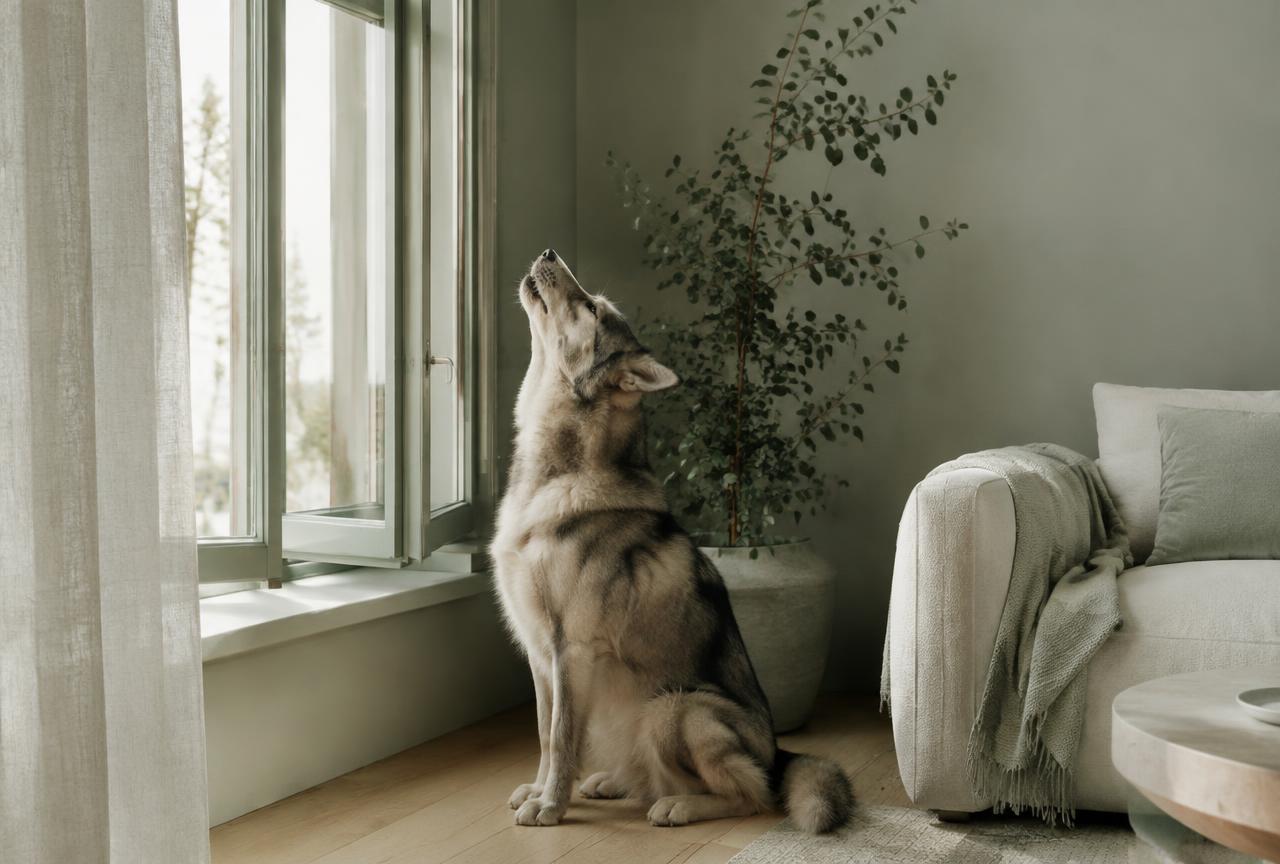
The siren howl is one of the oldest behaviours your dog carries: a high, wailing pitch that lands close to howling frequencies and trips an instinct older than the species' relationship with your sofa.
The SniffScroll desk
Reviewed by Dr Emily Carter, BVSc MRCVS
Published 10 October 2026
Dr Emily Carter, BVSc MRCVS
The short version
- Dogs howl at sirens because the pitch sits close to natural howling frequencies and triggers a pack-communication instinct.
- Sirens do not hurt dogs' ears; their hearing is more sensitive than ours
- but a passing siren is not painful.
- Some breeds
- especially hounds and northern breeds
- are far more prone to howling than others.
- Howling at sirens is normal; howling with pacing
- drooling or destruction points to anxiety instead.
- Reward quiet rather than punishing the howl if you want less of it.
Dogs howl at sirens because the siren's rising and falling pitch sits close to the frequencies of natural howling, and it trips an ancient pack-communication instinct. Your dog is not in pain and not, in most cases, distressed: it is answering what sounds like a distant call.
The instinct behind the howl
Howling is long-distance communication, inherited from wolves, and a siren sounds enough like a far-off howl to trigger an answering response.
Wolves howl to locate each other, to rally the pack and to advertise territory across kilometres of forest. Domestic dogs carry the same circuitry, and our guide to why dogs howl covers the full range of triggers. A siren, with its long, wavering, rising pitch, lands squarely in the frequency range of a howl, so to your dog it registers as another dog calling from far away. The answer is automatic.

Do sirens hurt their ears?
No. Dogs hear higher frequencies and at greater distances than we do, but a passing siren is not painfully loud for them.
This is the most common worry, and the behaviour itself answers it. A dog in pain from a sound moves away, hides, flattens its ears or shows obvious distress. A dog who sits by the window and howls along is participating, not suffering. Their sensitive hearing is why they notice the siren streets away before you do, not a reason it hurts.

Why some dogs howl and others never do
Breed, individual temperament and learned habit all play a part: hounds and northern breeds are the champion howlers.
Hounds such as the Beagle were bred to bay across fields so hunters could follow, and northern breeds such as the Siberian Husky and Alaskan Malamute are famously vocal. At the other end, many dogs hear the same siren and do nothing, because the threshold for the response varies enormously between individuals. Some dogs also learn the behaviour: one howl that got a reaction, and it becomes a habit.
The sounds that set them off
Sirens are the classic trigger, but anything with a sustained, wavering pitch in the howling range can do it: musical instruments, singing, alarms and other dogs.
Owners report howling at violins, harmonicas, particular songs, doorbells, phone ringtones and the theme tunes of specific programmes. The common thread is pitch and sustain. And howling is contagious: one dog howling in the neighbourhood can set off every dog on the street, which is exactly the pack behaviour working as designed.
When howling is something more
Howling at a siren and settling straight back down is normal; howling that comes with pacing, drooling, destruction or house-soiling points to anxiety.
The distinction is the company it keeps. A dog who howls at the ambulance and then goes back to sleep is fine. A dog who howls when left alone, especially with pacing, drooling, destructive behaviour or accidents, may be showing separation distress, and our separation anxiety guide covers that in full. Film your dog while you are out if you are unsure; the footage tells you which one you are dealing with.

If you want less howling
You cannot remove the instinct, but you can reduce the habit: reward the quiet, manage the environment, and never punish the howl.
- 1Reward quiet. Wait for the howl to end, then calmly praise or treat. You are paying for the silence, not the noise.
- 2Do not punish. Howling is instinct; punishment teaches the dog to be anxious about the sound, not to be quiet, and anxiety makes noise worse.
- 3Manage the sound. Close windows, add background noise such as a radio, and give a sound-sensitive dog a covered, quiet den to settle in.
- 4Redirect. A dog with a chew or a stuffed toy in its mouth howls less; offer the alternative as the siren approaches if you can predict it.
- 5Accept some of it. A Beagle who howls at the evening ambulance is being a Beagle. If it lasts thirty seconds and the dog is content, it is a feature, not a fault.

Interactive tool
Howl trigger decoder
Trigger, frequency and other signs in, instinct versus anxiety out.
Your plan
- The likely explanation is the siren's pitch sitting close to howling frequencies, an instinctive response. This is normal, ancient behaviour, not a problem to fix.
- Sirens do not hurt your dog's ears: their hearing is more sensitive than ours, but a passing siren is not painful.
- If the howling bothers you or the neighbours, reward quiet: wait for the howl to end, then calmly praise or treat.
- Do not punish howling: it is instinct, and punishment teaches anxiety about the sound, not silence.
Normal instinct
Howling at sirens is one of the oldest behaviours dogs carry. It only becomes a worry when it comes with signs of distress.
When to see a vet
Howling at sirens needs no vet. Speak to your vet if howling is new in an older dog, comes with signs of pain or confusion, or is part of a wider pattern of anxiety, because noise sensitivity and cognitive changes are both worth a check.
The science of the siren
A siren is almost perfectly engineered to trigger a howl: it is loud, sustained, and sweeps through exactly the pitch range that howling occupies.
Wolf howls sit in a band of frequencies that carry over long distances, and the howl's power comes from its sustained, wavering pitch. A two-tone or wailing siren sweeps through that same band repeatedly. Research into canine vocal behaviour suggests dogs are not mistaking the siren for a specific wolf, so much as responding to a sound that presses the same buttons: high, sustained, rising and falling. Some dogs also howl at the same pitch as the siren, matching it, which supports the idea that this is a participatory response rather than an alarm.
Howling through the ages
The howl is older than the dog: it is one of the behaviours that came down from the wolf largely unchanged, because it was never bred out.
Wolves howl to reassemble the pack, to locate a separated member and to warn neighbouring packs off a territory. Domestication changed dogs' barking enormously, dogs bark far more than wolves, but the howl survived almost intact, perhaps because humans never selected strongly against it, and in some breeds selected for it. Hounds were bred to bay so hunters could follow the chase; northern breeds kept the howl as part of their working communication. When your dog howls at the evening ambulance, you are hearing a behaviour that has been useful for tens of thousands of years.
Living with a howler
If you share your life with a Beagle, a Husky or a hound mix, the howl is part of the package, and the skill is managing it rather than eliminating it.
Know your triggers and your times: many dogs have a daily appointment with a particular siren or the bin lorry. Warn the neighbours with humour; most people find a thirty-second howl charming when they know it is coming. If you live in a flat or a terrace, the management steps matter more: background noise, a covered den away from the window, and a solid reward for quiet. And enjoy it a little. A dog howling at a siren is one of the few moments you can watch wild behaviour happen in your living room, from an animal who also knows how the sofa works.
Common myths about howling
"Howling means the dog is in pain." A howling dog who settles straight afterwards is communicating, not suffering. Pain-related vocalising sounds and looks different, and comes with other signs.
"Howling at sirens means the sound hurts their ears." Dogs in pain from sound move away or hide. Sitting and howling along is participation.
"You should punish howling to stop it." Punishment teaches anxiety about the sound, not silence, and anxiety makes vocal behaviour worse. Reward the quiet instead.
"Only certain breeds can howl." Any dog can howl; the hounds and northern breeds are simply the most willing. Even a French Bulldog can surprise you.
"A dog who howls is unhappy." Howling is communication, not a mood report. The dog's body language before and after tells you how they feel.
Puppies and the first howl
Many owners first hear the siren howl from a puppy or young dog, and it can be startling the first time: a sound you did not know your dog could make.
Puppies often discover howling between four and eight months, as their adult voice comes in, and the first howl is frequently triggered by a siren, a musical instrument or another dog. It is a normal developmental moment, not a behaviour problem. How you respond shapes the habit: a household that laughs, films and fusses teaches the puppy that howling is a wonderful trick, which is fine if you enjoy it and worth knowing if you do not. A household that stays neutral and rewards the quiet afterwards gets a dog who howls occasionally rather than performatively.
Noise sensitivity: the other end of the spectrum
For most dogs the siren is a call to answer, but for a noise-sensitive dog every siren is a small stressor, and the two need different responses.
The noise-sensitive dog does not howl along; it startles, trembles, pants, hides or tries to escape. If that is your dog, the advice in this article flips: instead of enjoying the instinct, you are managing a phobia. Counter-conditioning, pairing the sound with wonderful things at a volume the dog can tolerate, is the standard approach, and a covered den, background noise and predictable routines all help. Our fireworks guide covers noise fear in depth, and the same principles apply to sirens. Persistent or worsening noise fear deserves a conversation with your vet, because it is treatable and it tends to grow if ignored.
The neighbourhood chorus
One howling dog is a curiosity; three howling dogs are a choir, and the social nature of howling explains why.
Howling is contagious because that is its function: it is how a pack assembles and checks in. When one dog in the street starts, the others are not copying so much as answering, and the siren often triggers the first voice. Owners of multiple dogs see the same thing at home: one starts, the others join, and the song ends as suddenly as it began. It is one of the most ancient dog behaviours you can witness, and for most households it is a moment of comedy rather than a problem. If the choir is nightly and the neighbours are less charmed than you are, the management steps above, background noise, a den away from the window, reward for quiet, apply to the whole pack at once.
A word on recording it
Everyone films the howl, and there is no harm in it, with one small caveat: attention is a reward.
If the howl always produces a phone, laughter and fuss, some dogs learn to howl for the audience as much as for the siren. If you love the trick, that is a feature. If you would rather have less howling, film occasionally and reward the quiet ending instead of the performance. Either way, the howl itself is harmless, and the dog mid-howl, head up, eyes soft, is about as content as a dog gets.
When the howl is new in an older dog
A dog who has never howled and starts in later life is worth a second look, not because howling is dangerous, but because new behaviours in senior dogs sometimes carry information. A new noise sensitivity can arrive with age; hearing changes can alter how a dog perceives and responds to sound; and cognitive changes in older dogs can produce new vocal habits, including howling at things that never bothered them before. If your senior dog has newly joined the siren choir, mention it at the next check-up, and look at the company the howling keeps: a dog who howls and then settles is fine, while a dog who howls and seems lost, restless or confused afterwards deserves the vet's ear. For the vast majority of dogs, though, the howl is what it has always been: an old song, answered on instinct.
The ten-second check
When the howl starts, the check is: did it come with a trigger, does the dog settle when the sound ends, and is the rest of the behaviour normal? Three questions, and they separate the ancient instinct from the anxiety that deserves attention. A triggered, self-limiting howl from a dog who then goes back to sleep is the sound of a very old behaviour doing exactly what it was built for. Enjoy it, film it occasionally, reward the quiet when it ends, and save the worry for the patterns that actually earn it.
The bottom line
The siren howl is your dog answering a call that is thousands of years older than the ambulance. It does not hurt, it is usually harmless, and the only time to look closer is when it arrives with signs of distress.
Questions people actually ask
Why do dogs howl at sirens?
The leading explanation is that a siren's rising and falling pitch sits close to the frequencies of natural howling, so the dog responds as if another dog were calling in the distance. It is an instinctive pack-communication response, not pain or fear.
Do sirens hurt dogs' ears?
No. Dogs hear higher frequencies than we do, but a passing siren is not painfully loud for them. A dog in pain from a sound would move away, hide or show distress, not sit and howl along.
Why does my dog howl at ambulances but not other sounds?
Sirens rise and fall in pitch in a way that closely mimics a howl, which is what trips the response. Doorbells, alarms and phone ringtones can do it too if they land in the right range; many dogs are selective about which sounds count.
Which breeds howl the most?
Hounds such as Beagles and Bloodhounds, and northern breeds such as Huskies and Malamutes, are the most vocal howlers, because they were bred to communicate over distance. Any dog can howl, but some are much easier to set off.
How do I stop my dog howling at sirens?
You cannot remove the instinct, but you can reduce the habit: wait for the howl to end, then calmly reward the quiet. Never punish howling, and if it comes with pacing, drooling or destruction, treat it as anxiety and speak to your vet.
Is howling at sirens a sign of distress?
Usually not. A dog who howls at a siren and then settles straight back down is answering a call, not suffering. Howling combined with pacing, drooling, destruction or house-soiling, especially when left alone, is the pattern that suggests anxiety.
Sources
Breeds mentioned

Siberian Husky
A striking, athletic sled dog built for distance running and ill suited to a quiet life in the garden.

Beagle
A merry, sociable scenthound with a powerful nose and a mind of its own outdoors.

Alaskan Malamute
A powerful, affectionate Arctic freight dog bred to pull, that needs serious daily outlets for its strength and stamina.
Read next
Why Do Dogs Roll in Poop? The Instinct Explained
Why dogs roll in the worst smells they can find, what the behaviour is really about, and how to prevent it or at least clean up well afterwards.


