
Why Do Dogs Howl? Sirens, Night and What It Means
Howling is inherited communication, not misbehaviour. Most of it is harmless noise; some of it is a dog asking for help, and the two are easy to tell apart.
The SniffScroll desk
Dog care editors
Published 9 October 2026
Reviewed against RVC, PDSA and VCA guidance
The short version
- Howling is inherited long-distance communication from wolves, not a sign of a badly behaved dog.
- Siren and music howling is a reflexive answer that stops when the sound stops and needs no training.
- Night howling usually has an audible trigger, or has been accidentally rewarded with attention.
- Howling that starts within minutes of leaving points to separation-related distress, which needs a gradual plan, never punishment.
- New, escalating or night-time howling in an older dog deserves a vet check before any behaviour plan.
Ask ten owners why their dogs howl and you will hear ten versions of the same puzzle. The siren-howler sings along with every passing ambulance. The night-howler waits until the house goes quiet and dark. The left-alone howler starts the moment the front door closes, and the neighbours have started to mention it. All three are doing the same thing: howling. What the howling means, however, is different every time.
That distinction matters more than most behaviour advice admits. Howling is one of the oldest sounds a dog can make, inherited from wolves with almost no domestication filter. It carries further than barking, it carries information, and in the great majority of cases it is completely harmless. Occasionally it is not. Howling is also one of the signals a distressed, disoriented or painful dog can send, and the difference between the two shows up in the pattern, not in the sound itself.
Why do dogs howl? The short answer
Dogs howl to communicate across distance, to answer other howls, and because for some breeds the behaviour is simply part of the blueprint. It is not an emotion on its own. It is a delivery system, and the meaning lives in the situation around it: what triggered it, when it happens, and what the dog does afterwards.
Howling outperforms barking over distance. A bark scatters and fades; a howl is a long, sustained tone that travels and can be answered. Wolves use it to assemble a scattered pack and to advertise territory, and domestic dogs have kept the whole toolkit. The trick for owners is reading which tool in the toolkit is being used. A siren-howler is answering a sound. A night-howler is usually responding to a trigger you cannot hear. A left-alone howler is asking for help. The sound is identical; the cause is not.
The long-distance call: what howling is actually for
The primal use of the howl is simple: it says I am here, where are you? In a scattered pack, that is genuinely useful. A wolf can locate others from a howl it recognises, and reunite without ever seeing them. Your dog has kept the circuitry. When one dog in the neighbourhood starts, others often answer, which is why a single distant howl on an evening walk can set off a choir three gardens away.
This also explains why howling is oddly social. Dogs rarely howl completely alone without a trigger. They howl at other howls, at singing, at flutes, at sirens, at certain phone tones. Studies of domestic dogs show they recognise individual howls and respond differently to familiar ones than to strangers. Your dog answering the emergency services is not confused about whether the ambulance is a wolf. It is answering a long sustained tone in a register it is built to reply to.
There is a less charming side to this inherited feature: the howl is a group call, and a dog left outside or behind a fence will sometimes howl to be found. That is the link to watch later in this article, because the same instinct that makes a siren-howler charming makes a separation-howler distressing.
Why do dogs howl at sirens, alarms and music
Most siren-howling is an answer, not a complaint. High-pitched, sustained tones sit close to the frequency of another dog's howl, so the behaviour fires. It stops when the siren fades, the dog resets within seconds, and there is no build-up and no aftermath.
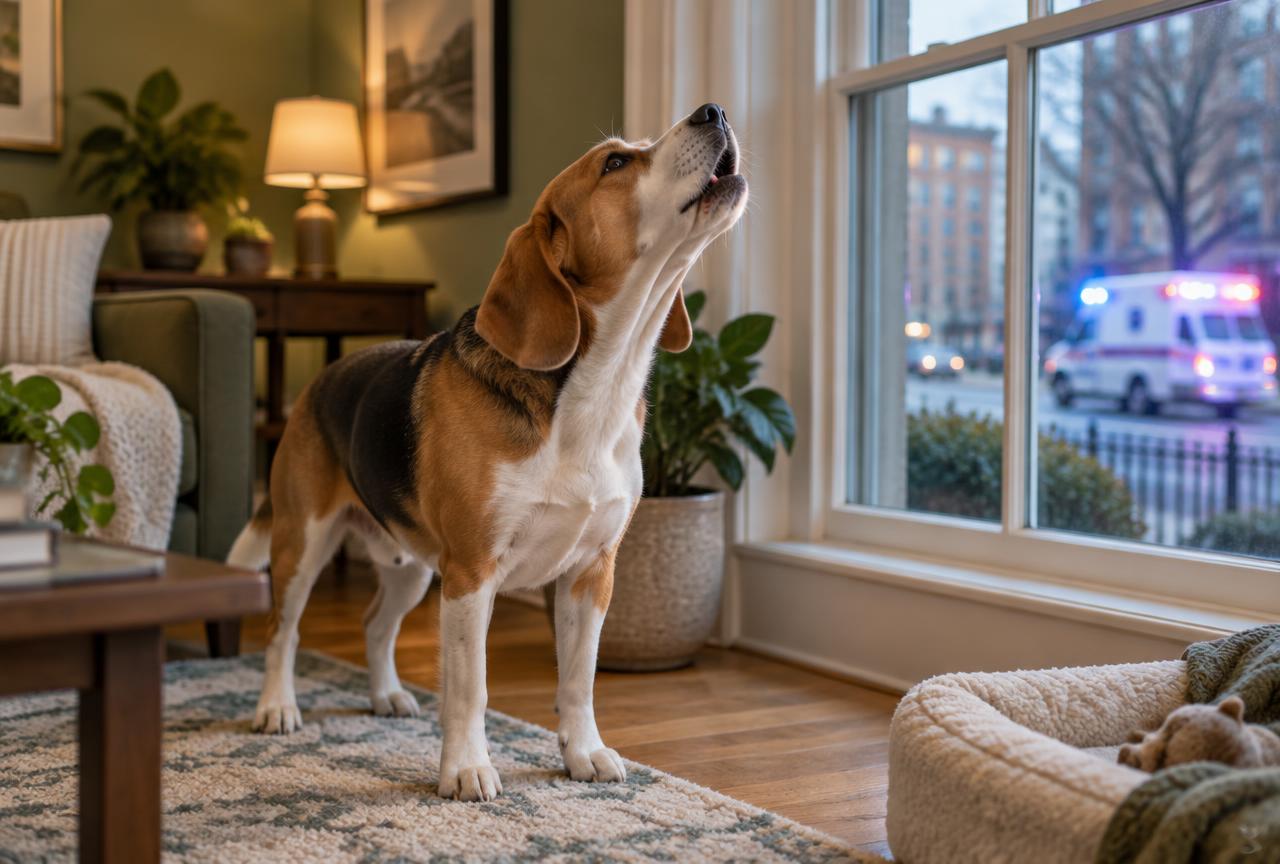
The pattern that separates reflex from problem is consistency. A reflexive siren-howler does the same thing every time the sound appears, stops as soon as it ends, shows no other signs of stress and does not escalate over months. Many owners find that their dog's siren howling even softens with age, as novelty wears off. If that is your dog, file it under personality. Some dogs are simply built to sing along, and a Beagle answering the street at lunchtime is performing a very ancient duet.
It becomes worth attention when the howling grows more frequent without a corresponding increase in sirens, when it starts before the sound is audible to you (dogs hear into ranges we do not), or when it spreads to silence, in which case the trigger is probably outside, and possibly something you cannot hear at all. None of that is urgent, but all of it is data.
Why does my dog howl at night
Night howling almost always has a trigger; it is just one you are less likely to see. Distant sirens, foxes, wildlife, mechanical noise, a neighbour's dog, all of them are louder at night when the world has gone quiet. Dogs also hear frequencies far above ours, so your dog may be answering something you will never identify.
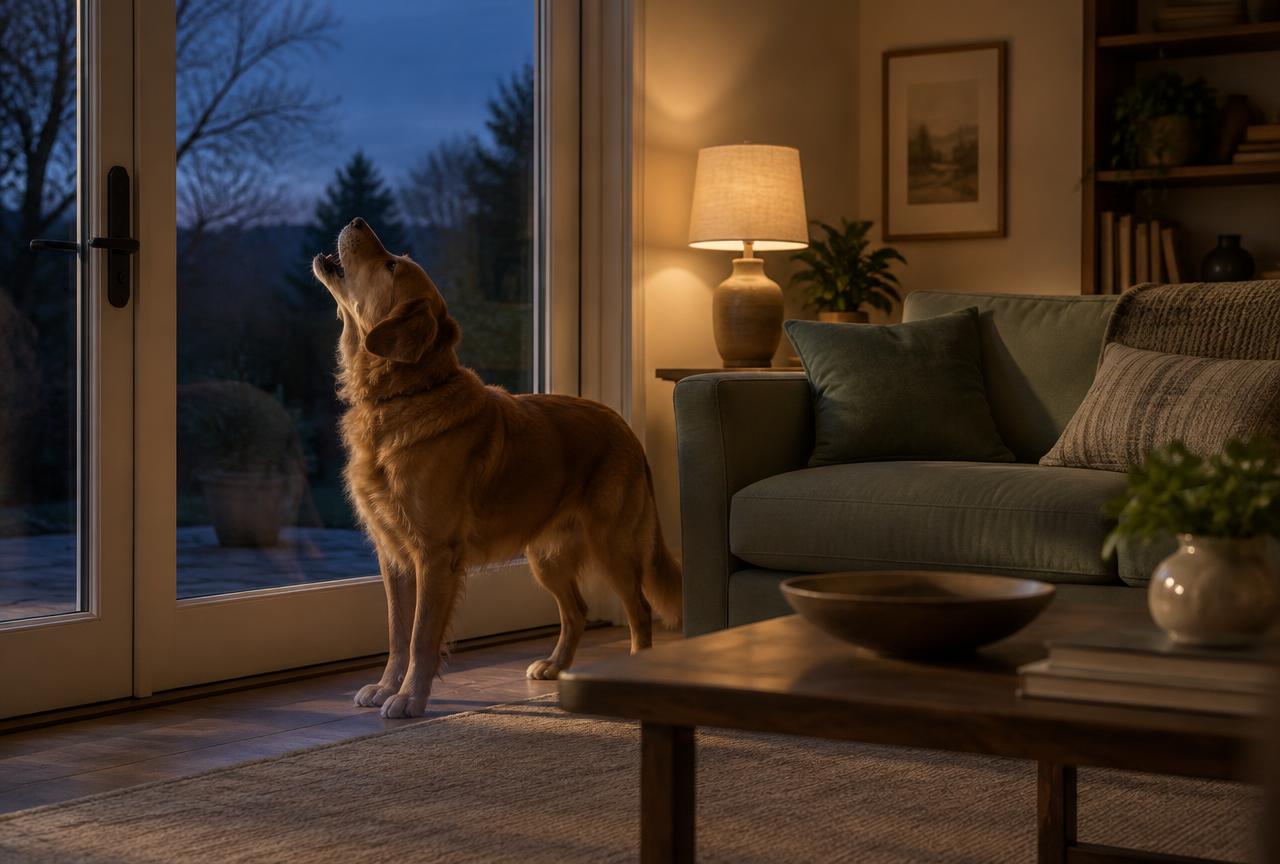
The second cause is accidental training, and it is commoner than most owners expect. A dog that howls once at night, gets a visitor, a chat, a trip outside or even a scold has learned that howling produces company. Scolding is attention, and attention is a reward. After a few repetitions the howling becomes a service the dog provides whenever it wants something: to come in, to be fed, to be joined in bed. The fix is dull but reliable: give the dog a settled bedtime routine in a comfortable spot away from the windows, ignore any howling completely, and respond only after a stretch of silence, every time, for a week or two.
Older dogs deserve a special note here. A senior dog that has recently begun howling at night, especially alongside restlessness, pacing or confusion after dark, may be showing sundowning, the disorientation some dogs experience as cognition changes with age. If the night howling is new for a dog over eight or nine, say so at the next vet visit; it is one of the earliest and most treatable signs.
Howling when left alone: the one to take seriously
This is the category that earns professional help. A dog that howls shortly after the household leaves, often starting within minutes, is not answering a siren. The most common explanation is separation-related distress, and the howl is the group call in its original job description: come back, the pack has gone.
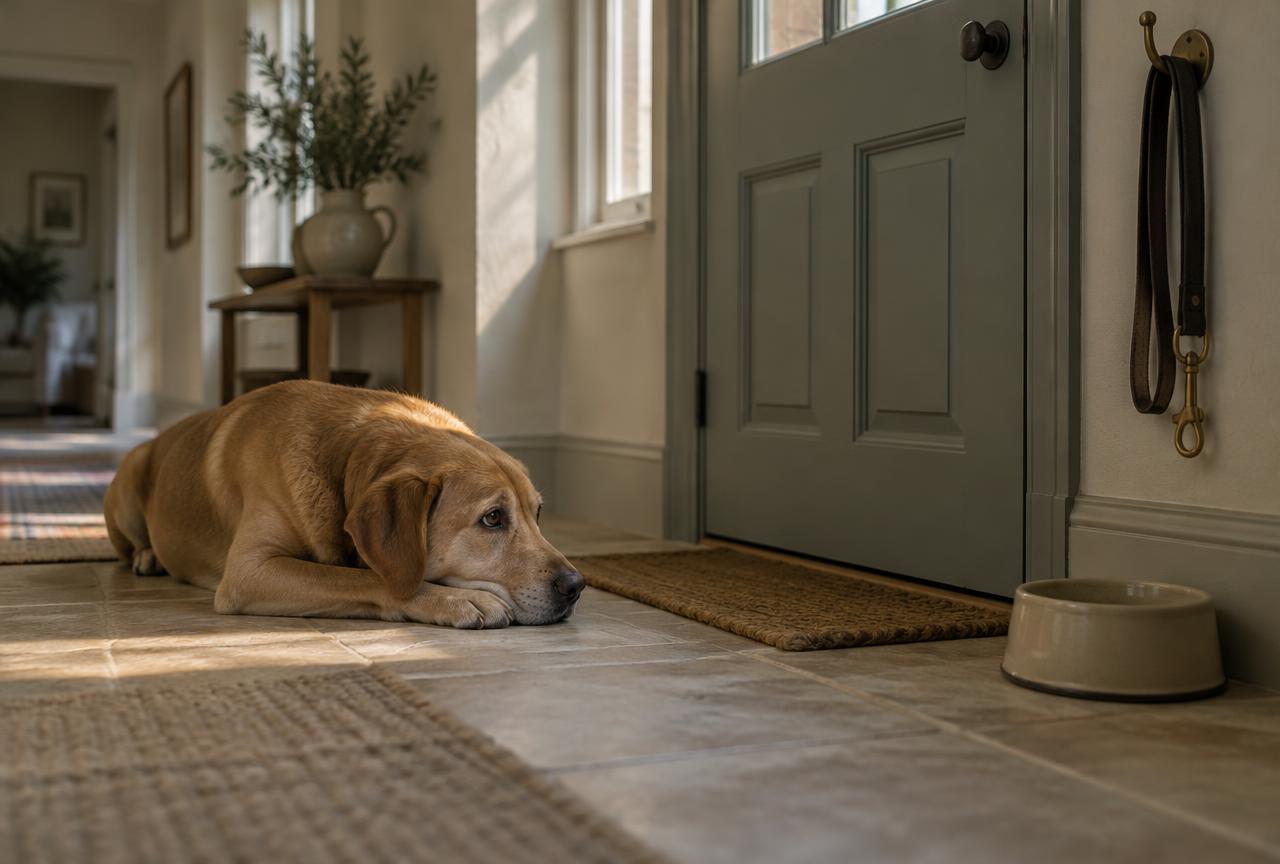
The other signs matter more than the howling itself. Distress leaves evidence: scratched doors, wet window sills from drooling, toileting indoors in a reliably house-trained dog, and neighbours describing howling that lasts. Recording a short absence with a phone or camera settles the question in one afternoon. If the dog settles within ten minutes, you are probably hearing the long-distance call and boredom. If the howling continues, paces, and the dog attempts doors, this is panic, and our full article on dog separation anxiety covers the graded training plan that fixes it.
Do not punish it. A howling dog that is being punished for calling the pack learns only that the pack is both gone and dangerous, which is the fastest way to deepen the problem. The fix is gradual absence training, and it works, but it needs a plan rather than a slapped newspaper.
Which dogs howl the most
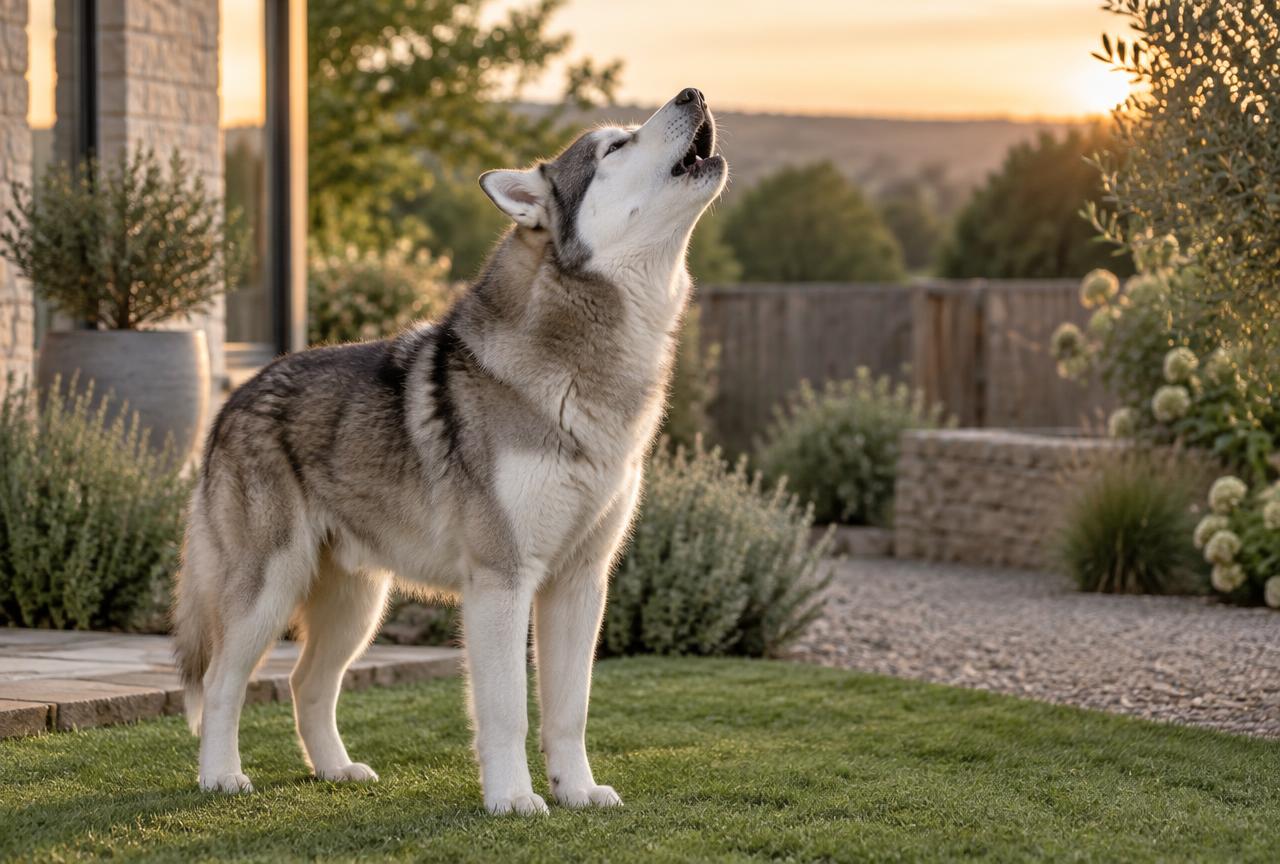
Breed matters, and the table below is a fair summary of the tendencies owners report and breed organisations describe. Nothing here is destiny: many Beagles never howl, and the occasional French Bulldog discovers the habit. But the ancestry is real, and it explains why two dogs in the same street can respond so differently to the same siren.
| Group | Examples | Typical howling tendency | Why |
|---|---|---|---|
| --- | --- | --- | --- |
| Spitz and northern breeds | Siberian Husky, Alaskan Malamute, Akita | High | Bred in communities where distance communication mattered; howling is part of the working vocabulary |
| Scent hounds | Beagle, Basset Hound, Bloodhound | High | Trailing breeds call to handlers across distance; the cry is a working tool |
| Shepherds and mastiffs | German Shepherd, Bullmastiff | Low to moderate | Bred to guard and work beside people rather than call to them |
| Flat-faced companions | French Bulldog, Pug | Low | Short airways make sustained howling physically effortful; not selected for it |
| Gundogs | Labrador Retriever, English Springer Spaniel | Occasional | Rarely howl; more likely to bark when excited |

For a Beagle or a Husky-type mix, some howling is not a flaw to train out. It is the instrument the breed was built with. Our guides to the Siberian Husky, Alaskan Malamute and Beagle discuss how much noise each breed makes before you commit, which is kinder to both dog and owner than discovering it in month two.
When howling means: call your vet
Most howling needs a behaviour plan at most. A minority needs a medical one, and the clues are specific.
Call your vet if the howling is new for a dog that has never done it, if it comes with disorientation, stumbling, circling or a head tilt, if a senior dog has begun howling at night alongside restlessness, if the howling follows pain, injury or a new medication, or if your dog howls in a way that cannot be interrupted, as though it cannot hear you. Sudden onset howling in an older dog can reflect hearing loss, pain, anxiety disorders or cognitive decline, and all of those have management options that work far better early.
A related trap: pain itself can cause howling, particularly neck and back pain, which often worsens at rest. A dog that howls when it moves a particular way, or that has stopped jumping onto sofas before the howling started, should skip the behaviourist and see the vet first.
How to live with a howler: a four-week plan
For reflexive and attention-seeking howling, the plan is modest and it works. The goal is not silence; it is a howler that howls on occasion, settles quickly and does not bother the neighbours.
- 1Log the triggers for a week. Note when the howling starts, what preceded it, how long it lasted and what ended it. Most owners find the list is shorter than they feared.
- 2Remove or soften what you can. Close curtains at dusk, mask street noise with a radio, and give the dog a sleeping spot away from the glass.
- 3Answer the social call on your terms. Invite a howl during play (many dogs will join a howled note with delight), then reward silence afterwards. This satisfies the urge predictably.
- 4Cut off the accidental training. Any howling that earns attention, even a word, gets ignored until it stops. Respond only to quiet. Consistency here does more than any gadget.
- 5If the pattern is the left-alone kind, switch to the separation plan rather than this one. The tool below will point you the right way.
Interactive · howl decoder
What is the howling telling you?
Pick the pattern you are seeing and we will read the likely cause, plus what to do next.
What to do next
- Expect the howling to stop when the siren fades; no action needed.
This sounds like normal communication
Howling at sirens, music or other dogs is a social, inherited response. It is not a training problem unless it is constant.
This decoder sorts the pattern for you: it takes the trigger, the time of day, your dog's breed type and whether the howling happens while you are out, and it tells you which of the four situations you are actually in, with a first step for each.
A howler-owner's checklist
Run through this before assuming the behaviour needs training:
- The howling stops within seconds of the trigger ending (siren, song, other dog).
- Your dog settles afterwards with no pacing, panting or scratching at exits.
- The pattern is consistent: same trigger, same response, no escalation over months.
- It happens almost exclusively with sound present, not in silence.
- Your dog is happy to eat, play and sleep normally in between.
- There has been no recent change in medication, routine or household.
Six ticks and you are describing a dog with an inherited party trick. Fewer than four, and the sections above deserve a second read.
A howl is a delivery system, not a mood. The meaning is written in everything around the sound: when it starts, what answers it, and what the dog does the moment it ends.
The verdict
Howling is normal, ancient and, in most dogs, occasional. Siren-howl is reflexive song and needs nothing but tolerance. Night howl usually needs a routine change, and occasionally a vet conversation in seniors. Left-alone howling is the serious one: it is a distress signal that responds well to a proper plan and poorly to punishment. Answer the sound, not the noise, and the two are easy to keep apart.
When to see a vet or behaviourist: any sudden new howling in a dog that has never done it, howling alongside stumbling or disorientation, night howling that begins in a senior dog, or howling that starts within minutes of every departure. Those four patterns earn a professional much sooner than a neighbourhood complaint ever should.
Questions people actually ask
Why do dogs howl at sirens?
Sirens sit close to the pitch of another dog's howl, so the inherited answering reflex fires. Most dogs stop within seconds of the sound fading, and there is nothing to fix. If the howling spreads to silence or grows more frequent without more sirens, start logging when it happens and check the pattern against the rest of this article.
Why does my dog howl at night?
Night howling usually answers a distant sound such as sirens, foxes or a neighbour's dog, which travel further after dark. It can also be attention-seeking that has been accidentally rewarded. A settled bedtime spot away from windows, plus completely ignoring howling and rewarding silence, resolves most cases within a couple of weeks. New night howling in an older dog deserves a vet check for pain or cognitive change.
Do certain breeds howl more than others?
Yes. Spitz and northern breeds such as Huskies and Malamutes, and scent hounds such as Beagles, Bassets and Bloodhounds, howl far more by design, because the howl was part of their working vocabulary. Guarding breeds and flat-faced companion breeds howl much less. Breed tendency is not destiny, but it sets the baseline.
Is it cruel to stop a dog howling?
Suppressing a normal communication channel with punishment is poor practice and often backfires. There is also no need: reflexive howling is harmless. The only howling that should stop is howling caused by distress when left alone, and the ethical fix is a graded alone-time plan that removes the cause, not the sound.
How do I stop my dog howling when left alone?
Treat it as separation-related distress, not a noise problem. Film a short absence first to confirm the pattern, then build tolerance with very short absences that always end before the dog becomes distressed, lengthening gradually. Full instructions are in our separation anxiety article, and severe cases benefit from a vet check and a clinical behaviourist.
Why is my old dog suddenly howling at night?
Sudden night howling in a senior dog is often linked to pain, hearing changes, anxiety or age-related cognitive decline, sometimes with restlessness or confusion after dark. Because several of these are treatable and early management works best, a new howling habit in an older dog is a vet conversation rather than a training project.
Sources
- Behavioral problems of dogs, Merck Veterinary Manual
- Dog behaviour advice, RSPCA
- Why do dogs howl?, American Kennel Club
- Dog advice, Dogs Trust
- Behaviour and training resources, VCA Animal Hospitals
Breeds mentioned
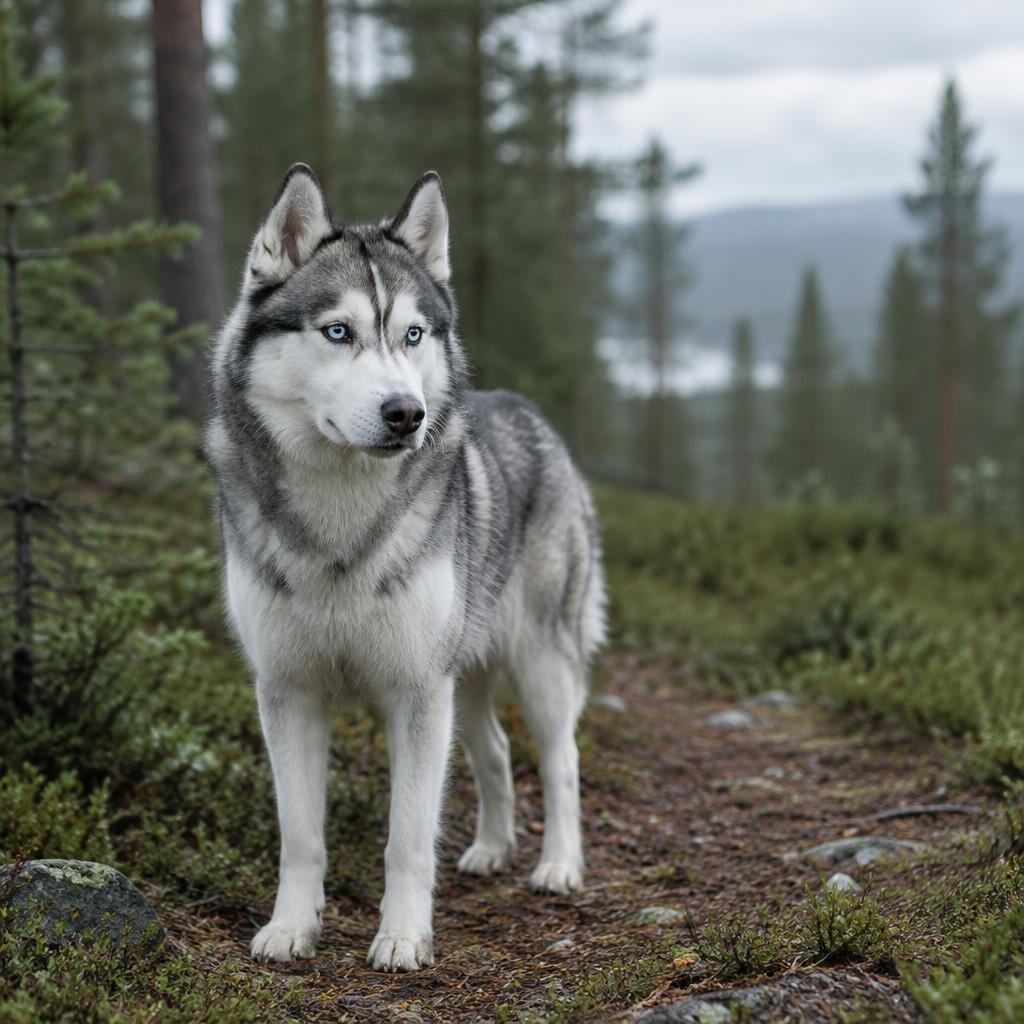
Siberian Husky
A striking, athletic sled dog built for distance running and ill suited to a quiet life in the garden.
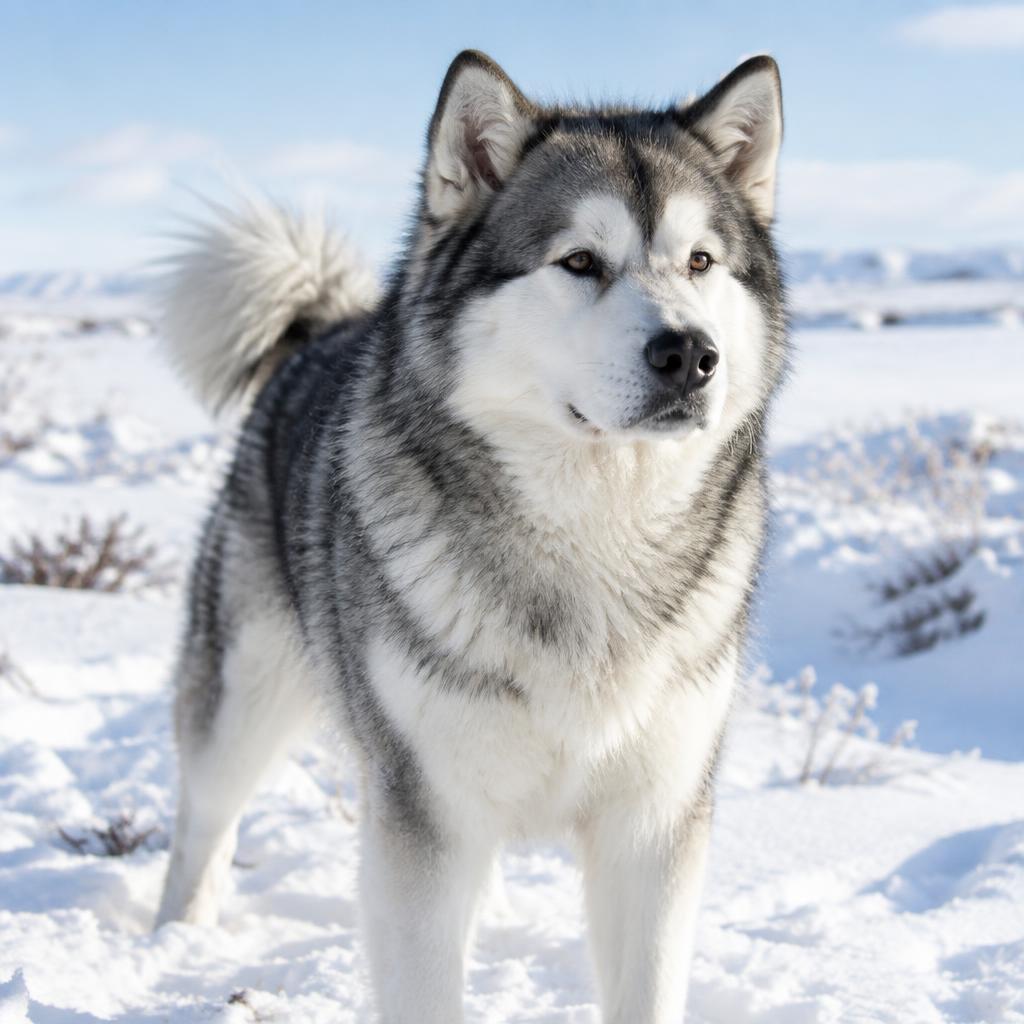
Alaskan Malamute
A powerful, affectionate Arctic freight dog bred to pull, that needs serious daily outlets for its strength and stamina.

Beagle
A merry, sociable scenthound with a powerful nose and a mind of its own outdoors.

French Bulldog
A comic, affectionate companion built for city life, but with health needs that demand a careful breeder.
Put it into practice
Read next
Why Do Dogs Roll in Poop? The Instinct Explained
Why dogs roll in the worst smells they can find, what the behaviour is really about, and how to prevent it or at least clean up well afterwards.


