Terrier group
Developed in mid-nineteenth-century England by James Hinks, who crossed the Bulldog and terrier stock of the fighting pits with the now-extinct White English Terrier and possibly Dalmatian, producing the all-white 'gentleman's companion'. The coloured variety was recognised later, and the Miniature Bull Terrier followed as a separate standard.
Bull Terrier
The Bull Terrier is the egg-headed clown of the terrier group: devoted, funny and stubborn, with a short coat and real inherited health risks that make breeder selection the most important decision an owner will make.
Reviewed by the SniffScroll editorial desk
The egg-headed clown with a terrier heart and a medical footnote.
The short version
- Devoted, playful and physically affectionate: a genuine clown that bonds hard with its family.
- Stubbornness is breed-defining; short, positive, varied training works, force does not.
- Health screening matters more than in most breeds: kidneys, hearing, patellas and heart.
- Dog aggression, especially between males, is well documented; introductions need lifelong management.
- The short coat is one of the easiest in the dog world: weekly brushing is the whole routine.
Choose a variety
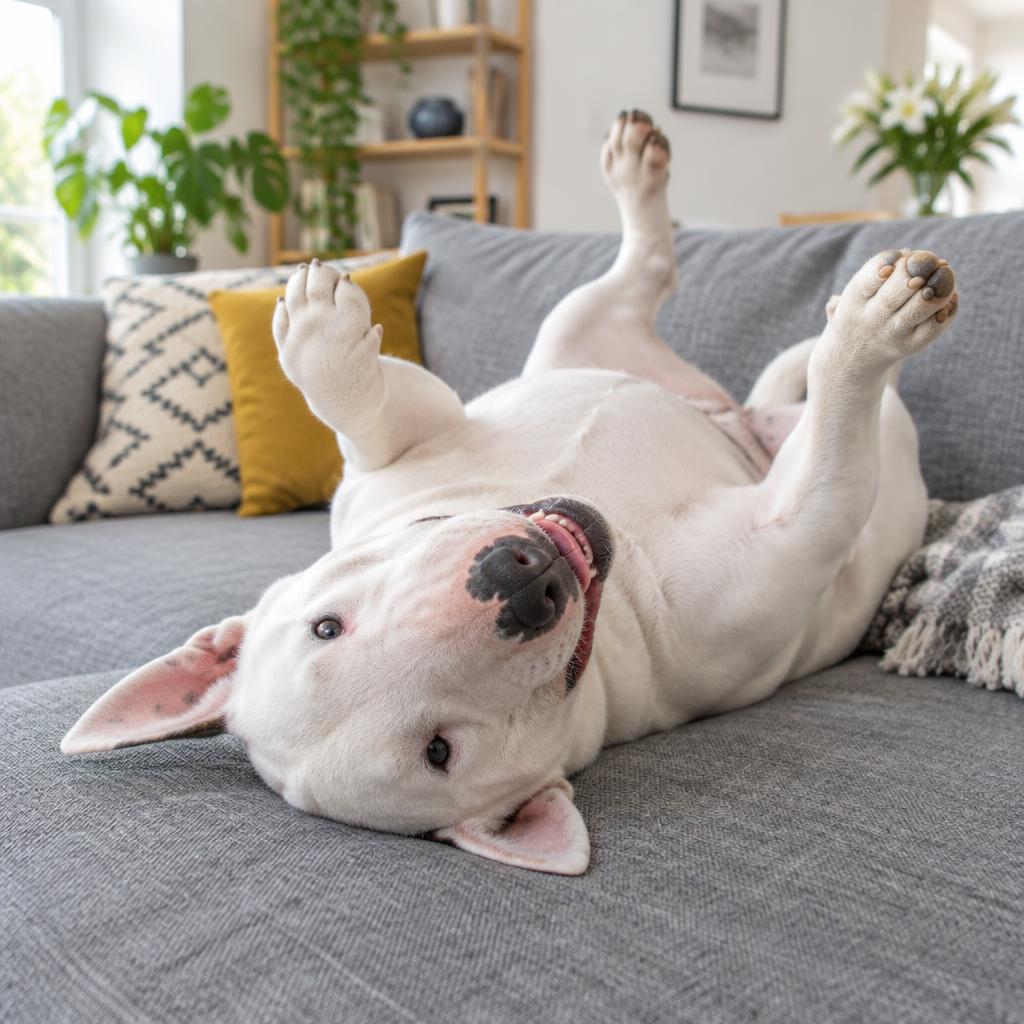
The original breed: powerful, muscular and clownish, with all the health screening requirements the breed carries.
- Weight
- 20 to 36 kg
- Height
- 45 to 55 cm
- Lifespan
- 10 to 14 yrs
- Size
- Medium
- Group
- Terrier
- Coat
- Short, flat, harsh coat in pure white, or coloured: brindle, black, red, fawn and tricolour
- Daily exercise
- 60 to 90 minutes a day
- Years to full size
- about 2
- One-off setup
- €700 to 1400
Get one if…
- Experienced owners who understand terrier stubbornness and strength
- Households wanting a devoted, physical, playful companion
- Families with calm, respectful older children
- Owners prepared to buy only from health-tested lines
- Homes with a sense of humour and patience for a clownish character
Think again if…
- Multi-dog households unprepared for possible dog aggression
- Homes with cats or small pets the dog has not been raised with
- First-time owners wanting an obedient, biddable breed
- Anyone unwilling to research breeders and health screening carefully
- Owners put off by a strong, muscular dog on the lead
Trait profile
The Bull Terrier pairs terrier courage and strength with a clown's personality. It is stubborn by design and strong enough that training and socialisation are not optional; the breed's health history makes breeder selection the single most important choice.
Space & setup. Medium-sized and adaptable to houses or larger flats, but needs a secure garden for play and a strong handler on the lead. Size is manageable; strength and exuberance are the real considerations.
Allergies. The short coat sheds moderately and is not hypoallergenic; skin allergies, not coat allergies, are the more common issue in the breed.
Living with a Bull Terrier
The Bull Terrier is a muscular, egg-headed terrier with an unmistakable profile and a mischievous, people-loving personality. Bred originally for pit fighting and later refined as a gentleman's companion, it is devoted and playful but stubborn, strong and prone to several breed-specific health conditions.
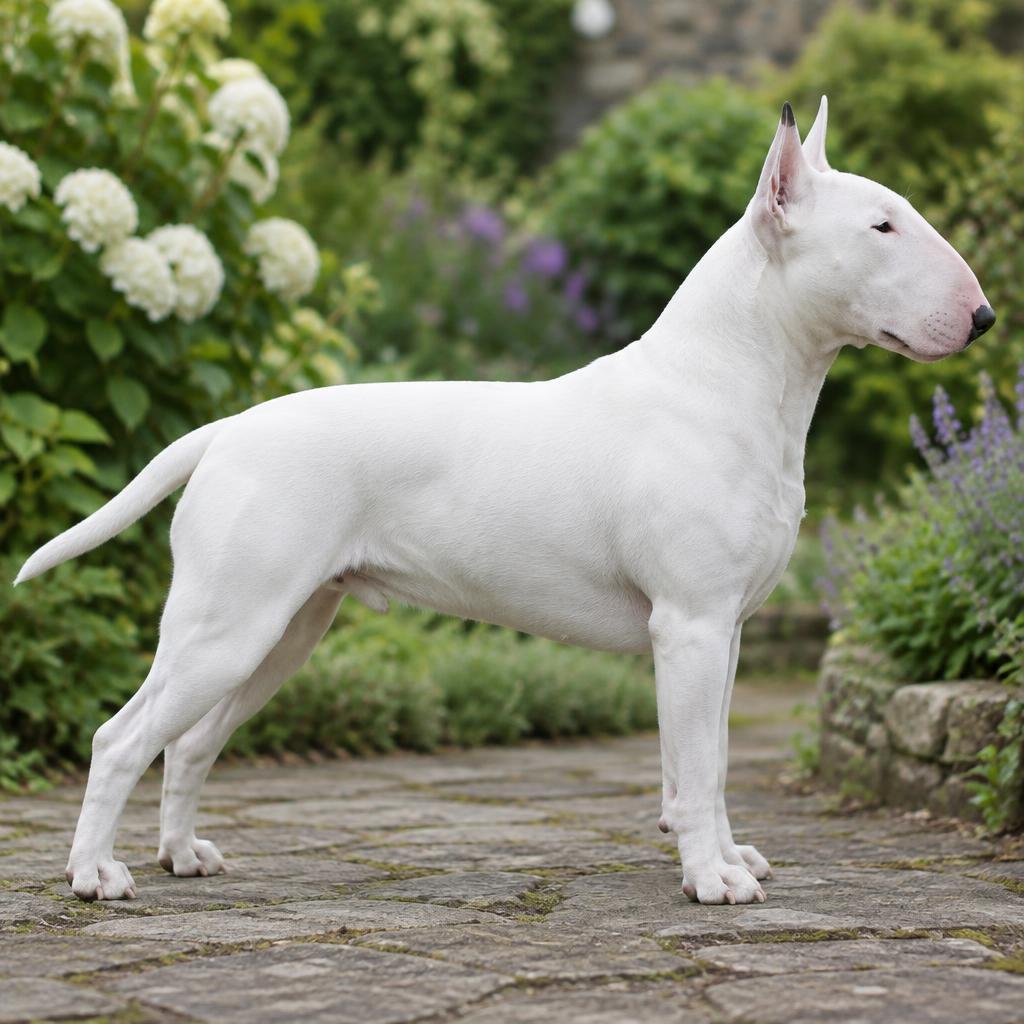
The Bull Terrier is one of the most visually unmistakable breeds in the world: the long, egg-shaped head with its roman profile has no equivalent in any other breed. It was created by James Hinks in Birmingham in the 1850s, who took the fighting Bulldog-and-terrier crosses of the day and refined them into an all-white dog elegant enough to be kept as a companion by gentlemen rather than only fought in pits. The breed's history shows: underneath the clown's face is a genuine terrier-bold, muscular dog with a real willingness to take on anything that challenges it.
As a companion the Bull Terrier is devoted, physically affectionate and very funny. Owners describe the breed as a three-year-old child that never grows up: playful, mischievous, prone to chewing and burrowing under blankets, and endlessly entertaining. It bonds hard with its family and is generally good with respectful children, though its strength and exuberance mean supervision with small ones is sensible. The stubbornness, however, is real and famous. Training works, but on the Bull Terrier's terms: sessions must be short, positive and varied, and the breed will happily ignore a repeated command if it sees no point. Force-based methods make things worse; patience and food make them work.
With other dogs the picture is mixed. Many Bull Terriers are sociable, but dog aggression, particularly between males, is well documented in the breed, and introductions should be managed carefully throughout life. Small pets are chased as terriers chase. The breed's reputation for people aggression is largely undeserved; it is far more often a clown than a guard dog, though its appearance alone deters intruders.
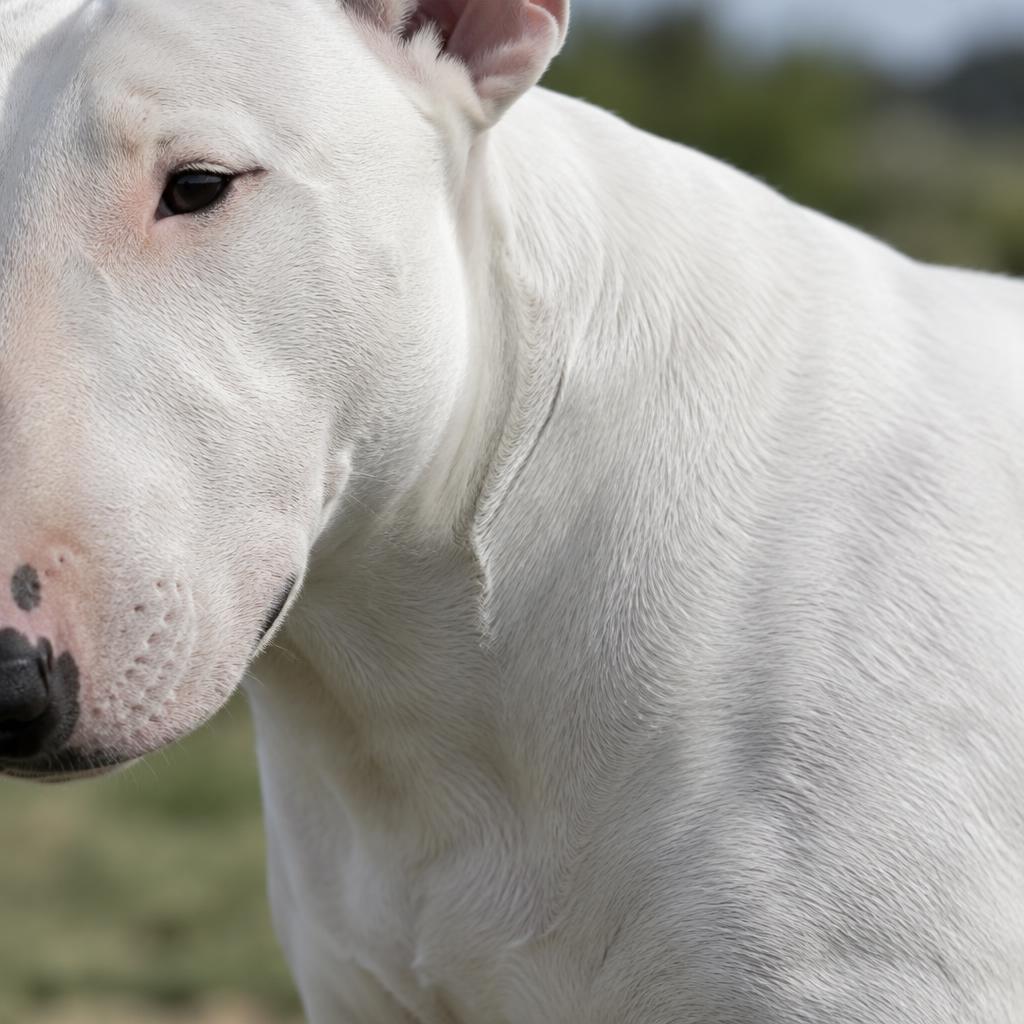
The breed's real caveat is health. Bull Terriers carry several inherited conditions at meaningful rates, most seriously hereditary nephropathy, a fatal kidney disease that breed clubs screen for, and congenital deafness, particularly in white dogs, which breeders test with BAER. Patellar luxation, heart valve dysplasia and skin allergies are all worth discussing with breeders. Choosing from health-tested lines is not optional here; it is the difference between a decade of joy and heartbreak.
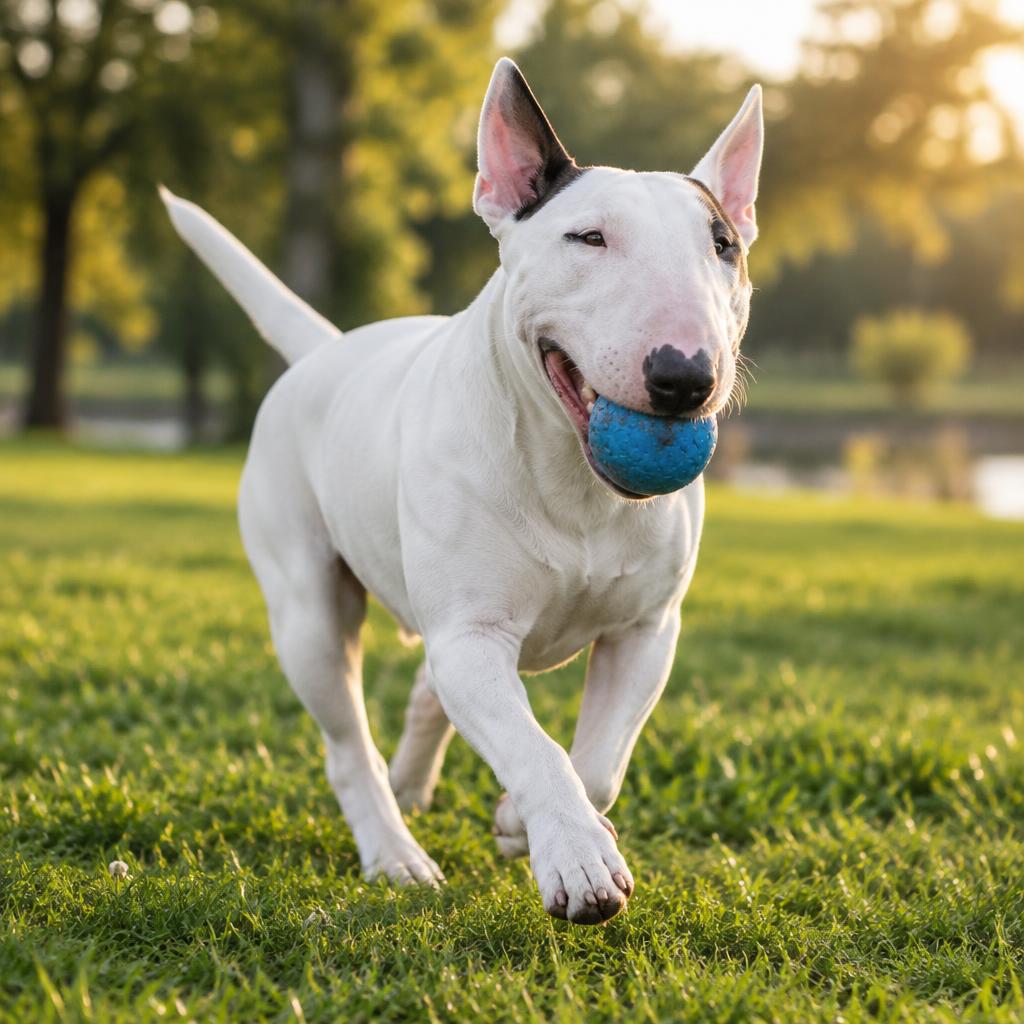
Exercise needs are moderate for a muscular breed: an hour or so daily, plus play and mental work. The coat is the easiest part of ownership, a short flat coat needing only a weekly brush. Overall, the Bull Terrier is a breed for people who fall in love with its character and accept its quirks and its health risks with open eyes. For the right owner it is a joyful, hilarious companion; for anyone wanting an easy, conventional dog, it will be a long education.
Choosing a breeder is the single most important decision in owning a Bull Terrier, more than in almost any other breed, because the conditions the breed carries are inherited and largely invisible in a bouncing eight-week-old puppy. Hereditary nephropathy is the clearest example: affected dogs can appear completely normal as puppies, and the disease surfaces as kidney failure in young adulthood. Responsible breeders screen their stock and keep records; some maintain long pedigrees of clear dogs. Ask to see those results, ask about BAER tests on the litter, and be suspicious of any breeder who answers vaguely. A properly bred Bull Terrier costs more and delivers far more.
Living with the breed day to day rewards planning. The Bull Terrier's strength means equipment matters: a flat collar and thin lead will not survive an adolescent pulling toward a squirrel, so a well-fitted harness and a solid lead are worth buying early. The breed's jaws are famous for determination, and destructible toys do not survive; invest in the durable kind. And the breed's habit of burrowing, under blankets, into laundry piles, against your back at 3am, is charming exactly as often as it is inconvenient.
Above all, the Bull Terrier needs an owner who enjoys the dog for what it is rather than wishing it were different. It will not become obedient in the way a retriever is. It will not greet every stranger warmly, or ignore the neighbour's cat, or stop circling the sofa looking for something to do. What it offers instead is a decade of genuine character: a dog that makes people laugh, greets its family as though they have been gone a month, and asks for nothing more than company, play and food. For the right household, that trade is an excellent one.
An unforgettable character: devoted, funny and deeply loyal, but stubborn, powerful and carrying more inherited health baggage than most breeds. Best for experienced, patient owners who adore the breed for what it is.
Exercise, day to day
- 1Puppies (8 to 20 weeks): short play and socialisation; avoid forced exercise while joints develop.
- 2Adolescents (4 to 12 months): two solid walks daily plus play; manage exuberance on the lead early.
- 3Adults: an hour or more daily, split between walks, fetch and training games.
- 4Mental work: short, varied training sessions suit the breed; repetition bores it quickly.
- 5Secure garden play is welcome, but the breed is strong and needs supervision around smaller animals.
Grooming, realistically
- 1Brush weekly with a rubber curry or hound glove to remove dead hair.
- 2Bathe every six to eight weeks or when dirty; the short coat cleans easily.
- 3Check skin folds and ears weekly; the breed can be prone to skin irritation.
- 4Trim nails every three to four weeks; the breed is active and nails often wear naturally.
- 5Brush teeth several times a week; dental care matters in muscular breeds too.

What you actually need
- Rubber curry brush
- Hound glove
- Dog nail clippers
- Ear cleaning solution
- Enzymatic dog toothpaste and brush
- Dog shampoo for sensitive skin
Puppy to adult
| Age | Male | Female | What is happening |
|---|---|---|---|
| 8 weeks | 4 to 6 kg | 3.5 to 5 kg | Stocky and bold from the start; begin socialisation and gentle handling immediately. |
| 3 months | 8 to 11 kg | 7 to 10 kg | Rapid muscle development; chewing is intense and needs appropriate outlets. |
| 6 months | 14 to 18 kg | 12 to 16 kg | Growing fast; lead manners matter from now, the breed is strong and exuberant. |
| 9 months | 18 to 23 kg | 15 to 20 kg | Adolescent testing appears; consistency and short sessions beat confrontation. |
| 12 months | 22 to 28 kg | 18 to 24 kg | Near adult size; keep exercise controlled until joints and muscles finish maturing. |
| 24 months | 25 to 36 kg | 20 to 30 kg | Fully mature; the adult character, playful and stubborn, is now fully expressed. |
Ranges are typical, not targets. Judge condition by ribs and waist, and check with the ideal weight checker.
What to ask a breeder
- Have the parents been screened for hereditary nephropathy, and what were the results?
- Have the puppies been BAER hearing tested, especially in white litters?
- What are the parents' patella and heart screening results?
- Have there been skin allergy problems in your lines?
- How do you socialise puppies with other dogs, given the breed's tendencies?
Health tests to ask for
Ask to see results for both parents before you put down a deposit.
- Hereditary nephropathy screening in breeding stock
- BAER hearing test for puppies, especially whites
- Patella examination for both parents
- Cardiac examination, particularly for mitral valve dysplasia
- Skin and allergy history from the breeder
Health watch-list
What to ask a breeder about, and what to watch for over a lifetime. This is orientation, not veterinary advice, anything you notice belongs in front of a vet.
Hereditary nephropathy
NotableA serious inherited kidney disease specific to the breed; breed clubs screen for it and breeder transparency is essential. Ask directly and see the results.
Congenital deafness
NotableMore common in white dogs; BAER testing of puppies before they leave the breeder is standard practice among responsible breeders.
Patellar luxation
CommonSlipping kneecaps occur regularly in the breed; patella checks on breeding stock reduce the risk.
Mitral valve dysplasia
NotableA congenital heart valve malformation screened by cardiac auscultation in breeding stock; ask for the results.
Skin allergies
CommonAtopy and food sensitivities appear across the breed; management is lifelong and often needs veterinary dermatology input.
Lens luxation
UncommonReported in the breed, more in Miniatures; an eye examination is part of routine screening and any sudden painful eye needs urgent care.
What it costs to keep one
Realistic running cost
€152 / month
About €1,824 a year, or roughly €21,888 across a 12-year life, before purchase price, neutering and one-off vet events.
Before the puppy arrives. Budget roughly €700 to 1400 for a crate, bed, lead and harness, bowls, puppy classes, first vaccinations and grooming kit sized for this breed. Figures throughout are indicative and vary a good deal between countries.
Interactive · built for this breed
Is a Bull Terrier right for your home?
Seven honest questions about your space, time and household, checked against this breed's exercise need, coat, sociability and tolerance for time alone.
Fit with your routine
96%
A strong fit
Your routine suits a Bull Terrier well. Meet adult dogs of the line before you commit.
What to sort out first
- Needs more daily exercise than you have pencilled in.
Working in your favour
- Coat care fits the grooming time you offered.
Compare more breeds in the matchmaker, or plan meals with the portion calculator.
The verdict, by household
Challenging
Manageable with guidance, but the stubbornness, strength and health screening requirements demand commitment.
Good
Devoted and playful with respectful children; its strength and exuberance mean supervision with small ones.
Very suitable
An hour of daily exercise plus play suits it well, and the breed loves a proper outing.
Workable
Moderately vocal and energetic but adaptable, provided daily exercise and company are guaranteed.
When to call your vet
- Increased thirst or urination, or unexplained weight loss, which can signal kidney disease
- Not responding to sounds or startling when asleep, worth a hearing assessment
- Skipping on a hind leg, which can signal a slipping kneecap
- A new heart murmur or reduced exercise tolerance, worth a cardiac check
- Persistent itching, redness or ear infections, which can signal skin allergy
Nothing here is a diagnosis. A swollen, hard belly with retching, collapse, breathing difficulty and sudden hind-leg weakness are emergencies: go straight away.
Bull Terrier vs the closest alternatives
| Breed | Weight | Energy | Grooming | € / month |
|---|---|---|---|---|
| Bull Terrier | 20 to 36 kg | 7/10 | 3/10 | €152 |
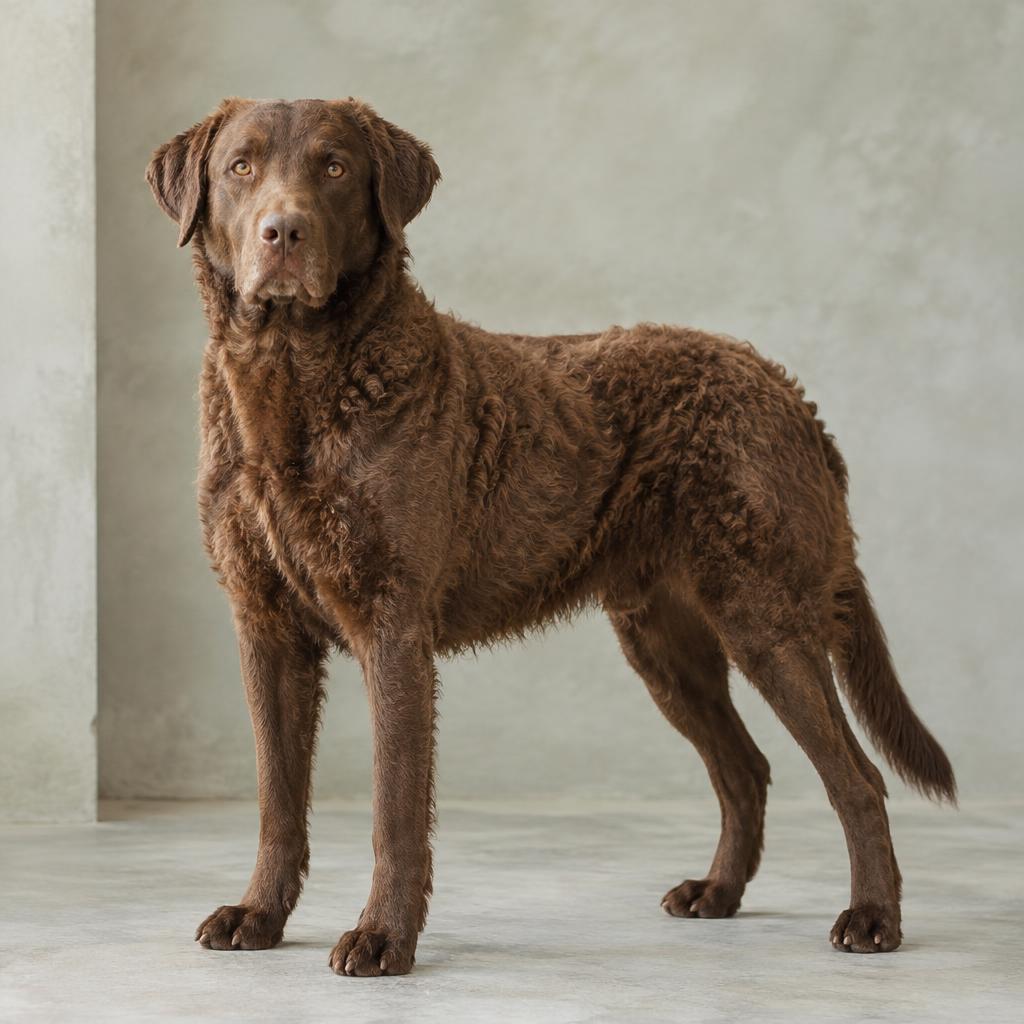
| Chesapeake Bay Retriever | 25 to 36 kg | 8/10 | 3/10 | €109 |
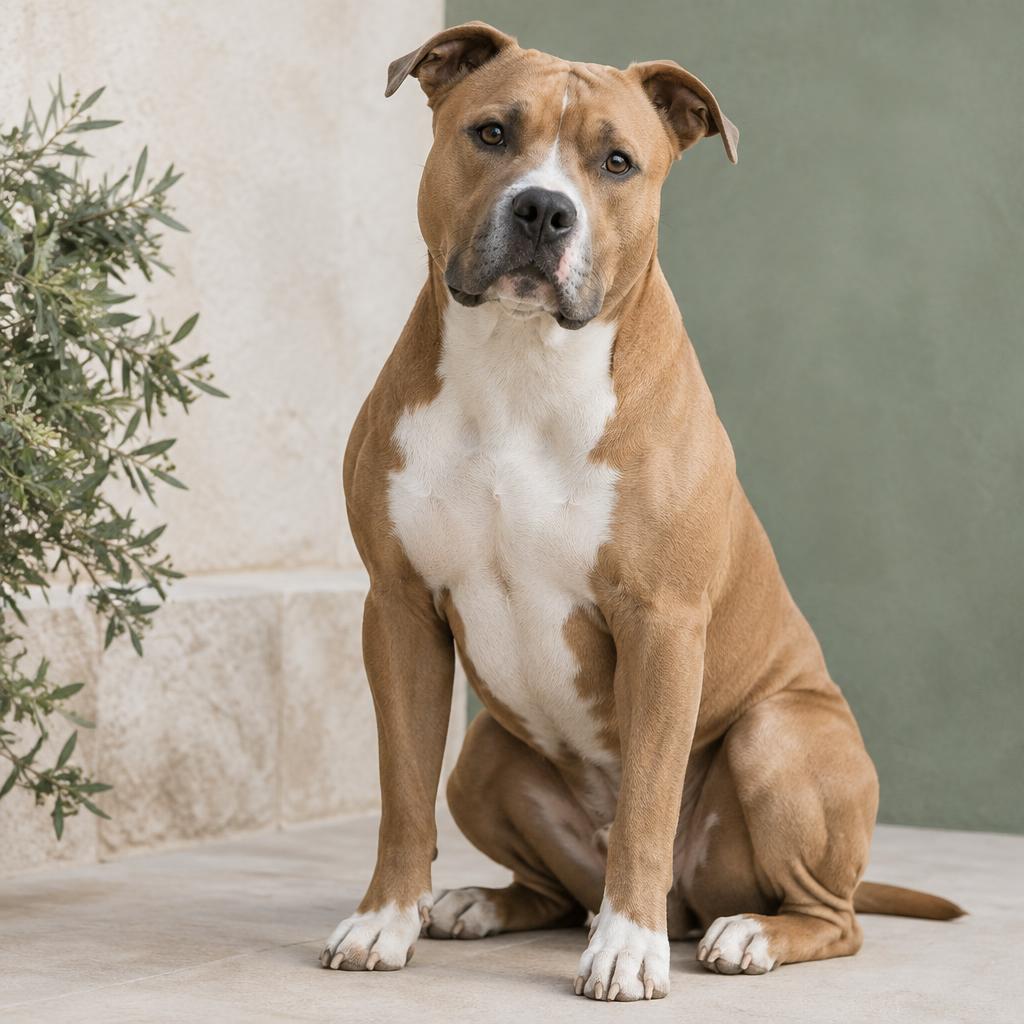
| American Staffordshire Terrier | 24 to 34 kg | 7/10 | 2/10 | €76 |
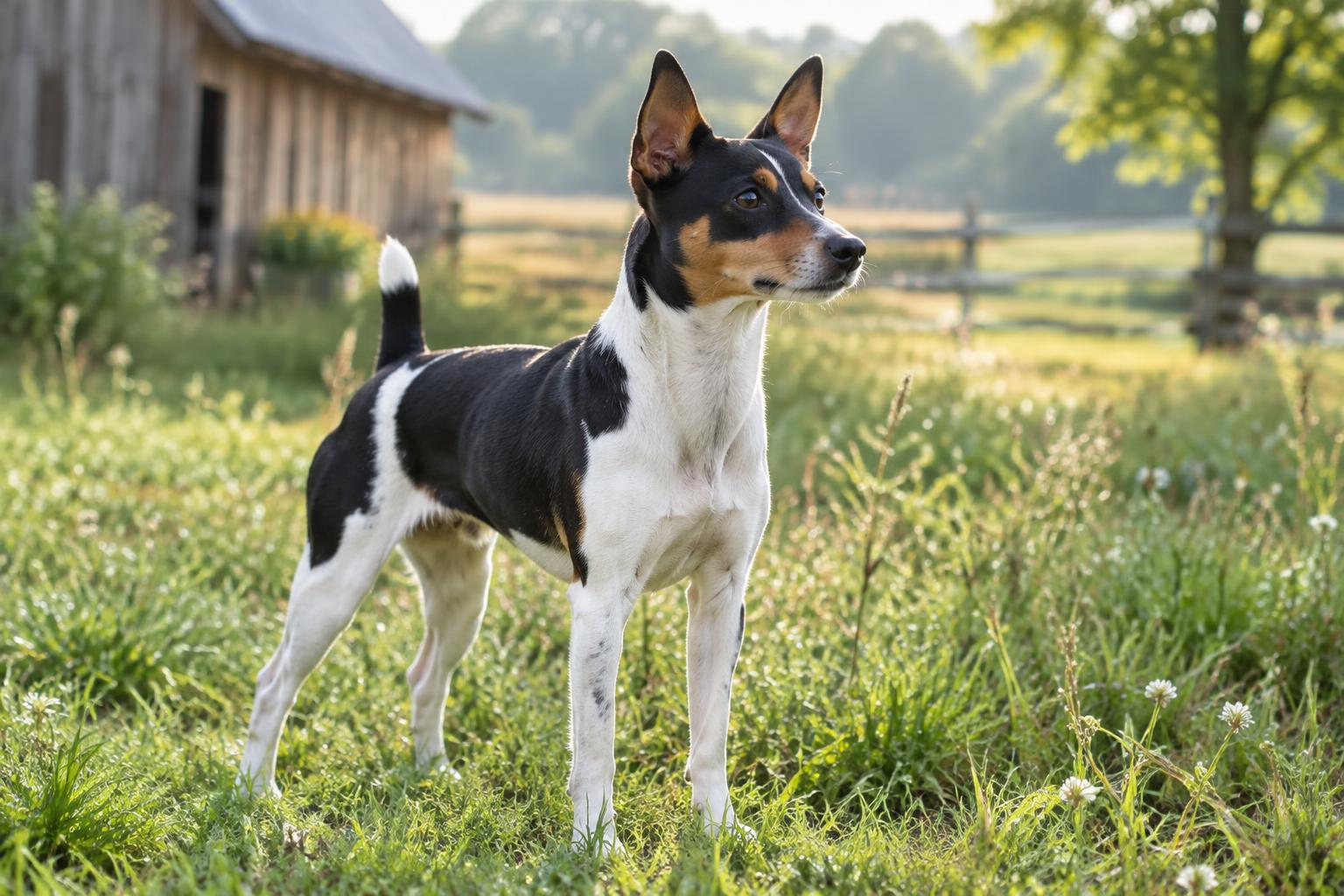
| Rat Terrier | 4.5 to 11 kg | 8/10 | 2/10 | €58 |
Bull Terrier questions, answered
Are Bull Terriers aggressive?
Not typically towards people; the breed is far more often a clown than a guard dog. Dog aggression, particularly between males, is well documented and needs lifelong management. Early socialisation helps but does not remove the tendency.
Are Bull Terriers good family dogs?
Yes, with respectful children: devoted, playful and physically affectionate. Their strength and exuberance mean supervision around very small children.
How long do Bull Terriers live?
Typically ten to fourteen years. Health screening, particularly for kidney disease, has the biggest influence on lifespan.
Do Bull Terriers shed?
Moderately. The short coat sheds year-round with seasonal peaks, and a weekly brush keeps it tidy.
Are Bull Terriers easy to train?
They are intelligent but famously stubborn. Short, positive, varied sessions work; repetition and force make the breed shut down or dig in.
What health problems do Bull Terriers have?
The most serious is hereditary nephropathy, an inherited kidney disease. Congenital deafness, patellar luxation, heart valve dysplasia and skin allergies are also documented. Buying from health-tested lines is essential.
What is the difference between a Bull Terrier and a Miniature Bull Terrier?
Size only. The Miniature is a separately recognised standard, 25 to 35 cm at the shoulder and 8 to 15 kg, with the same head shape, character and largely similar health considerations.