
Gundog group
England
English Setter
A gentle, sociable large gundog that needs open-country exercise and rewards it with one of the softest temperaments in the library.
The SniffScroll editorial desk
The gentleman of the gundogs: soft, sociable and built for open country.
The short version
- Famously gentle: superb with children and other dogs
- Needs at least an hour of exercise daily, ideally with free running
- The feathered coat needs brushing several times a week and collects debris outdoors
- Ask about hip scores and deafness screening; the breed carries a deafness risk
- Weight
- 20 to 36 kg
- Height
- 61 to 68 cm
- Lifespan
- 10 to 13 yrs
- Size
- Large
- Group
- Gundog
- Coat
- Long, silky, feathered
- Grown male
- 25 to 36 kg
- Grown female
- 20 to 32 kg
- Years to full size
- about 2
- One-off setup
- €450 to 950
Get one if…
- Active rural or semi-rural households
- Families wanting a gentle, sociable large dog
- Owners who enjoy long walks and free running
- Multi-dog homes; the breed is usually very dog-friendly
Think again if…
- City flats without daily access to open space
- House-proud owners; feathering carries mud and burrs indoors
- Anyone wanting a guard dog
- Households out all day with no company for the dog
Trait profile
Working lines are noticeably more driven and less coated than show lines; meet the breeder's adults to see which you are getting.
Space & setup. Needs a house with a garden and daily access to open space for free running.
Allergies. Not suitable for allergy sufferers; the long coat sheds moderately year-round.
Living with a English Setter
The English Setter is one of the oldest gundog breeds, developed to quarter moorland and set gamebirds. Behind the elegant feathered coat is a genuinely gentle, sociable dog that usually adores people and other dogs alike. It needs proper daily exercise and room to run, but indoors it is one of the softest, most biddable of the larger gundogs. Working and show lines differ noticeably in energy and coat, so meeting the breeder's adult dogs matters.
If the English Setter has a problem, it is that its looks sell it. The speckled belton coat and soft expression attract people who then discover a gundog that was bred to run all day. Get the exercise right, though, and few large breeds are easier to live with.
The temperament is the headline. English Setters are famously soft: gentle with children, sociable with other dogs, and usually friendly with strangers. They respond to kind, reward-based training and can shut down under harsh handling. Indoors, a well-exercised setter is a calm, affectionate presence that wants to be near its people.
The practical costs are exercise and coat. An hour is a minimum; the breed really comes into its own with free running in safe open country, and recall needs work because the hunting instinct is real. The feathered coat needs brushing several times a week, and ears, feathering and paws collect burrs, mud and grass seeds on every country walk.
Choose a working-line puppy and you get more drive and less coat; a show line gives you more coat and a slightly calmer dog. Either way, for an active, gentle household in or near the countryside, the English Setter is a lovely, underrated choice.
One of the sweetest large gundogs: gentle with children, friendly with dogs and strangers, and calm indoors after a proper run. The feathering picks up half the countryside.
Exercise, day to day
- 1At least 60 to 90 minutes of exercise daily
- 2Free running in secure open space several times a week
- 3Scent and retrieving games to engage the gundog brain
Grooming, realistically
- 1Brush the feathering three to four times a week
- 2Comb ears, chest, legs and tail after country walks
- 3Check ears weekly; the long drop ears trap moisture
- 4Trim around paws and check for grass seeds in summer
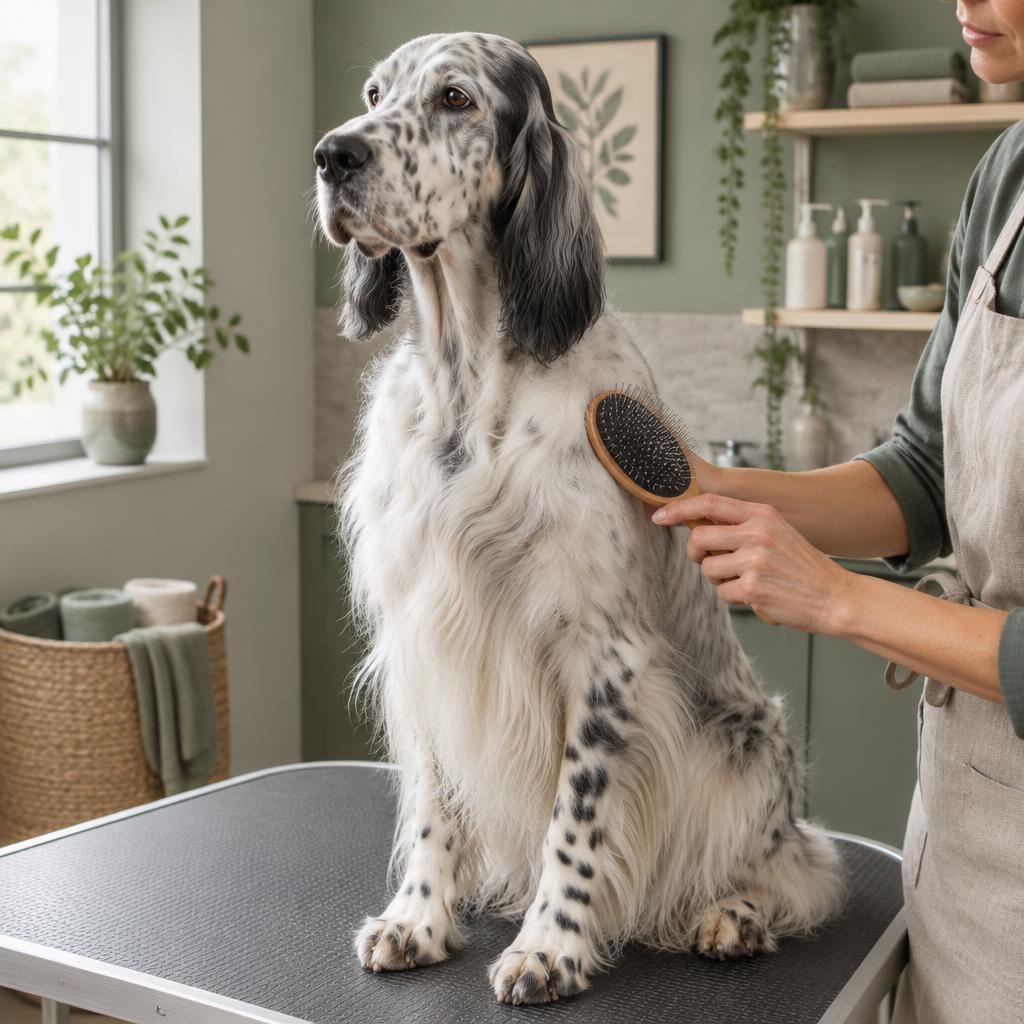
What you actually need
- Pin brush
- Metal comb
- Ear cleaner
- Blunt-ended scissors
Puppy to adult
| Age | Male | Female | What is happening |
|---|---|---|---|
| 8 weeks | |||
| 4 months | |||
| 6 months | |||
| 12 months | |||
| 24 months |
Ranges are typical, not targets. Judge condition by ribs and waist, and check with the ideal weight checker.
What to ask a breeder
- What are the hip and elbow scores of both parents?
- Have the parents and puppies been BAER hearing tested?
- Is this a working or show line, and how do they differ in energy?
- Can I meet the mother and any adult relatives?
- How are the puppies socialised before leaving?
Health tests to ask for
Ask to see results for both parents before you put down a deposit.
- Hip and elbow scoring for both parents
- BAER hearing test
- Eye examinations
Health watch-list
What to ask a breeder about, and what to watch for over a lifetime. This is orientation, not veterinary advice, anything you notice belongs in front of a vet.
Hip dysplasia
UncommonAsk for hip scores on both parents; manage weight and growth carefully.
Deafness
UncommonCongenital deafness occurs in the breed; BAER testing identifies affected puppies.
Ear infections
CommonLong drop ears trap moisture and debris; weekly checks are essential.
Hypothyroidism
UncommonWeight gain, lethargy and coat changes; diagnosed by blood test and managed with medication.
Elbow dysplasia
UncommonAsk for elbow scores alongside hips, particularly in working lines.
Grass-seed injuries
CommonThe feathered coat traps grass seeds in ears, paws and armpits during summer; check after every walk.
What it costs to keep one
Realistic running cost
€116 / month
About €1,392 a year, or roughly €16,704 across a 12-year life, before purchase price, neutering and one-off vet events.
Before the puppy arrives. Budget roughly €450 to 950 for a crate, bed, lead and harness, bowls, puppy classes, first vaccinations and grooming kit sized for this breed. Figures throughout are indicative and vary a good deal between countries.
Interactive · built for this breed
Is a English Setter right for your home?
Seven honest questions about your space, time and household, checked against this breed's exercise need, coat, sociability and tolerance for time alone.
Fit with your routine
94%
A strong fit
Your routine suits a English Setter well. Meet adult dogs of the line before you commit.
What to sort out first
- Needs more daily exercise than you have pencilled in.
- Coat needs more brushing or trimming than you have allowed.
Compare more breeds in the matchmaker, or plan meals with the portion calculator.
The verdict, by household
When to call your vet
- Head shaking, odour or discharge from the ears
- Limping or stiffness, especially after rest
- Not responding to sounds, which can indicate deafness
- Lumps, skin irritation or grass-seed abscesses after walks
Nothing here is a diagnosis. A swollen, hard belly with retching, collapse, breathing difficulty and sudden hind-leg weakness are emergencies: go straight away.
English Setter vs the closest alternatives
| Breed | Weight | Energy | Grooming | € / month |
|---|---|---|---|---|
| English Setter | 20 to 36 kg | 7/10 | 6/10 | €116 |
| Cavachon | 5 to 9 kg | 5/10 | 6/10 | €66 |
| Golden Retriever | 25 to 34 kg | 8/10 | 6/10 | €223 |
| Boykin Spaniel | 11 to 18 kg | 8/10 | 5/10 | €88 |
English Setter questions, answered
Are English Setters good family dogs?
Among the best of the large breeds: gentle, patient and sociable with children and other dogs when properly exercised.
How much exercise does an English Setter need?
At least an hour daily, and the breed is happiest with free running in open country several times a week.
Do English Setters shed?
Yes, moderately all year. The long feathering also carries mud, burrs and grass seeds indoors.
What is the difference between working and show lines?
Working lines are lighter, more driven and less coated; show lines are heavier coated and usually a little calmer.
Can an English Setter live in a city?
It is hard. The breed needs daily free running and struggles in a flat without serious commitment to outings.
Are they easy to train?
Yes, with kind methods. They are soft dogs that respond beautifully to rewards and can shut down under harsh handling.
What health screening should I ask about?
Hip and elbow scores, BAER hearing testing and eye examinations for both parents.