
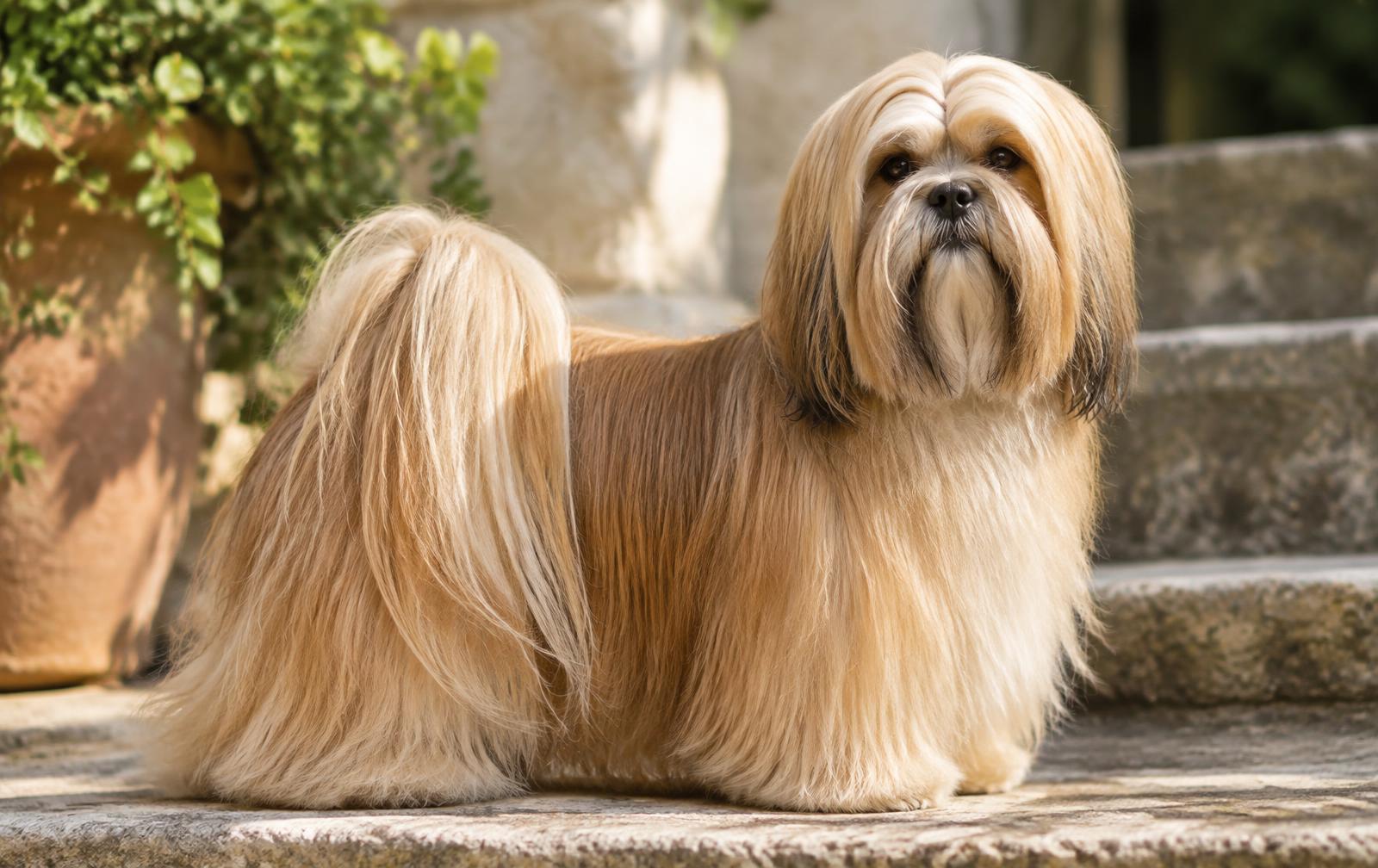
Utility group
Bred for centuries in Tibet as an indoor watchdog in monasteries and noble households around the city of Lhasa, alerting to strangers while the larger mastiff-type dogs guarded outside. It reached the West in the early twentieth century.
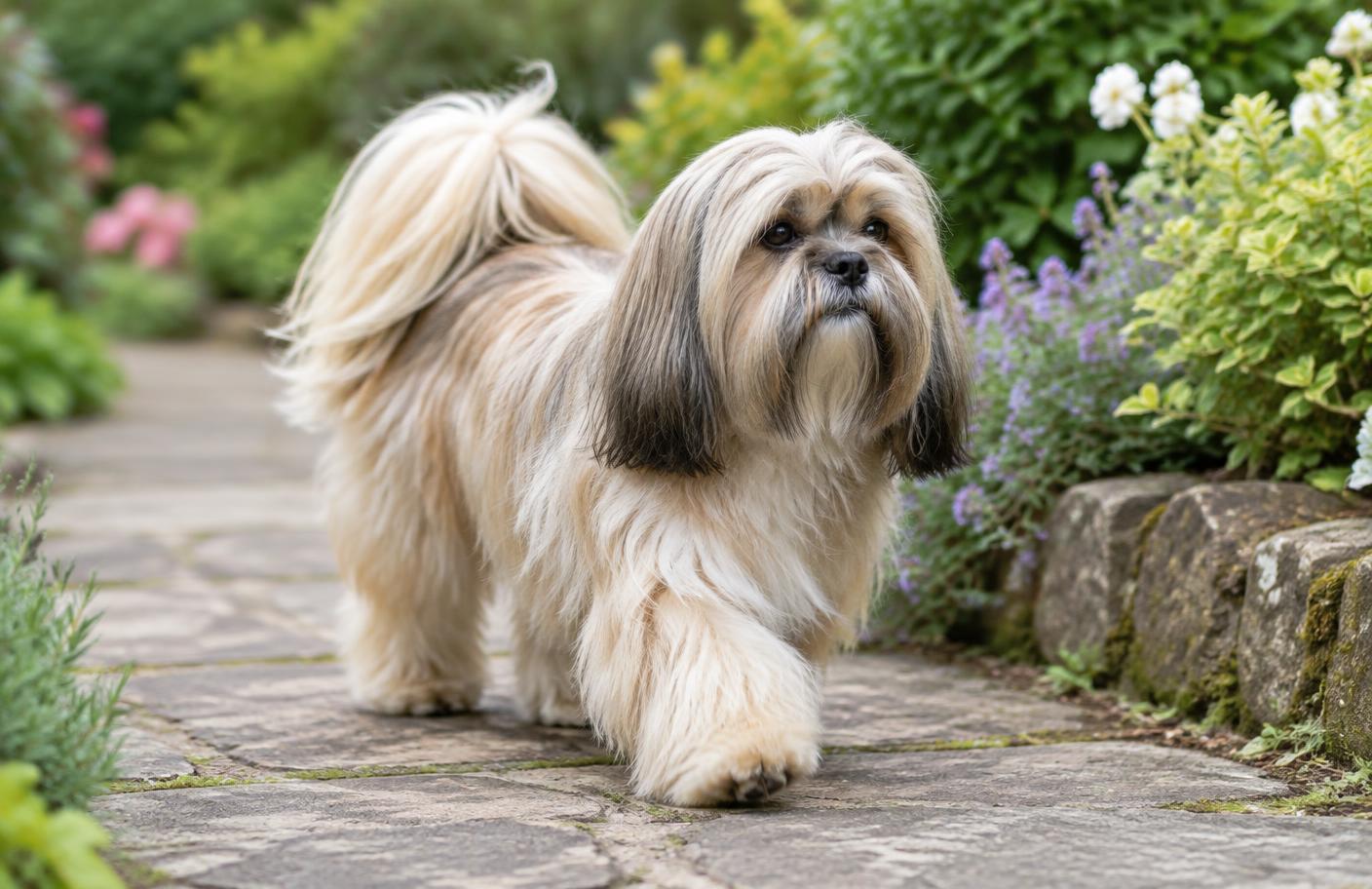
Lhasa Apso
The Lhasa Apso is a small, long-coated Tibetan sentinel: suspicious of strangers, devoted to its own people, surprisingly long-lived, and carrying either a full show coat or a practical clip, each with its own grooming workload.
Reviewed by the SniffScroll editorial desk
The little Tibetan sentinel with a long memory.
The short version
- A genuine sentinel: wary of strangers, devoted to family, and a sharp alarm barker that benefits from early quiet training.
- One of the longest-lived breeds, regularly reaching fourteen or fifteen years.
- The full coat needs brushing several times a week; a puppy clip every six to eight weeks is the practical pet choice.
- Modest exercise needs and a calm indoor nature make it genuinely flat-friendly.
- Early socialisation decides whether the natural suspicion of strangers stays polite.
- Weight
- 5 to 8 kg
- Height
- 23 to 28 cm
- Lifespan
- 12 to 16 yrs
- Size
- Small
- Group
- Utility
- Coat
- Long, straight, heavy double coat in gold, cream, honey, slate, smoke, black, white or parti-colour
- Grown male
- 6 to 8 kg
- Grown female
- 5 to 7 kg
- Years to full size
- about 1
- One-off setup
- €600 to 1100
Get one if…
- Flats and small homes wanting a compact, calm companion
- Owners who want a long-lived breed and will invest in socialisation
- People who enjoy a dog with opinions and an independent streak
- Households with older, considerate children or adults only
- Owners happy with either a serious grooming routine or a regular clipping appointment
Think again if…
- Families with toddlers or grabby young children
- Owners wanting an instantly friendly, everyone-welcome dog
- Anyone unwilling to maintain a long coat or pay for regular clipping
- Households wanting a silent dog; the alarm bark is part of the package
- Owners wanting a highly biddable, eager-to-please temperament
Trait profile
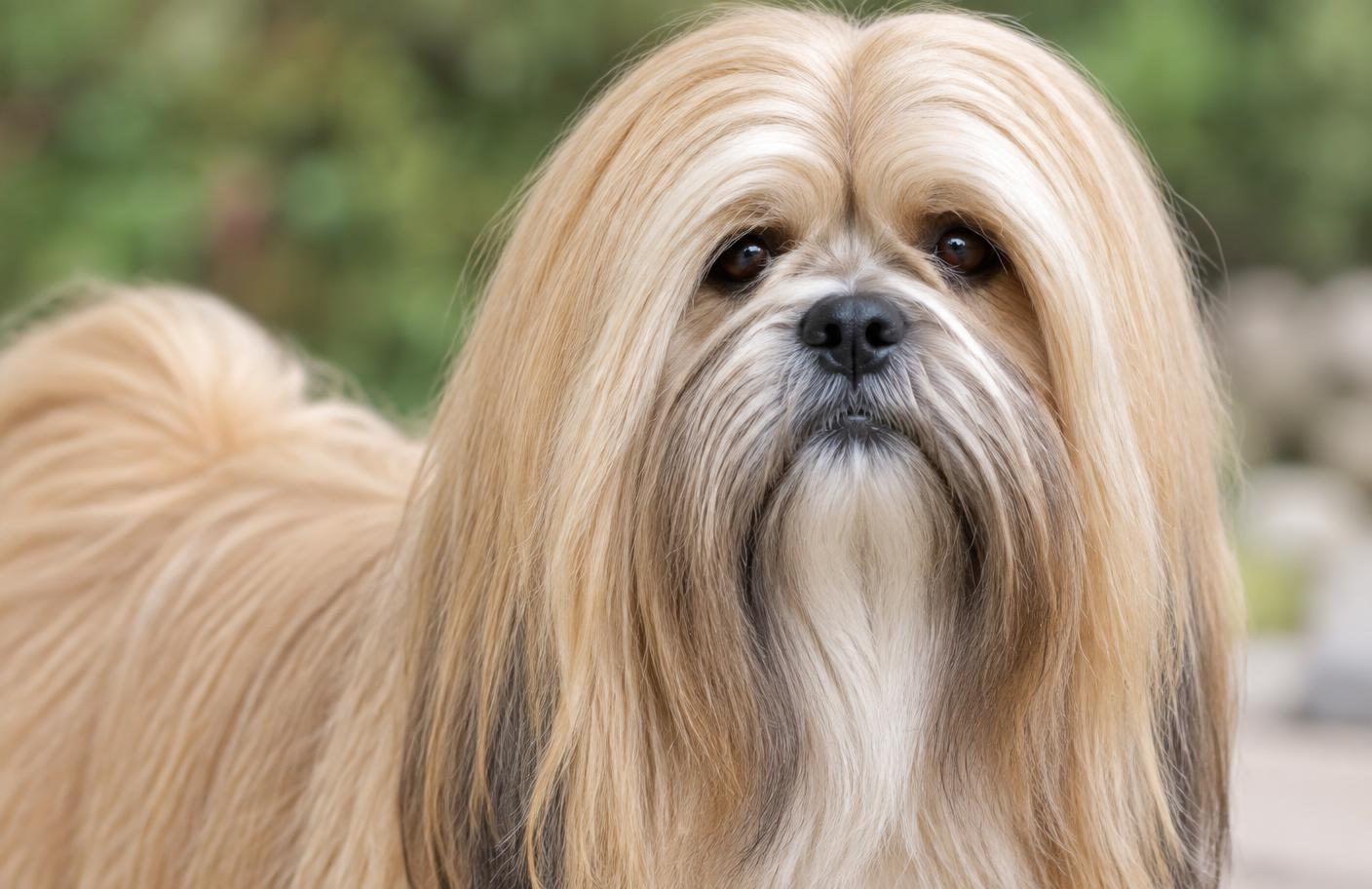
Centuries as a monastery sentinel produced a small dog with a big-dog sense of self: confident, independent and genuinely suspicious of strangers until they are accepted. With its own people it is devoted, playful and quietly comical, but it never quite forgets that guarding the house is its job.
Space & setup. Genuinely well suited to flats and small homes: compact, calm indoors and content with moderate walks, though its sharp alarm bark at corridor noises needs training in close quarters.
Allergies. The long coat sheds very little and the breed is sometimes tolerated by mild allergy sufferers, though no dog is truly hypoallergenic and dander is still produced.
Living with a Lhasa Apso
The Lhasa Apso is a small Tibetan breed developed as an indoor sentinel in monasteries and homes around Lhasa. Beneath the long coat is a confident, independent dog that is devoted to its family, wary of strangers and blessed with one of the longest lifespans of any breed. The coat can be kept long or clipped short, and the choice defines the grooming routine.
The Lhasa Apso spent centuries in the monasteries and noble households of Tibet, where its job was to patrol indoors and raise the alarm at anything unusual, while the much larger Tibetan Mastiff types guarded the gates outside. That division of labour explains the breed completely: a small, hardy, sure-footed dog with keen hearing, a sharp bark, a long memory for friends and strangers alike, and a strong sense of its own importance. It was never given away casually in its homeland, where it was considered a bringer of good fortune, and it reached Britain and America only in the early twentieth century.
At home the Lhasa Apso is two dogs in one. With its own family it is affectionate, playful and quietly funny, happy to potter about the house and then settle for hours. With strangers it is reserved to the point of suspicion, and that sentinel instinct never fully switches off: visitors are announced, assessed and only gradually accepted. Early, generous socialisation makes the difference between a dog that is politely aloof and one that is genuinely sharp, so puppies should meet a wide, steady stream of people in their first months. With considerate older children the breed does well; it does not enjoy being grabbed, and toddlers need supervision.
Exercise needs are modest: two walks totalling forty-five minutes to an hour a day keeps most adults content, and the breed is calm and adaptable indoors, suiting flats and small houses well. The trade-off for that easy physical profile is a busy mind: the Lhasa is clever and independent, learns household routines quickly and will absolutely train its owners if they let it. Short, positive, consistent training sessions work far better than repetition, and the alarm barking benefits from early quiet training, particularly in flats with shared walls.
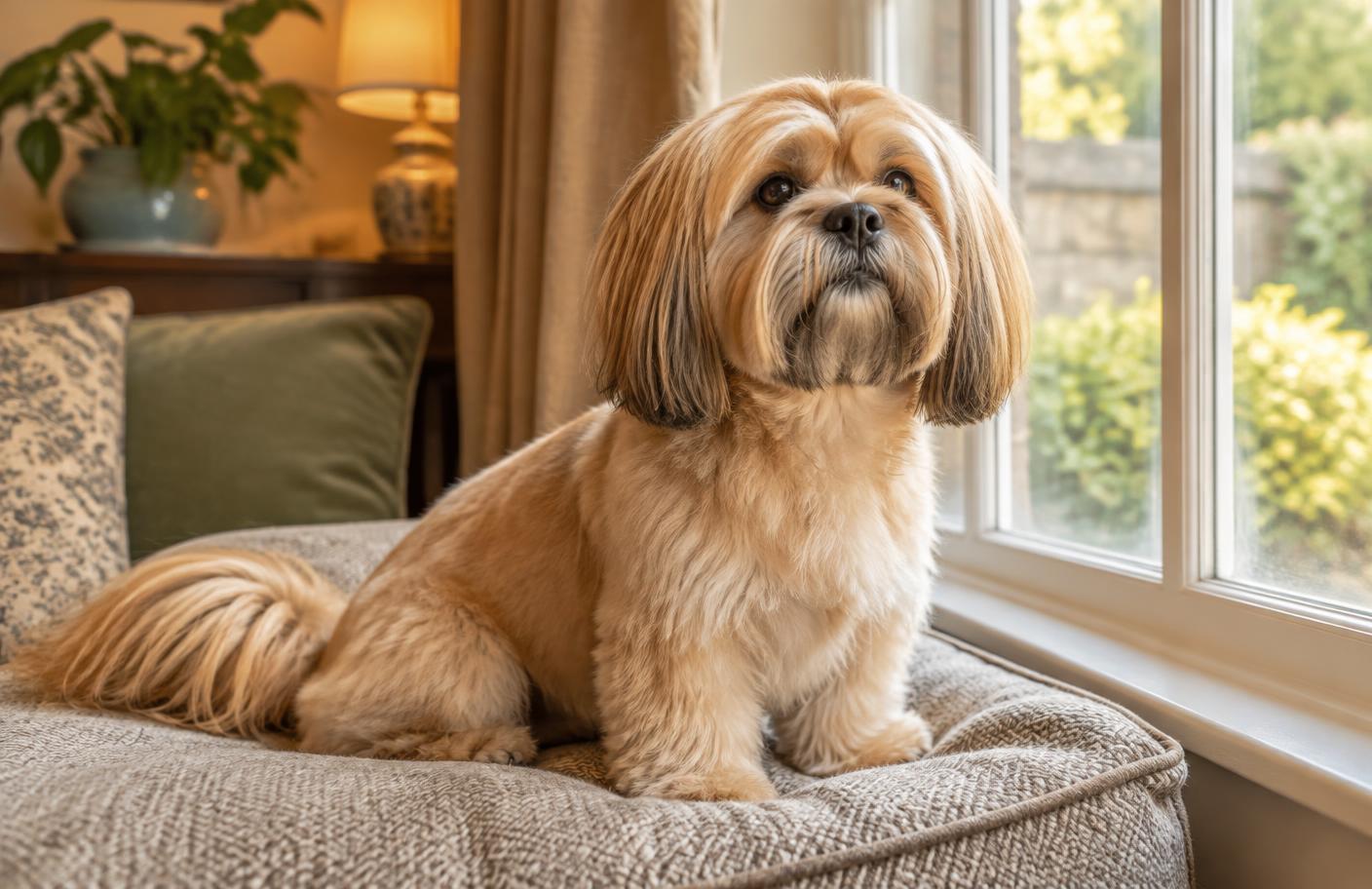
The coat decision is the big practical choice. Kept long, the heavy, straight double coat is beautiful and demanding: thorough brushing and combing several times a week, regular baths and constant attention to the face, ears and feet. Most pet owners choose a practical puppy clip every six to eight weeks, which reduces the routine to weekly brushing plus the grooming appointment, and the dog looks cheerful and tidy rather than glamorous. Either way, the face hair needs daily wiping and the ears need weekly checks, because hair grows in the ear canal and traps wax.
Health is a strong point and the breed is famously long-lived, regularly reaching fourteen or fifteen and not uncommonly beyond. The watch-list is specific rather than long: progressive retinal atrophy and dry eye affect the eyes, so annual eye checks are sensible, and patellar luxation occurs as in most small breeds. Renal dysplasia, an inherited kidney problem, appears in some lines, so ask breeders about kidney health in their dogs, and the small crowded jaw makes daily tooth brushing worthwhile. Choose a breeder who eye-tests, keep up the dental care, and the Lhasa Apso offers something few breeds can match: a decade and a half of characterful, watchful, devoted company in a very portable package.
A characterful, long-lived little watchdog for owners who respect its independence: the full coat is a serious commitment, the clipped version merely a moderate one, and early socialisation shapes how sharp the sentinel instinct becomes.
Exercise, day to day
- 1Puppies (8 to 20 weeks): short play sessions and gentle socialisation outings rather than formal walks.
- 2Adolescents (4 to 12 months): two short walks a day plus training games.
- 3Adults: forty-five minutes to an hour of walking daily, split into two outings.
- 4Mental work: the clever, independent brain needs training games and variety more than mileage.
- 5Indoor play counts: the breed is happy to chase toys down the corridor on wet days.
Grooming, realistically
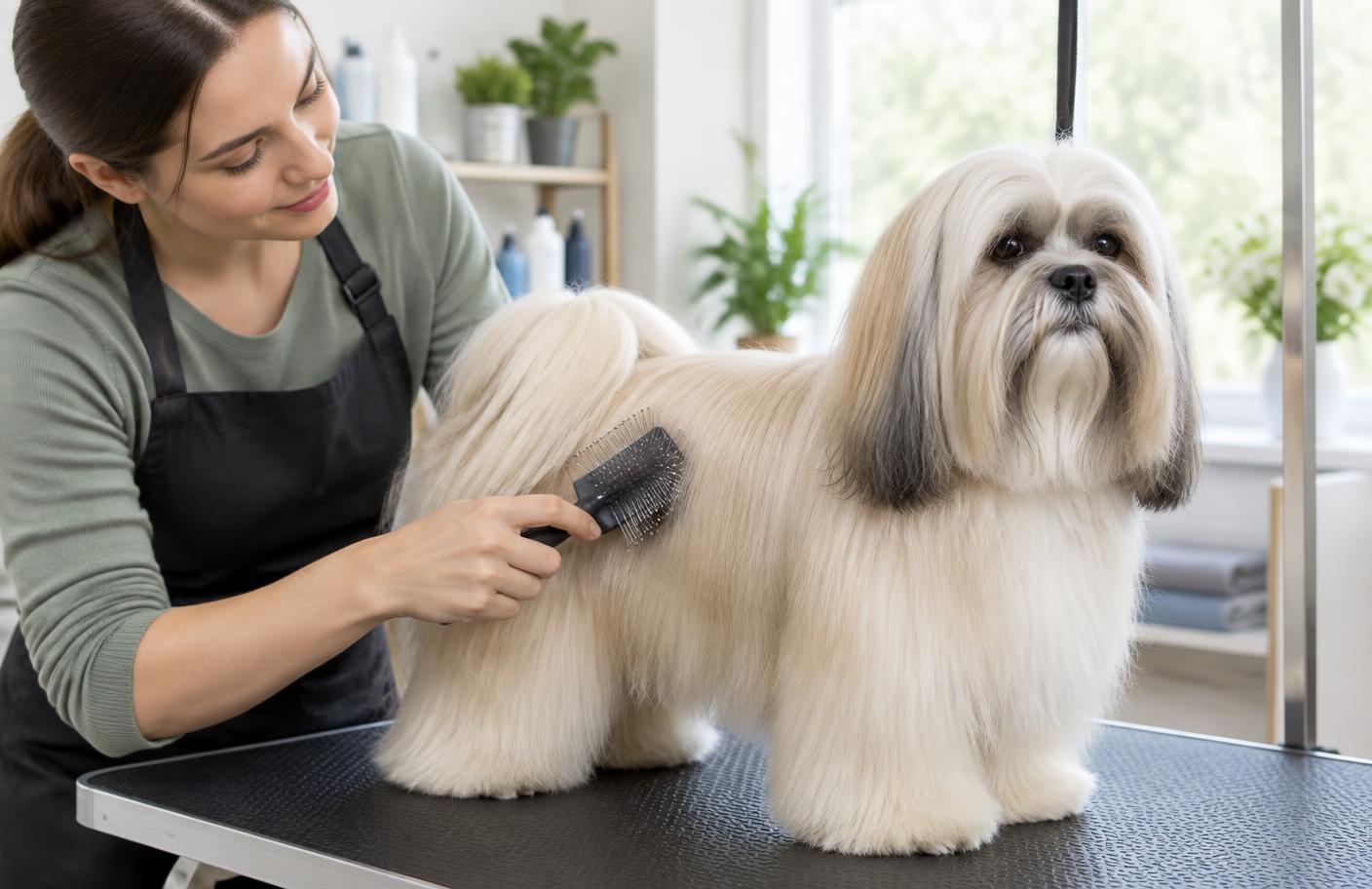
- 1Long coat: brush and comb thoroughly three to four times a week, section by section, down to the skin.
- 2Clipped coat: brush weekly and book a puppy clip every six to eight weeks.
- 3Wipe the face daily and keep the hair around the eyes clean and dry.
- 4Check ears weekly; hair in the ear canal traps wax and needs attention.
- 5Brush teeth daily, as the small crowded jaw is prone to dental disease.
What you actually need
- Pin brush
- Metal comb
- Slicker brush
- Detangling spray
- Dog nail clippers
- Ear cleaning solution
- Enzymatic dog toothpaste and a small brush
Puppy to adult
| Age | Male | Female | What is happening |
|---|---|---|---|
| 8 weeks | 1.3 to 1.8 kg | 1.2 to 1.6 kg | Socialisation window opens; introduce a steady stream of people from the start. |
| 3 months | 2.6 to 3.4 kg | 2.3 to 3 kg | Confident and busy; short positive training sessions suit the independent mind. |
| 6 months | 4.5 to 6 kg | 4 to 5.3 kg | Puppy coat transitioning to adult coat; matting risk rises, so brushing matters now. |
| 9 months | 5.4 to 7.2 kg | 4.7 to 6.4 kg | Near adult size; adolescence can sharpen the suspicious streak, so keep socialising. |
| 12 months | 6 to 8 kg | 5 to 7 kg | Adult size and coat reached; decide on the long coat or the clip. |
| 18 months | 6 to 8 kg | 5 to 7 kg | Fully mature; the settled adult character is now clear. |
Ranges are typical, not targets. Judge condition by ribs and waist, and check with the ideal weight checker.
What to ask a breeder
- Have the parents had recent eye examinations, and can I see the results?
- Is there any history of kidney problems or renal dysplasia in your lines?
- How do you socialise the puppies with strangers and household noises?
- What coat care routine do you recommend, and do you advise the long coat or a clip for a pet home?
- What are the parents' temperaments like with visitors?
Health tests to ask for
Ask to see results for both parents before you put down a deposit.
- Annual eye examination, covering progressive retinal atrophy and dry eye
- Patella checks for breeding stock
- Breeder history of kidney health in the line
- Daily tooth brushing and regular dental checks
- Weight control; a lean Lhasa is a long-lived Lhasa
Health watch-list
What to ask a breeder about, and what to watch for over a lifetime. This is orientation, not veterinary advice, anything you notice belongs in front of a vet.
Progressive retinal atrophy
NotableAn inherited eye condition causing gradual vision loss. Breeding stock should have regular eye examinations.
Dry eye (keratoconjunctivitis sicca)
CommonReduced tear production leading to red, uncomfortable eyes. Manageable with lifelong drops once diagnosed; annual eye checks catch it early.
Patellar luxation
NotableThe kneecap can slip out of place, as in many small breeds. Breeding stock should be patella checked.
Renal dysplasia
UncommonAn inherited kidney problem appearing in some lines. Ask breeders about kidney health in their dogs and watch for increased thirst.
Dental disease
CommonThe small, crowded jaw traps tartar. Daily tooth brushing from puppyhood prevents most problems.
Ear problems
CommonHair growing in the ear canal traps wax and moisture. Weekly ear checks and keeping the canal hair managed prevent most infections.
What it costs to keep one
Realistic running cost
€140 / month
About €1,680 a year, or roughly €23,520 across a 14-year life, before purchase price, neutering and one-off vet events.
Before the puppy arrives. Budget roughly €600 to 1100 for a crate, bed, lead and harness, bowls, puppy classes, first vaccinations and grooming kit sized for this breed. Figures throughout are indicative and vary a good deal between countries.
Interactive · built for this breed
Is a Lhasa Apso right for your home?
Seven honest questions about your space, time and household, checked against this breed's exercise need, coat, sociability and tolerance for time alone.
Fit with your routine
97%
A strong fit
Your routine suits a Lhasa Apso well. Meet adult dogs of the line before you commit.
What to sort out first
- Coat needs more brushing or trimming than you have allowed.
Working in your favour
- Your daily walking comfortably covers this breed's exercise need.
Compare more breeds in the matchmaker, or plan meals with the portion calculator.
The verdict, by household
Suitable with commitment
Hardy and manageable, provided socialisation and grooming are taken seriously from the start.
Best with older children
Devoted and playful with considerate children; toddlers and grabbing hands are a poor match.
Excellent
A characterful, portable companion content with moderate walks and plenty of company.
Good with training
Compact and calm indoors; the alarm bark needs early quiet training in shared buildings.
When to call your vet
- Night hesitation or bumping into things, which warrant an eye examination
- Red, dry or repeatedly infected eyes, which can indicate dry eye
- Skipping on a hind leg, which can signal a slipping kneecap
- Increased thirst or changes in urination, worth a kidney check
- Bad breath or reluctance to eat hard food, which suggest dental disease
Nothing here is a diagnosis. A swollen, hard belly with retching, collapse, breathing difficulty and sudden hind-leg weakness are emergencies: go straight away.
Lhasa Apso vs the closest alternatives
| Breed | Weight | Energy | Grooming | € / month |
|---|---|---|---|---|
| Lhasa Apso | 5 to 8 kg | 5/10 | 8/10 | €140 |
| Miniature Schnauzer | 5 to 9 kg | 6/10 | 8/10 | €92 |
| Maltese | 3 to 4 kg | 5/10 | 8/10 | €93 |
| Maltipoo | 2.5 to 7 kg | 5/10 | 8/10 | €138 |
Lhasa Apso questions, answered
How long do Lhasa Apsos live?
Typically twelve to sixteen years, and fourteen or fifteen is common. It is one of the longest-lived of all breeds, which makes the choice of a health-tested puppy especially worthwhile.
Do Lhasa Apsos shed?
Very little. The long coat holds onto shed hair, which is why it mats without regular brushing. The breed is sometimes tolerated by mild allergy sufferers, though no dog is truly hypoallergenic.
Are Lhasa Apsos good with strangers?
They are naturally wary, which is the point of the breed: it was developed as an indoor sentinel. Early, generous socialisation keeps that suspicion polite, and most accept visitors once properly introduced, but this is never an instantly friendly breed.
How much grooming does a Lhasa Apso need?
Kept long, the coat needs thorough brushing three to four times a week plus regular baths. Kept in a puppy clip, it needs weekly brushing and a grooming appointment every six to eight weeks. Most pet owners choose the clip.
Are Lhasa Apsos good with children?
They do well with considerate older children but dislike being grabbed or roughly handled, so toddlers are a poor match. As with any small dog, supervision matters.
How much exercise does a Lhasa Apso need?
Forty-five minutes to an hour of walking a day, split into two outings, suits most adults. The breed is calm indoors and genuinely suited to flat life.
Do Lhasa Apsos bark a lot?
They are alert alarm barkers by design and will announce visitors, corridor noises and unusual sounds. Early quiet training keeps it manageable, but a completely silent Lhasa is not a realistic goal.
Sources
Breeds people compare with this
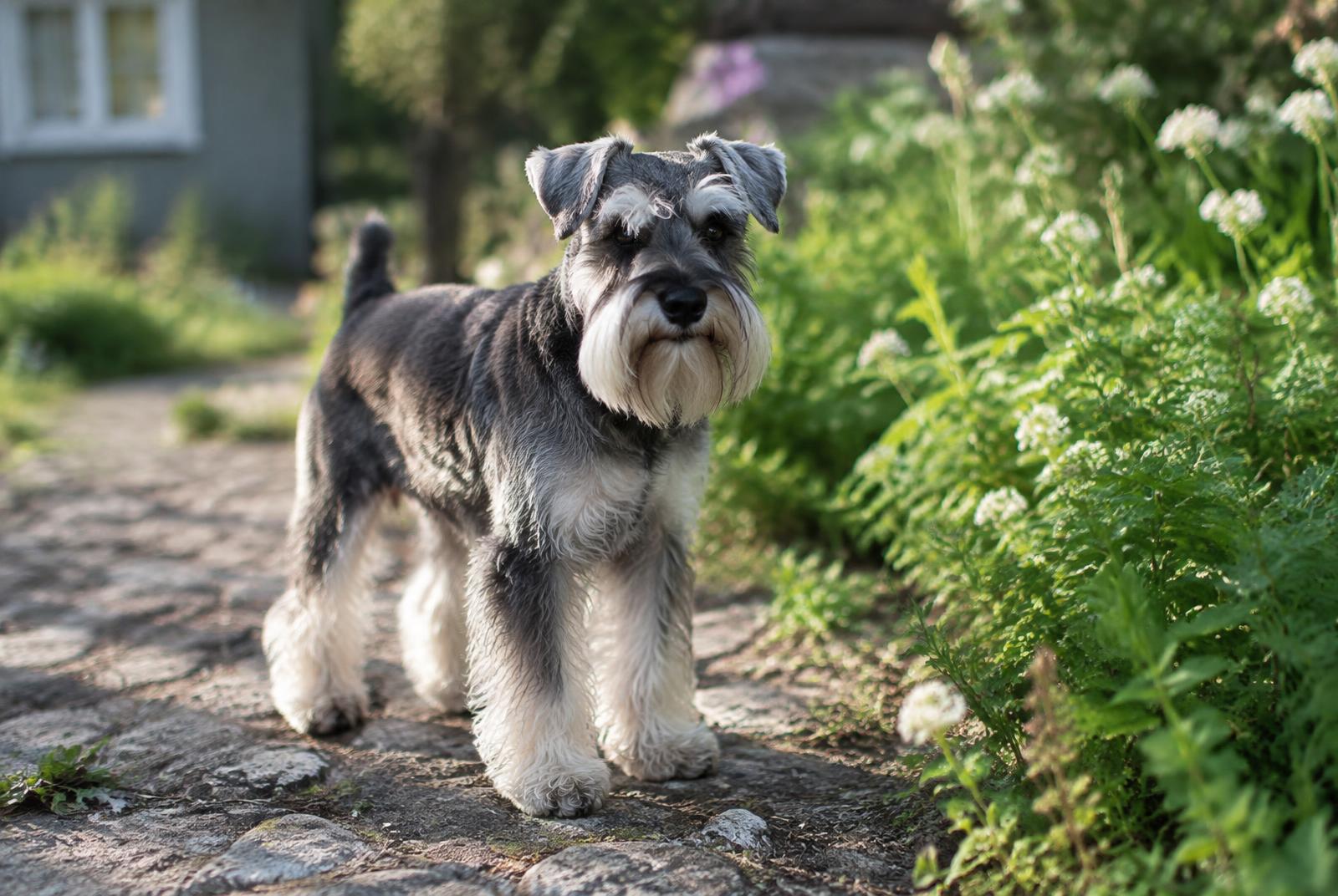
Miniature Schnauzer
A sharp witted, wiry coated terrier type that watches the door and minds its diet in equal measure.
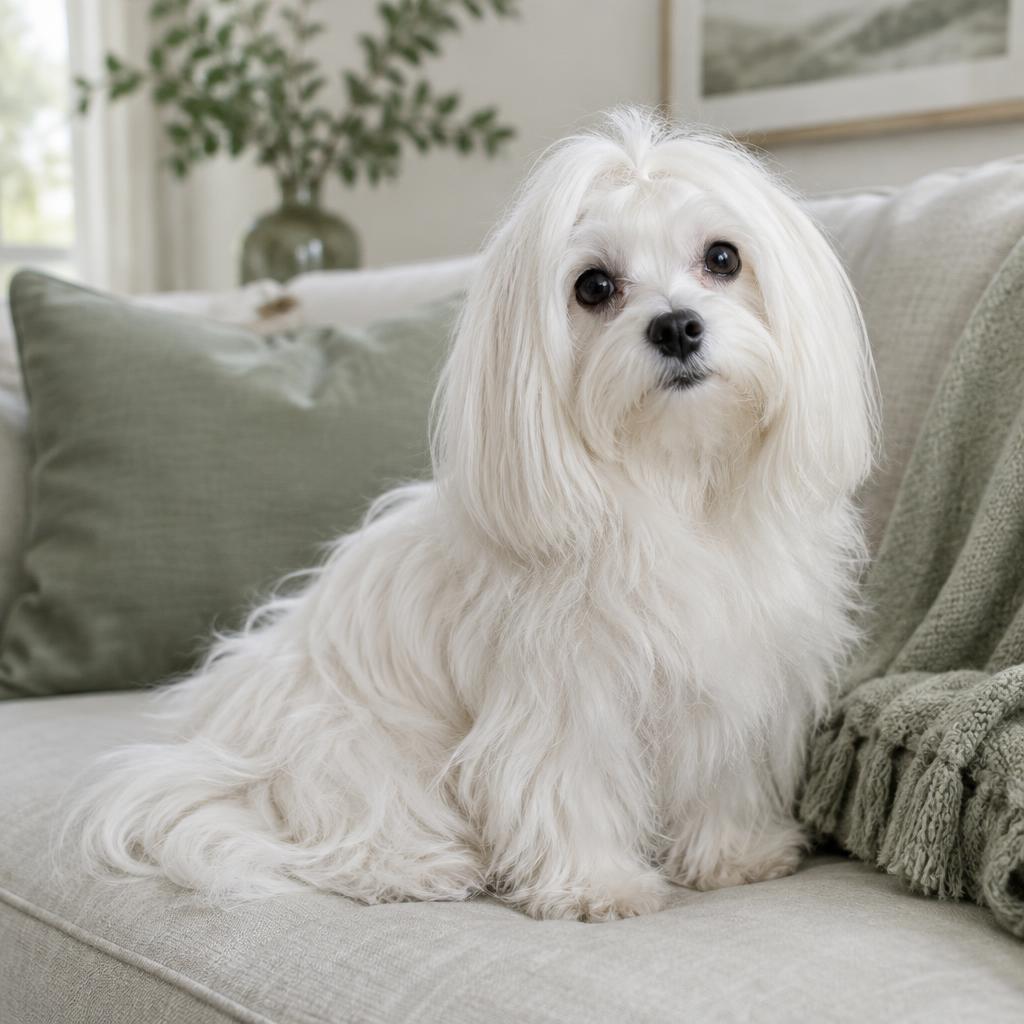
Maltese
A long lived, silky coated companion that demands daily combing and daily company in equal measure.

Maltipoo
The Maltese-Poodle cross built for laps, flats and low-shedding coats.