
Dog Bad Breath: Causes, Fixes and When It Is Serious
Bad breath is not a personality trait. It almost always has a cause, most often dental disease, and fixing the cause fixes the smell. Here is how to read the smell and what to do about it.
The SniffScroll desk
Published 9 October 2026
Reviewed by the SniffScroll editorial team
The short version
- Most bad breath in dogs is dental disease, and most dogs over three have some
- Sweet or ammonia-like breath with clean teeth can signal diabetes or kidney disease
- Daily brushing with dog toothpaste is the most effective home measure
- Dental chews support brushing but never replace it
- Dogs hide mouth pain; still eating is no reassurance
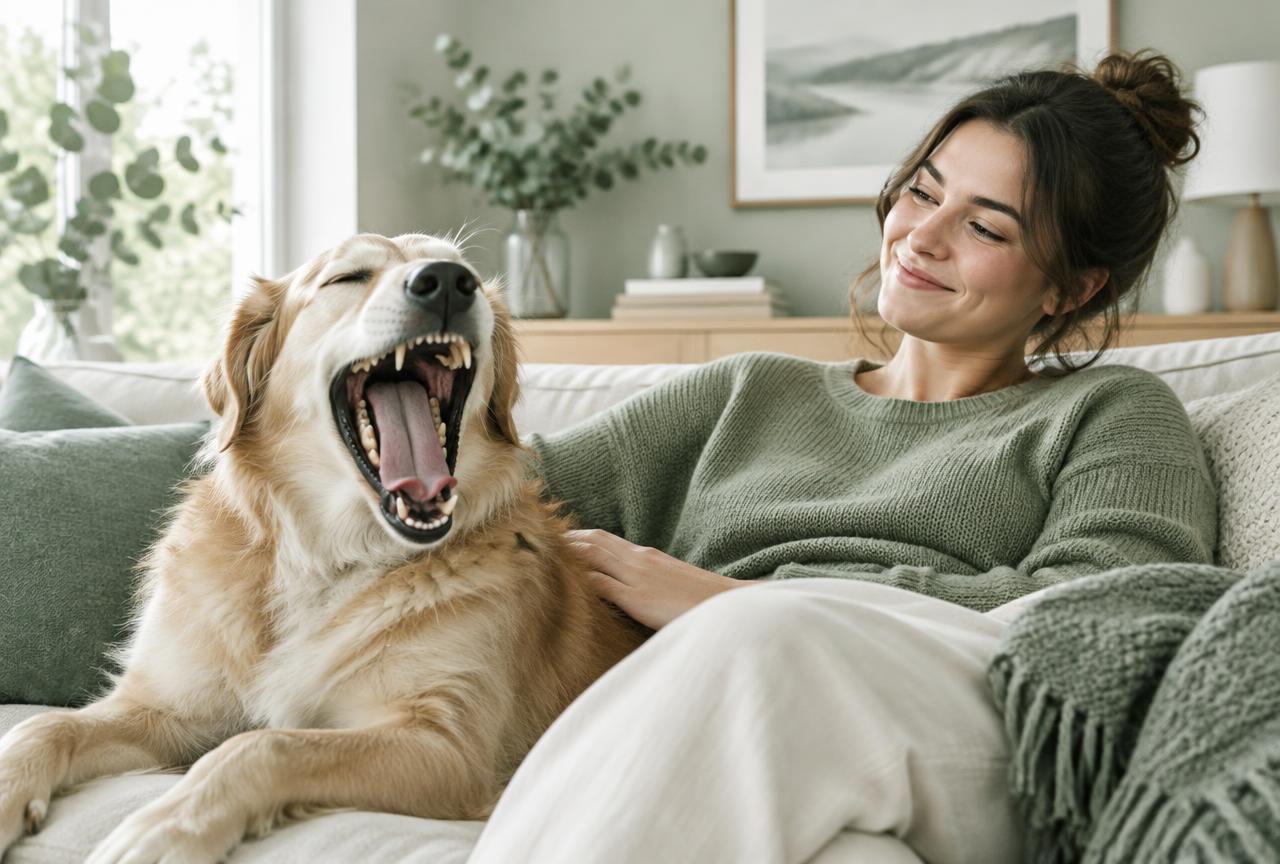
A certain amount of "dog breath" comes with the territory, but breath that makes you recoil is not normal, and it is not something to simply live with. Bad breath in dogs almost always has a cause, most often dental disease, and fixing it usually fixes the smell. Here is how to read the smell, what to check at home, and when it points to something beyond the mouth.
Why does my dog's breath smell bad?
The commonest cause of bad breath in dogs is dental disease: bacteria living in plaque and tartar produce the foul smell, and most dogs over three have some degree of it.
By three years of age, the majority of dogs have early periodontal disease. Bacteria form plaque on the teeth, plaque hardens into tartar, tartar pushes under the gumline, and the resulting inflammation and infection smell exactly like what you are noticing. Small breeds, including Cavapoos and other toy and small dogs, are especially prone because their teeth are crowded into small jaws.
Dental disease is not the only cause, though. The character of the smell and the state of the teeth together tell you a lot, which is why the next section asks you to lift a lip.
Reading the smell: a rough guide
A fishy or generally foul smell with visible tartar points to dental disease, while sweet or ammonia-like breath with clean teeth can signal illness elsewhere in the body.
Fishy, meaty, generally foul. The classic dental smell. Check for yellow-brown tartar along the gumline and redness where gum meets tooth.
Foul and rotten. A step beyond ordinary dental smell. Think broken tooth, root abscess, something stuck across the roof of the mouth, or infected gums. Needs a vet soon.
Sweet or fruity. Unusual in dogs and worth taking seriously, particularly with increased thirst and urination, as it can accompany diabetes.
Like urine or ammonia. Can be a sign of kidney disease, which allows waste products to build up in the blood and show on the breath. Needs blood and urine tests.
Metallic or sour, with lip licking and gulping. Sometimes accompanies nausea and stomach upset rather than a mouth problem.
| Smell | Teeth look | Most likely | Next step |
|---|---|---|---|
| --- | --- | --- | --- |
| Fishy, foul | Tartar, red gums | Dental disease | Dental check, then home care |
| Rotten | Any | Broken tooth, abscess, stuck object | Vet within days |
| Sweet, fruity | Clean | Possible diabetes | Vet promptly, blood test |
| Ammonia, urine-like | Clean | Possible kidney disease | Vet promptly, blood and urine |
| Mild, occasional | Clean | Normal dog breath | Keep up home care |
The mouth check you can do at home
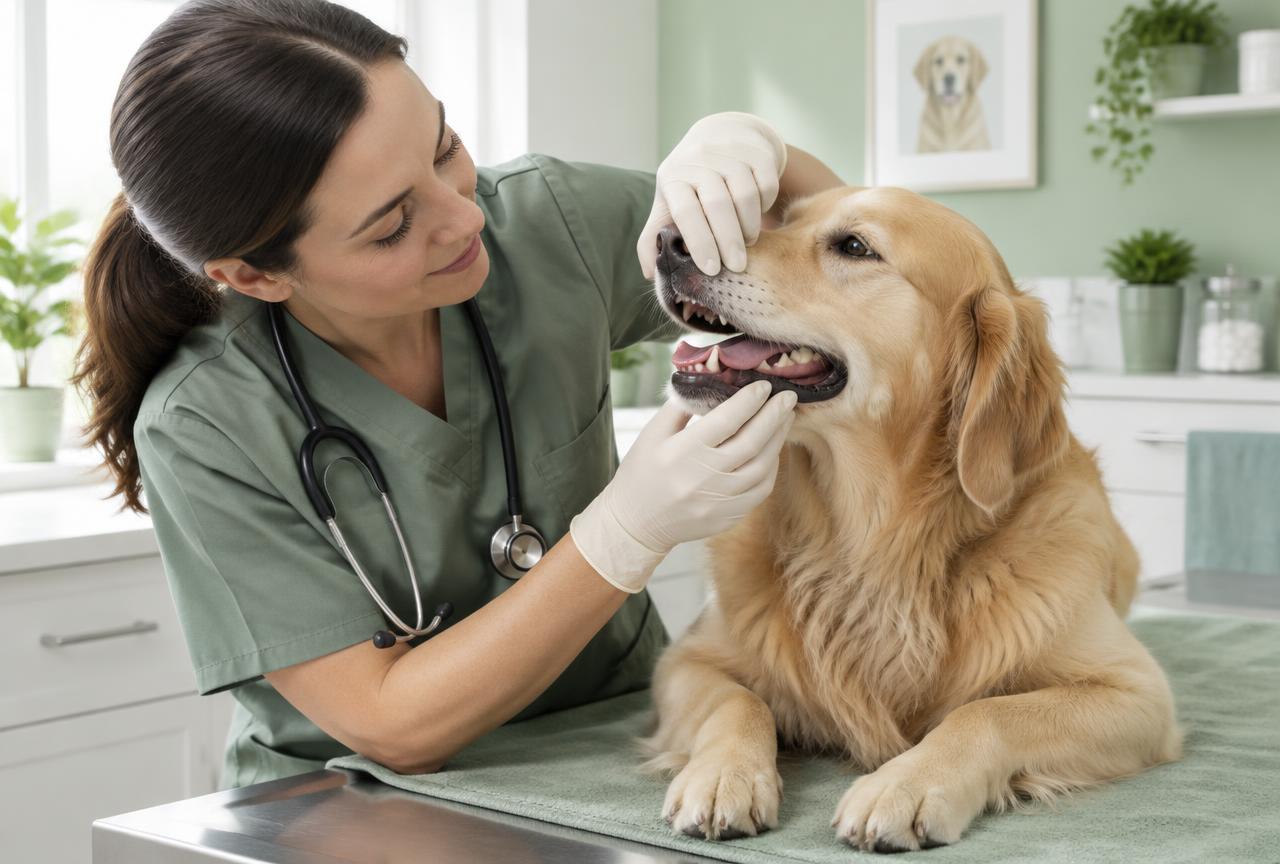
A thirty-second look at the teeth and gums, done weekly, tells you most of what you need to know about your dog's mouth.
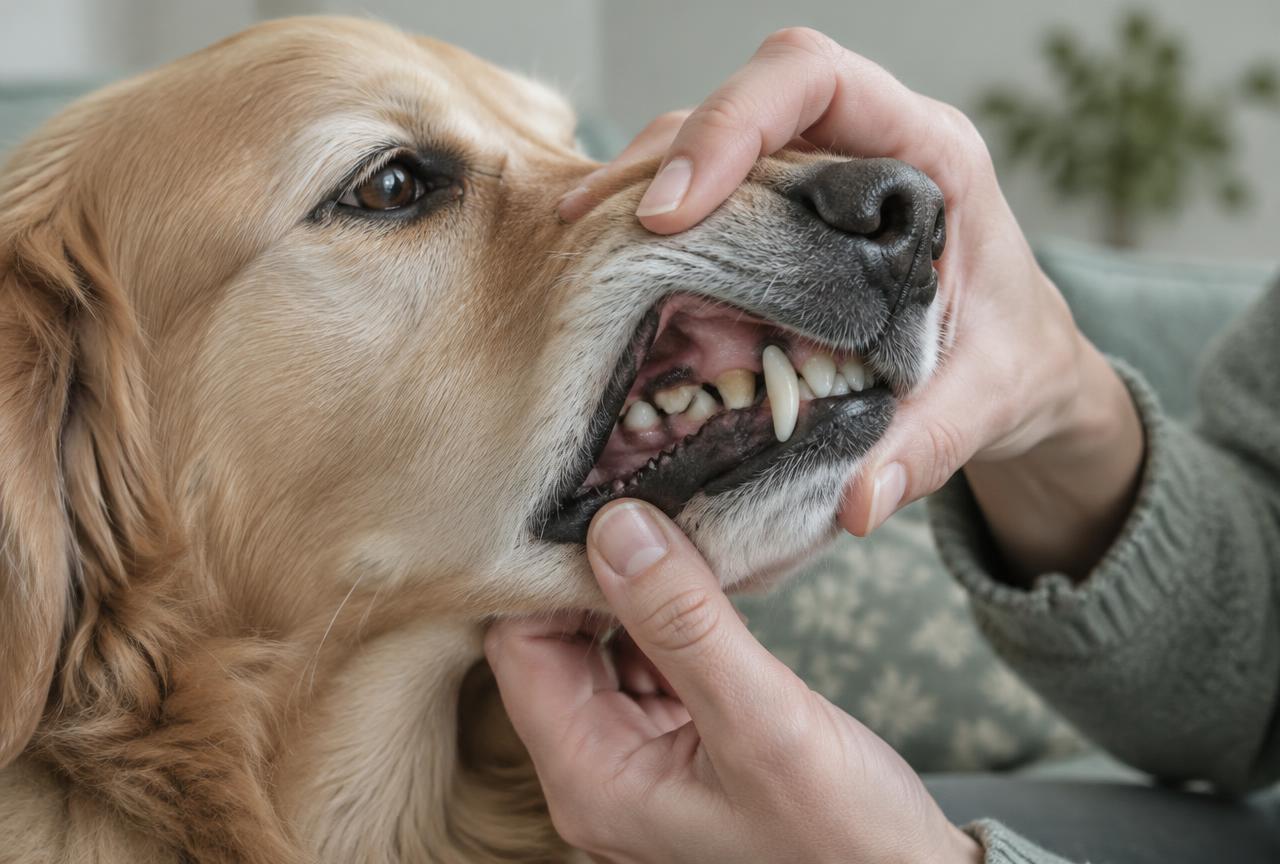
Wait for a calm moment, lift the upper lip on each side, and look along the gumline. Healthy teeth are white and the gums are pale pink with a sharp edge against the tooth. Early disease shows as a thin red line at the gum margin and a film of yellow near the gumline. Advanced disease shows brown tartar, red or bleeding gums, gum recession, loose teeth and, sometimes, a dog that flinches when you touch the muzzle.
While you are there, check for anything odd: a chipped or discoloured tooth, a lump on the gum, or something wedged between the teeth or across the palate. Dogs that chew sticks and bones occasionally get fragments stuck, and the smell from a rotting fragment is impressive.
Fixing dental breath: what actually works
The fix for dental bad breath is a professional clean if tartar is established, then daily toothbrushing to stop it coming back.
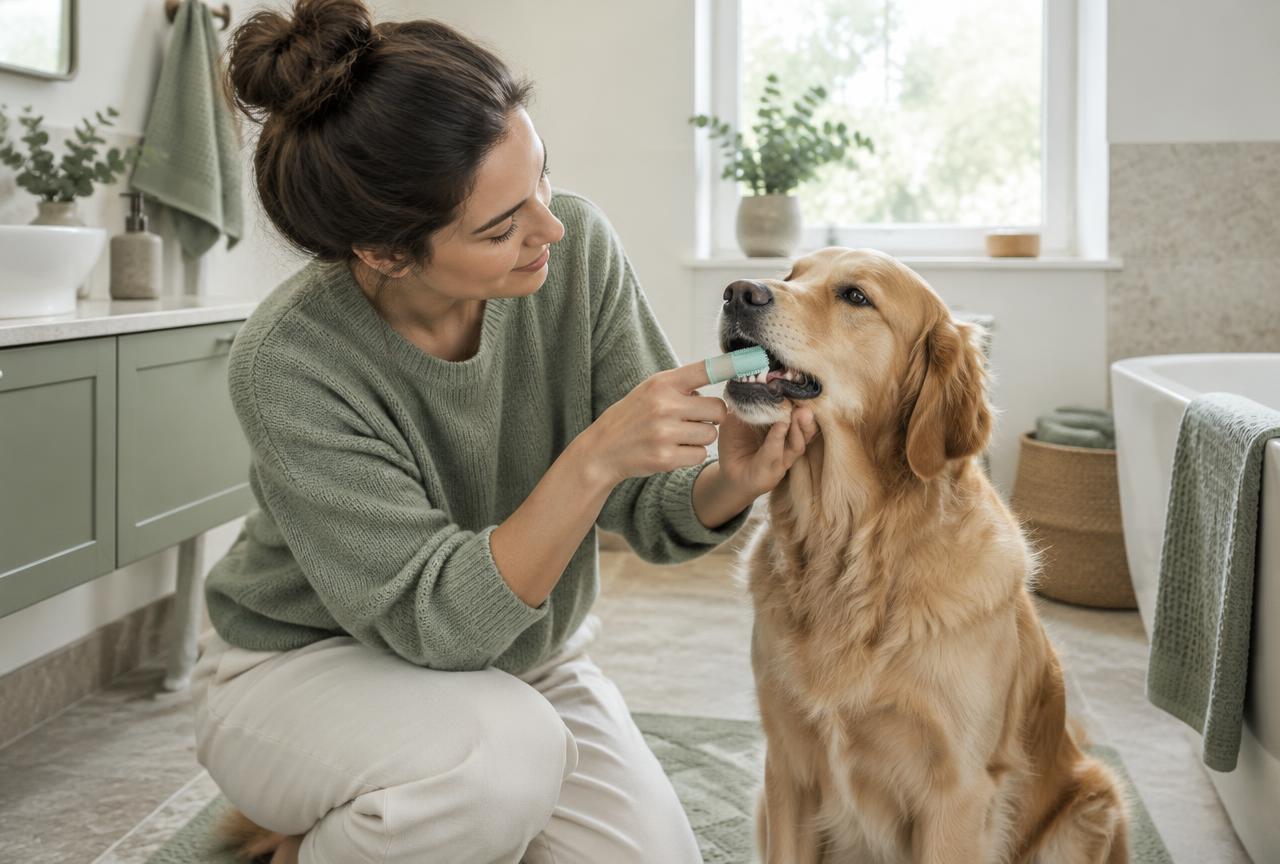
Once tartar is present, no chew, spray or additive removes it; it needs scaling under anaesthetic, just like a human dental clean but with the dog asleep. After the clean, home care decides whether you are back in two years or never. Daily brushing with a dog toothpaste (human toothpaste is not safe to swallow) is the gold standard, and most dogs learn to accept it within a couple of weeks of patient, treat-backed practice.
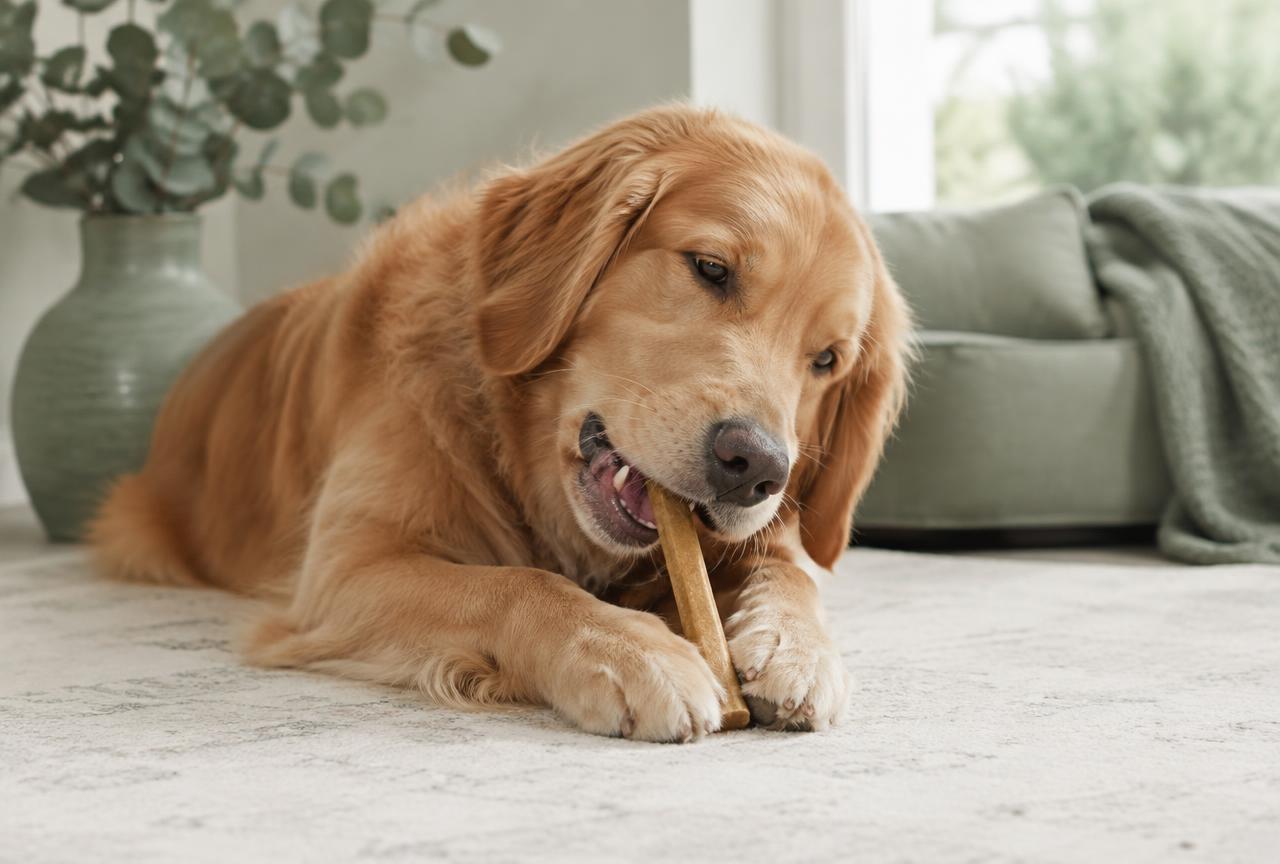
Dental chews and dental diets help as supporting acts: look for products with the VOHC (Veterinary Oral Health Council) seal, which means they have actual evidence behind them. Water additives and breath sprays are, at best, minor helpers. Nothing replaces the toothbrush.
When bad breath is not about teeth
If the teeth are clean and the breath is still bad, the cause may lie in the stomach, kidneys, liver or metabolism, and that pattern needs a vet.
The clues are the smell character and the company it keeps. Sweet breath plus drinking and weeing more suggests diabetes. Ammonia breath plus weight loss, nausea or appetite change suggests kidney trouble. Foul breath plus vomiting, gulping and lip licking can be reflux or stomach disease. A sudden change in breath in a dog that scavenges can simply be something dreadful it ate, which resolves in a day or two, but persistent unexplained bad breath with clean teeth always deserves blood tests.
A weekly mouth-care routine that actually sticks
The routine that works is the one simple enough to keep doing: a quick look weekly, brushing most days, and a dental check at every annual vet visit.
Pick a fixed moment, Sunday evening works for many households, and lift the lip on both sides. You are looking for change: new tartar, redness creeping along the gumline, a chipped tooth, a lump. Thirty seconds, done. Brush daily if you can and at least three times a week if you cannot; use a dog toothpaste, start with a finger brush, and pay in treats generously. Add a VOHC-approved dental chew on the days you do not brush.
Small and flat-faced breeds need the most diligence. Crowded teeth trap food and plaque, and breeds like the Cavapoo often need professional cleans more frequently than big-jawed dogs. Build the cost into your expectations of the breed.
Bad breath myths worth binning
"Dogs naturally have bad breath." They do not. A healthy mouth smells mild. Persistent foul breath is disease until proven otherwise.
"Dry food cleans teeth." Mostly marketing. Most kibble shatters on contact and does little for the gumline, where disease starts. Specific dental diets with evidence are the exception.
"Anaesthetic-free cleaning is a kind alternative." It scrapes visible tartar while leaving the disease under the gumline untouched, and it stresses a conscious dog. A proper clean under anaesthetic is safer and actually treats the problem.
Puppies, seniors and special cases
Age changes the picture: puppy breath problems are usually teething or trapped baby teeth, while senior breath problems are usually years of dental disease finally announcing themselves.
Teething puppies often have mildly unpleasant breath for a few weeks as baby teeth loosen and gums are inflamed. That passes. What should not pass is a retained baby tooth, where the adult tooth comes through alongside it; the double row traps food and smells, and the baby tooth needs removing. Small breeds are the usual suspects.
At the other end of life, a senior dog with suddenly worse breath may have reached the point where home care is no longer enough and a proper dental assessment, with blood tests before anaesthetic, is due. Owners sometimes avoid dentals in old dogs from fear of anaesthetic, but modern protocols, pre-anaesthetic bloods and monitoring make dentals in healthy seniors routine, and the improvement in comfort and breath is often dramatic.
When to see a vet
See a vet soon if the breath smells rotten, sweet or like ammonia, if the gums bleed or the teeth are loose, or if your dog drools, drops food or paws at its mouth.
Book a routine dental check if tartar is building and the breath is worsening; that is the bread and butter of any practice, and early cleans are shorter, cheaper and safer than late ones. Go promptly if bad breath arrives with other signs: drinking more, weeing more, weight loss, vomiting, or a dog that seems off colour. Mouth pain is famously hidden in dogs; they keep eating through dental disease that would floor a person, so "still eating" is no reassurance.
Interactive · breath sleuth
What is behind your dog's bad breath?
Describe the smell and what your dog's teeth look like. We will point to the most likely cause and the right next step.
Next steps
- Lift the lip and look along the gumline: yellow-brown tartar and red gums confirm dental build-up.
- Daily brushing with dog toothpaste is the single most effective home measure; chews help but do not replace it.
Dental disease is the most likely cause
Most bad breath in dogs is dental and improves hugely with a proper clean and home care. Breath that smells unusual for the mouth, sweet or ammonia-like, can signal illness elsewhere and needs a vet.
Frequently asked questions
Is it normal for a dog's breath to smell?
A mild, neutral smell is normal. Breath that is foul, fishy, rotten or makes you pull away is not, at any age. "Dog breath" as a punchline has normalised dental disease; most smelly dogs have a treatable mouth problem.
Why does my puppy's breath smell bad?
Puppy breath is usually mild and inoffensive. Bad breath in a puppy is more often a retained baby tooth, something stuck in the mouth, or teething inflammation than true dental disease. If it persists past a few days or the gums look sore, have your vet look.
Do dental chews actually work?
Some do, modestly. Chews with the VOHC seal have evidence that they reduce plaque or tartar. They work best as part of a routine built on daily brushing, not as a substitute for it, and they do nothing for tartar that is already established.
Why does my dog's breath smell like fish?
A fishy smell is the classic signature of the bacteria involved in dental disease, and occasionally of full anal glands if your dog has been licking its bottom and then panting in your face. Check the teeth first; if they are clean and the smell persists, mention it to your vet.
How often should I brush my dog's teeth?
Daily is ideal, because plaque starts hardening into tartar within a couple of days. Three times a week is a realistic minimum that still makes a real difference. Use a dog toothpaste and build up gradually with plenty of rewards.
Can bad breath be a sign of cancer?
Occasionally. Tumours in the mouth can smell foul as they outgrow their blood supply, which is why any new lump on the gums, one-sided smell or bleeding from the mouth needs a vet look. It is an uncommon cause, but it is the reason persistent unexplained bad breath should never just be masked.
Questions people actually ask
Is it normal for a dog's breath to smell?
A mild, neutral smell is normal. Breath that is foul, fishy, rotten or makes you pull away is not, at any age. "Dog breath" as a punchline has normalised dental disease; most smelly dogs have a treatable mouth problem.
Why does my puppy's breath smell bad?
Puppy breath is usually mild and inoffensive. Bad breath in a puppy is more often a retained baby tooth, something stuck in the mouth, or teething inflammation than true dental disease. If it persists past a few days or the gums look sore, have your vet look.
Do dental chews actually work?
Some do, modestly. Chews with the VOHC seal have evidence that they reduce plaque or tartar. They work best as part of a routine built on daily brushing, not as a substitute for it, and they do nothing for tartar that is already established.
Why does my dog's breath smell like fish?
A fishy smell is the classic signature of the bacteria involved in dental disease, and occasionally of full anal glands if your dog has been licking its bottom and then panting in your face. Check the teeth first; if they are clean and the smell persists, mention it to your vet.
How often should I brush my dog's teeth?
Daily is ideal, because plaque starts hardening into tartar within a couple of days. Three times a week is a realistic minimum that still makes a real difference. Use a dog toothpaste and build up gradually with plenty of rewards.
Can bad breath be a sign of cancer?
Occasionally. Tumours in the mouth can smell foul as they outgrow their blood supply, which is why any new lump on the gums, one-sided smell or bleeding from the mouth needs a vet look. It is an uncommon cause, but it is the reason persistent unexplained bad breath should never just be masked.
Sources
Breeds mentioned


Put it into practice
Read next
Dog Dry Heaving: Causes and When It Is an Emergency
Dog dry heaving is usually throat irritation or mild nausea, but repeated unproductive retching with a swollen, tight belly can be bloat (GDV), a life-threatening emergency.


