
Why Is My Dog Limping? Causes, First Aid and When to Worry
A limp can be a grass seed in a paw or a torn ligament, and telling them apart takes five minutes of structured looking. Here is how to triage your dog's limp at home and when it cannot wait.
The SniffScroll desk
Published 9 October 2026
Reviewed by the SniffScroll editorial team
The short version
- Check the paw first: thorns, grass seeds and torn nails cause half of all limps
- A dog that cannot put the leg down at all needs a vet the same day
- Gradual limps are usually arthritis and always deserve a vet visit
- Never give human painkillers; several are toxic to dogs
- A mild limp that is not clearly better after 48 hours of rest needs examining
A limping dog triggers instant worry, and the range of possible causes is enormous: a grass seed in a paw, a sprained wrist, a torn cruciate ligament, arthritis, or something more serious. The good news is that a few simple questions tell you whether you are dealing with a rest-and-watch situation or a same-day vet visit. This guide walks you through both.
Why is my dog limping?
A dog limps because something hurts or because a leg no longer works mechanically, and the commonest causes are paw injuries, sprains, arthritis and ligament damage.
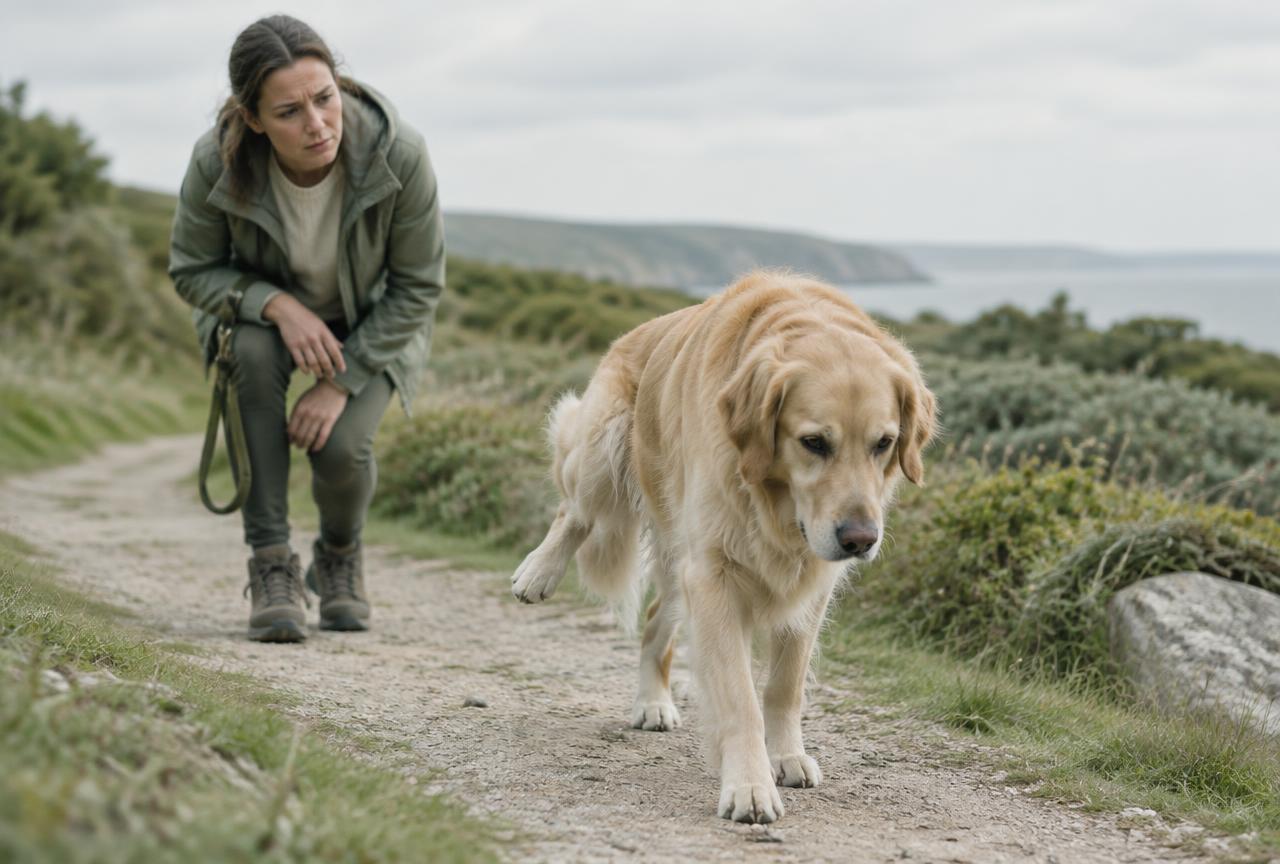
Limping (lameness, in vet language) falls into two broad camps. Sudden lameness appears during or just after exercise and usually means an injury: a cut pad, a broken nail, a sprain, a pulled muscle or a torn ligament. Gradual lameness creeps in over days or weeks and usually means a disease process: arthritis, hip or elbow dysplasia, or, more rarely, bone infection or cancer.
The single most useful thing you can do before anything else is watch your dog walk on a flat surface and work out which leg is affected. A dog with a sore front leg nods its head up when that leg hits the ground. A dog with a sore back leg bobs its hip. Your vet will ask, and "front left, I think" is a much better starting point than "one of them".
The paw check: five minutes that solve half of all limps
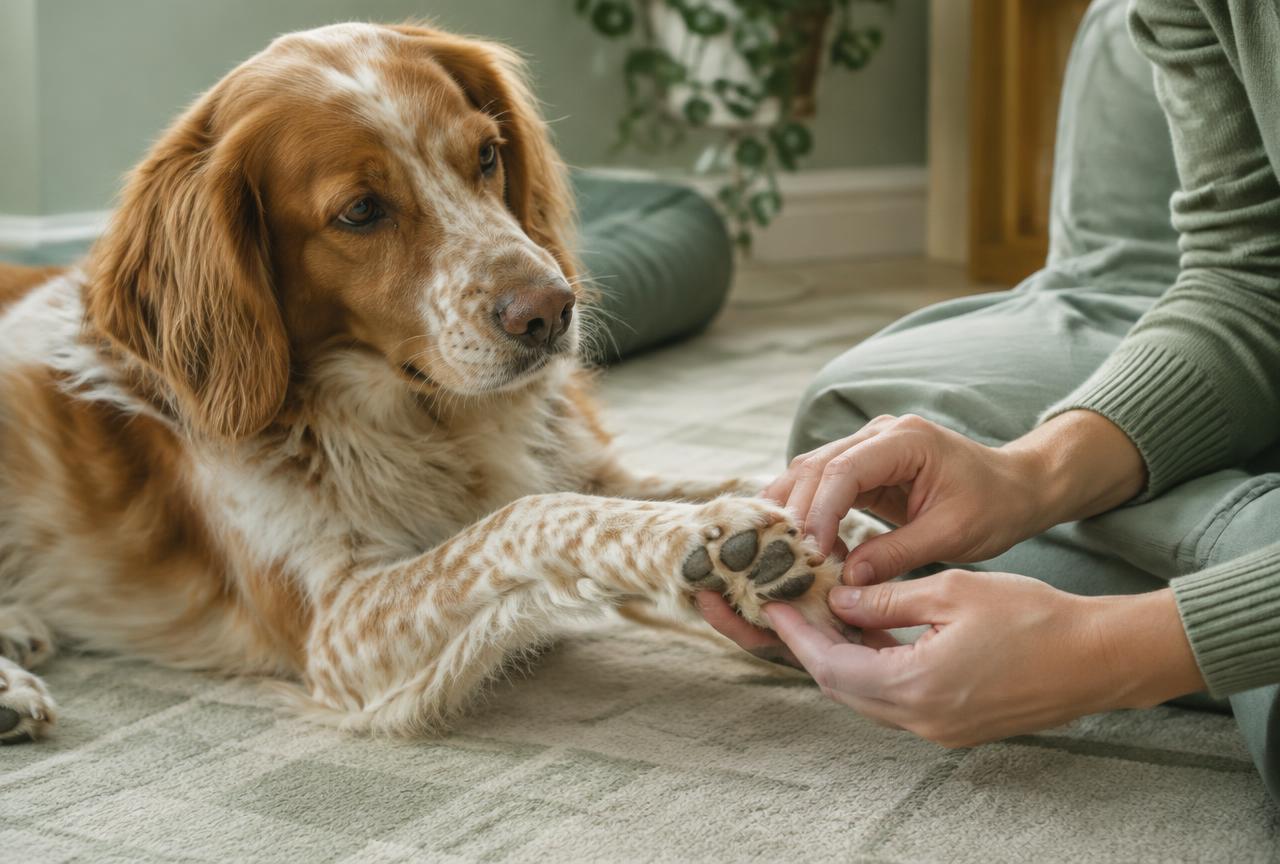
Check the paw first, because thorns, grass seeds, cut pads, broken nails and trapped debris cause a large share of sudden limps and most can be seen with the naked eye.
With your dog lying relaxed, examine the sore leg from the ground up. Look at each pad for cuts, cracks, blisters from hot pavements or embedded thorns. Part the toes and look between them: grass seeds (foxtails) burrow into the skin here and cause sudden, painful limping with licking at the foot. Check each nail for splits, breaks or a nail torn away from the quick, which bleeds dramatically and hurts sharply. Then feel gently up the leg for heat, swelling or a flinch.
Small pad cuts and superficial grazes can be bathed in salty water and rested. Anything embedded, bleeding heavily, or a nail torn to the quick needs a vet, as do puncture wounds, which seal over and trap infection.
| What you find | What it probably is | Home care or vet |
|---|---|---|
| --- | --- | --- |
| Thorn or splinter visible, easily grasped | Foreign body | Remove with tweezers, bathe, rest |
| Grass seed between toes, hole or swelling | Migrating grass seed | Vet: they travel and need removing |
| Broken or hanging nail | Torn nail | Vet if down to the quick or bleeding |
| Cut pad, shallow | Pad graze | Bathe, rest, vet if deep or gaping |
| Nothing visible, dog sore | Sprain or higher injury | Rest 48 hours, vet if not improving |
Sudden limping: injury or emergency?
A sudden limp during a walk is usually a paw injury or a sprain, but a dog that cannot put the leg down at all, or is in obvious pain, needs a vet the same day.
The commonest sudden injuries are soft tissue: sprains and strains from skidding, jumping or twisting, which improve noticeably over 48 hours of strict rest. The one that worries vets is the sudden hind-limb limp in an active dog that toe-touches or holds the leg up: a torn cranial cruciate ligament, the dog equivalent of the footballer's ACL. It is one of the most common orthopaedic injuries in dogs, especially in Labradors and other larger breeds, and it does not heal with rest alone.
Same-day red flags: the leg dangles or looks the wrong shape, there is a deep wound or heavy bleeding, your dog cries out when the leg is touched, there is rapid swelling, or your dog seems generally unwell alongside the limp.
Gradual limping: the slow-onset causes
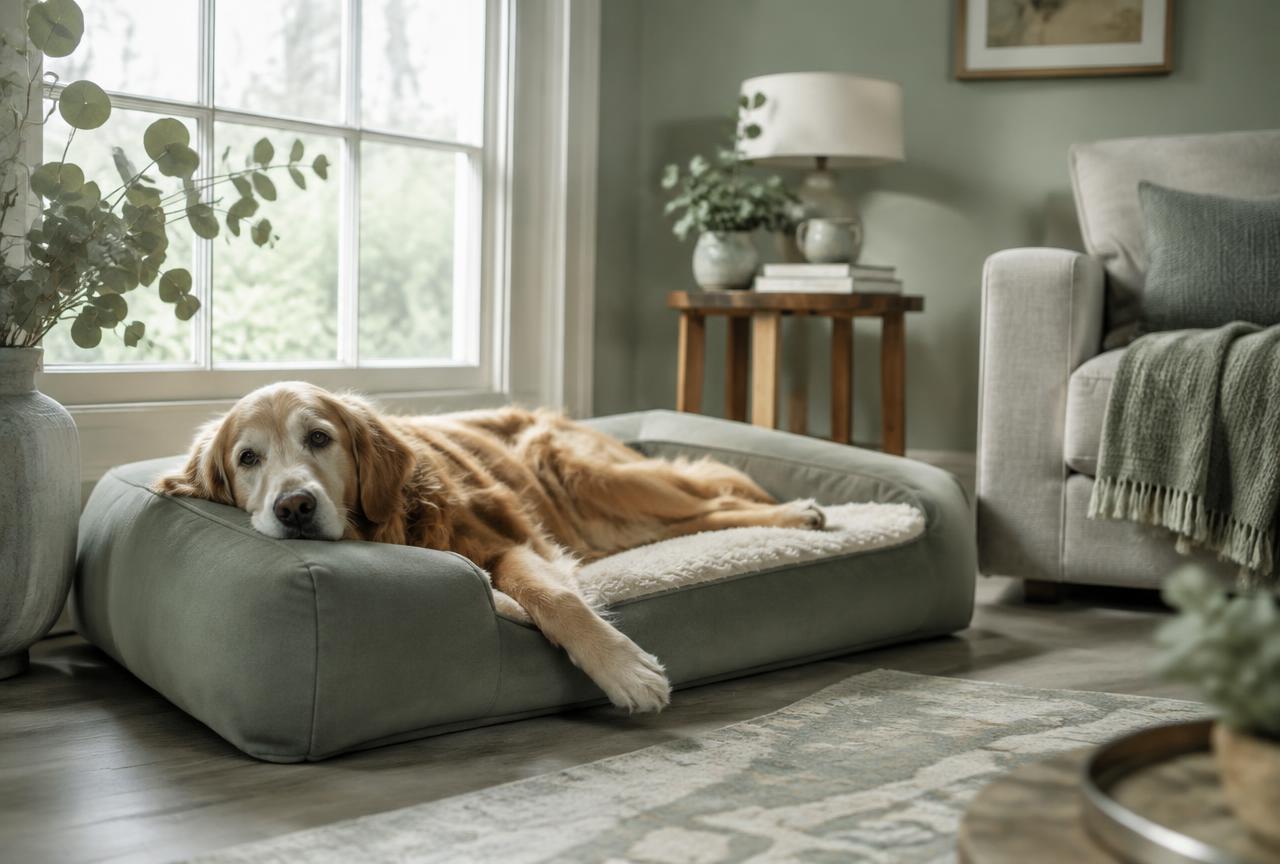
A limp that builds over weeks is most often arthritis, especially in middle-aged and older dogs, and it is very manageable once identified.
Osteoarthritis is by far the commonest cause of gradual lameness, and it is underdiagnosed because owners read the signs as "just slowing down". Watch for stiffness after rest that eases with movement, reluctance to jump into the car, lagging on walks, and licking at a joint. In younger large breeds, hip and elbow dysplasia can cause gradual lameness from as early as five or six months. In small breeds, a kneecap that slips out of place (luxating patella) causes an intermittent skip-and-hop limp that comes and goes.
Gradual limps are never an emergency, but they are always worth a vet visit within a week or two, because early management, particularly weight control and pain relief, changes the long-term outcome dramatically.
How to rest a limping dog properly
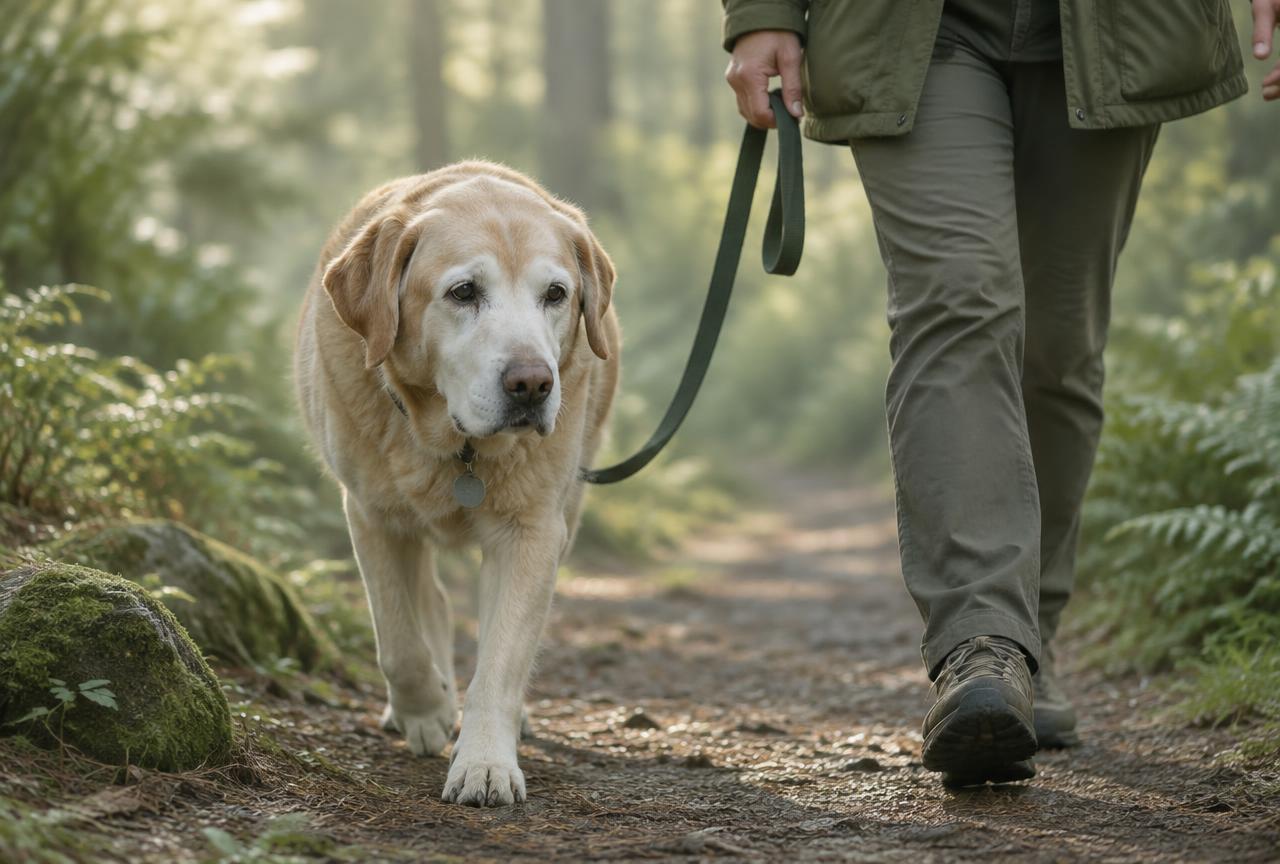
Proper rest means short lead walks for toilet breaks only, no running, jumping, stairs or sofa access, for at least 48 hours.
Rest is the most prescribed and least followed advice in dog care. "Rest" does not mean a shorter version of the normal walk; it means five-minute lead trips into the garden and back, three or four times a day. Block the stairs, lift small dogs on and off furniture, and use a harness or a towel under the belly to help bigger dogs with stairs they cannot avoid.
Do not give human painkillers. Ibuprofen and naproxen are toxic to dogs, and paracetamol dosing is unsafe without veterinary guidance. If your dog is sore enough to need pain relief, that is a vet visit, and your vet has safe, effective options.
What happens at the vet
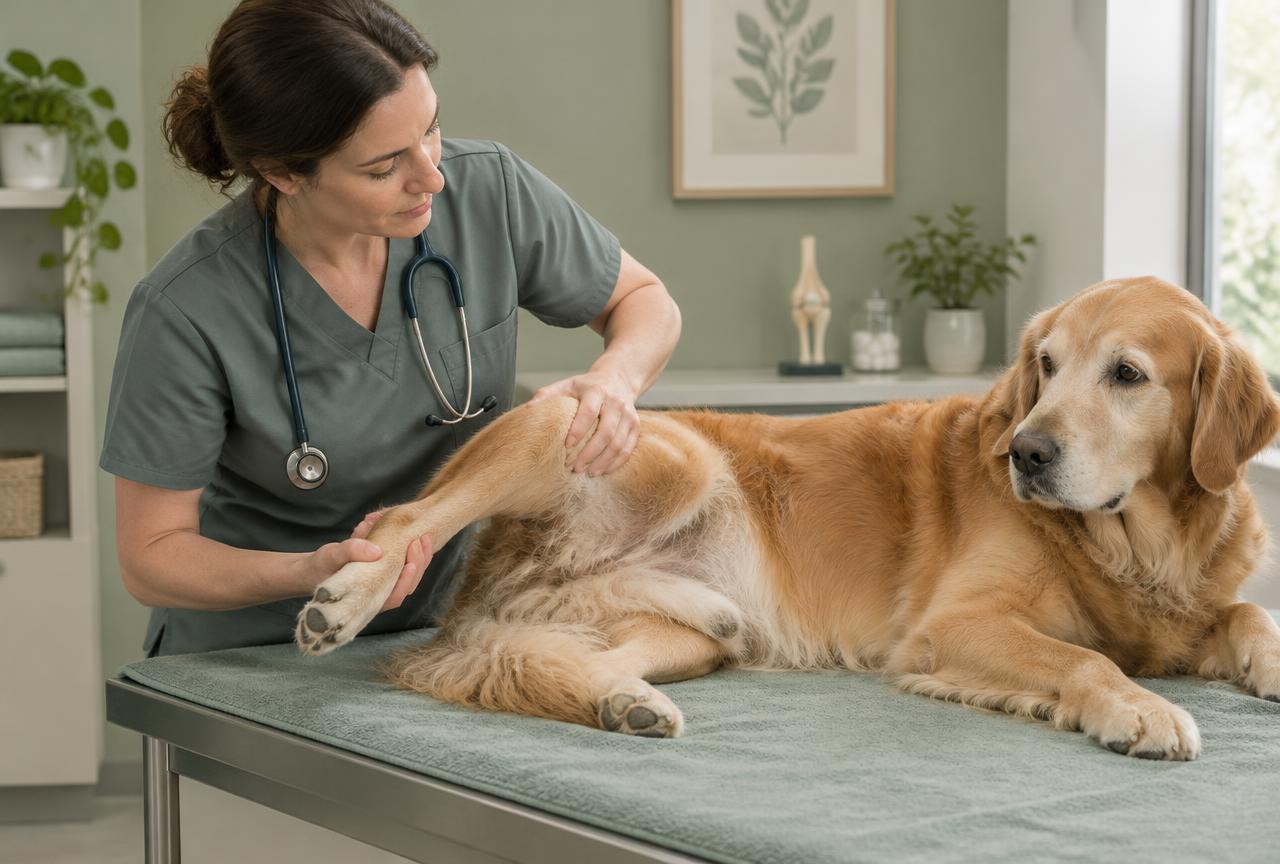
Your vet will watch your dog walk, feel every joint and bone for pain and swelling, and may recommend X-rays if the cause is not obvious or not improving.
The examination is systematic: gait analysis first, then a hands-on check of the whole leg, flexing and extending each joint to find exactly where it hurts. Many limps are diagnosed at this stage. X-rays come next if a fracture, arthritis, dysplasia or cruciate injury is suspected; sedation is usually needed for good images. Treatment ranges from rest and anti-inflammatories for sprains, through to surgery for cruciate tears, fractures and some joint diseases.
The limp that worries me is not the dramatic one. It is the mild, grumbling limp that has been "waited out" for three months. Early treatment of joint disease genuinely changes how a dog ages.
The likely cause by age and lifestyle
Age and lifestyle narrow the field considerably: puppies grow, adults injure, and seniors wear out.
Puppies and adolescents. Growing bones have their own problems. Panosteitis, sometimes called growing pains, causes a shifting limp that moves from leg to leg in young large breeds. Hip and elbow dysplasia can announce themselves before a year of age. Any limping puppy deserves a prompt vet visit rather than a wait-and-see approach.
Active adults. Sprains, strains, pad injuries and cruciate ligament tears dominate. The weekend warrior pattern, a quiet week then a frantic Saturday at the park, is behind a large share of them. German Shepherds and other big, athletic breeds carry extra cruciate risk.
Seniors. Arthritis is the default assumption until proven otherwise, and it is usually right. But a new limp in an older dog that is getting worse despite rest, especially with a firm swelling on a bone, must be checked, because bone cancer, though uncommon, is a real cause in large seniors.
Keeping legs healthy for the long run
Most limp prevention is unglamorous: keep your dog lean, keep exercise consistent, and keep nails short.
Weight is the single biggest lever. Every extra kilogram multiplies the load on joints with every step, and lean dogs develop arthritis later and milder. Our ideal weight tool gives you a target and a body condition check. Exercise matters too: regular moderate exercise keeps joints mobile and muscles supportive, while boom-and-bust exercise invites injury. Finally, nails: overgrown nails change how the foot lands and can twist toes over time, so keep them trimmed.
When to see a vet
See a vet the same day if your dog cannot put any weight on the leg, is in obvious pain, has a wound, swelling or a leg that looks the wrong shape, or seems unwell in themselves.
Book a routine appointment if a mild limp has not clearly improved after 48 hours of strict rest, if it keeps coming back, or if it has been creeping in gradually over weeks. Puppies with a limp should always be seen promptly: their growing bones are vulnerable, and some causes, like panosteitis or hip problems, benefit from early attention. When in doubt, phone your practice and describe what you see; they would always rather triage over the phone than meet a problem three weeks late.
Interactive · limp triage
How urgent is your dog's limp?
Answer five questions about the limp. We will suggest whether strict rest at home is reasonable or whether your dog needs a vet today.
What to do now
- Check the paw pads and between the toes for thorns, cuts, cracked nails or stuck debris.
- Strict rest: short lead walks for toilet breaks only, no running, jumping or stairs.
- If there is no clear improvement in 48 hours, or it worsens at any point, book a vet visit.
Rest and monitor for 24 to 48 hours
This is triage, not diagnosis. When in doubt, phone your vet practice; they will tell you over the phone whether it can wait.
Frequently asked questions
Why is my dog limping but not crying?
Dogs rarely cry with pain; they limp, lick the sore spot, go quiet or change how they move. A limp without crying is still pain. The absence of noise tells you nothing about severity, so judge by how the leg is used, not by the soundtrack.
Why is my dog limping after a walk but fine at home?
A limp that appears after exercise and fades with rest suggests a soft tissue strain or early joint disease. If it happens repeatedly, cut exercise back to gentle lead walks and book a vet check, because repeated post-walk limping is an early arthritis pattern worth catching.
Can I give my dog ibuprofen or paracetamol?
No. Ibuprofen and naproxen are toxic to dogs even in small doses, and paracetamol is dangerous without precise veterinary dosing. If your dog needs pain relief, your vet can prescribe safe, effective dog-specific anti-inflammatories, often the same day.
How long should I rest a limping dog before seeing a vet?
For a mild limp with no red flags, 48 hours of strict rest is a reasonable trial. If there is no clear improvement by then, or the limp worsens at any point, book a vet visit. Any limp lasting more than a week, however mild, deserves an examination.
Why does my dog limp on and off?
Intermittent limping often means a mechanical problem that comes and goes, such as a slipping kneecap in small breeds, or arthritis that flares with activity and weather. On-and-off limps still deserve a vet visit, because the underlying cause is usually progressive.
My dog is limping on a front leg after the park. What is most likely?
After vigorous exercise, the most likely causes are a pad or nail injury, a sprain, or a pulled muscle. Check the paw carefully first. If nothing is visible and the limp persists past 48 hours of rest, see your vet.
Questions people actually ask
Why is my dog limping but not crying?
Dogs rarely cry with pain; they limp, lick the sore spot, go quiet or change how they move. A limp without crying is still pain. The absence of noise tells you nothing about severity, so judge by how the leg is used, not by the soundtrack.
Why is my dog limping after a walk but fine at home?
A limp that appears after exercise and fades with rest suggests a soft tissue strain or early joint disease. If it happens repeatedly, cut exercise back to gentle lead walks and book a vet check, because repeated post-walk limping is an early arthritis pattern worth catching.
Can I give my dog ibuprofen or paracetamol?
No. Ibuprofen and naproxen are toxic to dogs even in small doses, and paracetamol is dangerous without precise veterinary dosing. If your dog needs pain relief, your vet can prescribe safe, effective dog-specific anti-inflammatories, often the same day.
How long should I rest a limping dog before seeing a vet?
For a mild limp with no red flags, 48 hours of strict rest is a reasonable trial. If there is no clear improvement by then, or the limp worsens at any point, book a vet visit. Any limp lasting more than a week, however mild, deserves an examination.
Why does my dog limp on and off?
Intermittent limping often means a mechanical problem that comes and goes, such as a slipping kneecap in small breeds, or arthritis that flares with activity and weather. On-and-off limps still deserve a vet visit, because the underlying cause is usually progressive.
My dog is limping on a front leg after the park. What is most likely?
After vigorous exercise, the most likely causes are a pad or nail injury, a sprain, or a pulled muscle. Check the paw carefully first. If nothing is visible and the limp persists past 48 hours of rest, see your vet.
Sources
Breeds mentioned


Put it into practice
Read next
Dog Dry Heaving: Causes and When It Is an Emergency
Dog dry heaving is usually throat irritation or mild nausea, but repeated unproductive retching with a swollen, tight belly can be bloat (GDV), a life-threatening emergency.


