Toy group
Developed in Cuba from small Bichon-type dogs brought by Spanish settlers, refined over centuries as a companion of Havana's wealthy households and later of the Cuban circus and theatre world. The breed nearly vanished after the Cuban revolution, saved by a handful of exiled families who carried their dogs to the United States.
Havanese
The Havanese, Cuba's national dog, is a silky-coated, sociable and trainable small companion. It suits flats and families well, but needs daily brushing, regular grooming and genuine company throughout the day.
Reviewed by the SniffScroll editorial desk
The velcro companion of Cuba, silky-coated and endlessly sociable.
The short version
- One of the most sociable small breeds: friendly with family, guests, children and other pets.
- A true velcro dog: prolonged solitude is the hardest demand and separation distress is a real risk.
- Trainable and sensitive: reward-based methods work, harsh corrections backfire badly.
- The silky coat needs daily brushing; most owners choose the practical puppy clip.
- Thirteen to sixteen years is typical, and the small founding population makes breeder screening essential.
- Weight
- 4.5 to 7.5 kg
- Height
- 23 to 28 cm
- Lifespan
- 13 to 16 yrs
- Size
- Small
- Group
- Toy
- Coat
- Long, silky double coat in white, cream, black, silver, blue, chocolate, Havana brown, or parti colouring
- Grown male
- 5 to 7.5 kg
- Grown female
- 4.5 to 7 kg
- Years to full size
- about 1
- One-off setup
- €800 to 1600
Get one if…
- First-time owners wanting an affectionate, trainable small companion
- Flats and apartments: small, quiet-to-moderate and adaptable
- Families with gentle children who want a sociable family dog
- Multi-pet households; the breed is unusually accepting of other animals
- Owners home most of the day or able to arrange company
Think again if…
- Households where the dog would be alone for full working days
- Owners unwilling to brush daily or pay for regular grooming
- Anyone wanting a robust outdoor dog for long hikes in rough country
- Homes put off by frequent grooming bills
- Buyers unwilling to research breeders and health screening carefully
Trait profile
Bred for centuries as a Havana drawing-room companion and later a circus performer, the Havanese combines sociability and trainability in equal measure. Its need for company is as strong as its affection, and its silky coat is a daily commitment.
Space & setup. Perfectly suited to flat living: small, adaptable and quiet-to-moderate indoors. The constraints are time and coat care, not square footage.
Allergies. The silky coat sheds lightly, which helps some allergy sufferers, but no dog is truly hypoallergenic and individual reactions vary.
Living with a Havanese
The Havanese is Cuba's national dog, a small, silky-coated companion bred to be sociable, trainable and devoted. Cheerful with everyone, good with children and other pets, and adaptable to flats, it asks in return for company, coat care and consistent company-focused training.
The Havanese is Cuba's national dog and one of the oldest companion breeds in the Americas, descended from Bichon-type dogs brought to the island by Spanish colonists. It spent centuries as the pampered companion of Havana's wealthy families, then became a fixture of Cuban circuses, where its trainability and charm made it a performer. The breed nearly disappeared after 1959, surviving only because a handful of Cuban families carried their dogs into exile in the United States, where every Havanese today traces back to about eleven founding animals. That bottleneck makes health screening particularly important in this breed.
Temperamentally the Havanese is as sociable as companion breeds come. It is affectionate with family, welcoming to guests, gentle with children, sociable with other dogs and typically friendly with cats. It is also a genuine velcro dog: it wants to be where its people are, always, and prolonged solitude is the breed's hardest demand. Owners who work from home, have flexible hours or can arrange company do brilliantly; owners planning full working days should look elsewhere or plan carefully for daycare.
Trainability is a real strength. The Havanese learns quickly, responds well to positive reinforcement and has a well-documented history in dog sports, including agility and obedience, despite its size. The main challenge is not learning but sensitivity: harsh corrections shut the breed down quickly, and house training can take longer than owners expect because the breed is easily discouraged. Patience, consistency and reward-based methods bring excellent results.
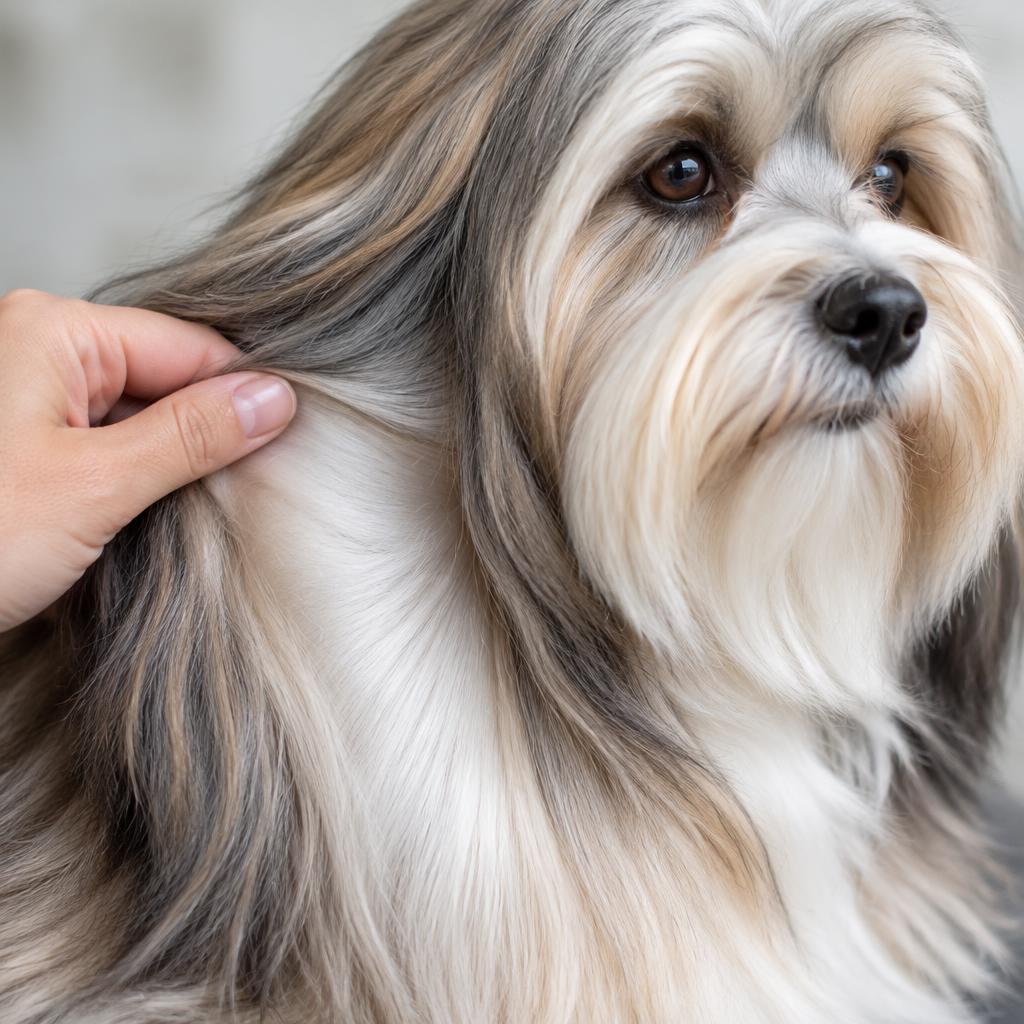
The coat is the defining feature and the defining commitment. The long, silky double coat grows continuously and mats quickly; daily brushing is not optional, and most pet owners choose the practical puppy clip, keeping the coat shorter and easier. Show grooming takes hours daily, which is not what most households want. Eye tearing, common in small companion breeds, needs daily attention to keep the face clean.
Exercise needs are modest but real: two good walks a day plus play suits the breed perfectly, and it is surprisingly athletic for its size, excelling at agility and trick training. Health is generally good, with a lifespan of thirteen to sixteen years, but the breed's small genetic pool makes screening for luxating patellas, cataracts and cardiac issues essential when choosing a breeder. Overall, for households with time, company and a grooming routine, the Havanese is one of the most rewarding small companions available. For households out all day, it is the wrong choice.
The breed's history explains much of its character. Havanese dogs performed in Cuban circuses not despite their size but because of it: they learned complex routines quickly, worked happily in front of strangers and travelled well, and that performer's confidence survives in the modern breed. It is why a Havanese is often the first dog to volunteer for a new trick, the one at the class who wants to try again, and the one who has learned that being adorable is a strategy that works on humans. Owners who channel this energy into trick training, agility or scent games get a remarkably engaged little dog; owners who leave it idle get a dog that invents attention-seeking games of its own.
House training deserves specific mention because it is the most common frustration in the breed. Havanese puppies are intelligent but easily discouraged, and harsh corrections slow them down markedly. Short, frequent trips outside, generous rewards for getting it right and a predictable routine bring the best results, usually within a few months. Crate training suits the breed well, provided the crate is never used as punishment.
Living with the coat is a lifestyle decision more than a chore. Many owners love the long show coat and enjoy the routine; others choose the shorter clip and regain their evenings. Both are fine, and most groomers will advise on what suits the household. What does not work is the middle path, a coat that is neither maintained nor clipped: matting close to the skin is uncomfortable for the dog and stressful for everyone, and neglected coats are the most common reason Havanese end up shaved short at a groomer's anyway. Decide, then be consistent.
Finally, the breed suits multi-generational households unusually well: light enough to handle safely, sociable enough to welcome visiting relatives, and calm enough to nap through the noise. That adaptability, more than any single trait, is why the Havanese keeps appearing on lists of the best small family dogs year after year.
One of the most sociable and adaptable small companions available: cheerful, trainable and good with nearly everyone, as long as daily coat care and near-constant company are genuinely on offer.
Exercise, day to day
- 1Puppies (8 to 20 weeks): short play sessions and gentle socialisation outings.
- 2Adolescents (4 to 12 months): two moderate walks daily plus play and short training games.
- 3Adults: 30 to 45 minutes daily, split between walks and indoor play.
- 4Mental work: trick training, agility and scent games suit the breed and deepen the bond.
- 5Company matters as much as exercise: this breed does not do well with long daily solitude.
Grooming, realistically
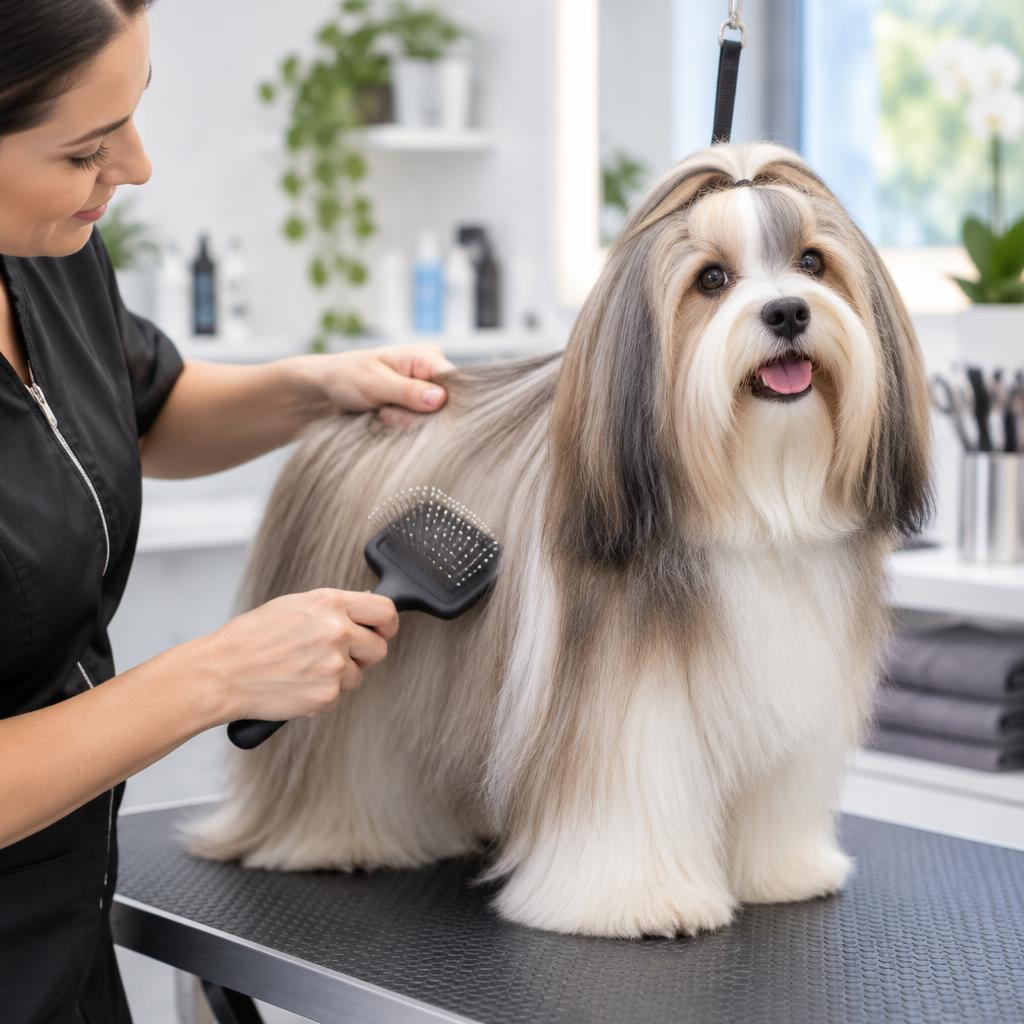
- 1Brush daily with a pin brush and metal comb to prevent matting.
- 2Book professional grooming every six to eight weeks, or keep the coat in a shorter puppy clip.
- 3Wipe around the eyes daily to manage tear staining.
- 4Trim nails every three weeks and brush teeth several times a week.
- 5Bathe every three to four weeks and dry thoroughly; damp coats mat faster.
What you actually need
- Pin brush
- Metal comb
- Blunt-ended scissors for face and paws
- Dog nail clippers
- Ear cleaning solution
- Enzymatic dog toothpaste and brush
Puppy to adult
| Age | Male | Female | What is happening |
|---|---|---|---|
| 8 weeks | 0.9 to 1.4 kg | 0.9 to 1.3 kg | Small and delicate; begin gentle handling and socialisation immediately. |
| 3 months | 1.8 to 2.5 kg | 1.6 to 2.3 kg | Growing quickly; keep play with larger dogs supervised. |
| 6 months | 3 to 4.2 kg | 2.8 to 4 kg | Near adult height; first grooming visit due, start coat handling early. |
| 9 months | 3.8 to 5.2 kg | 3.5 to 5 kg | Almost fully grown; house training patience pays off now. |
| 12 months | 5 to 7 kg | 4.5 to 6.5 kg | Adult size reached; settle into the daily brushing routine. |
| 18 months | 5 to 7.5 kg | 4.5 to 7 kg | Fully mature; coat length and texture stabilise in the second year. |
Ranges are typical, not targets. Judge condition by ribs and waist, and check with the ideal weight checker.
What to ask a breeder
- Have both parents had patella and eye examinations, and what were the results?
- Have the parents been cardiac screened, and is there any history of murmurs?
- Can you tell me about liver shunt history in your lines?
- How do you socialise puppies to household life, children and other pets?
- What is the typical coat type in your litters, and how do you prepare owners for grooming?
Health tests to ask for
Ask to see results for both parents before you put down a deposit.
- Patella examination for both parents
- Annual eye examination including cataract screening
- Cardiac auscultation for murmurs in breeding stock
- Liver shunt history from the breeder
- Dental care from the first year; small breeds need it early
Health watch-list
What to ask a breeder about, and what to watch for over a lifetime. This is orientation, not veterinary advice, anything you notice belongs in front of a vet.
Luxating patella
CommonSlipping kneecaps are common in small breeds; patella checks on breeding stock are the practical safeguard.
Cataracts
NotableCan appear in young adult Havanese, not just with age; annual eye examinations pick them up early.
Progressive retinal atrophy
UncommonDNA tests exist for some forms; breeder DNA status is worth asking for directly.
Heart murmurs
NotableMitral valve issues occur in the breed; cardiac auscultation in breeding stock reduces the risk.
Portosystemic shunt (liver shunt)
RareA congenital vascular abnormality; signs include poor growth and neurological symptoms, and surgery is often curative.
Dental disease
Very likelySmall mouths crowd teeth; daily brushing and regular veterinary dental checks are essential.
What it costs to keep one
Realistic running cost
€130 / month
About €1,560 a year, or roughly €23,400 across a 15-year life, before purchase price, neutering and one-off vet events.
Before the puppy arrives. Budget roughly €800 to 1600 for a crate, bed, lead and harness, bowls, puppy classes, first vaccinations and grooming kit sized for this breed. Figures throughout are indicative and vary a good deal between countries.
Interactive · built for this breed
Is a Havanese right for your home?
Seven honest questions about your space, time and household, checked against this breed's exercise need, coat, sociability and tolerance for time alone.
Fit with your routine
97%
A strong fit
Your routine suits a Havanese well. Meet adult dogs of the line before you commit.
What to sort out first
- Coat needs more brushing or trimming than you have allowed.
Working in your favour
- Your daily walking comfortably covers this breed's exercise need.
Compare more breeds in the matchmaker, or plan meals with the portion calculator.
The verdict, by household
Very suitable
Affectionate, trainable and forgiving; the grooming routine is the main learning curve.
Excellent
Gentle, playful and sturdy for its size; supervision with very young children as with any small dog.
Good
Happy to join walks and even agility, but it needs company more than mileage.
Excellent
Small, adaptable and quiet-to-moderate; one of the best flat companions in the group.
When to call your vet
- Skipping or hopping on a hind leg, which can signal a slipping kneecap
- Cloudiness in the eyes or bumping into furniture, worth an eye examination
- A new heart murmur detected at a routine visit
- Persistent scratching or paw licking, which can signal skin allergy
- Bad breath or difficulty eating, worth a dental check
Nothing here is a diagnosis. A swollen, hard belly with retching, collapse, breathing difficulty and sudden hind-leg weakness are emergencies: go straight away.
Havanese vs the closest alternatives
| Breed | Weight | Energy | Grooming | € / month |
|---|---|---|---|---|
| Havanese | 4.5 to 7.5 kg | 5/10 | 7/10 | €130 |
| Cavapoo | 5 to 11 kg | 5/10 | 7/10 | €77 |
| Coton de Tulear | 3.5 to 6 kg | 5/10 | 7/10 | €94 |
| Shih-Poo | 4 to 9 kg | 4/10 | 8/10 | €88 |
Havanese questions, answered
Do Havanese shed?
Lightly. The silky double coat sheds far less than most breeds, which helps some allergy sufferers, but no dog is truly hypoallergenic.
How long do Havanese live?
Typically thirteen to sixteen years, among the longest lifespans of any breed, provided dental and weight care are good.
Can Havanese be left alone?
Not for long. The breed is deeply people-oriented and many individuals develop separation distress if routinely left for a full working day. Company or daycare matters.
Are Havanese good with children?
Yes, gentle and playful with considerate children. Their small size means supervision with very young children, as with any small dog.
Are Havanese easy to train?
Very, with reward-based methods. They are sensitive, so harsh corrections backfire; house training can take a little longer than owners expect.
How often does a Havanese need grooming?
Daily brushing plus professional grooming every six to eight weeks. Most pet owners keep the coat in a shorter, practical clip.
Do Havanese bark a lot?
Moderately. They are alert and will announce visitors, but they are not chronic barkers compared with many small companion breeds.