
Why Do Dogs Lick You? Affection, Taste and When to Worry
From face licks at the door to constant paw licking at midnight, what your dog's tongue is actually telling you.
The SniffScroll desk
Published 9 October 2026
Reviewed against current veterinary behaviour guidance
The short version
- Most licking of people is social: greeting, bonding and taste, and it is normal and harmless.
- Feet and hands are popular because they carry the strongest scent and salt story of your day.
- Air licking and repeated lip licking usually mean nausea or stress, not affection.
- Constant self-licking of one spot points to itch, pain or anxiety and needs a vet check.
- To reduce unwanted licking, withdraw attention, reward calm and redirect to a chew or lick mat.
You come through the front door and within seconds a warm tongue is working its way up your chin. Or you are watching television and feel a slow, deliberate lick across your bare foot. Or your dog sits and licks the air, over and over, for no reason you can see. Licking is one of the most universal dog behaviours and one of the least understood, because the same action can mean love, hunger, stress or illness depending on where it is aimed and when it happens.
The short answer is that most licking directed at you is social and harmless. Dogs lick people for the same reasons they lick each other: to greet, to bond, to groom and to taste. The longer answer, which matters more, is that some licking patterns are not social at all. Air licking, lip licking and obsessive self-licking belong to a different category entirely, and learning to spot the difference is one of the more useful skills a dog owner can have.
Why do dogs lick you? The short answer
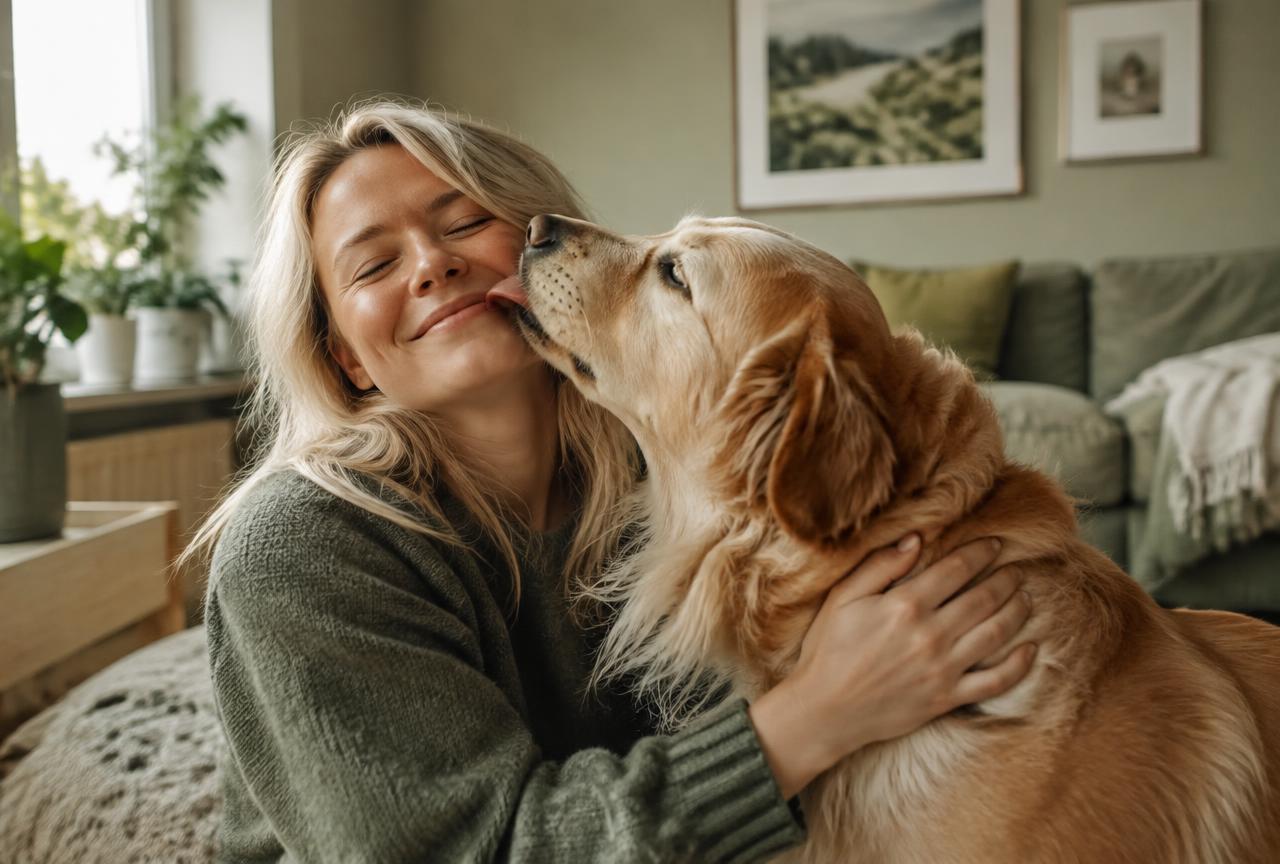
Dogs lick people mainly for affection, greeting and taste. Licking is a social behaviour learned in puppyhood, when mothers lick puppies to clean and comfort them and puppies lick adult mouths to ask for food. Your skin also tastes of salt and whatever you have touched, which makes you genuinely interesting to lick. Occasional licking is normal and healthy. Constant, frantic or newly started licking, especially of the air or the dog''s own body, can signal stress, nausea or pain and deserves a closer look.
Where the behaviour comes from
Licking is one of the first things a puppy ever experiences. Mother dogs lick their puppies from birth: to clean them, to stimulate breathing and digestion, and to comfort them. A puppy''s earliest association with a tongue is safety and care, and that association never really leaves.
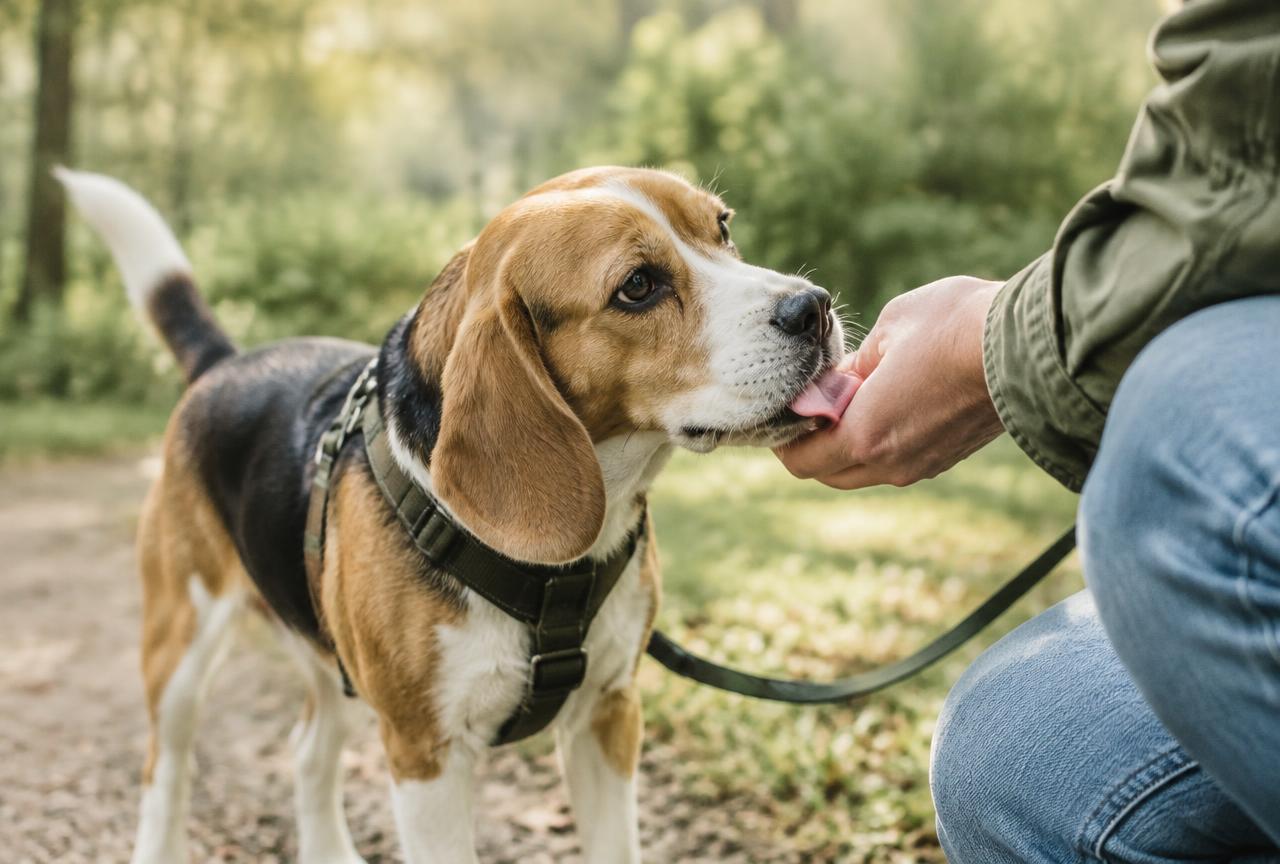
A few weeks later the puppy discovers the other use. In wild canids, pups approaching weaning lick the mouths of adults returning from a hunt, which encourages the adult to regurgitate food for them. Domestic dogs do not need this any more, but the gesture survives as a greeting and an appeasement signal: a soft, quick lick at the corner of another dog''s mouth, or yours, says roughly "I come in peace, and also, is there food?"
So when your dog licks your face when you come home, it is stacking several ancient messages at once: hello, I missed you, you are my family, and what did you eat while you were out. It is genuinely a compliment, even when it is also genuinely slimy.
The taste factor
Dogs experience the world through smell and taste far more than we do, and human skin is a rich source of both. Your skin carries salt from sweat, traces of whatever you have cooked or eaten, lotions, and the scent of every place your hands have been. To a dog, licking your hand after you have made a sandwich is reading the newspaper.
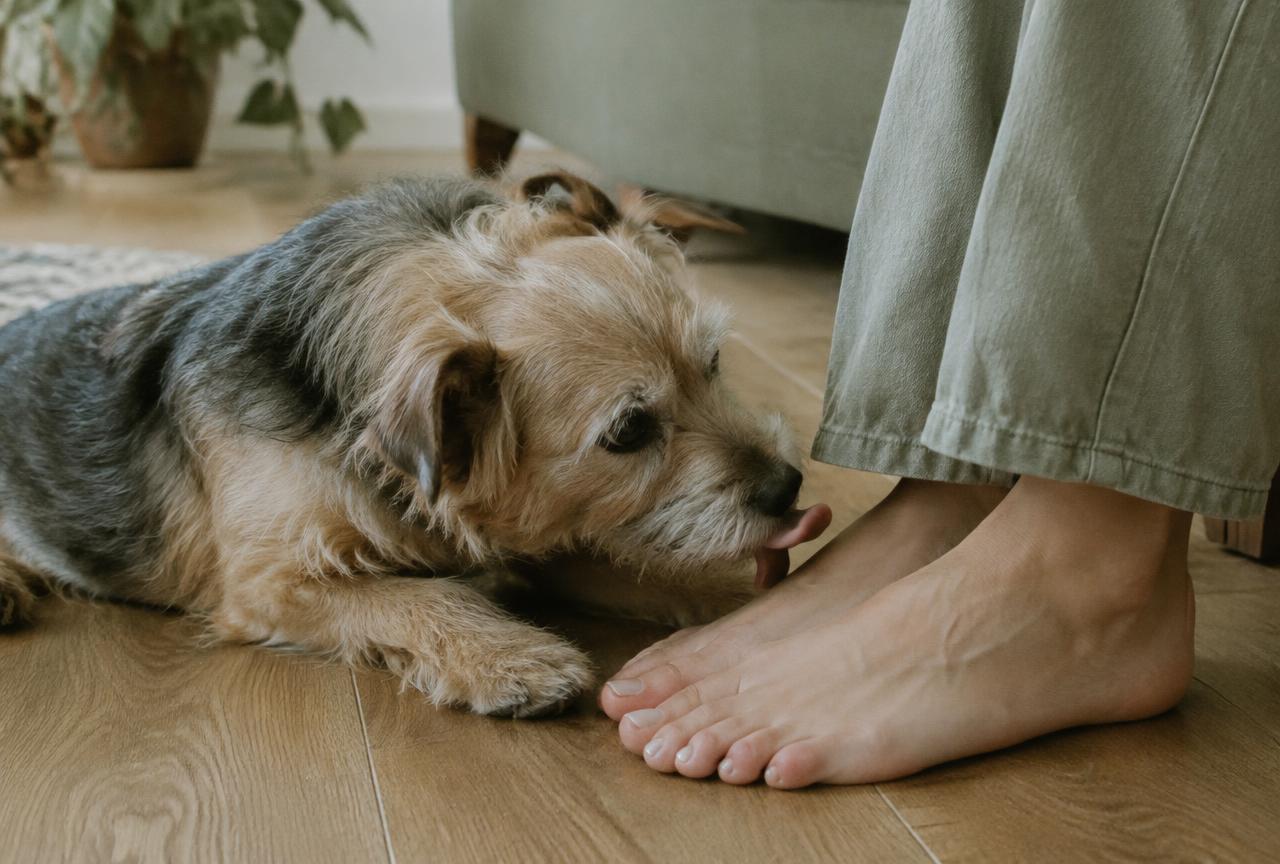
This is why feet are so popular. Feet are the sweatiest, strongest-smelling part of most people, and they carry the story of everywhere you walked that day. A dog licking your feet is not being weird; it is catching up on the news. It is also why some dogs are obsessed with licking people after exercise, after a shower, or after a meal: each situation changes the flavour.
Taste-driven licking is easy to live with. If it bothers you, the fix is simple management: wash hands after cooking, redirect to a toy, and avoid rewarding the behaviour with laughter and attention if you want less of it. Dogs do what works, and a lick that reliably produces a laughing, talking human is a lick that will be repeated.
Affection, appeasement and attention
Beyond taste, licking is one of the main ways dogs maintain social bonds. Studies of dog behaviour consistently find that licking releases endorphins in the dog doing the licking: it is self-soothing and pleasurable, a little like stroking is for us. Dogs lick the people and dogs they are attached to, and they lick more when reunited after time apart.
There is also an appeasement dimension. A dog that licks your face or hand during a tense moment, when you have raised your voice or a stranger looms over it, is often offering a calming signal: a way of saying it means no harm and would like the tension to stop. This kind of lick looks different once you know to look: quicker, more furtive, often paired with a turned head, a lowered body or a yawn.
And then there is the simplest driver of all: attention. If licking you reliably makes you stop what you are doing and engage, even to say "ugh, stop it", the dog has learned that licking is a button it can press. Many dogs lick because it has worked for years.
When licking is not about you at all
This is the section that matters most, because the licks owners worry about least are sometimes the ones that deserve the most attention.
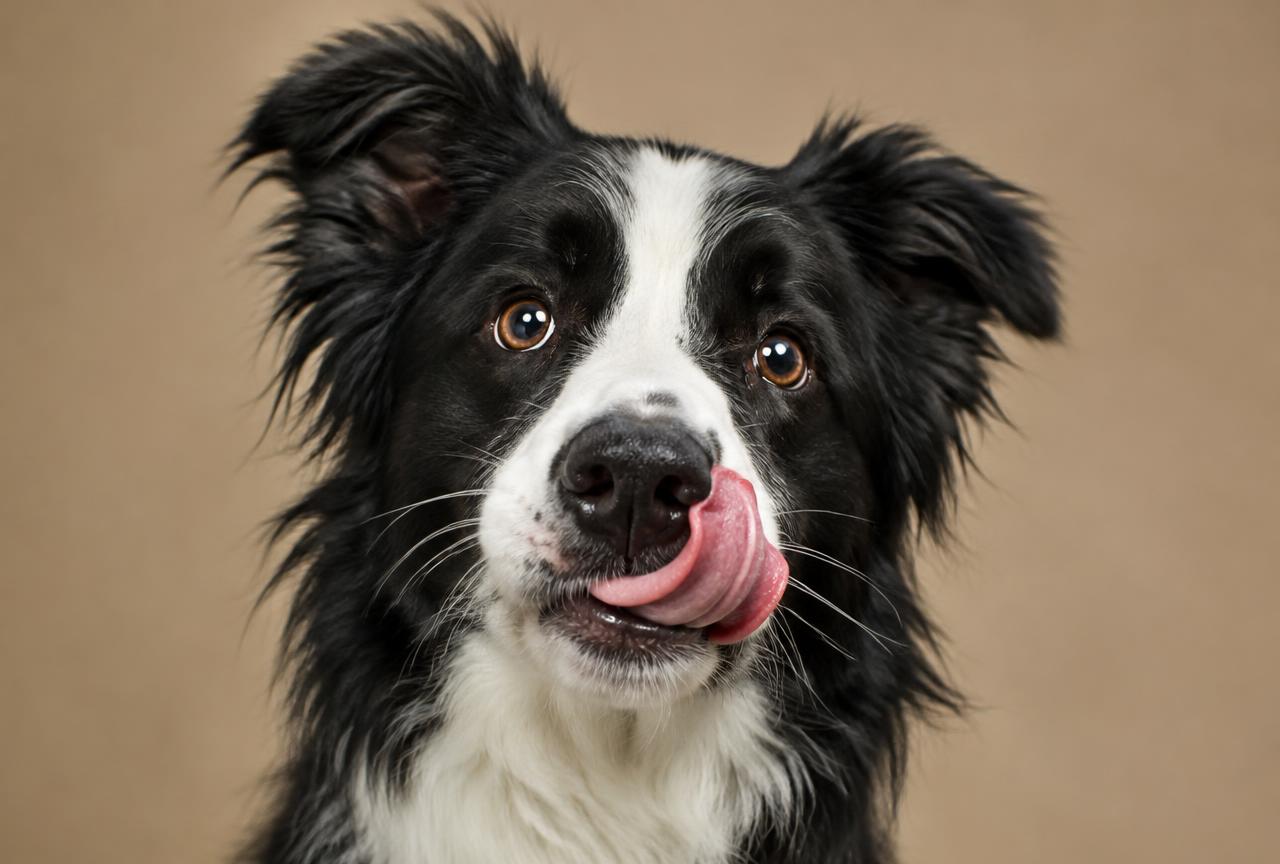
Air licking and lip licking, where the dog licks at nothing or repeatedly flicks its tongue over its own nose and lips, is frequently a sign of nausea. Dogs feeling sick lick their lips, swallow repeatedly and sometimes eat grass. If your dog does this after meals, before vomiting, or in the car, nausea is the likely cause. The same gesture appears in stressed dogs as a calming signal, so context is everything: lip licking at the vet is stress, lip licking after breakfast every day is worth a vet conversation about digestion.
Self-licking is the other category. Dogs do not groom themselves the way cats do. A dog that licks its own paws, legs, flanks or tail base is almost always responding to something: an itch from allergies, a small wound, a thorn, joint pain it is trying to soothe, or anxiety it is self-medicating. Constant licking of one spot can create a lick granuloma, a thickened, raw patch that then itches more and drives more licking. If your dog licks itself to the point of thinning fur or pink skin, that is a vet appointment, not a quirk.
The breeds that lick most
Any dog can be a licker, but some tendencies show up often enough to be worth naming. Retrievers and spaniels, bred to carry things gently in their mouths, are famously oral dogs and often prolific lickers. Toy breeds bred purely for companionship, like the Cavalier King Charles Spaniel and the Havanese, often lick as part of their intensive social bonding. Anxious or highly sensitive dogs of any breed lick more, because the behaviour is self-soothing. And any under-stimulated dog can develop licking as a habit simply because it is something to do.
How to reduce licking you do not want
You cannot and should not stop a dog licking altogether, but you can shape it. The principles are the same as for any behaviour: reward what you want, make what you do not want unrewarding, and give the need a legal outlet.
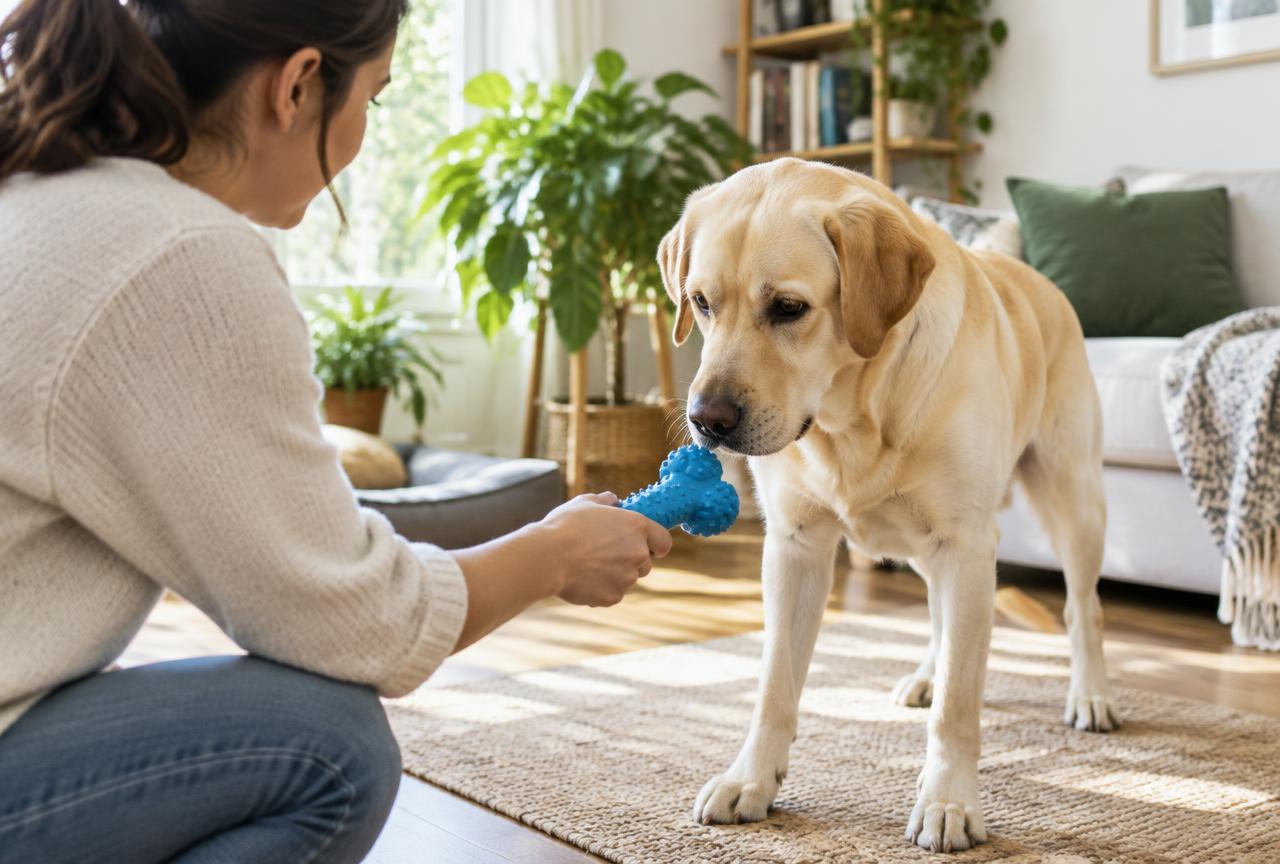
- 1Withdraw attention calmly. When the licking starts, turn away, stand up or leave the room without drama. No pushing, no squeaking, no eye contact. Attention of any kind feeds the habit.
- 2Reward the alternative. The moment the dog stops and settles, or offers a sit instead, mark it and reward it. You are teaching that calm gets you, licking does not.
- 3Redirect the mouth. Keep a chew or lick mat handy. Licking is self-soothing, so give the dog something it is allowed to lick: a frozen Kong or a smear of dog-safe peanut butter on a lick mat scratches the same itch.
- 4Check the pattern. If the licking is new, escalating, or focused on the air, the lips or one body spot, skip the training plan and book the vet first. Treating a medical lick as a behaviour problem wastes time the dog does not have.
When to see the vet
Book an appointment if licking is constant or hard to interrupt, if it started suddenly in an adult or older dog, if it is directed at one body area with visible redness or hair loss, if it comes with vomiting, swallowing, grass eating or appetite changes, or if your dog seems unable to settle. Bring a short video on your phone: vets find a thirty-second clip of the behaviour more useful than any description.
Interactive · lick decoder
What is your dog's licking telling you?
Pick what your dog licks and when, and we will read the most likely meaning.
What to do
- If you enjoy it, fine. If not, turn your head away and reward four paws on the floor instead.
- Keep licks away from mouths and any broken skin, especially with young children.
Affectionate licking
This pattern is classic social licking: your dog is greeting you, bonding and enjoying the salty taste of skin. It is normal and harmless.
The bottom line
Most licking is your dog being a dog: greeting you, tasting your day and topping up its own feel-good chemistry. Enjoy it or redirect it, but do not worry about it. Save your attention for the licks that look different: the air licks, the lip flicks, the raw patch on a front leg. Those are the ones trying to tell you something, and they are the ones worth listening to.
Questions people actually ask
Is it safe to let my dog lick my face?
For healthy adults it is low risk, but dog mouths carry bacteria, so keep licks away from your mouth, eyes and any broken skin, and be stricter with young children, elderly people and anyone immunocompromised.
Why does my dog lick me more than anyone else?
Dogs lick most the person they are most bonded to and the person whose response has rewarded licking most. If you laugh, talk or pet when licked, you have been training it for years.
Why does my dog lick my feet?
Feet are the sweatiest and strongest-smelling part of you and carry the scents of everywhere you walked. Foot licking is curiosity and affection, and it is normal.
Why does my dog lick the air?
Air licking and repeated lip licking usually signal nausea or stress rather than affection. If it is frequent, new, or paired with swallowing, grass eating or appetite changes, mention it to your vet.
Why does my dog lick its own paws?
Self-licking is usually a response to itch, pain or anxiety, not grooming. Check for redness between the toes and book a vet visit if the licking is constant or the skin is sore.
How do I stop my dog licking me?
Withdraw attention the moment licking starts, reward calm behaviour instead, and redirect to a chew or lick mat. Never punish it: licking is self-soothing, and punishment adds stress that fuels more licking.
Sources
Breeds mentioned

Golden Retriever
A gentle, biddable gundog famed for its patience with children and its glossy golden coat.

Labrador Retriever
Britain's most popular family dog: biddable, food driven and built for an active household.

Cavalier King Charles Spaniel
An affectionate, adaptable toy spaniel that thrives on human company above almost anything else.
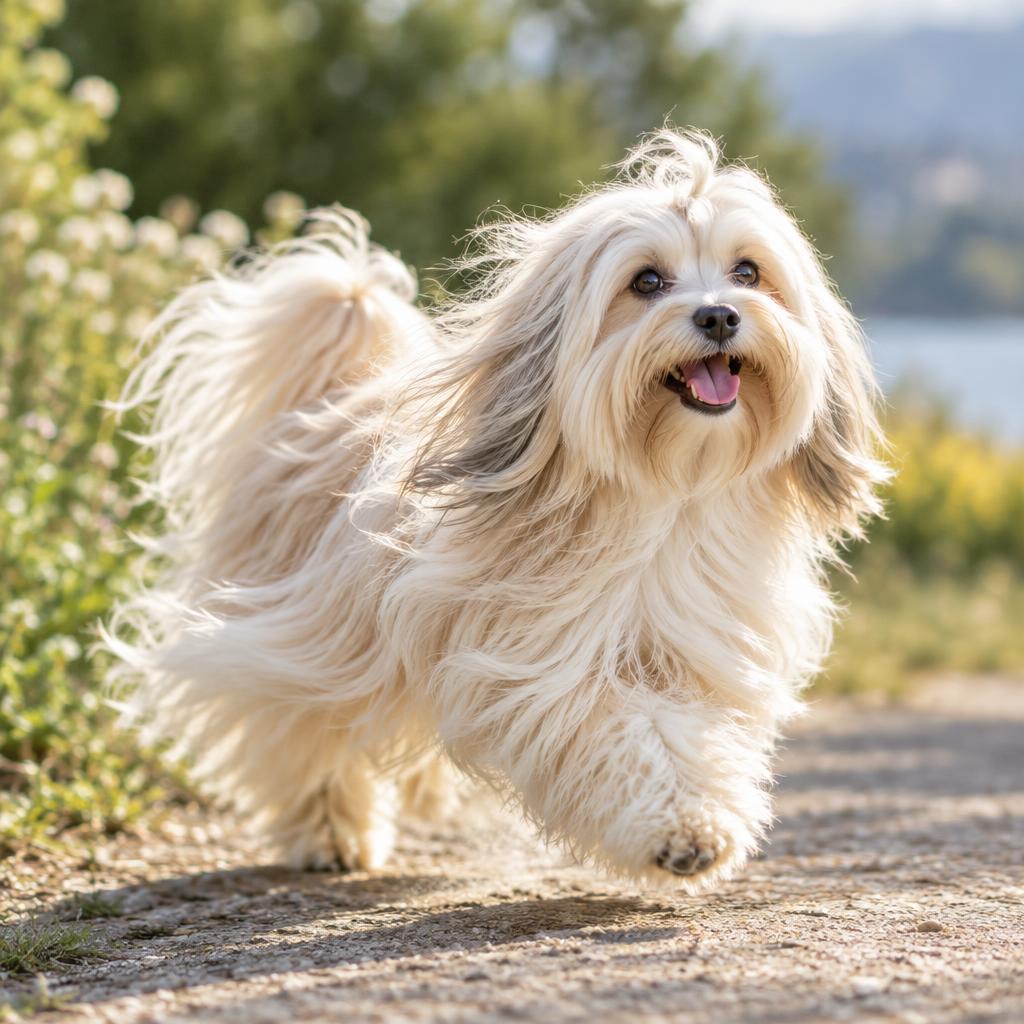
Havanese
The velcro companion of Cuba, silky-coated and endlessly sociable.
Put it into practice
Read next
Why Do Dogs Roll in Poop? The Instinct Explained
Why dogs roll in the worst smells they can find, what the behaviour is really about, and how to prevent it or at least clean up well afterwards.


