
Can Dogs Eat Eggs? Cooked, Raw and Portion Guidance
Yes, dogs can eat eggs, and cooked plain egg is one of the better kitchen treats. Here is how to serve them, how much is too much, and why raw is not worth the risk.
The SniffScroll desk
Published 10 October 2026
Reviewed against current veterinary guidance
The short version
- Cooked, plain egg is safe and nutritious for most dogs.
- Raw egg carries salmonella risk and offers no extra benefit: cook it.
- One egg is roughly 70 calories, so count it in the daily total.
- Skip butter, oil, salt and seasoning when cooking for a dog.
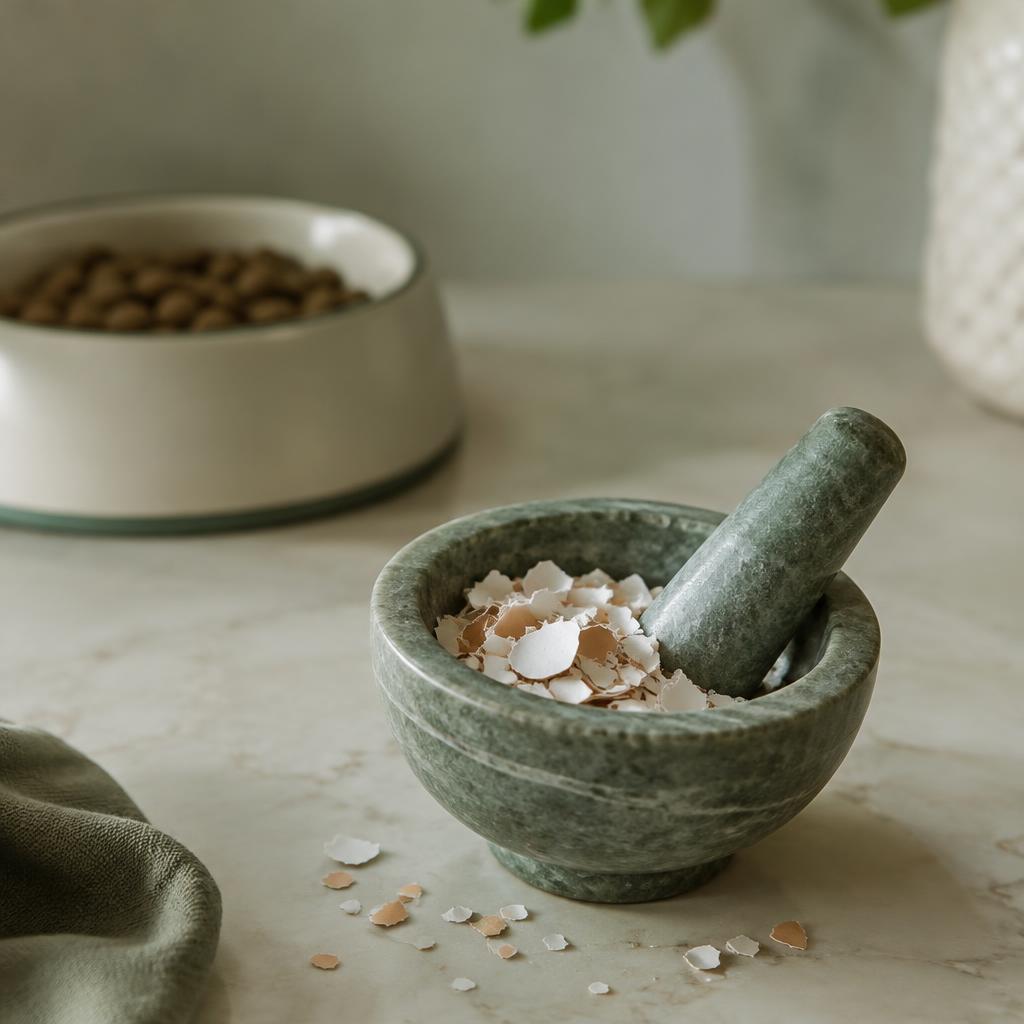
- Eggshells are a calcium supplement and easy to overdo: ask your vet first.
Eggs are one of the cheapest, most nutritious foods in the kitchen, and the good news travels well across species: yes, dogs can eat eggs. Cooked plainly, an egg is a protein-rich, highly digestible treat that most dogs adore. The questions that matter are how it is cooked, how much is served, and how often it appears.
What eggs offer a dog
Eggs are close to a perfect protein package: all the essential amino acids, plus vitamin A, riboflavin, B12, iron, selenium and fatty acids. For a dog on a complete diet none of this is strictly necessary, but as treats go, egg is near the top of the nutritional league table. It is soft enough for seniors with worn teeth, gentle on most stomachs, and easy to portion.
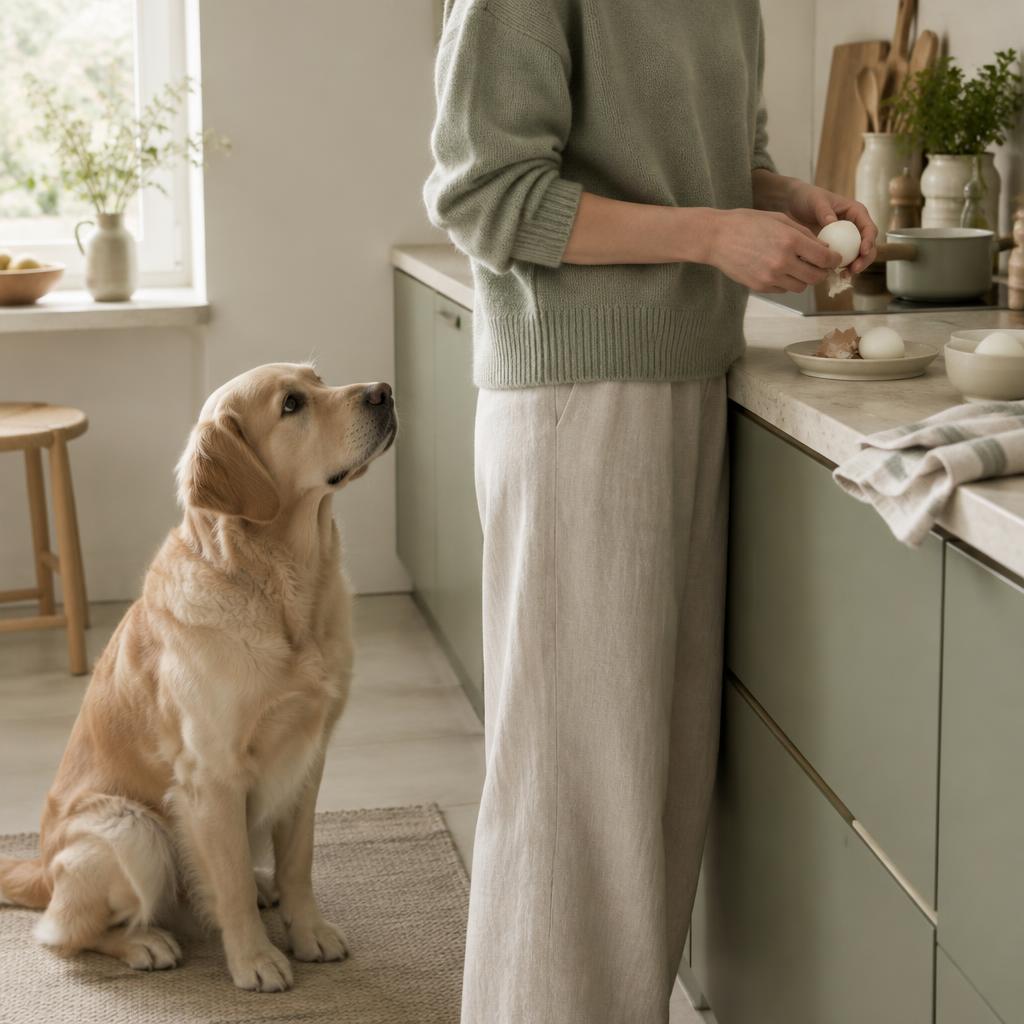
The catch is energy density. One large egg is roughly 70 calories. For a 30 kg Golden Retriever that is a reasonable snack; for a 5 kg companion dog it is a significant slice of the day's allowance. Treats, eggs included, should stay under 10 percent of daily calories.
Cooked versus raw
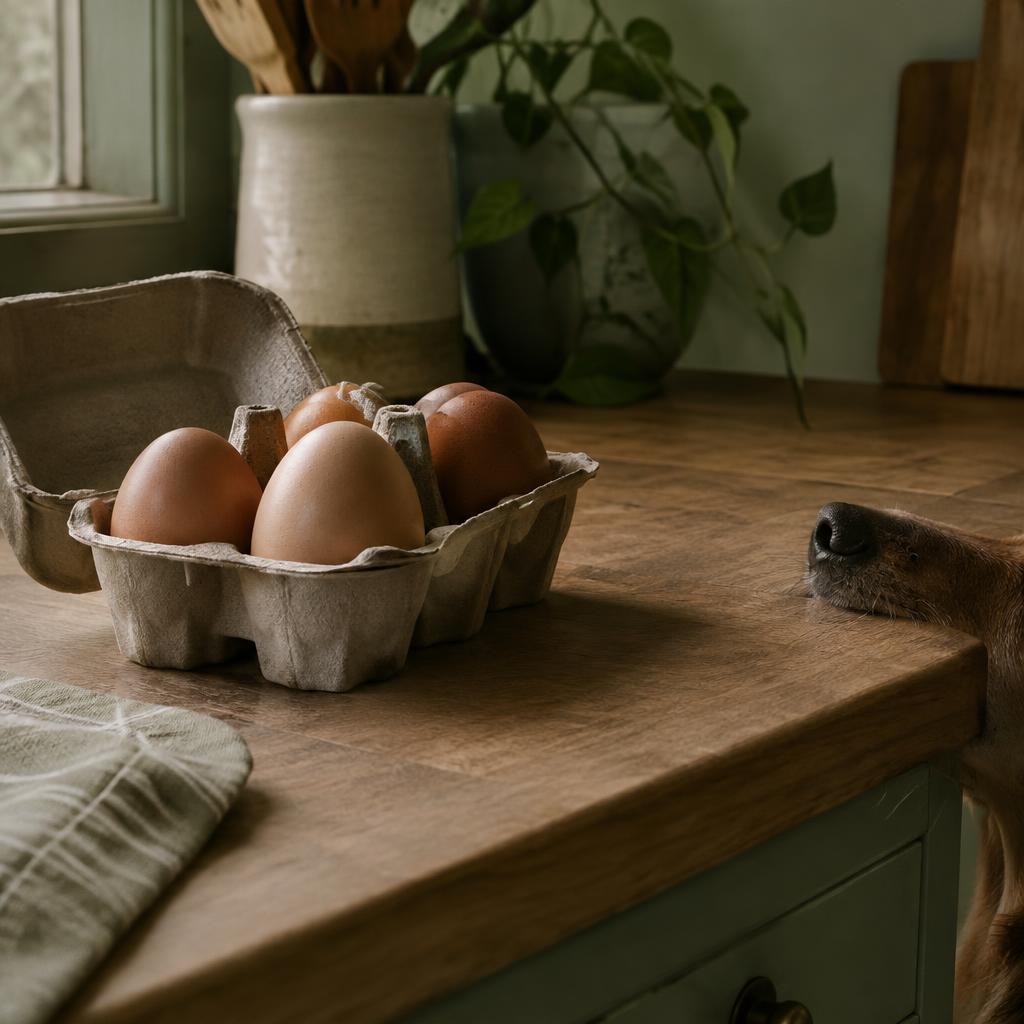
Cook the egg. Boiling, poaching or scrambling without fat removes the two genuine concerns with raw eggs:
- Salmonella. Dogs are more resistant than humans, but they are not immune, and a raw egg habit is an unnecessary gamble, especially in homes with children or anyone immunocompromised.
- Avidin. Raw egg white contains a protein that binds biotin. An occasional raw white is unlikely to cause harm, but regular feeding can contribute to a deficiency over time.
Cooking solves both and actually improves how much of the protein the dog can use. There is no nutritional upside to raw that survives an honest look at the risks.
How to serve eggs to a dog
The golden rule is plain. Dogs do not need, and should not have, the extras we cook eggs with:
- No butter or oil in the pan.
- No salt, pepper or seasoning.
- No onion, garlic, chives or cheese mixed in.
- No sharing from your own plate if your eggs were cooked with any of the above.
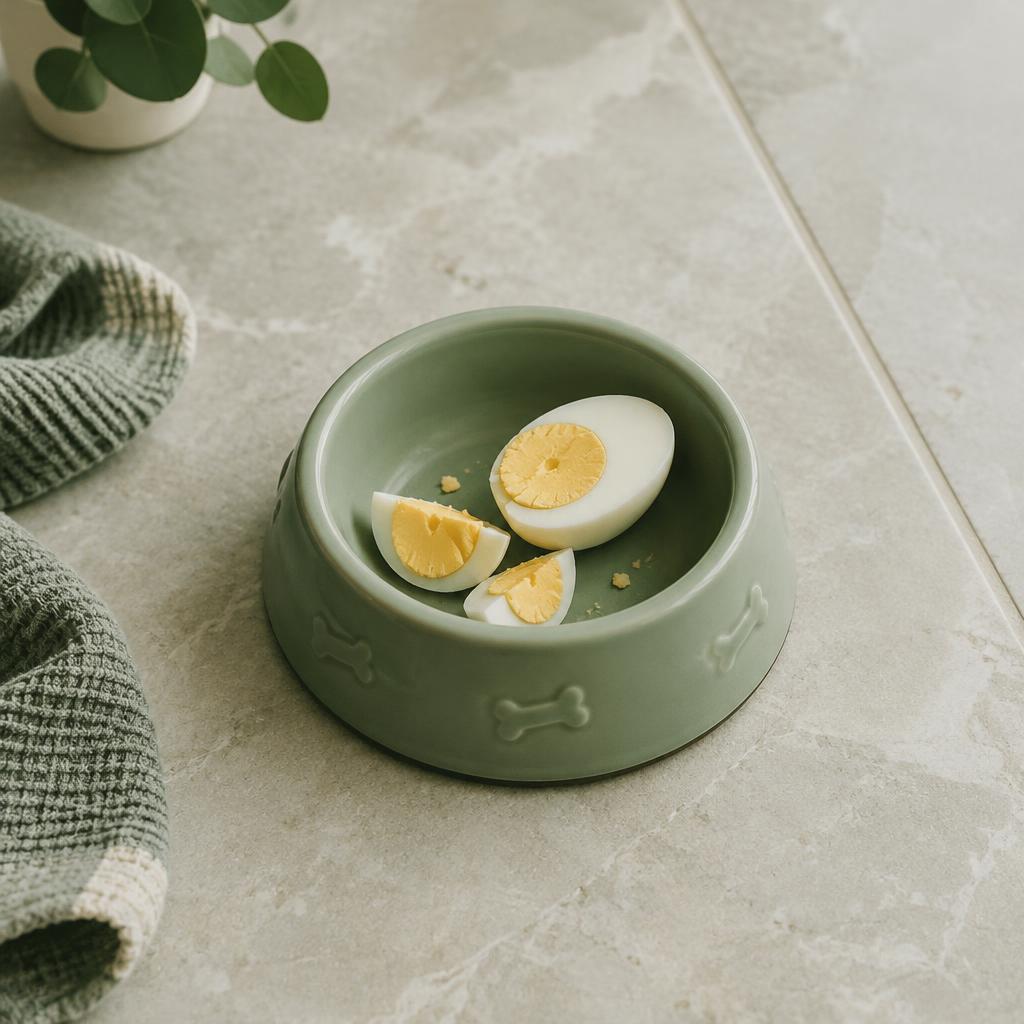
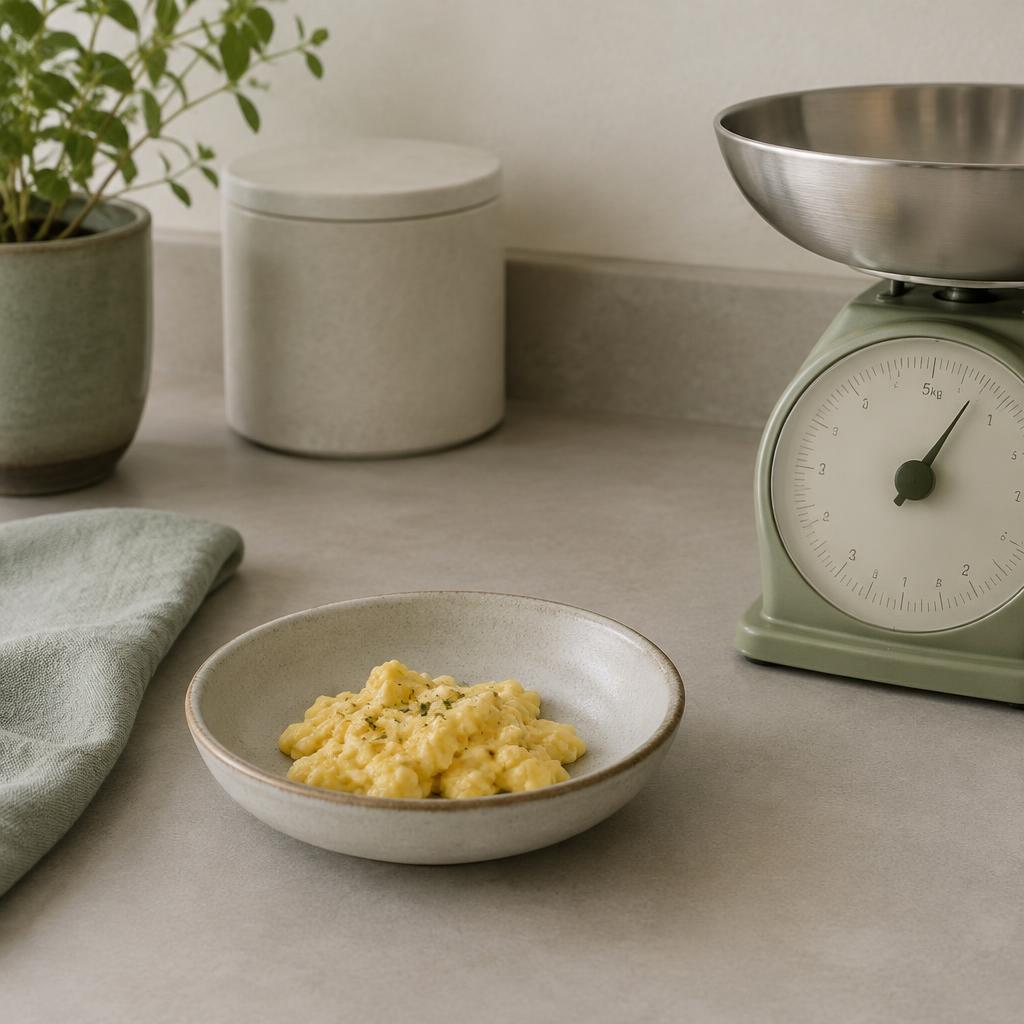
A boiled egg, cooled and chopped, is the simplest option. Plain scrambled egg, cooked in a dry non-stick pan, works just as well.
How much egg is right?
| Dog size | Example weight | Egg serving | How often |
|---|---|---|---|
| --- | --- | --- | --- |
| Toy | Under 5 kg | A quarter of an egg | Once or twice a week |
| Small | 5 to 10 kg | Up to half an egg | Once or twice a week |
| Medium | 10 to 25 kg | One egg | Once or twice a week |
| Large | Over 25 kg | One large egg | Two or three times a week |
Food-motivated breeds such as the Beagle will tell you the serving is too small. Hold firm: their waistline depends on it, and our portion calculator shows how quickly treat calories accumulate.
What about eggshells?
Ground eggshell is sometimes used as a calcium source in carefully formulated home-cooked diets. That is a supplement decision, not a treat decision, and it belongs in a conversation with your vet or a veterinary nutritionist. Too much calcium is genuinely harmful, particularly for growing large-breed puppies, so do not sprinkle shells into a complete diet on a hunch.
Interactive tool
Egg portion checker
Dog size, preparation and frequency in, a safe serving out.
Your serving plan
- One egg, once or twice a week.
- Keep it plain: no butter, oil, salt, onion or seasoning in the pan.
- Count the egg towards daily calories: a whole egg is roughly 70 calories, a meaningful chunk of a small dog's day.
- Skip the shell unless your vet suggests it: ground eggshell is a calcium supplement, and calcium is easy to overdo.
Eggs are on the menu
A plain cooked egg is a nutritious occasional extra for most dogs. Raw eggs carry more risk than reward.
A simple way to start
- 1Boil an egg, cool it and peel it.
- 2Chop a portion suited to your dog's size from the table above.
- 3Offer it as a treat or crumbled over the evening meal.
- 4Watch stools over the next day, as with any new food.
- 5Keep egg in the rotation once or twice a week, not daily.
An egg a week will not make a dog healthier, but it will make a dog very happy, and that counts for something.
Eggs for puppies, seniors and unwell dogs
Eggs are one of the gentlest proteins you can offer, which makes them useful at both ends of life. For weaned puppies, a spoonful of plain cooked egg is a soft, digestible treat that slots neatly around a growth diet, as long as it stays occasional. For seniors with worn teeth or a fading appetite, a little scrambled egg crumbled over dinner can rekindle interest in the bowl without upsetting digestion. For dogs recovering from a mild stomach upset, plain boiled egg with white rice is a classic short-term bland diet, though anything beyond a day or two of tummy trouble belongs with the vet rather than the frying pan.
Egg allergy in dogs
Egg is one of the more common food allergens in dogs, though true allergies are still uncommon overall. The signs to watch for after a first serving are itching, red skin, ear inflammation, hives or digestive upset in the following day or two. If any appear, eggs come off the menu and the reaction is worth mentioning at the next vet visit, since a dog allergic to egg may react to other proteins too. Most dogs, it should be said, eat eggs for years with nothing more dramatic than enthusiastic bowl-licking.
Boiled, poached, scrambled and fried
The cooking method matters less than what goes in the pan with it. Boiled and poached are the gold standard because nothing is added at all. Scrambled is fine if the pan is dry or non-stick and no milk, butter or salt goes in. Fried eggs cooked in oil or butter are best kept for human plates, since the added fat is exactly what a dog does not need. Omelettes and quiches are out: they almost always contain onion, cheese, milk or seasoning. When in doubt, boil it, cool it, chop it.
How eggs fit the weekly menu
Think of egg as a rotating treat rather than a dietary fixture. A medium dog having an egg on Tuesday and Saturday, with the calories counted, is doing well. A medium dog having an egg every morning on top of a full ration is slowly gaining weight, and the egg is only half the story. If you like the idea of fresh food toppers, rotate egg with sardines in water, plain cooked chicken and a little pumpkin, so no single food dominates and the bowl stays interesting. Variety within the treat allowance is the quiet secret of good feeding.
Eggs and the complete diet question
A fair question is why a dog on a complete food needs eggs at all, and the honest answer is that they do not. Commercial diets are formulated to cover every nutritional requirement, and no treat adds anything essential. What egg adds is variety, enjoyment and a useful training and medication tool, and those are legitimate reasons in a life shared with a dog. The mistake is treating egg as a supplement a dog needs, because that thinking leads to daily servings, creeping calories and, eventually, a bowl of balanced food being displaced by extras. Keep egg in its proper place, an occasional pleasure, and it earns its spot in the fridge door.
Buying and storing eggs for the dog bowl
Nothing exotic is required. Ordinary supermarket eggs are fine; free-range or organic is a welfare and taste choice rather than a canine health one. Store eggs in the fridge, use them within their date, and cook them through: a firm white and a set yolk is the standard for dog servings, not the runny centre humans enjoy. If you batch-cook, boiled eggs keep in the fridge for up to a week in their shells, which makes weekday portioning easy. Discard anything cracked or off-smelling, exactly as you would for your own plate. The dog's serving comes from the same standard of freshness, just plainer and smaller.
Eggs in home-cooked diets
For owners who cook for their dogs properly, eggs are a staple ingredient: complete protein, good fat, easy digestibility. But a home-cooked diet is a formulated thing, balanced for calcium, phosphorus, vitamins and minerals across every meal, and eggs are only one line in that spreadsheet. Adding eggs ad hoc to an already complete commercial diet is not home cooking; it is just extra. If home preparation genuinely interests you, do it with a veterinary nutritionist's recipe rather than by improvisation, because the gaps in an improvised diet take months to show and years to undo.
Eggs as a training reward
Chopped boiled egg makes an excellent high-value reward for dogs that have grown bored of biscuits. Keep the pieces small, store them in a sealed tub in the fridge for a day or two, and subtract them from the day's food allowance when a big training session is planned. The smell alone will sharpen most dogs' attention.
A note on freshness
Eggs for the dog bowl follow the same freshness rules as eggs for your own. Use them within their date, store them in the fridge, and discard anything cracked or off-smelling. A batch of boiled eggs keeps for up to a week in their shells, which makes weekday portioning simple: peel, chop, serve, done.
Common mistakes owners make
The first mistake is the seasoned pan: scrambled egg cooked in butter with a pinch of salt is a human breakfast, not a dog treat. The second is frequency creep, where an occasional egg quietly becomes a daily one and the waistline follows. The third is assuming raw is more natural and therefore better, when cooking is strictly safer and more digestible. Finally, some owners add crushed shell on advice from the internet without checking with their vet; calcium balance is too important to improvise. Keep eggs cooked, plain, measured and occasional, and they remain one of the best treats in the kitchen.
When to see a vet
Call your vet if your dog shows vomiting, diarrhoea, hives or facial swelling after eating egg, as egg allergy, while uncommon, does occur. The same applies if a dog has raided a carton of raw eggs and seems unwell afterwards. For everyday feeding questions, your vet or our guide to how much to feed a dog is the right starting point.
The bottom line
Can dogs eat eggs? Yes: cooked, plain and portioned, eggs are one of the best kitchen treats you can share. Keep them occasional, keep them simple, and enjoy having the most attentive kitchen audience in the neighbourhood.
Questions people actually ask
Can dogs eat scrambled eggs?
Yes, if they are cooked plainly: no butter, oil, milk, salt or seasoning. A small portion of plain scrambled egg is a fine occasional treat. Scrambled egg made for the family pan, with butter and salt, is better kept for humans.
Can dogs eat raw eggs?
It is not recommended. Raw eggs can carry salmonella, and raw egg white contains avidin, which can interfere with biotin absorption if fed heavily over time. Cooking removes both concerns and makes the protein easier to digest.
How many eggs can a dog eat?
For most medium dogs, one egg once or twice a week is plenty. Toy breeds should have a quarter to half an egg, and even large dogs do not need more than one egg at a time. Remember an egg is about 70 calories.
Can dogs eat eggshells?
Only with veterinary guidance. Ground eggshell is used as a calcium supplement in some home-prepared diets, but calcium is easy to overdose and too much is harmful, especially for growing puppies. Do not add shells to a complete commercial diet without asking your vet.
Can puppies eat eggs?
Yes, in small amounts once weaned. A spoonful of plain cooked egg is a gentle protein treat for a puppy. Keep pieces small, introduce gradually, and remember their main diet is calibrated for growth.
Are eggs good for dogs with upset stomachs?
Plain boiled egg is sometimes used as part of a bland diet for a mild stomach upset, alongside white rice. It is gentle and digestible, but ongoing vomiting or diarrhoea needs a vet, not home cooking.
Sources
Breeds mentioned


Put it into practice
Read next
Can Dogs Eat Oatmeal? Cooked, Raw and Flavoured
Plain oatmeal cooked in water is safe for dogs in small servings and its soluble fibre can help mild diarrhoea. Avoid flavoured sachets, raw oats and porridge made with milk or sugar.


