Working group
The breed developed on South African farms from the seventeenth century onwards, where settlers' dogs, including mastiff and bulldog types brought from Europe, were selected for the ability to guard homesteads and livestock against predators and intruders. The name comes from the Afrikaans for farmer's dog. Formal breeding programmes in the twentieth century stabilised the type, and the breed was recognised by the Kennel Union of Southern Africa in the 1980s. It has since spread internationally as a guard and family dog, though it remains a specialist breed.
Boerboel
A calm, powerful farm guardian that bonds deeply with its family and thinks for itself. For experienced owners with space and time only.
The South African farm guardian: calm, confident and seriously powerful
The short version
- Calm and confident at home when properly exercised and socialised
- Deeply devoted to its family, including children it grows up with
- Moderate exercise needs for its size, around an hour a day plus mental work
- Short, easy-care coat with moderate drool
- Not for first-time owners: strength, independence and guarding instinct need expert management
- Weight
- 50 to 90 kg
- Height
- 59 to 70 cm
- Lifespan
- 9 to 12 yrs
- Size
- Giant
- Group
- Working
- Coat
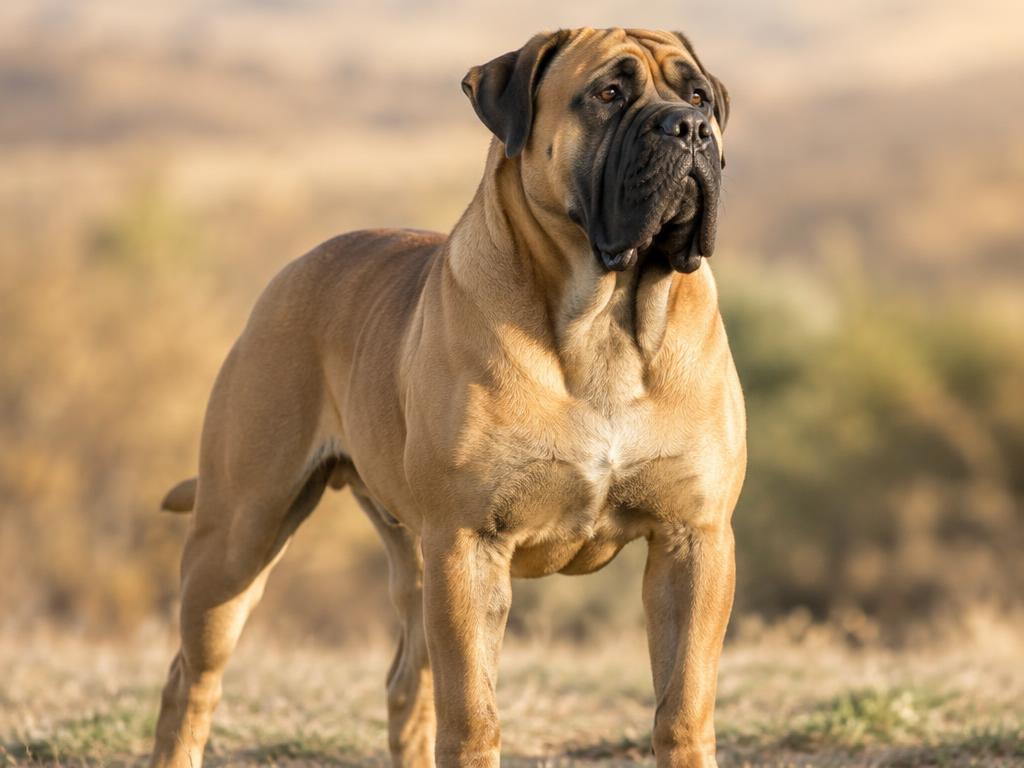
- Short, dense and smooth with a slight sheen; fawn, red, brown or brindle, often with a black mask.
- Grown male
- 60 to 90 kg
- Grown female
- 50 to 75 kg
- Years to full size
- about 2.5
- One-off setup
- €1100 to 2200
Get one if…
- Experienced owners of large or guardian breeds who want a serious, steady dog
- Households with a house, secure garden and space for a giant breed
- Families prepared to socialise and train consistently from puppyhood onwards
- People at home enough to give the dog company and structure
- Owners who can budget honestly for giant-breed food, insurance and vet care
Think again if…
- First-time dog owners, without exception
- Flats or homes without secure, strong fencing
- Anyone who cannot commit to ongoing socialisation and training
- Households with frequent visiting dogs or chaotic comings and goings
- Owners who would struggle physically to control a 70 kg dog
Trait profile
Trait scores assume a well-bred, well-socialised dog; a poorly bred or under-socialised Boerboel is a different and far harder animal.
Space & setup. Needs a house with a large, securely fenced garden. Flat living is not realistic for a dog of this size and guarding instinct.
Allergies. The short coat sheds moderately year round. This is not a breed for people with significant dog allergies.
Living with a Boerboel
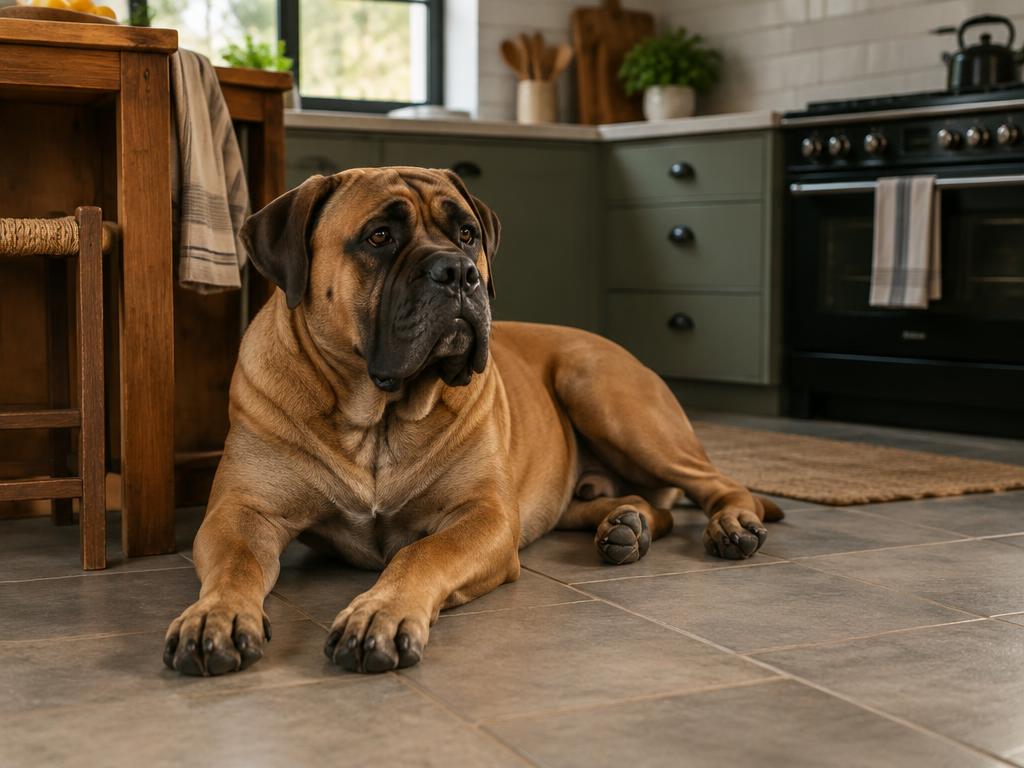
The Boerboel is a large South African mastiff bred to guard remote farms and families. A well-bred Boerboel is calm, confident and deeply devoted to its people, but this is a dog of genuine power and independence that makes its own decisions. It suits experienced owners who can offer structure, space and lifelong socialisation, and it is entirely unsuited to casual or first-time ownership.
The Boerboel's defining quality is self-possession: a good one assesses rather than reacts, and is steady with its family including children it has grown up with. That steadiness depends entirely on breeding, early socialisation and consistent leadership. An under-socialised or harshly treated Boerboel is a dangerous dog, and no amount of good intention substitutes for experience with large guardian breeds. Day to day, exercise needs are moderate for the size, an hour or so of walking plus mental engagement, but the dog must be under control in public at all times. Weight control matters enormously: a Boerboel carrying extra weight is loading joints that are already working hard. The short coat is easy, the drool is moderate, and the vet, food and insurance bills are honestly large. For an experienced home with space and commitment, few breeds are more impressive. For everyone else, admire from a distance.
A magnificent guardian in the right hands and a serious liability in the wrong ones. The Boerboel's calm confidence is real, but so is its strength and its willingness to act on its own judgement.
Exercise, day to day
- 1Puppies: five minutes of structured exercise per month of age, twice daily; growth plates stay open well past a year.
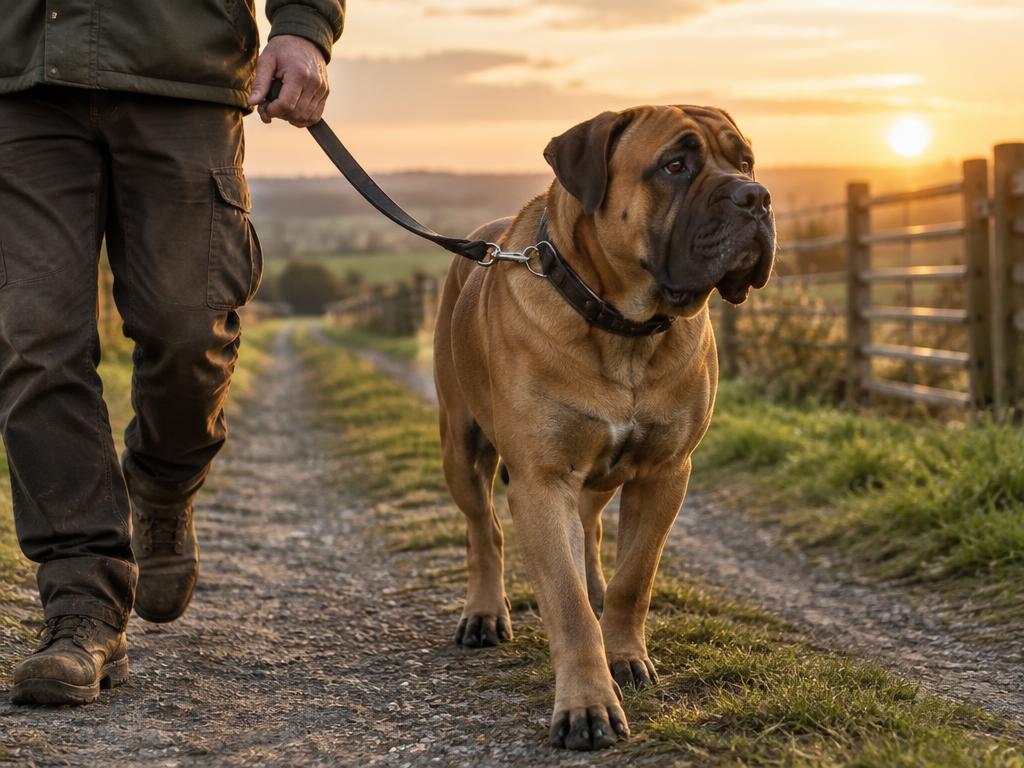
- 2Adults: around an hour of walking a day plus play and training; avoid sustained running on hard surfaces.
- 3Mental work: obedience, scent games and calm exposure to new places keep the mind settled.
- 4Strength: controlled hill walks and free movement in a secure garden maintain muscle without pounding joints.
- 5Heat: exercise early or late in warm weather; heavy mastiffs overheat quickly.
Grooming, realistically
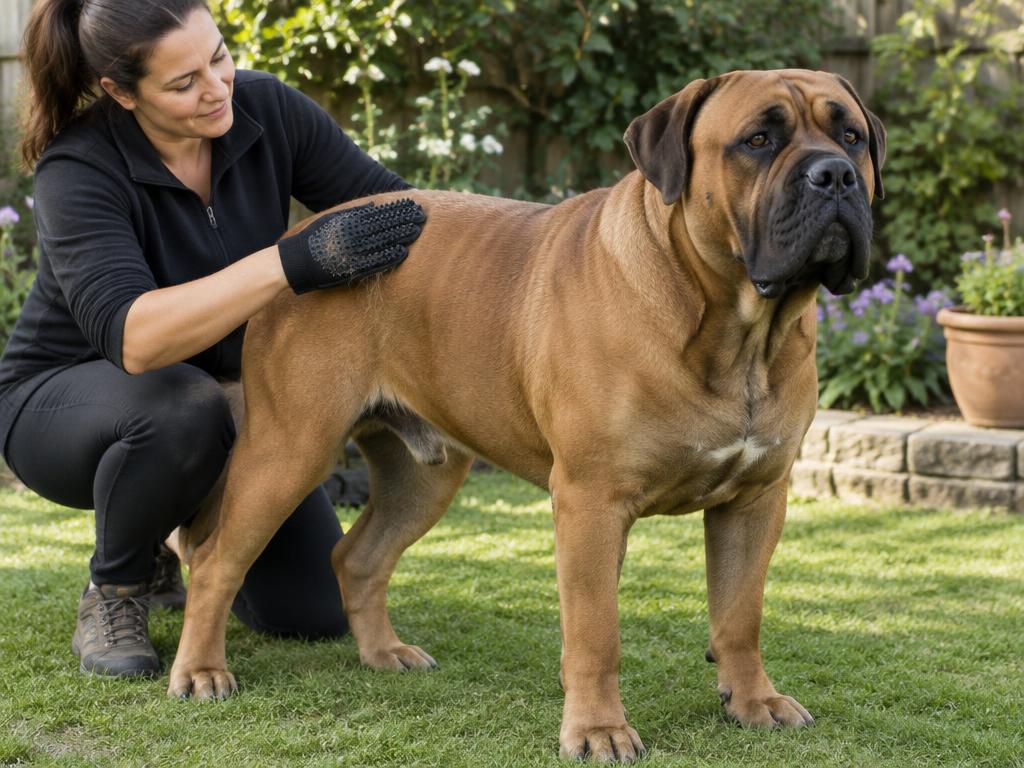
- 1Brush weekly with a rubber mitt or bristle brush to remove loose hair and distribute skin oils.
- 2Bathe only when needed, as frequent bathing dries the skin.
- 3Check and clean the facial folds and lips weekly, and dry them after drinking.
- 4Clean ears weekly and trim nails every two to three weeks; giant-breed nails grow fast.
- 5Check skin regularly for bumps, hot spots and ticks after walks.
What you actually need
- Rubber grooming mitt
- Bristle brush
- Ear cleaning solution
- Nail clippers for large breeds
- Soft cloths for facial folds
Puppy to adult
| Age | Male | Female | What is happening |
|---|---|---|---|
| 8 weeks | 7 to 10 kg | 6 to 9 kg | Already substantial; handle feet, ears and mouth daily and begin calm lead introduction. |
| 3 months | 16 to 22 kg | 14 to 19 kg | Critical socialisation window; meet people, dogs and places in controlled, positive settings. |
| 6 months | 30 to 42 kg | 26 to 36 kg | Growth is rapid; keep exercise low impact and avoid stairs and jumping where possible. |
| 12 months | 45 to 65 kg | 40 to 55 kg | Adolescent strength arrives before maturity; consistency and calm leadership are essential. |
| 18 to 30 months | 60 to 90 kg | 50 to 75 kg | Reaches full size and mental maturity around two and a half years; keep lean throughout. |
Ranges are typical, not targets. Judge condition by ribs and waist, and check with the ideal weight checker.
What to ask a breeder
- What are the hip and elbow scores of both parents, and can I see the certificates?
- Have the parents' eyes and hearts been examined, and what were the results?
- How would you describe the temperaments of both parents with strangers and other dogs?
- What socialisation have the puppies had with people, children, noise and other animals?
- What support do you offer after the puppy goes home, and will you take the dog back at any age?
Health tests to ask for
Ask to see results for both parents before you put down a deposit.
- Hip scoring for both parents
- Elbow grading for both parents
- Eye testing including entropion and ectropion assessment
- Cardiac examination of breeding stock
- Vaginal hyperplasia and reproductive health history in the dam's line
Health watch-list
What to ask a breeder about, and what to watch for over a lifetime. This is orientation, not veterinary advice, anything you notice belongs in front of a vet.
Hip dysplasia
CommonA significant concern in the breed. Insist on hip scores for both parents and keep puppies lean and off stairs during growth.
Elbow dysplasia
ModerateCommon in heavy breeds. Ask for elbow grades and avoid repetitive impact exercise in the first eighteen months.
Eyelid conditions (entropion, ectropion)
ModerateLoose facial skin can roll eyelids in or out, irritating the eye. Squinting or weepy eyes need a vet check.
Bloat (gastric torsion)
ModerateDeep-chested giant breeds are at risk. Feed smaller meals, rest around feeding and know the emergency signs.
Heart disease
UncommonCardiac problems occur in the breed; breeding dogs should have heart examinations and any fainting or coughing needs checking.
Obesity and joint strain
CommonExtra weight on a giant frame accelerates joint disease. Keep the dog visibly lean throughout life.
What it costs to keep one
Realistic running cost
€275 / month
About €3,300 a year, or roughly €36,300 across a 11-year life, before purchase price, neutering and one-off vet events.
Before the puppy arrives. Budget roughly €1100 to 2200 for a crate, bed, lead and harness, bowls, puppy classes, first vaccinations and grooming kit sized for this breed. Figures throughout are indicative and vary a good deal between countries.
Interactive · built for this breed
Is a Boerboel right for your home?
Seven honest questions about your space, time and household, checked against this breed's exercise need, coat, sociability and tolerance for time alone.
Fit with your routine
97%
A strong fit
Your routine suits a Boerboel well. Meet adult dogs of the line before you commit.
Working in your favour
- Your daily walking comfortably covers this breed's exercise need.
- Coat care fits the grooming time you offered.
Compare more breeds in the matchmaker, or plan meals with the portion calculator.
The verdict, by household
When to call your vet
- Limping or stiffness, especially after rest, which can indicate hip or elbow disease
- Red, weepy or squinting eyes, which can signal entropion or other eyelid problems
- A swollen abdomen, unproductive retching or collapse, which is a bloat emergency
- Exercise intolerance, coughing or fainting, which need a cardiac check
- New lumps or unexplained weight loss at any age
Nothing here is a diagnosis. A swollen, hard belly with retching, collapse, breathing difficulty and sudden hind-leg weakness are emergencies: go straight away.
Boerboel vs the closest alternatives
| Breed | Weight | Energy | Grooming | € / month |
|---|---|---|---|---|
| Boerboel | 50 to 90 kg | 5/10 | 3/10 | €275 |
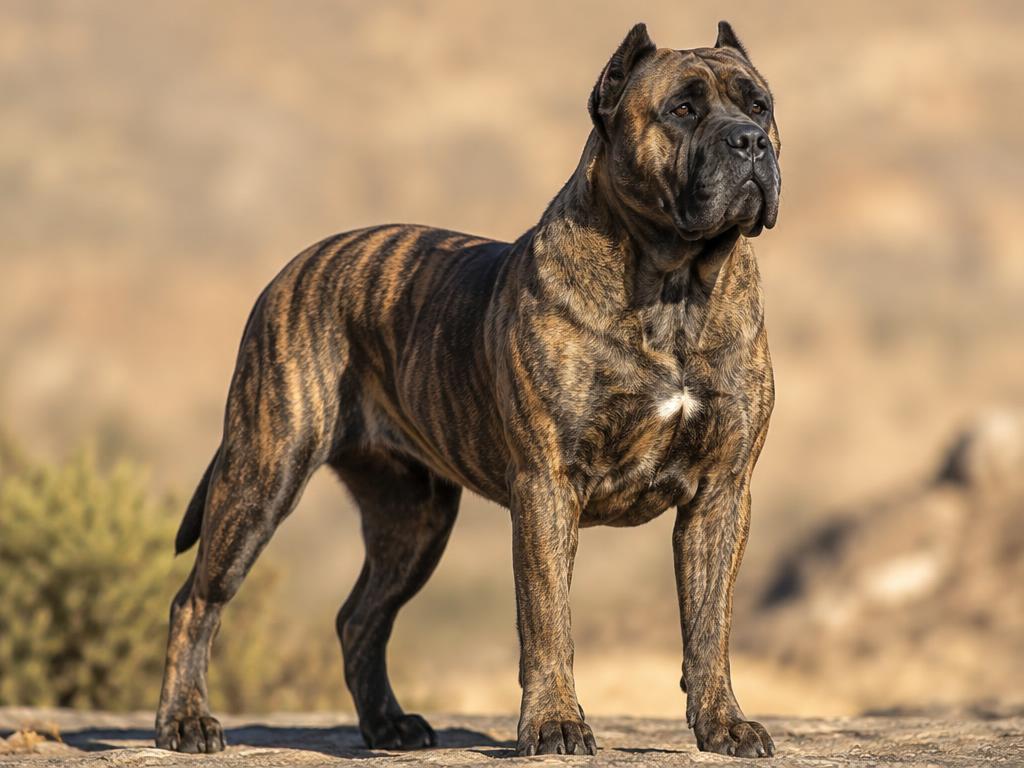
| Presa Canario | 38 to 60 kg | 5/10 | 2/10 | €246 |
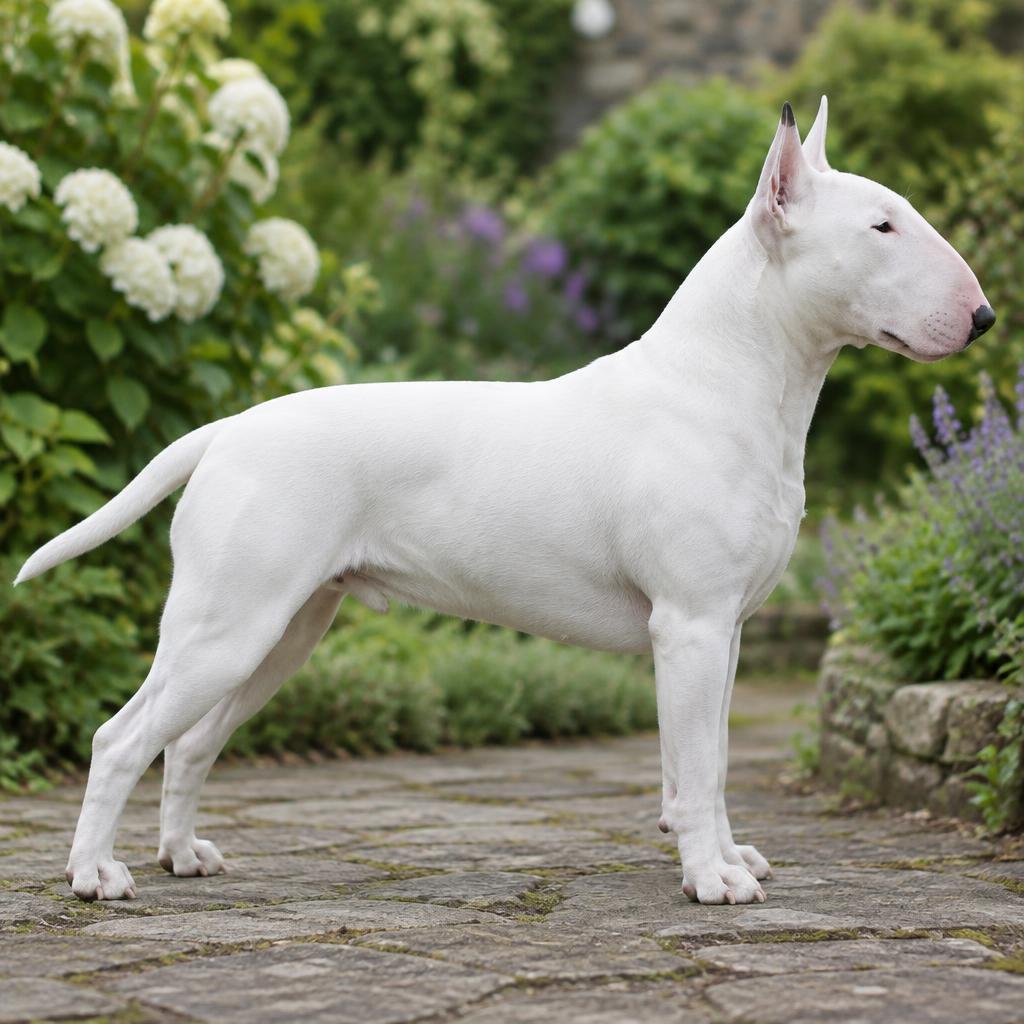
| Bull Terrier | 20 to 36 kg | 7/10 | 3/10 | €152 |
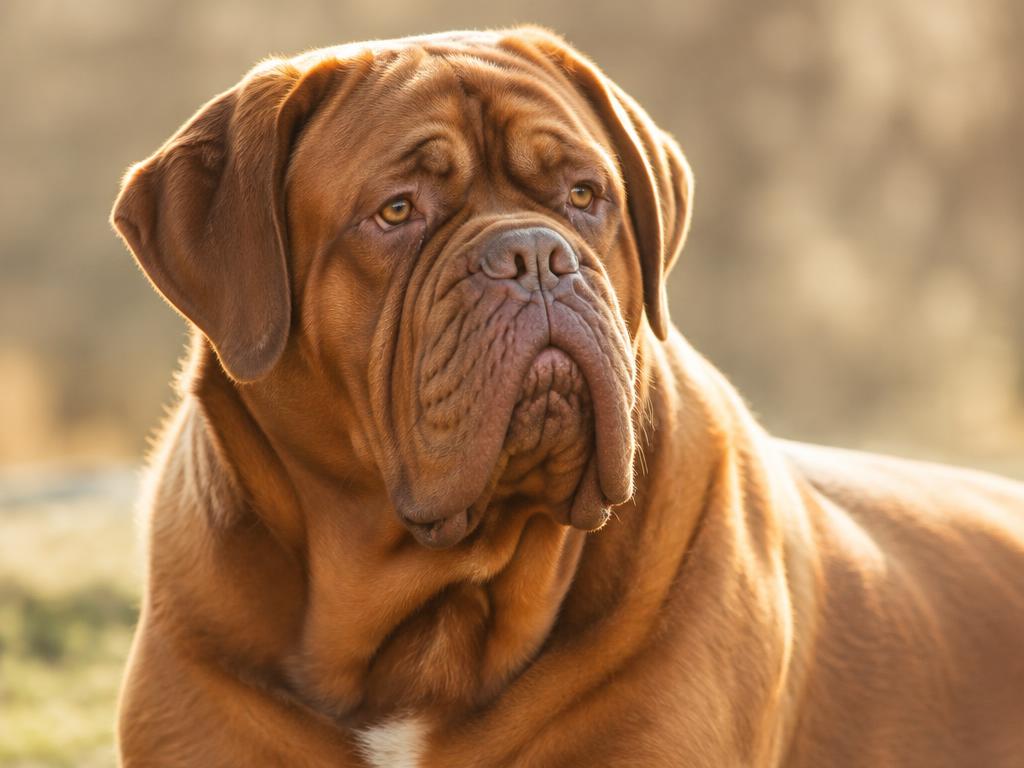
| Dogue de Bordeaux | 45 to 68 kg | 4/10 | 4/10 | €303 |
Boerboel questions, answered
Is a Boerboel a good family dog?
For an experienced family, yes: a well-bred Boerboel is devoted and steady with its own children. It is not a breed for first-time owners, and all interaction with visiting children should be supervised.
How much exercise does a Boerboel need?
Around an hour a day of walking plus play and mental work. Despite the size, this is not an endurance athlete; controlled, moderate exercise protects the joints.
Are Boerboels dangerous?
A well-bred, well-socialised Boerboel is calm and discriminating, but the breed is powerful and protective, and poor breeding or handling can produce a genuinely dangerous dog. Responsible ownership is everything with this breed.
Do Boerboels drool?
Moderately. Expect some drool, especially after drinking and in warm weather, though less than the loosest-lipped mastiffs. Keeping a cloth near the water bowl is wise.
How big does a Boerboel get?
Males typically stand 64 to 70 cm and weigh 60 to 90 kg; females 59 to 65 cm and 50 to 75 kg. They mature slowly, reaching full size and mental adulthood around two and a half years.
Can a Boerboel live with other dogs?
Many live happily with dogs they are raised with, especially of the opposite sex. Same-sex intolerance and dog selectiveness occur in the breed, so careful introductions and honest assessment of the individual dog matter.
How long do Boerboels live?
Typically 9 to 12 years. Keeping them lean, choosing health-tested parents and protecting joints through the long growth period all support a longer, sounder life.