Working group
The breed was developed in Bavaria and Wurttemberg in the nineteenth century, where farmers and innkeepers wanted a larger, more powerful version of the Standard Schnauzer to drive cattle to market and guard premises. Rough-coated driving dogs were crossed with working breeds including, most likely, black Great Danes and Bouvier des Flandres types. By the early twentieth century the breed had moved into police and military work in Germany, and it reached Britain and the United States in the interwar years, where it remains a respected working and protection breed.
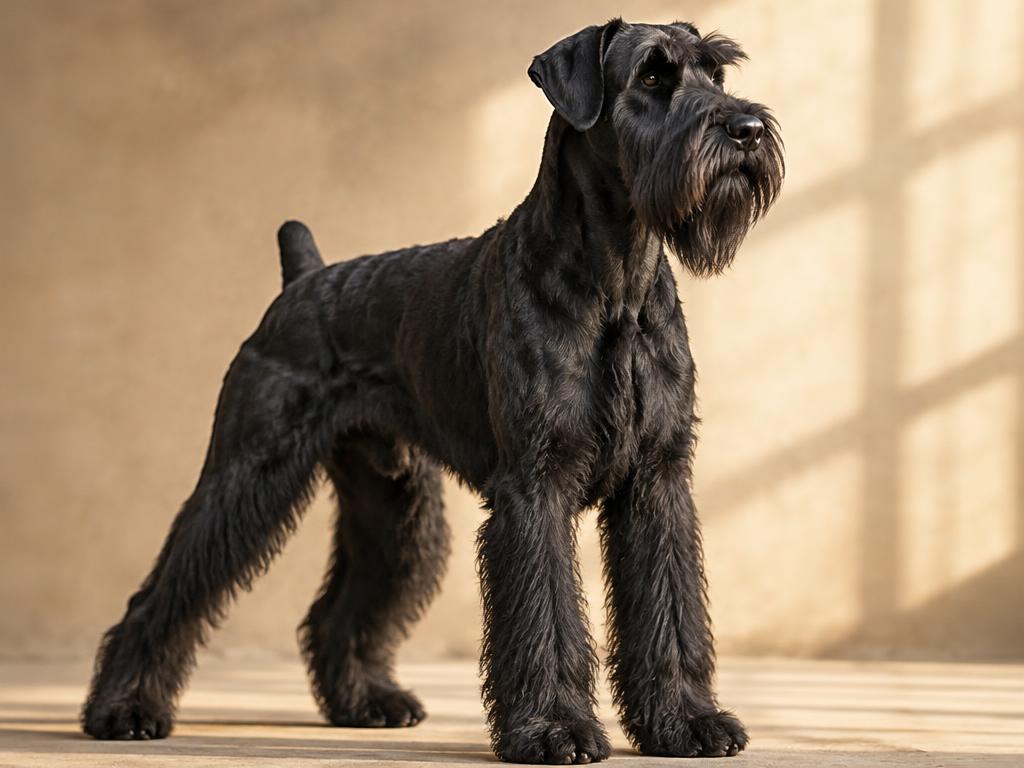
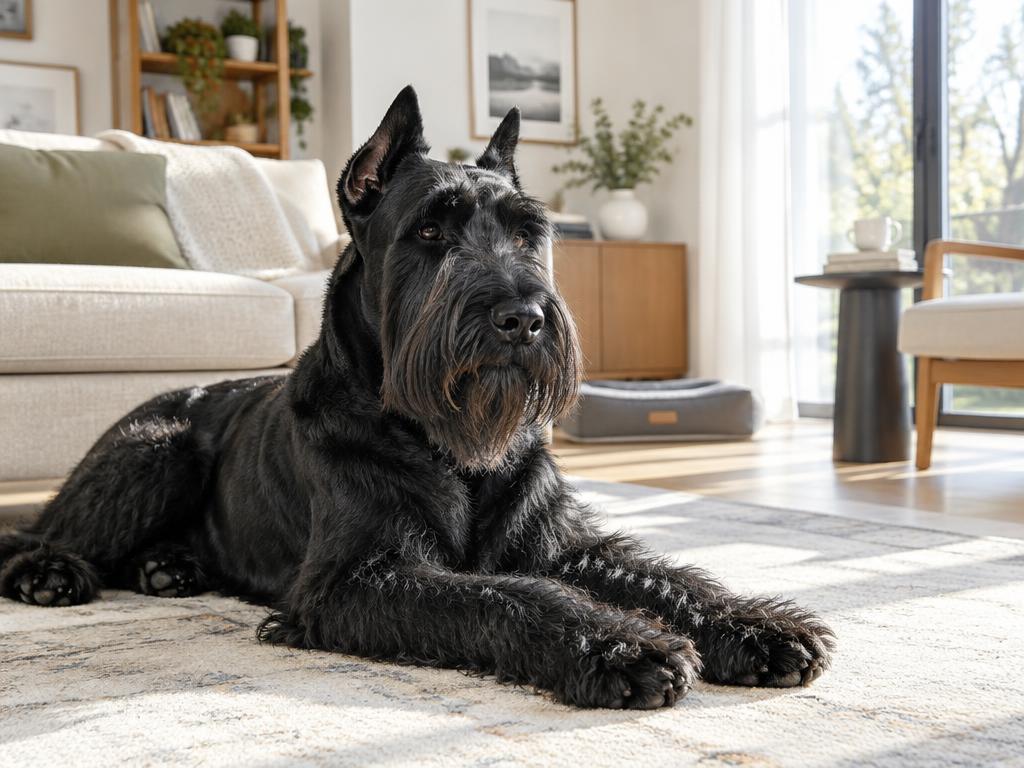
Giant Schnauzer
A powerful working schnauzer with real drive, a harsh non-shedding coat and a mind that needs a job. Magnificent for experienced, active owners; overwhelming for almost everyone else.
The thinking person's guard dog: a working mind in a bearded, athletic frame
The short version
- Barely sheds, but the harsh coat needs weekly brushing and professional stripping or clipping every six to ten weeks
- Needs at least ninety minutes of real exercise and mental work every day
- Naturally protective and suspicious of strangers, so early socialisation is essential
- Not a first dog: adolescence is strong, clever and persistent
- Thrives with training, sport or a working routine, and struggles without one
- Weight
- 25 to 48 kg
- Height
- 60 to 70 cm
- Lifespan
- 10 to 14 yrs
- Size
- Large
- Group
- Working
- Coat
- Dense, harsh and wiry double coat with a soft undercoat, furnishing the characteristic beard and eyebrows; solid black or pepper and salt.
- Grown male
- 27 to 48 kg
- Grown female
- 25 to 43 kg
- Years to full size
- about 2.5
- One-off setup
- €900 to 1800
Get one if…
- Experienced owners who enjoy daily training and want a dog with real working drive
- Active households that can offer ninety minutes or more of exercise and mental work
- People who want a natural guardian and are prepared to manage that instinct responsibly
- Owners happy to budget for regular professional grooming or learn to hand-strip
- Homes with space, secure fencing and a structured daily routine
Think again if…
- First-time owners or anyone wanting an easy, biddable companion
- Households out at work all day with no plan for exercise or company
- Families with very young children and little time for training
- Anyone unwilling to commit to the coat's grooming schedule
- Homes with small pets where a strong chase and grab instinct would be a risk
Trait profile
Trait scores reflect a well-bred, well-socialised dog; an under-stimulated Giant Schnauzer scores far worse on barking, sociability and destructiveness.
Space & setup. Needs a house with a secure garden. Flat living is possible only for exceptionally committed owners who can replace space with several structured outings every day.
Allergies. The harsh coat sheds very little and is often better tolerated than heavy shedders, but no dog is truly hypoallergenic and the beard and furnishings still carry dander and saliva.
Living with a Giant Schnauzer
The Giant Schnauzer is the largest of the three schnauzer sizes and the most serious in temperament. Bred to drive cattle and later to guard breweries and work with police, it combines real athleticism with an intense, watchful mind. This is not a big Standard Schnauzer in outlook: it is a working dog that needs structure, training and a job, and it rewards experienced owners with loyalty and remarkable capability.
The Giant Schnauzer suits people who want an active partnership with a dog: training, sport, long walks with purpose. It does not suit anyone who wants a decorative bearded companion. The breed bonds hard with its family and is naturally suspicious of strangers, which makes early, thorough socialisation essential rather than optional. Adolescence, roughly from eight months to two and a half years, can be genuinely testing, with a strong, clever dog pushing every boundary. The coat is another honest consideration: it barely sheds, but it needs weekly brushing and either hand-stripping or professional clipping every six to ten weeks, and the beard collects food, water and mud with enthusiasm. With the right owner this is one of the most capable and rewarding breeds alive. With the wrong one it is a 40 kilogram problem with a beard.
A superb dog for the right owner and a difficult one for the wrong one. The Giant Schnauzer's intelligence and drive are genuine working qualities, not marketing words, and without daily structure they turn into boredom, reactivity and inventive destruction.
Exercise, day to day
- 1Puppies: five minutes of structured exercise per month of age, twice a day, plus free play on soft ground.
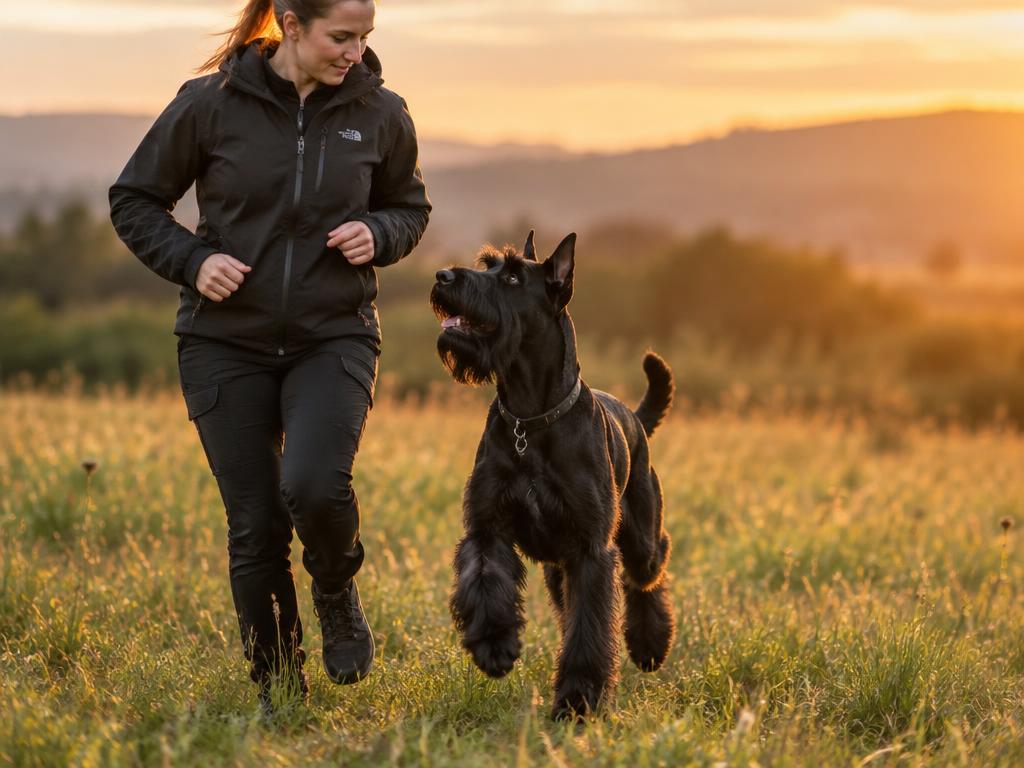
- 2Adults: at least ninety minutes a day, split between brisk walks, training and free running in secure areas.
- 3Mental work: obedience, scent work, tracking or a protection-sport foundation channel the working mind.
- 4Off-lead: only in secure areas until recall is genuinely proofed; the prey drive is real.
- 5Rest: teach an off-switch deliberately, because a Giant Schnauzer will not invent one itself.
Grooming, realistically
- 1Brush through the coat twice a week with a slicker and comb, working down to the undercoat to prevent felting.
- 2Hand-strip or book a professional clip every six to ten weeks; clipping softens the coat texture over time.
- 3Wash and comb the beard and leg furnishings weekly, and wipe the beard after meals and drinks.
- 4Check ears weekly and keep them clean and dry, especially if the dog swims.
- 5Trim nails every two to three weeks and check pads after work on rough ground.
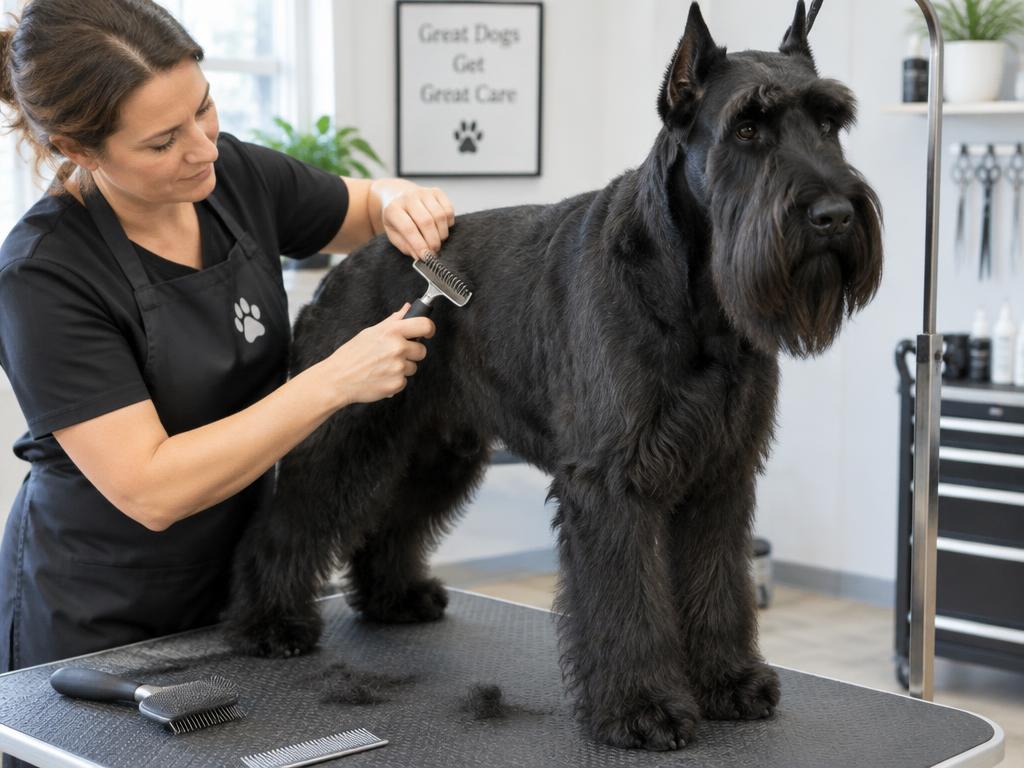
What you actually need
- Slicker brush
- Wide-tooth metal comb
- Stripping knife (if hand-stripping)
- Beard comb and grooming spray
- Ear cleaning solution
- Nail clippers or grinder
Puppy to adult
| Age | Male | Female | What is happening |
|---|---|---|---|
| 8 weeks | 5 to 7 kg | 4.5 to 6.5 kg | Coat is soft and puppyish; begin gentle handling of beard, feet and ears for future grooming. |
| 3 months | 11 to 14 kg | 10 to 13 kg | Rapid growth; keep exercise short and structured, and start lead and recall foundations. |
| 6 months | 20 to 26 kg | 18 to 23 kg | Adolescence begins; expect boundary testing and keep training consistent and calm. |
| 12 months | 30 to 40 kg | 26 to 34 kg | Near adult height but mentally immature; guard against over-exercise of still-growing joints. |
| 18 to 30 months | 34 to 48 kg | 30 to 43 kg | Fills out to adult muscle and mental maturity; consistent routines now pay off for life. |
Ranges are typical, not targets. Judge condition by ribs and waist, and check with the ideal weight checker.
What to ask a breeder
- What are the hip and elbow scores of both parents, and can I see the certificates?
- Have the parents had recent eye tests, and is there any thyroid or heart history in the line?
- What working or sport titles do the parents or grandparents hold?
- How have the puppies been socialised to noise, traffic, strangers and other animals?
- What is the breeder's honest view of this litter's drive levels, and which puppy suits a pet versus working home?
Health tests to ask for
Ask to see results for both parents before you put down a deposit.
- Hip scoring for both parents
- Elbow grading for both parents
- Eye testing including hereditary cataract
- Thyroid testing in breeding stock
- Cardiac assessment where lines have a history of heart disease
Health watch-list
What to ask a breeder about, and what to watch for over a lifetime. This is orientation, not veterinary advice, anything you notice belongs in front of a vet.
Hip dysplasia
ModerateA common concern in large working breeds. Both parents should be hip scored, and puppies should grow lean with controlled exercise.
Elbow dysplasia
UncommonSeen in the breed; ask for elbow grades alongside hip scores and avoid repetitive jumping in the first year.
Hereditary cataracts and eye disease
ModerateBreeding dogs should have current eye certificates. Cloudiness or vision changes at any age need a vet check.
Hypothyroidism
ModerateReported in the breed. Weight gain, lethargy and coat changes on a normal diet warrant a thyroid blood test.
Bloat (gastric torsion)
ModerateDeep-chested breeds are at risk. Feed two or more smaller meals, avoid exercise around mealtimes and learn the emergency signs.
Osteosarcoma and other cancers
UncommonAs with many large breeds, cancer risk rises with age. New lumps and unexplained lameness should always be checked promptly.
What it costs to keep one
Realistic running cost
€271 / month
About €3,252 a year, or roughly €39,024 across a 12-year life, before purchase price, neutering and one-off vet events.
Before the puppy arrives. Budget roughly €900 to 1800 for a crate, bed, lead and harness, bowls, puppy classes, first vaccinations and grooming kit sized for this breed. Figures throughout are indicative and vary a good deal between countries.
Interactive · built for this breed
Is a Giant Schnauzer right for your home?
Seven honest questions about your space, time and household, checked against this breed's exercise need, coat, sociability and tolerance for time alone.
Fit with your routine
91%
A strong fit
Your routine suits a Giant Schnauzer well. Meet adult dogs of the line before you commit.
What to sort out first
- Needs more daily exercise than you have pencilled in.
- Coat needs more brushing or trimming than you have allowed.
Compare more breeds in the matchmaker, or plan meals with the portion calculator.
The verdict, by household
When to call your vet
- Limping, stiffness after rest or reluctance to jump, which can signal hip or elbow disease
- Cloudiness in the eye or bumping into furniture, which needs prompt eye examination
- Lethargy, weight gain on a normal diet or coat changes, which can point to thyroid trouble
- A distended abdomen, unproductive retching or sudden restlessness, which is a bloat emergency
- Any sudden change in tolerance of handling, which can indicate pain rather than temperament
Nothing here is a diagnosis. A swollen, hard belly with retching, collapse, breathing difficulty and sudden hind-leg weakness are emergencies: go straight away.
Giant Schnauzer vs the closest alternatives
| Breed | Weight | Energy | Grooming | € / month |
|---|---|---|---|---|
| Giant Schnauzer | 25 to 48 kg | 8/10 | 8/10 | €271 |
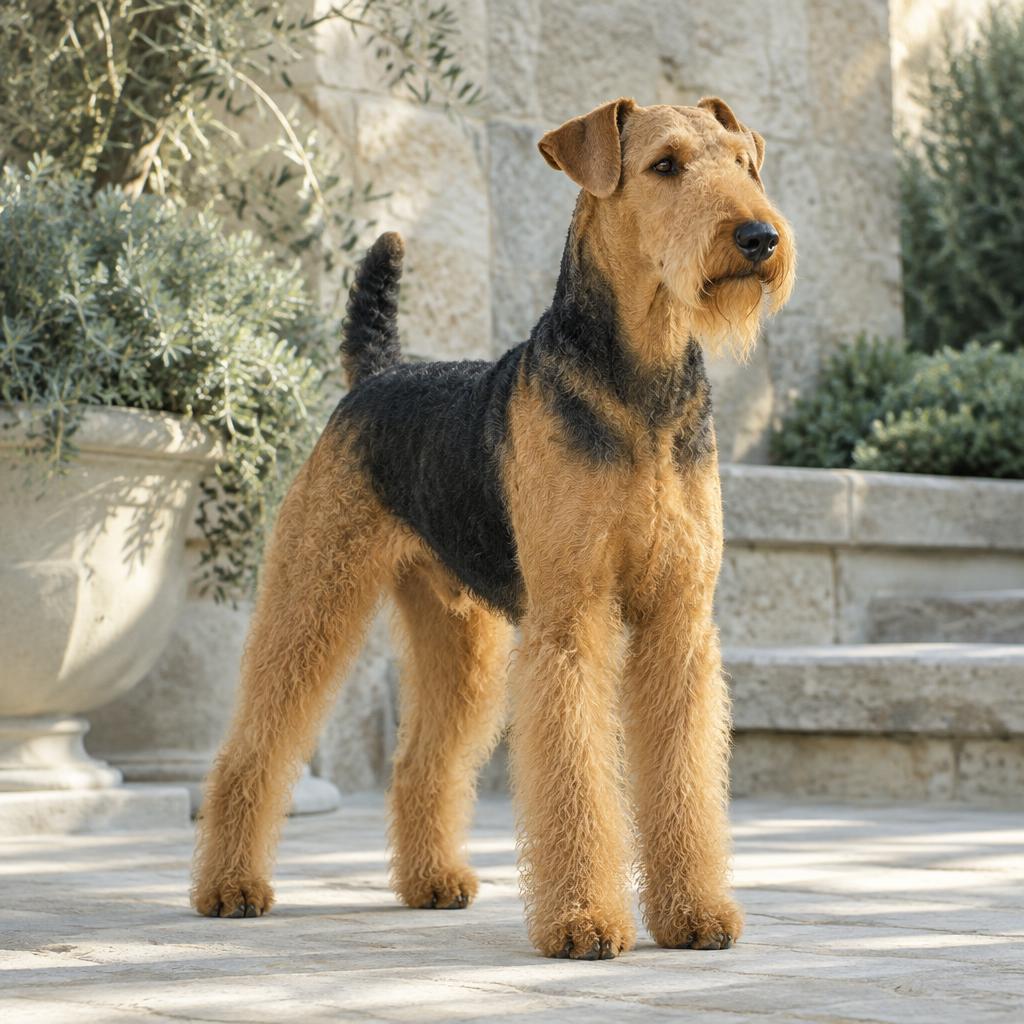
| Airedale Terrier | 18 to 29 kg | 8/10 | 7/10 | €350 |
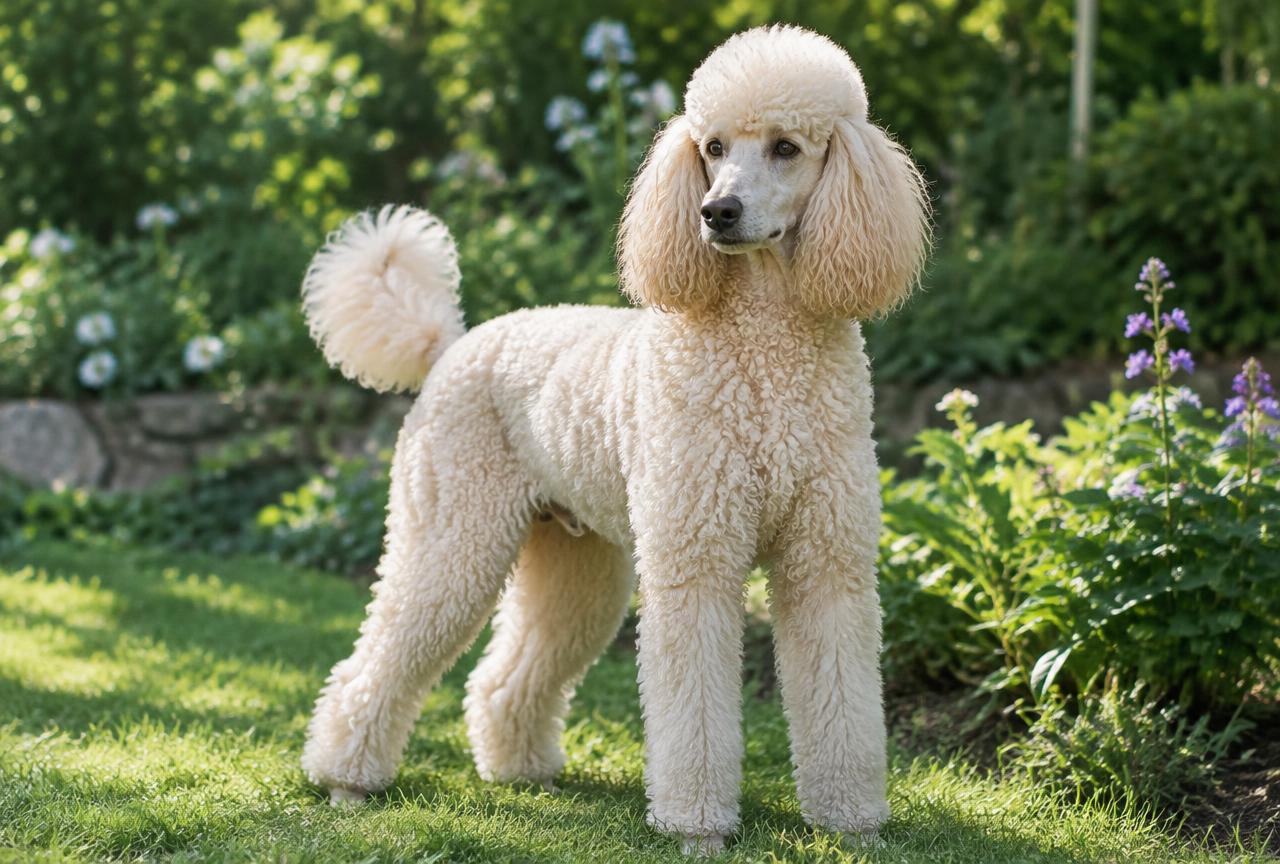
| Poodle | 20 to 32 kg | 8/10 | 8/10 | €170 |
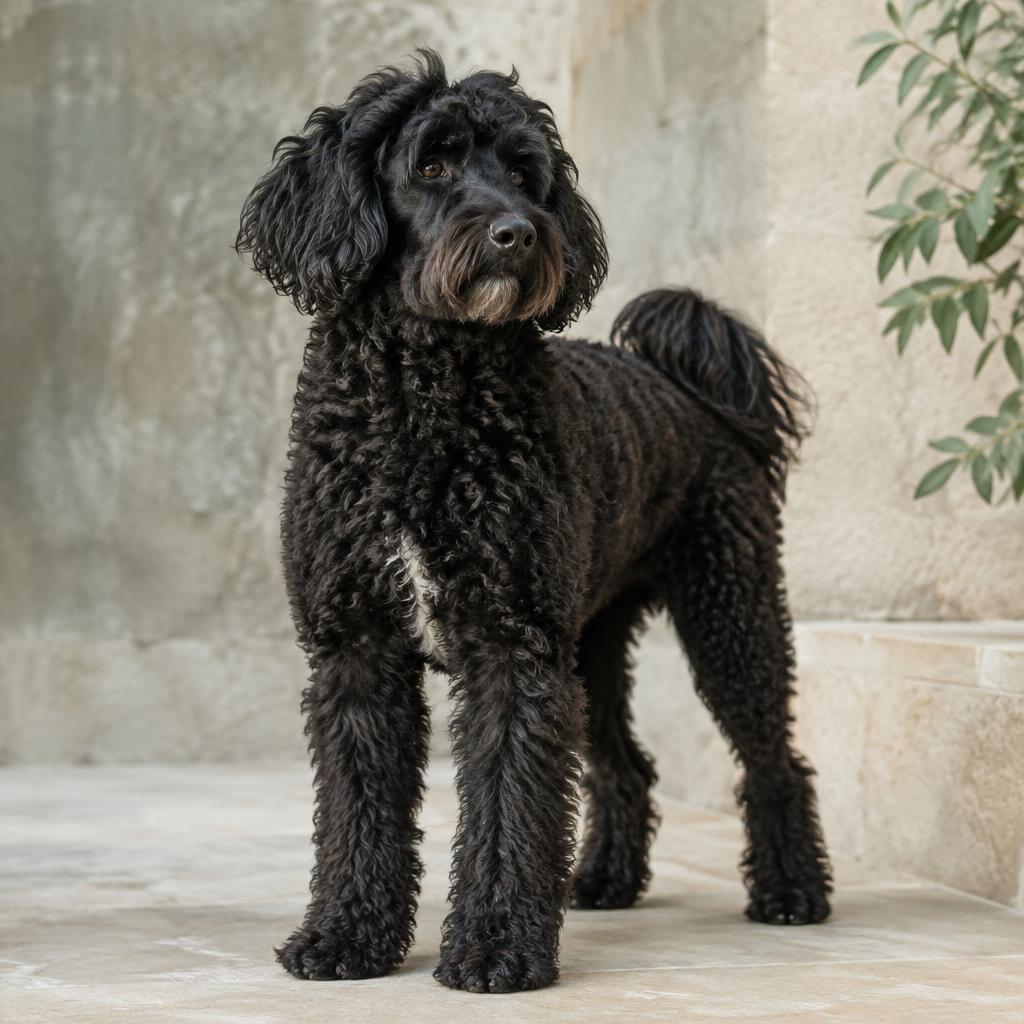
| Portuguese Water Dog | 16 to 27 kg | 8/10 | 8/10 | €139 |
Giant Schnauzer questions, answered
Is a Giant Schnauzer a good family dog?
In an experienced, active family, yes: they are loyal, playful and protective with their own people. They are too strong, intense and suspicious of strangers for most first-time or very busy households, and need careful management around visiting children.
Do Giant Schnauzers shed?
Very little. The harsh double coat holds loose hair, which is why it needs weekly brushing and regular stripping or clipping. They are often better tolerated by allergy sufferers than heavy shedders, but no breed is truly hypoallergenic.
How much exercise does a Giant Schnauzer need?
At least ninety minutes a day of real exercise plus training or mental work. A quick lead walk twice a day is nowhere near enough for this breed and is the most common cause of behaviour problems.
Are Giant Schnauzers aggressive?
They are naturally protective and reserved with strangers, which is a managed trait, not a fault. Poor socialisation, inconsistent handling or boredom can turn that instinct into reactivity, which is why experienced ownership matters so much.
How big does a Giant Schnauzer get?
Males typically stand 65 to 70 cm at the shoulder and weigh 34 to 48 kg; females are a little smaller at 60 to 65 cm and 25 to 43 kg. They reach full height by about a year but mature mentally over two to three years.
Can a Giant Schnauzer live in a flat?
It is possible but genuinely hard. The breed needs space, several structured outings daily and close management of its watchful, vocal nature around neighbours. A house with a secure garden is a far more realistic home.
How long do Giant Schnauzers live?
Typically 10 to 14 years, which is good for a dog of this size. Health-tested parents, lean body condition and appropriate exercise through growth all support a longer, sounder life.