
Can Dogs Eat Bread? Crusts, Dough and When It Is Dangerous
Plain baked bread is a safe occasional treat for most dogs, but raw dough is a genuine emergency and raisin bread is toxic. Here is where the lines are.
The SniffScroll desk
Published 11 October 2026
Dr Emma Hartley MRCVS
The short version
- Plain baked bread is a safe occasional treat in small amounts, but it is mostly empty calories.
- Raw yeast dough is an emergency: it rises in the stomach and produces alcohol. Call the vet immediately.
- Raisin bread is toxic at any dose: call the vet even for one slice.
- A medium dog can have about half a slice, a few times a week, inside the 10% treat allowance.
- Check labels on seeded, fruit and gluten-free loaves for raisins, onion, garlic, macadamias and xylitol.
Can dogs eat bread?
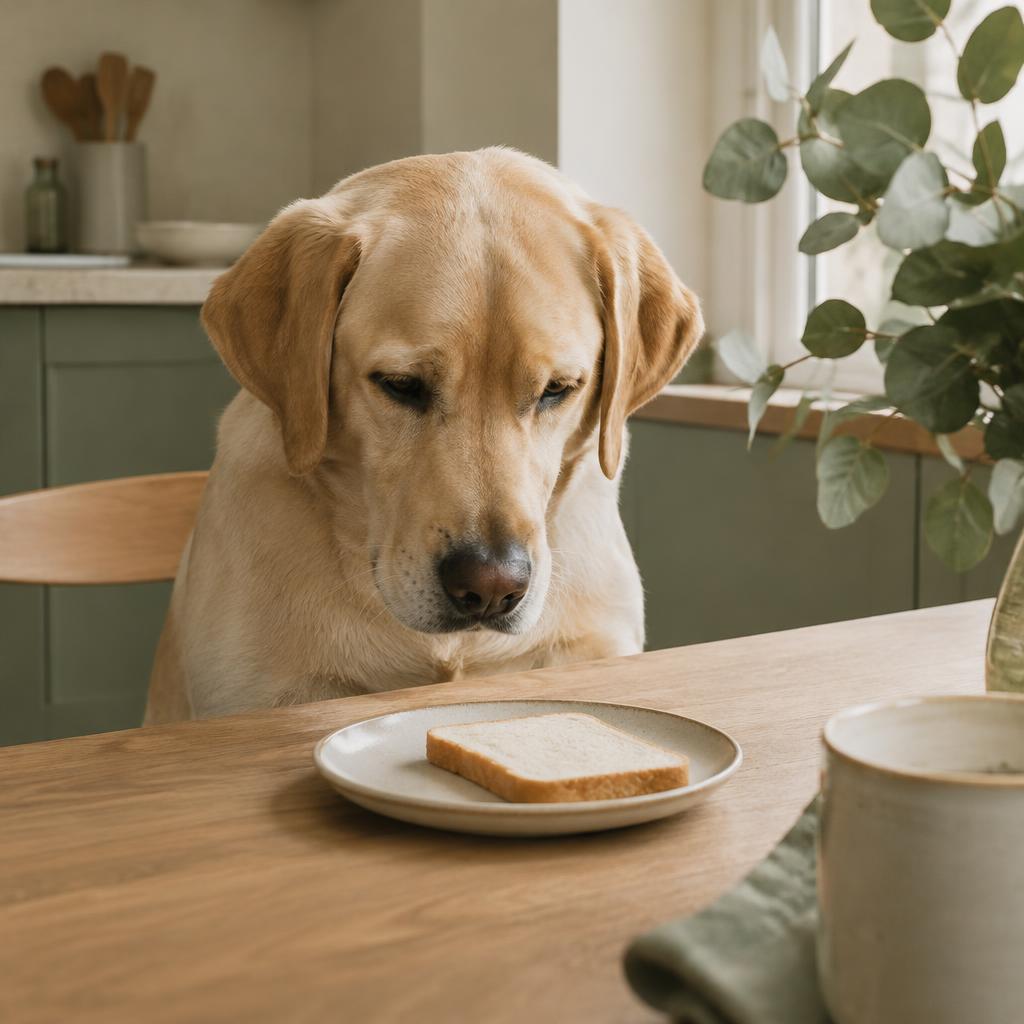
Yes, dogs can eat plain baked bread in small amounts. A corner of your toast or a cube of white bread is not toxic, most dogs digest it without trouble, and it makes a useful vehicle for hiding a tablet. Bread is mostly empty calories for a dog, though, so it belongs in the occasional-treat category rather than the daily diet.
Two forms of bread are genuinely dangerous, and they matter more than everything else in this article: raw yeast dough, which is an emergency, and raisin bread, which is toxic. Everything between those and a plain slice is a matter of reading the label.
Raw dough: the real emergency
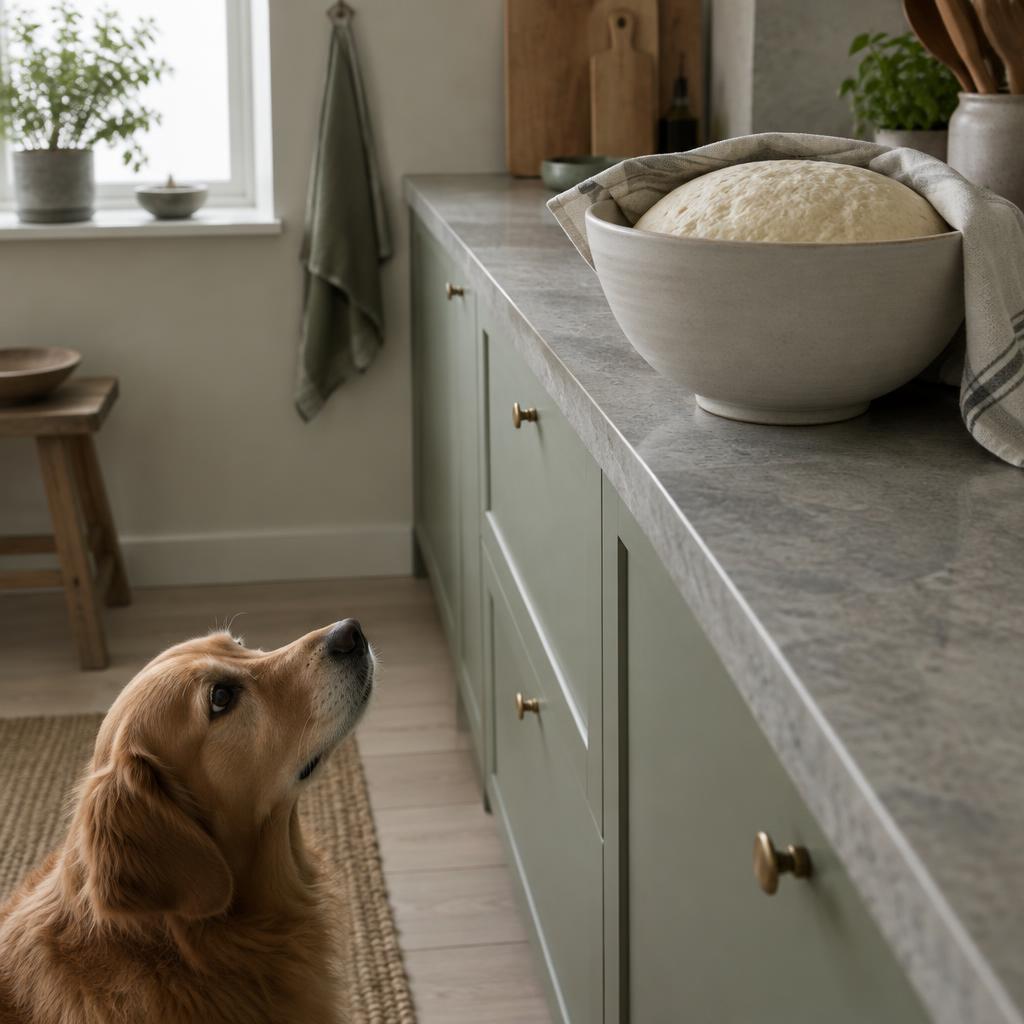
Raw bread dough is one of the most dangerous things a dog can steal from a kitchen. The yeast is still alive and active, and the warm, moist environment of a dog’s stomach is close to ideal proving conditions. The dough keeps rising inside the stomach, which can cause a dangerous distension, and the fermentation produces ethanol, which is absorbed into the bloodstream and causes alcohol poisoning.
The signs are a swollen, tight belly, retching without bringing anything up, unsteadiness, drooling and disorientation. If your dog eats raw dough, call the vet or a pet poison line immediately, even if they look fine. Do not wait for symptoms: the earlier the treatment, the better the outcome, and a severely distended stomach can become life-threatening.
Raisin bread and fruit loaves
Raisins and grapes are toxic to dogs at any dose, and there is no safe amount. Raisin bread, fruit loaf, hot cross buns, tea cakes and raisin bagels all carry them in every slice, and some dogs have developed kidney failure from surprisingly small quantities. If your dog eats any amount of raisin bread, call the vet or a poison line now, even for a single slice, and even if the dog seems well. Kidney injury can develop before a dog looks unwell, and early decontamination makes a real difference.
The same caution applies to any loaf with extras baked in: macadamia nuts are toxic, onion and garlic powder appear in some savoury breads, and xylitol turns up in some low-sugar and gluten-free loaves. The label is your friend.
Seeded, wholemeal and sourdough
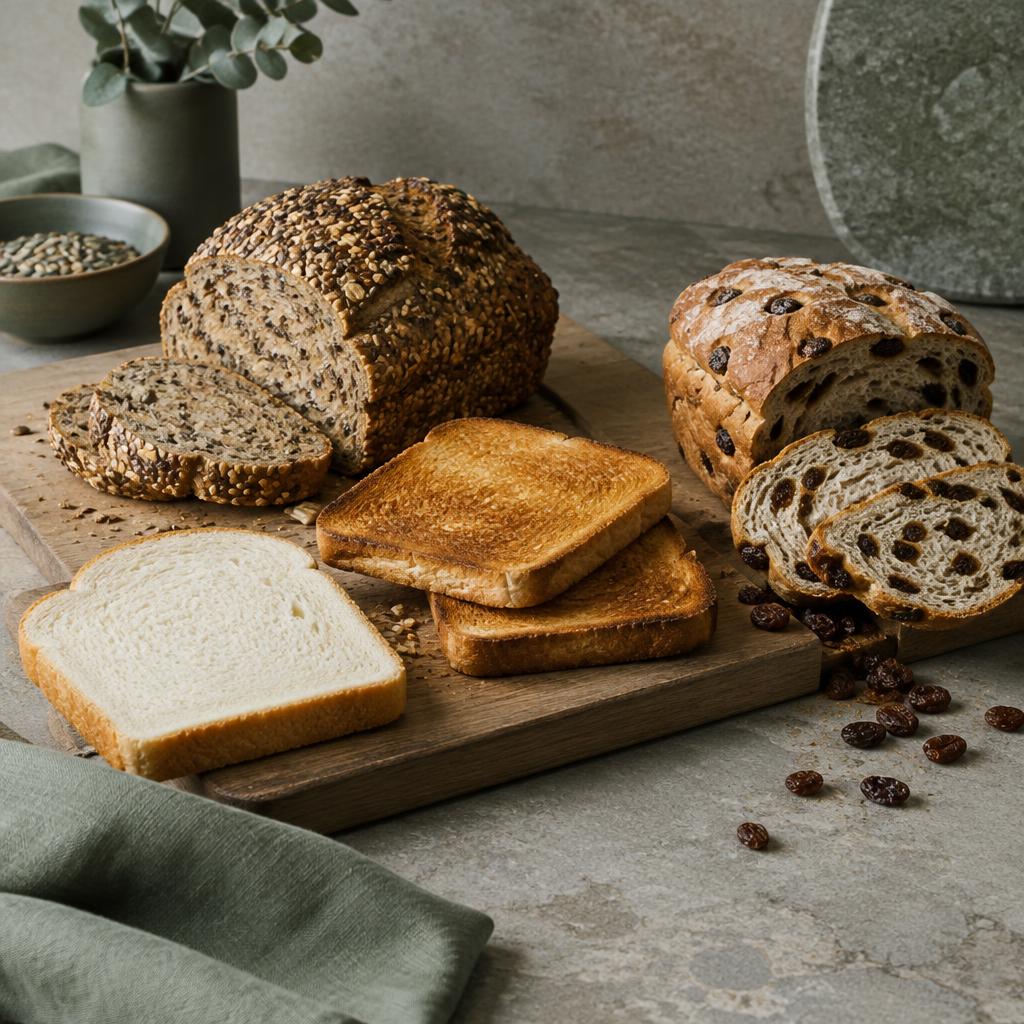
Plain seeded bread is fine for most dogs in small amounts: sesame, sunflower, pumpkin and poppy seeds are all harmless. The caution is that “seeded” and “fruited” loaves sometimes share a shelf and a recipe, so check the ingredients before sharing. Wholemeal bread is as safe as white and slightly more nutritious, though the extra fibre can loosen stools in sensitive dogs.
Sourdough is safe once baked: the fermentation that makes it sourdough happened before the oven. What is not safe is raw sourdough starter, which is active yeast culture and carries the same risks as raw dough. Keep the starter jar where the dog cannot reach it.
How much bread can a dog eat?
Bread is around 70 to 80 calories a slice and offers a dog very little nutritionally, so portions stay small and occasional:
| Dog size | Sensible serving | How often |
|---|---|---|
| --- | --- | --- |
| Toy (under 5 kg) | A couple of bite-size pieces | Occasionally |
| Small (5 to 10 kg) | A quarter of a slice | Occasionally |
| Medium (10 to 25 kg) | Half a slice | Occasionally |
| Large (25 kg plus) | One slice | Occasionally |
| Giant breeds | One to two slices | Occasionally |
“Occasionally” means a few times a week at most, inside the 10% treat allowance. Bread should never become a filler for a dog that is hungry: if your dog seems constantly hungry, that is a conversation about their main diet, not a reason for more toast.
Toast, crusts and butter
Plain toast is as safe as the bread it came from, and some dogs prefer the crunch. The toppings are where toast goes wrong: butter adds fat that can trigger pancreatitis in prone dogs, marmite is very salty, and chocolate spread is toxic. A dry corner of toast is the shareable version.
Crusts are fine too, despite the persistent myth that they are harmful. They are simply the drier, more baked part of the same loaf. The only caution is for dogs with dental disease, who may find hard crusts uncomfortable.
Bread and health conditions
A few situations change the answer:
- Wheat sensitivity: true wheat allergies are uncommon but real. If your dog itches, gets ear infections or has loose stools after wheat, skip bread and talk to your vet.
- Diabetes: bread spikes blood sugar and is best avoided for diabetic dogs.
- Overweight dogs: bread is exactly the kind of calorie-dense, nutrition-light food a dieting dog does not need.
- Pancreatitis history: plain bread itself is low in fat, but buttered bread and rich brioche-style loaves are not.
Interactive tool
Bread serving checker
Dog size and bread type in, serving guidance out.
Your plan
- For a medium dog, a serving is about half a slice of plain baked bread, inside the 10% treat allowance.
- Bread is mostly empty calories for dogs, so keep it occasional rather than daily.
- Skip butter, spreads and crusts heavy with seeds or seasoning.
- Dogs with wheat sensitivities should skip bread altogether; watch for itching or loose stools.
Plain baked bread is fine as a small treat
Baked plain bread is a safe occasional treat. Raw dough and raisin bread are the two real dangers.
My dog ate raw dough: what now?
Call the vet or a poison line immediately. Note roughly how much dough is missing and when it was eaten, keep your dog calm and still, and do not offer food or try to make them sick. Watch for a swelling belly, retching, drooling, wobbliness or disorientation while you arrange the visit, and mention all of these on the phone. This is one of the situations where an hour matters.
Using bread to give tablets
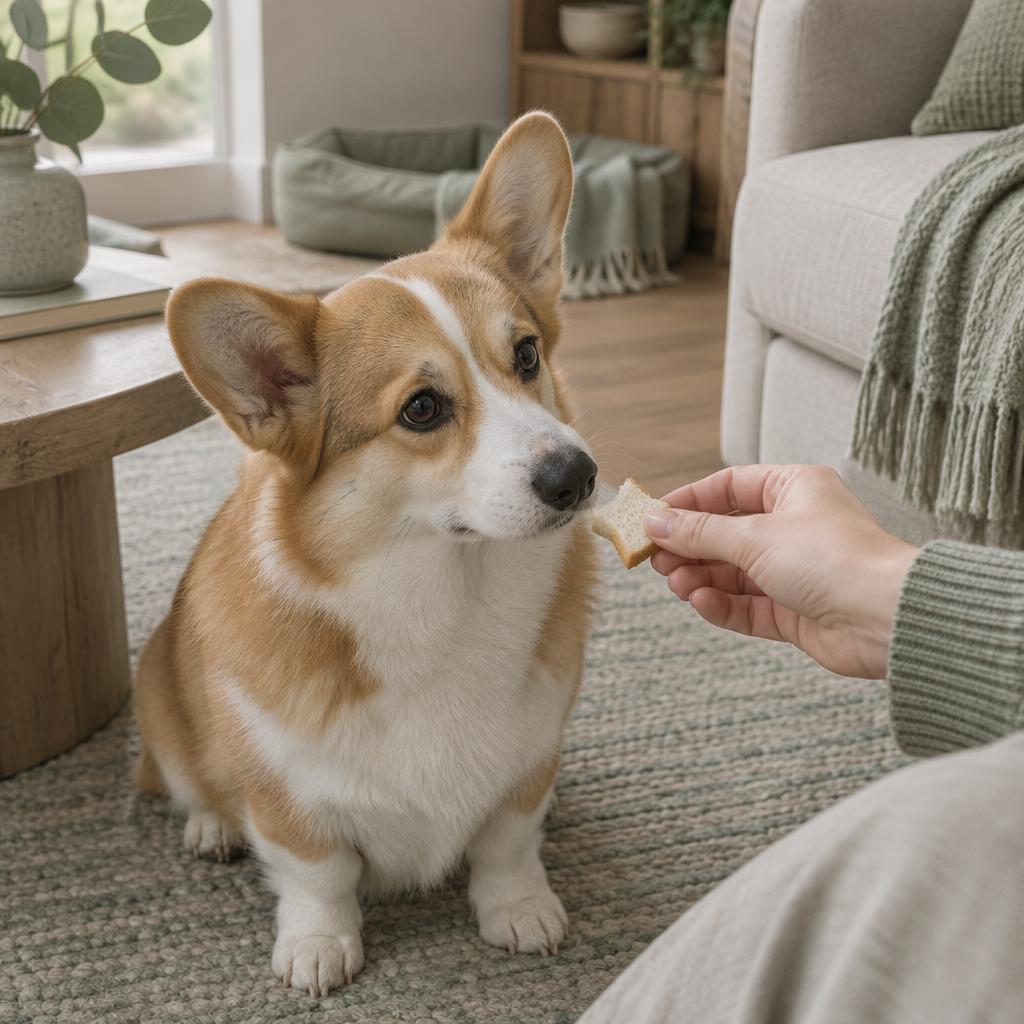
A small ball of bread is one of the classic ways to hide a tablet, and it works well for many dogs. A few practical tips: use just enough bread to wrap the tablet, give a plain “dummy” piece first so the dog swallows eagerly, and follow with another plain piece so the medicated one goes down in the middle of the sequence. Soft sandwich bread moulds around a tablet better than crusty bread. If your dog has a wheat sensitivity or is on a restricted diet, ask your vet for an alternative, such as a small piece of cheese or a commercial pill pocket, before using bread this way.
Why dogs love bread so much
Bread is soft, smells of yeast and grain, and usually arrives from your hand at the table, which makes it socially valuable as well as tasty. There is nothing wrong with that, but it does mean bread becomes a high-value reward quickly, and a dog that learns toast appears at breakfast will lobby hard every morning. Decide the house rule early, keep it consistent, and make sure everyone at the table follows it, because a dog only needs one soft-hearted family member to turn an occasional treat into a daily expectation.
When to see a vet
Treat raw dough and raisin bread as same-hour phone calls, and go straight in for a swollen belly, unproductive retching, wobbliness or collapse. For ordinary bread, see the vet if your dog shows signs of wheat sensitivity (itching, ear problems, chronic soft stools) or if a large stolen loaf causes vomiting or diarrhoea that lasts more than a day.
Bread products: a quick comparison
| Bread product | Safe for dogs? | Why |
|---|---|---|
| --- | --- | --- |
| Plain white or brown, baked | Yes, small amounts | Empty calories but harmless |
| Plain toast, no spread | Yes, small amounts | Same as the bread it came from |
| Crusts | Yes | Just drier bread |
| Plain seeded loaf | Yes, label checked | Watch for hidden raisins or onion |
| Sourdough, baked | Yes | Fermentation finished in the oven |
| Raw dough or starter | Never | Rising plus alcohol poisoning risk |
| Raisin bread or fruit loaf | Never | Raisins are toxic at any dose |
| Garlic or onion bread | Never | Allium toxicity |
| Brioche and buttery breads | Best avoided | High fat, pancreatitis risk |
The bottom line
Bread is neither a health food nor a hazard for most dogs: it is a bland, safe, occasional treat in small amounts. Keep it plain, keep it baked, keep it small, and keep raw dough and raisin bread behind closed doors. If your dog loves the ritual of sharing your breakfast toast, a dry corner is a perfectly reasonable way to include them.
For more on what belongs on the never list, read foods dogs must never eat, and for a safer carbohydrate to share, see can dogs eat rice. Food-obsessed breeds like the Labrador and the Corgi are the most likely to steal a rising loaf, so kitchen storage matters, and our portion calculator will help you keep treats within the daily allowance.
Frequently asked questions
Can dogs eat gluten-free bread?
Usually yes, but check the label carefully: some gluten-free loaves contain xylitol, which is toxic, and many are higher in fat. A plain xylitol-free slice is fine in small amounts.
Can bread help a dog with an upset stomach?
Plain bread is bland but not particularly helpful; vets more often suggest plain boiled rice and chicken for a mild upset stomach. Bread is not a treatment, just a neutral food.
Can puppies eat bread?
A small piece of plain baked bread is safe for a puppy on solid food, but puppies need nutrient-dense calories for growth, so bread should be a rare taste rather than a habit.
Is mouldy bread dangerous for dogs?
Yes. Mouldy bread can contain mycotoxins that cause tremors and seizures. If your dog eats mouldy bread from the bin, call the vet the same day, and treat tremors or wobbliness as an emergency.
Can dogs eat bread every day?
A small daily piece is unlikely to harm a healthy dog, but it adds empty calories and crowds out better food. Keep it occasional, and count it within the 10% treat allowance.
My dog ate a whole loaf. What should I do?
A whole baked loaf is mostly a stomach-upset risk: expect thirst, possible vomiting and soft stools, and phone the vet if these are severe or your dog is small. If the loaf contained raisins, or was still raw dough, call the vet immediately instead.
Sources
- American Kennel Club, Can Dogs Eat Bread?, akc.org
- Pet Poison Helpline, Bread Dough Toxicity, petpoisonhelpline.com
- VCA Animal Hospitals, Bread Dough (Ethanol) Poisoning in Dogs, vcahospitals.com
- PDSA, Foods to avoid feeding your dog, pdsa.org.uk
- Merck Veterinary Manual, Ethanol Toxicosis in Animals, merckvetmanual.com
Questions people actually ask
Can dogs eat gluten-free bread?
Usually yes, but check the label carefully: some gluten-free loaves contain xylitol, which is toxic, and many are higher in fat. A plain xylitol-free slice is fine in small amounts.
Can bread help a dog with an upset stomach?
Plain bread is bland but not particularly helpful; vets more often suggest plain boiled rice and chicken for a mild upset stomach. Bread is not a treatment, just a neutral food.
Can puppies eat bread?
A small piece of plain baked bread is safe for a puppy on solid food, but puppies need nutrient-dense calories for growth, so bread should be a rare taste rather than a habit.
Is mouldy bread dangerous for dogs?
Yes. Mouldy bread can contain mycotoxins that cause tremors and seizures. If your dog eats mouldy bread from the bin, call the vet the same day, and treat tremors or wobbliness as an emergency.
Can dogs eat bread every day?
A small daily piece is unlikely to harm a healthy dog, but it adds empty calories and crowds out better food. Keep it occasional, and count it within the 10% treat allowance.
My dog ate a whole loaf. What should I do?
A whole baked loaf is mostly a stomach-upset risk: expect thirst, possible vomiting and soft stools, and phone the vet if these are severe or your dog is small. If the loaf contained raisins, or was still raw dough, call the vet immediately instead.
Sources
Breeds mentioned


Put it into practice
Read next
Can Dogs Eat Oatmeal? Cooked, Raw and Flavoured
Plain oatmeal cooked in water is safe for dogs in small servings and its soluble fibre can help mild diarrhoea. Avoid flavoured sachets, raw oats and porridge made with milk or sugar.


