
Why Do Dogs Wag Their Tails? Reading the Signals
A wagging tail is arousal, not happiness. Read height, speed and stiffness together with the body, and the same wag turns out to be friendly, anxious or a warning.
The SniffScroll desk
Dog care editors
Published 9 October 2026
Reviewed against RVC, PDSA and VCA guidance
The short version
- A wagging tail broadcasts arousal, and only the height, speed and stiffness plus the body reveal which kind.
- A loose, fast, whole-body wag is friendly; a stiff, high, fast wag on a still body is a warning.
- A low slow wag usually means uncertainty, not sadness, and the dog should be allowed to finish processing.
- A wagging dog can bite: children are bitten most often by familiar dogs whose wags were misread.
- Learn each breed's natural tail position first, because baselines differ enormously.
Every dog owner believes they can read a wag. It is the one piece of dog language everyone thinks they speak, and it is also the single behaviour most often misread, sometimes expensively. Children reach for wags. Adults reach for wags. Emergency rooms have treated the result.
The mistake is understandable. A wag is one of the most visible signals a dog produces, and it genuinely does mean something. What it does not mean, on its own, is happy. A wag announces arousal, the height and speed and stiffness of it, plus everything the rest of the body is doing, say which kind of arousal. Learn to read the whole sentence and the tail becomes one of the most useful signals a dog has.
Why do dogs wag their tails? The short answer
Dogs wag their tails to broadcast emotional arousal to other dogs and to people. The tail does not carry the message alone: height, speed, stiffness, direction and body posture together determine whether the message is friendly, uncertain or a warning. A wagging dog can absolutely bite, and the statistics on children bitten by familiar dogs bear that out.
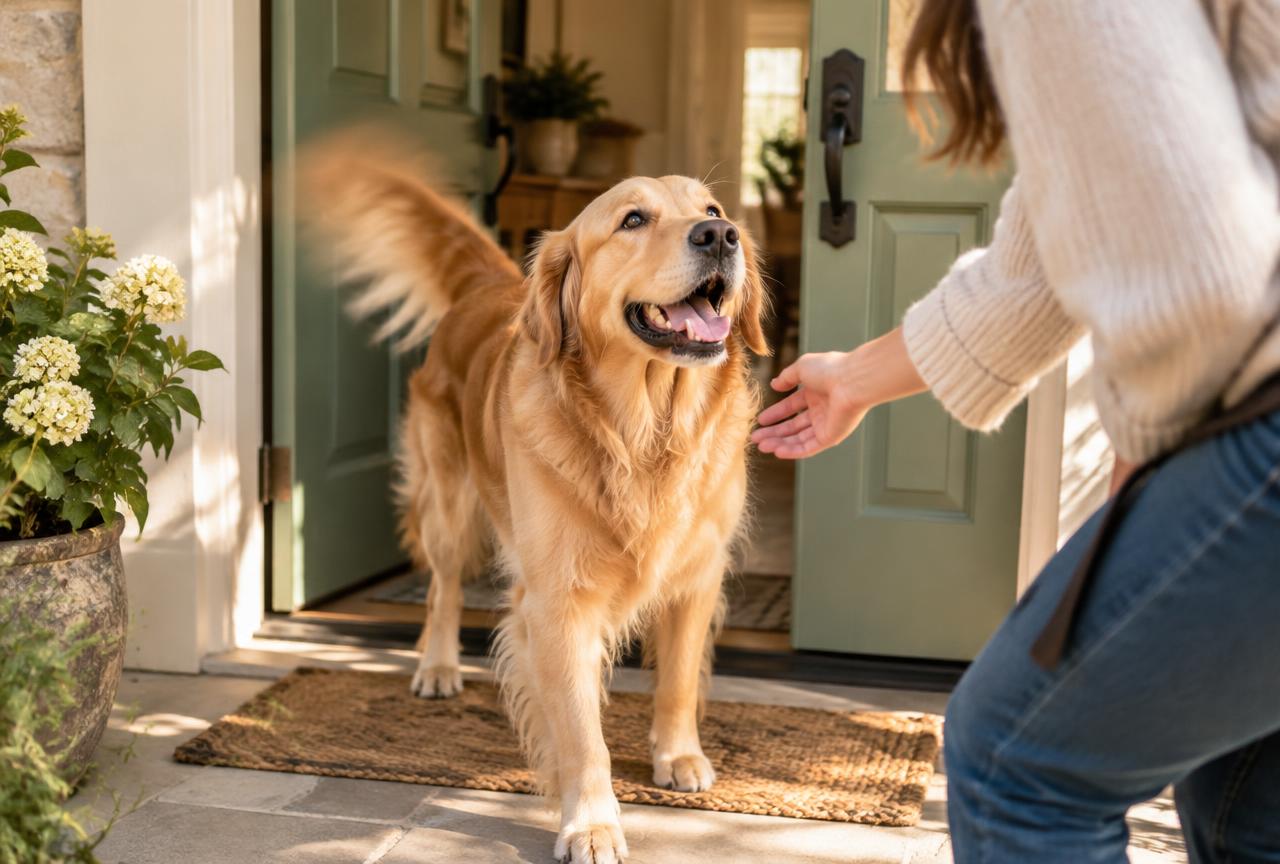
The wag evolved as a social signal, which is why dogs rarely wag when alone. Studies comparing tail wags to owners and to unfamiliar dogs even found wags bias more strongly to one side when a dog sees something it wants to approach, and to the other side when it sees something it wants to avoid, a lateral pattern consistent with how the two brain hemispheres handle approach and withdrawal. You do not need the neuroscience to use the practical version, but it is satisfying to know the tilt is real.
The science of the wag: height, speed and stiffness
Three properties carry most of the message.
Height is the dog's confidence level. A high tail, over the back, is a confident, possibly confrontational signal. A low tail is uncertainty or appeasement. A tucked tail is fear. Note that natural position varies enormously by breed: a Whippet's tail hangs low at rest, while a Spitz carries high, so you must know the baseline before you can read the change.
Speed is the intensity. Fast, wide sweeps mean strong arousal, which can be delight or agitation. Slow sweeps mean milder, more uncertain emotion.
Stiffness is the tell that separates the two. A loose wag recruits the whole rump; the back end wiggles and the dog looks like it is wagging itself. A stiff wag is small, tight and machine-like, and it belongs to a dog whose muscles are loaded. Loose plus fast plus wiggly is the friendliest combination a dog can offer.
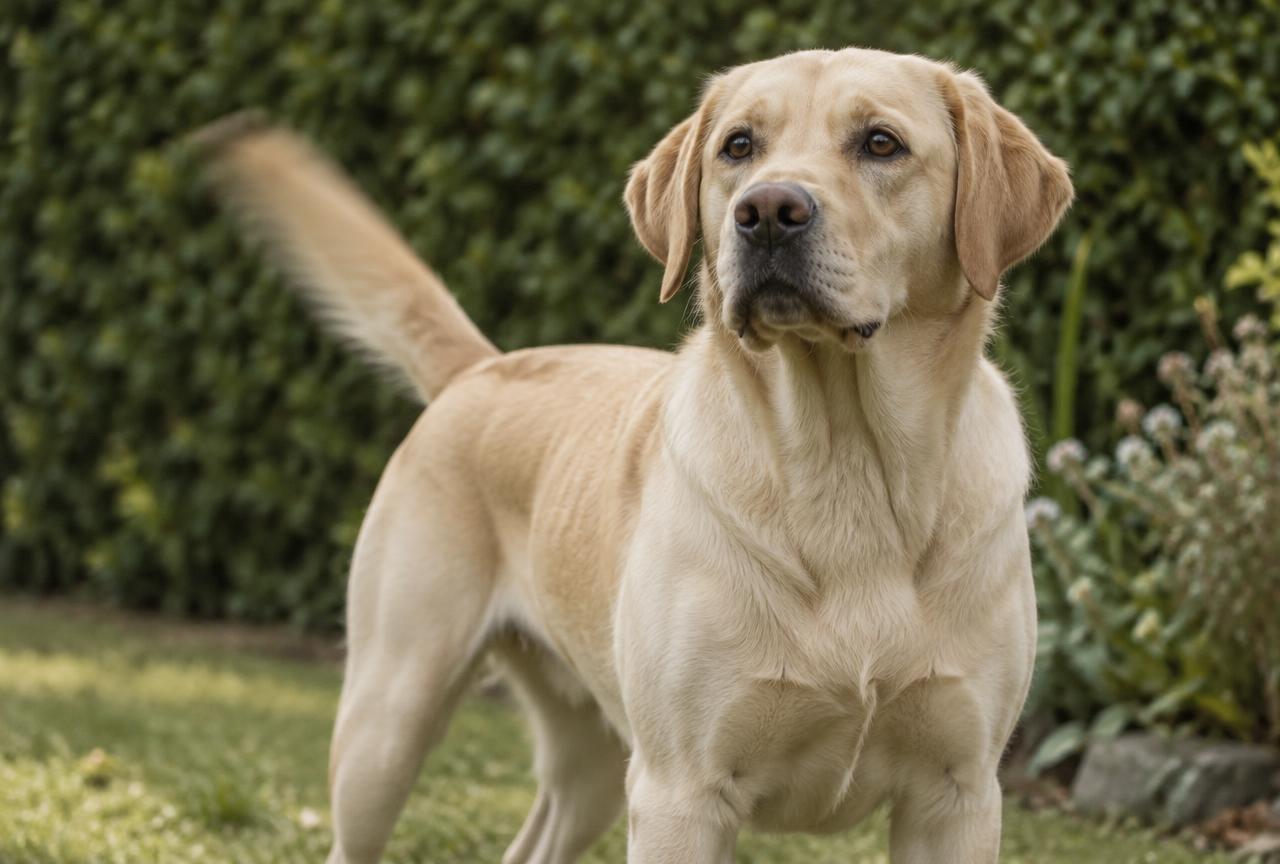
Direction deserves a note for owners who watch closely: the left-right bias mentioned above is real but subtle, and in practice the stiffness test does more work than the side test. Watch what the dog does next rather than which way it drifted.
The low slow wag: uncertainty, not misery
The wag that surprises most owners is the low, slow one, because it appears in situations that are not unhappy at all. A dog meeting a new person, approaching a strange dog, or working out whether the stranger at the door is friend or threat, often offers a low, hesitant wag: I am not sure yet.
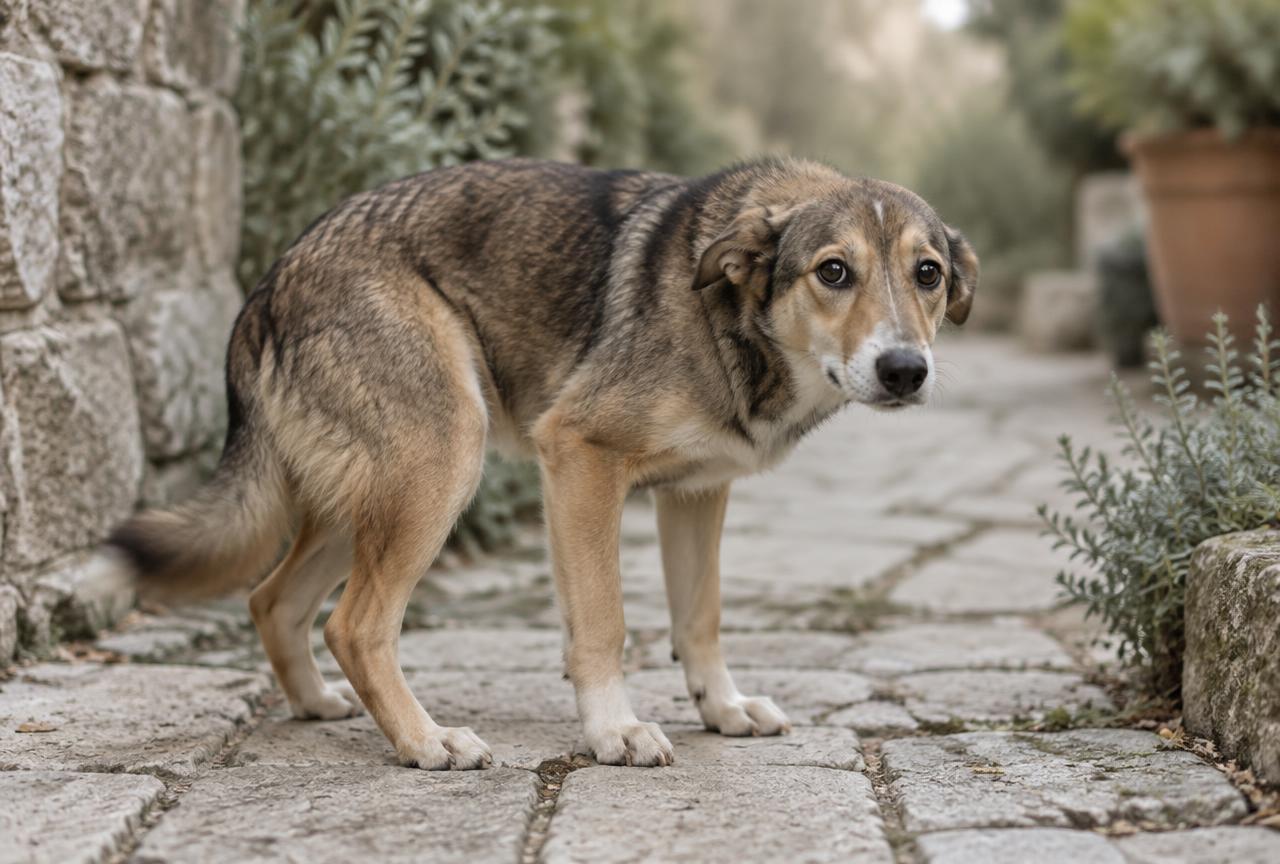
The response that works is to let the dog finish processing. Do not crouch and reach. Give it a second, let it choose to approach, and reward any choice it makes to come closer. Dogs pushed through this moment, picked up, petted or pulled forward while still uncertain, learn that greetings are something done to them, and the uncertainty tends to grow rather than fade.
A low wag with a genuinely frightened body, crouched, backing away, ears pinned, is different again: this is appeasement, the dog's way of saying I mean no harm. It is not an invitation. It is a request for space, and granting it is the kindest response.
The stiff wag: the one that fools everyone
Here is the trap that causes most of the bites. A high, stiff, fast wag, on a body that is still and tall, with a hard stare and closed mouth, is not friendly. It is the wag of a dog that is highly aroused and deciding something, and it is commonly misread by adults and children as excitement.
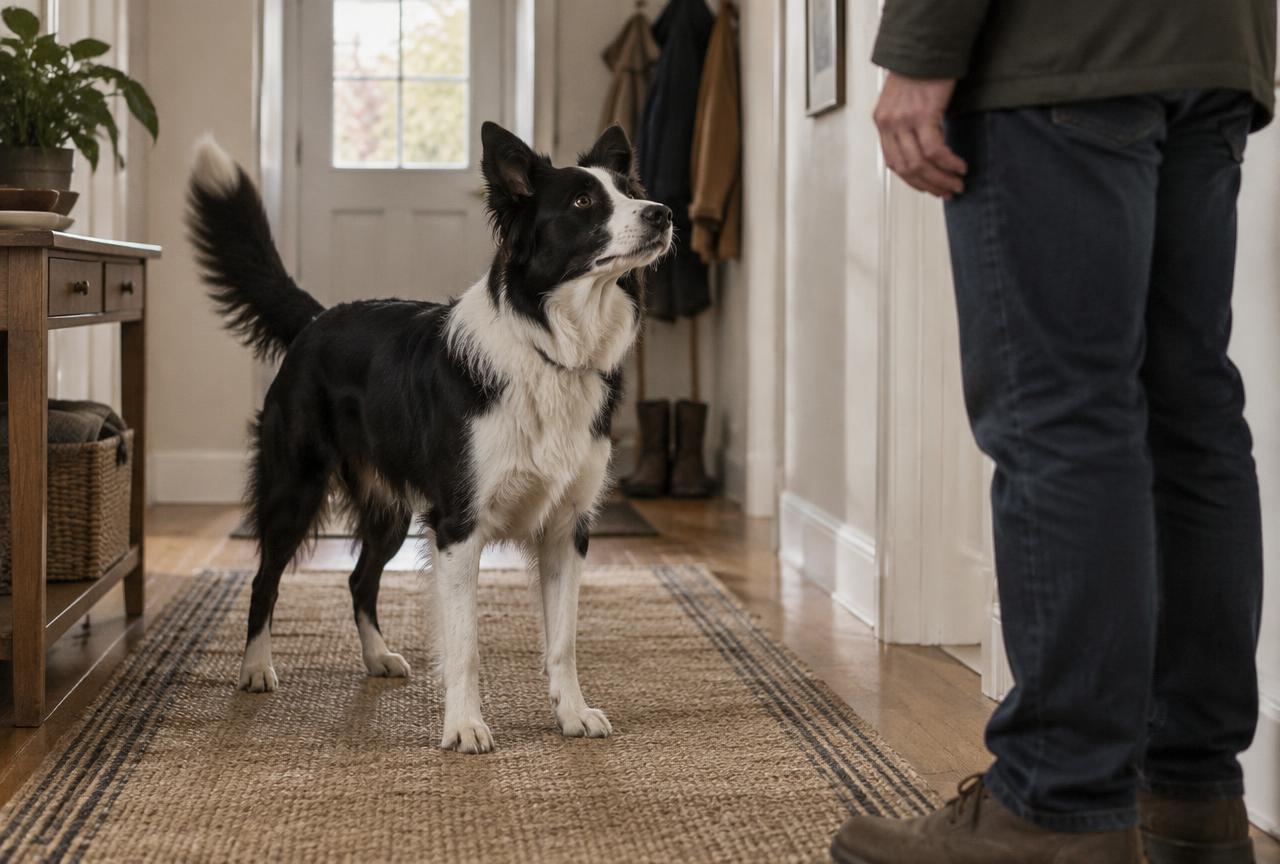
Context makes the difference readable. The friendly version comes with a loose body, soft eyes, an open mouth and weight shifting happily. The warning version comes with a still body, fixed gaze, and often a tail that wags in tight little arcs at the very top of its range. If you see the tight version with a still body, step back, do not reach, and give the dog room to settle. Nothing in this article is a substitute for that reflex.
Why a wagging dog can still bite
The bite statistics around wagging dogs come down to a single misattribution: people treat the wag as the message, when it is only the delivery. Aroused dogs, whether aroused by delight or by conflict, wag. Conflict arousal, frustration, fear and guarding all produce wags, frequently fast ones.
Add one more complication: many dogs wag while showing stress signals, lip licking, yawning, turning the head away, particularly during greetings. The wag is saying I am awake and reacting; the stress signals are saying I am not comfortable. Reading only the tail misses the vote that matters.
This is also why our article on how to stop a dog barking spends its opening on the same principle: barking and wagging are both broadcasts, and neither carries its own meaning. The situation supplies it.
Reading tails with the whole body
Use the table as a cheat sheet. No single row is ever conclusive on its own; the combination is.
| Tail | Body | Likely state | Your move |
|---|---|---|---|
| --- | --- | --- | --- |
| High, fast, loose | Wiggly, soft eyes, open mouth | Happy greeting | Approach normally, keep it brief |
| High, fast, stiff | Still, hard stare, closed mouth | High arousal, possible conflict | Give space, do not reach |
| Middle, slow, loose | Curious, ears forward | Interested, deciding | Let the dog approach you |
| Low, slow | Lowered, hesitant | Uncertain | Wait, no sudden moves |
| Low, stiff | Crouched, backing away | Fearful, appeasing | Step back, grant space |
| Tucked, still | Cowering, trembling | Frightened | Remove the trigger, never pet |
| Rapid helicopter | Whole hindquarters involved | Delight, usually for a favourite person | Enjoy it |
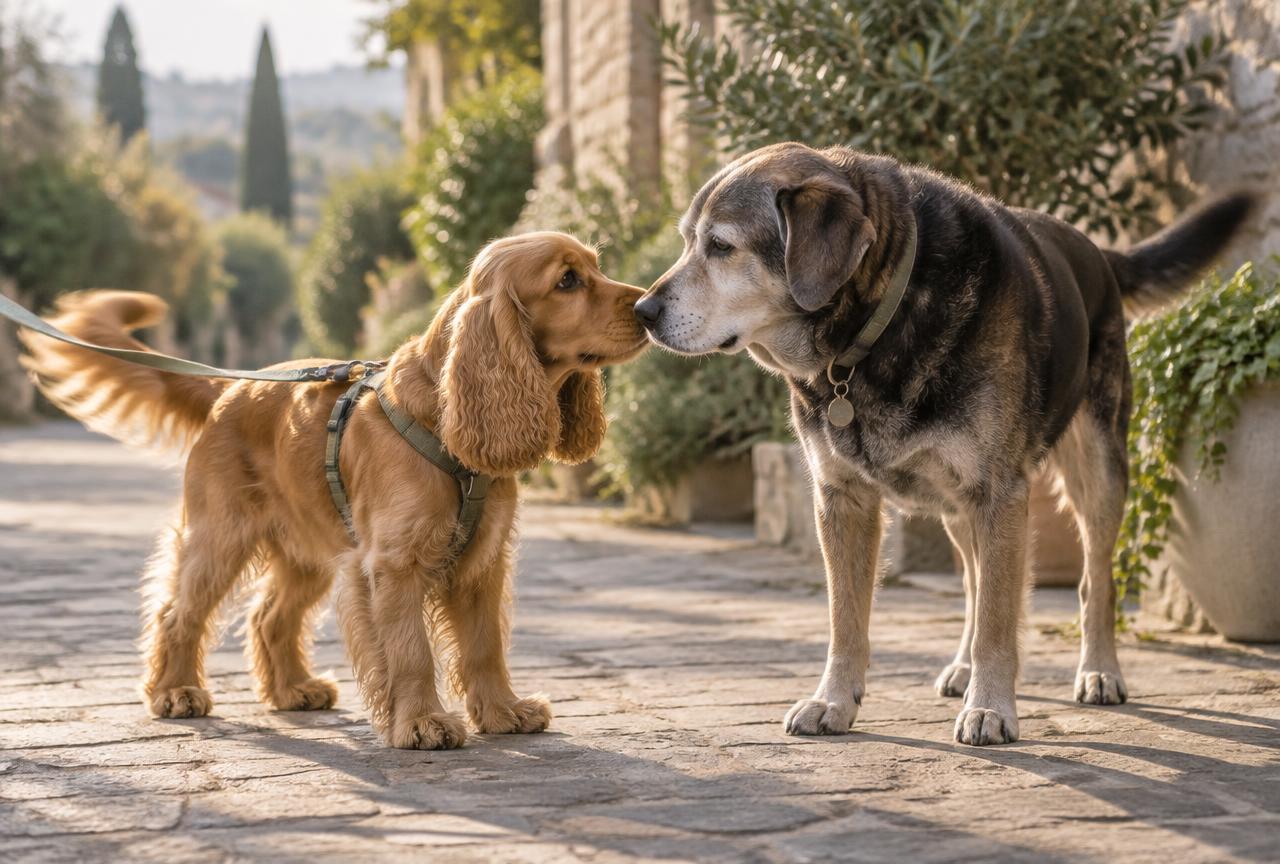
Between dogs, the wag is a live negotiation. Loose wags invite play; stiff high wags advertise status; a dog that freezes mid-wag is pausing a decision. Owners who let greetings run a few seconds longer than feels natural often watch dogs settle their own politics far better than any human intervention would have.
Teaching children the tail rules
Children are the group most often bitten by familiar dogs, and the wag is usually involved, so the house rules are worth stating plainly.
- A wagging tail is not permission. Always ask the owner, and always let the dog choose to approach.
- Never take a toy or food away from a dog that is wagging. Guarding arousal wags too.
- If the tail is high and stiff, or the body is still, stop and step back.
- Pet the chest or side, never reach over the head, and stop if the dog moves away.
- A dog that is eating, sleeping or chewing needs no greeting at all.
When to call your vet
This article is about communication, but two tail problems look like behaviour and are not. Limber tail, a painful sprain of the tail muscles after heavy swimming or hard exercise, presents as a droopy, flaccid tail that the dog cannot lift, often after a weekend of water play; it looks sad but is genuinely painful and responds to rest and anti-inflammatories. A tail that is suddenly limp, or a dog that yelps when its tail is touched, needs a check. Constant tail chasing or tail biting, particularly in a dog that has not done it before, can reflect pain, anal gland problems or compulsive behaviour, and deserves a conversation rather than a video for the group chat.
How to read any dog in four steps
- 1Find the baseline. Learn the breed's natural tail position first, because a Whippet's resting tail is a Husky's alarm signal.
- 2Read the change. Whatever the position, ask whether it is higher, lower, faster or stiffer than this dog's usual.
- 3Add the body. Loose and wiggly softens every signal; still and hard hardens every signal.
- 4Act on the combination, not the tail. Friendly plus loose invites approach. Stiff plus still invites space. Uncertain invites patience.
Interactive · tail signal reader
What is that wag really saying?
Describe the tail and the body around it, and we will give you the most likely mood and what to do.
A relaxed, happy dog
Mid-height, fast and loose with a wiggly body: this is the classic friendly wag. Approach normally, keep greetings soft and let the dog come to you.
Never rely on the tail alone. Ears, eyes, mouth and weight distribution finish the sentence the tail starts.
The tail reader works through the same four properties: set the height, speed, stiffness and body posture you are seeing, and it returns the likely mood with the response that fits it.
A tail-reader's checklist
- I know this dog's natural tail position before judging any wag.
- I checked the body, eyes and mouth before deciding what the wag means.
- I never assume a wag means permission, especially with children present.
- I gave space the last time I saw a stiff, still-bodied wag.
- I let an uncertain dog finish processing before touching it.
A wag is a broadcast, not a verdict. Height sets the confidence, speed sets the intensity, and stiffness tells you which direction the arousal is heading.
The verdict
The wag is the most useful signal a dog offers and the easiest to over-read. Fast and loose with a wiggly body: enjoy it. Low and slow: give it a moment. High and stiff on a still body: step back, every time, and teach the children the same rule. Do that, and the tail becomes what it was designed to be, an early-warning system that makes dogs easier to live with, not harder.
When to call a vet or behaviourist: a suddenly limp or painful tail, constant tail chasing or biting, and any dog whose stiff wags regularly escalate toward snapping during greetings. Those need professional eyes; the rest needs practice.
Questions people actually ask
Why do dogs wag their tails?
Wagging is a social broadcast that tells other dogs and people how aroused the dog is. The tail does not carry the meaning alone: height, speed, stiffness and the body around it together determine whether the message is friendly, uncertain or a warning.
Do dogs wag their tails when they are happy?
Often, yes, and the friendly version is fast, loose and accompanied by a wiggly body, soft eyes and an open mouth. But dogs also wag when frightened, frustrated or conflicted, which is why a wag alone is never proof of happiness. Always read the body with the tail.
Can a wagging tail mean aggression?
Yes. A high, stiff, fast wag on a still, hard-staring body is a high-arousal warning signal and one of the most misread signals in dog behaviour. It calls for space, not a fuss. Never reach for a dog whose wag is tight and machine-like while the body is frozen.
Why does my dog wag its tail when I scold it?
The wag during scolding is appeasement arousal, not agreement. Dogs in an uncomfortable social moment often wag while showing stress signals such as lip licking, turning away or yawning. It means the dog is reacting to the tension, not that it understands or welcomes the telling off.
What does a low, slow wag mean?
Usually uncertainty. The dog is processing a new person, dog or place and has not decided yet. Give it a second, avoid crouching and reaching, and let it choose to approach. If the low wag comes with a crouched, backing-away body, the dog is frightened and wants space.
Why do dogs wag their tails in their sleep?
Sleep wags accompany dreaming, most often during the rapid-eye-movement phase. They are involuntary and no more meaningful than human sleep talking. A sleeping dog that wags, twitches or paddles is simply processing the day, and should be left to it.
Sources
- Behavioral problems of dogs, Merck Veterinary Manual
- Dog behaviour advice, RSPCA
- Dog behaviour resources, VCA Animal Hospitals
- Dog advice, Dogs Trust
Breeds mentioned

Labrador Retriever
Britain's most popular family dog: biddable, food driven and built for an active household.

Border Collie
The world's most capable herding mind, needing an equally capable owner to match it.
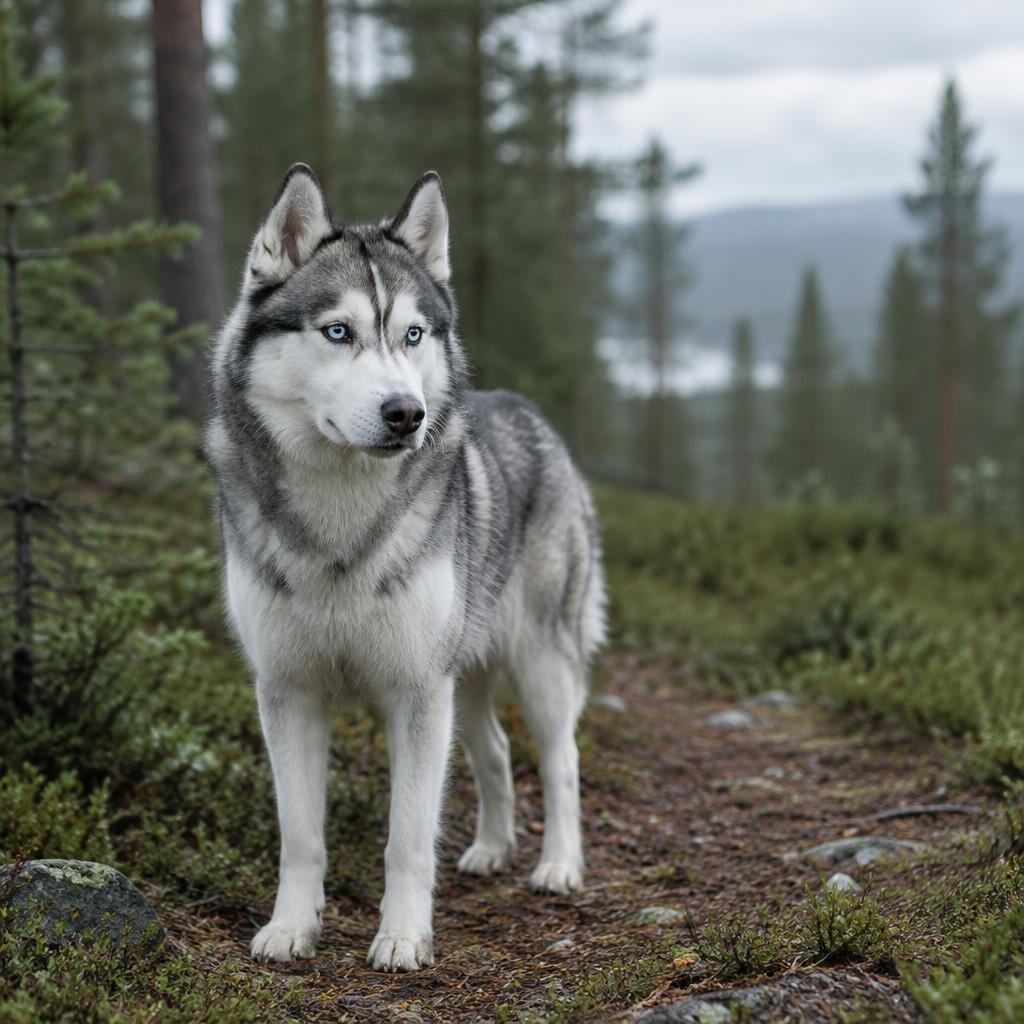
Siberian Husky
A striking, athletic sled dog built for distance running and ill suited to a quiet life in the garden.
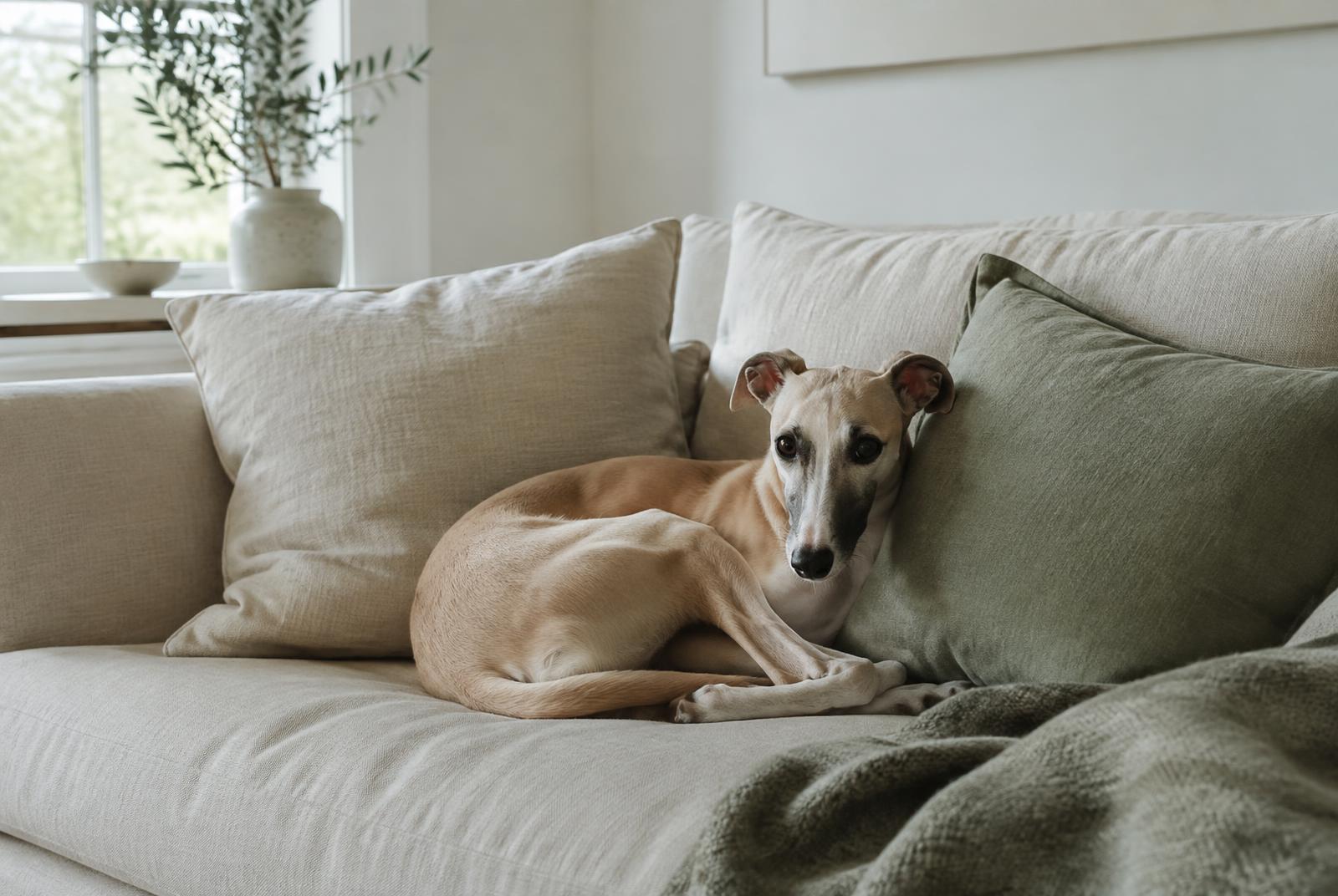
Whippet
A 35mph sprinter wrapped around a dedicated couch potato, happiest after a short burst of speed followed by hours of sleep.
Put it into practice
Read next
Why Do Dogs Roll in Poop? The Instinct Explained
Why dogs roll in the worst smells they can find, what the behaviour is really about, and how to prevent it or at least clean up well afterwards.


