Hound group
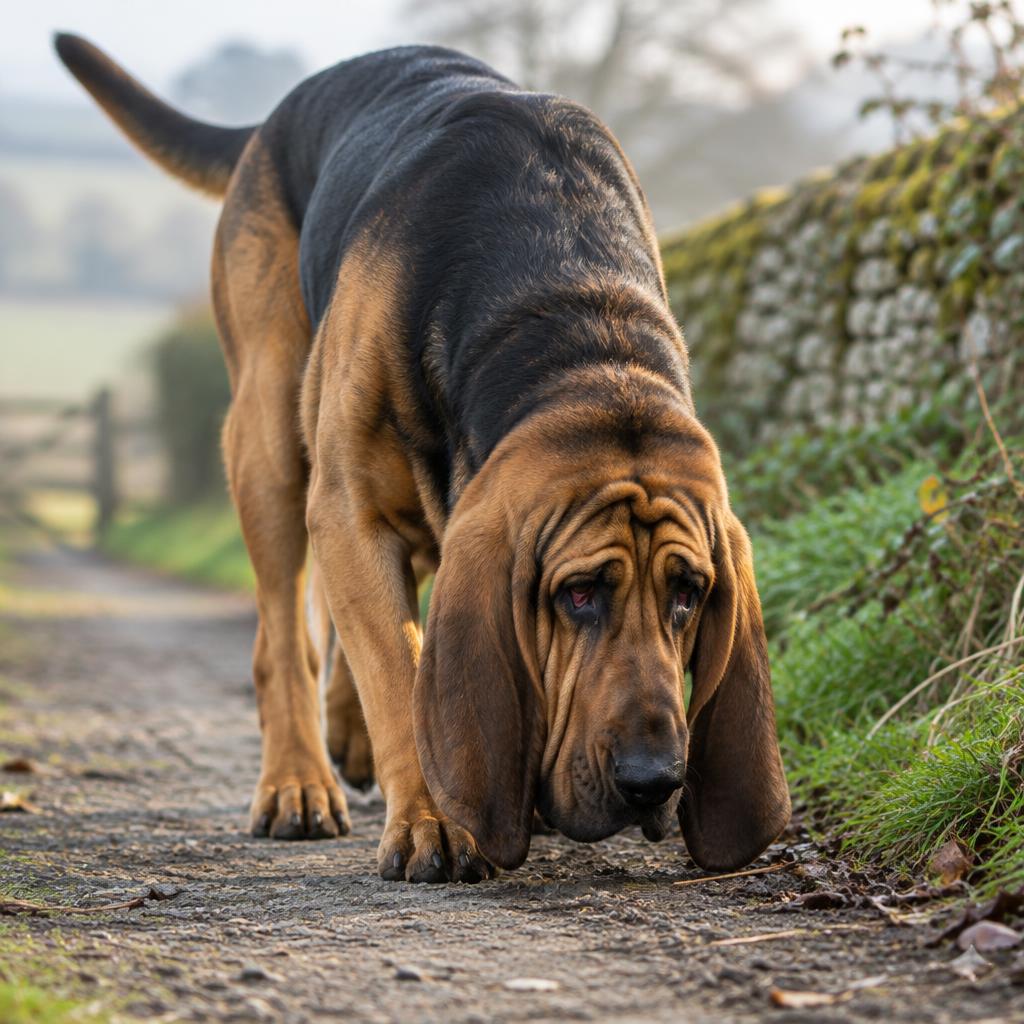
Developed in medieval Europe by monks for tracking game by scent, the Bloodhound was refined in Britain and later used by law enforcement worldwide for man-trailing, thanks to a sense of smell so reliable it is accepted as evidence in some courts.
Bloodhound
The Bloodhound is a gentle giant with the finest nose in the dog world, happiest following a trail on a long line. Drool, deep baying and daily ear care are the price of living with this devoted, short-lived hound.
Reviewed by the SniffScroll editorial desk
The world's best nose on four legs: a gentle giant built entirely for the trail.
The short version
- An unmatched sense of smell means recall is unreliable once a trail is picked up.
- Copious drooling is a daily, unavoidable feature of life with the breed.
- Deep baying and howling make this a poor fit for close neighbours or flats.
- Long ears and deep wrinkles need daily checking to prevent infections.
- A deep chest brings a real risk of bloat, and lifespan is shorter at 7 to 10 years.
- Weight
- 36 to 50 kg
- Height
- 58 to 69 cm
- Lifespan
- 7 to 10 yrs
- Size
- Large
- Group
- Hound
- Coat
- Short, dense, weather-resistant coat in black and tan, liver and tan, or red.
- Grown male
- 41 to 50 kg
- Grown female
- 36 to 45 kg
- Years to full size
- about 2
- One-off setup
- €550 to 1300
Get one if…
- Owners interested in scent work, tracking or man-trailing as a hobby
- Households with secure, fully fenced gardens
- People who do not mind drool on walls and furniture
- Families with children who can be gentle around a very large dog
- Owners who want an affectionate dog content with low-key indoor life
Think again if…
- Anyone wanting a dog reliably off-lead in open or unfenced spaces
- Flats or homes with close neighbours sensitive to baying and howling
- Owners hoping for a highly obedient or quickly trainable dog
- Households unable to manage daily ear and wrinkle cleaning
- Anyone unwilling to tolerate frequent drool on furnishings
Trait profile
The Bloodhound's nose comes first in everything it does, meaning recall and off-lead freedom will always take second place to the pull of a trail.
Space & setup. A Bloodhound needs a secure, well-fenced garden rather than a large house. Indoors the breed is calm and happy with modest space, but any outdoor area must be escape-proof given the strength of the breed's scenting instinct.
Allergies. The Bloodhound's short coat sheds moderately year-round, and heavy drool is a far bigger daily consideration than hair for anyone with allergies or a house proud about furnishings.
Living with a Bloodhound
The Bloodhound is a scenting specialist whose trailing ability is unmatched in the dog world, happiest with a nose to the ground and a harness on. Gentle and patient at home, this is a breed defined by drool, deep baying, and a short but devoted life.
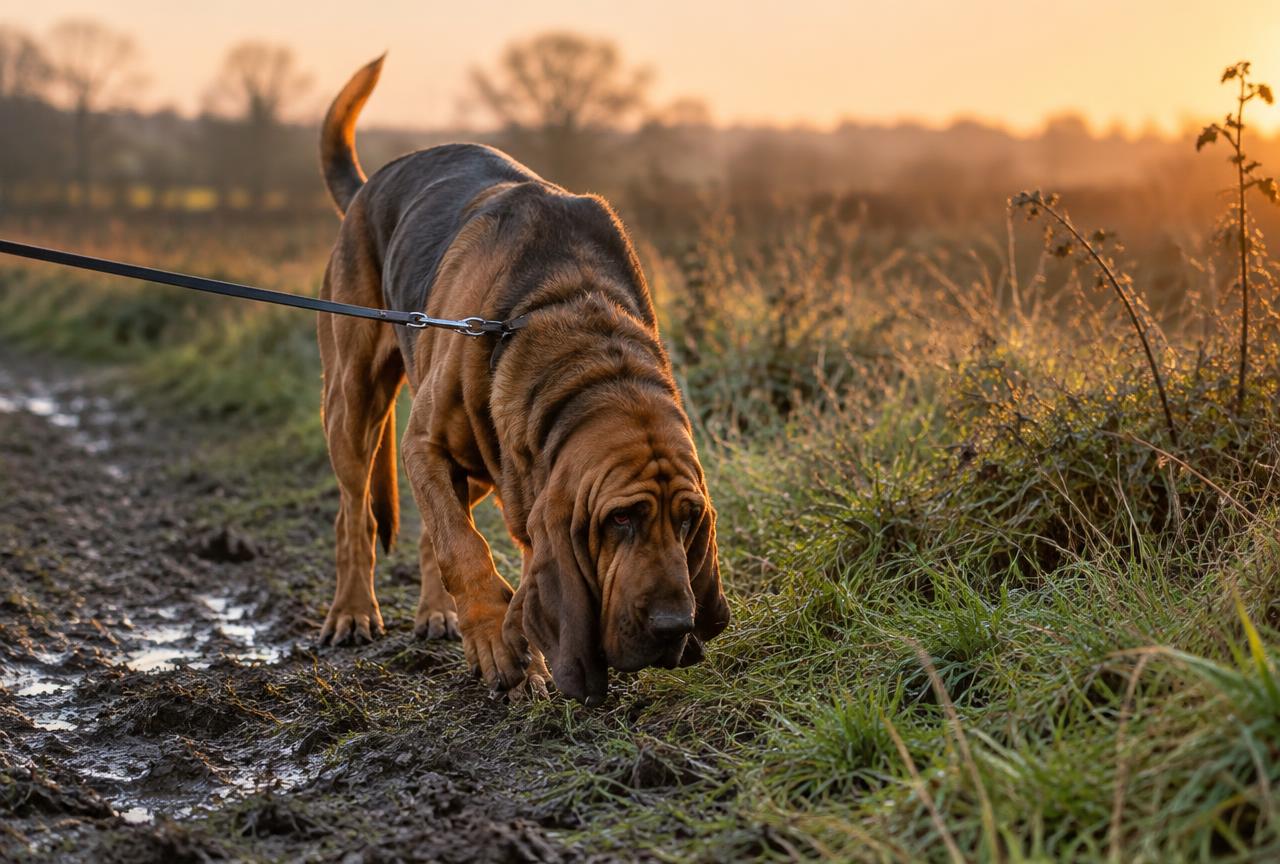
Few breeds are as singularly defined by one sense as the Bloodhound. This is a dog built, quite literally from its loose skin and long ears to its deep nasal folds, to capture and hold a scent for hours, sometimes days, across many miles. The Bloodhound's trailing ability is so renowned that its findings have been used as evidence in criminal courts, and search and rescue teams around the world still rely on the breed's extraordinary nose. For anyone considering a Bloodhound, understanding this single fact changes everything about how the breed should be managed, trained and exercised.
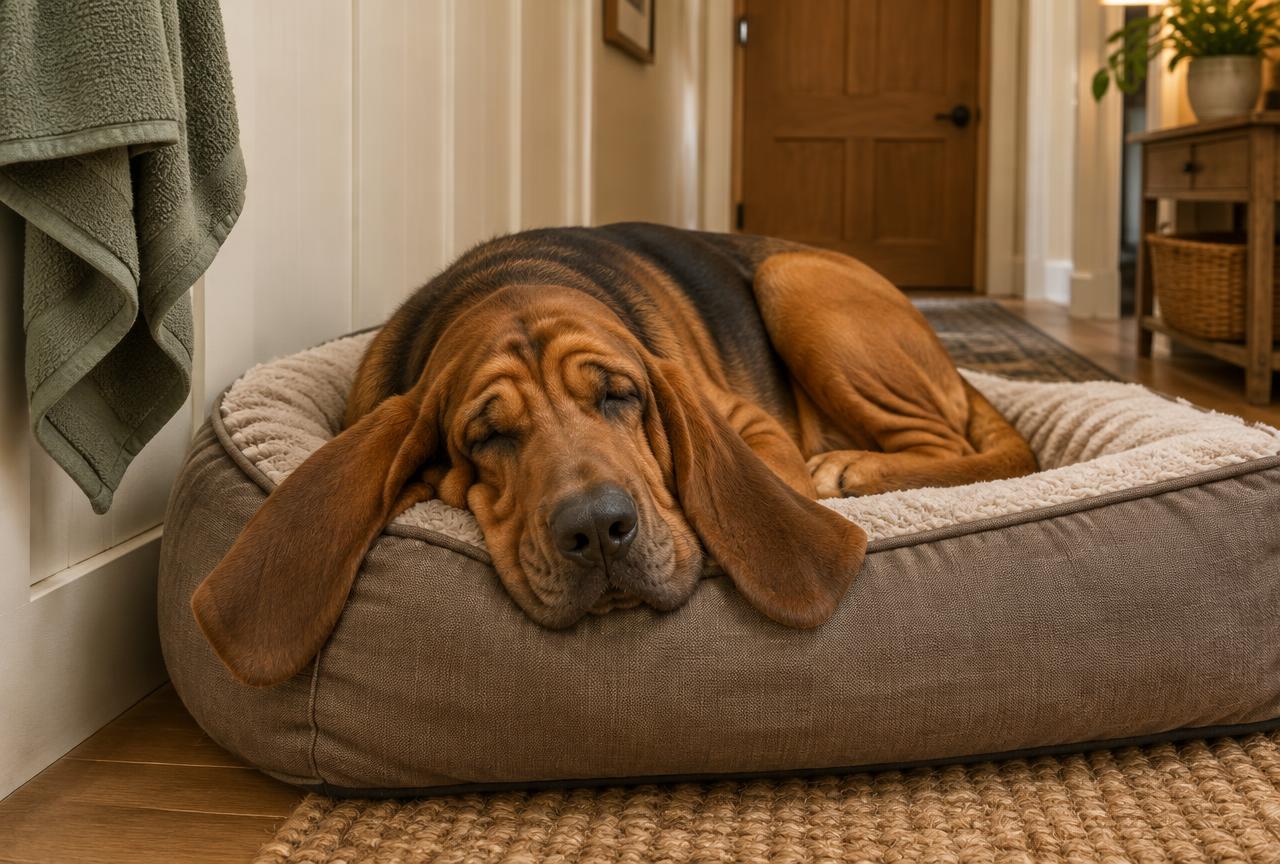
At home, the Bloodhound is a surprisingly calm and gentle presence. Energy levels indoors are low; this is not a dog that bounces off furniture or demands constant games. Instead, expect a large, affectionate hound who leans against your legs, follows you from room to room, and settles with a contented groan once the sofa has been claimed. Bloodhounds are patient with children, rarely snappy, and generally tolerant of being clambered on, though their sheer size means supervision with very young children is sensible simply to avoid accidental knocks. The flip side of this gentle nature is a stubborn independence that makes training a genuine challenge. A Bloodhound is food-motivated but easily outcompeted by an interesting smell, and recall reliability drops to near zero the moment a scent trail is picked up. Many owners describe their dog as becoming temporarily deaf once nose-down on a trail, unable to hear even an excited call from a few feet away. Secure fencing and the permanent use of a long line outdoors are not optional extras for this breed; they are the baseline of responsible ownership.
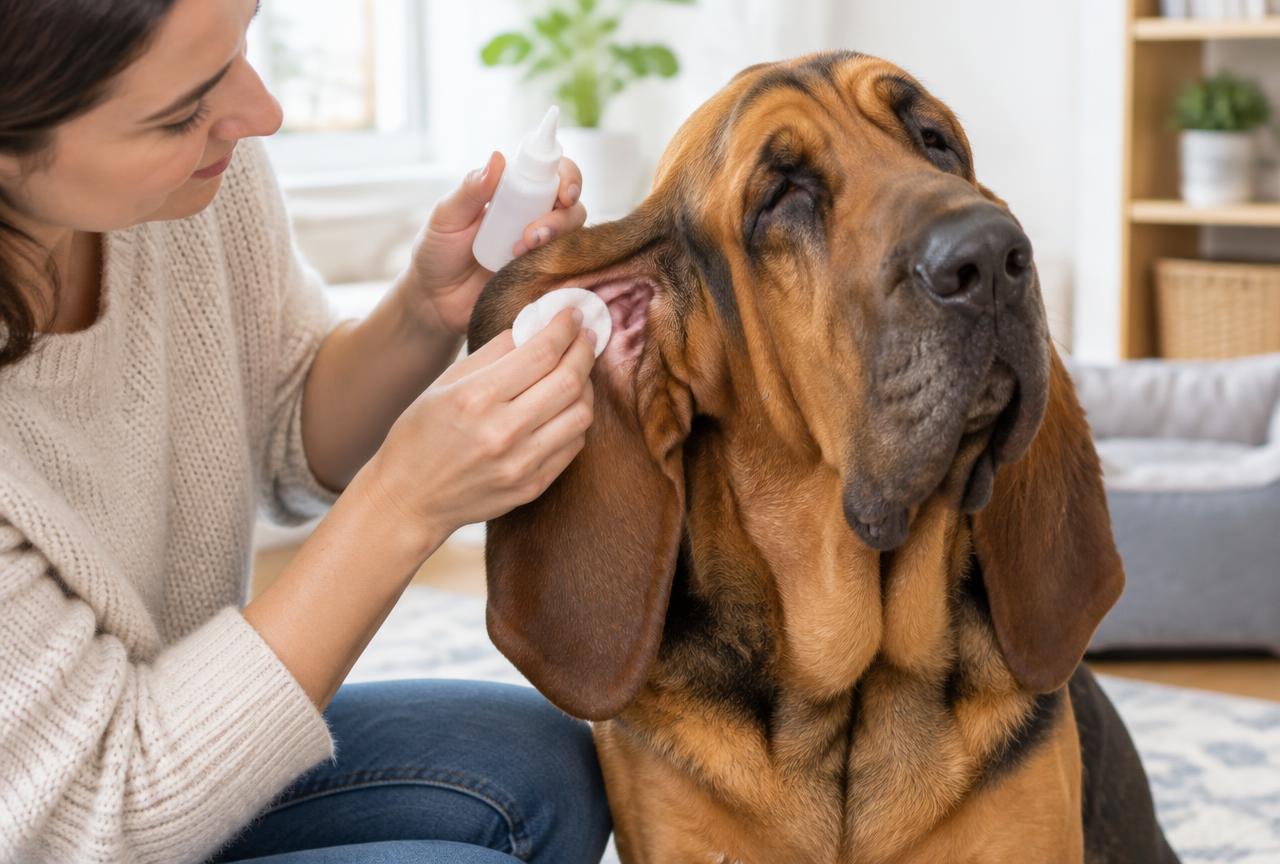
Physically, the Bloodhound is unmistakable: heavy folds of loose skin, long pendulous ears, deep wrinkles across the brow, and a powerful, athletic frame beneath it all. These features exist for a reason, helping to funnel scent particles towards the nose, but they come with daily maintenance demands. The ears must be checked and dried regularly, as their length and the warm, moist environment they create make ear infections one of the most frequent health complaints in the breed. Wrinkles need wiping to prevent skin-fold infections, particularly around the face and neck. None of this is difficult, but it is non-negotiable, and new owners should build it into a daily routine from puppyhood.
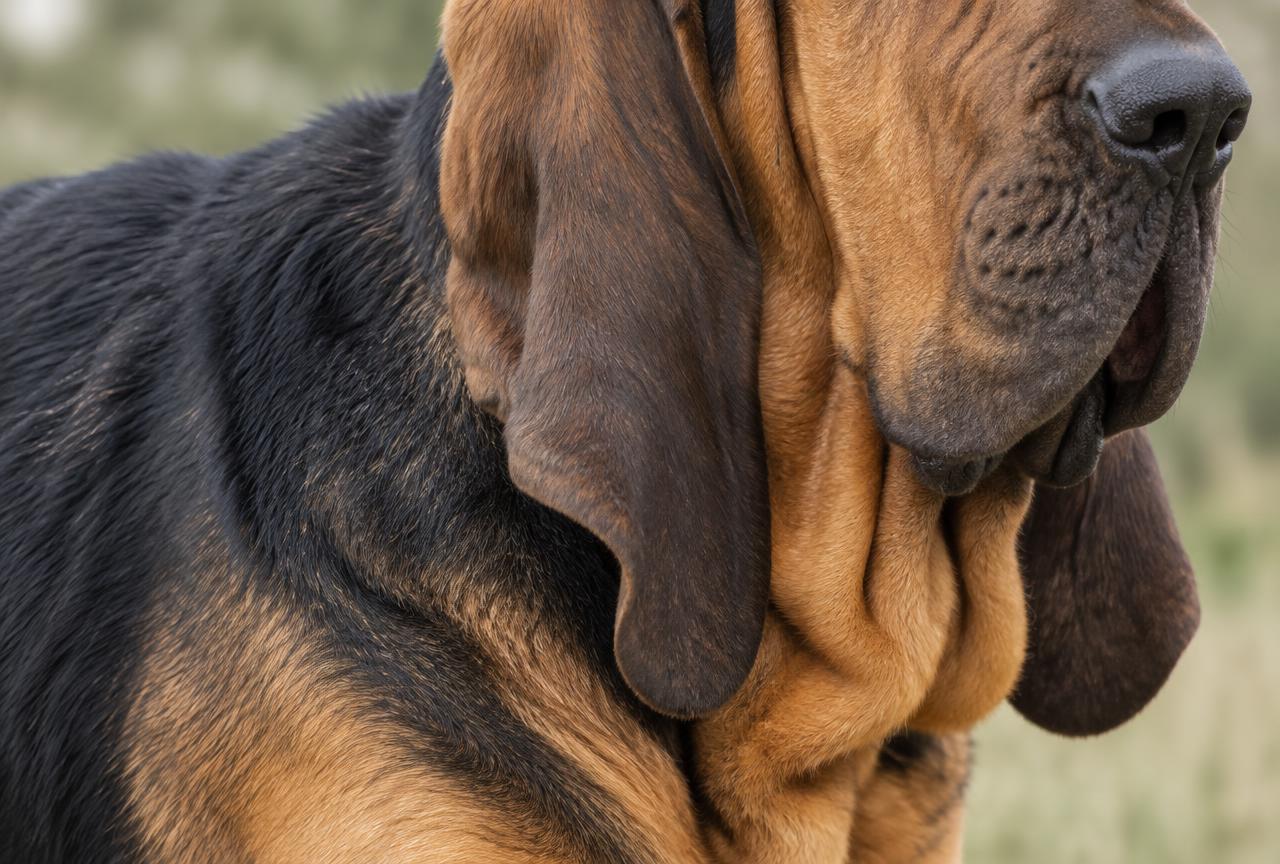
Then there is the drool. Bloodhounds produce copious amounts of saliva, and it is not subtle. Strings of drool on walls, ceilings, furniture and clothing are simply part of life with the breed, and anyone who cannot accept this should look elsewhere. Vocally, the Bloodhound is equally dramatic. The deep, resonant bay this breed produces is instantly recognisable, carries a remarkable distance, and will be heard by every neighbour within earshot. Combined with howling when left alone or excited, this makes the Bloodhound a poor fit for flats or homes with close neighbours.
Health is an area where honesty matters more than sentiment. The Bloodhound's deep chest places it among the breeds at highest risk of gastric dilatation-volvulus, commonly called bloat, a sudden and life-threatening twisting of the stomach that requires immediate emergency veterinary treatment. Every owner should learn the warning signs and adopt sensible feeding practices, such as smaller meals and rest around mealtimes, as a matter of routine rather than afterthought. Hip and elbow dysplasia, eyelid conditions such as entropion and ectropion, and obesity from a food-driven appetite are all recognised concerns, and the breed's lifespan of just 7 to 10 years is shorter than many large dogs, a fact prospective owners deserve to know clearly before committing.
Exercise for the Bloodhound should centre on the activity the breed was built for: scent work. On-lead trailing walks, man-trailing games in a garden or field, and nose-work puzzles provide far more satisfaction than a brisk off-lead run ever could. Free running in unfenced areas is genuinely risky given the breed's tendency to disappear onto a trail and simply not come back, so most exercise happens on a long line or within secure boundaries. Growth is slow and steady, with full size typically not reached until around two years old, so weight management throughout puppyhood matters for joint health later in life.
Ultimately, the Bloodhound suits a particular kind of owner: someone drawn to the breed's unmatched scenting talent, tolerant of drool and noise, equipped with secure outdoor space, and prepared for a shorter but deeply affectionate partnership. For the right household, few breeds offer such a singular, purposeful companion.
The Bloodhound is a devoted, gentle companion whose entire world revolves around scent. Owners must accept drool on every wall, deep baying that carries for miles, and a dog whose nose will always beat its ears, but in return they get one of the most affectionate and loyal hounds there is.
Exercise, day to day
- 1Puppies: short, gentle walks only, avoiding excessive strain on developing joints.
- 2Adults: one to two on-lead scent walks a day of 30 to 45 minutes each.
- 3Man-trailing games in the garden or field to satisfy the breed's natural drive.
- 4Nose-work puzzles and scatter feeding indoors for mental stimulation.
- 5Always use a long line or secure fencing, since recall is unreliable once scenting.
Grooming, realistically
- 1Daily ear and wrinkle checks to catch moisture, odour or redness early.
- 2Wipe facial folds and neck wrinkles daily to prevent skin-fold infections.
- 3Brush the short coat weekly with a rubber curry comb to remove loose hair.
- 4Wipe drool from the face and surrounding areas after meals and drinking.
- 5Trim nails every three to four weeks and check pads for wear after walks.
What you actually need
- Veterinary ear cleaner and cotton wool
- Rubber curry brush
- Soft cloths for wiping wrinkles and drool
- Nail clippers or grinder
- Dog-safe toothpaste and toothbrush
- Long training lead for scent walks
Puppy to adult
| Age | Male | Female | What is happening |
|---|---|---|---|
| 8 weeks | 6 to 8 kg | 5 to 7 kg | Large-pawed and loose-skinned from birth; keep meals small and frequent. |
| 3 months | 14 to 18 kg | 12 to 16 kg | Rapid early growth; avoid excessive exercise to protect developing joints. |
| 6 months | 24 to 30 kg | 21 to 27 kg | Gangly growth spurt phase; keep walks short and scent-focused rather than long. |
| 9 months | 32 to 40 kg | 28 to 35 kg | Still filling out; maintain a lean body condition to protect hips and elbows. |
| 12 months | 37 to 46 kg | 32 to 41 kg | Close to adult height but muscle and bone density continue to develop. |
| 18 months | 41 to 50 kg | 36 to 45 kg | Approaching full maturity; the breed typically is not fully mature until around two years old. |
Ranges are typical, not targets. Judge condition by ribs and waist, and check with the ideal weight checker.
What to ask a breeder
- Have the parents been hip and elbow scored and had eye tests?
- What is the history of bloat or gastric issues in the bloodlines?
- How are puppies socialised to household noises and handling of ears?
- What feeding schedule and practices do you recommend to reduce bloat risk?
- Can I meet the parents to see temperament and drool tolerance firsthand?
Health tests to ask for
Ask to see results for both parents before you put down a deposit.
- Hip and elbow scores for breeding stock
- Eye tests to check for entropion and ectropion
- Cardiac evaluation as part of routine health checks
- Gastric health discussion with a vet, given bloat risk
- Regular ear examinations throughout life
Health watch-list
What to ask a breeder about, and what to watch for over a lifetime. This is orientation, not veterinary advice, anything you notice belongs in front of a vet.
Gastric dilatation-volvulus (bloat)
NotableThe deep chest makes this breed a high-risk candidate for bloat, a sudden twisting of the stomach that needs emergency treatment. Feeding smaller meals and resting around mealtimes helps reduce the risk.
Ear infections
CommonLong, heavy ears trap moisture and warmth, creating ideal conditions for infection. Daily checking and regular cleaning with a veterinary ear cleaner is essential.
Hip and elbow dysplasia
CommonA large, fast-growing breed, the Bloodhound is prone to joint malformation. Choosing a breeder who screens parents and keeping puppies lean helps protect joints.
Eyelid conditions (entropion and ectropion)
NotableLoose facial skin can cause eyelids to roll inward or outward, leading to irritation or infection. Surgical correction is sometimes needed in affected dogs.
Skin-fold infections
CommonDeep wrinkles around the face and neck can trap moisture and debris. Daily wiping of the folds keeps the skin dry and reduces infection risk.
Obesity
Common with ageA food-driven appetite combined with lower indoor energy levels can lead to weight gain. Portion control and regular scent-based exercise help keep weight in check.
What it costs to keep one
Realistic running cost
€185 / month
About €2,220 a year, or roughly €19,980 across a 9-year life, before purchase price, neutering and one-off vet events.
Before the puppy arrives. Budget roughly €550 to 1300 for a crate, bed, lead and harness, bowls, puppy classes, first vaccinations and grooming kit sized for this breed. Figures throughout are indicative and vary a good deal between countries.
Interactive · built for this breed
Is a Bloodhound right for your home?
Seven honest questions about your space, time and household, checked against this breed's exercise need, coat, sociability and tolerance for time alone.
Fit with your routine
97%
A strong fit
Your routine suits a Bloodhound well. Meet adult dogs of the line before you commit.
Working in your favour
- Your daily walking comfortably covers this breed's exercise need.
- Coat care fits the grooming time you offered.
Compare more breeds in the matchmaker, or plan meals with the portion calculator.
The verdict, by household
Challenging
Rewarding but genuinely demanding, given limited trainability and a need for secure fencing.
Good
Gentle and patient with children, though supervision is wise simply due to the breed's size.
Excellent
An excellent match for anyone keen on scent work or long, exploratory trailing walks.
Avoid
Deep baying and howling make this a poor choice where noise will disturb neighbours.
When to call your vet
- A distended, tight abdomen or unproductive retching, which could indicate bloat
- Persistent ear odour, redness or head shaking, suggesting an ear infection
- Stiffness or reluctance to rise, which may point to hip or elbow dysplasia
- Excessive tearing, squinting or eye redness, possible signs of entropion or ectropion
- Sore or smelly skin folds, which can indicate a skin-fold infection
Nothing here is a diagnosis. A swollen, hard belly with retching, collapse, breathing difficulty and sudden hind-leg weakness are emergencies: go straight away.
Bloodhound vs the closest alternatives
| Breed | Weight | Energy | Grooming | € / month |
|---|---|---|---|---|
| Bloodhound | 36 to 50 kg | 5/10 | 3/10 | €185 |
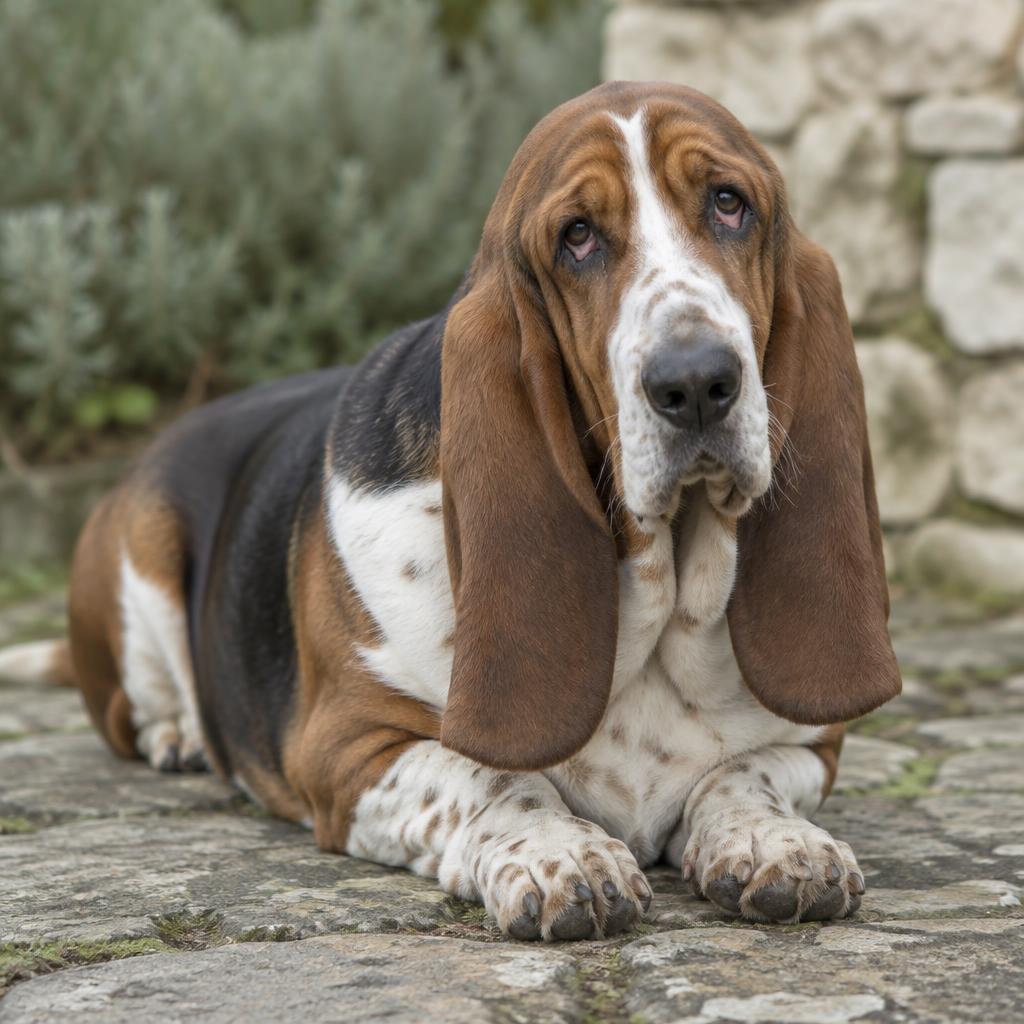
| Basset Hound | 18 to 29 kg | 5/10 | 3/10 | €102 |
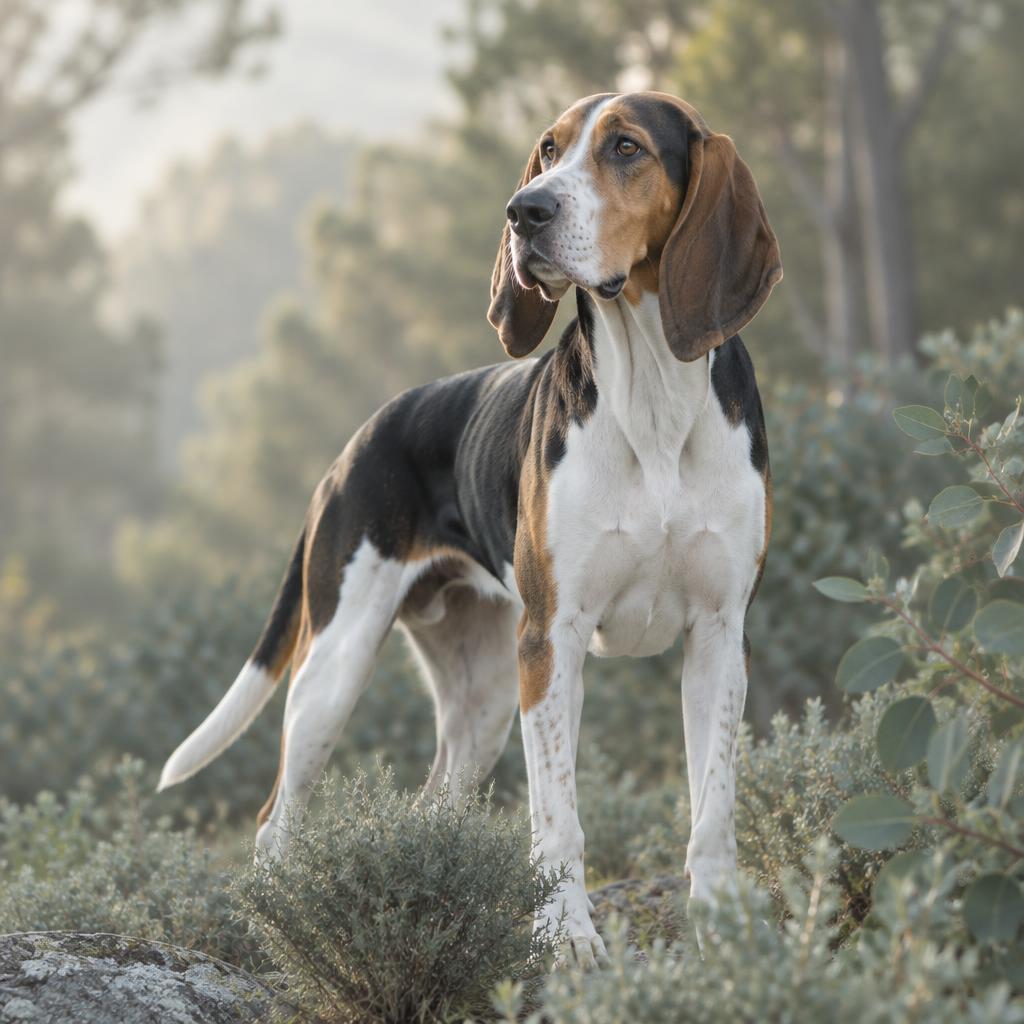
| Treeing Walker Coonhound | 23 to 32 kg | 8/10 | 3/10 | €88 |
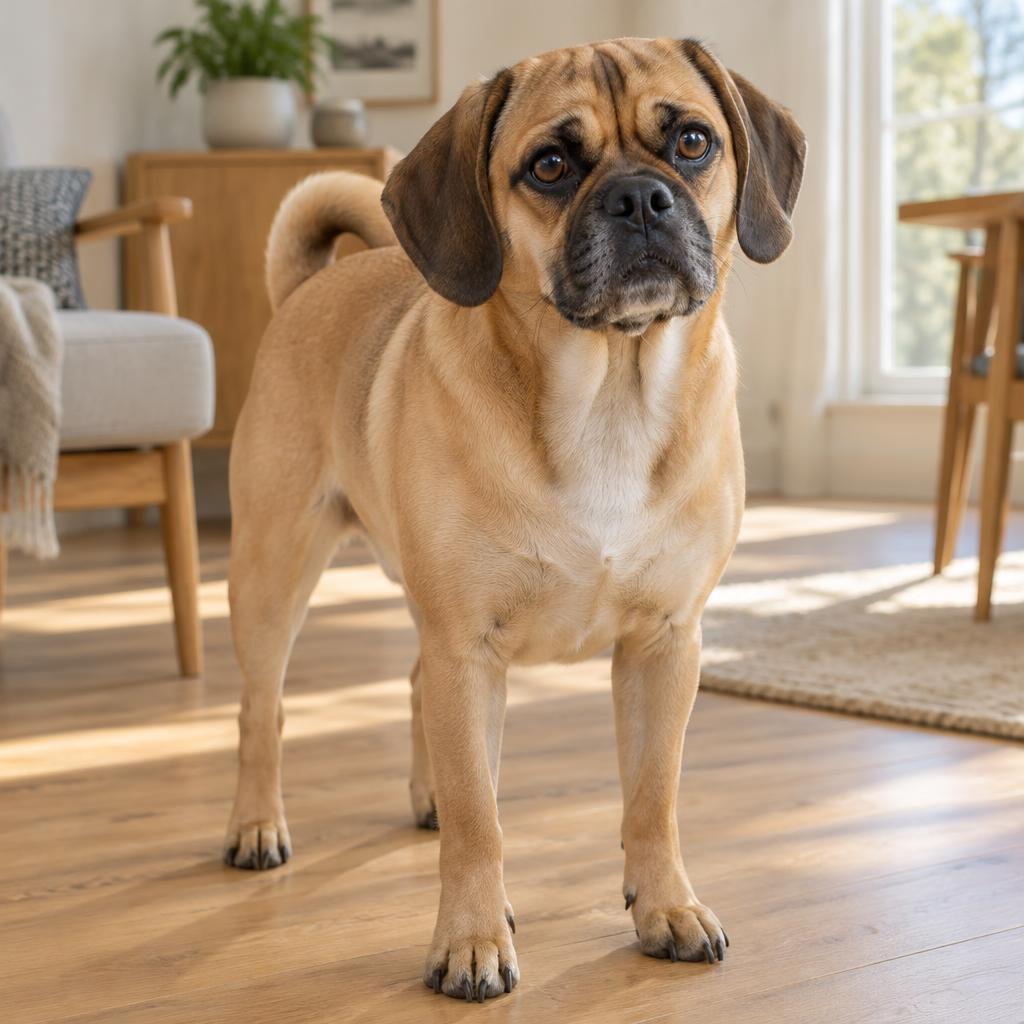
| Puggle | 7 to 14 kg | 6/10 | 3/10 | €64 |
Bloodhound questions, answered
Do Bloodhounds drool a lot?
Yes, drooling is one of the breed's most defining features. Expect strings of drool on walls, ceilings and furniture, particularly after eating, drinking or exercise, and plan for regular cleaning as part of daily life.
Do Bloodhounds bark or howl?
Bloodhounds rarely bark in the typical sense but are known for deep, resonant baying and howling, especially when excited, left alone, or following a trail. This vocal habit carries a long distance and should be factored in before living near close neighbours.
Can a Bloodhound be let off the lead?
This is not recommended in open or unfenced areas. Once a Bloodhound picks up a scent trail, it can become effectively deaf to recall and will follow the trail regardless of calling. A secure, fenced garden and a long line for walks are much safer options.
Are Bloodhounds good with children?
Generally yes, as the breed is gentle and patient by nature. Supervision around very young children is still wise purely because of the dog's large size and strength, rather than any aggressive tendency.
How much exercise does a Bloodhound need?
A Bloodhound needs around one to two on-lead walks a day, ideally with the chance to follow scents or play man-trailing games. Indoors, energy levels are low, but the breed has real stamina once engaged in scent work.
How long do Bloodhounds live?
The typical lifespan is 7 to 10 years, shorter than many other large breeds. Maintaining a healthy weight and staying alert to bloat symptoms can help support a longer, healthier life.
How much does it cost to keep a Bloodhound?
Monthly costs typically include around 60 pounds in food, 55 pounds in insurance, 15 pounds in grooming and 15 pounds in parasite prevention, with initial setup costs ranging from about 550 to 1,300 pounds for essentials such as a crate, bedding and a secure harness.