Toy group
Belgium
Brussels Griffon
A devoted, expressive toy companion for calm homes where someone is around most of the day.
Reviewed by the SniffScroll editorial team
The bearded toy with a remarkably human face
The short version
- Intensely loyal; struggles with long hours alone
- Rough and smooth coats can occur in one litter
- Moderate exercise, but heat sensitive because of the short face
- Ask about Chiari-like malformation and breathing in the parents
- House training needs patience
Choose a variety
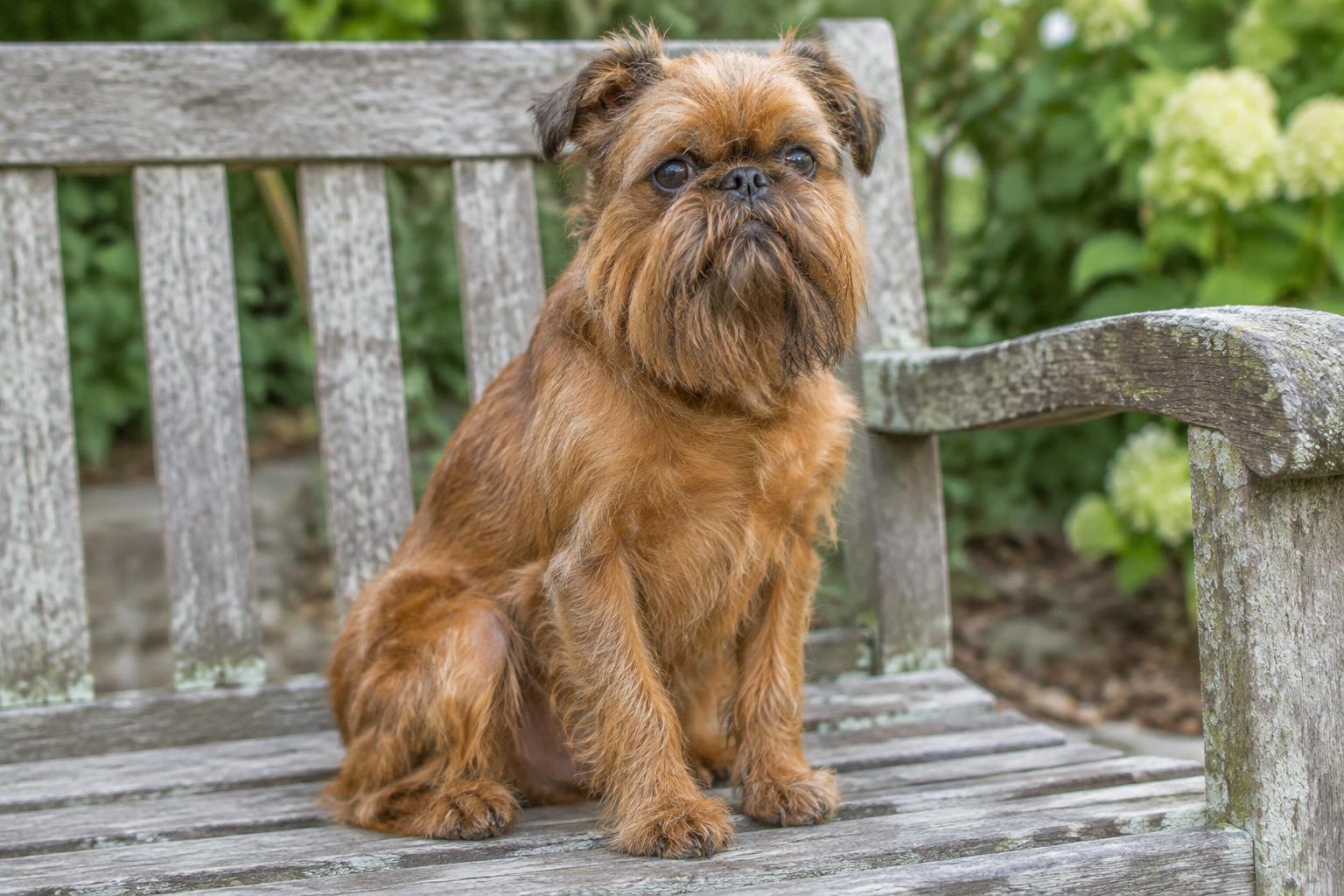
Wiry, dense coat with a beard; sheds little but needs hand-stripping or clipping and a daily beard wipe.
- Weight
- 3.5 to 6 kg
- Height
- 18 to 28 cm
- Lifespan
- 12 to 15 yrs
- Size
- Toy
- Group
- Toy
- Coat
- Rough wiry coat or smooth short coat
- Daily exercise
- Two short walks a day plus indoor play
- Years to full size
- about 1
- One-off setup
- €500 to 1000

Get one if…
- People at home most of the day
- Retired owners or home workers
- Adult households or families with older, gentle children
- Flat dwellers wanting a small companion
Think again if…
- Long hours alone
- Busy homes with toddlers
- Hot climates without air conditioning
- Owners wanting an independent dog
Trait profile
Scores reflect a devoted toy companion: very affectionate and flat-friendly, sensitive with young children and in heat.
Space & setup. Ideal for flats and smaller homes; train door barking early in shared buildings.
Allergies. The rough coat sheds little, but no dog is hypoallergenic; the smooth coat sheds noticeably more.
Living with a Brussels Griffon
The Brussels Griffon began as a stable ratter in Belgium and became a favourite of royalty, famous for its expressive, almost human face. Devoted, sensitive and full of character, it suits calm, attentive homes where someone is around most of the day.
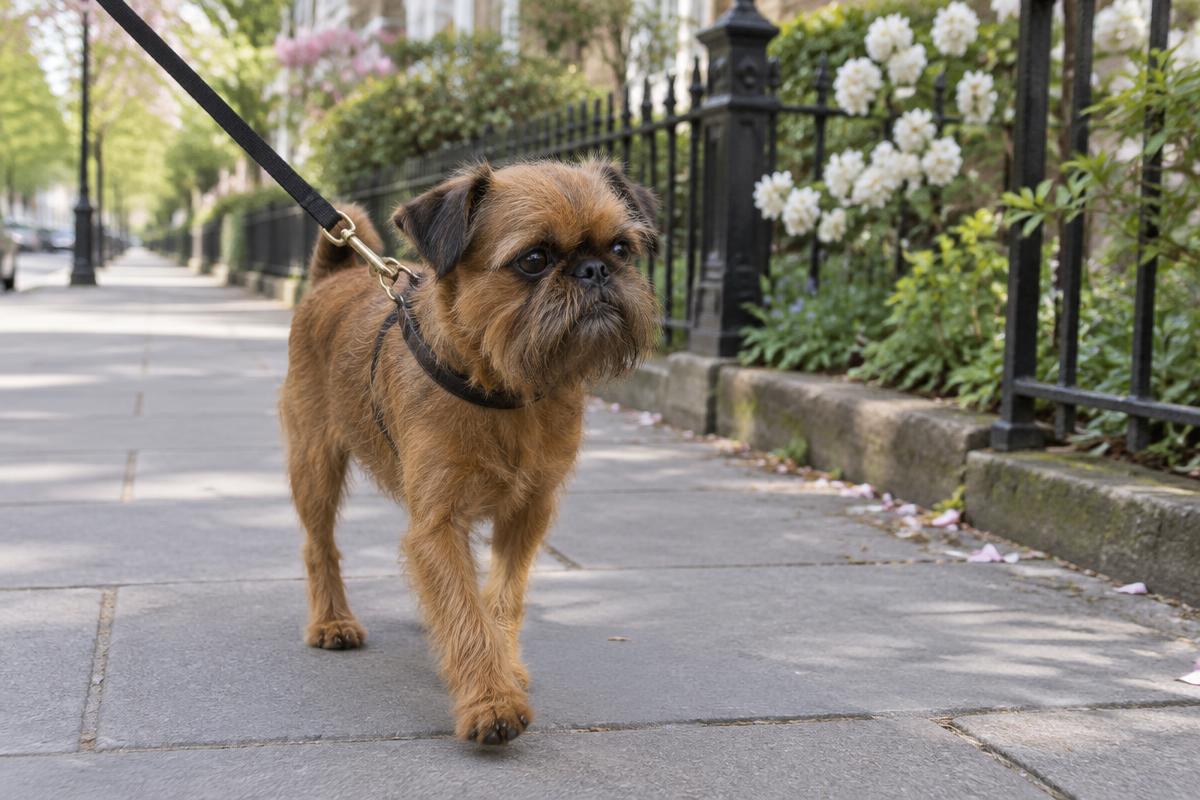
The Brussels Griffon started life in the stables of nineteenth-century Brussels, where small, wiry dogs kept cab horses' quarters free of rats. Crosses with the Pug, English Toy Spaniel and Affenpinscher gave it a shorter face and a more companionable nature, and before long Queen Marie Henriette of Belgium had made it fashionable. Today it is best known for its face: big dark eyes, a short nose, a jutting chin and, in the rough coat, a full beard that gives it the look of a tiny, opinionated old gentleman.
In the UK the breed is shown by the Kennel Club as the Griffon Bruxellois, and the smooth-coated version is called the Petit Brabancon in some countries. In the United States both coats are the Brussels Griffon. One litter can contain both coat types, so the difference is cosmetic rather than temperamental.
Temperament is the heart of this breed. A Griffon is intensely devoted, often attaching to one person above all others, and it wants to be with that person at all times. It is sensitive, picking up on moods and reacting to harsh words. It can be funny, mischievous and a little self-important, and it has more confidence than its small size suggests. Owners often describe it as a big dog in a toy body. That loyalty means it dislikes being alone; long hours without company can lead to anxiety, barking and distress.

With children, the Griffon is best suited to calm homes with older, gentle children. It is small and can be hurt by rough handling, and its sensitive nature does not always enjoy the noise and unpredictability of toddlers. With other dogs and cats it usually manages well, though it may try to boss larger dogs around.
Exercise needs are moderate. A couple of short walks a day plus indoor play is enough for most adults, and they are happy to spend the rest of the day on a lap. This makes them excellent flat dogs, as long as barking at the door is managed early. Because of the short face, they struggle in heat: walk them in the cooler parts of the day in summer, never leave them in a warm car and watch for laboured breathing.
House training deserves a warning. Like many toy breeds, Griffons can be slow to house train. Patience, a regular routine and plenty of rewards work; punishment does not. Training in general goes well when it is gentle, short and fun. They can be stubborn, but they respond to praise from the person they love.
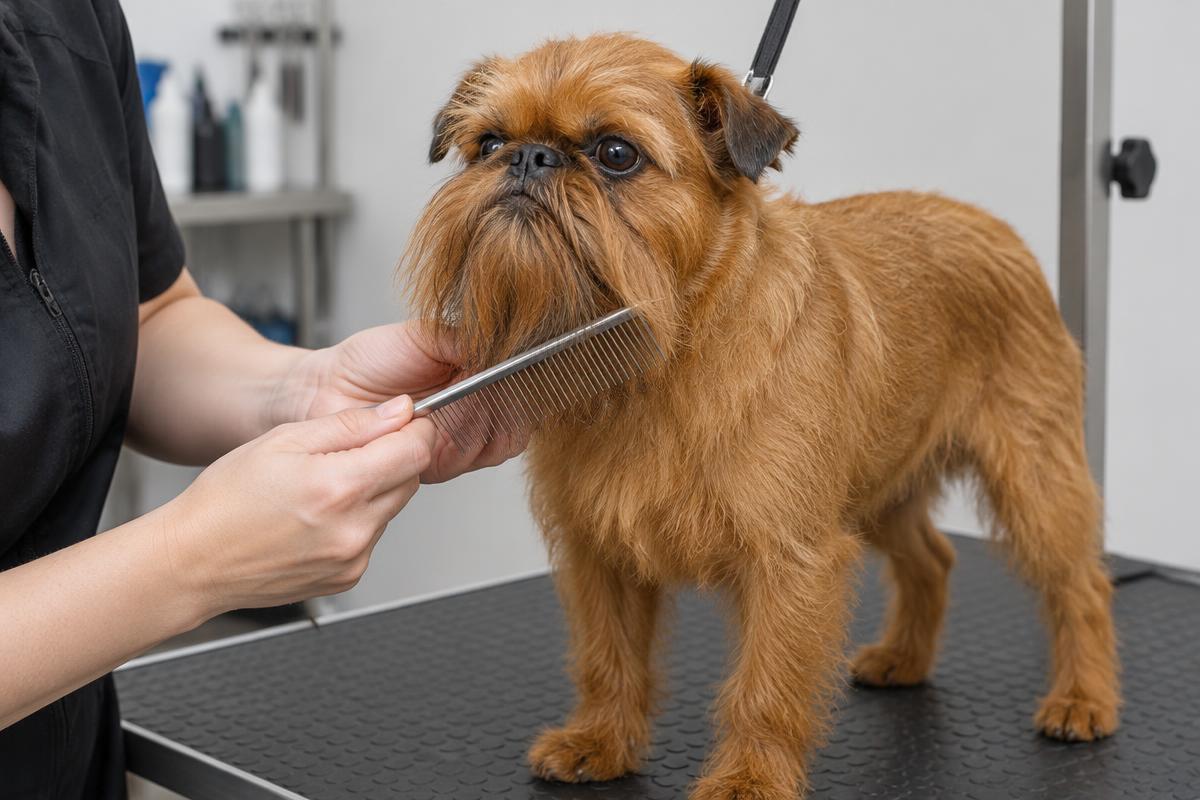
Coat care depends on the type. The rough coat is wiry and dense, with a beard and moustache that collect food and water. It needs brushing a couple of times a week, a daily beard wipe and either hand-stripping a few times a year or clipping for a softer, easier pet trim. The smooth coat is short and glossy, sheds more than the rough and needs only a weekly brush. Both need daily attention to the teeth, as toy breeds develop dental disease early, and the prominent eyes need checking for scratches and irritation.
Health concerns reflect the breed's face and size. Brachycephalic obstructive airway syndrome can cause noisy breathing and heat intolerance, though Griffons are usually less severely affected than flatter-faced breeds; choose puppies from parents with open nostrils and easy breathing. Chiari-like malformation and syringomyelia, where the skull is too small for the brain, occur in the breed and can cause pain, scratching at the neck and sensitivity to touch; ask breeders whether they MRI scan their dogs. Eye injuries, progressive retinal atrophy, patellar luxation, hip dysplasia and dental disease complete the picture. Litters are small, and caesarean births are common, which partly explains why puppies are scarce and waiting lists long.
The Brussels Griffon is a superb companion for retired people, couples who work from home or anyone wanting a small, devoted dog with big personality. It does not suit homes where everyone is out all day, very boisterous households or people who want an independent dog. Choose a health-focused breeder, protect the face from heat and knocks, and you will have a loyal little shadow that seems to understand far more than a dog should.
A deeply affectionate, comic little companion; ideal for adult homes, less so for busy families or long hours alone.
Exercise, day to day
- 1Two short walks a day, in cool hours during summer
- 2Indoor play and short trick sessions
- 3Gentle sniff walks for mental enrichment
Grooming, realistically
- 1Brush rough coats twice a week and wipe the beard daily
- 2Hand-strip rough coats a few times a year, or clip for a pet trim
- 3Brush smooth coats weekly
- 4Brush teeth daily and check eyes for irritation
What you actually need
- Soft slicker brush
- Fine metal comb
- Stripping knife (rough coat)
- Dog toothbrush and paste
Puppy to adult
| Age | Male | Female | What is happening |
|---|---|---|---|
| 8 weeks | 0.7 to 1.2 kg | 0.6 to 1.1 kg | Tiny and fragile; handle gently and start a regular toilet routine. |
| 3 months | 1.5 to 2.5 kg | 1.3 to 2.3 kg | Socialise carefully with calm people and dogs; protect from rough play. |
| 6 months | 2.5 to 4.5 kg | 2.3 to 4 kg | Adult teeth in; check for retained puppy teeth with your vet. |
| 9 months | 3 to 5.5 kg | 3 to 5 kg | Near adult size; rough coat and beard starting to fill out. |
| 12 months | 3.5 to 6 kg | 3.5 to 5.5 kg | Fully grown in most cases; adult coat settled. |
| 18 months | 3.5 to 6 kg | 3.5 to 5.5 kg | Mature in temperament; a settled, devoted companion. |
Ranges are typical, not targets. Judge condition by ribs and waist, and check with the ideal weight checker.
What to ask a breeder
- Have the parents been MRI scanned for Chiari-like malformation?
- How easily do the parents breathe at rest and after exercise?
- Have the parents had eye and patella checks?
- Do your litters often include both rough and smooth coats?
- Were the puppies born naturally or by caesarean?
Health tests to ask for
Ask to see results for both parents before you put down a deposit.
- MRI scan for Chiari-like malformation and syringomyelia where available
- Eye examination including PRA
- Patella and hip checks
- Assessment of nostrils and breathing
Health watch-list
What to ask a breeder about, and what to watch for over a lifetime. This is orientation, not veterinary advice, anything you notice belongs in front of a vet.
Brachycephalic airway problems
CommonNoisy breathing and heat intolerance; choose parents with open nostrils and easy breathing.
Chiari-like malformation and syringomyelia
NotableNeck pain, scratching and sensitivity to touch; MRI-screened parents reduce risk.
Eye injuries and progressive retinal atrophy
NotableProminent eyes scratch easily; see a vet quickly for any squinting or cloudiness.
Patellar luxation
CommonSlipping kneecaps cause a skipping gait; keep weight lean.
Dental disease
Very likelyCrowded toy-breed teeth decay early; daily brushing is essential.
Hip dysplasia
UncommonLess common than in large breeds but reported; ask about parents' hips.
What it costs to keep one
Realistic running cost
€75 / month
About €900 a year, or roughly €12,600 across a 14-year life, before purchase price, neutering and one-off vet events.
Before the puppy arrives. Budget roughly €500 to 1000 for a crate, bed, lead and harness, bowls, puppy classes, first vaccinations and grooming kit sized for this breed. Figures throughout are indicative and vary a good deal between countries.
Interactive · built for this breed
Is a Brussels Griffon right for your home?
Seven honest questions about your space, time and household, checked against this breed's exercise need, coat, sociability and tolerance for time alone.
Fit with your routine
99%
A strong fit
Your routine suits a Brussels Griffon well. Meet adult dogs of the line before you commit.
Working in your favour
- Your daily walking comfortably covers this breed's exercise need.
- Coat care fits the grooming time you offered.
Compare more breeds in the matchmaker, or plan meals with the portion calculator.
The verdict, by household
First-time owner
Yes, if home a lot
Affectionate and manageable, but needs company and patient house training.
Family with children
Older children only
Too small and sensitive for boisterous toddlers.
Active single or couple
Possible
Enjoys walks but is not built for long hikes or hot days.
Flat with close neighbours
Very good
Small and happy indoors; teach a quiet cue for the doorbell.
When to call your vet
- Noisy, laboured breathing or collapse in heat
- Scratching at the neck, yelping when touched or air-scratching (Chiari-like malformation)
- Squinting, a cloudy eye or eye discharge
- Skipping on a back leg (patellas)
- Bad breath or loose teeth
Nothing here is a diagnosis. A swollen, hard belly with retching, collapse, breathing difficulty and sudden hind-leg weakness are emergencies: go straight away.
Brussels Griffon vs the closest alternatives
| Breed | Weight | Energy | Grooming | € / month |
|---|---|---|---|---|
| Brussels Griffon | 3.5 to 6 kg | 5/10 | 5/10 | €75 |
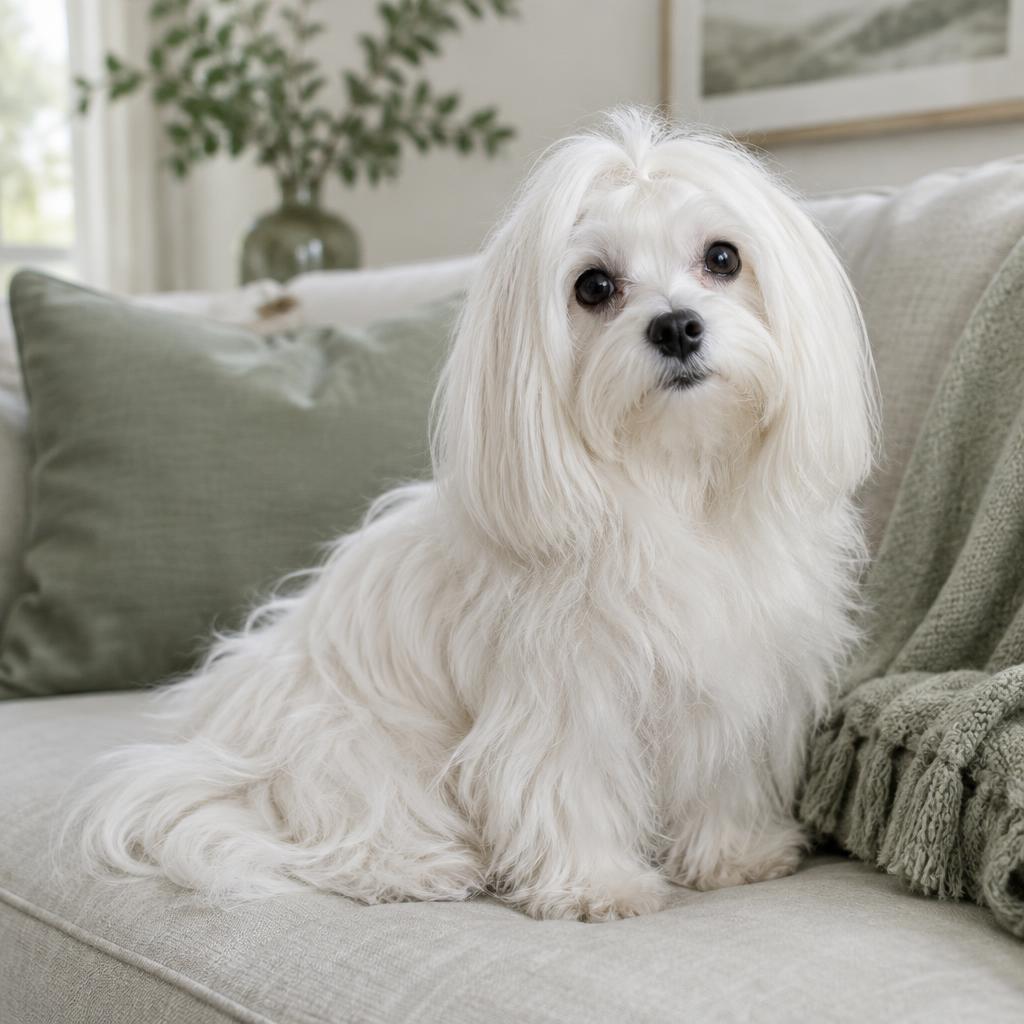
| Maltese | 3 to 4 kg | 5/10 | 8/10 | €93 |
| Morkie | 2 to 5 kg | 5/10 | 7/10 | €76 |
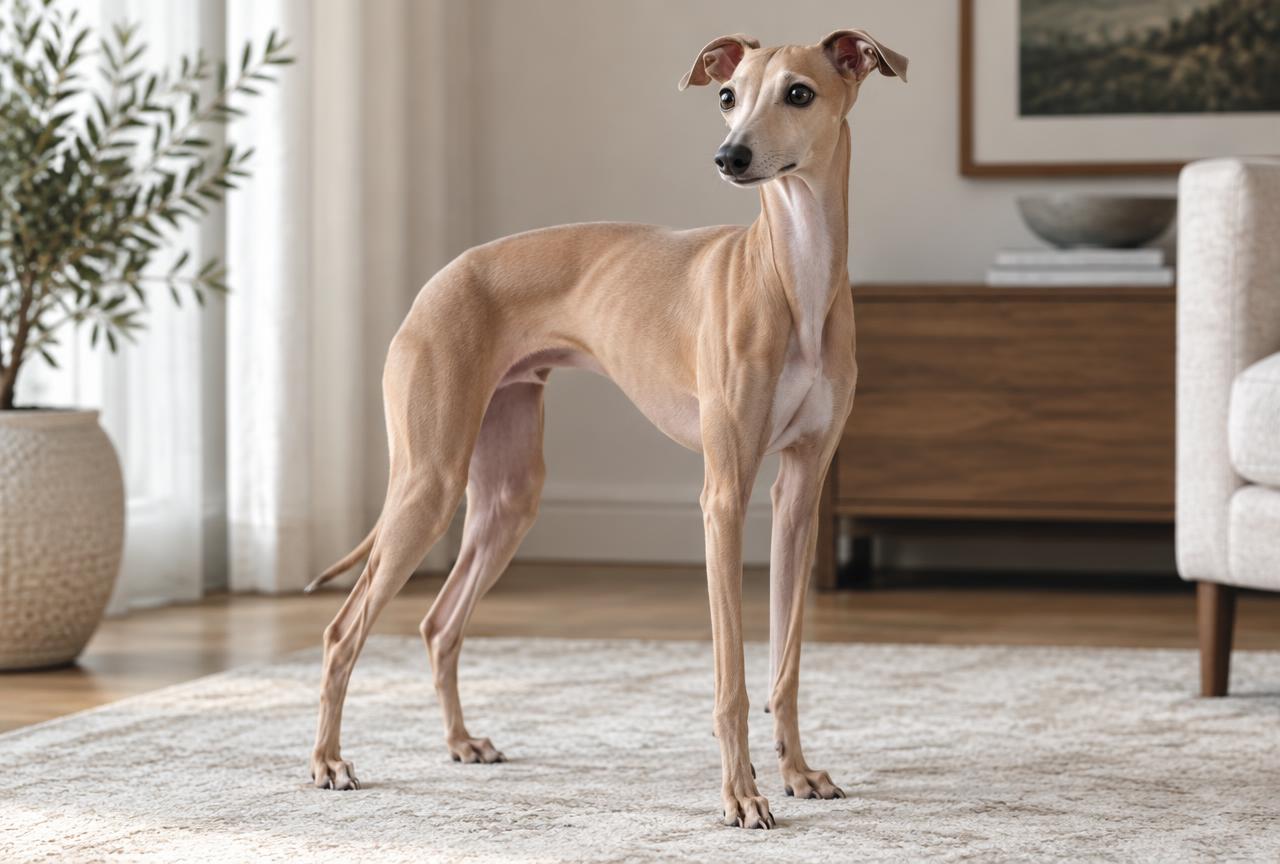
| Italian Greyhound | 3 to 5 kg | 6/10 | 2/10 | €85 |
Brussels Griffon questions, answered
Are Brussels Griffons good family dogs?
They suit calm families with older, gentle children best. They are loving and loyal, but small, sensitive and easily hurt by rough play.
Do Brussels Griffons shed?
The rough coat sheds little but needs stripping or clipping. The smooth coat is easier to groom but sheds more. Neither is truly hypoallergenic.
How big do Brussels Griffons get?
Adults usually weigh 3.5 to 6 kg and stand about 18 to 28 cm at the shoulder.
Can Brussels Griffons be left alone?
Not for long. They attach closely to their people and often become anxious or noisy when left alone for many hours.
Are Brussels Griffons easy to house train?
They can be slow. A strict routine, frequent outings and plenty of rewards work far better than punishment.
What is the difference between a Brussels Griffon and a Petit Brabancon?
They are the same type of dog with different coats. The Petit Brabancon is the smooth-coated version, recognised separately in some countries.
How long do Brussels Griffons live?
Typically 12 to 15 years.