Toy group
Uncertain; developed as a companion breed in Europe and America
Chinese Crested
A gentle, devoted little companion in two coats, for owners at home a lot and ready for sunscreen, jumpers or regular brushing.
Reviewed by the SniffScroll editorial team
Hairless or Powderpuff, a devoted little companion with very particular care needs
The short version
- Adults usually weigh 2.5 to 6 kg and stand 23 to 33 cm
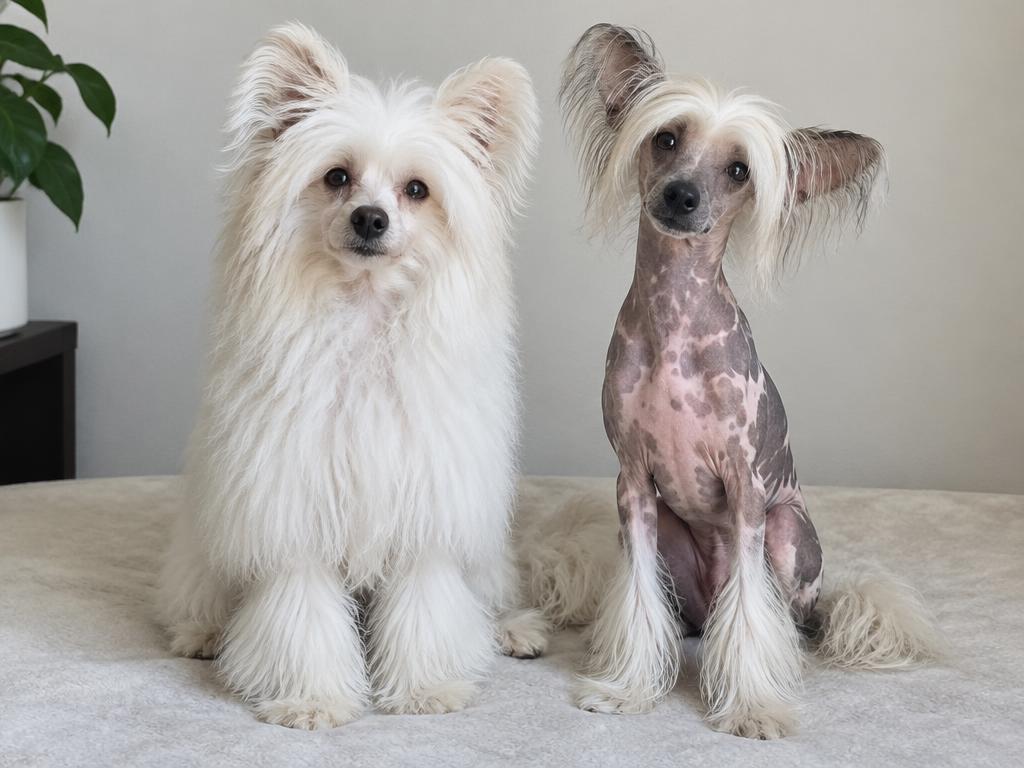
- Two varieties, Hairless and Powderpuff, born in the same litters
- The Hairless needs sun protection, warm clothing and regular skin care
- Deeply affectionate and prone to separation worry
- Ask for PLL and PRA DNA tests and a patella check
Choose a variety
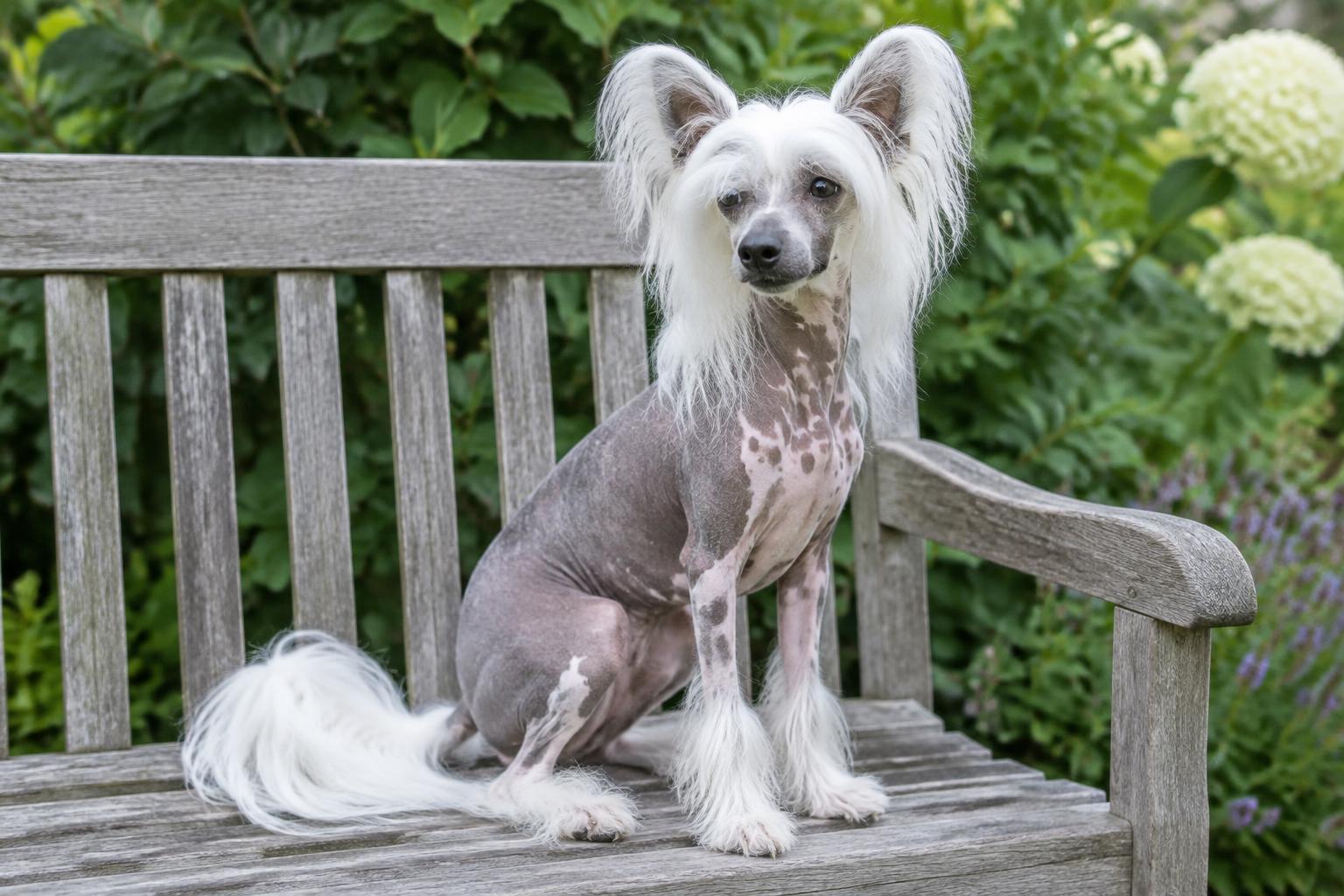
Silky hair on the head, tail and feet only; needs sunscreen, warm clothing and regular skin care.
- Weight
- 2.5 to 6 kg
- Height
- 23 to 33 cm
- Lifespan
- 13 to 18 yrs
- Size
- Toy
- Group
- Toy
- Coat
- Hairless with silky furnishings, or full silky Powderpuff coat
- Daily exercise
- 30 minutes a day plus play
- Years to full size
- about 1
- One-off setup
- €400 to 800
Get one if…
- People who are home a lot
- Owners wanting a deeply affectionate small dog
- Flats and quieter homes
- People happy to follow a skin or coat routine
Think again if…
- Owners out at work all day
- Families with toddlers
- Anyone expecting a hairless dog to need no care
- Very hot, sunny climates without shade
Trait profile
Scores reflect a typical adult Chinese Crested; grooming varies by variety.
Space & setup. Ideal for flats and smaller homes; the Hairless needs shade, sunscreen and warm clothing as weather demands.
Allergies. The Hairless barely sheds and the Powderpuff sheds little, which suits some allergy sufferers, but no dog is hypoallergenic.
Living with a Chinese Crested
The Chinese Crested is a small, elegant companion breed that comes in two varieties: the Hairless, with silky hair only on the head, tail and feet, and the Powderpuff, with a full, soft double coat. Both are affectionate and people-focused. The Hairless needs skin care and sun protection; the Powderpuff needs regular brushing.
The Chinese Crested is one of the most distinctive dogs you will ever meet. The Hairless variety has smooth, warm skin with silky hair only on the head (the crest), the tail (the plume) and the feet (the socks). The Powderpuff, which is born in the same litters, has a full, soft, veil-like coat. Both are the same breed with the same temperament, and both can be shown. Hairlessness comes from a single dominant gene, which is why the two varieties keep appearing together.
The breed's origins are genuinely uncertain. Hairless dogs have existed in Africa, Mexico and South America for centuries, and the Chinese name probably reflects legend more than history. What is clear is that the modern breed was developed as a companion in Europe and North America from the late nineteenth century. It has only ever had one job, and it does it beautifully: being with people.
Chinese Cresteds are affectionate, gentle and playful, and they tend to attach very closely to their owners. Many are true velcro dogs, following their person from room to room. They are usually good with other dogs and often with cats. With children, they suit calm, older kids better than toddlers, because they are fine-boned and sensitive. They do not cope well with long hours alone, and separation worry is common if they are not taught to settle.
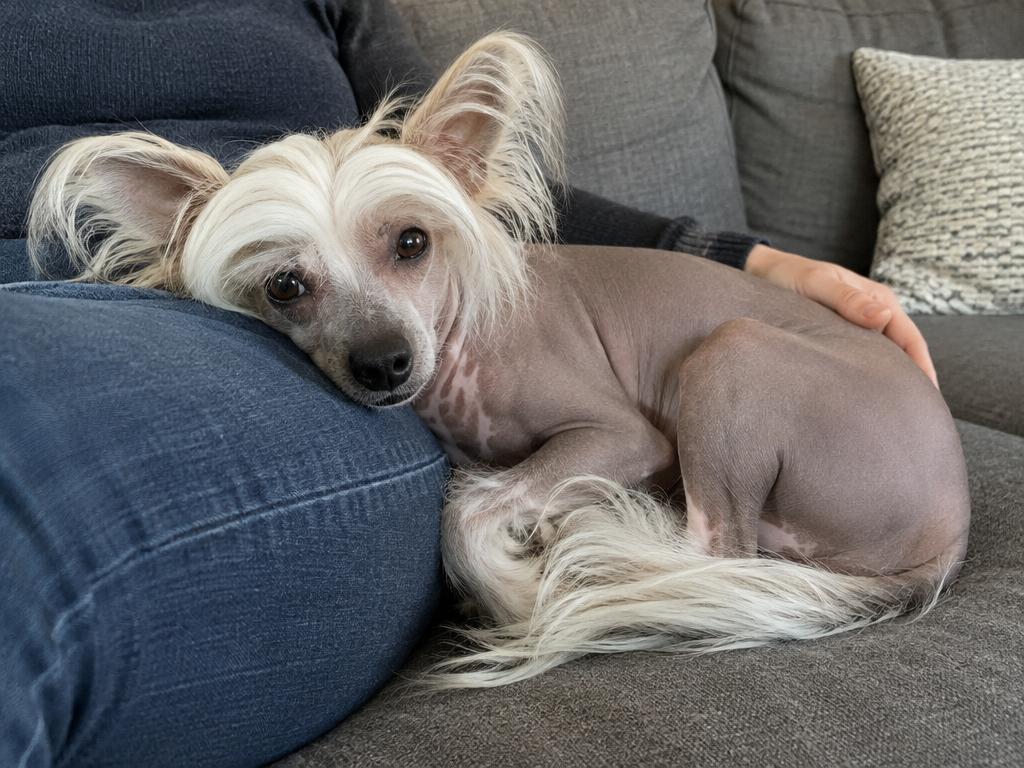
Exercise needs are modest. Around 30 minutes a day of walks and play keeps most adults happy, and they enjoy games, short training sessions and even agility. They are agile jumpers and climbers and some are surprisingly good escape artists. Training works best with gentle, reward-based methods; they are sensitive to harsh handling and can become shy if poorly socialised.
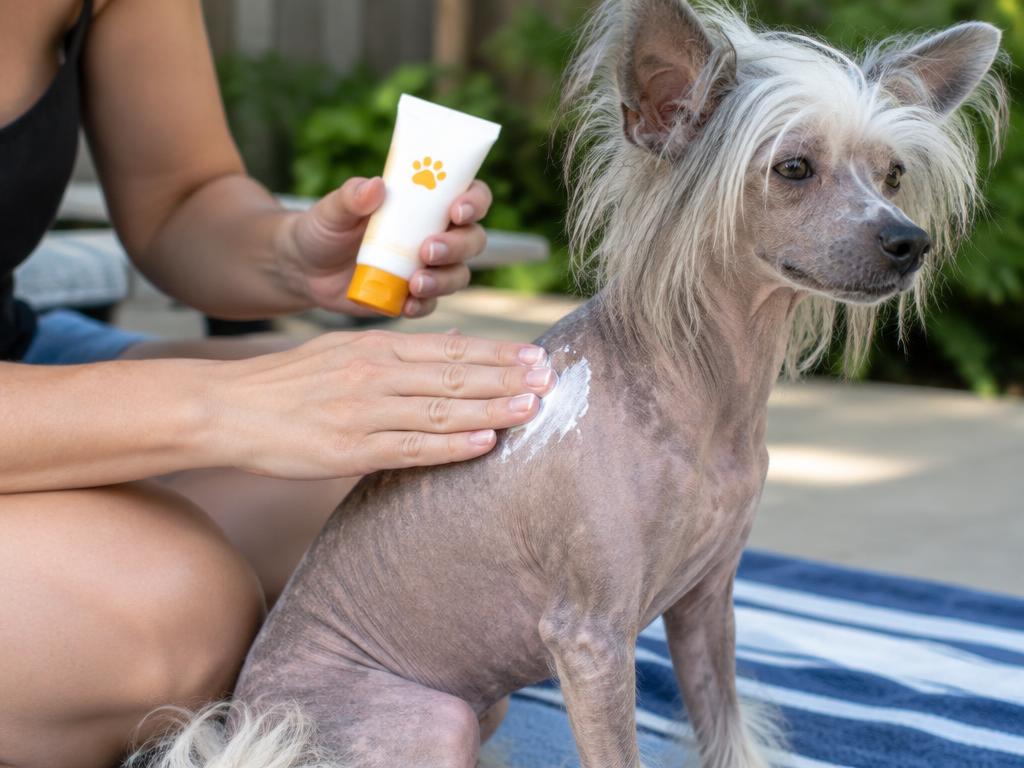
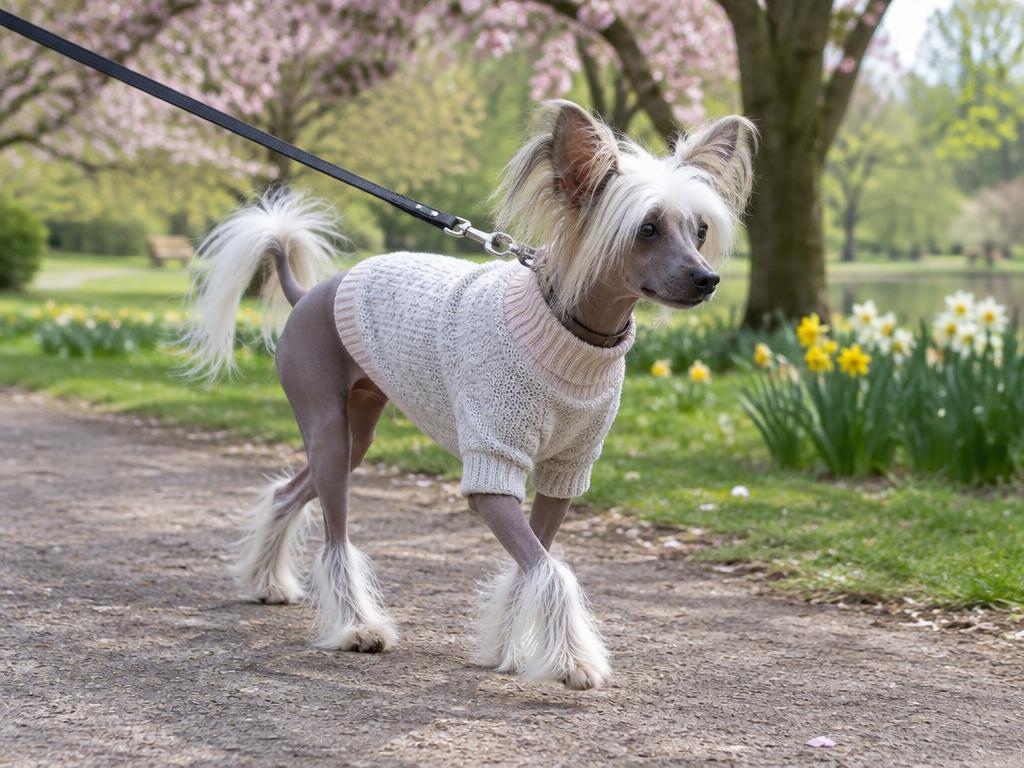
Care is where the two varieties differ, and it matters. The Hairless has skin that behaves much like human skin. It burns in the sun, so dog-safe sunscreen or light clothing is needed on bright days, even in northern Europe. It gets cold easily, so a jumper or coat is needed in cool weather. It can develop blackheads and acne, so a gentle bath every week or two with a mild shampoo, followed by a light moisturiser, keeps it healthy. Some Hairless dogs have more body hair than others and need occasional shaving or trimming. Avoid heavy oils and products not made for dogs.
The Powderpuff needs a different routine: brushing several times a week to stop its silky coat matting, especially behind the ears and in the armpits. Some owners clip the coat shorter. Powderpuffs shed little, and the Hairless barely sheds at all, though neither is truly hypoallergenic.
Health is generally good and the breed is long-lived, often reaching 15 or more. Primary lens luxation and progressive retinal atrophy have DNA tests, and breeders should use them. Patellar luxation is common in toy breeds. Dental problems are frequent in the Hairless, which is often born with missing or poorly rooted teeth because the hairless gene also affects tooth development; daily brushing and regular dental checks help. Skin problems, from sunburn to allergies, are the most common day-to-day issue for the Hairless.
Costs are low for food and modest for insurance, but factor in sunscreen, clothing, skin products or grooming.
Who suits a Chinese Crested? People who are home a lot, want a deeply affectionate small companion and are happy to follow a regular skin or coat routine. Who should think again? Busy households where the dog would be alone all day, families with toddlers, and anyone imagining hairless means no care. For the right owner, a Crested is a loving, playful and long-lived friend.
A loving, playful velcro dog with a long life ahead; easy to adore, but the skin or coat needs regular, specific care.
Exercise, day to day
- 1Around 30 minutes of walks and play daily
- 2Short training games and gentle agility
- 3Shade, sunscreen or clothing as weather demands
Grooming, realistically
- 1Hairless: bathe every one to two weeks with mild shampoo and moisturise lightly
- 2Hairless: dog-safe sunscreen or a light top on sunny days
- 3Powderpuff: brush several times a week
- 4Brush teeth daily and trim nails every few weeks
What you actually need
- Mild dog shampoo
- Dog-safe sunscreen and light moisturiser
- Pin brush and metal comb for the Powderpuff
- Jumper or coat for cool weather
- Dog toothbrush and paste
Puppy to adult
| Age | Male | Female | What is happening |
|---|---|---|---|
| 8 weeks | 0.8 to 1.3 kg | 0.7 to 1.2 kg | Start gentle handling, bathing and calm alone-time practice. |
| 3 months | 1.5 to 2.5 kg | 1.4 to 2.3 kg | Socialise gently to prevent shyness. |
| 6 months | 2.5 to 4.5 kg | 2.3 to 4.2 kg | Hairless skin may get teenage acne; keep it clean. |
| 9 months | 3 to 5.5 kg | 2.6 to 5 kg | Adolescent; keep training short and kind. |
| 12 months | 3 to 6 kg | 2.5 to 5.5 kg | Fully grown. |
Ranges are typical, not targets. Judge condition by ribs and waist, and check with the ideal weight checker.
What to ask a breeder
- Have both parents been DNA tested for primary lens luxation and PRA?
- Have the parents had a patella check?
- How are the Hairless parents' teeth?
- Are there Hairless and Powderpuff puppies in the litter?
- How do you help puppies learn to be alone calmly?
Health tests to ask for
Ask to see results for both parents before you put down a deposit.
- Primary lens luxation DNA test
- PRA DNA test
- Patella check
- Eye examination
Health watch-list
What to ask a breeder about, and what to watch for over a lifetime. This is orientation, not veterinary advice, anything you notice belongs in front of a vet.
Primary lens luxation
UncommonThe lens slips out of place and can cause glaucoma; a DNA test is available.
Progressive retinal atrophy
UncommonGradual loss of sight; DNA tests help breeders avoid it.
Patellar luxation
CommonA slipping kneecap causing a skipping gait.
Dental problems
CommonHairless dogs often have missing or weak teeth; brush daily and check regularly.
Sunburn and skin problems
CommonHairless skin burns, gets acne and can react to products; use mild, dog-safe care.
Legg-Calve-Perthes disease
RareHip problems in young small dogs causing lameness.
What it costs to keep one
Realistic running cost
€58 / month
About €696 a year, or roughly €11,136 across a 16-year life, before purchase price, neutering and one-off vet events.
Before the puppy arrives. Budget roughly €400 to 800 for a crate, bed, lead and harness, bowls, puppy classes, first vaccinations and grooming kit sized for this breed. Figures throughout are indicative and vary a good deal between countries.
Interactive · built for this breed
Is a Chinese Crested right for your home?
Seven honest questions about your space, time and household, checked against this breed's exercise need, coat, sociability and tolerance for time alone.
Fit with your routine
97%
A strong fit
Your routine suits a Chinese Crested well. Meet adult dogs of the line before you commit.
What to sort out first
- Coat needs more brushing or trimming than you have allowed.
Working in your favour
- Your daily walking comfortably covers this breed's exercise need.
Compare more breeds in the matchmaker, or plan meals with the portion calculator.
The verdict, by household
First-time owner
Good fit
Gentle and eager to please; the care routine is easy to learn.
Family with children
With older children
Fine-boned and sensitive; best with calm children.
Older owner
Good fit
Modest exercise needs and devoted company.
Owner out all day
Often difficult
Bonds very closely and prone to separation worry.
When to call your vet
- A red, painful or cloudy eye (possible lens luxation, an emergency)
- Bumping into things at night (PRA)
- Red, peeling or blistered skin after sun
- Skipping on a back leg (patellas)
- Bad breath, loose teeth or reluctance to chew
Nothing here is a diagnosis. A swollen, hard belly with retching, collapse, breathing difficulty and sudden hind-leg weakness are emergencies: go straight away.
Chinese Crested vs the closest alternatives
| Breed | Weight | Energy | Grooming | € / month |
|---|---|---|---|---|
| Chinese Crested | 2.5 to 6 kg | 5/10 | 6/10 | €58 |
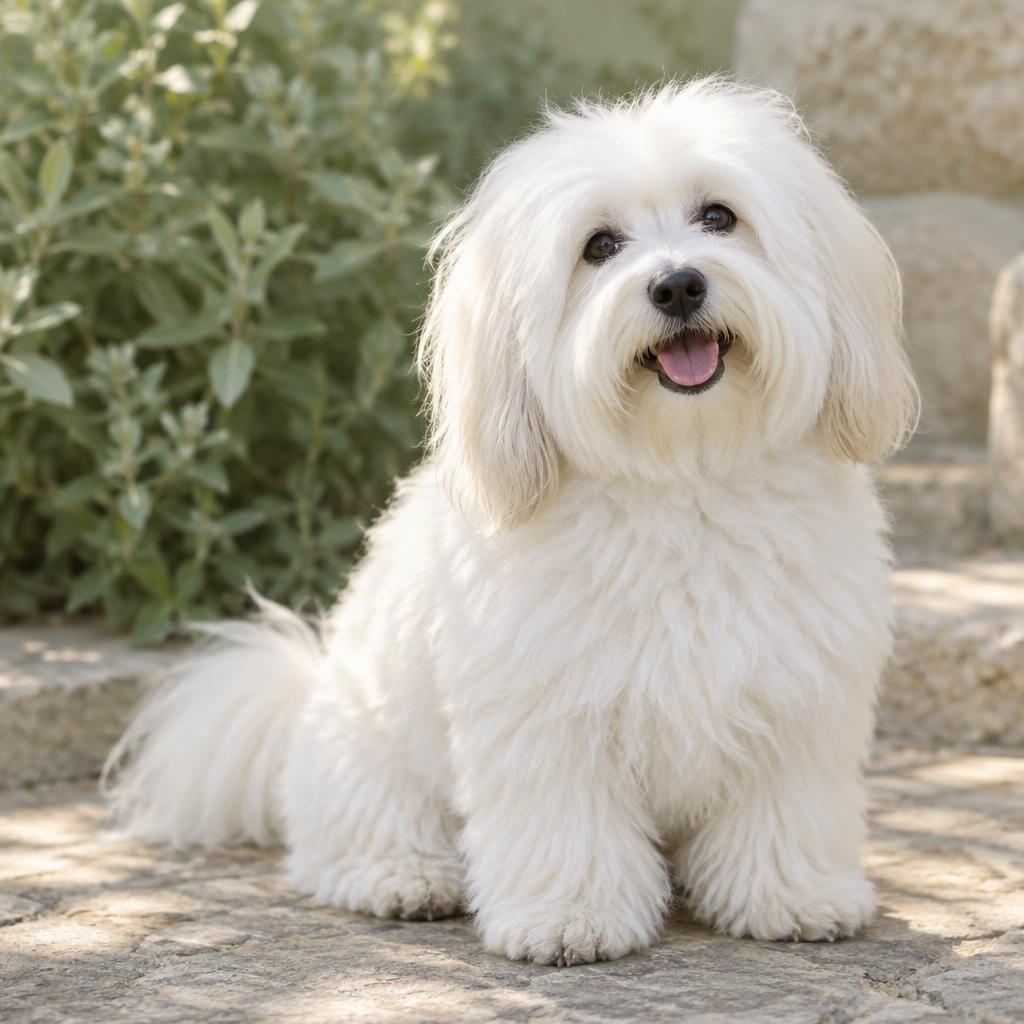
| Coton de Tulear | 3.5 to 6 kg | 5/10 | 7/10 | €94 |
| Cavapoo | 5 to 11 kg | 5/10 | 7/10 | €77 |
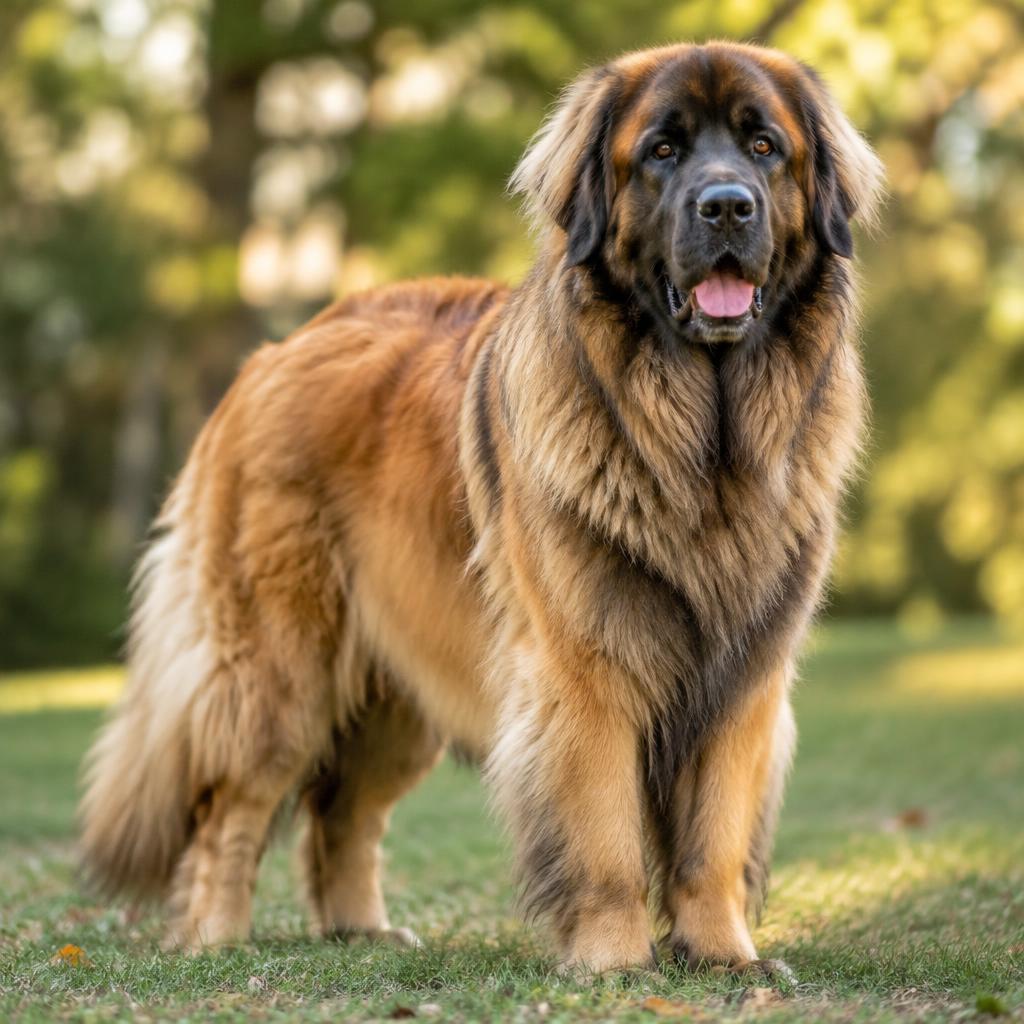
| Leonberger | 45 to 77 kg | 5/10 | 6/10 | €305 |
Chinese Crested questions, answered
What is the difference between Hairless and Powderpuff?
The Hairless has silky hair only on the head, tail and feet; the Powderpuff has a full soft coat. Both come from the same litters and share the same temperament.
Do hairless Chinese Cresteds need sunscreen?
Yes. Their skin burns easily, so use a dog-safe sunscreen or a light top on sunny days.
Are Chinese Cresteds hypoallergenic?
No dog is fully hypoallergenic, but the Hairless barely sheds and the Powderpuff sheds little, which suits some allergy sufferers.
Do Chinese Cresteds get cold?
The Hairless does. A jumper or coat is needed in cool weather.
Can a Chinese Crested be left alone?
Not for long. They bond very closely and separation worry is common; practise short absences from puppyhood.
Are Chinese Cresteds good with children?
With calm, older children, yes. They are fine-boned and sensitive.
How long do Chinese Cresteds live?
They are long-lived, often 13 to 18 years.