

Crossbreed group
United States (modern crossbreed)
Sheepadoodle
A gentle, playful Old English Sheepdog and Poodle cross for active families ready for a big dog and a big grooming routine.
Reviewed by the SniffScroll editorial team
A big, soft-hearted shaggy dog with a grooming bill to match
The short version
- Standard adults usually weigh 20 to 36 kg; Minis 11 to 20 kg
- Low-shedding coat still needs brushing several times a week and a groom every six to eight weeks
- Affectionate and good with children, with a mild herding streak
- Needs 60 to 90 minutes of exercise daily and dislikes long hours alone
- Ask for hip scores and eye tests on both parents
Choose a variety
Old English Sheepdog crossed with a Standard Poodle; the classic big, shaggy Sheepadoodle.
- Weight
- 20 to 36 kg
- Height
- 46 to 60 cm
- Lifespan
- 12 to 15 yrs
- Size
- Large
- Group
- Crossbreed
- Coat
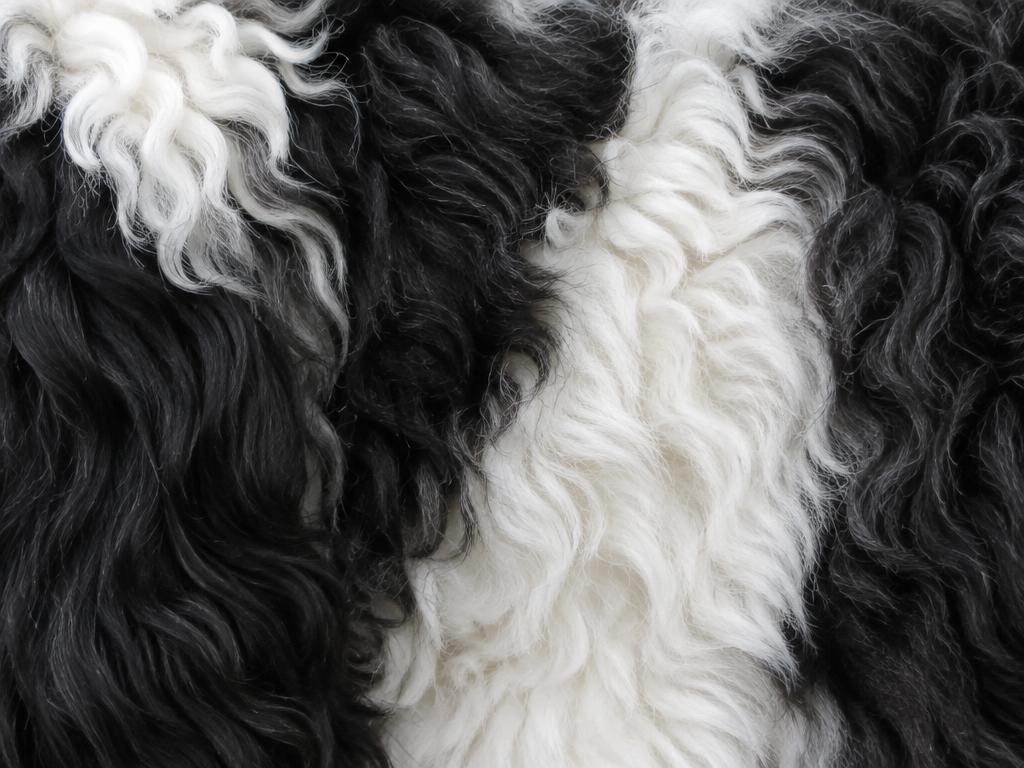
- Wavy to curly fleece
- Daily exercise
- 60 to 90 minutes a day
- Years to full size
- about 2
- One-off setup
- €900 to 1600
Get one if…
- Active families with time at home
- Owners happy to budget for regular professional grooming
- Homes with a garden or easy green space
- People who enjoy training and play
Think again if…
- Owners out at work all day
- Anyone wanting a low-maintenance coat
- Small flats without easy outdoor access
- People expecting a guaranteed hypoallergenic dog
Trait profile
Scores reflect a typical Standard Sheepadoodle; as a crossbreed, individuals vary in size, coat and temperament.
Space & setup. A Standard needs room to move and a garden helps; a Mini copes better with smaller homes if well exercised.
Allergies. Often sheds less than many breeds, but no dog is hypoallergenic; spend time with the adult dog before committing.
Living with a Sheepadoodle
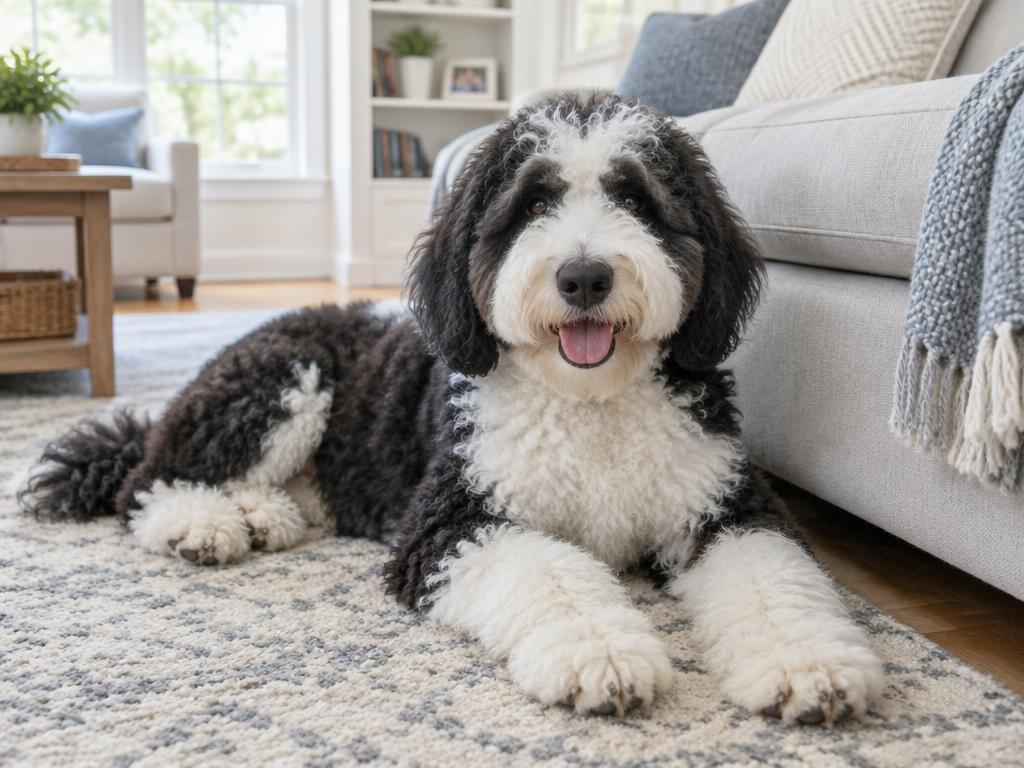
The Sheepadoodle is a cross between the Old English Sheepdog and the Poodle, usually the Standard Poodle. It is gentle, playful and people-focused, with a wavy or curly coat that sheds less than many breeds but needs professional grooming every six to eight weeks.
The Sheepadoodle is what happens when you cross one of Britain's great shaggy herding dogs with one of the cleverest breeds in the world. The Old English Sheepdog brings the teddy bear look, a gentle nature and a love of family life. The Poodle brings brains, athleticism and a coat that tends to shed less. The result, when it goes well, is a big, soft, playful dog that wants to be in the middle of everything.
It is worth being honest about what a crossbreed is. A Sheepadoodle is not a breed with a written standard, so puppies in a first-generation litter can vary a lot. Some look like a black and white Poodle, some like a slimmer Old English Sheepdog, and most land somewhere in between. Standard Sheepadoodles usually weigh 20 to 36 kilograms and stand 46 to 60 centimetres, while Mini Sheepadoodles, made with a Miniature Poodle, are closer to 11 to 20 kilograms. Ask to see both parents and the adult sizes of earlier litters before you trust any size promise.
Temperament is the reason most people fall for them. Sheepadoodles are usually affectionate, patient with children and keen to please. They inherit a little of the Sheepdog's herding instinct, so a young one may try to round up running toddlers or nudge at heels. That is easy to redirect with play and training, but it should be expected. They are clever and learn fast with reward-based methods, and they get bored fast too. A bored Sheepadoodle invents its own games, and those games often involve cushions.
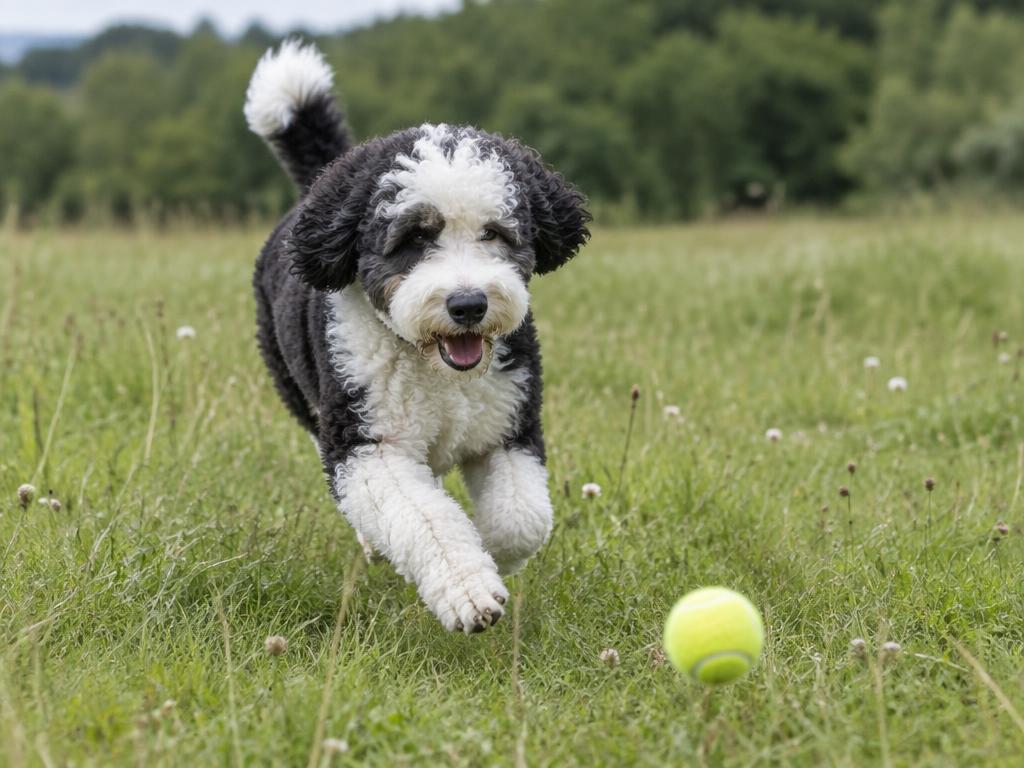
Exercise needs are real but manageable. Plan on 60 to 90 minutes a day for a Standard: a good walk, some free running in a safe space and short training sessions or puzzle feeders. They love fetch, swimming and anything social. They are not a dog for long hours alone; both parent breeds were bred to work closely with people, and many Sheepadoodles become anxious or destructive if left all day.
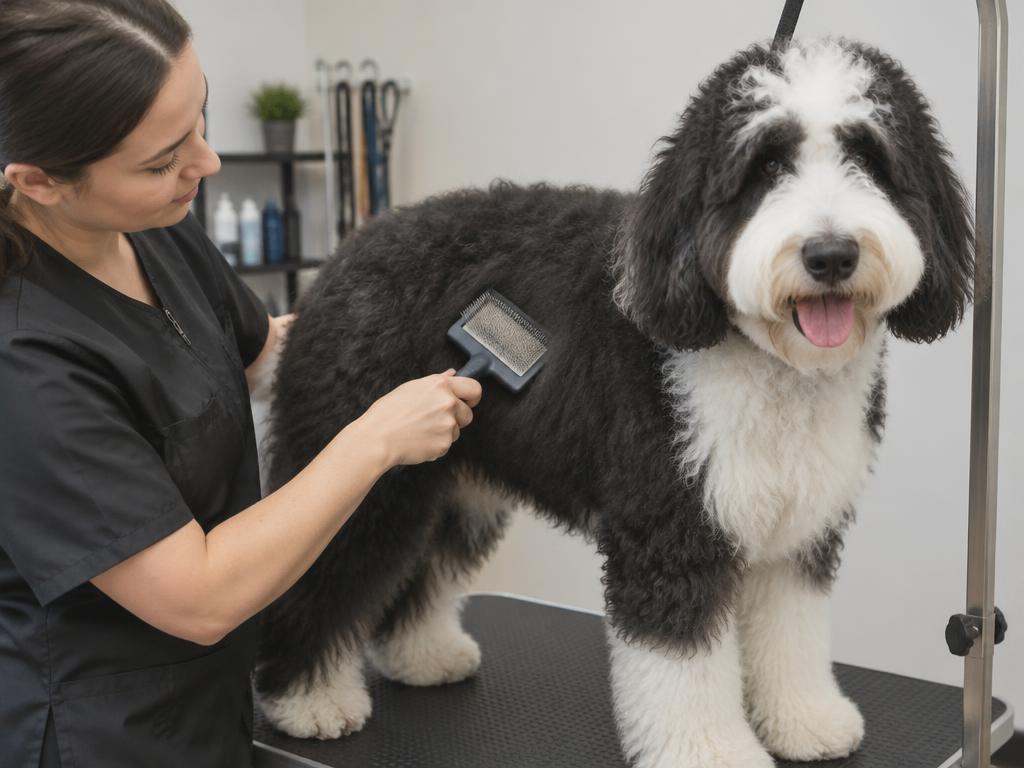
The coat deserves its own paragraph. Low shedding is not the same as no grooming. The wavy or curly fleece traps loose hair, which is why it sheds less onto your sofa, but that trapped hair mats quickly if it is not brushed out. Expect to brush right down to the skin three or four times a week with a slicker brush and a metal comb, and to book a professional groom every six to eight weeks. Many owners keep a shorter clip for practicality. No dog is truly hypoallergenic, and allergy sufferers should spend time with the adult dog before committing.
Health draws on both parents. Hip dysplasia is the main structural concern, so both parents should be hip scored. Eye conditions such as progressive retinal atrophy and cataracts appear in both breeds, so look for current eye examinations and relevant DNA tests. As a large, deep-chested dog, a Sheepadoodle can suffer bloat, and Addison's disease and sebaceous adenitis are known in Standard Poodles. A responsible breeder will show you paperwork, not just promises.
Costs are higher than many people expect. Grooming alone can be 60 to 100 euros a visit, and a large dog eats, and is insured, like a large dog. Set-up costs include a big crate, a sturdy bed, grooming tools and puppy classes.
Who suits a Sheepadoodle? Active families with time at home, a garden or easy access to green space, and a realistic grooming budget. Who should think again? Anyone out at work all day, anyone wanting a tidy wash-and-go dog, and people in small flats without lifts. For the right home, the Sheepadoodle is one of the happiest, most sociable companions you will find.
A warm, goofy family giant with a clever streak; wonderful company, but the coat is a real commitment of time and money.
Exercise, day to day
- 160 to 90 minutes of walking and free play daily
- 2Fetch, swimming or scent games for variety
- 3Short training and puzzle sessions to occupy the clever mind
- 4No forced running or long jogs until fully grown
Grooming, realistically
- 1Brush to the skin three or four times a week
- 2Professional groom every six to eight weeks
- 3Check and clean ears weekly; pluck or trim hair as advised
- 4Brush teeth daily and trim nails monthly
What you actually need
- Slicker brush
- Long-pin metal comb
- Dematting tool
- Ear cleaner
- Dog toothbrush and paste
Puppy to adult
| Age | Male | Female | What is happening |
|---|---|---|---|
| 8 weeks | 4 to 7 kg | 3.5 to 6.5 kg | Fluffy and curious; start handling paws, ears and brushing. |
| 3 months | 8 to 13 kg | 7 to 12 kg | Socialise widely and begin short training sessions. |
| 6 months | 15 to 24 kg | 13 to 21 kg | Puppy coat starts changing; mats form fast, so brush often. |
| 9 months | 19 to 30 kg | 17 to 27 kg | Gangly adolescent; keep exercise steady and avoid forced running. |
| 12 months | 21 to 34 kg | 19 to 31 kg | Near full height; still filling out. |
| 18 to 24 months | 23 to 36 kg | 20 to 33 kg | Fully mature in body and coat. |
Ranges are typical, not targets. Judge condition by ribs and waist, and check with the ideal weight checker.
What to ask a breeder
- Can I meet the mother and see both parents?
- Are both parents hip scored, and what are the scores?
- Have both parents had recent eye examinations and DNA tests?
- Is the Poodle parent a Standard or Miniature?
- How big did adults from earlier litters grow?
- How do you socialise puppies before they leave?
Health tests to ask for
Ask to see results for both parents before you put down a deposit.
- Hip score on both parents
- Eye examination on both parents
- PRA DNA test on the Poodle parent
- Sebaceous adenitis screening on a Standard Poodle parent
Health watch-list
What to ask a breeder about, and what to watch for over a lifetime. This is orientation, not veterinary advice, anything you notice belongs in front of a vet.
Hip dysplasia
CommonPresent in both parent breeds; ask for hip scores and keep puppies lean.
Progressive retinal atrophy
UncommonAn inherited eye disease causing gradual blindness; DNA tests exist for the Poodle form.
Bloat (gastric dilatation volvulus)
UncommonA life-threatening emergency in deep-chested dogs; feed smaller meals and rest after eating.
Addison's disease
UncommonKnown in Standard Poodles; vague signs such as lethargy and vomiting need a vet check.
Sebaceous adenitis
UncommonAn inflammatory skin disease from the Poodle side, causing scaly skin and hair loss.
Ear infections
CommonHairy, folded ears trap moisture; weekly checks and cleaning help prevent problems.
What it costs to keep one
Realistic running cost
€176 / month
About €2,112 a year, or roughly €29,568 across a 14-year life, before purchase price, neutering and one-off vet events.
Before the puppy arrives. Budget roughly €900 to 1600 for a crate, bed, lead and harness, bowls, puppy classes, first vaccinations and grooming kit sized for this breed. Figures throughout are indicative and vary a good deal between countries.
Interactive · built for this breed
Is a Sheepadoodle right for your home?
Seven honest questions about your space, time and household, checked against this breed's exercise need, coat, sociability and tolerance for time alone.
Fit with your routine
91%
A strong fit
Your routine suits a Sheepadoodle well. Meet adult dogs of the line before you commit.
What to sort out first
- Needs more daily exercise than you have pencilled in.
- Coat needs more brushing or trimming than you have allowed.
Compare more breeds in the matchmaker, or plan meals with the portion calculator.
The verdict, by household
First-time owner
Good fit with support
Biddable and kind, but the coat and size need planning.
Family with children
Good fit
Patient and playful; teach children not to run so herding nips do not start.
Active single or couple
Good fit
Loves walks, games and company, if not left alone for long.
Small flat
Often difficult
A Standard needs space; consider a Mini only with daily outdoor time.
When to call your vet
- Lameness or stiffness after rest (hips)
- Swollen belly, retching without bringing anything up (bloat, an emergency)
- Cloudy eyes or bumping into things
- Lethargy, vomiting and weight loss (possible Addison's)
- Patchy hair loss or scaly skin
Nothing here is a diagnosis. A swollen, hard belly with retching, collapse, breathing difficulty and sudden hind-leg weakness are emergencies: go straight away.
Sheepadoodle vs the closest alternatives
| Breed | Weight | Energy | Grooming | € / month |
|---|---|---|---|---|
| Sheepadoodle | 20 to 36 kg | 7/10 | 9/10 | €176 |
| Bernedoodle | 11 to 41 kg | 6/10 | 8/10 | €194 |
| Goldendoodle | 20 to 35 kg | 7/10 | 8/10 | €170 |
| English Setter | 20 to 36 kg | 7/10 | 6/10 | €116 |
Sheepadoodle questions, answered
How big do Sheepadoodles get?
A Standard Sheepadoodle usually weighs 20 to 36 kg and stands 46 to 60 cm. A Mini is closer to 11 to 20 kg. Ask to see both parents and earlier litters.
Are Sheepadoodles hypoallergenic?
No dog is fully hypoallergenic. Sheepadoodles often shed less than many breeds, but they still produce allergens; spend time with adult dogs before committing.
How much grooming does a Sheepadoodle need?
Brush to the skin three or four times a week and book a professional groom every six to eight weeks. Skipping brushing leads to painful mats.
Are Sheepadoodles good with children?
Usually yes. They are gentle and playful, though a mild herding instinct may lead to nudging or nipping at running children, which training can redirect.
How much exercise does a Sheepadoodle need?
Around 60 to 90 minutes a day for a Standard, including free play and mental work. Minis need a little less.
Can a Sheepadoodle be left alone?
Not for long. They bond closely and many become anxious or destructive if left for more than three or four hours.
How long do Sheepadoodles live?
Most live around 12 to 15 years, with Minis often at the upper end.
Sources
Put it into practice
Reading that goes with this



Breeds people compare with this
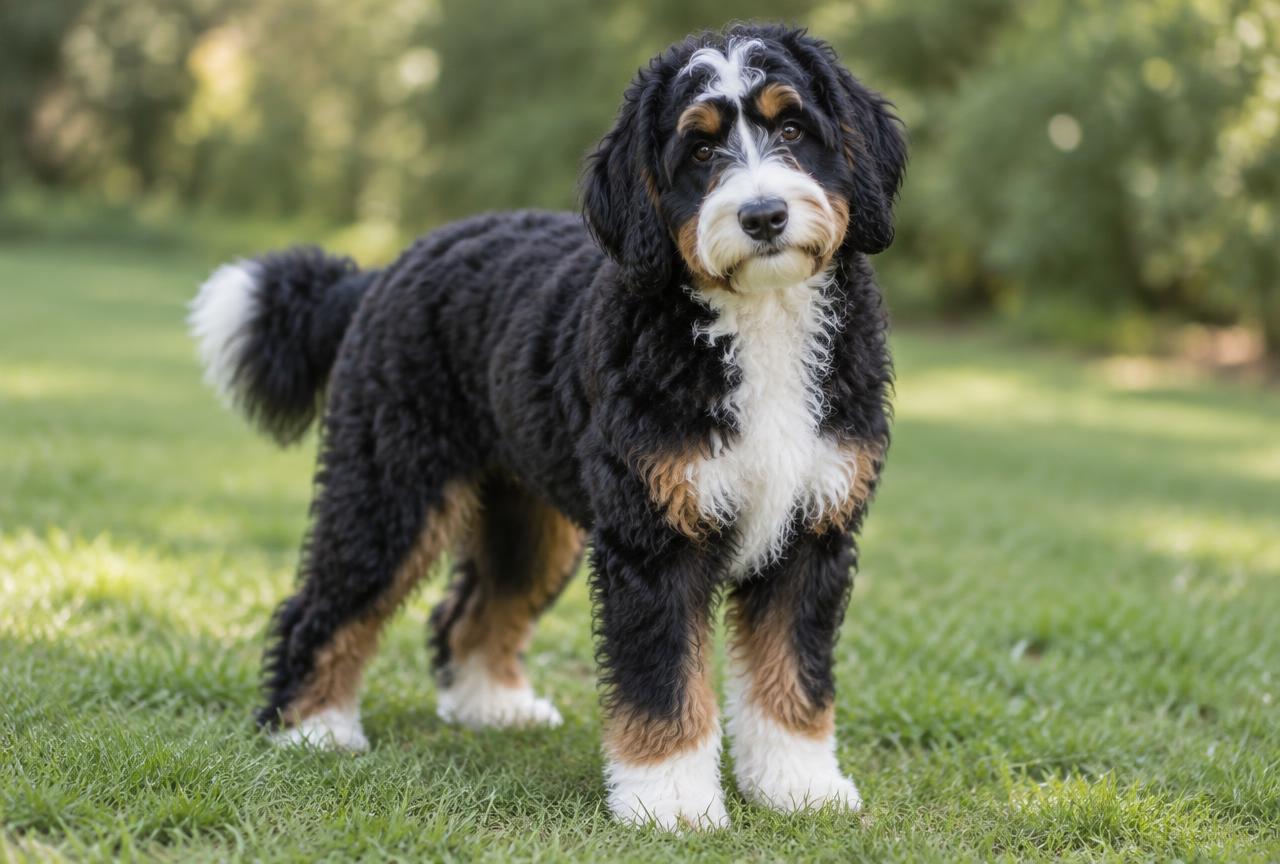
Bernedoodle
The Bernese Mountain Dog-Poodle cross built for family life, with a striking coat and a short lifespan shadow to plan for.

Goldendoodle
A friendly, trainable Golden Retriever and Poodle cross whose coat, size and health depend heavily on the specific pairing behind it.
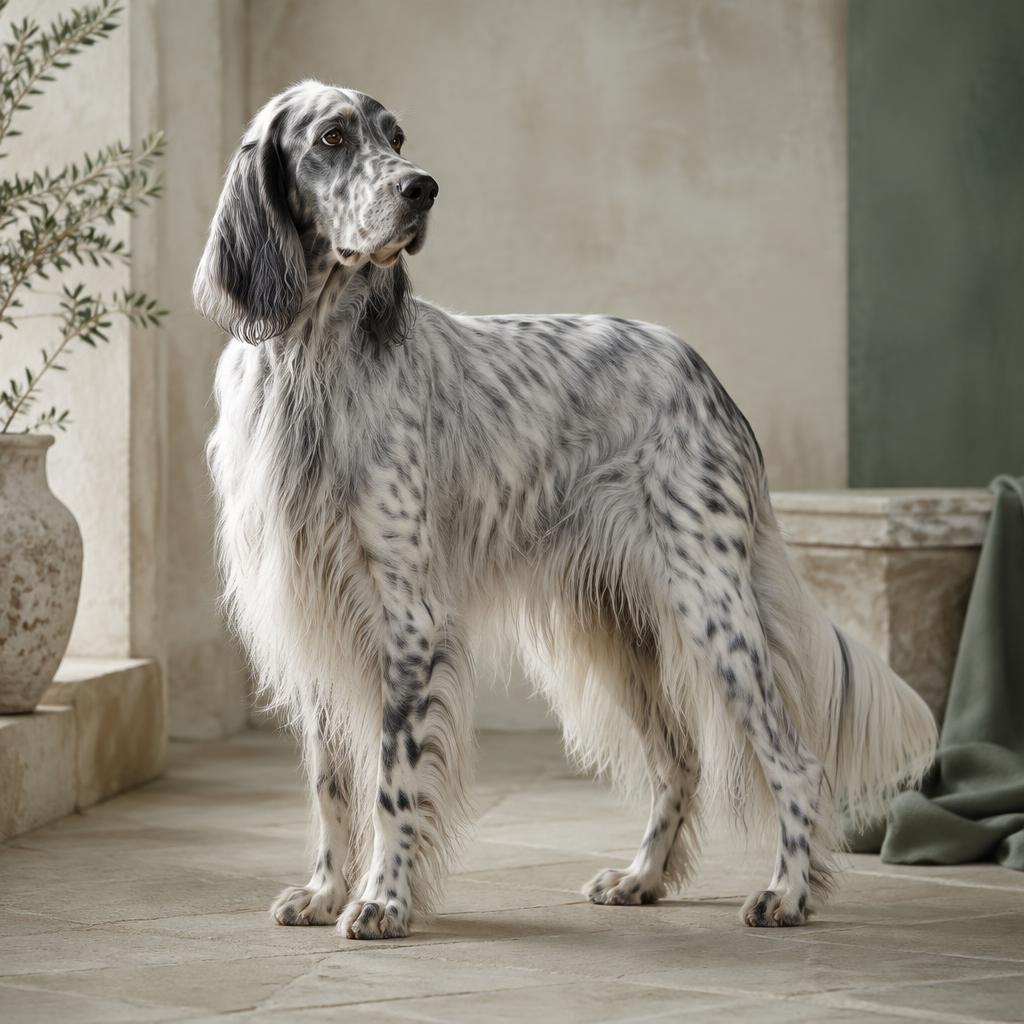
English Setter
The gentleman of the gundogs: soft, sociable and built for open country.