
Crossbreed group
A twenty-first century designer cross first developed in North America, pairing the Swiss working Bernese Mountain Dog with the Poodle, aiming for the Bernese's gentle temperament and striking tricolour looks alongside the Poodle's trainability and lower-shedding coat. Most Bernedoodles sold today are first generation (F1) or first generation backcross (F1b) crosses.
Bernedoodle
The Bernedoodle crosses the Bernese Mountain Dog with the Poodle for an affectionate, trainable family dog with a striking coat. It needs regular grooming, space to grow into and honest expectations about size, coat and the Bernese side's shorter lifespan.
Reviewed by the SniffScroll editorial desk
The Bernese Mountain Dog-Poodle cross built for family life, with a striking coat and a short lifespan shadow to plan for.
The short version
- Affectionate, gentle and trainable, combining the Bernese's temperament with the Poodle's biddability.
- Size varies widely: standard dogs reach 25 to 41 kg, while minis stay much smaller at 11 to 25 kg.
- No crossbreed is truly hypoallergenic, though shedding is often reduced compared with a straight Bernese.
- Both parent breeds need health testing; hips, elbows, eyes and patellas are the practical watch points.
- The Bernese side brings a shorter lifespan risk that good breeding and the Poodle side's hybrid vigour can improve but not remove.
- Grooming is a real weekly commitment, with professional trims every six to eight weeks.
Choose a variety
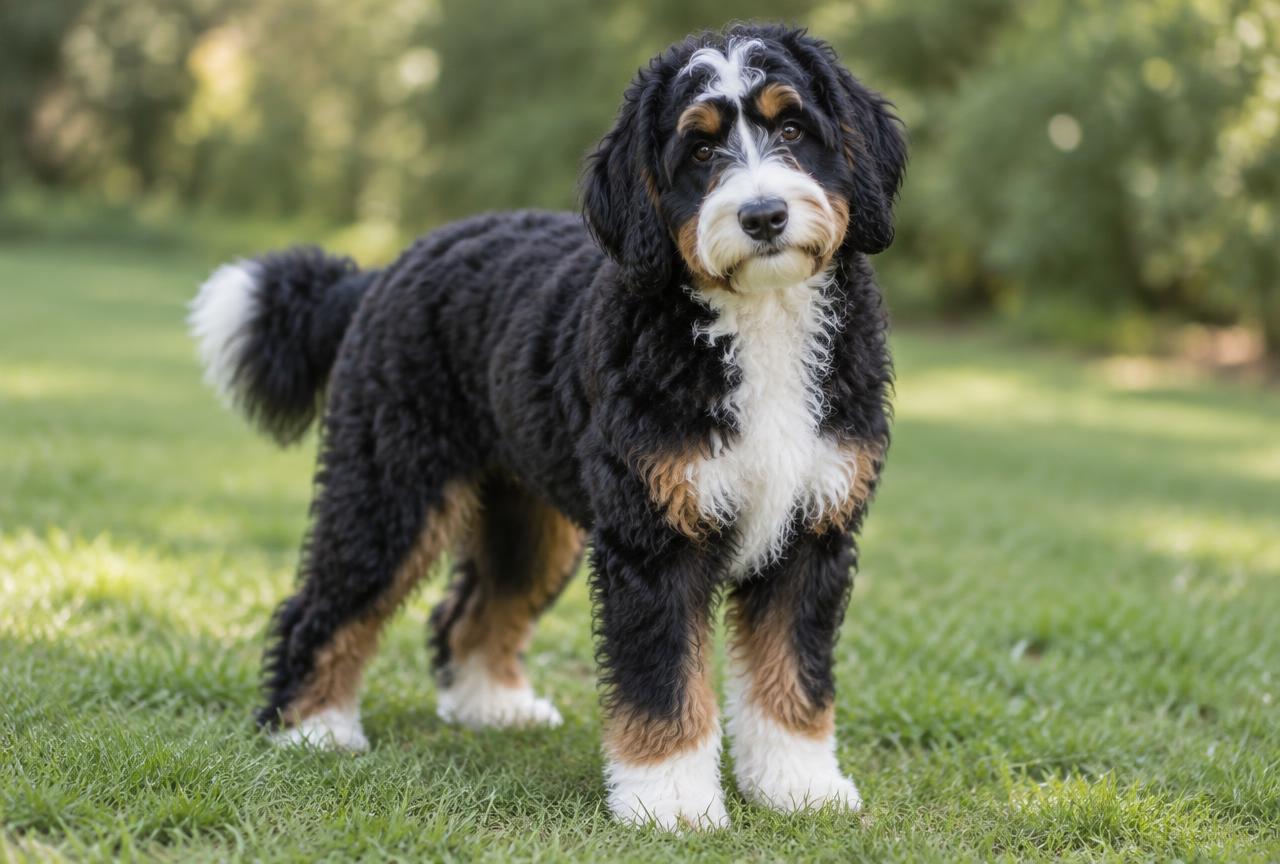
Bred from a Standard Poodle parent, this is the most common variety, strong and sturdy enough for active family life but too large for most flats.
- Weight
- 25 to 41 kg
- Height
- 55 to 70 cm
- Lifespan
- 12 to 15 yrs
- Size
- Large
- Group
- Crossbreed
- Coat
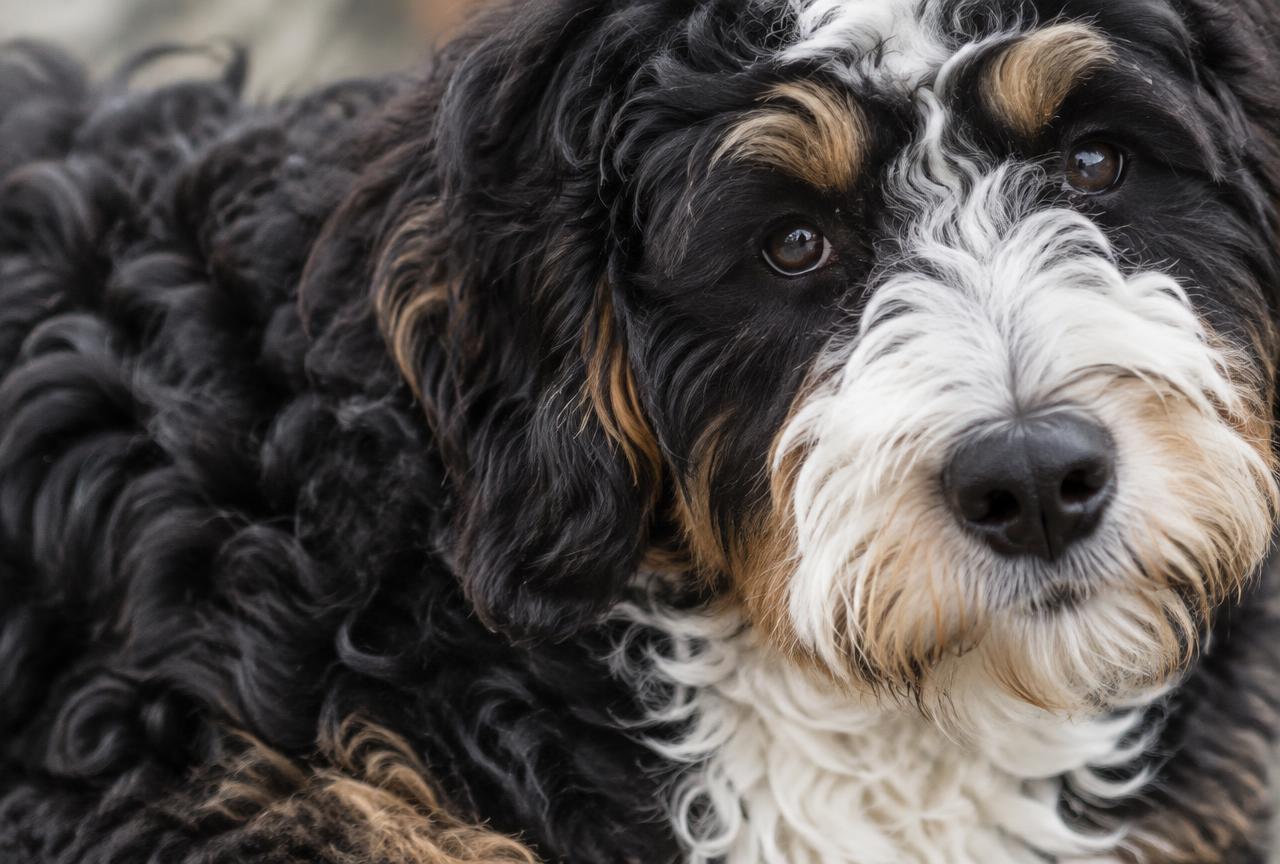
- Wavy to curly, often lower shedding coat, typically tricolour black, white and rust, or black and white, sometimes phantom or sable
- Daily exercise
- 45 to 60 minutes a day
- Years to full size
- about 1.75
- One-off setup
- €1400 to 3200
Get one if…
- Families with children and space for a medium to large dog
- Owners willing to commit to regular grooming and coat care
- Households wanting a trainable, biddable companion
- Buyers who have researched breeders and accept crossbreed variation
- Homes where someone is present for much of the day
Think again if…
- Anyone wanting a guaranteed hypoallergenic or low-shedding dog
- Flats or small homes with no outdoor access for a standard-sized adult
- Households expecting an exact adult size or coat type from a first cross
- Owners unwilling to budget for grooming and health screening costs
- Families wanting a dog that tolerates being left alone for long hours
Trait profile
The Bernedoodle inherits the Bernese's gentle, devoted temperament and the Poodle's trainability, making it affectionate, biddable and family-oriented. The trade-offs are a real grooming commitment and a size range, from mini to standard, that buyers must plan for carefully.
Space & setup. Standard Bernedoodles do best with a garden and regular outdoor access; they are too large for most flats. Mini Bernedoodles are more flexible but still benefit from outdoor space and daily walks.
Allergies. Lower shedding than a straight Bernese is common, especially in F1b crosses bred back to a Poodle, but no crossbreed is truly hypoallergenic. Allergens come from skin and saliva as well as hair, so meet the specific puppy and its parents before committing.
Living with a Bernedoodle
The Bernedoodle is a cross between the Bernese Mountain Dog and the Poodle, bred in standard and mini sizes. Affectionate, biddable and often lower shedding than a straight Bernese, it suits active families with space, but buyers must accept real variation in coat, size and health, and the Bernese side's short lifespan risk.
The Bernedoodle crosses the Bernese Mountain Dog with the Poodle, and it was bred with a clear goal: keep the Bernese's famously gentle, devoted temperament and striking tricolour coat, while reducing shedding and extending working intelligence through the Poodle line. For many families it delivers exactly that. For others, the cross brings two sets of health risks and a size range wide enough to catch buyers off guard.
Start with size, because it varies more here than in most crosses. Standard Bernedoodles, from a Standard Poodle parent, typically reach 25 to 41 kg and 55 to 70 cm at the shoulder, with males generally heavier and taller than females. Mini Bernedoodles, from a Miniature or Toy Poodle parent, can be as small as 11 to 25 kg, a genuinely different dog to live with in terms of space, exercise and furniture damage potential. No breeder can promise an exact adult size from a first-generation litter, and anyone offering guarantees to the kilogram is overselling.
Coat is the second area of real variation. The Bernese parent carries a long double coat that sheds seasonally; the Poodle parent carries a curly, continuously growing coat that sheds very little. First-generation Bernedoodle puppies land anywhere along that spectrum, from a looser wave that sheds moderately to a tight curl that sheds almost nothing but mats without regular brushing. Breeders working with F1b crosses, bred back to a Poodle, tend to produce coats closer to the low-shedding end, but even then nothing is guaranteed. No crossbreed, including this one, is truly hypoallergenic, and allergy sufferers should spend real time with a specific puppy and its parents before committing.
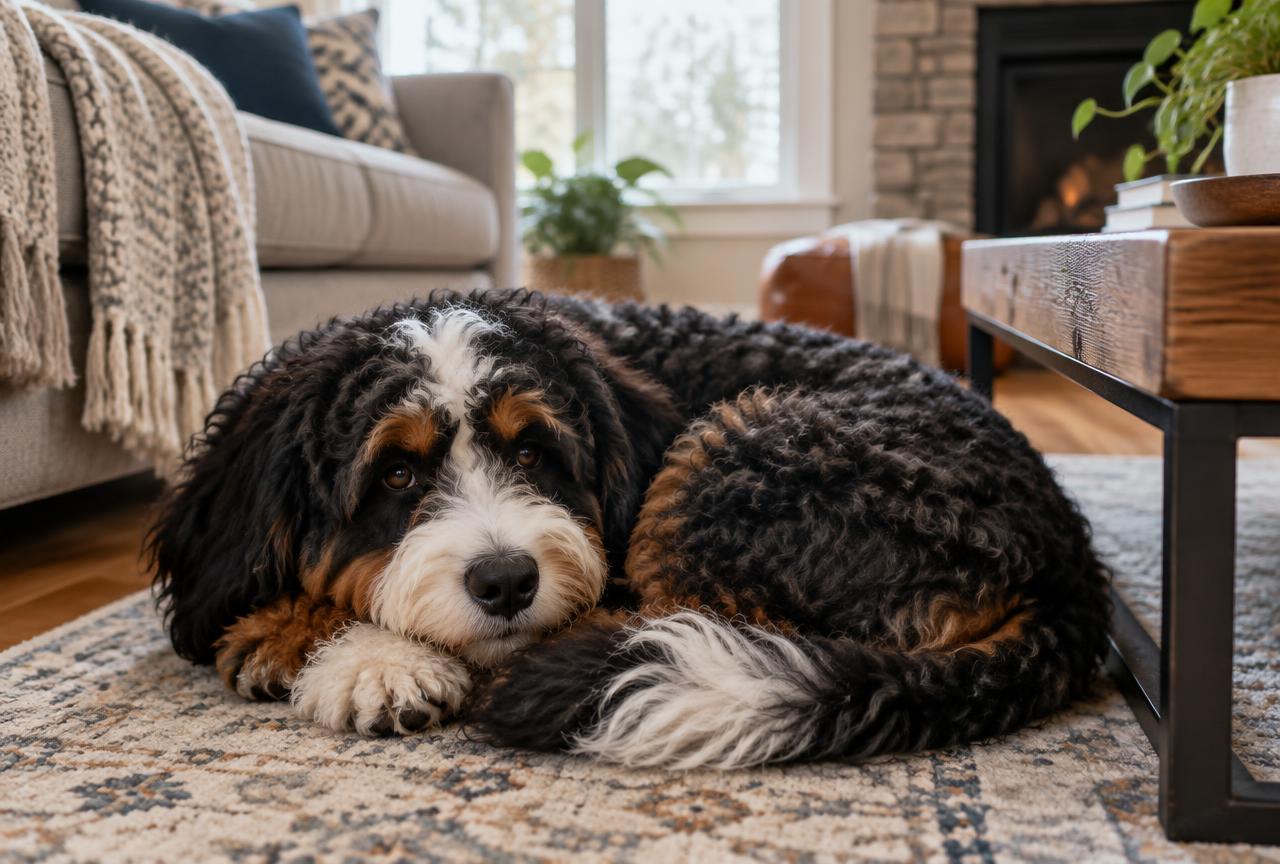
Temperamentally the cross tends to inherit the best of both parents: the Bernese's calm, affectionate loyalty towards its family, and the Poodle's sharp trainability and eagerness to work for food or praise. Most Bernedoodles are excellent with children, generally sociable with other dogs, and form strong bonds with their household. The trade-off is a dog that does not thrive on being left alone for long stretches; separation-related distress is a known issue in the cross, particularly in puppies that have not been taught gradual independence.
Health is where honesty matters most. The Bernese Mountain Dog is, unfortunately, one of the shorter-lived larger breeds, with a meaningful incidence of cancers and a median lifespan that can fall below ten years in some lines. Crossing with the Poodle, a comparatively long-lived and robust breed, tends to improve on this through hybrid vigour, and well-bred Bernedoodles commonly reach twelve to fifteen years, but buyers should not assume the Poodle side erases the risk entirely. Hip and elbow dysplasia are common concerns from the Bernese side, as is degenerative myelopathy in some lines; the Poodle side brings its own watch points around eyes and patellas. A breeder who cannot show hip, elbow and eye certification on both parents is not one to buy from.
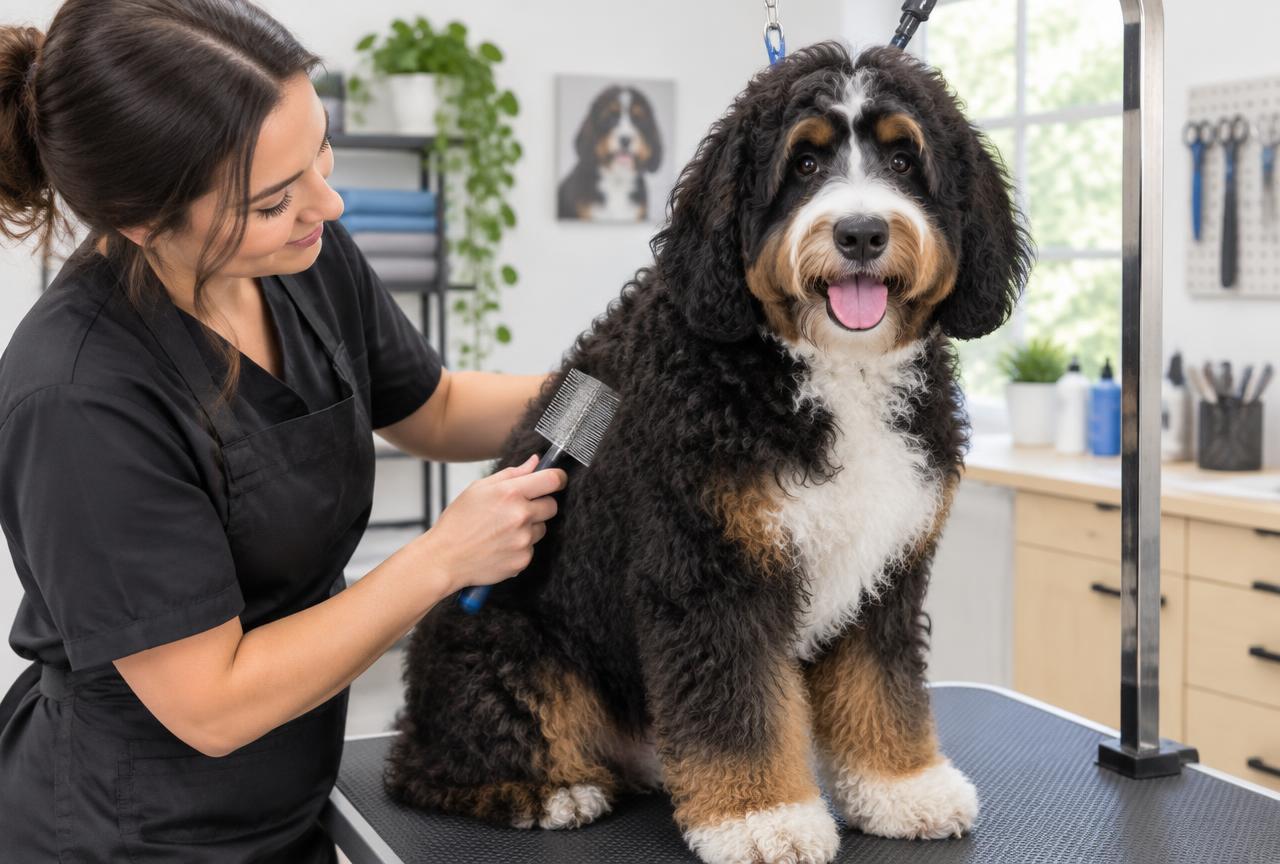
Grooming is a genuine daily and weekly commitment rather than an occasional chore. Wavy to curly coats need brushing several times a week at minimum, and most owners book professional grooming every six to eight weeks to manage length, mats and the face and paw furnishings. Standard-sized dogs take longer to groom than minis simply due to surface area, which is worth factoring into the ongoing cost.
Exercise needs sit in the moderate range: a standard Bernedoodle enjoys a decent daily walk and some off-lead time, but it is not a high-drive working dog that needs hours of exertion. Puppies in particular should have exercise limited while growth plates close, given the size and weight the standard variety reaches.
Overall, this is a strong match for an active family with space, time for grooming, and a willingness to research breeders carefully and accept genuine coat, size and health variation. It is a poor match for a household wanting a guaranteed hypoallergenic dog, a flat with no outdoor access for a standard-sized adult, or anyone unwilling to budget for health testing, grooming and the possibility of breed-related illness later in life. Done well, with a careful breeder and realistic expectations, the Bernedoodle is a loving, good-natured family companion that earns its popularity. Buyers researching a breeder should also ask how the puppies have been raised day to day, since early exposure to household noise, car travel and gentle handling makes a noticeable difference to adult confidence. A well-run litter, kept clean and handled often from birth, tends to produce calmer, more adaptable adults than one raised with minimal human contact.
A warm, family-oriented dog that combines the Bernese's gentle nature with the Poodle's trainability and lower-shedding coat, provided buyers accept real variation between individuals and the Bernese side's shorter lifespan.
Exercise, day to day
- 1Puppies (8 to 20 weeks): short, gentle play sessions and brief outings; avoid stairs and jumping while joints are developing.
- 2Adolescents (4 to 12 months): two moderate walks daily plus supervised play, keeping high-impact exercise limited until growth plates close.
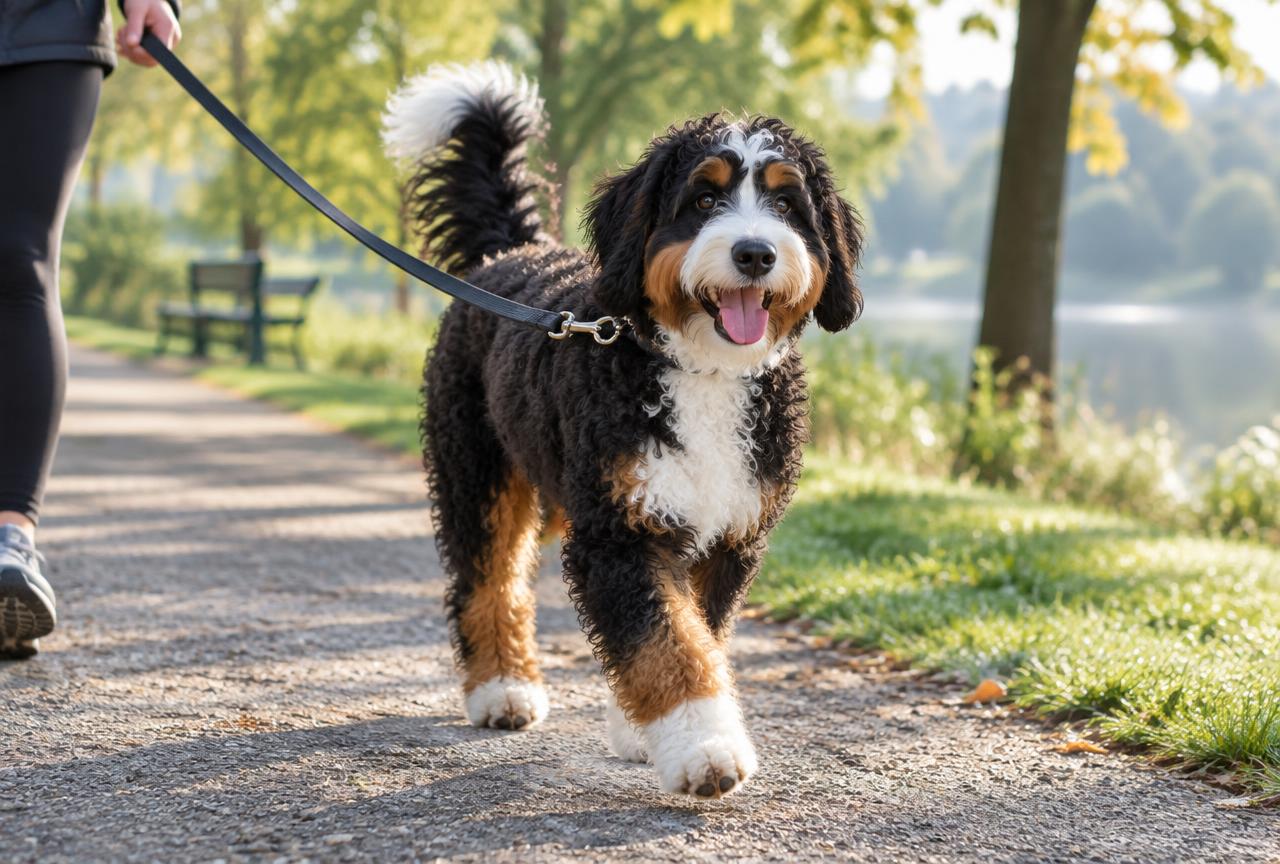
- 3Adults: 45 to 60 minutes daily for standard dogs, split between walks and off-lead time where safe; minis need somewhat less.
- 4Mental work: puzzle feeders, scent games and ongoing obedience training suit the Poodle side's intelligence and prevent boredom.
Grooming, realistically
- 1Brush three to four times a week with a slicker brush and comb through to the skin to prevent matting.
- 2Book professional grooming every six to eight weeks for a trim, de-shed and sanitary clip.
- 3Check and clean ears weekly, as floppy ears with hair growth can trap moisture.
- 4Trim nails every three to four weeks and brush teeth several times a week.
- 5Bathe every four to six weeks, or sooner after muddy walks, drying the coat fully to prevent skin issues.
What you actually need
- Slicker brush
- Wide-tooth comb
- Blunt-ended scissors for face and paws
- Dog nail clippers or grinder
- Ear cleaning solution
- Enzymatic dog toothpaste and brush
Puppy to adult
| Age | Male | Female | What is happening |
|---|---|---|---|
| 8 weeks | 4 to 6 kg | 3.5 to 5.5 kg | Soft and clumsy; begin gentle handling and early socialisation with a range of people and surfaces. |
| 3 months | 8 to 12 kg | 7 to 11 kg | Rapid growth phase begins; keep exercise gentle to protect developing joints. |
| 6 months | 16 to 24 kg | 14 to 21 kg | Significant size gain; avoid excessive jumping or long runs while bones are still forming. |
| 9 months | 21 to 30 kg | 18 to 26 kg | Adolescent stage; training consistency matters as confidence and size both increase. |
| 12 months | 24 to 35 kg | 21 to 30 kg | Close to adult height, though the frame is still filling out with muscle and coat. |
| 18 months | 27 to 41 kg | 23 to 34 kg | Physically mature for most standard Bernedoodles; coat texture may still be settling into its adult pattern. |
Ranges are typical, not targets. Judge condition by ribs and waist, and check with the ideal weight checker.
What to ask a breeder
- Have both parents been hip, elbow and eye tested, with results on file?
- Is there any history of degenerative myelopathy or early cancer in the lines?
- Is this an F1 or F1b cross, and what coat and size range do previous litters show?
- Can I meet the mother and see how she and the litter are socialised?
- What is the typical adult size and lifespan seen in your previous litters?
Health tests to ask for
Ask to see results for both parents before you put down a deposit.
- Hip and elbow scoring for both parents
- Eye examination and PRA DNA status on the Poodle side
- Degenerative myelopathy DNA testing where available
- Patella examination
- Cardiac check given cancer and heart concerns noted in Bernese lines
Health watch-list
What to ask a breeder about, and what to watch for over a lifetime. This is orientation, not veterinary advice, anything you notice belongs in front of a vet.
Hip dysplasia
CommonInherited from the Bernese side and seen across larger breeds generally; hip scoring on both parents is the practical safeguard.
Elbow dysplasia
CommonA related joint condition in larger dogs; ask for elbow grading alongside hip scores before buying a puppy.
Degenerative myelopathy
UncommonA progressive spinal condition reported in Bernese lines; DNA testing of parents can identify carriers and reduce risk.
Certain cancers
NotableThe Bernese Mountain Dog has a notably higher cancer incidence than many breeds; the Poodle side's hybrid vigour can help, but it does not remove the risk.
Progressive retinal atrophy
UncommonInherited from the Poodle side; DNA testing of parents removes most of the risk, so ask for certificates.
Luxating patella
UncommonA slipping kneecap can occur in either parent line; a patella examination on breeding stock is a sensible check.
What it costs to keep one
Realistic running cost
€194 / month
About €2,328 a year, or roughly €32,592 across a 14-year life, before purchase price, neutering and one-off vet events.
Before the puppy arrives. Budget roughly €1400 to 3200 for a crate, bed, lead and harness, bowls, puppy classes, first vaccinations and grooming kit sized for this breed. Figures throughout are indicative and vary a good deal between countries.
Interactive · built for this breed
Is a Bernedoodle right for your home?
Seven honest questions about your space, time and household, checked against this breed's exercise need, coat, sociability and tolerance for time alone.
Fit with your routine
95%
A strong fit
Your routine suits a Bernedoodle well. Meet adult dogs of the line before you commit.
What to sort out first
- Needs more daily exercise than you have pencilled in.
- Coat needs more brushing or trimming than you have allowed.
Compare more breeds in the matchmaker, or plan meals with the portion calculator.
The verdict, by household
Suitable with preparation
Trainable and affectionate, but the size, grooming needs and health research required mean a first-timer should go in well informed.
Excellent
Gentle, sturdy and patient, the Bernedoodle is one of the better crossbreed matches for family life, within reason for puppy and child size.
Good
Enjoys daily walks and outdoor time, though it is not a high-endurance working dog and values company over distance.
Poor for standard size
Standard Bernedoodles need space and a garden; a mini variety and a ground-floor flat with outdoor access could work, but it is not an easy flat dog.
When to call your vet
- Stiffness, limping or reluctance to climb stairs, which can signal hip or elbow dysplasia
- Hind-leg weakness, scuffing or incoordination, worth checking for degenerative myelopathy
- Cloudy eyes or bumping into furniture, worth an eye examination
- Skipping or hopping on a hind leg, which can signal a slipping kneecap
- Lumps, unexplained weight loss or lethargy, which warrant prompt veterinary attention given the breed's cancer risk
Nothing here is a diagnosis. A swollen, hard belly with retching, collapse, breathing difficulty and sudden hind-leg weakness are emergencies: go straight away.
Bernedoodle vs the closest alternatives
| Breed | Weight | Energy | Grooming | € / month |
|---|---|---|---|---|
| Bernedoodle | 11 to 41 kg | 6/10 | 8/10 | €194 |
| Cockapoo | 4.5 to 11 kg | 6/10 | 8/10 | €163 |
| Goldendoodle | 20 to 35 kg | 7/10 | 8/10 | €170 |
| Labradoodle | 15 to 30 kg | 8/10 | 7/10 | €209 |
Bernedoodle questions, answered
What is a Bernedoodle?
A Bernedoodle is a cross between the Bernese Mountain Dog and the Poodle, bred for an affectionate temperament, a striking tricolour coat and often reduced shedding compared with a straight Bernese.
Are Bernedoodles hypoallergenic?
No crossbreed is truly hypoallergenic. Bernedoodles, especially F1b crosses bred back to a Poodle, often shed less than a straight Bernese, but allergens come from skin and saliva as well as hair. Spend time with the puppy and its parents before committing.
How big do Bernedoodles get?
Standard Bernedoodles typically reach 25 to 41 kg and 55 to 70 cm at the shoulder. Mini Bernedoodles, from a Miniature Poodle parent, are much smaller at around 11 to 25 kg. Breeders cannot guarantee an exact adult size from a first cross.
How long do Bernedoodles live?
Typically twelve to fifteen years. The Bernese Mountain Dog side carries a shorter lifespan risk, including a higher cancer incidence, but the Poodle side's hybrid vigour tends to improve on this in well-bred crosses.
Do Bernedoodles shed?
Less than a straight Bernese Mountain Dog in most cases, particularly in F1b crosses, but coat type varies between individuals and some shed moderately. No crossbreed sheds nothing at all.
What is a mini Bernedoodle?
A mini Bernedoodle is bred from a Miniature or Toy Poodle parent rather than a Standard Poodle, producing a smaller adult, usually 11 to 25 kg, that suits a wider range of homes while keeping much of the standard variety's temperament.
Are Bernedoodles good with children?
Yes, generally. The breed is known for being gentle, patient and sociable with children, though supervision is still needed with a puppy or a very young child given the size the standard variety reaches.
Sources
Put it into practice
Reading that goes with this




Breeds people compare with this
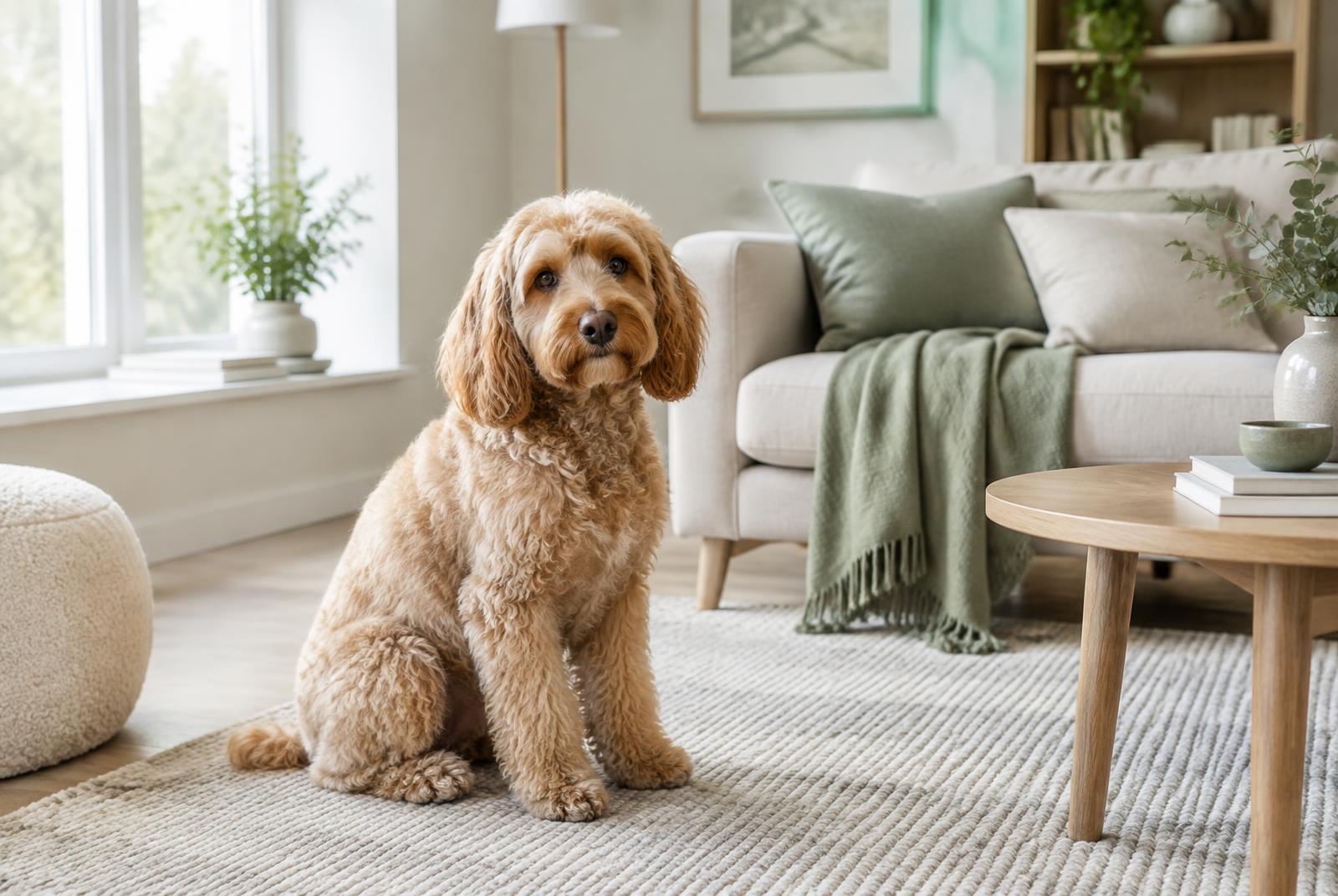
Cockapoo
An affectionate Cocker Spaniel and Poodle cross where coat, size and energy vary litter to litter, so no two Cockapoos are quite alike.
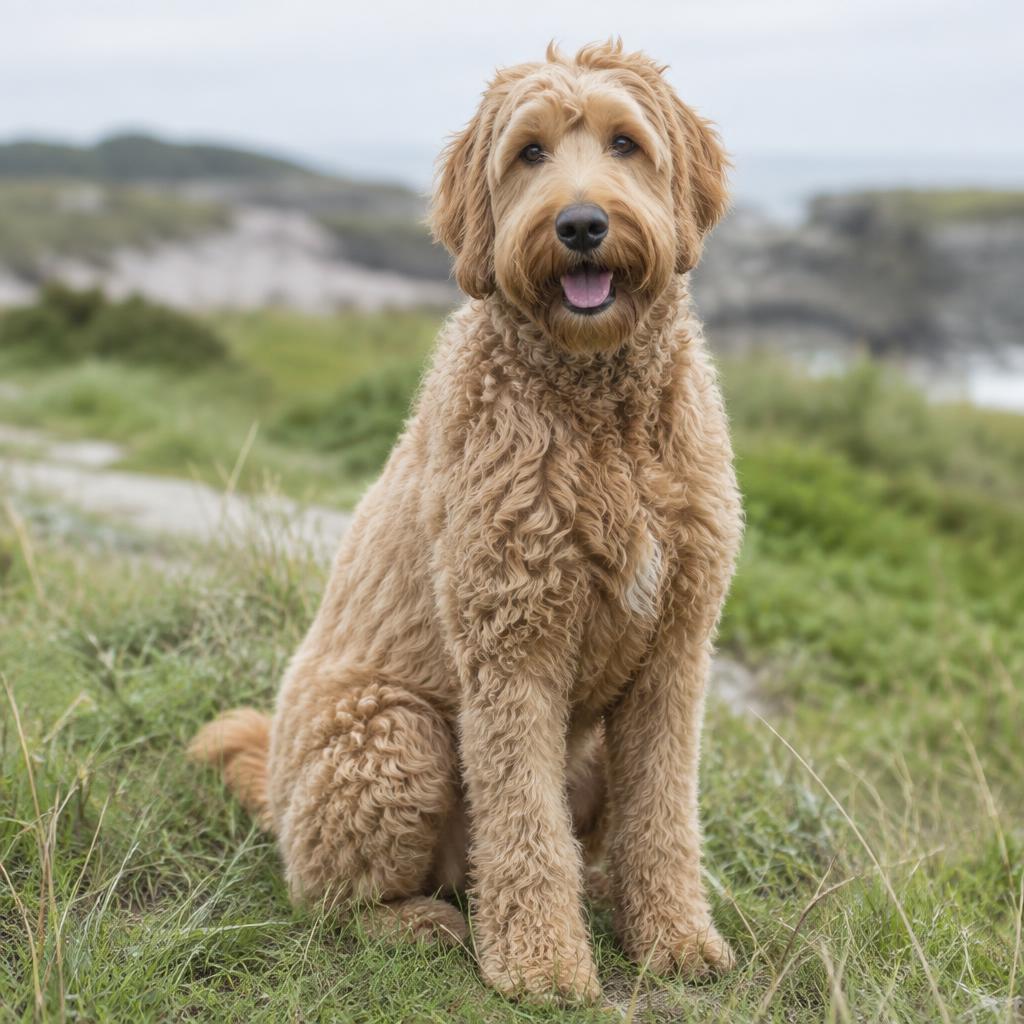
Goldendoodle
A friendly, trainable Golden Retriever and Poodle cross whose coat, size and health depend heavily on the specific pairing behind it.
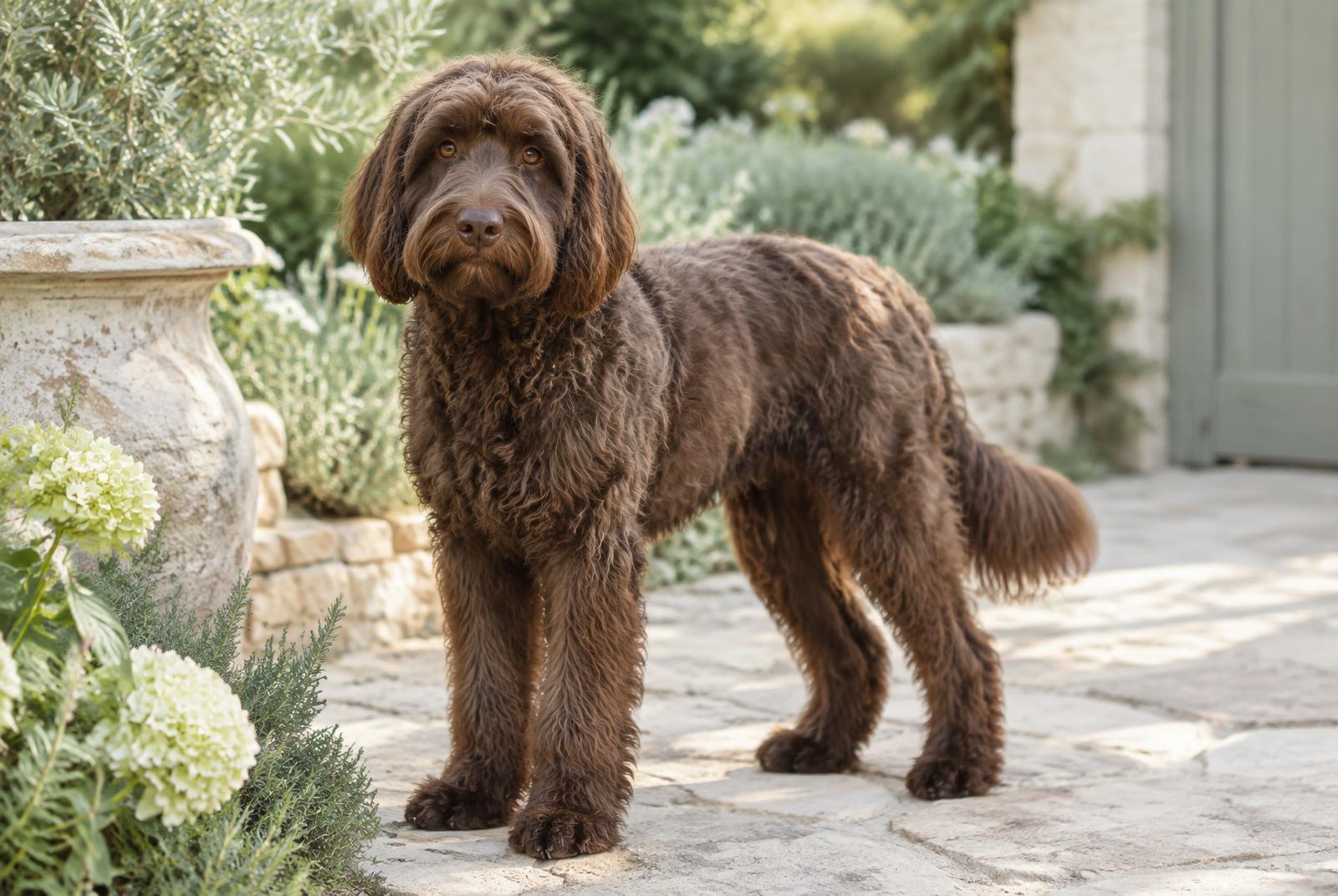
Labradoodle
A Labrador and Poodle cross that is usually bigger, bouncier and more energetic than people expect, with coat and size that vary by line.