
Why Does My Dog Follow Me Everywhere?
The velcro dog explained: why some dogs shadow their people from room to room, when it is a healthy bond, and the signs that it is tipping into separation anxiety.
The SniffScroll desk
Published 10 October 2026
Reviewed by the SniffScroll editorial team
The short version
- Following you is normal social behaviour; dogs are pack animals and you are the pack.
- Herding, gundog and companion breeds are famously velcro; it is in the job description.
- The line between attachment and anxiety is distress: a calm shadow is love, a panicking one is a problem.
- A settle cue and tiny practised absences build independence without stressing the bond.
You get up to make tea and the dog gets up. You move to the sofa and the dog relocates. You go to the bathroom and a nose appears at the door. Living with a "velcro dog" is equal parts flattering and faintly exhausting, and the question every shadowed owner eventually asks is whether it is love, habit, or something that needs attention.
The honest answer is that following you around is usually a sign of a healthy bond and a social animal doing what social animals do. Occasionally it is the early shape of separation anxiety. This guide helps you tell the difference.
Why dogs follow their people
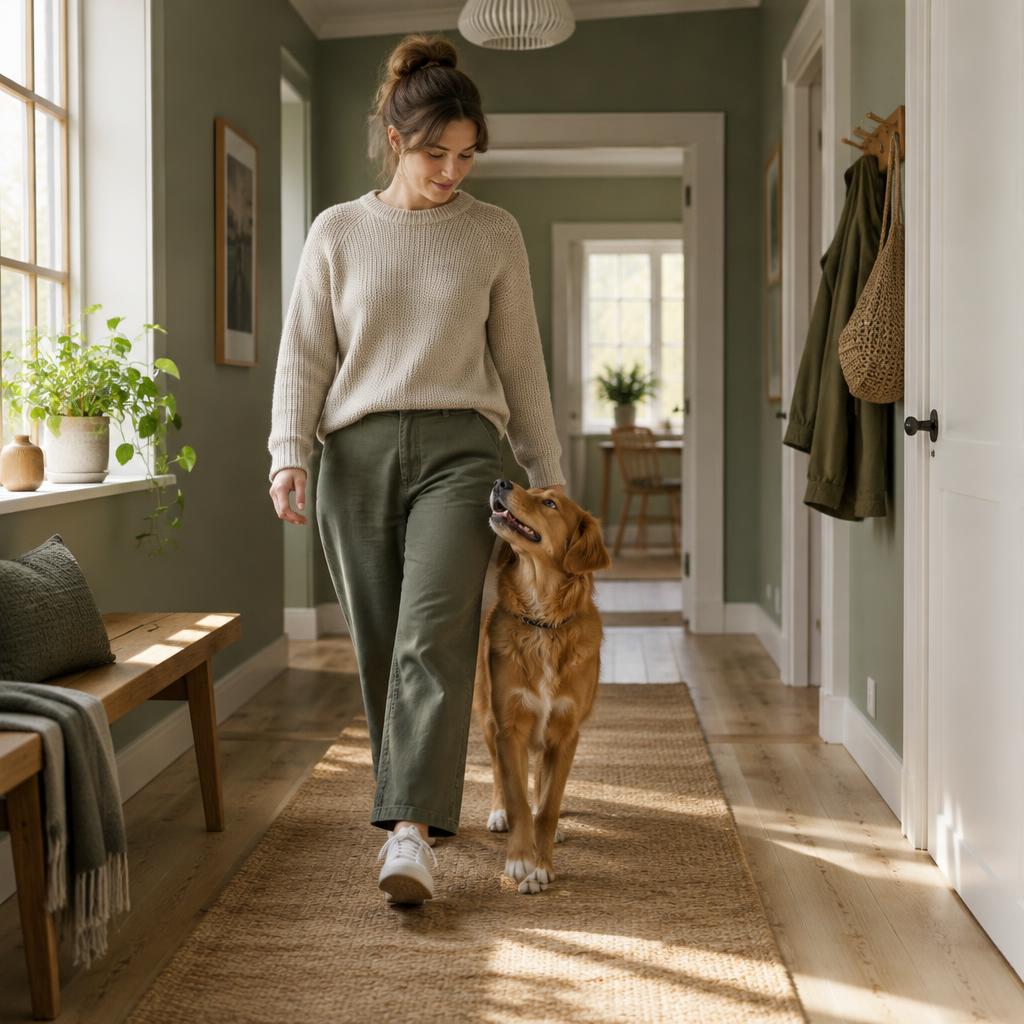
Dogs follow their owners because they are social pack animals who find their person interesting, rewarding and reassuring; in most cases it is simply attachment, and a compliment.
Several perfectly healthy drives sit behind the shadowing:
- Social nature. Dogs evolved alongside people for tens of thousands of years, and staying close to the group is deeply normal behaviour. You are the group.
- You are the source of good things. Food, walks, play, warmth and praise all come from you. Following you is a rational strategy.
- Reinforcement. If trailing you to the kitchen sometimes produces a dropped scrap, or following you to the door sometimes produces a walk, the behaviour is being quietly rewarded.
- Breed tendency. Some breeds were developed to work in close partnership with people. Herding breeds like the Border Collie, gundogs like the Labrador, and the classic companion breeds are famously "velcro". It is in the job description.
- Age. Puppies follow because the world is big and you are safety. Seniors often follow more as senses fade and they rely on you to navigate.
When following is completely normal
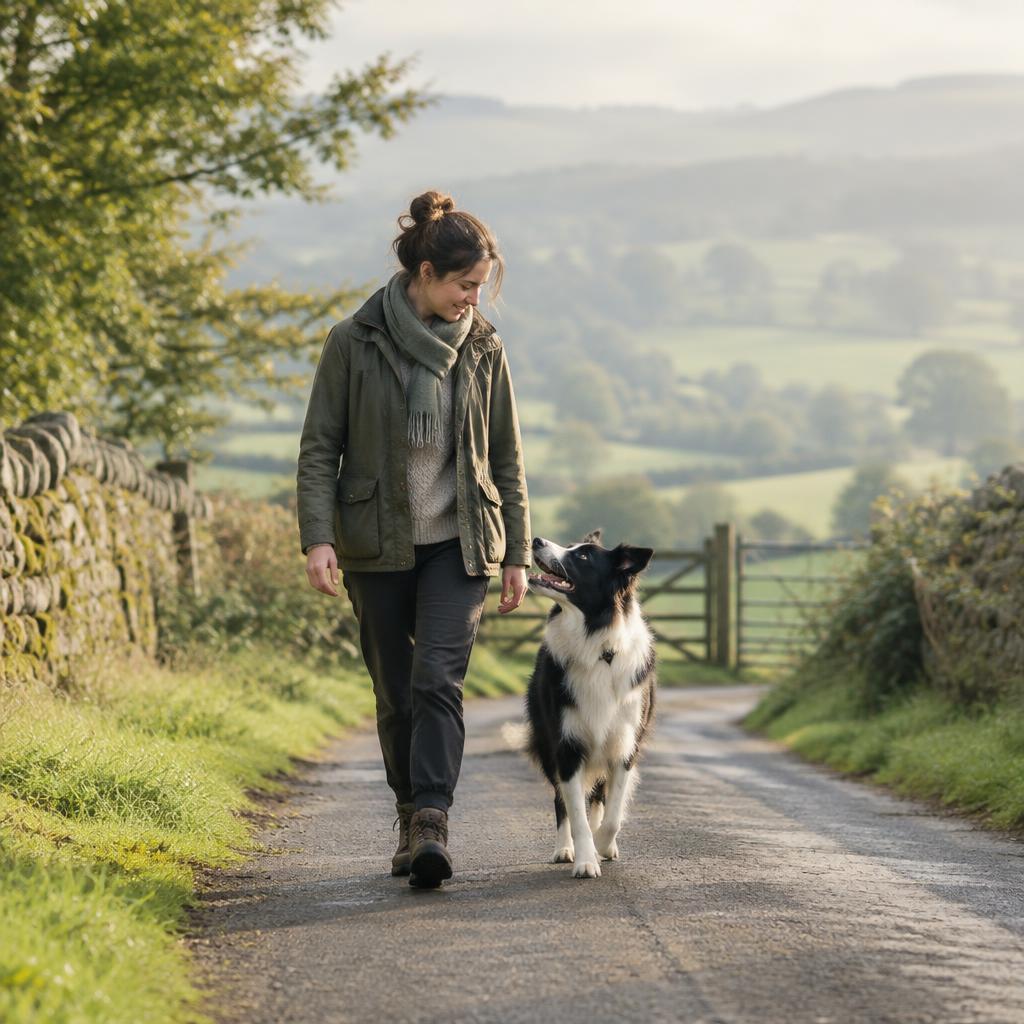
Following is normal when your dog is relaxed, can settle when you are still, and copes calmly when you leave; the behaviour itself matters less than the emotional state behind it.
A happily attached dog shows these signs:
- Follows you, but settles with a sigh and a nap once you sit down
- Greets your departures with mild interest rather than panic
- Can be left in another room, or home alone, without distress
- Follows other family members too, at least some of the time
- Is easily redirected to a toy, a chew or their bed
If that describes your dog, you do not have a problem. You have a dog who likes you, which is rather the point of the whole arrangement.
The line between attachment and anxiety
The line is distress: a dog who follows you calmly is attached, while a dog who cannot settle, who panics when you prepare to leave, or who is destructive when alone is showing separation anxiety.
Watch for the warning cluster:
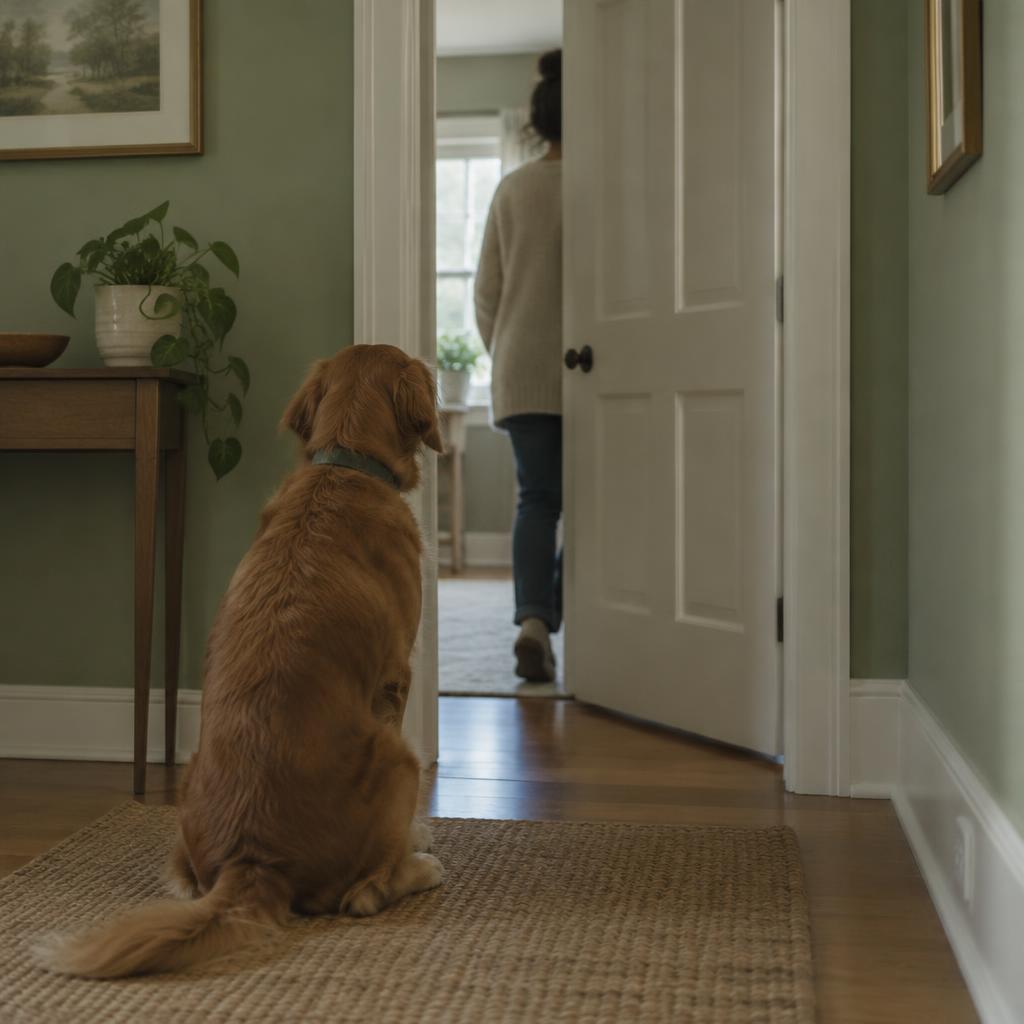
- Following with tension. The dog shadows you but never fully relaxes, startles when you stand, and watches your every move.
- Pre-departure anxiety. Panting, pacing, whining or trembling when you pick up keys or put on shoes.
- Distress when alone. Barking, howling, destruction, house-soiling or escape attempts that happen only when you are out. A camera, even a phone propped on a shelf, settles this question definitively.
- Over-the-top reunions. Greetings that are frantic and prolonged rather than joyful and brief.
- A sudden change. A dog who was independent and becomes a shadow overnight is telling you something has changed, in their world or their health.
If several of these ring true, read our guide to dog separation anxiety, which covers the training plan in detail, and consider a chat with your vet or a qualified behaviourist. Separation anxiety is common, treatable, and much easier to fix early.
Interactive · velcro checker
Devoted shadow or something more?
Answer four questions about how your dog follows and copes. We will tell you whether it is healthy attachment or the early shape of anxiety.
What to do
- Enjoy it; calm following is a sign of a good bond, not a problem.
- Teach a settle on a mat so your dog has an official parking spot that is not under your feet.
Healthy attachment: a dog who simply likes you
The behaviour matters less than the emotion behind it: a calm shadow is love, a distressed one is a treatable problem.
Other reasons a dog suddenly becomes a shadow
A sudden increase in following can be triggered by changes at home, fear, pregnancy, ageing or illness, so new clinginess in a previously independent dog deserves a moment's thought.
The usual suspects:
- Change in the household. A move, a new baby, a new pet, a bereavement or a change in your working pattern can all make a dog seek reassurance.
- Fear. Thunder, fireworks, building work next door; a frightened dog glues itself to its safest person.
- Ageing. Failing sight or hearing, and the early stages of cognitive decline, make senior dogs rely on you more. Our piece on how long dogs live touches on the senior years more broadly.
- Feeling unwell. Dogs who are nauseous, painful or off colour often stay close. If the clinginess comes with any physical sign, vet first, training second.
- Season and hormones. A bitch in season, or one experiencing a phantom pregnancy, may become notably clingy for a few weeks.
Should you encourage independence?
A little structured independence training is good for every dog, even a happily attached one, because a dog who can settle alone is a dog with a more robust life.
The goal is not to make your dog love you less; it is to make alone time safe and boring rather than alarming. Practical steps:
- 1Teach a "settle" on a mat. Reward calm lying on a specific bed or mat, first beside you, then a pace away, then across the room. This becomes a portable off-switch.
- 2Practise tiny absences. Step out of the room for a few seconds, return before any worry, and build up slowly. Dozens of easy repetitions beat one heroic hour.
- 3Make your movements boring. Pick up your keys, then sit back down. Put on your coat, then make tea. When departure cues stop predicting departure, they stop producing anxiety.
- 4Give the nose a job. A stuffed food toy or a scatter of treats in the grass gives your dog something better to do than monitor you.
- 5Reward calm, ignore the shadow. Quietly reinforce the moments your dog chooses to settle away from you, and avoid making a fuss of the following itself.
- 6Keep departures and returns low-key. No long goodbyes, no ecstatic reunions. Calm in, calm out.
Living happily with a velcro dog
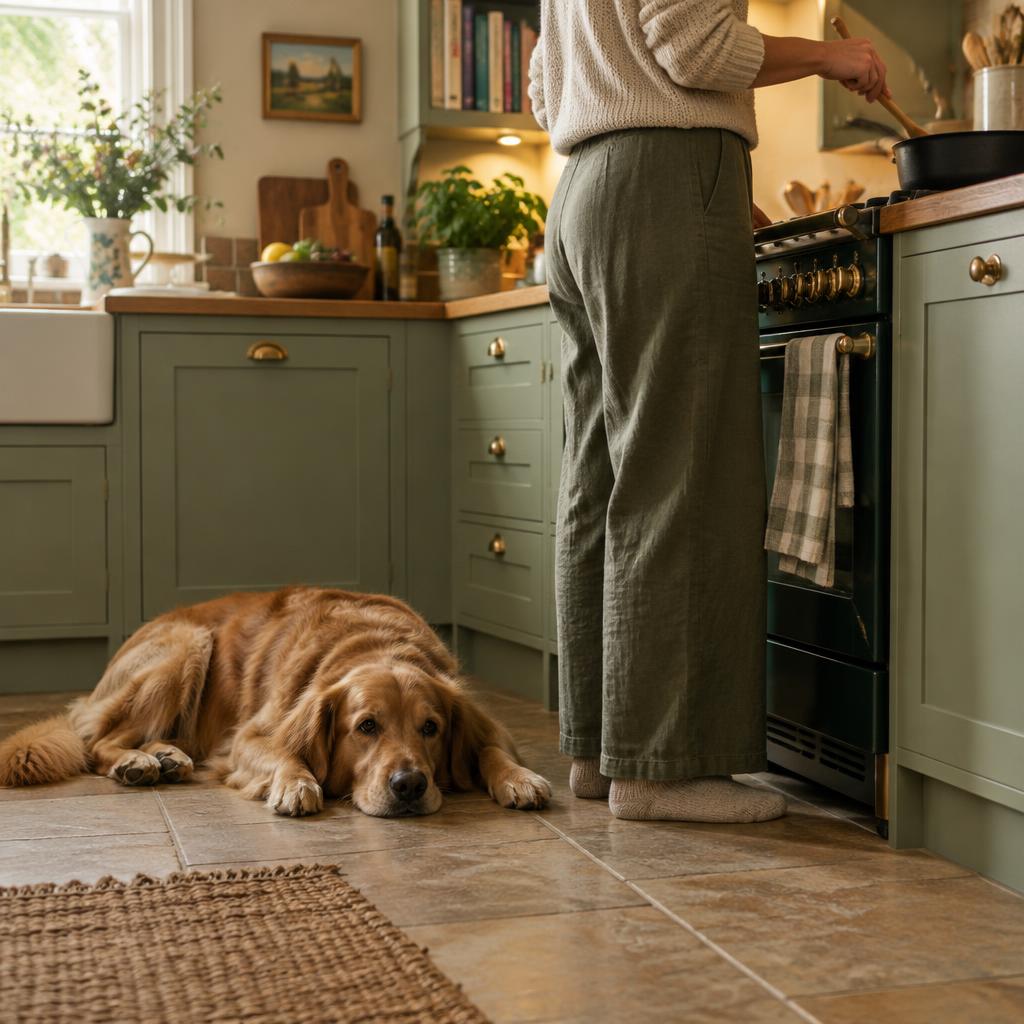
For most owners the answer is not to fix the following but to shape it, so the dog's devotion fits comfortably around human life.
A few quality-of-life adjustments:
- A bed in every room you use often gives the shadow an official parking spot that is not under your feet.
- Non-slip paths through the kitchen and hallway protect both of you when the escort is close behind.
- Accept the breed. If you chose a herding or companion breed, you chose a dog bred to be near people. Fighting that is like arguing with the weather; shaping it is much more productive.
- Share the load. If one person does all the feeding and walking, the dog will shadow that person. Spreading the good stuff around the household broadens the bond.
- Enjoy it. Within reason, being someone's whole world is one of the better parts of having a dog.
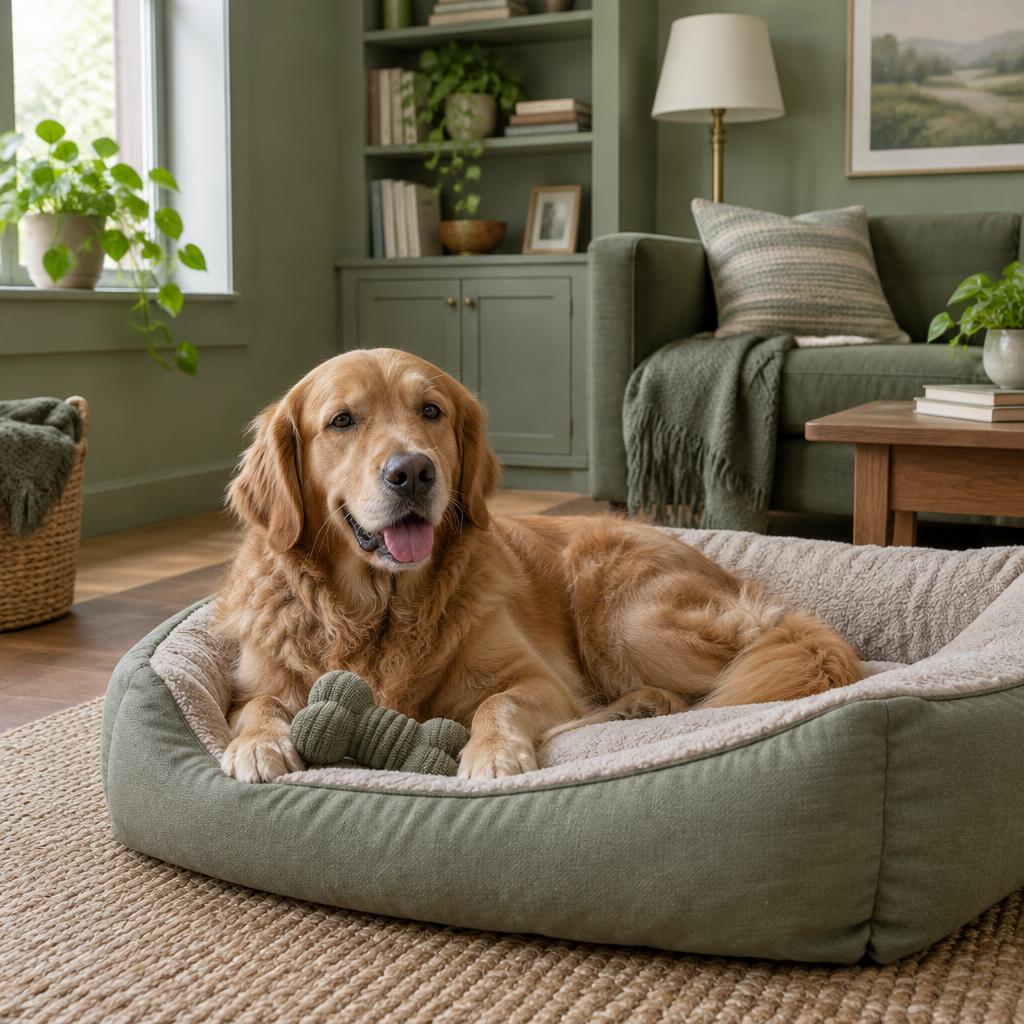
Breed by breed: the famous shadows
While any dog can be a velcro dog, some breeds are practically born with a following licence, and it helps to know whether you are living with a tendency or a problem.
The herding breeds top the list. Border Collies, Australian Shepherds and their relatives were bred to work in constant communication with a handler, and in a pet home that handler is you. Gundogs such as Labradors, Golden Retrievers and the spaniels were bred to work close to the gun, and they bring the same orientation indoors. The companion breeds, from the Cavalier King Charles Spaniel to the Bichon Frise, were bred for nothing else but human company, so shadowing is quite literally their purpose.
Guardian and working breeds often follow from a different motivation: keeping an eye on their charge. At the other end, the independent spitz and hound breeds are more likely to follow only when there is something in it for them. None of these tendencies is a fault. Knowing your breed simply tells you whether the behaviour is a personality or a symptom.
A gentle independence plan, week by week
If you want a little more breathing room, this four-week plan builds independence without stressing the bond.
Week one: introduce the mat. Feed treats on a specific bed or mat several times a day until the dog goes there hopefully. Week two: add duration. Reward the dog for staying on the mat while you sit nearby, building from seconds to a few relaxed minutes. Week three: add distance. Move a pace away, then across the room, returning to reward calm. If the dog follows, simply guide them back and shorten the distance. Week four: add absences. Step out of sight for a few seconds, then longer, always returning before any worry appears.
Two rules carry the whole plan: never push far enough to cause distress, because that teaches the opposite lesson, and practise in many short sessions rather than occasional long ones. Ten repetitions of five seconds beat one repetition of five minutes, every time.
When to see a vet or behaviourist
See a vet when clinginess is sudden or comes with physical signs, and a behaviourist when following is paired with distress, destruction or panic around your departures.
Rule out the medical first whenever the change is abrupt; pain, nausea and sensory decline all masquerade as behaviour problems. Once health is cleared, a qualified behaviourist (look for APBC or CCAB accreditation in the UK) can assess whether you are dealing with true separation anxiety and build a proper treatment plan. It is one of the best-understood behaviour problems in dogs, and the outlook with proper help is genuinely good.
The bottom line
A dog who follows you everywhere is usually just a social animal with excellent taste in company. Enjoy the devotion, teach a settle and a little independence so the attachment stays comfortable, and keep an eye on the emotional temperature: calm shadowing is love, but shadowing with distress is a treatable problem, and the sooner you address it the easier it is.
Questions people actually ask
Why does my dog follow me everywhere, even to the bathroom?
Dogs are social animals who find their person interesting, rewarding and reassuring. You are the source of food, walks, play and safety, so staying close is a rational and deeply normal strategy.
Is it bad if my dog follows me everywhere?
Not usually. If your dog is relaxed, settles when you sit down, and copes calmly when you leave, the following is simply attachment. It only becomes a concern when it comes with tension, panic around departures, or distress when alone.
Why has my dog suddenly started following me everywhere?
Sudden clinginess can be triggered by a change at home, fear of something like fireworks, ageing senses, hormones, or feeling unwell. A new shadow in a previously independent dog deserves a vet check before any training.
Which dog breeds are the most clingy?
Herding breeds like Border Collies, gundogs like Labradors and spaniels, and companion breeds like the Cavalier King Charles Spaniel and Bichon Frise are famously velcro, because they were bred to work or live in close partnership with people.
How do I get my dog to stop following me everywhere?
Teach a settle on a mat, reward calm moments away from you, practise tiny absences that stay below any worry, and make your departure cues boring. The goal is a dog who can relax alone, not one who loves you less.
Is following me a sign of separation anxiety?
On its own, no. Separation anxiety shows as distress: panting, pacing or whining as you prepare to leave, and barking, destruction or house-soiling when alone. A camera on your dog while you are out settles the question.
Sources
Breeds mentioned

Border Collie
The world's most capable herding mind, needing an equally capable owner to match it.

Labrador Retriever
Britain's most popular family dog: biddable, food driven and built for an active household.

Cavalier King Charles Spaniel
An affectionate, adaptable toy spaniel that thrives on human company above almost anything else.
Read next
Why Do Dogs Roll in Poop? The Instinct Explained
Why dogs roll in the worst smells they can find, what the behaviour is really about, and how to prevent it or at least clean up well afterwards.


