Working group
Italy
Cane Corso
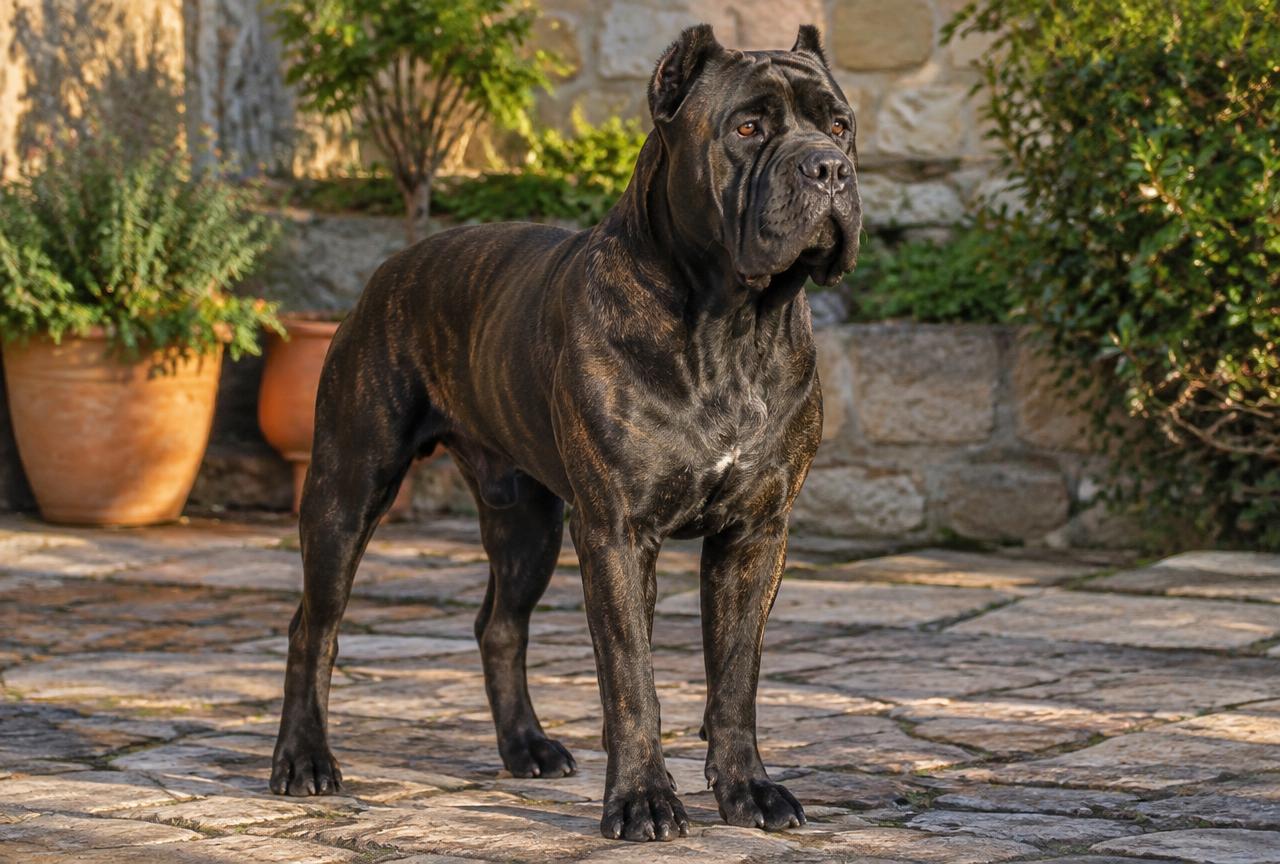
The Cane Corso is an intelligent, powerful Italian guardian that rewards experienced owners who commit to early socialisation, firm handling and a daily job to do.
Reviewed against Kennel Club and breed club health guidance
A powerful Italian guardian breed that demands an experienced, committed owner and a genuine job to do.
The short version
- The Cane Corso is not a first dog; it needs an experienced owner confident with firm, consistent leadership from puppyhood.
- There is a meaningful difference between natural guarding instinct and aggression, and poor socialisation can tip a confident guardian toward reactivity.
- Early and ongoing socialisation during the key puppy windows is essential to raise a stable, predictable adult.
- Insurance terms and local housing rules for this breed vary by country and even by area, so checking local requirements before buying is sensible.
- This is a working breed that needs a job or purpose; without structured exercise and training it will often invent its own outlets, which owners rarely enjoy.
- Weight
- 40 to 50 kg
- Height
- 58 to 70 cm
- Lifespan
- 9 to 12 yrs
- Size
- Giant
- Group
- Working
- Coat
- Short, stiff, dense double coat
- Grown male
- 45 to 50 kg
- Grown female
- 40 to 45 kg
- Years to full size
- about 2
- One-off setup
- €600 to 1200

Get one if…
- Experienced owners with a history of confident, consistent dog training
- Households with a securely fenced garden and no close shared boundaries
- People able to commit significant time to early socialisation classes and ongoing training
- Owners wanting a working partner for structured activities such as protection sport or obedience
- Adult only or older children households with calm, established routines
Think again if…
- First time dog owners
- Households wanting a relaxed, low supervision family pet
- Homes with frequent visitors or close neighbours unfamiliar with large guardian breeds
- Owners unable to commit daily time to training and structured exercise
- Areas with breed specific insurance restrictions or housing rules that the owner has not checked
Trait profile
The Cane Corso combines high intelligence and trainability with a strong natural guarding instinct, so structured socialisation and daily mental work matter as much as physical exercise.
Space & setup. A house with a securely fenced garden and no shared boundary with the public is strongly preferred, since this breed takes a serious interest in anyone approaching its territory.
Allergies. The short coat sheds moderately and is generally easier on allergy sensitive households than long coated breeds, though no dog is fully hypoallergenic.
Living with a Cane Corso
The Cane Corso is a large, muscular Italian mastiff type bred as a farm guardian and property protector, descended from ancient Roman war dogs. It is intelligent and loyal to its family but has a strong protective instinct that requires careful, early socialisation and firm, consistent handling from an experienced owner.
The Cane Corso traces its ancestry to the war dogs and estate guardians of ancient Rome, developed in southern Italy to protect farms and livestock and to help drive cattle and boar. The breed nearly disappeared in the mid twentieth century as Italian farming changed, but dedicated enthusiasts revived it from a small number of working dogs still found on rural farms, and it has since grown rapidly in popularity worldwide as both a guardian and a companion. Its name is widely thought to derive from the Latin cohors, meaning guardian or protector, which tells you most of what you need to know about its original purpose.
This is not a breed suited to a first time owner, and that needs saying plainly rather than softened. The Cane Corso is intelligent, confident and strongly protective of its family and territory, and it needs an owner who already has experience handling large, assertive dogs and who can provide calm, consistent leadership from the day the puppy arrives. Without that structure, the breed's natural confidence can tip into problem behaviour that is genuinely difficult to manage in an animal of this size and strength.
A central point that prospective owners must understand is the real difference between natural guarding instinct and aggression. A well bred, well socialised Cane Corso is watchful and discerning, assessing situations rather than reacting on instinct, and is typically affectionate and gentle with its own family. Aggression, by contrast, usually reflects poor breeding, inadequate socialisation or inconsistent handling rather than an inevitable breed trait. This distinction matters enormously in practice, because it is entirely within an owner's control to raise a stable, predictable adult through deliberate effort, or to inadvertently create a reactive one through neglect of that effort.
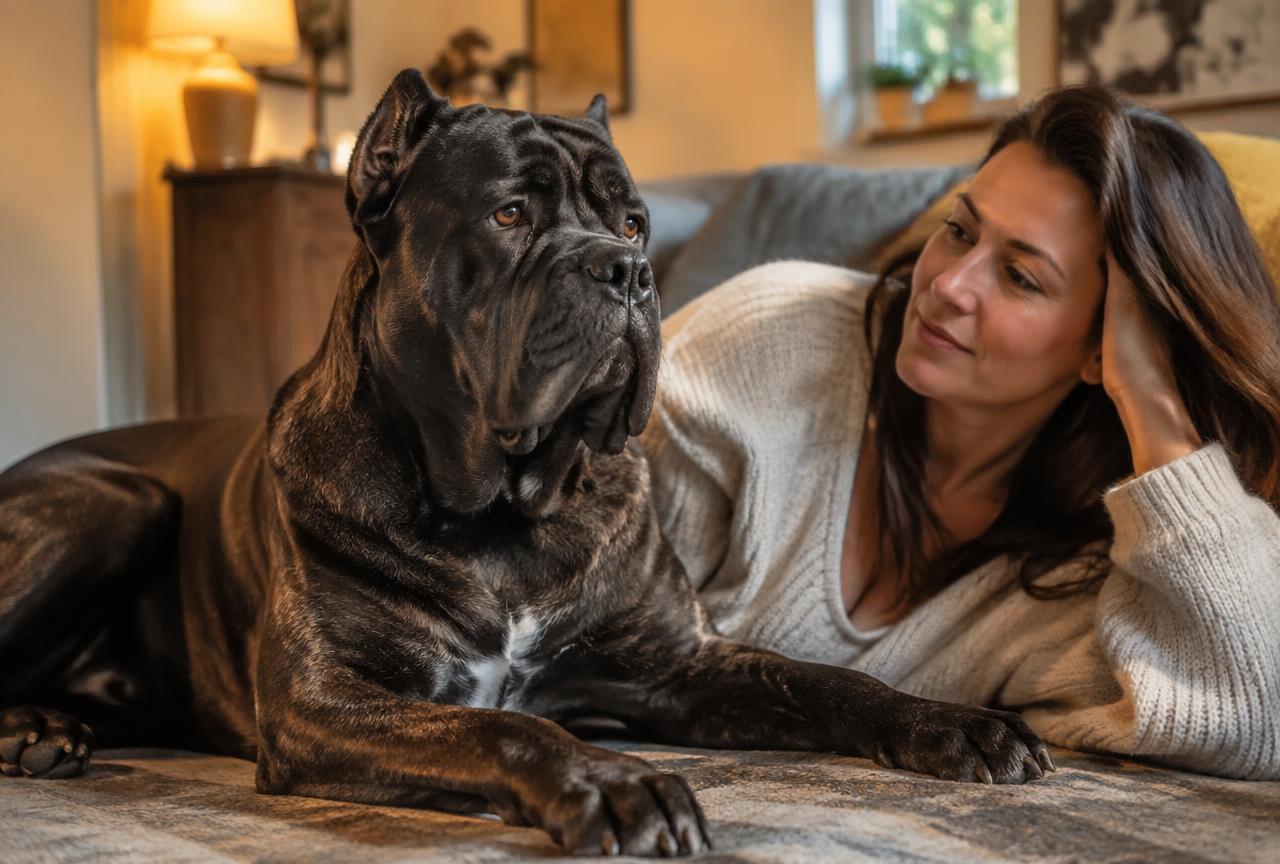
Early socialisation is therefore not optional with this breed, it is the single most important thing an owner will do. Puppy socialisation windows close by around four months of age, and structured, positive exposure to a wide range of people, dogs, environments and everyday situations during this period shapes temperament for life. This needs to continue in a maintained way through adolescence and adulthood too, since a guardian breed that stops meeting new people and situations can become increasingly wary over time rather than more confident.
Prospective owners should also be aware that practical realities around owning a breed like this vary considerably by location. Insurance providers often apply different terms, exclusions or premiums for large guardian breeds, and some local authorities, housing associations or landlords impose their own restrictions or requirements that have nothing to do with national breed specific legislation. Checking these local requirements before committing to a puppy avoids a difficult and sometimes heartbreaking situation later. Health wise, hip and elbow dysplasia are notable concerns given the breed's size and weight, so BVA or KC scoring of both parents should always be requested, alongside a cardiac check.
Finally, this is fundamentally a working breed, and it needs a job or purpose, whether that is structured obedience work, tracking, weight pulling or simply a disciplined daily routine of training and exercise. Left without sufficient mental and physical engagement, a Cane Corso will reliably invent its own activities, and these rarely align with what an owner would choose, ranging from destructive behaviour to an unwelcome increase in territorial vigilance. For experienced owners prepared to meet these demands consistently, the Cane Corso offers a remarkably loyal, capable and rewarding working companion, but it is categorically not a dog to take on casually or for the wrong reasons.
It is worth expanding on what good socialisation actually looks like in practice, since the phrase is often used loosely. It means structured, positive exposure, not simply allowing a puppy to be present around new things, but managing those encounters so the puppy forms calm, confident associations. This includes meeting a wide variety of calm adults and children under controlled conditions, encountering other dogs of different sizes and temperaments on neutral ground, experiencing different surfaces, sounds and environments, and practising being left alone for short periods. A good puppy class run by an experienced, reward based trainer is a sound starting point, but socialisation with a breed like this is really a year round project rather than a box to tick in the first few months.
Owners should also think carefully about management as a permanent feature of daily life rather than a temporary training phase. This typically means secure fencing that visitors and delivery workers cannot accidentally breach, clear house rules about greeting strangers, and a willingness to keep the dog on lead or under close control in situations where its judgement has not yet been tested. None of this implies the dog is dangerous by default, but it reflects a sensible respect for the consequences if things do go wrong with an animal of this size and strength, which is simply different from the consequences of a smaller breed making the same mistake.
A capable, serious guardian breed for experienced owners who can commit to early socialisation, consistent leadership and daily purposeful work.
Exercise, day to day
- 1Puppies (8 to 20 weeks): short, varied socialisation outings prioritised over distance, meeting calm people and dogs in controlled settings.
- 2Young dogs (4 to 18 months): structured lead walks and basic obedience work, avoiding excessive jumping or hard impact while joints develop.
- 3Adults: 60 to 90 minutes a day combining purposeful activity such as obedience, tracking or working trials with regular walks.
- 4Mental work: daily training sessions and structured tasks matter as much as physical exercise, since an under occupied Corso will often create its own entertainment.
- 5Socialisation maintenance: ongoing calm exposure to new people, dogs and situations throughout life, not just in puppyhood.
Grooming, realistically
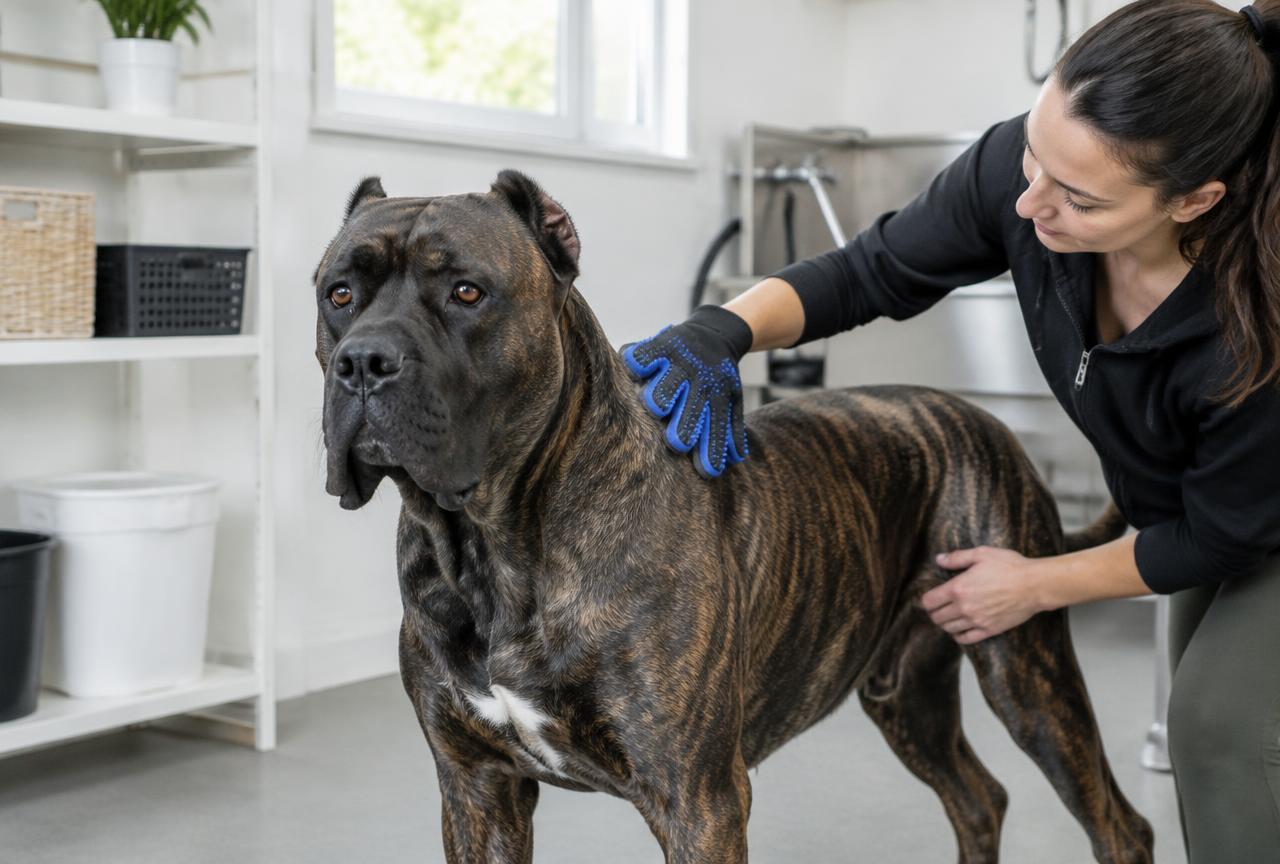
- 1Brush weekly with a rubber curry brush or grooming mitt to remove loose hair.
- 2Bathe every 6 to 8 weeks or as needed.
- 3Check and clean ears weekly.
- 4Trim nails every 3 to 4 weeks given the breed's weight and joint load.
- 5Brush teeth several times a week to reduce tartar build up.
What you actually need
- Rubber curry brush or grooming mitt
- Dog nail clippers
- Ear cleaning solution
- Enzymatic dog toothpaste and brush
- Gentle dog shampoo
Puppy to adult
| Age | Male | Female | What is happening |
|---|---|---|---|
| 8 weeks | 8 to 10 kg | 7 to 9 kg | Large, solidly built puppy that needs gentle, positive early handling and exposure. |
| 3 months | 16 to 20 kg | 14 to 18 kg | Rapid growth phase, structured socialisation outings should begin as soon as vaccination allows. |
| 6 months | 27 to 33 kg | 24 to 30 kg | Confidence and territorial instincts begin emerging, consistent boundaries matter now. |
| 9 months | 33 to 40 kg | 29 to 36 kg | Adolescent testing of boundaries is common, calm firm handling should continue. |
| 12 months | 38 to 45 kg | 34 to 40 kg | Near adult height, though muscle mass and mental maturity are still developing. |
| 18 months | 43 to 50 kg | 38 to 45 kg | Approaching full adult weight, though true maturity is not reached until around 2 years. |
Ranges are typical, not targets. Judge condition by ribs and waist, and check with the ideal weight checker.
What to ask a breeder
- Can I see hip and elbow scores for both parents?
- How do the parents behave around unfamiliar people and in new situations?
- What socialisation have the puppies had so far, and what do you recommend for the first year?
- Can I see a cardiac health check result for both parents?
- What temperament traits run in this particular line, and how do you select for stable temperament?
- Can I meet both parents and see the environment the puppies were raised in?
Health tests to ask for
Ask to see results for both parents before you put down a deposit.
- Hip score (BVA/KC scheme)
- Elbow score (BVA/KC scheme)
- Cardiac examination
- Eye examination for inherited conditions
- Temperament assessment of breeding stock
Health watch-list
What to ask a breeder about, and what to watch for over a lifetime. This is orientation, not veterinary advice, anything you notice belongs in front of a vet.
Hip dysplasia
CommonMalformed hip joints are common in this large, heavy breed; BVA or KC hip scoring of both parents should be checked before buying.
Elbow dysplasia
NotableJoint malformation causing lameness and arthritis; elbow scoring of breeding stock is recommended.
Bloat (gastric dilatation volvulus)
NotableA life threatening emergency more common in deep chested giant breeds; smaller meals and rest after eating can help reduce risk.
Eyelid abnormalities (entropion and ectropion)
NotableLoose or inward rolling eyelids can cause irritation and infection; breeders should select against pronounced eyelid looseness.
Cardiac conditions, including dilated cardiomyopathy
UncommonA cardiac examination of breeding stock helps identify early signs before dogs are bred from.
Demodectic mange
UncommonLinked to an inherited immune response in some lines; responsible breeders avoid breeding affected individuals repeatedly.
What it costs to keep one
Realistic running cost
€190 / month
About €2,280 a year, or roughly €25,080 across a 11-year life, before purchase price, neutering and one-off vet events.
Before the puppy arrives. Budget roughly €600 to 1200 for a crate, bed, lead and harness, bowls, puppy classes, first vaccinations and grooming kit sized for this breed. Figures throughout are indicative and vary a good deal between countries.
Interactive · built for this breed
Is a Cane Corso right for your home?
Seven honest questions about your space, time and household, checked against this breed's exercise need, coat, sociability and tolerance for time alone.
Fit with your routine
92%
A strong fit
Your routine suits a Cane Corso well. Meet adult dogs of the line before you commit.
What to sort out first
- Needs more daily exercise than you have pencilled in.
Working in your favour
- Coat care fits the grooming time you offered.
Compare more breeds in the matchmaker, or plan meals with the portion calculator.
The verdict, by household
First-time owner
Not recommended
The combination of size, strength and natural guarding instinct makes this a poor choice for anyone without prior experience handling assertive breeds.
Family with children
A reasonable choice with caveats
Can be loyal and gentle with its own family when well socialised, but supervision around visiting children and other dogs is essential.
Active single or couple
A strong choice for experienced owners
Thrives with owners who can commit to daily structured exercise, training and a working role for the dog.
Owner in a flat with close neighbours
Not recommended
The breed's territorial instincts and size make flat living with shared walls or close neighbours a poor match.

When to call your vet
- Reluctance to rise, stiffness or an altered gait, which may indicate hip or elbow dysplasia
- Sudden changes in behaviour or increased reactivity, which should prompt both a veterinary and behavioural assessment
- Excessive drooling, pacing or an abnormally distended abdomen, which can signal bloat, a true emergency
- Eyelid abnormalities causing excessive tearing or irritation, which may need surgical correction
- Exercise intolerance or laboured breathing, which may point to a cardiac issue
Nothing here is a diagnosis. A swollen, hard belly with retching, collapse, breathing difficulty and sudden hind-leg weakness are emergencies: go straight away.
Cane Corso vs the closest alternatives
| Breed | Weight | Energy | Grooming | € / month |
|---|---|---|---|---|
| Cane Corso | 40 to 50 kg | 7/10 | 2/10 | €190 |
| Presa Canario | 38 to 60 kg | 5/10 | 2/10 | €246 |
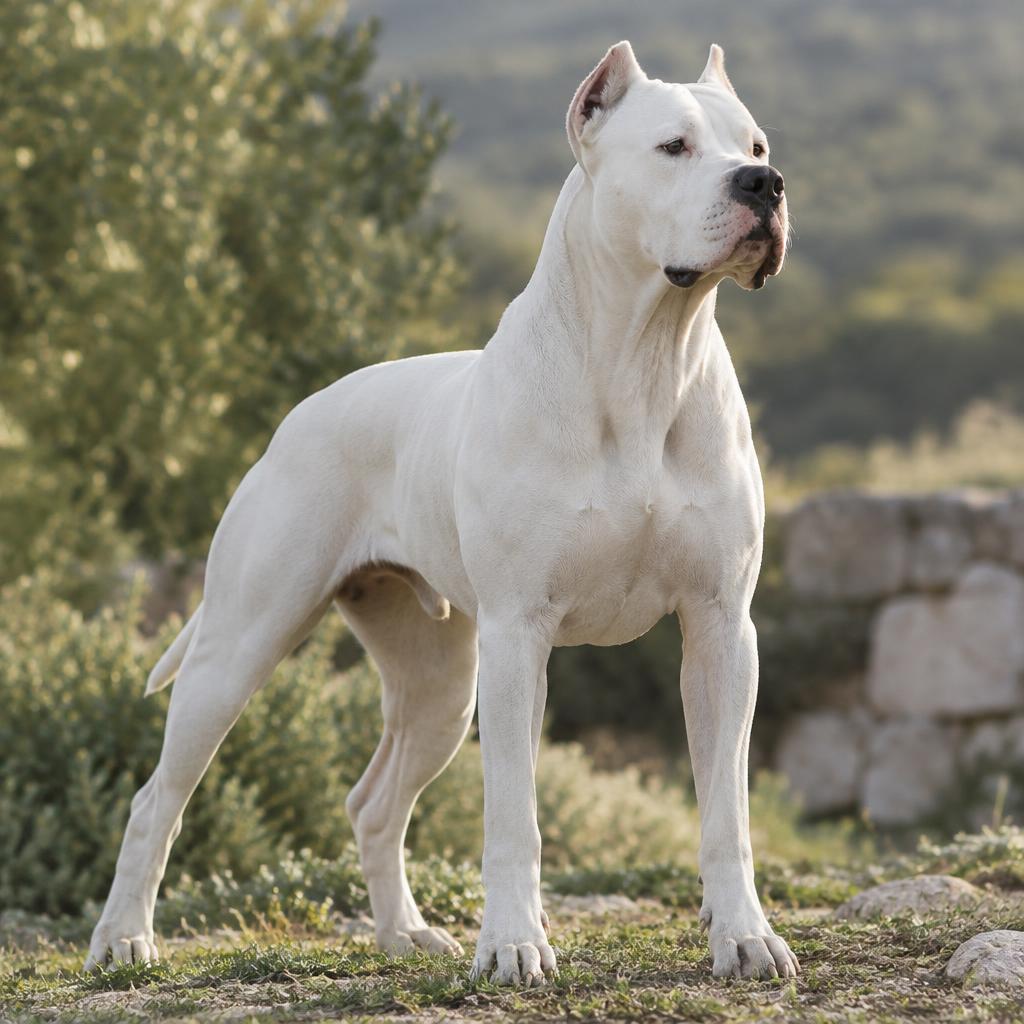
| Dogo Argentino | 36 to 45 kg | 8/10 | 2/10 | €135 |
| Saluki | 16 to 29 kg | 7/10 | 3/10 | €100 |
Cane Corso questions, answered
What is the temperament of a Cane Corso like?
Cane Corsos are intelligent, confident and naturally protective of their family and territory. With early, consistent socialisation they are typically calm and discerning, but without it their strong guarding instinct can tip toward reactivity, which is why experienced handling matters so much.
How big does a Cane Corso get?
This is a giant breed, with males typically weighing 45 to 50 kg and females 40 to 45 kg, standing between 58 and 70 cm at the shoulder. Full physical and mental maturity is not reached until around 2 years of age.
Is a Cane Corso a good dog for a first time owner?
Generally no. The Cane Corso's size, strength and strong protective instinct mean it needs an owner with existing experience handling large, assertive breeds and confident with firm, consistent leadership. First time owners are usually advised to consider a more forgiving breed.
How much exercise does a Cane Corso need?
Around 60 to 90 minutes a day, ideally combining purposeful activity such as obedience work or tracking with regular walks. Mental engagement matters as much as physical exercise, since an under occupied Corso tends to invent its own, usually unwelcome, activities.
Are Cane Corsos good with children?
They can be loyal and gentle with their own well known family when properly socialised, but supervision around visiting children and unfamiliar dogs is essential given the breed's size and territorial instincts. This is not a breed for a relaxed, low supervision household.
What health problems are common in Cane Corsos?
Hip and elbow dysplasia are notable concerns given the breed's size and weight, alongside a risk of bloat common to deep chested large breeds. Reputable breeders screen breeding stock with BVA or KC hip and elbow scoring and cardiac examinations.
Do I need special insurance or permissions for a Cane Corso?
Insurance terms and local housing rules for large guardian breeds vary by country, region and even individual landlord, so it is worth checking local requirements and insurance exclusions before buying. Some areas also apply specific restrictions worth confirming in advance.
Sources
- Cane Corso Italiano breed standard, The Kennel Club
- Cane Corso breed information, American Kennel Club
- Hip dysplasia scheme, British Veterinary Association
- Elbow dysplasia scheme, British Veterinary Association
- Socialising your puppy, The Kennel Club
- Dangerous Dogs Act and breed specific legislation guidance, UK Government