Working group
United States (Louisiana)
Catahoula Leopard Dog
A powerful, intelligent Louisiana working dog for experienced, active owners who can offer real work and firm, kind training.
A striking, tireless working dog that needs a job, not just a garden.
The short version
- A genuine working breed that needs a daily job
- Merle coat and glass eyes; double merle breeding risks deaf and blind puppies
- Reserved with strangers; socialise early and thoroughly
- Two hours of real exercise a day, minimum
- Not usually dog-social; manage introductions carefully
Choose a variety
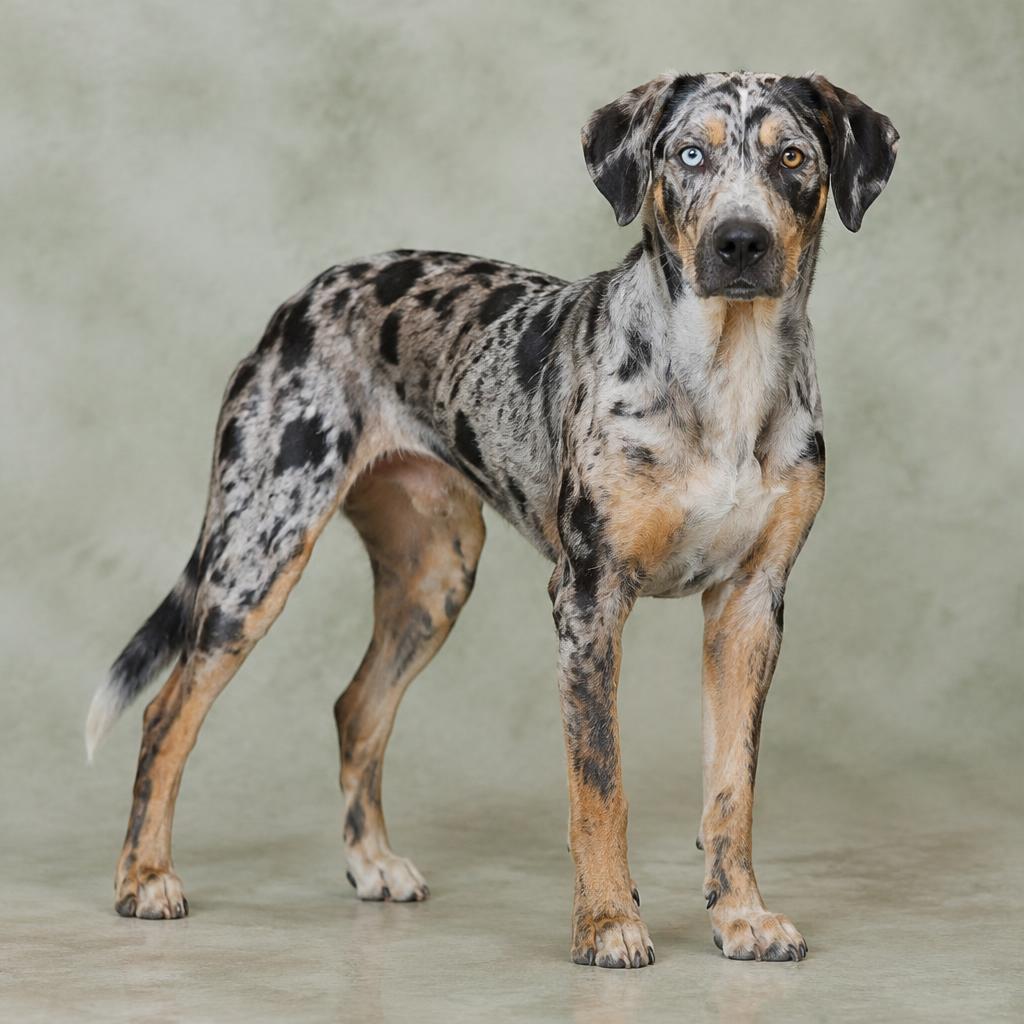
The classic marbled grey and black coat, often with pale or marbled eyes.
- Weight
- 20 to 34 kg
- Height
- 56 to 66 cm
- Lifespan
- 10 to 14 yrs
- Size
- Large
- Group
- Working
- Coat
- Short single coat, often merle
- Years to full size
- about 2
- One-off setup
- €900 to 1800
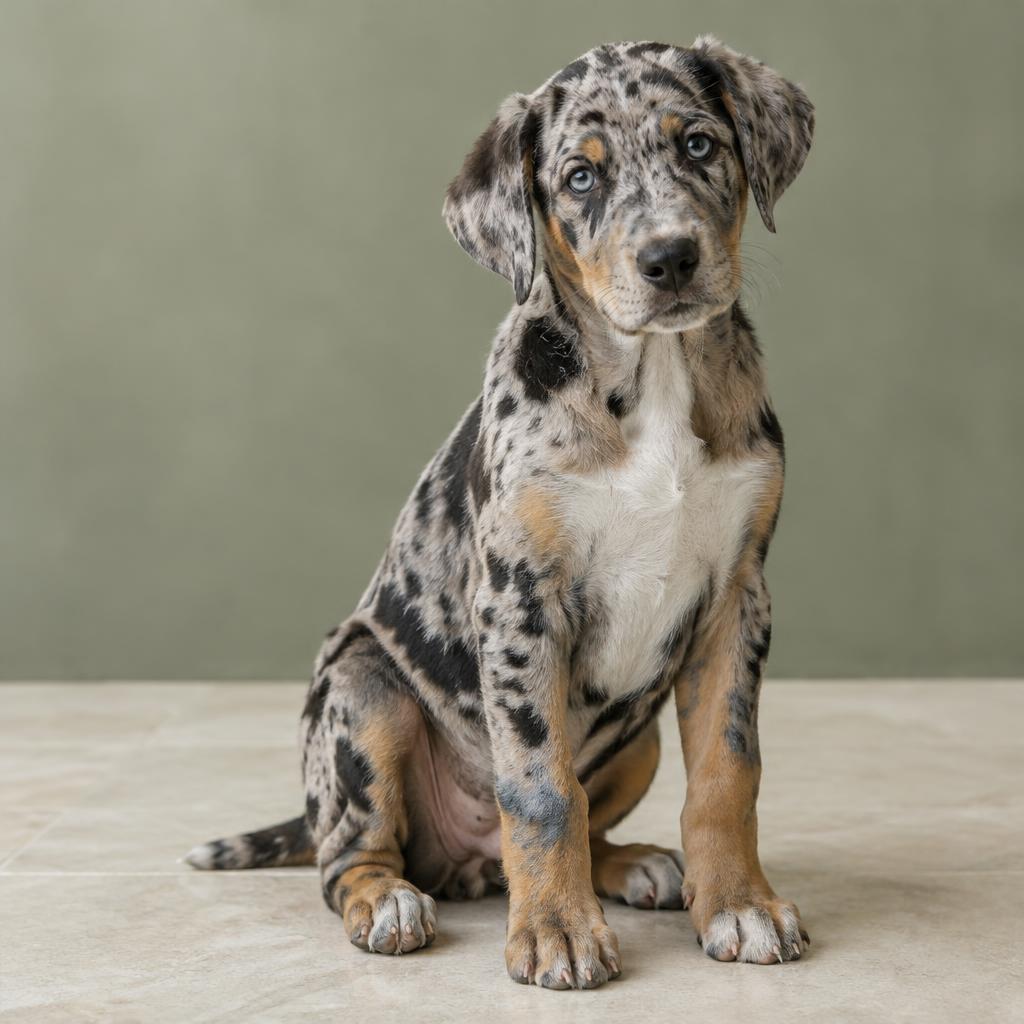
Get one if…
- Experienced, active owners
- Homes with land or easy access to open space
- People who enjoy training and dog sports
- Owners wanting a watchful, loyal family guardian
Think again if…
- First-time dog owners
- Flats and small homes without real outdoor access
- Households out at work all day
- Homes with several other dogs, especially of the same sex
Trait profile
Scores reflect a working dog: very high exercise needs, moderate trainability, low suitability for flats and long hours alone.
Space & setup. Needs a securely fenced garden and daily access to open space; not suited to flat living.
Allergies. The short single coat sheds moderately and is easy to keep, but no dog is truly hypoallergenic.
Living with a Catahoula Leopard Dog
The Catahoula Leopard Dog is the state dog of Louisiana, bred to herd cattle and hunt hogs in swamps and forests. Famous for its merle coat and glass eyes, it is athletic, independent and intensely loyal. This is a serious working breed that thrives with experienced owners who can give it structure, space and a daily job to do.
The Catahoula Leopard Dog takes its name from Catahoula Parish in Louisiana, where settlers crossed local dogs used by Native Americans with hounds and herding dogs brought from Europe. The result was a tough, versatile dog that could gather wild hogs and cattle from swampland, tree game and guard the homestead. The merle coat and pale, sometimes marbled eyes that make the breed so recognisable come from that mixed ancestry.
Living with a Catahoula means living with a dog that thinks for itself. They bond hard with their family and are often reserved or watchful with strangers, which makes early, thorough socialisation essential. They are not naturally dog-social, and same-sex friction is not unusual in adults. With their own people they are affectionate and even goofy, but they test boundaries and need consistent, fair handling rather than harsh corrections, which they remember.
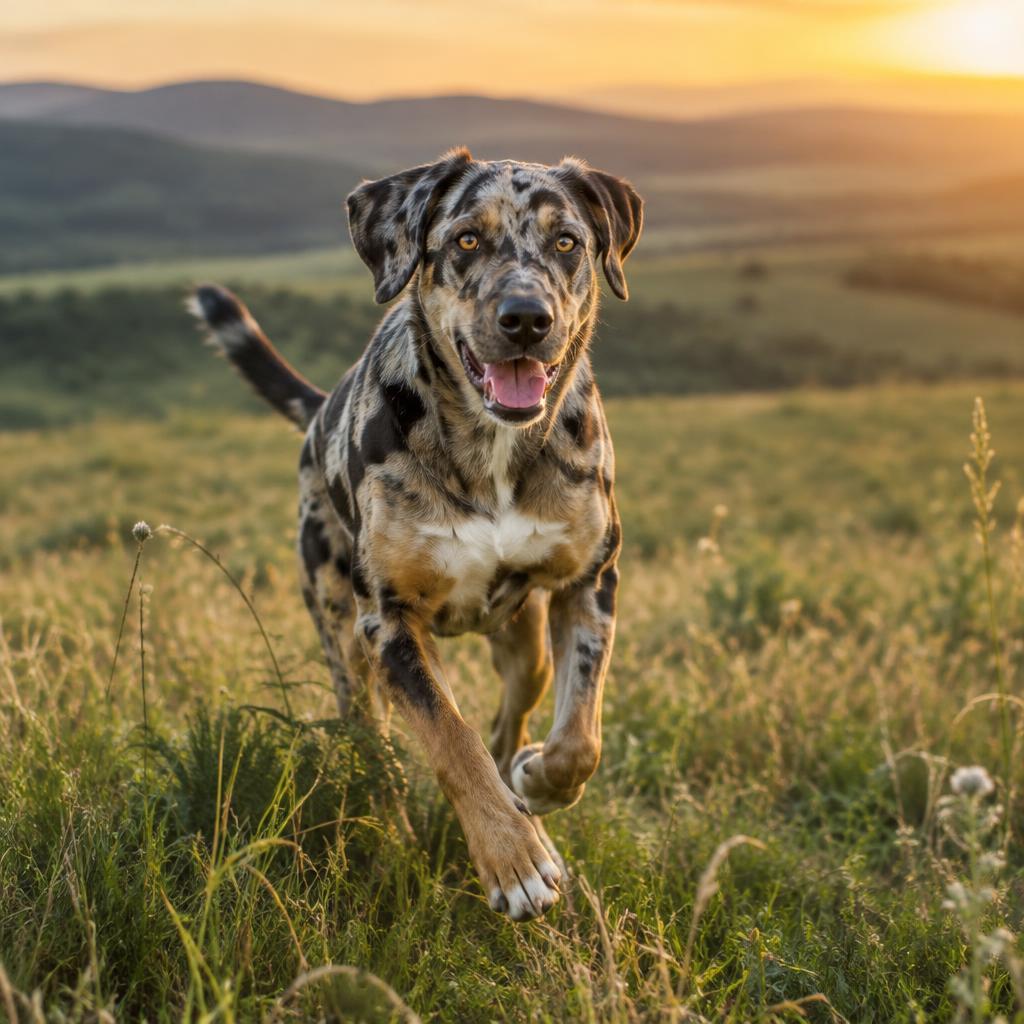
Exercise is non-negotiable: a quick lead walk round the block will not touch the sides. Catahoulas need long walks, running, swimming, tracking or herding-style work most days, plus training that gives their brain something to chew on. In the right home, with land, work and an owner who enjoys training, they are extraordinary. In a small flat with a novice owner, they are a handful that too often ends up in rescue.
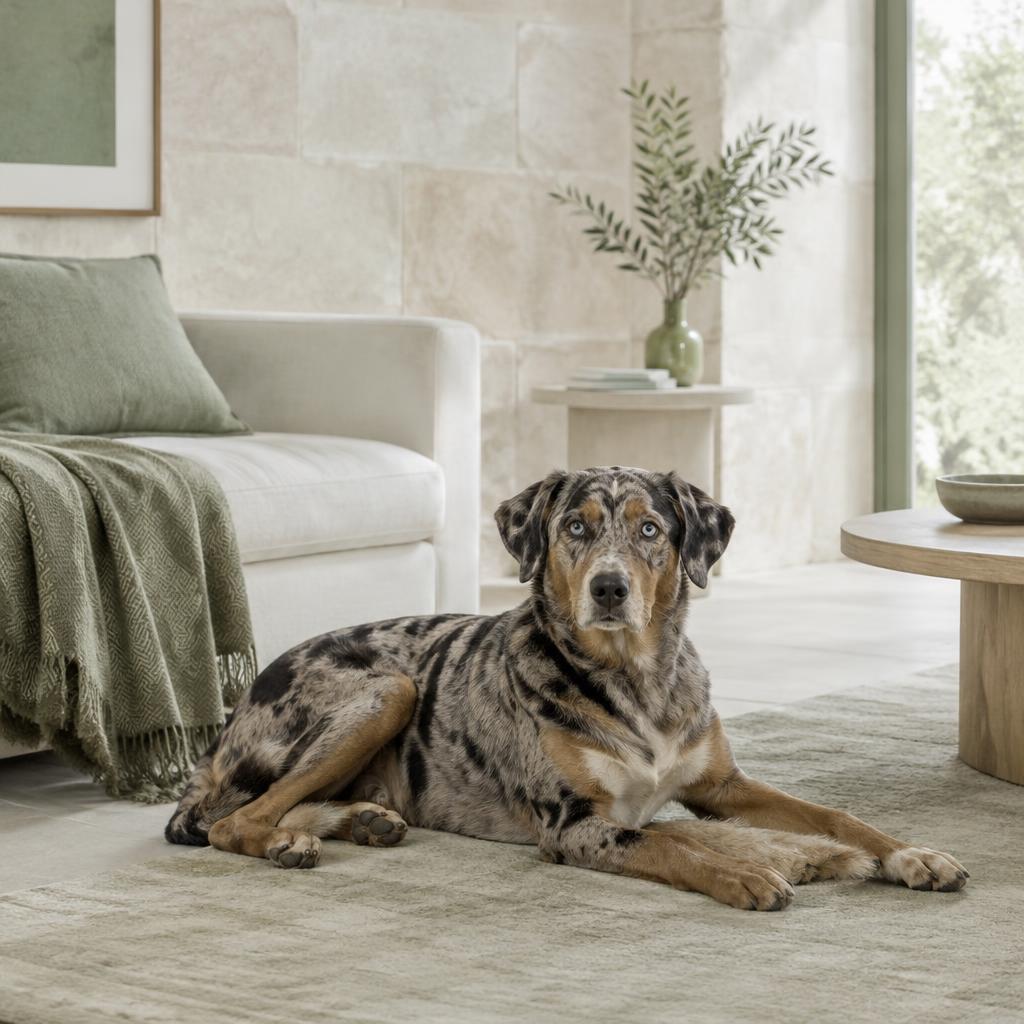
Magnificent to look at and magnificent to work with, but this is not a beginner dog. A Catahoula without enough to do will invent its own job, and you will not like it.
Exercise, day to day
- 1Two hours of exercise daily, split across the day
- 2Off-lead running or swimming in safe areas most days
- 3Scent work, tracking or herding-style games for the brain
- 4Training sessions woven into walks rather than separate drills
Grooming, realistically
- 1Brush weekly with a rubber curry brush to lift dead hair
- 2Bathe only when muddy or rolled in something; the coat is low odour
- 3Check ears weekly, especially after swimming
- 4Trim nails every three to four weeks
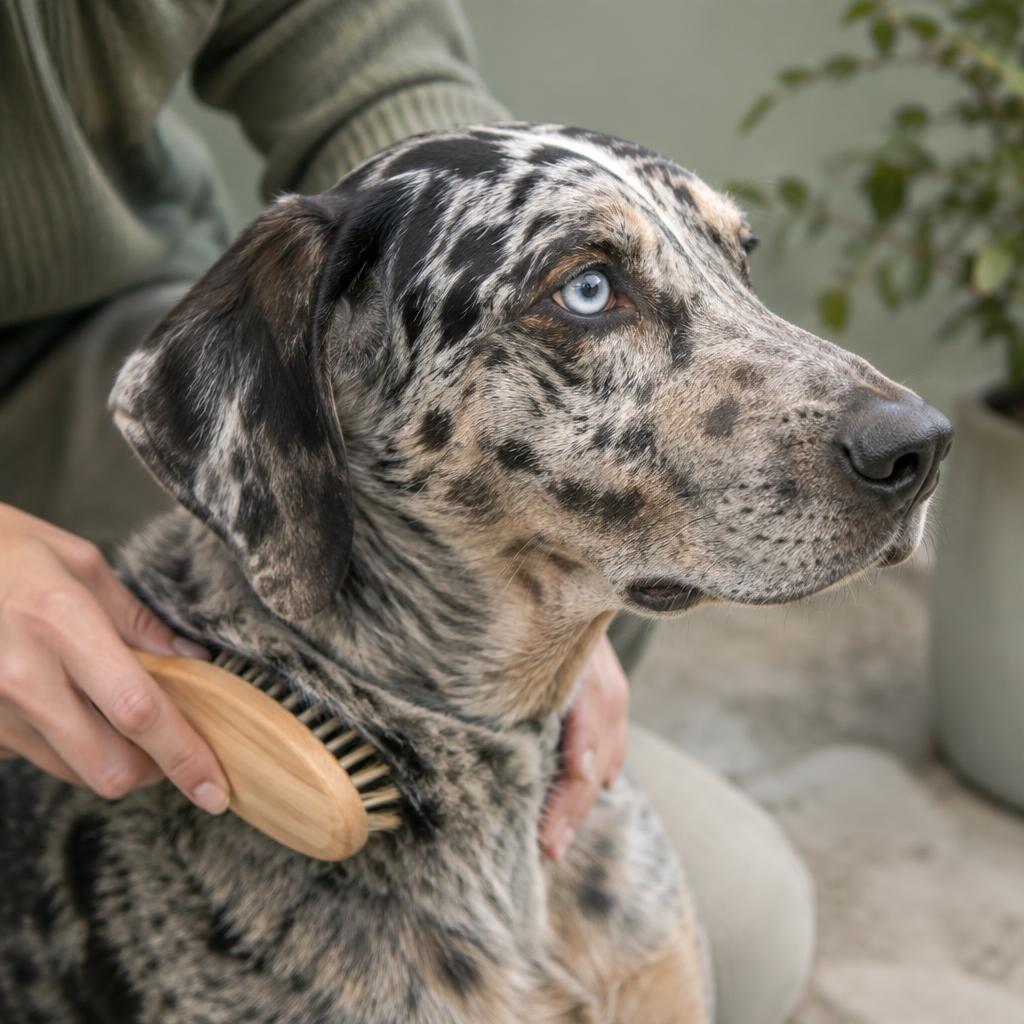
What you actually need
- Rubber curry brush
- Bristle brush
- Ear cleaner
- Nail clippers or grinder
Puppy to adult
| Age | Male | Female | What is happening |
|---|---|---|---|
| 8 weeks | 4 to 6 kg | 3.5 to 5.5 kg | Bold and busy already; start gentle handling and a toilet routine. |
| 3 months | 9 to 13 kg | 8 to 12 kg | Key socialisation window; introduce calm dogs, people and places. |
| 6 months | 16 to 22 kg | 14 to 19 kg | Adolescent testing begins; keep training consistent and fair. |
| 9 months | 19 to 27 kg | 16 to 23 kg | Long and leggy; avoid forced running while joints mature. |
| 12 months | 21 to 30 kg | 17 to 26 kg | Near adult height; muscle and coat still filling out. |
| 18 months | 23 to 34 kg | 18 to 29 kg | Fully grown; a powerful adult that still needs structure. |
Ranges are typical, not targets. Judge condition by ribs and waist, and check with the ideal weight checker.
What to ask a breeder
- Were both parents BAER hearing tested?
- Have the parents had hip and eye scores?
- Is there any double merle breeding in the pedigree?
- How are the parents with strangers and other dogs?
- What work or sport do the parents do?
Health tests to ask for
Ask to see results for both parents before you put down a deposit.
- Hip scoring for both parents
- BAER hearing test, essential in merle lines
- Eye examination by a veterinary ophthalmologist
- Avoid any puppy from merle to merle mating
Health watch-list
What to ask a breeder about, and what to watch for over a lifetime. This is orientation, not veterinary advice, anything you notice belongs in front of a vet.
Hip dysplasia
UncommonA medium to large athletic breed, so hip scores matter. Ask for both parents' scores and keep the dog lean through growth.
Deafness
UncommonLinked to the merle gene, especially in double merle breedings. BAER testing of puppies and parents is the safeguard.
Eye conditions
UncommonMerle lines can carry eye defects. Parents should have a current eye examination from a veterinary ophthalmologist.
Bloat (GDV)
UncommonDeep-chested and active. Feed two smaller meals, rest around mealtimes and learn the emergency signs.
Joint wear in old age
CommonA lifetime of hard work catches up. Keep them lean, maintain muscle with steady exercise and discuss joint support with your vet.
What it costs to keep one
Realistic running cost
€98 / month
About €1,176 a year, or roughly €14,112 across a 12-year life, before purchase price, neutering and one-off vet events.
Before the puppy arrives. Budget roughly €900 to 1800 for a crate, bed, lead and harness, bowls, puppy classes, first vaccinations and grooming kit sized for this breed. Figures throughout are indicative and vary a good deal between countries.
Interactive · built for this breed
Is a Catahoula Leopard Dog right for your home?
Seven honest questions about your space, time and household, checked against this breed's exercise need, coat, sociability and tolerance for time alone.
Fit with your routine
92%
A strong fit
Your routine suits a Catahoula Leopard Dog well. Meet adult dogs of the line before you commit.
What to sort out first
- Needs more daily exercise than you have pencilled in.
Working in your favour
- Coat care fits the grooming time you offered.
Compare more breeds in the matchmaker, or plan meals with the portion calculator.
The verdict, by household
Outstanding partner for work, sport and adventure.
Too much dog; choose a biddable breed first.
Good with older children when raised with them and supervised.
Not suitable; needs space and serious daily exercise.
When to call your vet
- Reluctance to jump or climb, which can signal hip trouble
- Cloudiness or bumping into things, which can signal eye disease
- Head tilt, circling or unresponsiveness to sound, which can signal deafness
- Limping after exercise that does not settle with rest
Nothing here is a diagnosis. A swollen, hard belly with retching, collapse, breathing difficulty and sudden hind-leg weakness are emergencies: go straight away.
Catahoula Leopard Dog vs the closest alternatives
| Breed | Weight | Energy | Grooming | € / month |
|---|---|---|---|---|
| Catahoula Leopard Dog | 20 to 34 kg | 9/10 | 2/10 | €98 |
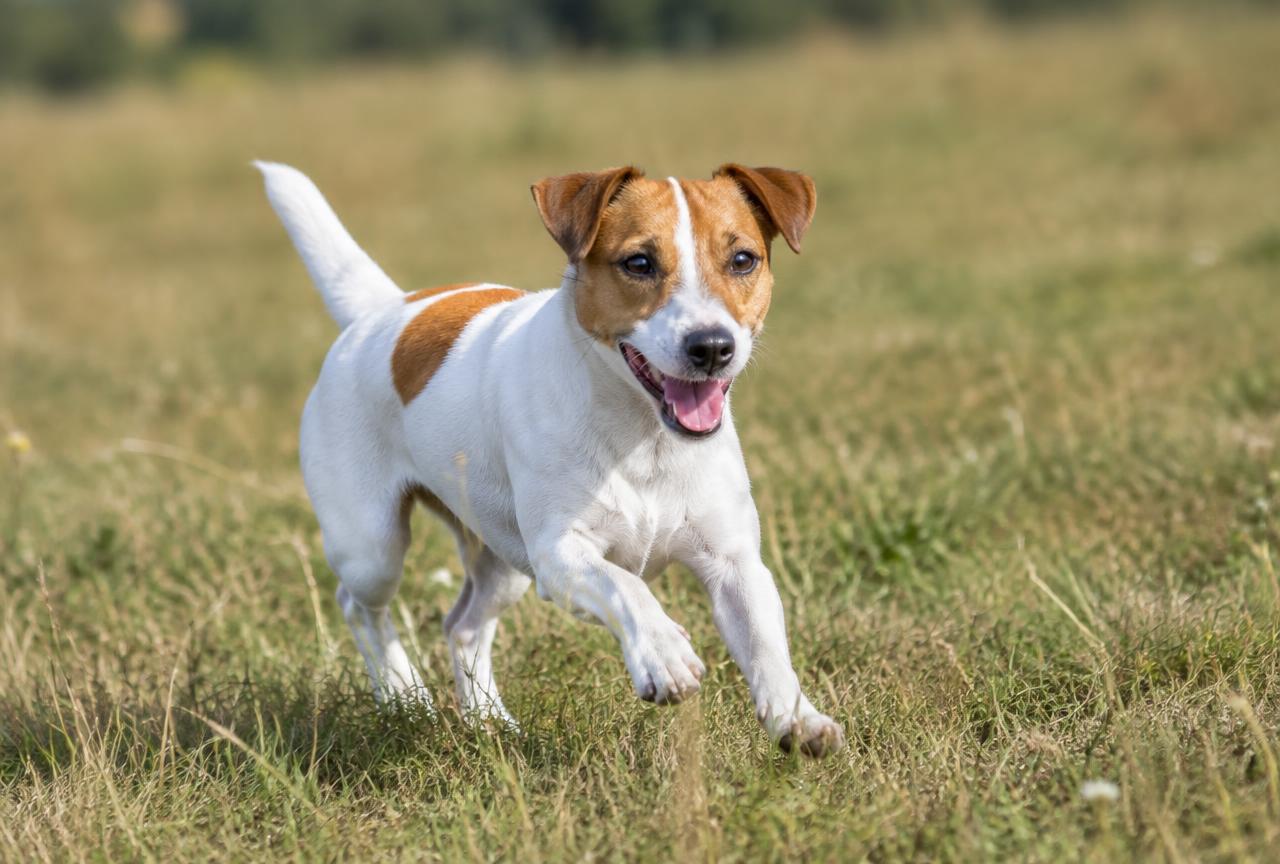
| Jack Russell Terrier | 5 to 8 kg | 9/10 | 2/10 | €73 |
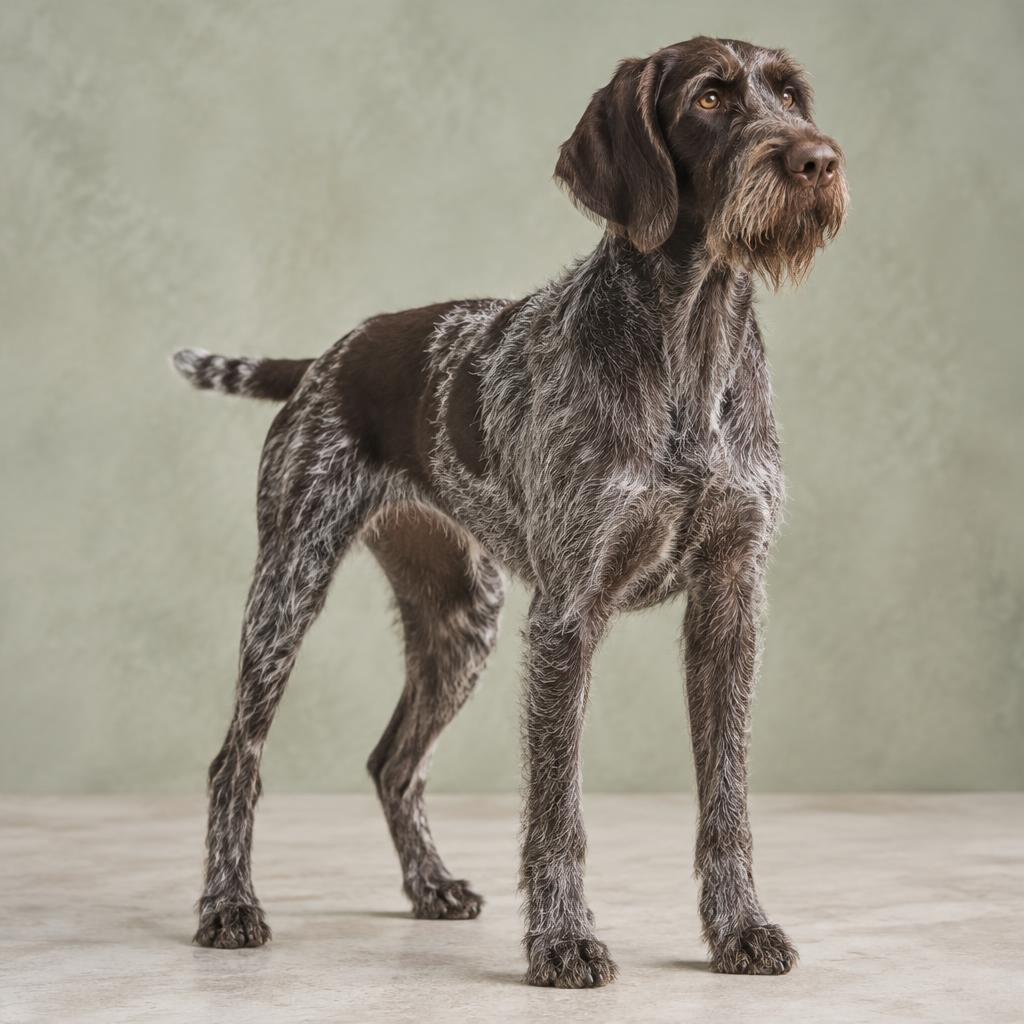
| German Wirehaired Pointer | 25 to 32 kg | 9/10 | 4/10 | €103 |
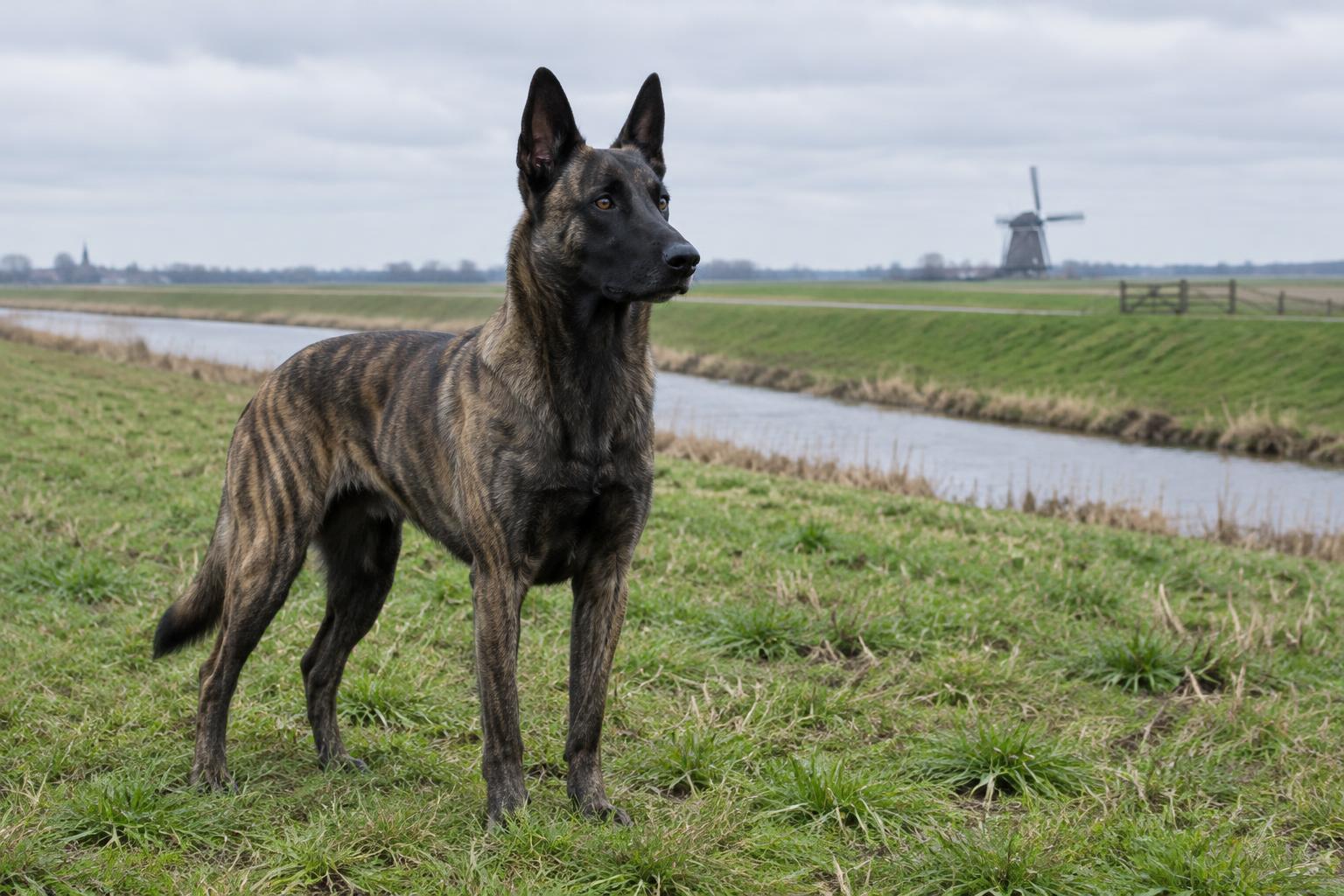
| Dutch Shepherd | 23 to 34 kg | 9/10 | 3/10 | €112 |
Catahoula Leopard Dog questions, answered
Is a Catahoula Leopard Dog good for first-time owners?
Usually no. They are intelligent but independent and strong-willed, and they need firm, consistent training plus serious daily exercise. A biddable first breed is a kinder starting point.
How much exercise does a Catahoula need?
Plan on at least two hours a day of real exercise: long walks, running, swimming, tracking or herding-style games, plus training for their brain. A short lead walk is not enough.
Are Catahoulas good with children?
With their own family and older, dog-savvy children they are loyal and affectionate. Their size, energy and herding instinct mean supervision with young children is essential.
Do Catahoulas get on with other dogs?
They are not naturally dog-social, and same-sex friction is common in adults. Early socialisation helps, but many do best as the only dog or with one well-matched companion.
Why are some Catahoula puppies deaf or blind?
Breeding two merle dogs together can produce double merle puppies with a high risk of deafness and eye defects. Responsible breeders never mate merle to merle and BAER test their dogs.
Can a Catahoula live in a flat?
It is not recommended. They are large, very active and vocal when bored, and they need a secure garden plus daily access to real exercise space.