
Dog Dry Nose: The Myth, the Causes and When It Matters
The nose is a poor thermometer and a decent diary. Read it alongside the dog, never instead of the dog.
The SniffScroll desk
Published 10 October 2026
Dr Emma Whitfield, BVSc MRCVS
The short version
- A warm, dry nose does not mean your dog has a fever; only a thermometer can tell you that.
- Noses dry out after sleep, in sun, wind and heated rooms, and remoisten on their own.
- Cracked or flaking noses benefit from a dog-safe balm; avoid human products with zinc or fragrance.
- Thick crusting over the whole nose, or pigment loss with sores, needs a veterinary check.
- Judge illness by the whole dog: appetite, energy and behaviour, not nose moisture.
The myth that will not die
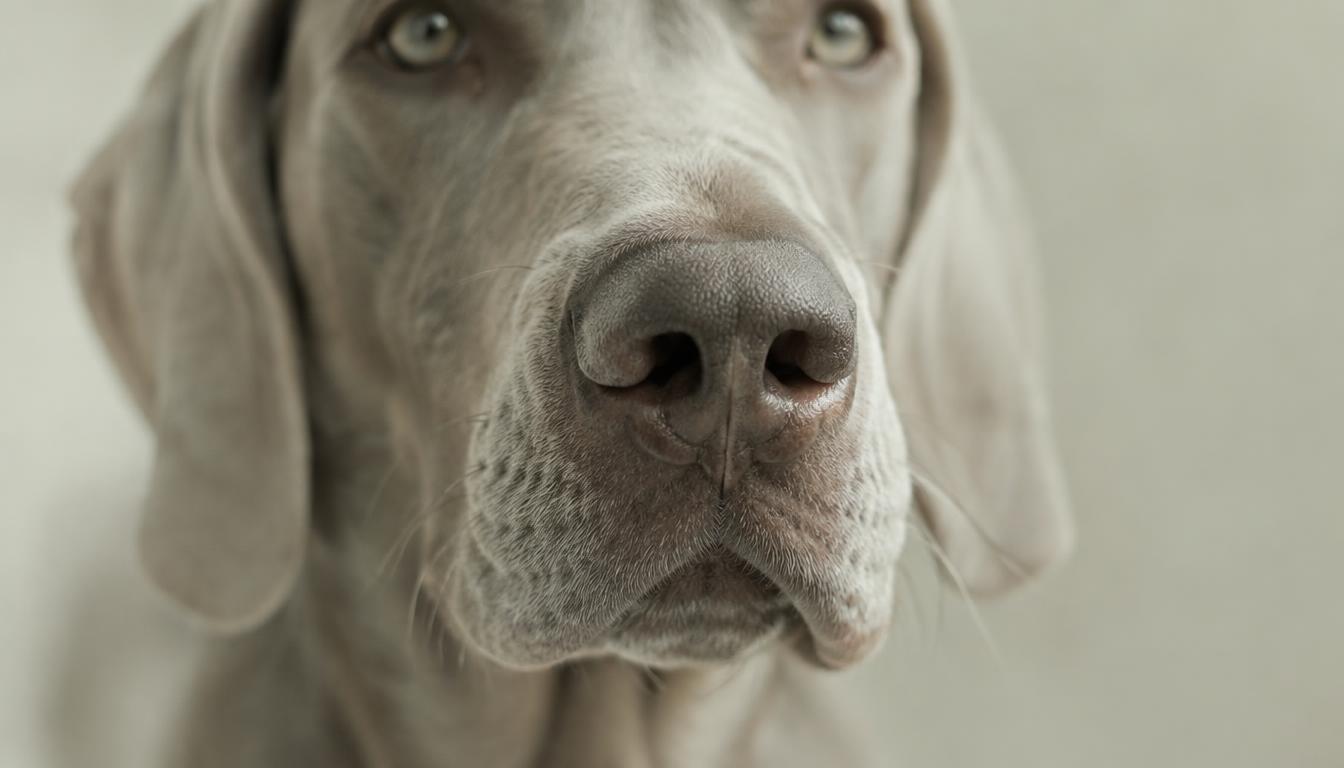
The idea that a healthy dog has a cold, wet nose and a sick dog has a warm, dry one is one of the most durable myths in dog ownership, and it is simply wrong. Nose moisture changes hour to hour with sleep, weather, heating and how much your dog has been licking. It tracks nothing about fever or illness.
The only reliable way to know if your dog has a temperature is to take it, with a thermometer, and most owners will never need to. Appetite, energy, behaviour and drinking are the signals that actually move first when a dog is unwell. A dog with a dry nose who is bouncing about and eating is a well dog. A dog with a wet nose who is lying flat and refusing food is not.
Why noses dry out
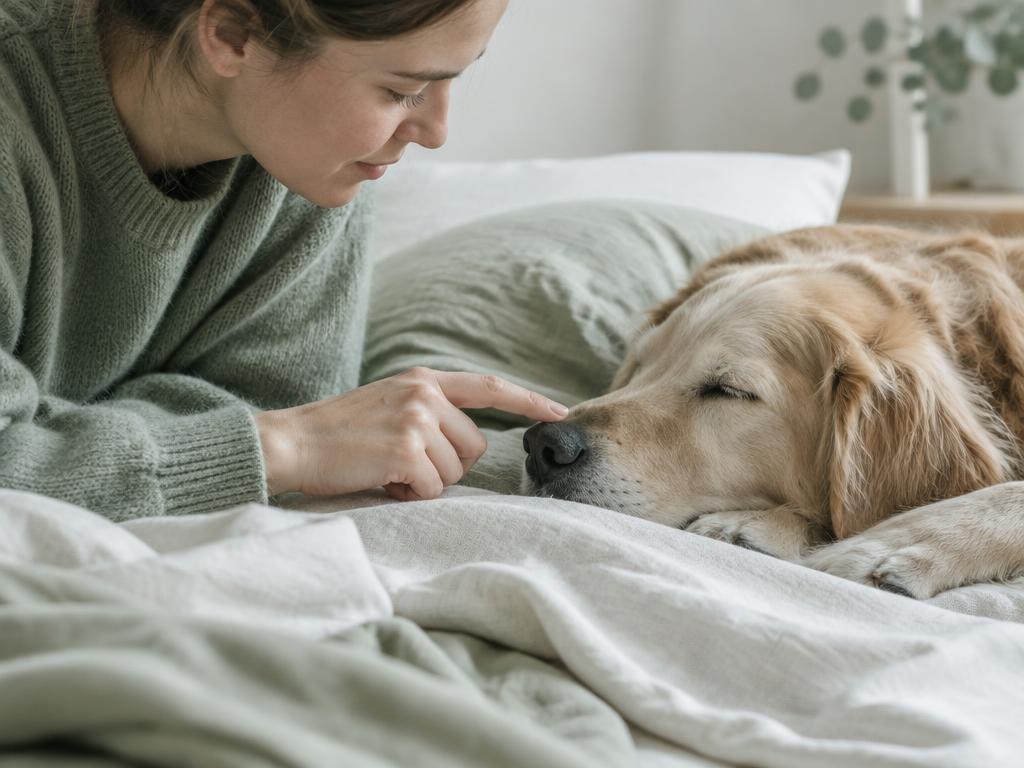
The wetness comes from a thin layer of mucus that helps scent molecules stick, topped up constantly by licking. Anything that interrupts either dries the nose:
- 1Sleep. No licking for an hour means a dry nose on waking. Universal, normal, gone by breakfast.
- 2Sun and wind. A day on the beach or a windy walk dries the nose like it dries your lips.
- 3Central heating. Winter heating dries the air, and dogs who sleep by radiators dry fastest.
- 4Age. Older dogs often run drier noses, the way older skin runs drier.
- 5Breed. Flat-faced breeds such as the Pug cannot reach their noses with their tongues properly, so they dry and crack more easily.
Puppies, adults and seniors: the nose through a life
A puppy's nose is usually the wettest it will ever be, because puppies lick constantly and explore everything muzzle-first. Dryness in a young puppy is rare, and a persistently dry, crusted puppy nose is worth a vet look, since congenital and infectious causes show early. Healthy adults cycle through the ordinary dryness this article describes: after sleep, in sun and wind, through heated winters, none of it meaning a thing.
Seniors run drier as a rule, the way older skin does, and nasal hyperkeratosis, the crusty overgrowth, is largely a condition of older dogs. This is the life stage where the weekly nose check earns its place most, because small cracks caught early soften with balm, while thick neglected crusts split and bleed. Flat-faced breeds sit outside the age pattern entirely: from puppyhood to old age, their noses need the most help, simply because their tongues cannot reach them properly.
Everyday care that prevents the cracks
Most dry noses never need treating, but a little prevention keeps the vulnerable ones comfortable. In winter, move the dog's bed away from radiators and consider a humidifier in the room where they sleep; dry heated air is the single biggest cause of seasonal nose and skin dryness. In summer, provide shade on walks and at home, and use a dog-safe sun cream on pale or pink noses, because a sunburnt nose cracks exactly like sunburnt skin.
Diet plays a quiet role too. Skin and nose condition track overall nutrition, and dogs on a complete, good-quality diet with adequate omega oils tend to have supple noses and coats. If the nose is chronically dry and the coat is dull alongside it, the bowl is worth a look before the balm. Fresh water always available goes without saying, though it bears repeating: hydration shows in the nose last, but it shows.
When dryness is a skin problem
There is a real condition behind some dry noses: nasal hyperkeratosis, where the nose produces too much keratin and builds a thick, crusty, sometimes cracking layer. It looks like the nose is growing a hard shell. It is commonest in older dogs and flat-faced breeds, and while it is not dangerous in itself, the cracks can be sore and can let infection in.
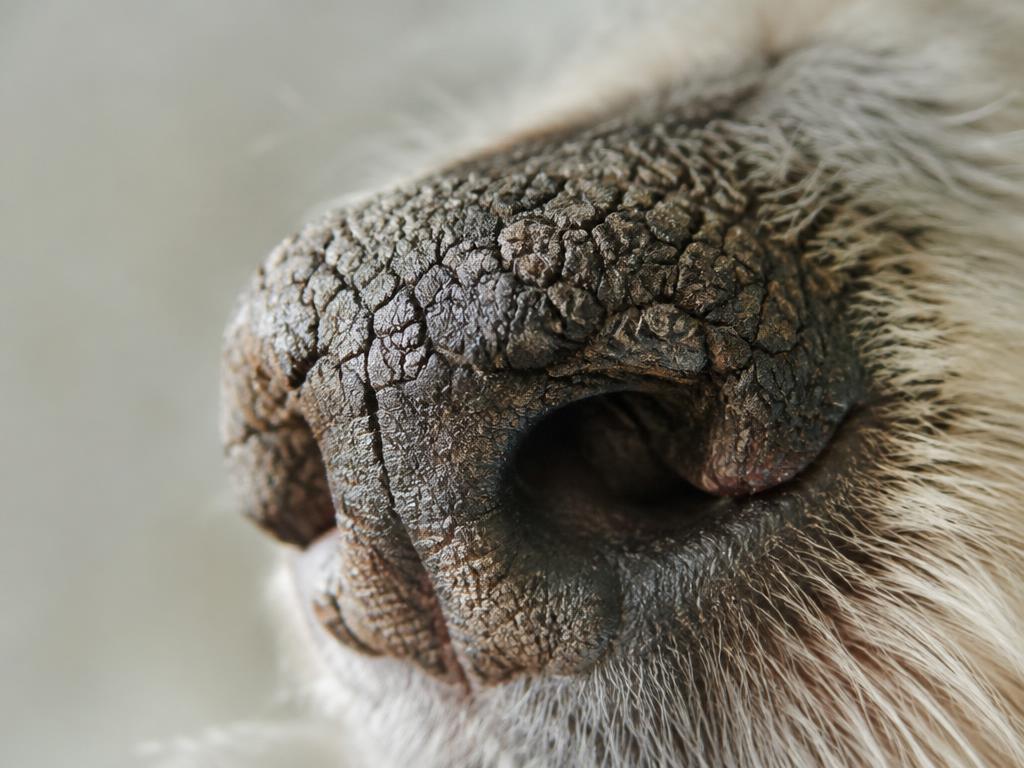
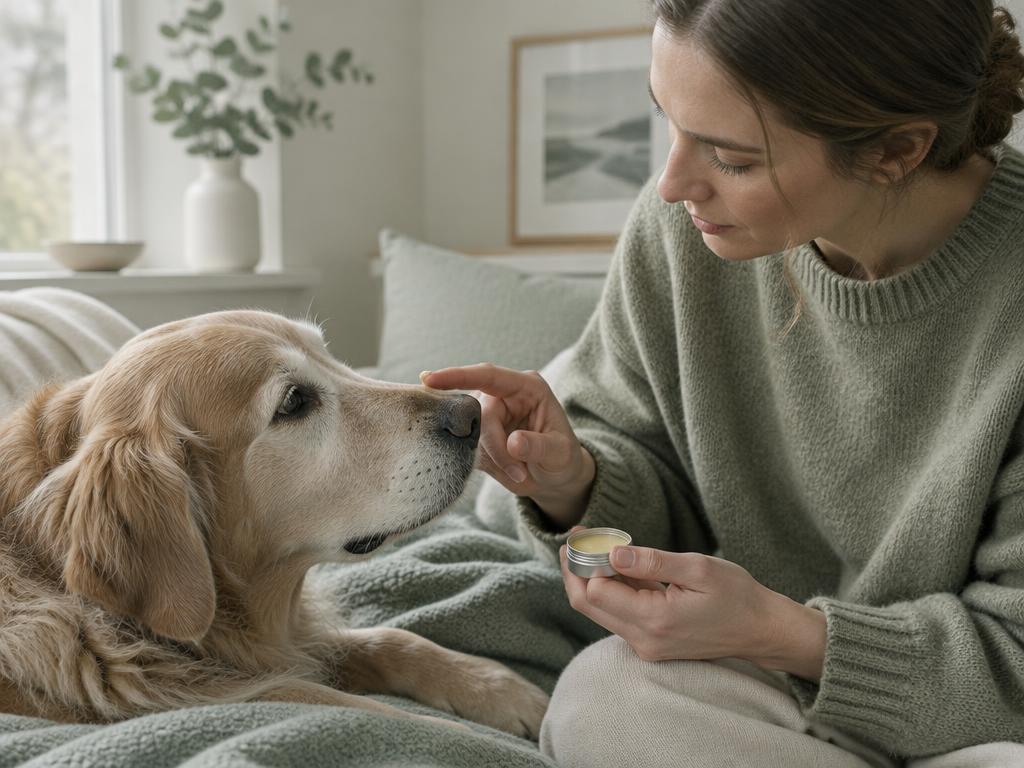
The fix at home is simple: a dog-safe nose balm, applied once or twice a day, softens the crust within a week or two. Choose a product made for dogs with ingredients that are safe to lick, because it will be licked. Avoid human lip balms and creams: zinc oxide, salicylates and heavy fragrance are all bad news when swallowed. If the crusting is thick, spreading, or the cracks bleed, see a vet before treating, because a few immune-mediated skin conditions look similar and need real treatment.
Choosing and using a nose balm
The balm shelf is where good intentions go wrong, so it is worth being specific. A good dog nose balm has a short ingredient list built around safe-to-lick emollients: shea butter, coconut oil, beeswax, vitamin E. It has no zinc oxide, no salicylates, no essential oils in meaningful quantity, and no fragrance. If the label reads like a human luxury lip product, put it back; dogs lick whatever you apply, and the nose is applied to constantly.
Application is simple but benefits from timing. Apply after a walk or a meal, when the dog is calm and the licking urge is lowest, and distract with a chew or a training game for a few minutes while it absorbs. Once or twice daily is enough for a cracked nose, and most show visible softening within a week. If two weeks of a proper balm changes nothing, or the crusting thickens meanwhile, stop treating and book the vet, because that is the point where simple dryness has been ruled out by its own refusal to heal.
The nose through the seasons
A dog's nose has a yearly rhythm that is worth learning, because it explains most of the dryness owners worry about. Winter brings central heating and cold wind, the two driest environments a nose meets, and it brings snow nose fading in the breeds prone to it. Summer brings sun, and pale-nosed and thin-coated dogs can genuinely sunburn their noses; a dog-safe sun cream on the nose is sensible for pink-nosed dogs who sunbathe. Spring and autumn are the easy seasons, when most noses look their best.
Working this rhythm means you stop being surprised by it. The Labrador whose nose pales every January and darkens every May is not developing a condition; he is keeping his own calendar. Photograph the nose once a season if you like having a record; it makes any real change obvious.
Checking a nose properly
A proper nose check takes ten seconds and belongs in the weekly groom. Look at the surface in good light: it should be smooth, without deep cracks, crusts, sores or lumps. Check both nostrils are clear and symmetrical. Note the colour, and whether any fading is smooth or comes with broken skin. Then forget about temperature and moisture entirely, because neither tells you anything useful. If the surface is intact and the dog is well, the nose is fine, whatever it feels like.
Pigment changes: snow nose and its lookalikes
A black nose that fades to brown or pink in winter and darkens again in summer has snow nose, a harmless, common quirk seen often in Labradors and Golden Retrievers. Nobody knows quite why it happens, and it needs nothing at all.
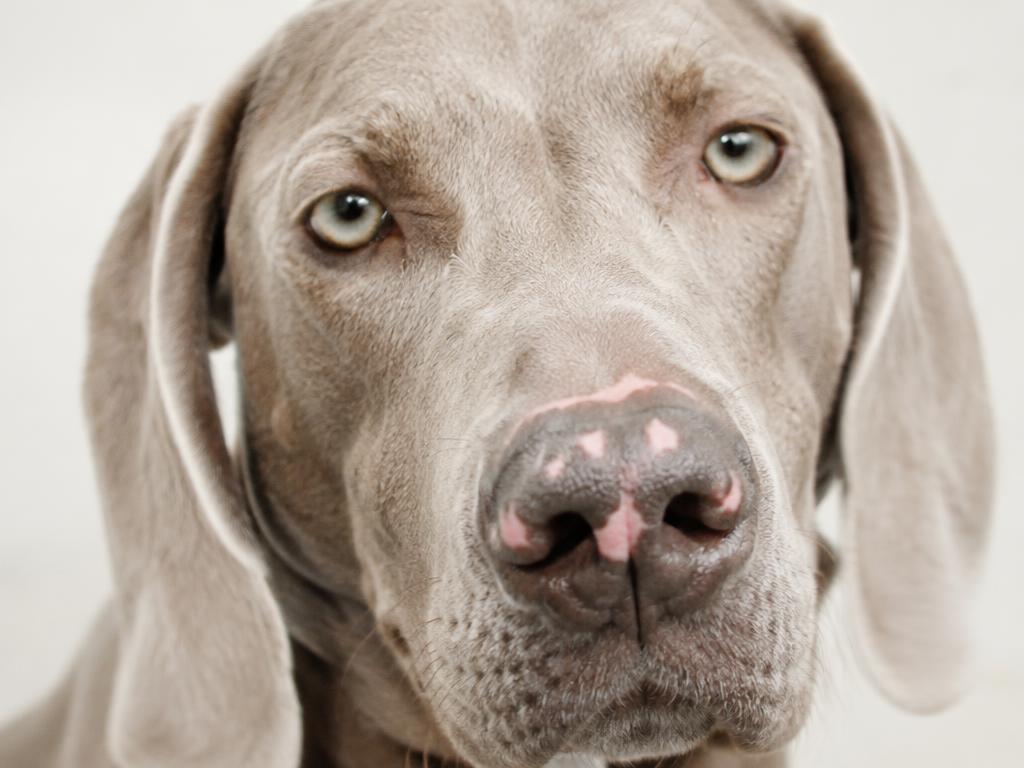
The lookalikes matter more. Pigment loss that arrives with sores, ulcers, scaling or crusting, especially spreading onto the lips or face, can signal an immune-mediated condition and needs a veterinary diagnosis. The dividing line is the surface: smooth fading is fine, broken skin is not.
Judge the dog, not the nose. Appetite, energy and behaviour tell the truth that moisture cannot.
What actually tells you a dog is unwell
Since the nose cannot do the job, it is worth knowing what can. The honest early signals of illness in a dog are appetite, energy, drinking, and interest in the world. A dog who eats with enthusiasm, greets the lead, and settles contentedly is a well dog almost regardless of what any single body part looks like. A dog who goes off food, lies apart from the family, or loses interest in walks is telling you something real, and those changes deserve attention even when every visible check looks normal.
This is why experienced owners and vets talk about the whole dog. No single checkpoint, nose, gums, coat, temperature, outranks the animal's behaviour. Learn your dog's ordinary: how they eat, how they greet you, how they sleep. Illness almost always announces itself as a change in that ordinary before it shows up anywhere you can photograph.
When to see a vet
Book a routine check for crusting that builds despite balm, cracks that bleed, or pigment loss with any surface change. Book sooner if the dry nose arrives with a dog who is off their food, lethargic, drinking oddly or just not themselves, because then the nose is a footnote to a bigger story. If you suspect illness, our guides to dog losing weight and dog not eating cover the signals that genuinely matter.
Interactive · nose checker
Does the dry nose mean anything?
Describe the nose and how your dog is otherwise. We will separate myth from the signs that actually matter.
What to do
- Forget the old myth: a warm, dry nose does not mean fever, and a cold, wet one does not prove health. Look at the whole dog.
- Noses dry out after sleep, in sun, wind and centrally heated rooms; moisture returns on its own.
A dry nose alone is usually fine
The nose is a poor thermometer and a decent diary. Read it alongside the dog, never instead of the dog.
A simple nose routine
Check the nose when you groom: look for cracks, crusting and colour change, and feel whether the surface is smooth. Keep a dog-safe balm in the cupboard for winter and for flat-faced breeds. And let go of the moisture test entirely; your hands on the dog and your eyes on their behaviour will always beat a fingertip on a nose.
The bottom line on noses
Of all the health checks passed down between dog owners, the nose test is the one most worth retiring. It persists because it is easy, not because it works. Replace it with the checks that do: appetite, energy, behaviour, drinking, and a weekly look at the surface of the nose itself for cracks, crusts, sores and colour change. That combination catches everything the moisture test pretends to catch, and a good deal more.
A dry nose on a bright, hungry, playful dog is a decoration, not a symptom. A cracked nose is a skincare task. A crusted, sore or changing nose is a vet task. And a dog who is unwell will tell you so in a dozen ways before the nose says anything at all. Keep the balm in the cupboard, keep the myth out of your head, and the nose will take care of itself.
Questions people actually ask
Does a dry nose mean my dog is sick?
No. Nose moisture varies with sleep, weather, heating and activity, and a warm dry nose is not a fever sign. Look at appetite, energy and behaviour instead; those are the reliable signals.
Why is my dog's nose dry after sleeping?
Dogs do not lick their noses in their sleep, and licking is what keeps the nose wet. A dry nose on waking is universal and normal; it remoistens within minutes of the dog getting up.
What can I put on my dog's dry, cracked nose?
A dog-specific nose balm with simple, lick-safe ingredients. Avoid human lip balms and creams, particularly anything containing zinc oxide, salicylates or fragrance, which are not safe to be licked.
Why is my dog's nose changing colour?
Seasonal pigment fading, called snow nose, is common and harmless, especially in winter. Pigment loss that comes with sores, crusting or scaling is different and needs a vet.
Can a dry nose be dehydrated?
Dehydration shows better elsewhere: tacky gums, sunken eyes and skin that stays tented when gently pinched. A dry nose alone is a poor dehydration test.
When should I worry about a dry nose?
When it comes with thick crusting, cracks that bleed, sores, pigment loss, or a dog who is also off their food, lethargic or unwell. The company matters far more than the nose itself.
Sources
Breeds mentioned
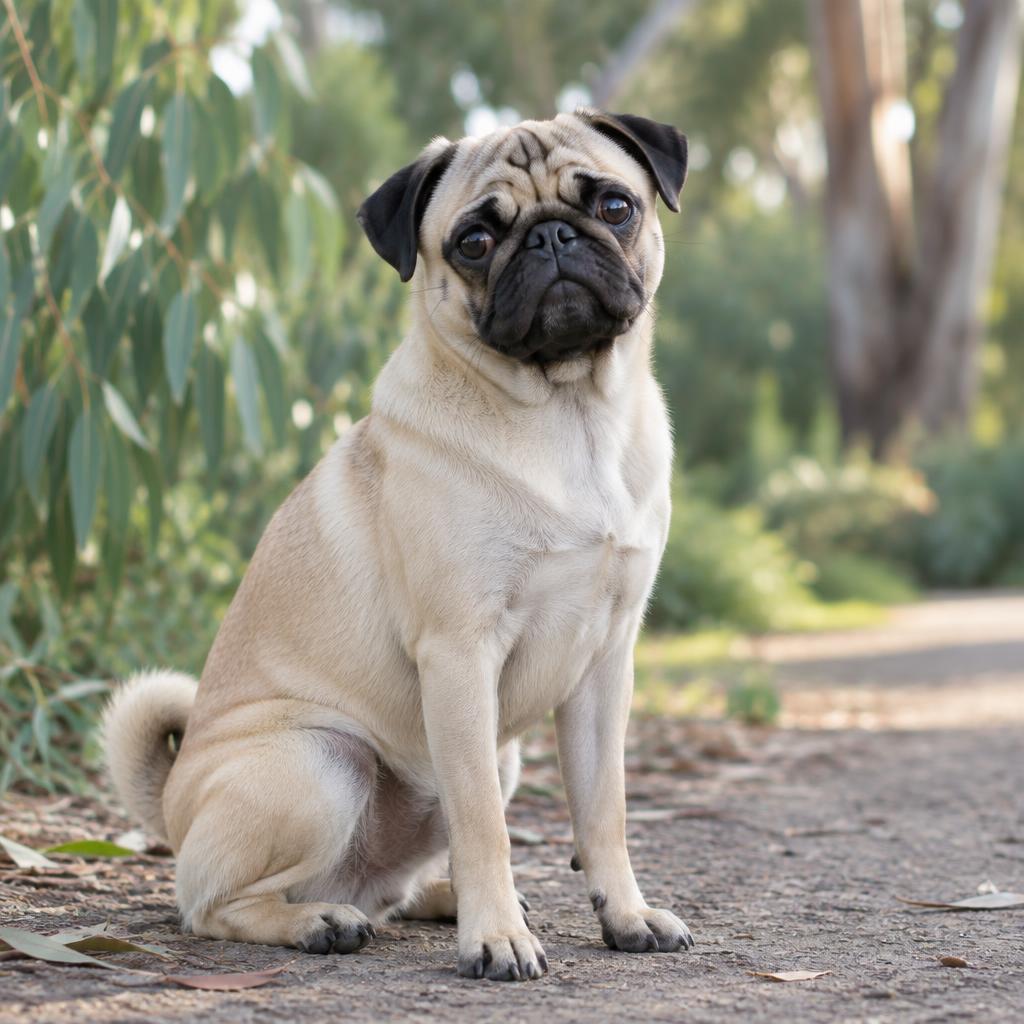
Pug
A charming, people loving companion whose flat face demands honest, careful ownership.
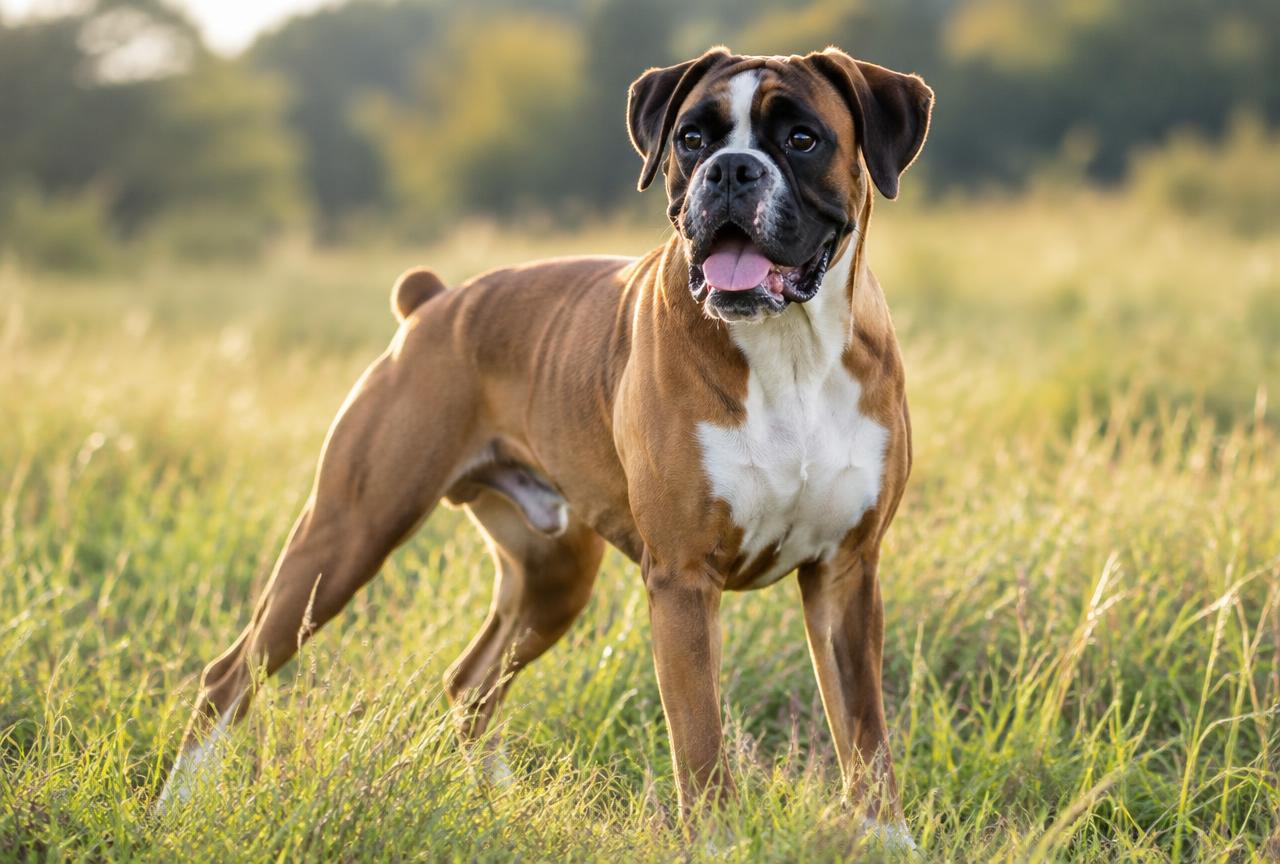
Boxer
An energetic, devoted working dog known for its playful spirit and protective nature.

Labrador Retriever
Britain's most popular family dog: biddable, food driven and built for an active household.

Golden Retriever
A gentle, biddable gundog famed for its patience with children and its glossy golden coat.
Put it into practice
Read next
Dog Dry Heaving: Causes and When It Is an Emergency
Dog dry heaving is usually throat irritation or mild nausea, but repeated unproductive retching with a swollen, tight belly can be bloat (GDV), a life-threatening emergency.


