
Why Do Dogs Eat Sticks? Risks and How to Stop It
Carrying a stick is charming; shredding and swallowing one is a genuine hazard. Here is why dogs do it, when it matters, and how to redirect the habit without a battle.
The SniffScroll desk
Published 10 October 2026
Dr Emma Whitfield, MRCVS
The short version
- Carrying a stick is low risk; swallowing wood can splinter, obstruct or perforate and is genuinely dangerous.
- Teething puppies and bored adolescents chew hardest; meet the need with legal chews rather than fighting it.
- Teach drop it as a well-paid trade, carry a toy to swap, and never chase a dog with a stick.
- Thrown sticks cause severe throat injuries; throw toys instead.
- Compulsive stick eating alongside other non-food items can signal pica and deserves a vet check.
Few sights are more cheerful than a dog trotting home with a stick twice their own width. And few habits cause more quiet vet visits than the same dog deciding to eat it. Stick chewing sits at the crossroads of normal canine behaviour and genuine risk: the chewing itself is natural, but swallowed wood can splinter, obstruct or perforate, and even enthusiastic chewing can leave splinters embedded in gums and the roof of the mouth.
This guide covers why dogs go for sticks, which dogs are most at risk, what swallowed wood can do, and how to redirect the habit onto safer targets without turning every walk into a tug of war.
Why do dogs chew and eat sticks?
Dogs chew sticks because chewing is a fundamental canine need, sticks are free, abundant and satisfyingly shreddable, and for puppies they are also relief for sore teething gums.
The motivations break down into a handful of groups:
- Teething. Between roughly three and six months, puppies chew to relieve gum discomfort as adult teeth come through. Texture matters, and wood has an ideal give to it. Our puppy teething guide covers this stage in detail.
- Instinct and play. Carrying and dissecting a stick echoes the dismantling behaviour of a scavenging ancestor. Many dogs find shredding deeply satisfying in itself.
- Boredom. A dog with empty time, in the garden or on a slow walk, makes their own entertainment, and the park is full of free chew toys.
- Attention. If grabbing a stick reliably produces a chase or a reaction, the stick becomes a tool for starting a game with you.
- Pica. A small number of dogs compulsively eat non-food items, including wood. When stick eating is intense, frequent and paired with eating dirt or other oddities, it can signal a nutritional gap or gut problem; our guides to why dogs eat dirt and why dogs eat poop cover the wider pica picture.
Is it actually dangerous?
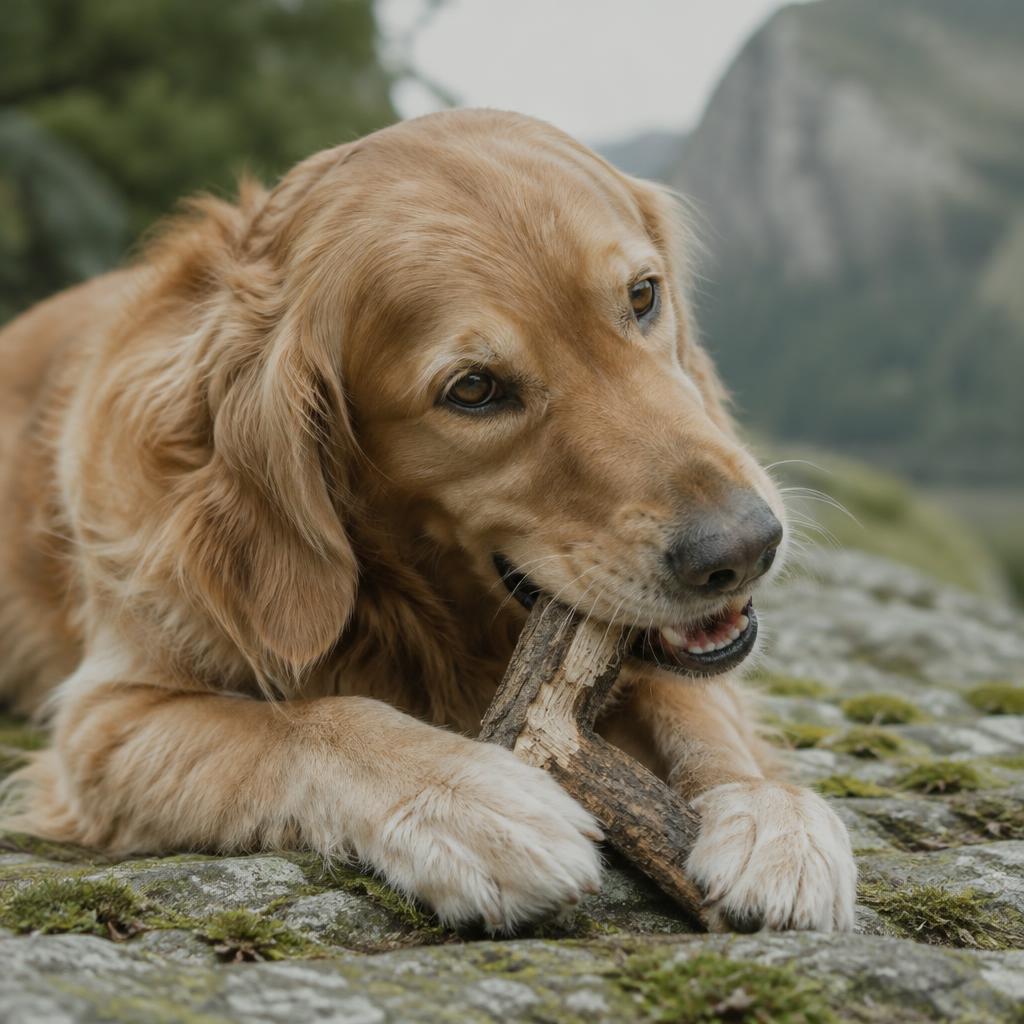
Carrying and lightly chewing a stick is low risk, but swallowing wood is genuinely dangerous: splinters can pierce the mouth, throat or gut, and larger pieces can block the intestine.
The risks, in ascending order of seriousness:
| Risk | What happens | How it presents |
|---|---|---|
| --- | --- | --- |
| Mouth splinters | Wood shards embed in gums, tongue or palate | Drooling, pawing at mouth, reluctance to eat |
| Throat injury | A piece lodges or scrapes the throat | Gagging, retching, distress |
| Tooth damage | Hard wood fractures teeth, especially slab fractures of the big molars | Chewing on one side, dropped food |
| Obstruction | A swallowed piece blocks the stomach or intestine | Vomiting, no appetite, hunched posture |
| Perforation | A sharp splinter pierces the gut wall | Sudden severe illness, fever, collapse; an emergency |
There is also a quieter risk: stick injuries to the mouth are common enough in throwing games that many vets now advise against throwing sticks at all. A dog running onto a thrown stick can impale the back of the throat if the stick lands point-up. It is rare, but it is the kind of rare that fills emergency clinics.
If your dog has just swallowed a sizeable piece of wood, phone your vet for advice even if they seem fine. They will weigh the size and shape of the piece against your dog's size and tell you whether to watch or come in.
Puppies, adolescents and the committed chewers
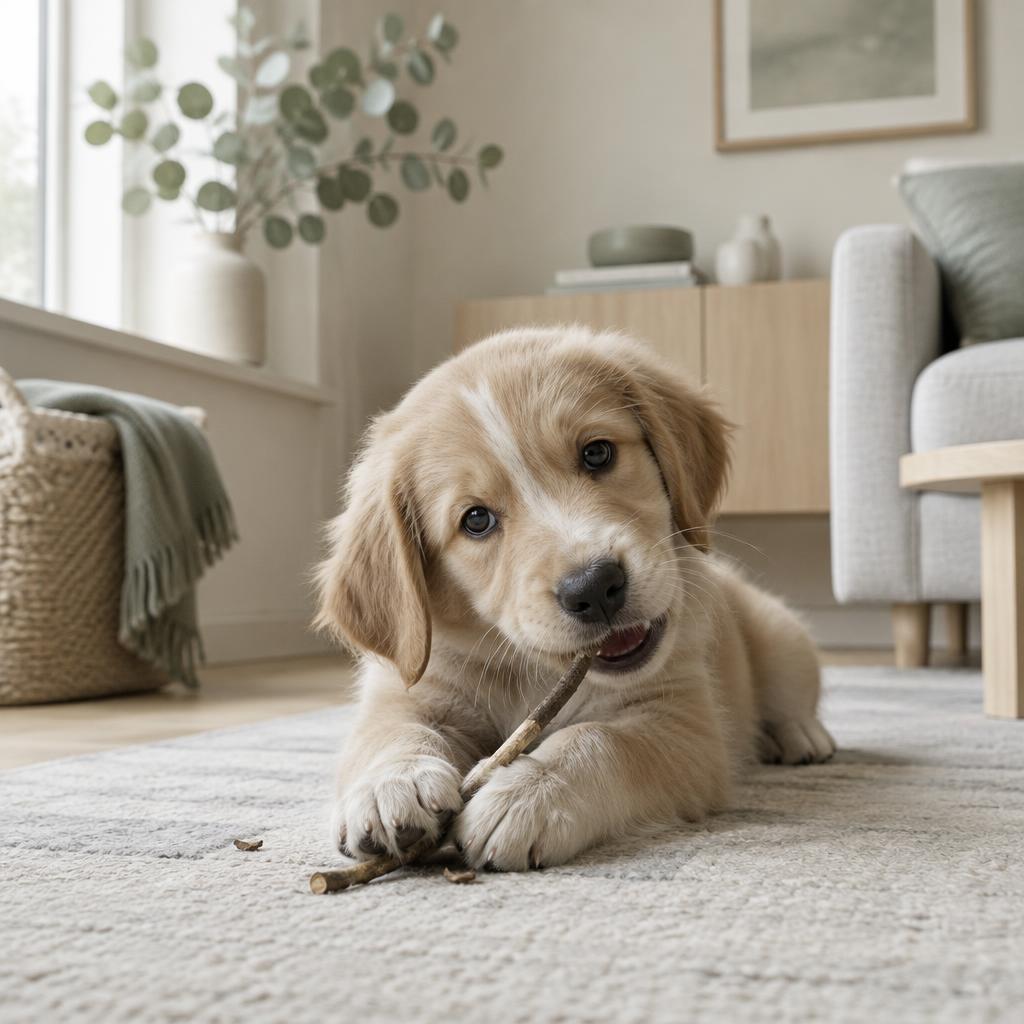
Puppies and adolescent dogs chew hardest and most indiscriminately, and these are the years when management matters more than training, because the urge will fade but a gut obstruction will not wait.
For a teething puppy, the answer is not to remove chewing but to outcompete the stick: a rotation of legal chews with different textures, frozen wet flannels for sore gums, and supervision in stick-heavy areas. Adolescent dogs, roughly six months to two years, chew out of boredom and surplus energy, and they respond best to more exercise plus more legal chewing, not less of either.
Breeds built to carry and dissect, retrievers like the Labrador and Golden Retriever, and terriers like the Border Terrier, are often the most committed stick enthusiasts, because the behaviour is close to what they were bred for.
How to redirect the habit
The reliable approach is management plus swap: supervise in stick-heavy areas, carry a better option, teach drop it with real payment, and make legal chews more available than illegal ones.
- 1Manage first. Until the training is solid, keep your dog on lead or under close watch in woods and parks where sticks are everywhere. You cannot train a dog who is already mid-shred thirty metres away.
- 2Teach drop it properly. Start indoors with a boring toy, say drop it, and pay with something much better. Build up to higher-value items before ever trying it on a stick in the wild. The swap must be a trade, not a confiscation.
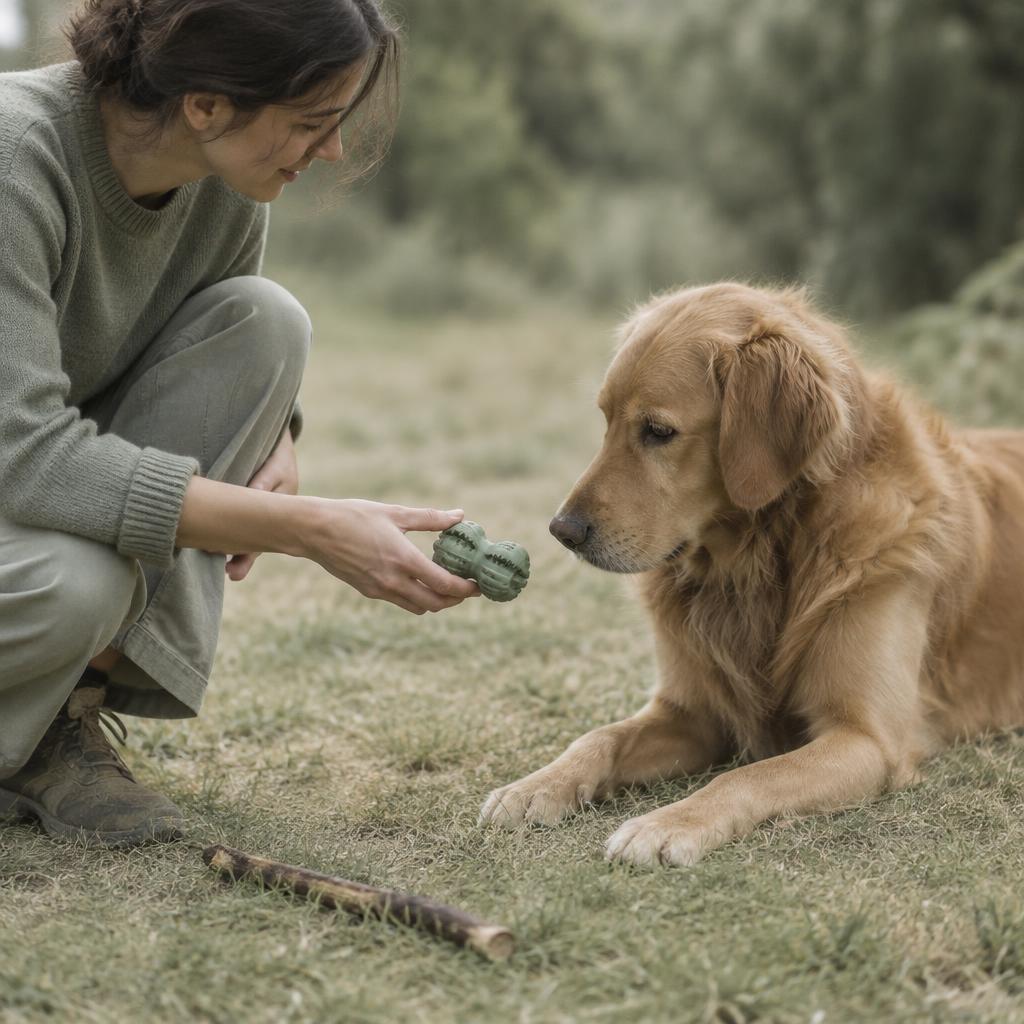
- 3Carry the alternative. A rubber chew or a favourite toy in your pocket gives the swap credibility. Offer it the moment the stick appears.
- 4Never chase. Chasing a dog with a stick teaches them that sticks start the best game in the world. Stand still, be interesting, and trade.
- 5Feed the need at home. A dog whose chewing needs are met with a rotating chew library is far less interested in park debris.
- 6Exercise the brain. Sniffing walks and food puzzles drain the mental energy that boredom chewing runs on.
Safer alternatives to sticks
The best stick substitutes are rubber chew toys, rope toys, and natural chews sized to your dog, rotated every few days so none of them becomes wallpaper.
Choose chews matched to your dog's chewing style: power chewers need dense rubber or specifically designed tough chews, while gentle shredders do well with rope and softer rubber. Avoid cooked bones, which splinter like wood, and be cautious with very hard chews like antlers and weight-bearing bones for aggressive chewers, since they fracture teeth; your vet can advise for your dog's bite.
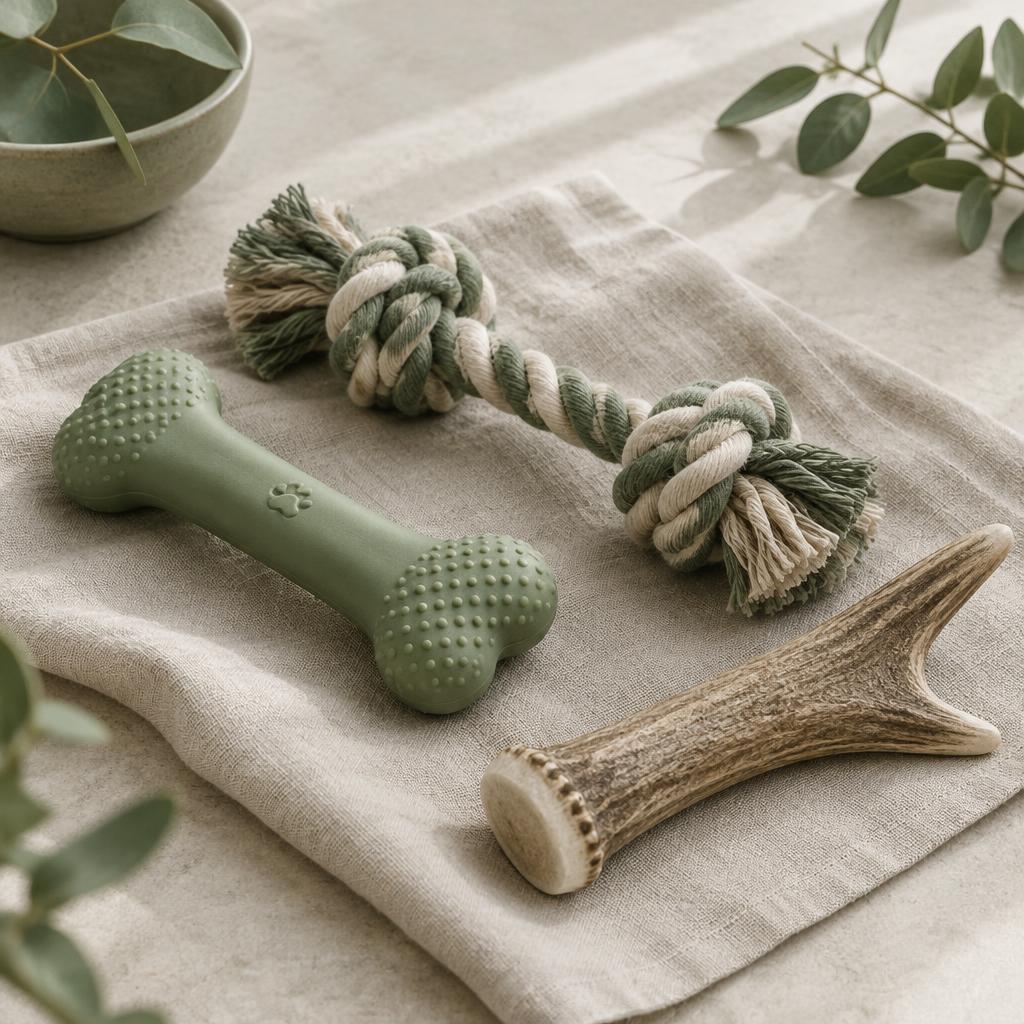
You will not train the chew out of a dog, and you should not try. The win is choosing what the chewing lands on.
What about fetching sticks?
Carrying is the safe end of the habit, and plenty of dogs live long lives with a stick permanently in mouth on walks. If your dog is a carrier rather than a shredder, the main upgrade is swapping what gets thrown. Throw a bumper, a ball or a frisbee rather than the stick itself, because the impalement injuries happen almost exclusively when a stick is thrown and lands awkwardly. Let them pick their own stick up from the ground if they must, keep an eye on any chewing that turns to shredding, and you have the compromise most stick-loving dogs and their vets can live with.
When to see a vet
See a vet urgently if your dog has swallowed a large piece of wood, is gagging or pawing at the mouth, vomits repeatedly, goes off food, or seems hunched and uncomfortable after a stick session.
Also mention the habit at a routine visit if your dog eats sticks compulsively, meaning daily, intensely, and alongside other non-food items. That pattern can point to pica with a medical driver, and a basic health screen plus a diet review is a sensible next step.
The garden problem: sticks at home
Walks get most of the attention, but for many dogs the garden is where the habit really lives, because the garden is where boredom and unsupervised time meet a ready supply of material.
If your dog spends time in the garden alone, the first job is a genuine tidy: rake up the fallen branches after windy weather, clear the pruning pile promptly, and check along fences and under shrubs where sticks accumulate. A dog with nothing to shred cannot practise the habit, and every unpractised week weakens it.
The second job is giving the garden a better purpose. A sandpit corner for diggers, a scatter of food in the grass for sniffers, or a frozen stuffed toy on hot days all convert empty time into occupied time. Dogs rarely choose a stick over something genuinely better; the problem is that a bare garden offers nothing better.
Finally, watch the firewood stack and the woodchip border. Both are stick buffets, and woodchip mulches are responsible for a steady trickle of obstructions every year, because the pieces are exactly swallow-sized. Cocoa mulch is worse, being toxic as well as obstructive. If your dog is a known swallower, fence these areas off until the habit is history.
Interactive · chew redirector
How risky is the stick habit?
Tell us about your dog's stick chewing. We will suggest a redirection plan and flag when the habit is a genuine hazard.
Redirection plan
- Carry a better option on walks: a rubber chew or a toy trades cleanly for a stick.
- Teach drop it with high-value treats, swapping rather than chasing or grabbing.
- Teething puppies need legal chewing outlets; rotate three or four textures so sticks lose their novelty.
Normal chewing: manage it, do not fight it
You will not train the chew out of a dog, and you should not try. The win is choosing what the chewing lands on.
Frequently asked questions
Is it OK for my dog to chew sticks if they do not swallow them? Light chewing is low risk, but not zero risk: splinters in the gums and fractured teeth happen to dogs who never swallow a thing, and thrown sticks cause the worst injuries. If your dog loves a stick, let them carry it, supervise the chewing, and swap it for a toy when the shredding starts.
What should I do if my dog ate a stick? Note roughly how big the piece was and when. Phone your vet for advice; for small fragments in a large dog they will usually suggest monitoring for vomiting, appetite loss and lethargy over 48 to 72 hours. For large pieces, sharp fragments or any symptoms, they will want to see the dog.
Why does my puppy eat sticks constantly? Teething. Between three and six months the gums are sore and chewing brings relief, and wood has an ideal texture. Provide a rotation of legal chews, including something freezable, supervise outdoors, and expect the intensity to fade once the adult teeth are through.
Are some woods poisonous to dogs? Yes. Cherry, yew, black walnut, red maple and oleander are among the toxic ones, and any treated or painted wood is a hazard. Since identifying fallen branches mid-walk is unrealistic, the practical rule is that unknown wood is not for eating.
How do I stop my dog picking up sticks on walks? Combine management and training: on lead in stick-heavy areas while you teach a well-paid drop it and leave it at home, carry a toy to trade, and never chase. Most dogs improve dramatically within a few weeks of consistent swapping.
Can eating sticks cause a blockage? Yes. Swallowed wood does not digest, and a large enough piece can obstruct the stomach or intestine, which is a surgical emergency. Signs are repeated vomiting, no appetite, a painful hunched posture and lethargy, and they warrant an immediate vet visit.
Questions people actually ask
Is it OK for my dog to chew sticks if they do not swallow them?
Light chewing is low risk but not zero risk: gum splinters and fractured teeth happen without swallowing, and thrown sticks cause the worst injuries. Supervise chewing and swap for a toy when shredding starts.
What should I do if my dog ate a stick?
Note the size of the piece and the time, then phone your vet. Small fragments in a large dog usually mean monitoring for vomiting, appetite loss and lethargy for 48 to 72 hours; large pieces or any symptoms mean a visit.
Why does my puppy eat sticks constantly?
Teething. Between three and six months, chewing relieves sore gums and wood has an ideal texture. Provide a rotation of legal chews, supervise outdoors, and expect the intensity to fade once adult teeth arrive.
Are some woods poisonous to dogs?
Yes: cherry, yew, black walnut, red maple and oleander are among the toxic ones, and treated or painted wood is hazardous. The practical rule is that unknown wood is not for eating.
How do I stop my dog picking up sticks on walks?
Combine management and training: on lead in stick-heavy areas while you teach a well-paid drop it, carry a toy to trade, and never chase. Most dogs improve within a few weeks of consistent swapping.
Can eating sticks cause a blockage?
Yes. Swallowed wood does not digest and can obstruct the stomach or intestine, a surgical emergency. Repeated vomiting, no appetite, a hunched painful posture and lethargy warrant an immediate vet visit.
Sources
Breeds mentioned



Put it into practice
Read next
Why Do Dogs Roll in Poop? The Instinct Explained
Why dogs roll in the worst smells they can find, what the behaviour is really about, and how to prevent it or at least clean up well afterwards.


