
Why Is My Dog Whining? Causes and How to Respond
Whining is your dog's most versatile vocalisation, and it can mean anything from "I want that biscuit" to "something hurts". Here is how to decode it.
The SniffScroll desk
Published 10 October 2026
Dr Emma Whitfield, MRCVS
The short version
- Whining has six main causes: attention, excitement, anxiety, appeasement, physical need and pain.
- Learned whining stops the instant the dog gets what they want; anxious whining does not.
- Reward quiet, meet needs on a schedule, and expect a brief extinction burst before improvement.
- New whining in a senior dog or any sudden onset deserves a vet check before training.
- Night whining in puppies is loneliness; in seniors it can be pain or cognitive decline.
Whining sits in the middle of the canine vocabulary: more urgent than a sigh, less alarming than a bark, and used for everything from begging to genuine distress. That range is exactly what makes it confusing. The same sound can be a learned habit your dog has trained you to answer, or the only way your dog can tell you something is wrong.
The skill is not stopping the whining. It is reading it. This guide covers the main reasons dogs whine, how to tell them apart, how to respond to each, and the patterns that mean the whining is a symptom rather than a conversation.
What is my dog actually saying when they whine?
Dogs whine to communicate a need or an emotion, and the main categories are attention-seeking, excitement, anxiety, appeasement, physical need and pain, each with its own body language.
Context and posture decode the sound. A dog whining at the treat cupboard with a wagging tail is making a request. A dog whining with a tucked tail, pinned ears and a lowered body is worried or apologising. A dog whining while pacing at the door probably needs the toilet. And a dog whining while lying still, or when a particular spot is touched, may be telling you about pain.
Puppies whine more than adults because it is their primary communication tool, honed in the litter where whining summoned their mother. Most dogs whine less as they mature and learn other ways to ask. A dog who whines more with age, or one who starts whining out of nowhere, is telling you something has changed.
Attention and excitement: the learned whine
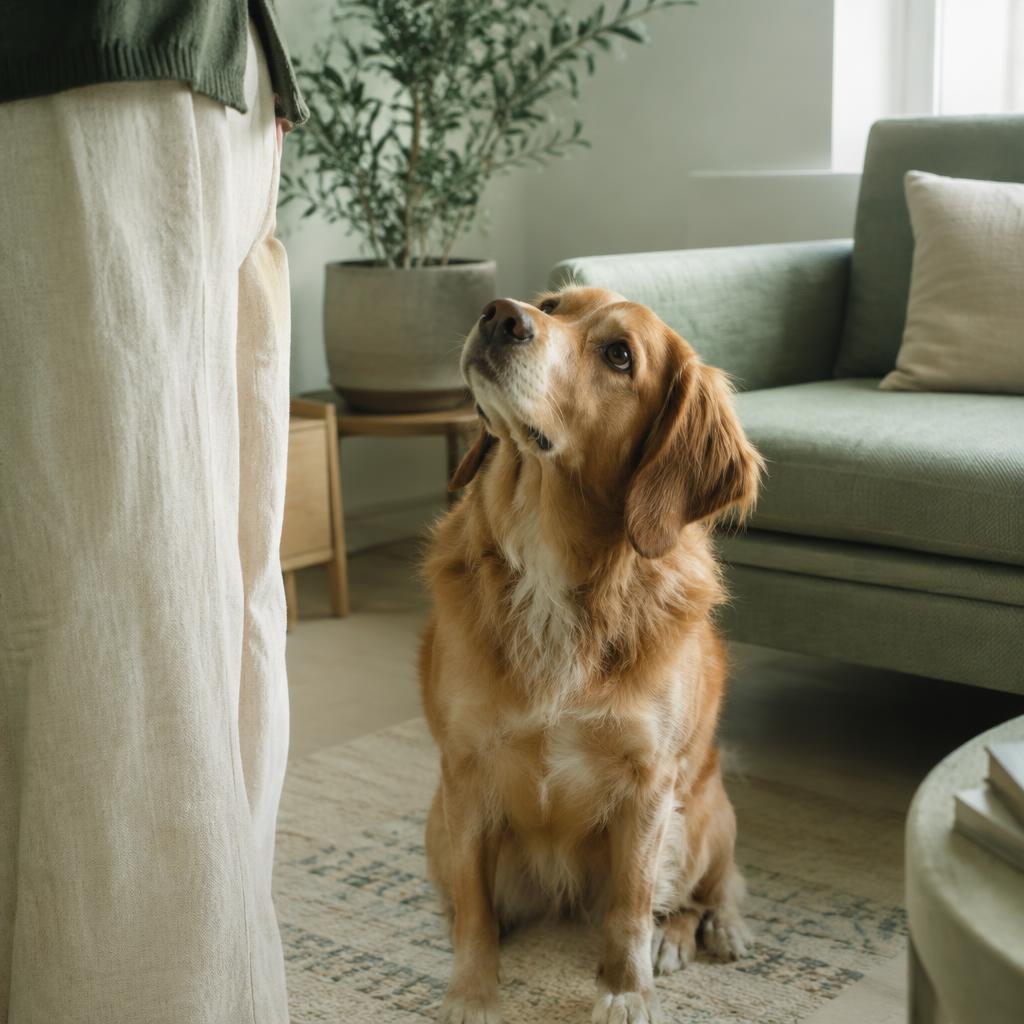
The commonest kind of whining in adult dogs is learned: the dog discovered that whining produces attention, food, door-opening or play, and has been using it as a remote control ever since.
This is not manipulation in any sinister sense; it is simply training working in reverse. Every time whining produces a result, the behaviour is reinforced, and dogs are excellent scientists about it. The tell-tale signs are that the whining happens when your dog wants something specific, stops the instant they get it, and comes with relaxed, hopeful body language rather than tension.
The fix is equally logical, though it demands patience:
- 1Meet needs proactively. Exercise, toilet breaks, food and company on a predictable schedule remove most legitimate reasons to ask.
- 2Reward quiet, not noise. Wait for even two seconds of silence before giving attention. Mark it with a calm word, then deliver what they wanted.
- 3Never reward the whine itself. This includes sighing, eye contact and telling them off, all of which are attention.
- 4Expect an extinction burst. When the whining stops working, it typically gets worse for a few days before it gets better. This is the strategy working, not failing.

Anxiety, night whining and the crate
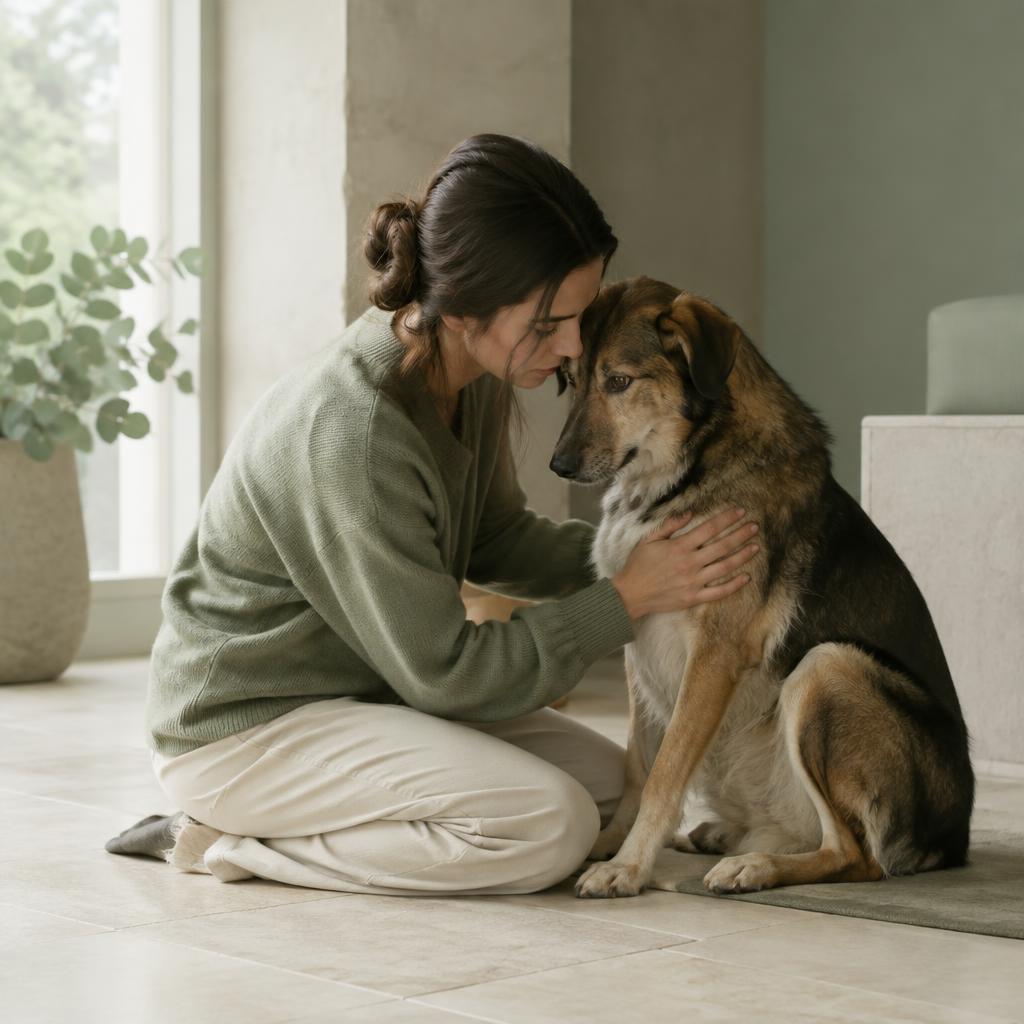
Whining driven by anxiety sounds different: it comes with pacing, panting, pinned ears or an inability to settle, and it does not switch off the moment the dog gets what they appear to want.
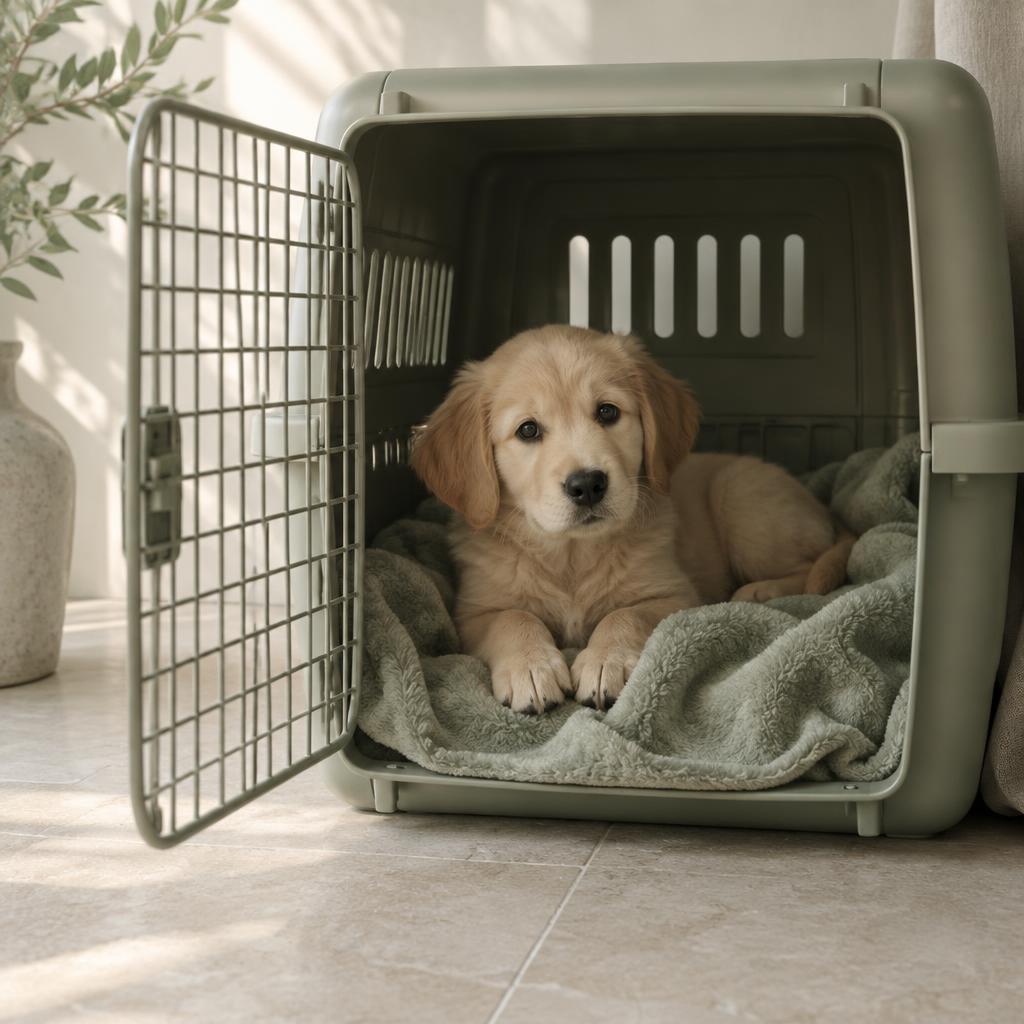
Night-time is where this shows most. A puppy whining in the crate in their first weeks is usually experiencing their first nights alone, and the answer is proximity, routine and time rather than ignoring or indulging: a crate beside the bed at first, a late toilet break, a brief boring check when they cry, then gradually moving the crate away over a couple of weeks. Our crate training guide covers the full schedule.
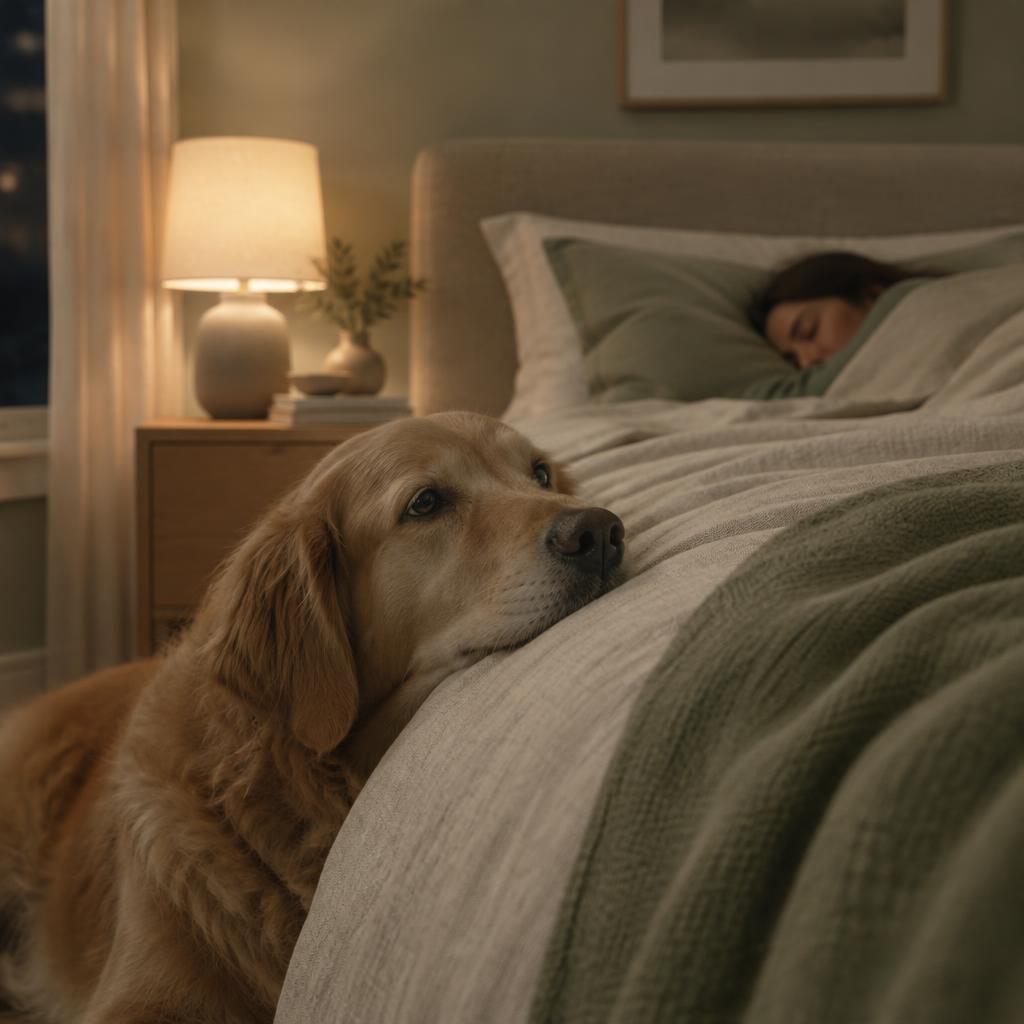
In adult dogs, whining as you pick up your keys, or whining that continues after you leave, can be the leading edge of separation anxiety. The distinction from a learned whine is the emotional temperature: an anxious dog is not making a request, they are panicking, and answering the whine does not soothe them. If your dog whines, barks, destroys things or soils the house when alone, read our separation anxiety guide and treat it as the welfare issue it is rather than a noise problem.
Whining in puppies and senior dogs
Puppies whine because it is their native language, and senior dogs whine because ageing brings new discomforts; both ends of life deserve a more generous interpretation than the adult years.
For puppies, whining communicates hunger, cold, loneliness, a full bladder and plain uncertainty, often all in the same hour. The approach is to meet needs on a schedule, respond to night whining briefly and boringly, and avoid turning every squeak into a party. Puppies who learn that calm behaviour gets attention and whining gets a yawn grow into quiet adults.
Senior dogs are the opposite case. New whining in an older dog who never used to whine is a flag, not a habit. Arthritis pain, fading sight or hearing, and canine cognitive dysfunction (the dog equivalent of dementia) all present with increased vocalisation, often at night. A senior who has started pacing and whining after dark deserves a vet conversation before any training plan.
When whining means pain or illness
Whining that starts suddenly in a dog who rarely whined, that happens when the dog moves or is touched, or that comes with any other symptom, should be treated as a pain signal until a vet proves otherwise.
Dogs hide pain well, and whining is often the first crack in the facade. The patterns that matter:
- Sudden onset. A dog who starts whining this week after years of quiet is not developing a habit; something has changed.
- Movement-linked. Whining when jumping, climbing stairs, or being picked up points at joints, back or abdomen.
- Restless whining. A dog who whines, lies down, gets up, repositions and cannot settle may have abdominal pain; if the belly looks swollen or the dog is retching, treat it as an emergency.
- Whining plus anything else. Off food, limping, drinking more, vomiting or lethargy alongside whining all raise the stakes.
Whining is information, not manipulation. Decode when and why before you decide whether to train it away or investigate it.
Keeping a whine diary
When the pattern is not obvious, a week of notes beats a month of guessing. Each time the whining happens, jot down the time, what was happening just before, what your dog's body was doing, and what you did in response. Patterns that are invisible in the moment jump off the page after seven days: the whining that always precedes the evening walk is a request; the whining that clusters around mealtimes may be hunger or nausea; the whining with no pattern at all, in a dog who is also a little off, is the kind you take to the vet along with the diary.
Bring the notes to any vet or behaviourist appointment. They compress weeks of observation into something a professional can read in two minutes.
When to see a vet
Book a vet check when whining is new and unexplained, when it is linked to movement or touch, when it arrives with other symptoms, or when a senior dog starts vocalising at night.
Also seek help from an accredited behaviourist when the whining is anxiety-driven and not improving with routine changes, or when it is part of a wider picture of distress when left alone. A short course of professional help early is far cheaper, and kinder, than months of an escalating problem.
Excitement whining and the greeting problem
A special mention for the whine that comes with the wiggle: the dog who whines with joy when you come home, when the lead appears, or when a favourite person walks in.
Excitement whining is emotionally genuine, the sound of a dog whose feelings have briefly exceeded their capacity to contain them, and in moderation it is harmless and rather lovely. It becomes a problem only when the arousal behind it is so high that the dog cannot hear you, cannot settle, or tips into jumping, mouthing or spinning. At that point the issue is not the noise but the arousal level, and the answer is to lower the temperature of the whole event: calmer greetings, the lead appearing without ceremony, and attention given once four feet are on the floor.
Breeds wired for close partnership, the Labrador, the Cavalier King Charles Spaniel and the Border Collie among them, tend to be the most vocal greeters, because anticipation is baked into what they were bred for. With these dogs, consistency across the whole household matters more than any single technique: one person who makes a fuss at the door keeps the whining alive for everyone.
The test for whether excitement whining needs work is simple. If the dog can settle within a minute or two of the exciting thing happening, enjoy the soundtrack. If the whining escalates, lasts, or comes with frantic behaviour, treat it as an arousal problem and train the calm, not the quiet.
Interactive · whine decoder
What is the whining telling you?
Answer four questions about when and how your dog whines. We will help you tell a learned habit from a genuine cry for help.
How to respond
- Wait for two seconds of quiet before giving attention; reward the silence, not the sound.
- Check the basics first: water, toilet break, exercise and company all met before the whining starts.
Learned whining: your dog has trained you well
Whining is information, not manipulation. Decode when and why before you decide whether to train it away or investigate it.
Frequently asked questions
Why is my dog whining for no reason? There is almost always a reason; it is just not always visible from the sofa. Work through the checklist: toilet, water, exercise, food, company, then boredom. If none fit and the whining is new, consider pain or illness, especially in an older dog, and keep a diary of when it happens for a week.
Should I ignore my dog when they whine? It depends entirely on the cause. Ignore a learned attention whine and reward the quiet that follows. Never ignore a puppy's night whining in their first weeks, an anxious dog's distress, or any sudden unexplained whining, since those need comfort, training plans or a vet, not silence.
Why does my dog whine at night? In puppies, night whining is usually loneliness and responds to proximity and routine. In adults, check for a full bladder, a cold room or an unsettled stomach. In seniors, new night whining can signal pain or cognitive decline and deserves a vet visit.
Do dogs grow out of whining? Most puppies whine less as they mature and learn other ways to communicate, provided whining has not been accidentally rewarded along the way. A dog whose whining reliably produces results will keep whining into old age, because it works.
Is whining a sign of separation anxiety? It can be, particularly whining that starts as you prepare to leave or continues after you have gone. The distinguishing feature is distress that answering does not soothe, often with pacing, panting or destruction. A camera check after you leave settles the question.
Why does my dog whine when I pet another dog? That is usually a mix of excitement and a learned request for attention, the canine version of queue-jumping. It is benign, but if you would rather not encourage it, reward calm waiting with your attention and let the whining earn nothing.
Questions people actually ask
Why is my dog whining for no reason?
There is almost always a reason. Check toilet, water, exercise, food, company and boredom first. If none fit and the whining is new, consider pain or illness and keep a diary of when it happens for a week.
Should I ignore my dog when they whine?
It depends on the cause. Ignore a learned attention whine and reward quiet. Never ignore a young puppy's night whining, an anxious dog's distress, or sudden unexplained whining, which need comfort, training or a vet.
Why does my dog whine at night?
In puppies, usually loneliness, settled by proximity and routine. In adults, check for a full bladder, cold or an unsettled stomach. In seniors, new night whining can signal pain or cognitive decline and deserves a vet visit.
Do dogs grow out of whining?
Most puppies whine less as they mature, provided whining has not been accidentally rewarded. A dog whose whining reliably produces results will keep using it into old age.
Is whining a sign of separation anxiety?
It can be, especially whining that starts as you prepare to leave or continues after you go. The marker is distress that answering does not soothe, often with pacing or destruction. A camera check settles the question.
Why does my dog whine when I pet another dog?
Usually excitement plus a learned request for attention. It is benign, but if you would rather not encourage it, reward calm waiting and let the whining earn nothing.
Sources
Breeds mentioned

Labrador Retriever
Britain's most popular family dog: biddable, food driven and built for an active household.

Cavalier King Charles Spaniel
An affectionate, adaptable toy spaniel that thrives on human company above almost anything else.

Border Terrier
The easy-going terrier with an otter head and a working heart.
Put it into practice
Read next
Why Do Dogs Roll in Poop? The Instinct Explained
Why dogs roll in the worst smells they can find, what the behaviour is really about, and how to prevent it or at least clean up well afterwards.


