Gundog group
Developed in the Brittany region of north-west France, where local spaniel-type pointing dogs were refined through the nineteenth century into a compact, fast gundog able to point and retrieve over rough hedgerow country on foot. Early imports to Britain and the United States were known as Brittany Spaniels, but the breed hunts and points like a pointer rather than flushing like a spaniel, and most kennel clubs now use the name Brittany alone to reflect that.
Brittany
The Brittany is a French pointing gundog built for serious daily exercise and gentle training. It is affectionate and biddable, but it needs runners, hikers or shooting households, not a quiet flat.
Reviewed by the SniffScroll editorial desk
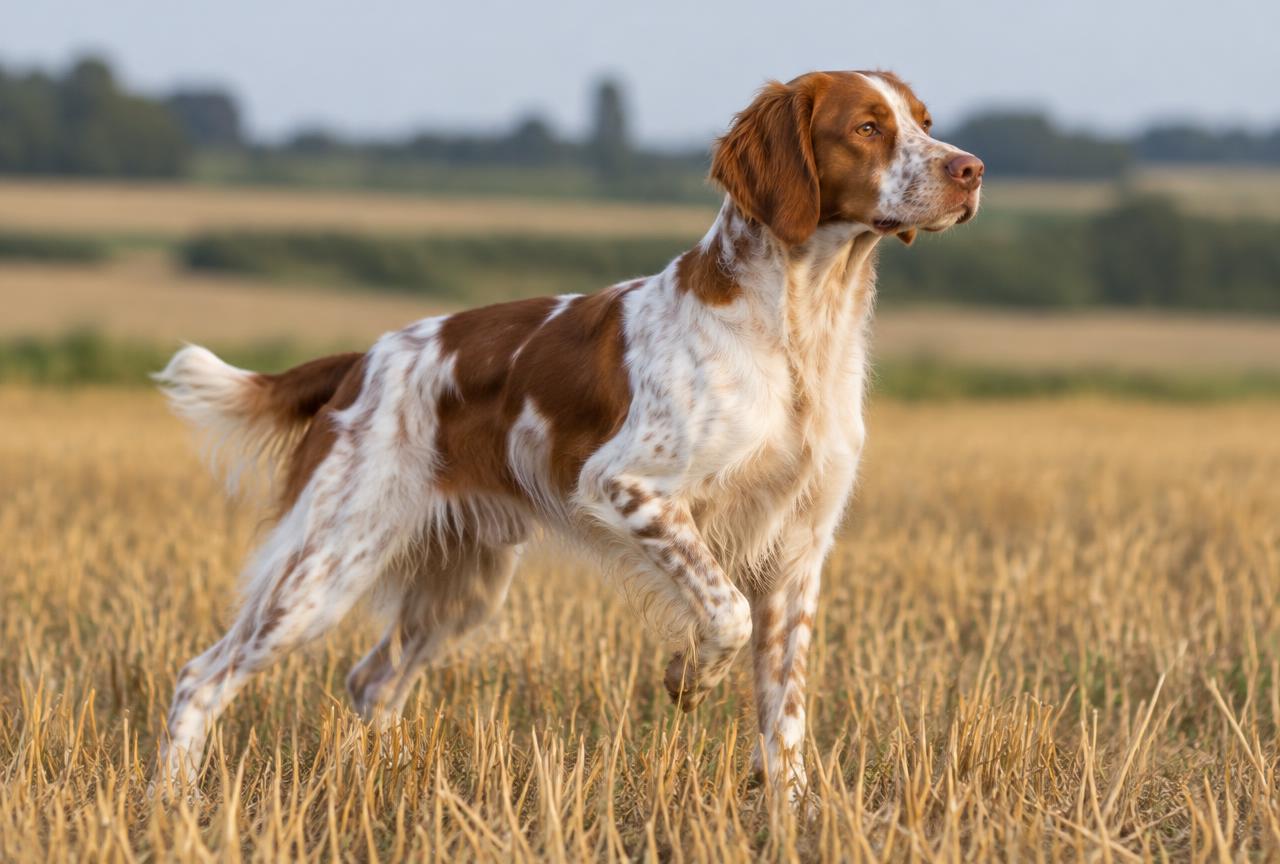
The orange and white pointing dog built for the field, not the sofa.
The short version
- A pointing gundog, not a spaniel, despite the older Brittany Spaniel name.
- Needs well over an hour of real off-lead exercise most days, ideally with scent work or fieldwork included.
- Sensitive temperament responds to calm, reward-based training and shuts down under harsh handling.
- Health watch-list: hip dysplasia, epilepsy, hypothyroidism, ear infections and entropion.
- Grooming is comparatively light: a weekly brush plus routine ear and nail care.
- Suits active runners, hikers and shooting homes far better than flats or sedentary households.
- Weight
- 14 to 20 kg
- Height
- 46 to 52 cm
- Lifespan
- 12 to 14 yrs
- Size
- Medium
- Group
- Gundog
- Coat
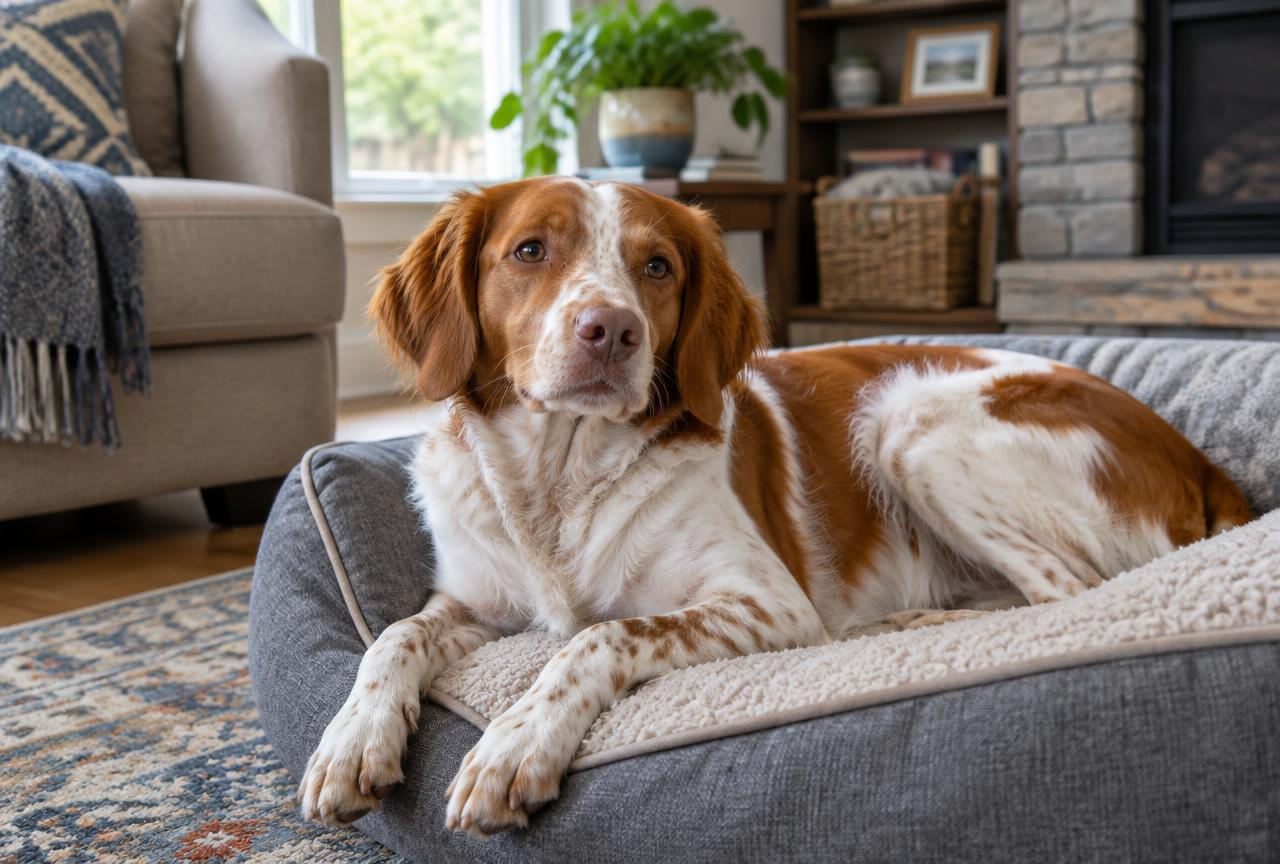
- Dense, flat or slightly wavy coat with light feathering, in orange and white or liver and white, needing weekly brushing
- Grown male
- 15 to 20 kg
- Grown female
- 14 to 18 kg
- Years to full size
- about 1.5
- One-off setup
- €900 to 1700
Get one if…
- Runners, hikers and cyclists who can give well over an hour of real exercise daily
- Shooting or working gundog households able to let the dog do its job
- Owners committed to calm, reward-based training rather than firm handling
- Active families with older, considerate children who enjoy outdoor life
- Homes with secure access to open ground for off-lead running and scent work
Think again if…
- Flats or homes with close neighbours and no serious exercise outlet
- First-time owners expecting a low-key companion dog
- Households planning long daily absences with no outdoor stimulation
- Anyone intending to train with a heavy hand or raised-voice corrections
- Owners wanting a low-shedding or hypoallergenic-style coat
Trait profile
The Brittany combines near-endless field energy with a genuinely soft, affectionate temperament, which makes it biddable under gentle handling but reactive and anxious under pressure. The trade-off for that willingness is an exercise need that few casual households can meet.
Space & setup. Not suited to flat life. The Brittany needs a securely fenced garden as a bonus, not a substitute, alongside daily access to open ground where it can run and work off lead.
Allergies. The Brittany sheds a moderate, seasonal amount and is not considered hypoallergenic. Weekly brushing manages loose hair reasonably well, but allergy sufferers should spend time with the breed before committing.
Living with a Brittany
The Brittany is a medium-sized gundog from north-west France, bred to point and retrieve over long days in open country. Affectionate, sensitive and tirelessly athletic, it suits active households and shooting homes, but its exercise appetite and soft temperament make it a poor match for quiet flats or heavy-handed training.
The Brittany is a working gundog first and a family companion second, and the people who get the most from the breed are the ones who understand that order and plan their lives around it. Bred in north-west France to point and retrieve over long days of rough hedgerow shooting, the Brittany carries a hunting appetite that does not switch off because a puppy has moved into a suburban house. This is not a dog that is satisfied with a lead walk around the block. It wants to run, quarter ground, use its nose and work with a person, and if that outlet is missing the energy tends to resurface as pacing, destructiveness or relentless barking.
Many owners still know the breed as the Brittany Spaniel, and the name causes genuine confusion about what the dog actually does. Despite the old name, the Brittany is not a flushing spaniel. It hunts in the pointer tradition, ranging out ahead of the gun, freezing on scent and holding point until the bird is flushed. Most kennel clubs dropped the word Spaniel from the official name decades ago precisely because it misled buyers about temperament and working style, and anyone shopping for the breed today should think of it as a close cousin of the German Shorthaired Pointer or the Hungarian Vizsla rather than of the Springer Spaniel, even though all four are gundogs worth comparing side by side.
Temperamentally, the Brittany is softer than its athleticism suggests. It is affectionate, people-focused and genuinely eager to please, but it is also sensitive to tone and correction in a way that surprises owners used to tougher breeds. Harsh handling, raised voices or heavy-handed equipment tend to produce a dog that shuts down or becomes anxious rather than one that complies, while calm, reward-based training builds a biddable, responsive partner quickly. This sensitivity extends to the home: Brittanys read household tension and routine changes keenly, and they do best with consistency and quiet confidence rather than drama.
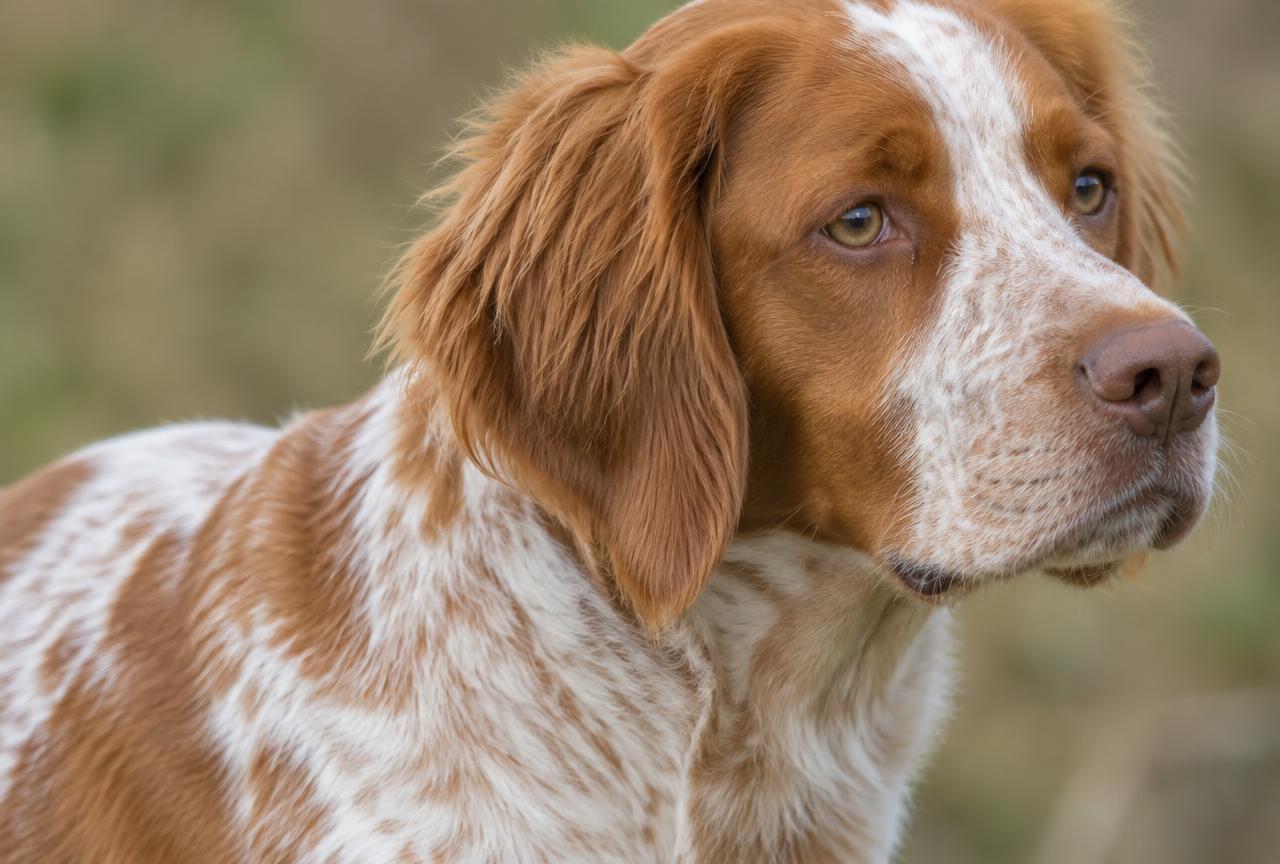
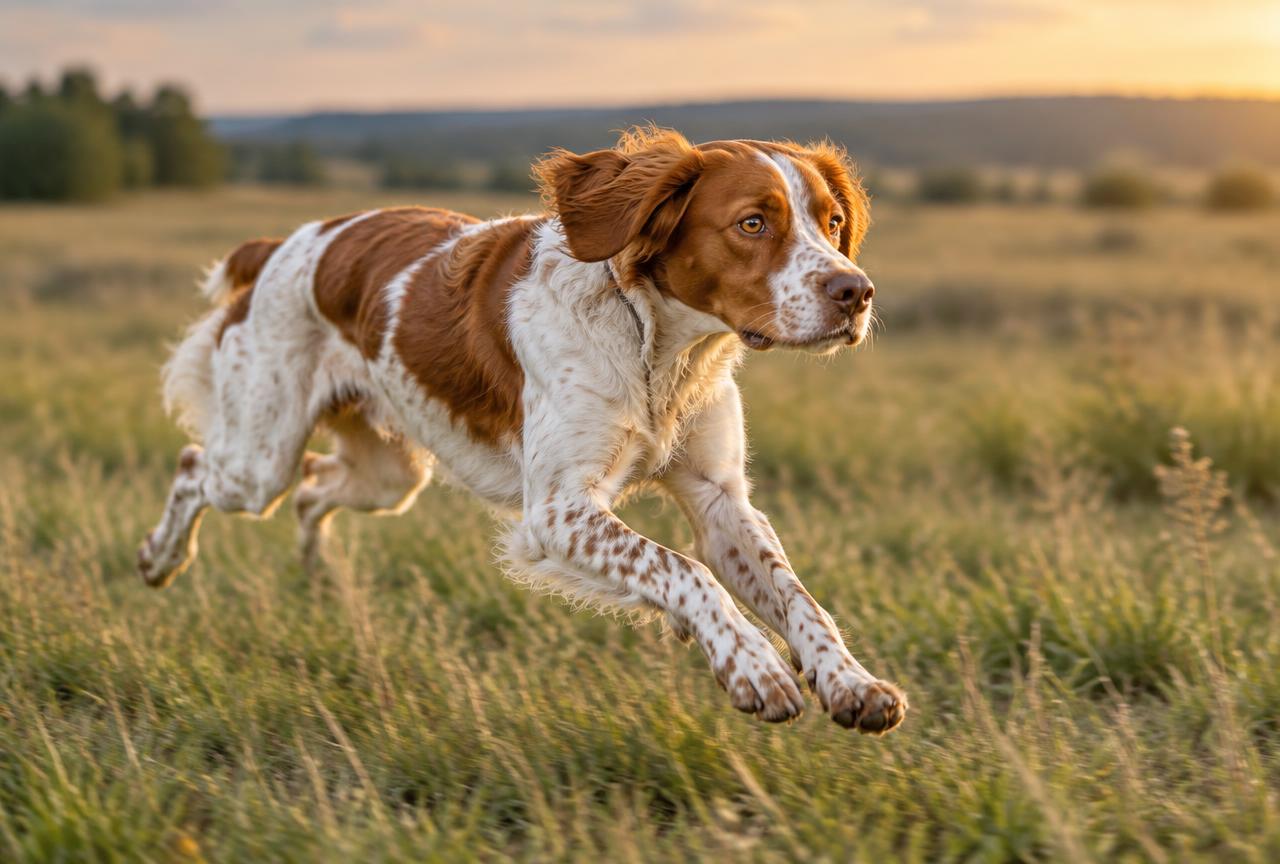
Exercise is the single biggest commitment. A full-grown Brittany needs well over an hour of proper off-lead activity most days, ideally with scent work, retrieving games or genuine field access folded in alongside the walking. Running, cycling and hiking households suit the breed naturally, as do homes connected to shooting or working gundog activities, where the dog can actually do the job it was bred for. A garden alone is not enough; the breed needs distance and purpose, not just space to potter. Flats with close neighbours, owners who work long hours, and anyone hoping for a low-key companion dog should look elsewhere, because an under-exercised Brittany becomes a vocal, anxious, hard-to-live-with dog fairly quickly.
Health in the breed is generally good relative to its size, but a handful of conditions recur often enough to plan around. Hip dysplasia appears in working and show lines alike, so buying from parents with sound hip scores matters. Epilepsy has a meaningful presence in the breed and tends to run in families, making an honest conversation with the breeder about seizure history worthwhile. Hypothyroidism shows up with age and can masquerade as weight gain or a dulled coat, so a thyroid panel is sensible if temperament or condition shifts later in life. Ear infections are a routine risk given the drop ears and active outdoor lifestyle, and regular checking after muddy or wet outings heads off most problems early. Entropion, where the eyelid rolls inward, is less common but worth asking breeders about, since it typically needs surgical correction if it occurs.
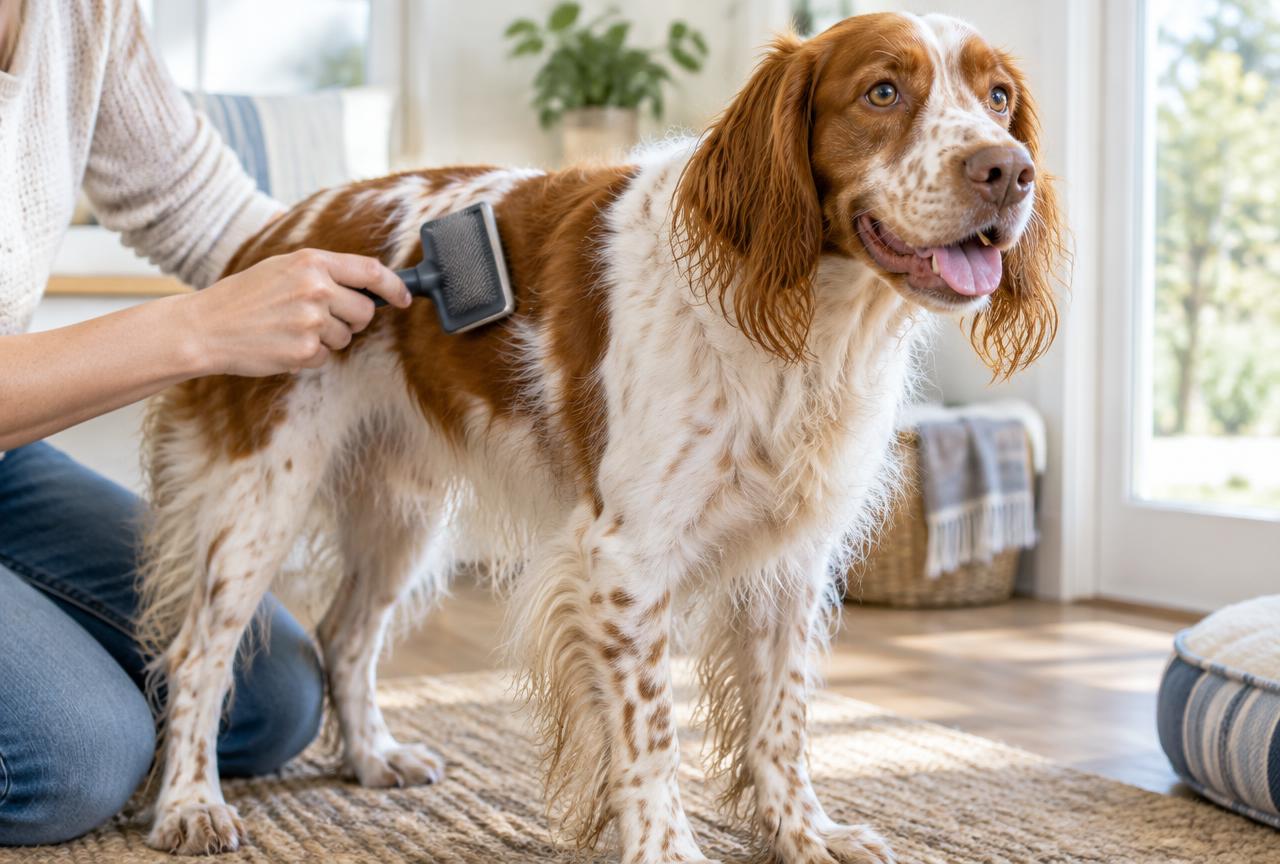
Grooming is comparatively light for a gundog. The dense, flat to slightly wavy coat with its light feathering needs a weekly brush to clear debris and prevent matting around the ears and legs, with more frequent attention after days spent working through cover. Ears need regular drying and checking, nails need routine trimming, and that is largely the full grooming picture; this is not a high-maintenance coat by gundog standards.
Taken together, the Brittany suits runners, hikers, and shooting or working gundog households who want a genuinely affectionate, biddable dog alongside serious athleticism, and who are willing to train with patience rather than pressure. It is a poor fit for first-time owners who underestimate the exercise need, for quiet flats with no outdoor outlet, and for anyone planning to train with a firm hand. Chosen by the right household and trained gently, the Brittany is one of the most rewarding of the pointing breeds: loyal, biddable and endlessly willing to work.
A tireless, affectionate pointing dog that rewards owners who can match its exercise appetite and train it gently. Wrong for quiet flats or forceful handling.
Exercise, day to day
- 1Puppies (8 to 20 weeks): short, varied play and exploration sessions, avoiding forced running or jumping while joints develop.
- 2Adolescents (4 to 12 months): gradually building on-lead walks plus controlled off-lead recall practice and gentle scent games.
- 3Adults: well over an hour of proper off-lead exercise most days, ideally including fieldwork, scent work or retrieving.
- 4Mental work: scent trails, gundog training classes and puzzle feeders channel the pointing instinct and prevent boredom-driven barking.
Grooming, realistically
- 1Brush weekly with a slicker brush or hound glove to clear loose hair and prevent matting in the feathering.
- 2Check and dry ears after every wet or muddy outing to reduce the risk of infection.
- 3Trim nails every three to four weeks, more often if the dog does not naturally wear them down.
- 4Bathe only when genuinely dirty; over-bathing strips the natural oils from the working coat.
- 5Check eyes, paws and coat for burrs, thorns or ticks after any time spent in long grass or woodland.
What you actually need
- Slicker brush
- Hound glove
- Dog nail clippers
- Ear cleaning solution
- Dog-safe tick remover
- Enzymatic dog toothpaste and brush
Puppy to adult
| Age | Male | Female | What is happening |
|---|---|---|---|
| 8 weeks | 3 to 4.5 kg | 2.8 to 4.2 kg | Small and playful; begin gentle handling and early socialisation without any forced exercise. |
| 3 months | 6 to 8.5 kg | 5.5 to 8 kg | Fast growth phase; keep walks short and let play be the main exercise outlet. |
| 6 months | 10 to 13 kg | 9.5 to 12 kg | Adolescent energy rises sharply; structured training now prevents later pulling and barking habits. |
| 9 months | 13 to 17 kg | 12 to 15.5 kg | Approaching adult weight; introduce longer off-lead sessions and early fieldwork if relevant. |
| 12 months | 14.5 to 19 kg | 13.5 to 17.5 kg | Close to adult size; full exercise routine can begin, built up gradually rather than all at once. |
| 18 months | 15 to 20 kg | 14 to 18 kg | Physically and mentally mature; settle into the lifelong exercise and training routine. |
Ranges are typical, not targets. Judge condition by ribs and waist, and check with the ideal weight checker.
What to ask a breeder
- What are the hip scores of both parents, and can I see the certificates?
- Is there any history of epilepsy in the line, and how far back does it go?
- Have the parents had recent thyroid checks, and what were the results?
- How are puppies introduced to gunfire, scent work or field conditions?
- What temperament traits run in this particular line, and how sensitive are they to correction?
Health tests to ask for
Ask to see results for both parents before you put down a deposit.
- Hip and elbow scores on both parents
- Annual eye examination to monitor for entropion
- Thyroid profile if temperament, weight or coat condition changes
- Family history check for epilepsy going back at least two generations
- Routine ear checks built into the grooming and exercise routine
Health watch-list
What to ask a breeder about, and what to watch for over a lifetime. This is orientation, not veterinary advice, anything you notice belongs in front of a vet.
Hip dysplasia
CommonAppears across working and show lines; choosing parents with sound hip scores is the most effective safeguard.
Epilepsy
NotableHas a meaningful presence in the breed and tends to run in families, so ask breeders directly about seizure history in the line.
Hypothyroidism
Common with ageOften shows as weight gain, lethargy or a dulled coat later in life; a thyroid panel clarifies the picture quickly.
Ear infections
CommonDrop ears and an active outdoor lifestyle combine to raise the risk; drying and checking ears after wet or muddy outings helps prevent problems.
Entropion
UncommonAn inward-rolling eyelid that typically needs surgical correction if it occurs; ask breeders whether it has appeared in the line.
Patellar luxation
RareOccasionally reported in the breed; a straightforward orthopaedic check at puppy visits usually catches it early.
What it costs to keep one
Realistic running cost
€143 / month
About €1,716 a year, or roughly €22,308 across a 13-year life, before purchase price, neutering and one-off vet events.
Before the puppy arrives. Budget roughly €900 to 1700 for a crate, bed, lead and harness, bowls, puppy classes, first vaccinations and grooming kit sized for this breed. Figures throughout are indicative and vary a good deal between countries.
Interactive · built for this breed
Is a Brittany right for your home?
Seven honest questions about your space, time and household, checked against this breed's exercise need, coat, sociability and tolerance for time alone.
Fit with your routine
90%
A strong fit
Your routine suits a Brittany well. Meet adult dogs of the line before you commit.
What to sort out first
- Needs more daily exercise than you have pencilled in.
Working in your favour
- Coat care fits the grooming time you offered.
Compare more breeds in the matchmaker, or plan meals with the portion calculator.
The verdict, by household
Only with commitment
Trainable and affectionate, but the exercise need and training sensitivity suit an owner who has researched gundogs properly, not someone wanting a casual first dog.
Good, with the right pace
Affectionate and playful with older, active children who enjoy outdoor life, though its energy can overwhelm toddlers and very young children.
Excellent
This is the Brittany's ideal home: a running, hiking or shooting lifestyle gives the dog the outlet it needs and builds a close working partnership.
Not suitable
Limited space, restricted exercise access and barking triggered by boredom make this a consistently poor match for the breed.
When to call your vet
- Reluctance to rise, bunny-hopping or stiffness after exercise, worth a hip check
- Any collapse, twitching or seizure-like episode, which needs urgent veterinary assessment
- Unexplained weight gain, hair thinning or lethargy, worth a thyroid panel
- Head shaking, ear odour or scratching at the ears, worth an ear examination
- Persistent eye irritation, redness or squinting, which can indicate entropion
Nothing here is a diagnosis. A swollen, hard belly with retching, collapse, breathing difficulty and sudden hind-leg weakness are emergencies: go straight away.
Brittany vs the closest alternatives
| Breed | Weight | Energy | Grooming | € / month |
|---|---|---|---|---|
| Brittany | 14 to 20 kg | 9/10 | 4/10 | €143 |
| German Shepherd | 22 to 40 kg | 9/10 | 5/10 | €153 |
| Border Collie | 12 to 24 kg | 10/10 | 4/10 | €106 |
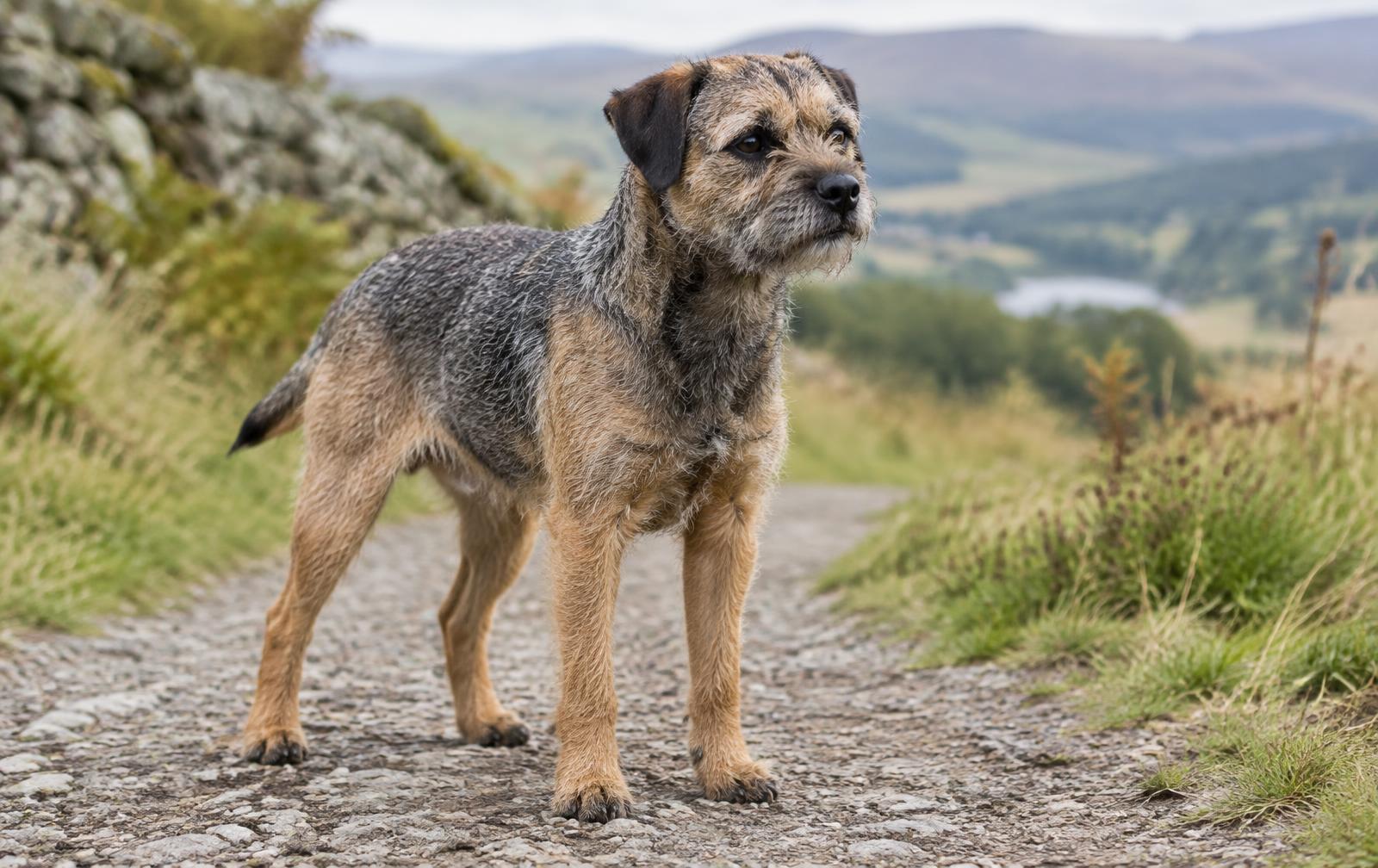
| Border Terrier | 5.1 to 7.1 kg | 7/10 | 5/10 | €142 |
Brittany questions, answered
Is a Brittany the same as a Brittany Spaniel?
Yes, it is the same breed. The older name Brittany Spaniel is largely retired because the dog points and retrieves like a pointer rather than flushing game like a spaniel, so most kennel clubs now use simply Brittany.
How big do Brittany dogs get?
Males typically reach 15 to 20 kg and 47 to 52 cm at the shoulder, with females slightly smaller at 14 to 18 kg and 46 to 50 cm. Most reach full size by around a year and a half.
Do Brittany dogs shed?
Yes, a moderate and seasonal amount. The coat is not low shedding or hypoallergenic, though weekly brushing keeps loose hair manageable.
What is Brittany dog temperament like?
Affectionate, eager to please and genuinely sensitive. The breed responds best to calm, reward-based training and can become anxious or shut down under harsh handling.
How much exercise does a Brittany need?
Well over an hour of real off-lead activity most days, ideally including scent work, retrieving or fieldwork. A short lead walk alone will not satisfy this breed.
Are Brittany Spaniel puppies easy to train?
Generally yes, since the breed is intelligent and keen to work with its handler. Training should stay gentle and reward based, as firm corrections tend to backfire with this sensitive temperament.
Is a Brittany a good flat dog?
No. The breed's high exercise need and sensitivity to under-stimulation make flats with limited outdoor access a poor match, regardless of how much indoor space is available.