Working group
Germany
Dobermann
The Dobermann is a devoted, highly intelligent guardian that is sensitive to harsh handling and needs cardiac screening knowledge and a confident, present owner.
Reviewed against Kennel Club and breed club health guidance
A sleek, devoted guardian with a famously soft heart that needs a confident, present owner.
The short version
- Dobermanns are affectionate, people focused dogs that bond intensely and do poorly when kept apart from their family.
- The breed is sensitive to harsh training methods, and consistent reward based training works far better than correction.
- Dilated cardiomyopathy is the headline health concern, and breeding stock should be screened with Holter monitoring and echocardiograms.
- Daily exercise needs are considerable, generally 60 to 90 minutes of varied activity plus mental work.
- Early, wide ranging socialisation is essential to prevent wariness of strangers developing into reactivity.
- Weight
- 32 to 45 kg
- Height
- 63 to 72 cm
- Lifespan
- 10 to 13 yrs
- Size
- Large
- Group
- Working
- Coat
- Short, smooth, close lying coat
- Grown male
- 40 to 45 kg
- Grown female
- 32 to 35 kg
- Years to full size
- about 1.5
- One-off setup
- €700 to 1400
Get one if…
- Confident, experienced owners who enjoy structured training
- Active households able to provide an hour or more of daily exercise
- People wanting a dog that lives closely indoors as part of the family
- Owners committed to early, wide ranging socialisation
- Households able to research cardiac screening in breeding lines
Think again if…
- Owners wanting an outdoor only guard dog kept apart from the family
- First time owners unwilling to commit to consistent reward based training
- Households using harsh or forceful training methods
- Flats or homes without space for daily vigorous exercise
- People drawn to the breed solely for its intimidating reputation
Trait profile
Dobermanns combine very high trainability and affection with real sensitivity to harsh correction, so confident, reward based handling and genuine closeness with the family matter more than firmness.
Space & setup. A house with a secure garden suits the breed best, since Dobermanns need daily vigorous exercise and do poorly when confined to a small flat or left outside alone.
Allergies. The short, smooth coat sheds moderately year round and is not considered suitable for households with significant allergy concerns.
Living with a Dobermann
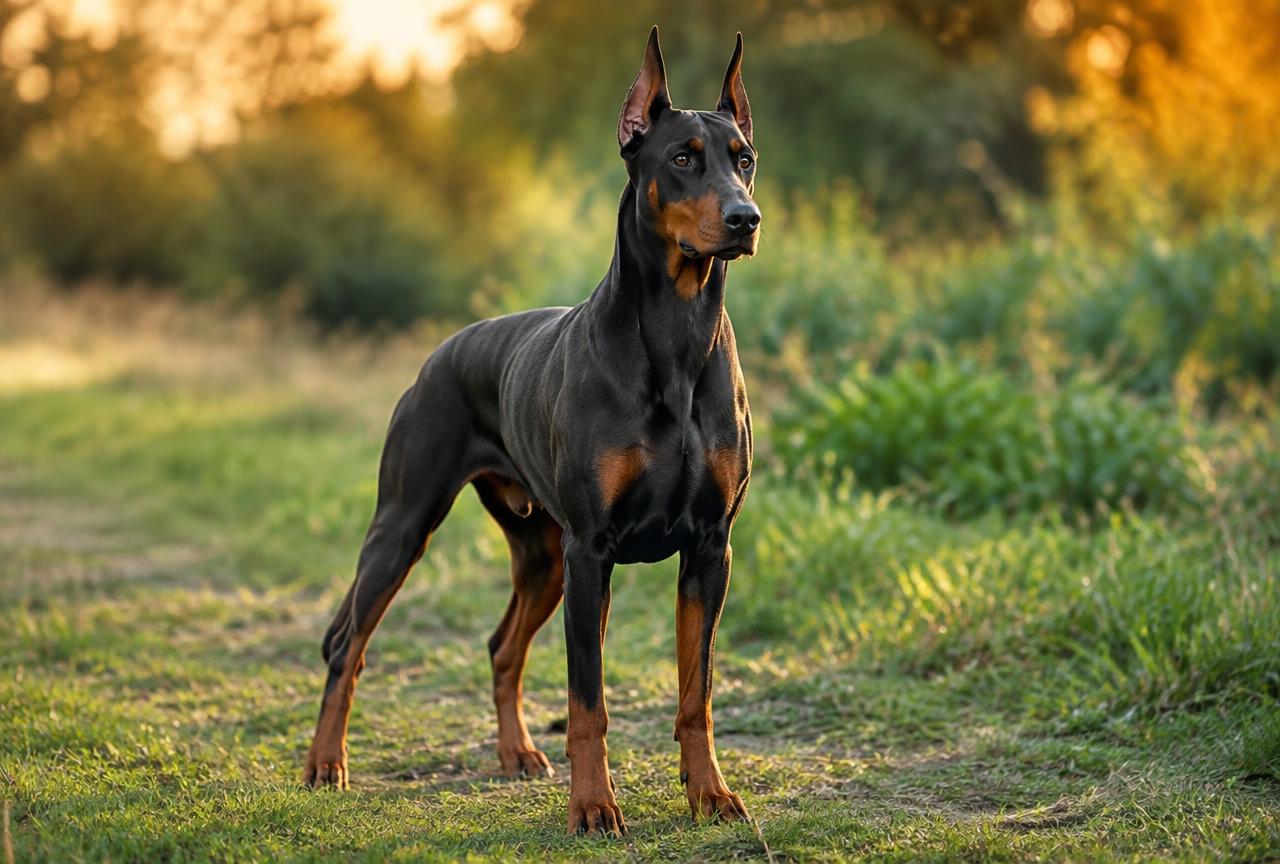
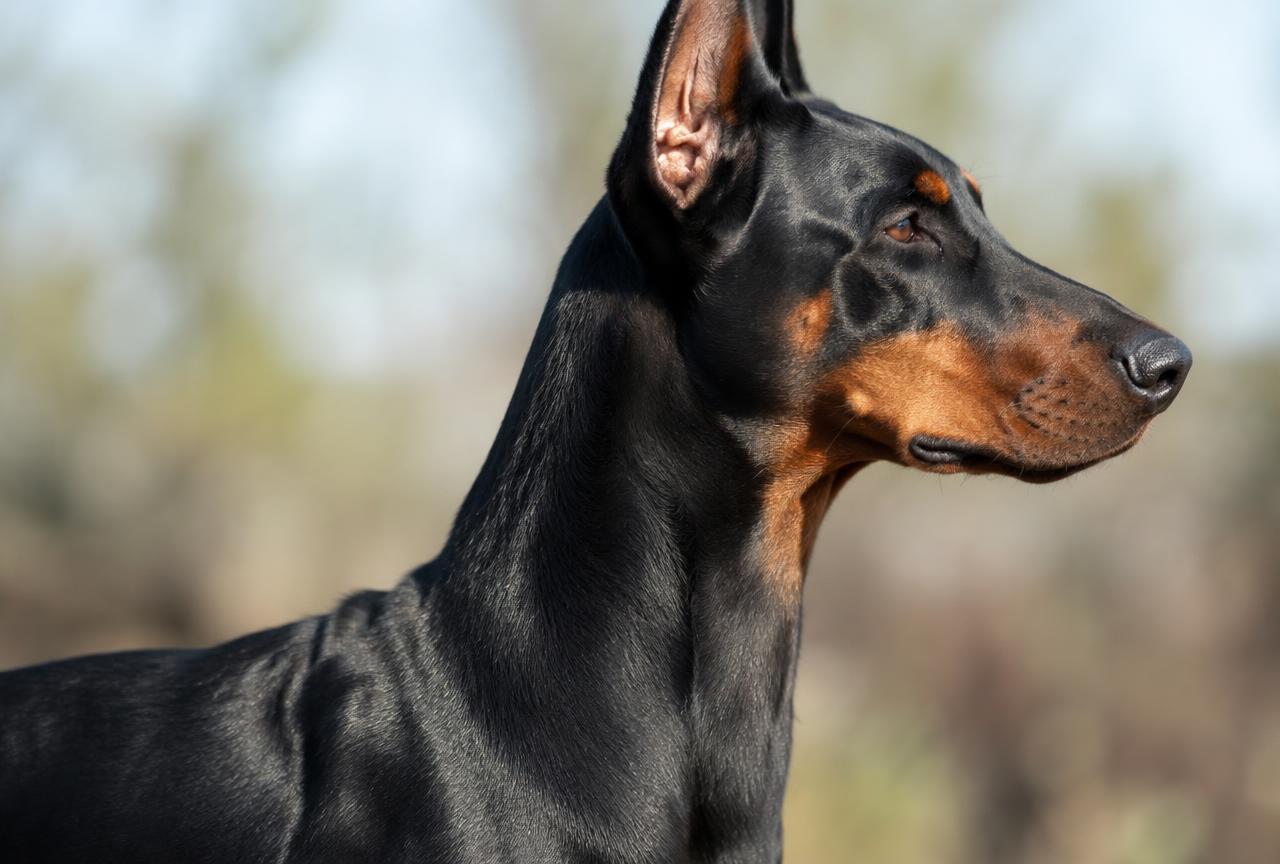
The Dobermann is an athletic German working breed developed for personal protection, known for its sharp intelligence, loyalty and physical courage. Beneath its alert guardian image is a sensitive, people focused dog that thrives on close human company and struggles when kept at a distance.
The Dobermann was developed in late nineteenth century Germany by a tax collector named Karl Friedrich Louis Dobermann, who wanted a dog capable of protecting him on his rounds through rough neighbourhoods. He crossed several breeds, likely including the German Pinscher, Rottweiler and Weimaraner, to produce a sleek, alert, medium large guardian with enormous physical courage. That working history still shapes the breed today, but it has also saddled the Dobermann with a reputation it does not fully deserve.
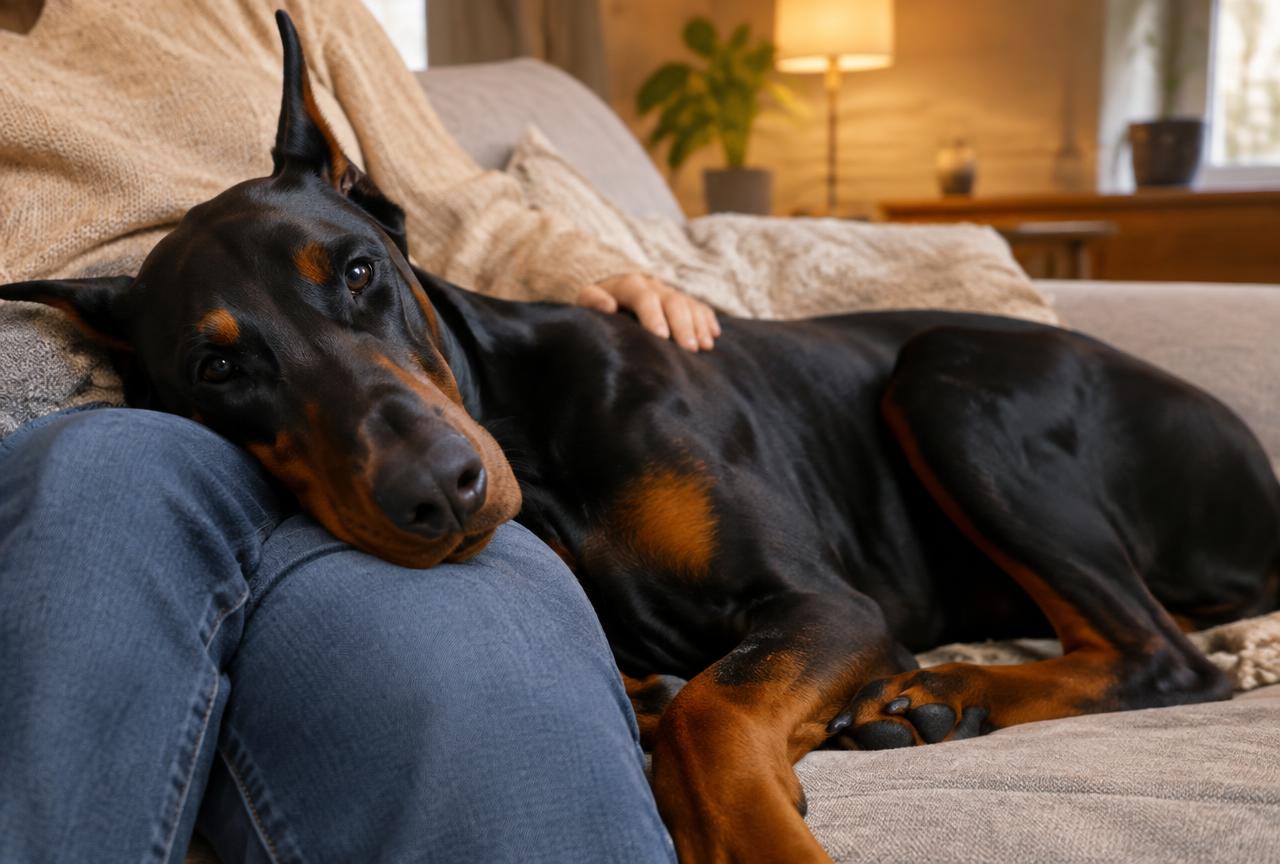
Behind the sharp, angular silhouette and the cropped ear image still seen in older photographs is a dog that is, by most breed surveys and the accounts of people who actually live with them, remarkably soft with its own family. Dobermanns are often described as velcro dogs, following their owners from room to room and seeking physical contact more than many working breeds. They bond intensely, read human emotion closely and can become genuinely anxious when separated from people they trust. This is not a breed suited to life on a chain at the bottom of the garden, and treating it that way tends to produce exactly the nervous, reactive guard dog of popular imagination rather than the confident companion the breed can be. A Dobermann needs to live indoors, close to its people, with daily structured engagement. The breed's heritage as a personal protector, rather than a kennel dog bred for independence, means it was selected over generations to stay close to one handler and respond to subtle cues, which is part of why modern Dobermanns find prolonged isolation genuinely stressful and why crate or alone training from puppyhood is worth doing properly rather than as an afterthought.
That sensitivity extends directly into training. Dobermanns are highly intelligent and eager to work, which makes them quick learners, but they are also notably sensitive to harsh handling. Heavy corrections, shouting or old style forceful methods tend to produce a dog that shuts down or becomes defensive rather than one that performs reliably. Reward based training, begun early and kept consistent, produces far better results and a far more settled temperament. Early, wide ranging socialisation matters a great deal too, since an undersocialised Dobermann can become genuinely wary of strangers rather than simply alert, and that wariness is harder to manage in a large, physically capable dog. Owners need confidence, consistency and time, not dominance. Puppy classes, calm exposure to traffic, other dogs, children and everyday household noises, and ongoing obedience work through adolescence all pay off considerably in an adult Dobermann's manageability, confidence and overall temperament stability.
The headline health concern for the breed is dilated cardiomyopathy, a serious heart condition in which the heart muscle weakens and enlarges, reducing its ability to pump effectively. Breed health surveys and cardiology research consistently identify DCM as disproportionately common in Dobermanns compared with most other breeds, and it can progress silently for a long time before signs appear. For this reason, responsible breeders now screen breeding stock with regular Holter monitoring and echocardiograms, and prospective owners should ask directly about this testing and the cardiac history of both parents. Von Willebrand's disease, a bleeding disorder, and some thyroid and hip concerns are also worth discussing with a breeder, alongside the DNA tests now available for several of these conditions.
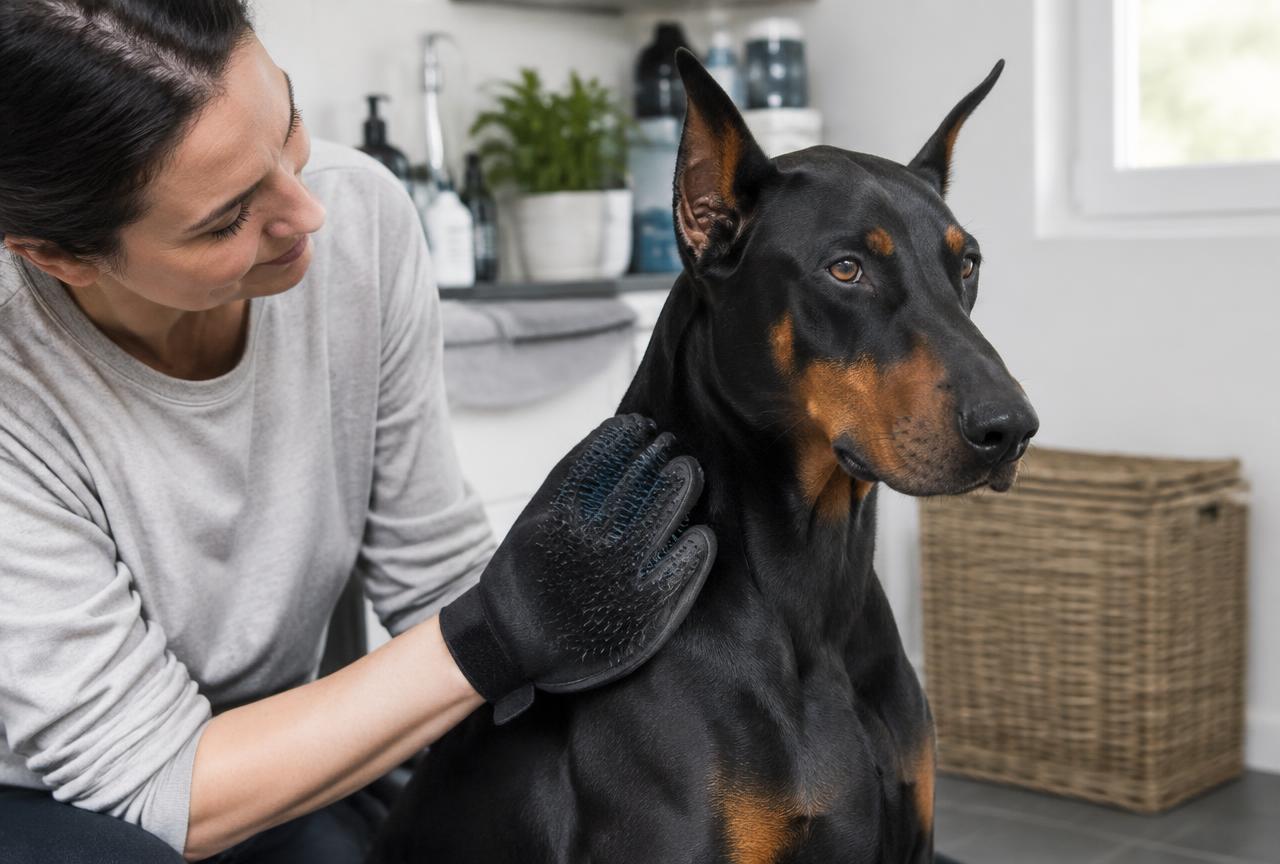
Physically, the Dobermann is an athletic, powerful breed that needs real daily exercise, generally upwards of an hour of varied activity including off lead running where it is safe to do so, plus mental work such as tracking or protection sport training under proper guidance. The short, smooth coat is genuinely low maintenance, needing only weekly brushing, though the breed feels the cold more than its sleek look suggests and often appreciates a coat in winter. Shedding is moderate but steady year round.
Taken together, the Dobermann suits confident, present owners who want a devoted, biddable companion and are prepared to invest in training, socialisation and cardiac screening knowledge, not people looking for a low effort deterrent to leave outside. It is an excellent fit for active households with older children, experienced dog people and anyone wanting a dog that will happily accompany them on long runs and then settle on the sofa in the evening. It is a poor match for first time owners unwilling to commit to early training, households wanting an outdoor only dog, or anyone drawn to the breed purely for its intimidating reputation. Understood properly, the Dobermann is less a weapon and more a shadow with a heartbeat worth protecting. Prospective owners should also budget realistically: Dobermanns eat a meaningful amount for their size, benefit from pet insurance given the breed's cardiac risk, and do best with access to secure off lead space several times a week rather than lead walks alone.
A devoted, highly trainable guardian that needs a confident owner, early socialisation and heart health screening, not a backyard chain.
Exercise, day to day
- 1Puppies (8 to 20 weeks): short, gentle play sessions and lead walks, avoiding forced running or jumping while joints develop.
- 2Young adolescents (4 to 12 months): gradually increasing lead walks, avoiding repetitive high impact exercise until growth plates close.
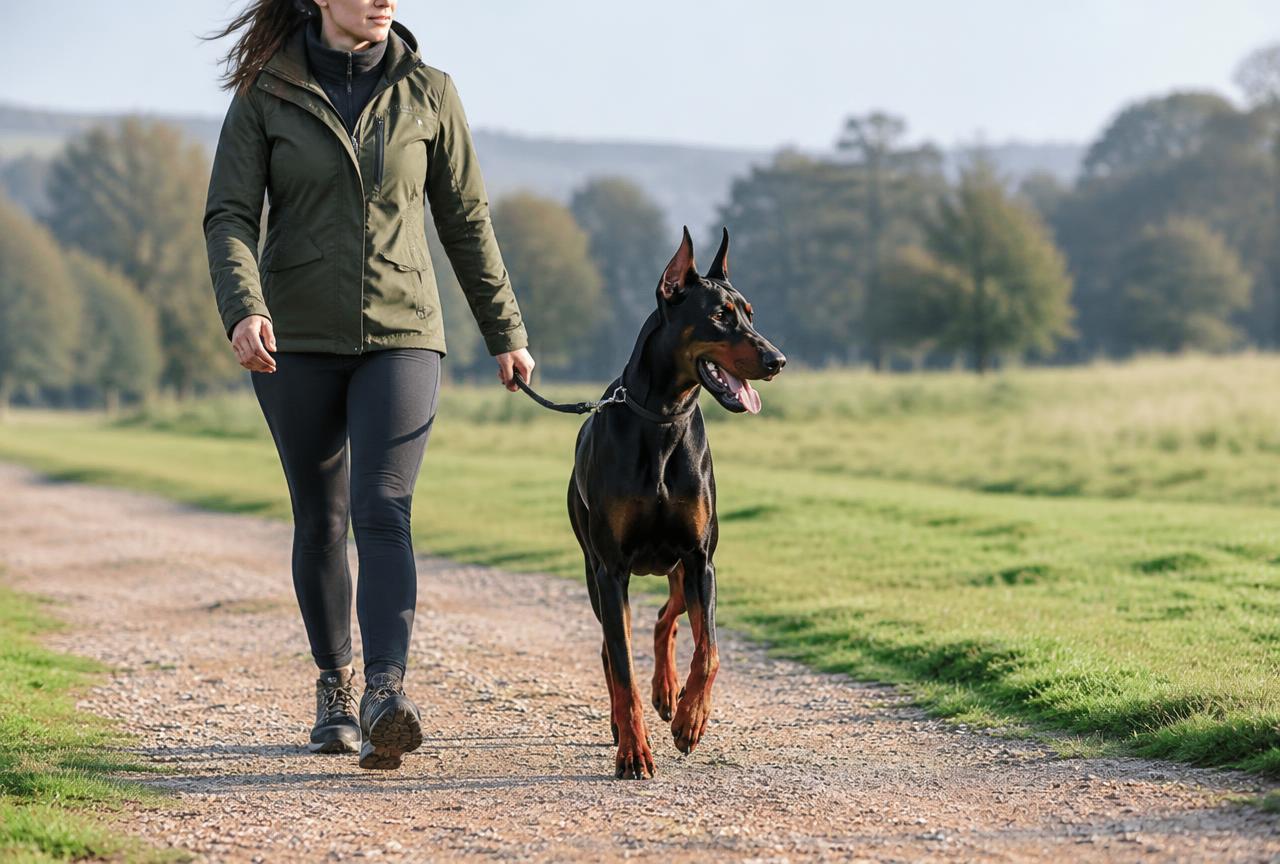
- 3Adults: at least 60 to 90 minutes a day combining brisk walking, off lead running where safe, and structured training work.
- 4Mental work: tracking, obedience or protection sport training under a qualified instructor channels drive constructively.
- 5Rest and settle training: teach calm downtime indoors, since this breed can struggle to switch off without guidance.
Grooming, realistically
- 1Brush weekly with a rubber curry brush or grooming mitt to remove loose hair and distribute skin oils.
- 2Bathe every 6 to 8 weeks or when dirty, using a gentle dog shampoo suited to short coats.
- 3Check ears weekly and clean gently to prevent wax build up.
- 4Trim nails every 3 to 4 weeks, since the breed's active lifestyle does not always wear them down evenly.
- 5Brush teeth several times a week to reduce tartar and support long term dental health.
What you actually need
- Rubber curry brush or grooming mitt
- Gentle dog shampoo
- Dog nail clippers
- Ear cleaning solution
- Enzymatic dog toothpaste and brush
- Lightweight winter coat for cold weather
Puppy to adult
| Age | Male | Female | What is happening |
|---|---|---|---|
| 8 weeks | 5 to 7 kg | 4.5 to 6.5 kg | Sturdy, leggy puppy build with rapid early growth. |
| 3 months | 12 to 16 kg | 10 to 14 kg | Fast growth phase, joint care and controlled exercise matter. |
| 6 months | 22 to 28 kg | 18 to 24 kg | Lanky adolescent stage, coordination still developing. |
| 9 months | 28 to 35 kg | 24 to 29 kg | Approaching adult height, frame still filling out. |
| 12 months | 33 to 40 kg | 28 to 32 kg | Near adult height but still gaining muscle and chest depth. |
| 18 months | 38 to 45 kg | 31 to 35 kg | Physical maturity largely reached, full adult proportions settled. |
Ranges are typical, not targets. Judge condition by ribs and waist, and check with the ideal weight checker.
What to ask a breeder
- Can I see recent Holter monitor and echocardiogram results for both parents to screen for dilated cardiomyopathy?
- Is there a family history of von Willebrand's disease, and have the parents been DNA tested?
- What hip and thyroid screening have the breeding dogs had?
- How do you socialise puppies with new people, sounds and environments before they leave?
- What is the temperament of the parents, particularly around strangers and handling?
- Can I meet both parents and see the environment the puppies were raised in?
Health tests to ask for
Ask to see results for both parents before you put down a deposit.
- Cardiac screening with Holter monitoring and echocardiogram for dilated cardiomyopathy
- DNA test for von Willebrand's disease
- Hip score (BVA/KC scheme)
- Thyroid function testing
- DCM1 and DCM2 genetic marker tests where available
- Eye examination for inherited conditions
Health watch-list
What to ask a breeder about, and what to watch for over a lifetime. This is orientation, not veterinary advice, anything you notice belongs in front of a vet.
Dilated cardiomyopathy
CommonA serious heart muscle disease disproportionately reported in Dobermanns; breeding stock should have regular Holter monitoring and echocardiograms.
Von Willebrand's disease
NotableAn inherited bleeding disorder affecting clotting; DNA testing of breeding stock is available and recommended.
Hip dysplasia
NotableMalformed hip joints can cause discomfort and arthritis; hip scoring of breeding stock helps reduce incidence.
Hypothyroidism
NotableAn underactive thyroid can cause weight gain, coat changes and lethargy; thyroid testing of breeding stock is advised.
Wobbler syndrome
UncommonA condition affecting the neck vertebrae that can cause unsteady gait; a vet should assess any sudden coordination changes.
Progressive retinal atrophy
RareAn inherited condition causing gradual vision loss; eye testing of breeding stock reduces risk.
What it costs to keep one
Realistic running cost
€218 / month
About €2,616 a year, or roughly €31,392 across a 12-year life, before purchase price, neutering and one-off vet events.
Before the puppy arrives. Budget roughly €700 to 1400 for a crate, bed, lead and harness, bowls, puppy classes, first vaccinations and grooming kit sized for this breed. Figures throughout are indicative and vary a good deal between countries.
Interactive · built for this breed
Is a Dobermann right for your home?
Seven honest questions about your space, time and household, checked against this breed's exercise need, coat, sociability and tolerance for time alone.
Fit with your routine
91%
A strong fit
Your routine suits a Dobermann well. Meet adult dogs of the line before you commit.
What to sort out first
- Needs more daily exercise than you have pencilled in.
Working in your favour
- Coat care fits the grooming time you offered.
Compare more breeds in the matchmaker, or plan meals with the portion calculator.
The verdict, by household
First-time owner
Only with support and commitment
Capable owners willing to commit to consistent, reward based training and daily structure can succeed, but this is not an easy starter breed.
Family with children
A good match with supervision
Affectionate and protective with its own family when well socialised, though its size and energy call for sensible supervision with younger children.
Active single or couple
An excellent match
Thrives with owners able to provide daily vigorous exercise, structured training and close companionship.
Owner in a flat with close neighbours
Not recommended
The breed's exercise needs, size and attachment to its people make small flat living a poor fit.
When to call your vet
- Reduced exercise tolerance, coughing or laboured breathing, which can indicate early heart disease
- Unexplained bruising or prolonged bleeding from minor cuts, which may suggest a clotting disorder
- Sudden lethargy, pale gums or fainting episodes, which warrant immediate veterinary attention
- Lameness or reluctance to rise, which may point to a hip or joint problem
- Noticeable weight change or coat dullness, which can indicate a thyroid imbalance
Nothing here is a diagnosis. A swollen, hard belly with retching, collapse, breathing difficulty and sudden hind-leg weakness are emergencies: go straight away.
Dobermann vs the closest alternatives
| Breed | Weight | Energy | Grooming | € / month |
|---|---|---|---|---|
| Dobermann | 32 to 45 kg | 9/10 | 2/10 | €218 |
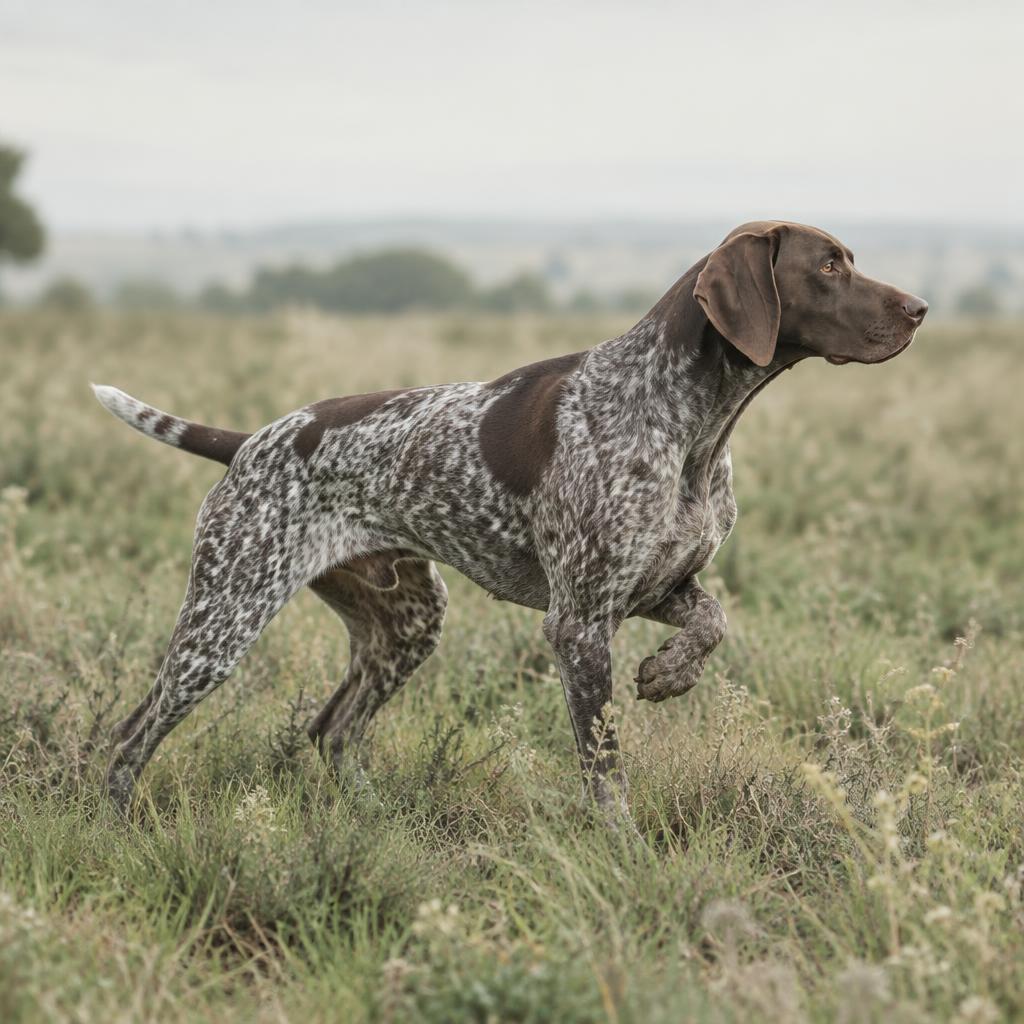
| German Shorthaired Pointer | 20 to 32 kg | 10/10 | 2/10 | €74 |
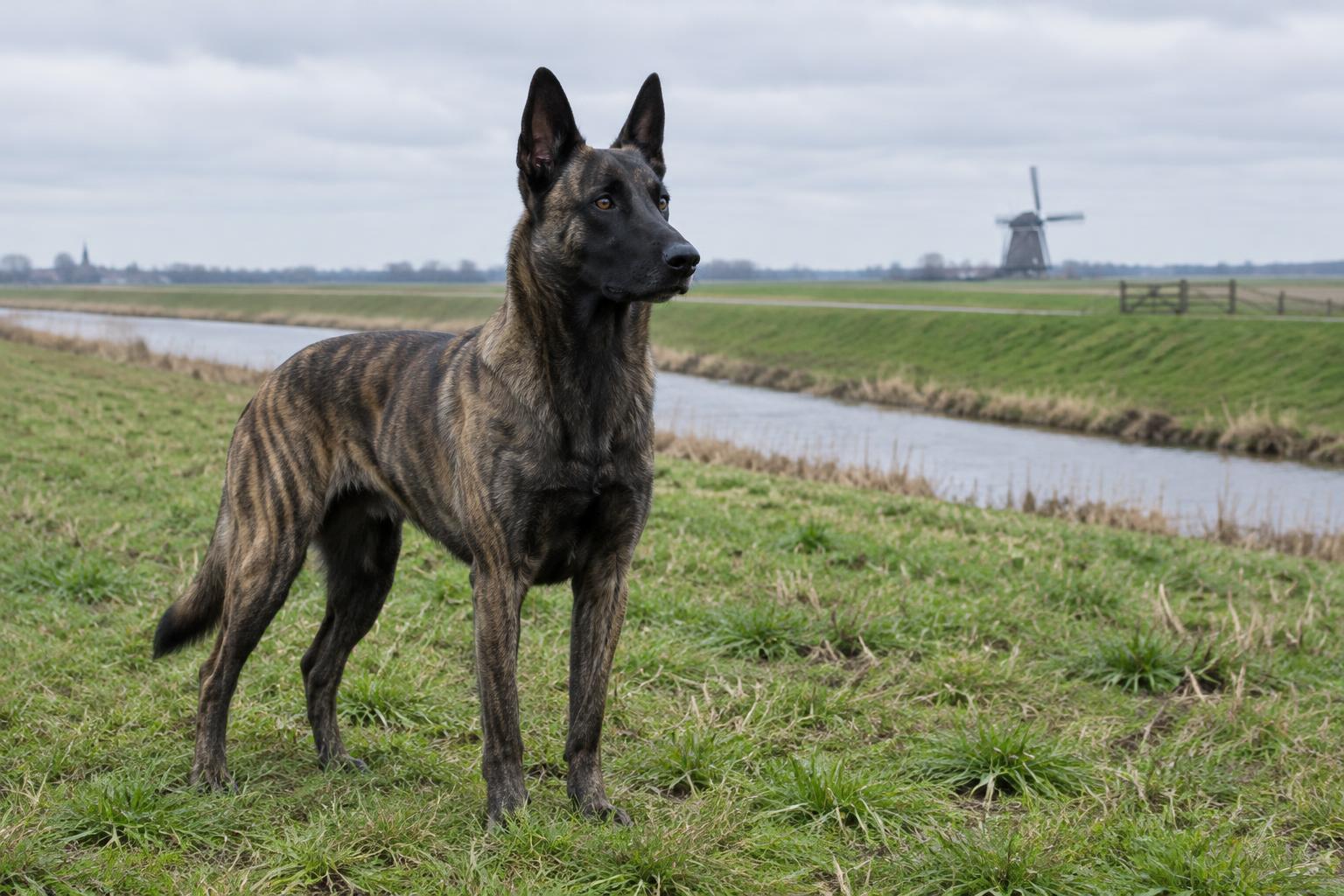
| Dutch Shepherd | 23 to 34 kg | 9/10 | 3/10 | €112 |
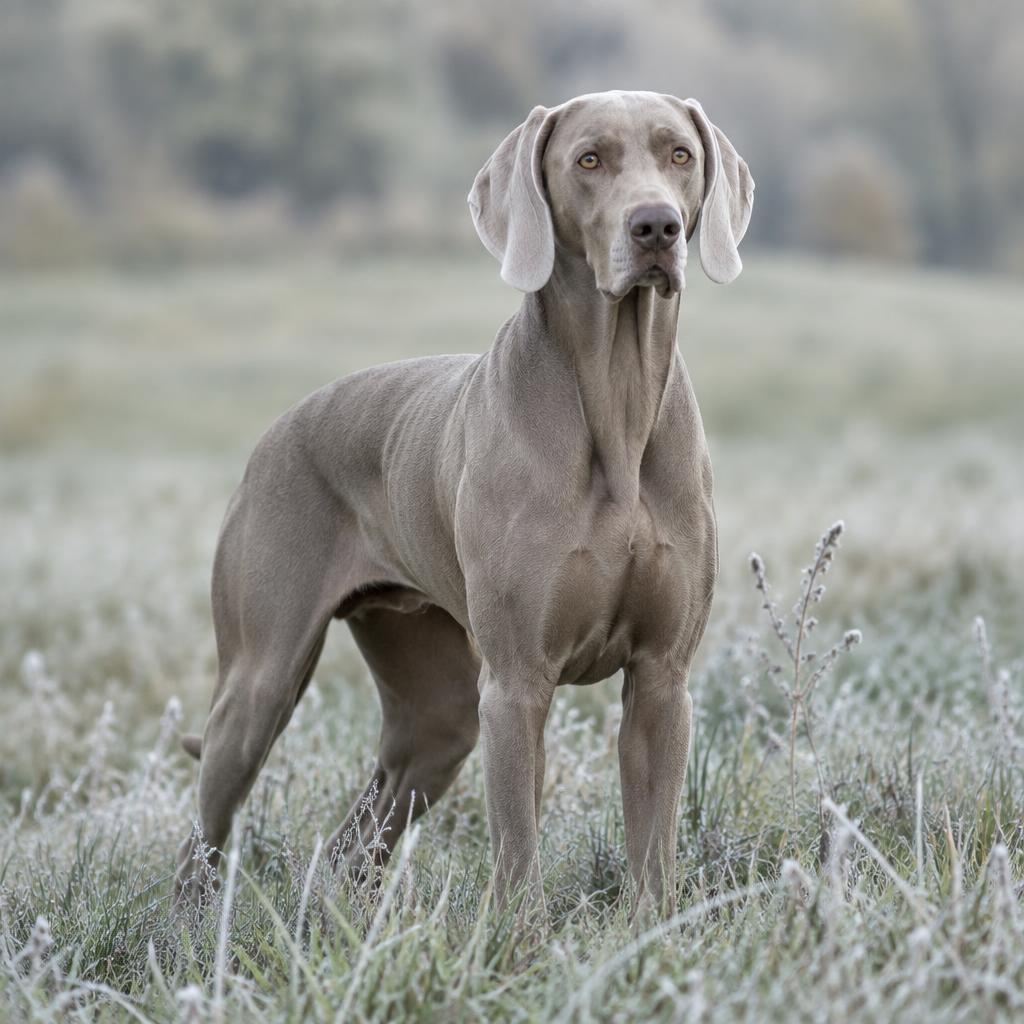
| Weimaraner | 25 to 40 kg | 9/10 | 2/10 | €203 |
Dobermann questions, answered
Are Dobermanns aggressive?
No, well bred and well socialised Dobermanns are typically affectionate and loyal rather than aggressive. Their guardian reputation comes from alertness and protectiveness, not inherent hostility, and poor socialisation or harsh training is usually behind problem behaviour rather than the breed itself.
How big do Dobermanns get?
Male Dobermanns typically weigh 40 to 45 kg and stand 68 to 72 cm at the shoulder, while females are generally smaller at 32 to 35 kg and 63 to 68 cm. They reach full physical maturity by around 18 months.
Do Dobermanns shed a lot?
Dobermanns shed a moderate, steady amount year round despite their short coat, with a slight increase as seasons change. Weekly brushing with a rubber curry brush keeps loose hair manageable, and they are not a low shedding choice for strictly house proud homes.
How much exercise does a Dobermann need?
Dobermanns generally need 60 to 90 minutes of varied daily exercise, including off lead running where it is safe, plus mental work such as tracking or obedience training. Without enough stimulation, they can become restless or anxious.
Are Dobermanns good with children?
Dobermanns can be excellent, protective companions for older children in households that socialise and train them well from puppyhood. Their size and energy mean sensible supervision with very young children remains important, and rough games should stay calm and structured.
What health problems do Dobermanns have?
The headline concern is dilated cardiomyopathy, a serious heart condition commonly reported in the breed, alongside von Willebrand's disease, hip dysplasia and thyroid issues. Buying from a breeder who screens breeding stock for these conditions reduces risk considerably.
How much does it cost to own a Dobermann?
Monthly costs typically include around 75 euros in food, 55 euros in insurance and smaller amounts for parasite prevention and grooming, with initial setup costs of 700 to 1400 euros. Insurance is particularly worth prioritising given the breed's cardiac risk.
Sources
- Dobermann breed standard, The Kennel Club
- Dobermann breed information, American Kennel Club
- Dilated cardiomyopathy in Dobermanns, Royal Veterinary College
- Canine heart schemes, British Veterinary Association
- Hip dysplasia scheme, British Veterinary Association
- Von Willebrand's disease DNA testing, Orthopedic Foundation for Animals