Working group
Newfoundland, Canada
Newfoundland
A giant, water loving working breed from Canada, gentle and devoted, with heavy shedding and demands first time owners underestimate.
Reviewed against Kennel Club and breed club health guidance
The sweetest giant you will ever own, with the biggest reality check in drool, shedding and space it genuinely needs.
The short version
- Newfoundlands are gentle, patient giants, but their sheer size means space, cost and handling all need serious planning.
- Shedding is constant year round and becomes heavy during two annual coat blows, so grooming is a real commitment.
- Drool is a genuine daily feature of life with this breed, not an occasional inconvenience.
- Heat intolerance is significant given the thick double coat, so exercise timing and shade matter in warm weather.
- Cardiac screening, hip and elbow scores and bloat awareness are essential given this breed's known health risks.
- Weight
- 45 to 70 kg
- Height
- 66 to 71 cm
- Lifespan
- 8 to 10 yrs
- Size
- Giant
- Group
- Working
- Coat
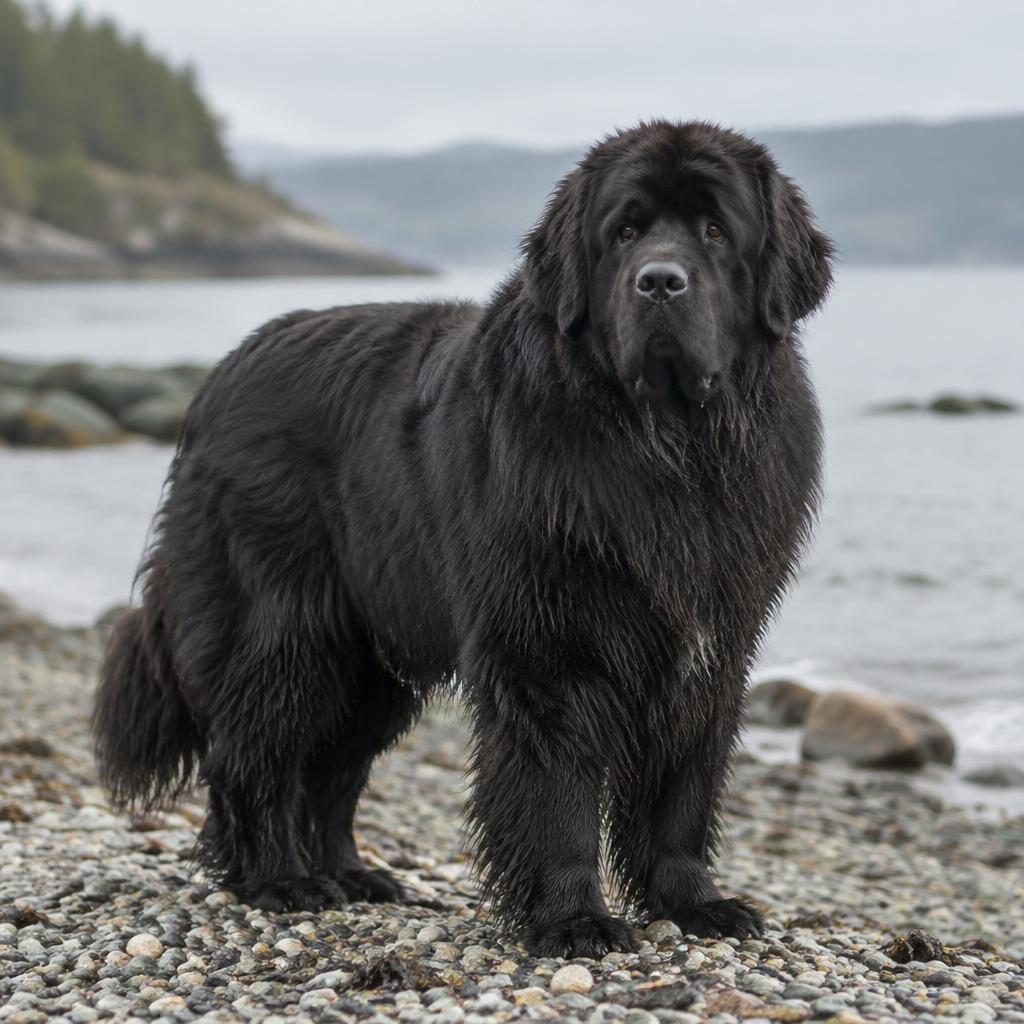
- Thick, water resistant double coat, flat or slightly wavy, usually black, brown or Landseer black and white
- Grown male
- 60 to 70 kg
- Grown female
- 45 to 55 kg
- Years to full size
- about 2
- One-off setup
- €800 to 1500
Get one if…
- Owners with ample indoor and outdoor space for a calm giant breed
- Families wanting a famously gentle, patient companion around children
- People happy to commit to frequent brushing and regular coat maintenance
- Owners near safe water who can offer supervised swimming opportunities
- Households prepared for genuinely high food, grooming and insurance costs
Think again if…
- Owners without a garden or enough indoor space for a genuinely giant dog
- Anyone hoping for a low shedding or low drool breed
- Households on a tight budget, given high food, insurance and grooming costs
- Owners in consistently hot climates without a way to manage heat exposure
- People wanting a dog that can be left alone for long stretches regularly
Trait profile
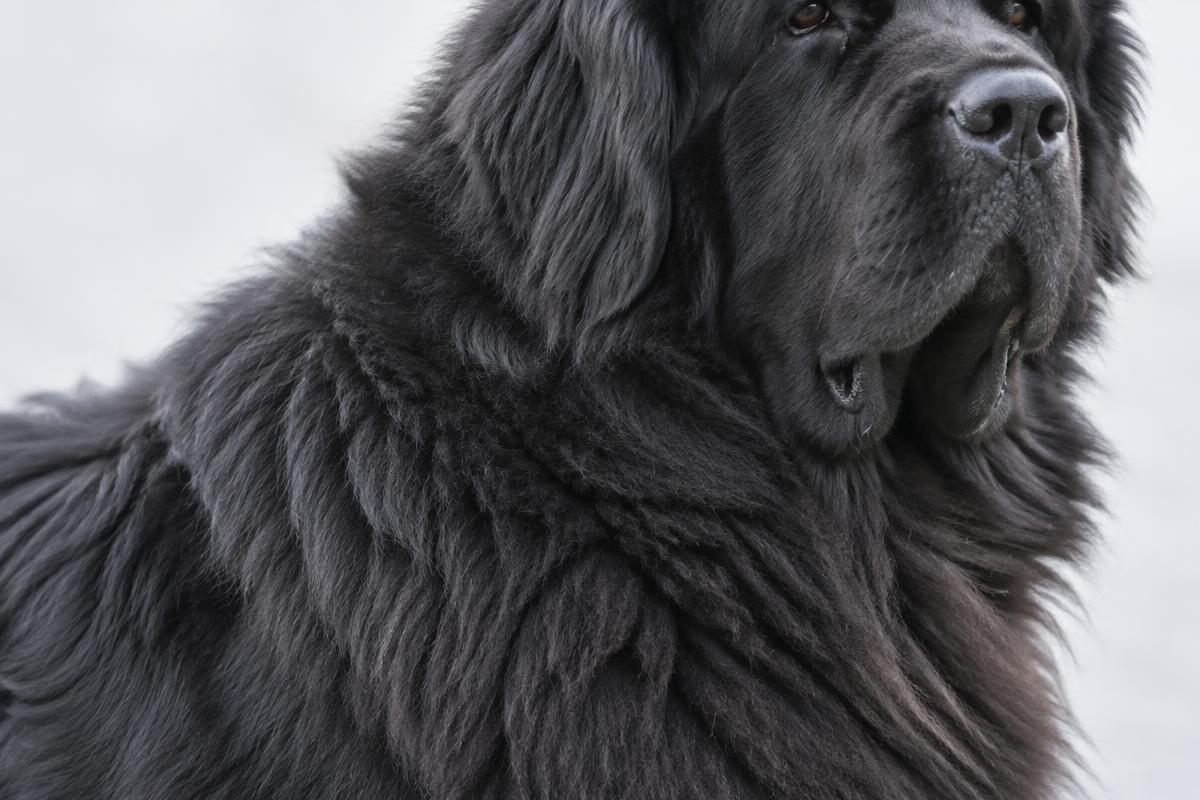
The Newfoundland pairs a famously gentle, patient temperament with a strong water instinct and genuinely demanding practical needs around size, shedding and heat management.
Space & setup. A genuinely large home with a secure garden suits this breed best, since its sheer size, drool and shedding make flat living impractical for most households.
Allergies. The Newfoundland is a heavy, constant shedder with a thick double coat and is not remotely suitable for allergy sufferers, since loose hair and dander are a near constant feature of life with this breed.
Living with a Newfoundland
The Newfoundland is a giant working breed from Newfoundland, Canada, bred to haul nets and rescue people from water. It is famous for a gentle, patient temperament, constant drool and a thick coat that sheds all year and blows twice annually.
The Newfoundland developed on the island of Newfoundland in Canada, where fishermen relied on a powerful, water loving dog to haul nets, retrieve lost gear and, according to well documented accounts, pull people from rough, cold water. That working history still shapes the breed completely. Everything about the Newfoundland, from its webbed feet to its oily, water resistant double coat, exists because it was built to work in the sea, not to sit decoratively in a show ring, and that practical origin is worth remembering before falling for the breed's famously soft expression.
Temperament is where the Newfoundland earns its reputation as one of the gentlest giant breeds available. These are patient, steady, affectionate dogs that generally regard children, visitors and other animals with calm goodwill rather than suspicion or excitement. Many Newfoundlands display a genuine instinct around water, positioning themselves protectively near children paddling in a pool or lake, a trait rooted directly in the breed's rescue history. This is not a hyperactive or especially playful breed in the usual sense; it is a thoughtful, affectionate presence that wants to be near its people rather than constantly entertained by them.
The honest reality check starts with size and space. A fully grown Newfoundland is a genuinely giant dog, and giant dogs need proportionate space indoors and out, proportionate furniture, proportionate car boots and proportionate vet bills. This is not a breed that adapts comfortably to a small flat, regardless of how calm its temperament is, simply because of the physical space its body occupies. Anyone drawn to the breed on temperament alone needs to be honest about whether their home can accommodate the dog it will actually become.
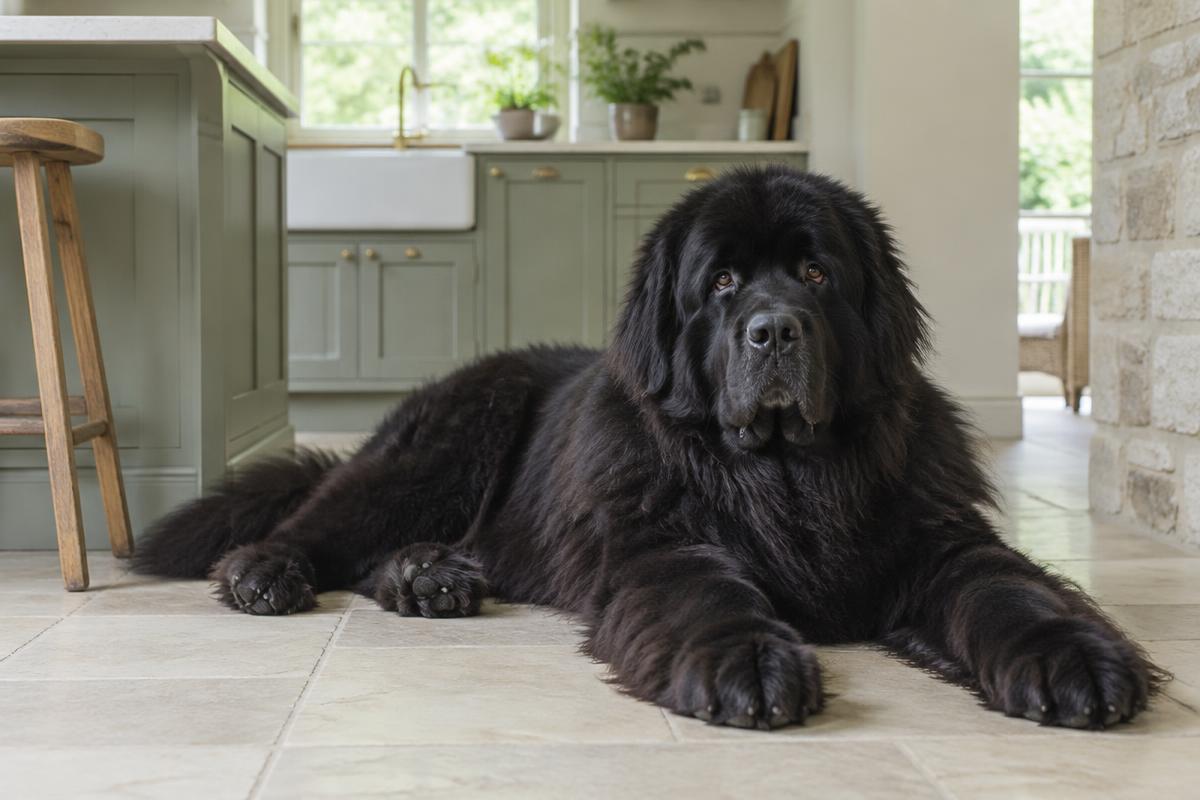
Drool and shedding are the two features that catch new owners most off guard. Newfoundlands drool, consistently and sometimes dramatically after drinking or in warm weather, and owners who cannot tolerate wet patches on sleeves, walls and furniture will find this a daily irritation rather than a quirk. Shedding is equally constant, with the thick double coat releasing hair year round and then shedding heavily during two seasonal coat blows, usually in spring and autumn, when the volume of loose undercoat can be genuinely startling to anyone unprepared for it. Thorough brushing several times a week, stepped up further during a blow, is not optional maintenance but a core part of ownership.
Heat intolerance deserves equal weight as an honest limitation. The dense double coat that insulates this breed against cold North Atlantic water works against it in warm weather, and Newfoundlands can overheat seriously if exercised in heat or left without shade and water. Owners in consistently hot climates, or simply during a warm summer, need to plan exercise for cooler parts of the day and watch closely for signs of heat stress.
Health screening matters enormously in this breed. Subaortic stenosis, a narrowing near the heart's aortic valve, is a recognised concern, and cardiac screening of breeding stock is genuinely important rather than a box ticking exercise. Hip and elbow dysplasia are also notable given the breed's size and rate of growth, making joint screening of parents a sensible question to ask any breeder. Bloat, a life threatening twisting of the stomach, is a real risk in deep chested giant breeds, and owners should learn its warning signs and discuss feeding practices with a vet. Cystinuria, a genetic condition affecting how the body handles certain amino acids and raising the risk of bladder stones, has also been documented in the breed and can be screened for genetically.
Feeding and running costs are substantial and should not be glossed over. A dog this size eats considerably more than an average breed, and insurance, grooming and general veterinary costs tend to scale with body size too. This is a breed that suits owners who have genuinely budgeted for giant breed costs, not simply admired giant breed photographs.
This breed suits owners with real space, a tolerance for drool and heavy shedding, and a household that wants a calm, affectionate giant rather than an energetic one. It does not suit owners in small flats, anyone hoping for a low maintenance coat, or households unwilling to commit to the health screening and running costs that come with a genuinely large dog. For the right household, the Newfoundland offers a loyal, patient companion unlike almost any other breed, provided the practical realities are faced honestly from the start.
A gentle, patient giant with a genuine water rescue instinct, offset by constant drool, heavy shedding and real space and cost demands.
Exercise, day to day
- 1Puppies (8 to 20 weeks): very short, gentle sessions only, avoiding stairs, jumps and hard surfaces to protect developing joints.
- 2Growing juveniles (up to 2 years): controlled lead walks, kept moderate, since over exercising a growing giant breed raises joint injury risk.
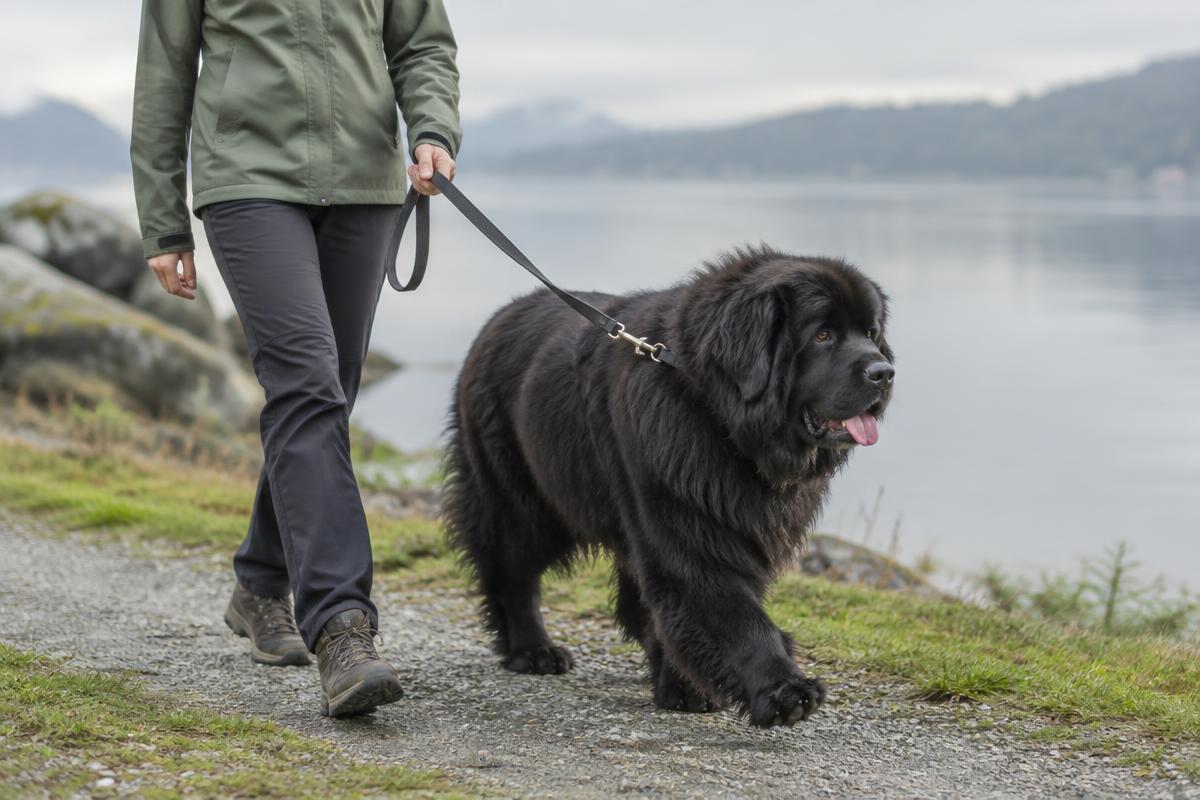
- 3Adults: 45 to 60 minutes a day, ideally including supervised swimming, which this breed is built for and genuinely enjoys.
- 4Heat management: exercise in the cool of early morning or evening, since the thick double coat makes this breed prone to overheating.
- 5Mental stimulation: calm obedience work and scent games suit the breed's steady, thoughtful temperament better than high intensity games.
Grooming, realistically
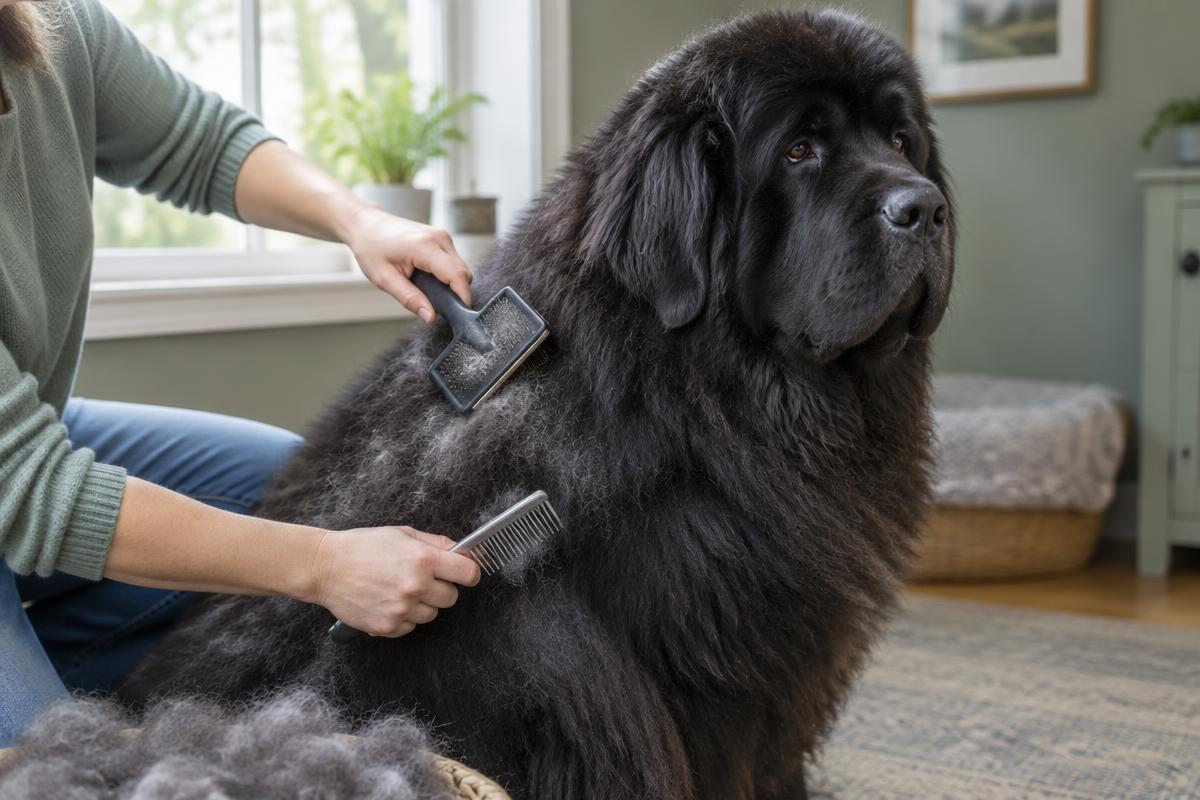
- 1Brush thoroughly two to three times a week, more often during the twice yearly coat blow, to manage the heavy undercoat shed.
- 2Bath every six to eight weeks or as needed, drying the thick coat fully to avoid damp skin irritation underneath.
- 3Check and clean skin folds around the jowls regularly, since drool can cause damp, sore areas if left unaddressed.
- 4Trim nails every three to four weeks, as this breed's size means overgrown nails affect gait and comfort quickly.
- 5Clean ears weekly and check for wax build up or odour, since the ears sit close to the head and drool.
What you actually need
- Undercoat rake
- Slicker brush
- Wide toothed metal comb
- Dog shampoo suited to double coats
- Drool cloths or bibs
- Dog nail clippers for large breeds
Puppy to adult
| Age | Male | Female | What is happening |
|---|---|---|---|
| 8 weeks | 7 to 10 kg | 6 to 9 kg | A large, heavy puppy even at this age; avoid stairs and jumps to protect soft joints. |
| 3 months | 16 to 20 kg | 14 to 18 kg | Rapid early growth; controlled, gentle exercise matters more than distance at this stage. |
| 6 months | 28 to 36 kg | 25 to 32 kg | Substantial size gain continues; joint screening conversations with a vet are worth starting now. |
| 9 months | 38 to 46 kg | 32 to 40 kg | Still growing steadily; avoid jumping from height or excessive repetitive exercise. |
| 12 months | 45 to 55 kg | 38 to 46 kg | Approaching adult height, though body mass and chest depth continue to fill out. |
| 2 years | 60 to 70 kg | 45 to 55 kg | Full adult size reached; this is a genuinely slow maturing giant breed. |
Ranges are typical, not targets. Judge condition by ribs and waist, and check with the ideal weight checker.
What to ask a breeder
- What cardiac screening, specifically for subaortic stenosis, can you show for both parents?
- What hip and elbow scores do the parents have, and from which scheme?
- Has either parent or close relative experienced bloat or gastric torsion?
- How do you manage heat tolerance and exercise restriction with your dogs in warmer months?
- Can I see where the litter has been raised and how they cope with everyday household noise?
- What is the expected adult size of this litter based on the parents and previous litters?
Health tests to ask for
Ask to see results for both parents before you put down a deposit.
- Cardiac examination for subaortic stenosis
- Hip score (BVA/KC scheme) where available
- Elbow score (BVA/KC scheme) where available
- Cystinuria genetic test
- General veterinary discussion of bloat prevention and feeding practices
Health watch-list
What to ask a breeder about, and what to watch for over a lifetime. This is orientation, not veterinary advice, anything you notice belongs in front of a vet.
Subaortic stenosis
NotableA narrowing near the aortic valve of the heart that can reduce blood flow and, in severe cases, cause collapse or sudden death; cardiac screening of breeding stock helps reduce the risk.
Hip dysplasia
CommonAbnormal development of the hip joint leading to arthritis and discomfort over time; hip scoring of parents through the BVA/KC scheme helps breeders select sounder dogs.
Elbow dysplasia
CommonA developmental joint condition affecting the elbow that can cause lameness and early arthritis; elbow scoring of breeding stock is recommended alongside hip screening.
Bloat
NotableA life threatening twisting of the stomach seen more often in deep chested giant breeds; feeding smaller meals, avoiding vigorous exercise around mealtimes and knowing the warning signs can help.
Cystinuria
UncommonAn inherited condition affecting how the body handles certain amino acids, which can lead to bladder stones; a genetic test is available and used to guide responsible breeding decisions.
Heat intolerance
CommonThe thick double coat that insulates this breed in cold water makes it prone to overheating in warm weather; exercise should be timed for cooler parts of the day with shade and water always available.
What it costs to keep one
Realistic running cost
€225 / month
About €2,700 a year, or roughly €24,300 across a 9-year life, before purchase price, neutering and one-off vet events.
Before the puppy arrives. Budget roughly €800 to 1500 for a crate, bed, lead and harness, bowls, puppy classes, first vaccinations and grooming kit sized for this breed. Figures throughout are indicative and vary a good deal between countries.
Interactive · built for this breed
Is a Newfoundland right for your home?
Seven honest questions about your space, time and household, checked against this breed's exercise need, coat, sociability and tolerance for time alone.
Fit with your routine
91%
A strong fit
Your routine suits a Newfoundland well. Meet adult dogs of the line before you commit.
What to sort out first
- Coat needs more brushing or trimming than you have allowed.
Working in your favour
- Your daily walking comfortably covers this breed's exercise need.
Compare more breeds in the matchmaker, or plan meals with the portion calculator.
The verdict, by household
First-time owner
Workable with planning
A calm, biddable temperament helps, but the sheer size and strength of a giant breed is a steep learning curve for a first dog.
Family with children
An excellent match
Famously gentle and patient with children, though supervision matters given sheer size and strength around small children.
Active single or couple
A good match
Enjoys moderate exercise and swimming, but is not a high energy running companion in the way some working breeds are.
Owner in a flat with close neighbours
A poor fit
Size alone makes flat living impractical, regardless of the breed's naturally quiet, low barking temperament.
When to call your vet
- Laboured breathing, exercise intolerance or fainting, which may indicate a cardiac issue such as subaortic stenosis
- Stiffness, reluctance to rise or lameness, which could point to hip or elbow dysplasia
- A swollen, hard abdomen, retching without producing vomit or restlessness, which are emergency signs of bloat
- Straining to urinate or blood in the urine, which may indicate bladder stones linked to cystinuria
- Heavy panting, drooling excessively or collapse in warm weather, suggesting heat intolerance
Nothing here is a diagnosis. A swollen, hard belly with retching, collapse, breathing difficulty and sudden hind-leg weakness are emergencies: go straight away.
Newfoundland vs the closest alternatives
| Breed | Weight | Energy | Grooming | € / month |
|---|---|---|---|---|
| Newfoundland | 45 to 70 kg | 4/10 | 7/10 | €225 |
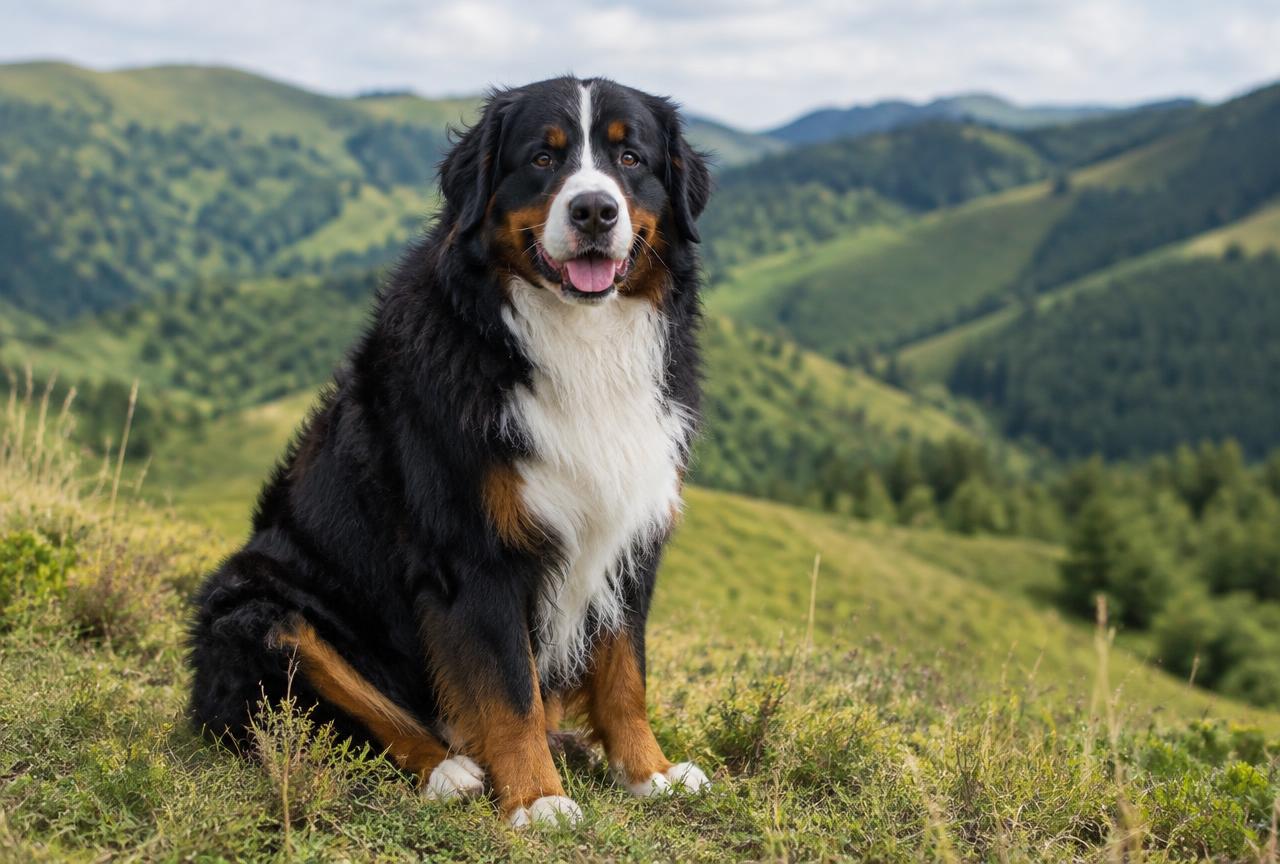
| Bernese Mountain Dog | 36 to 50 kg | 5/10 | 7/10 | €205 |
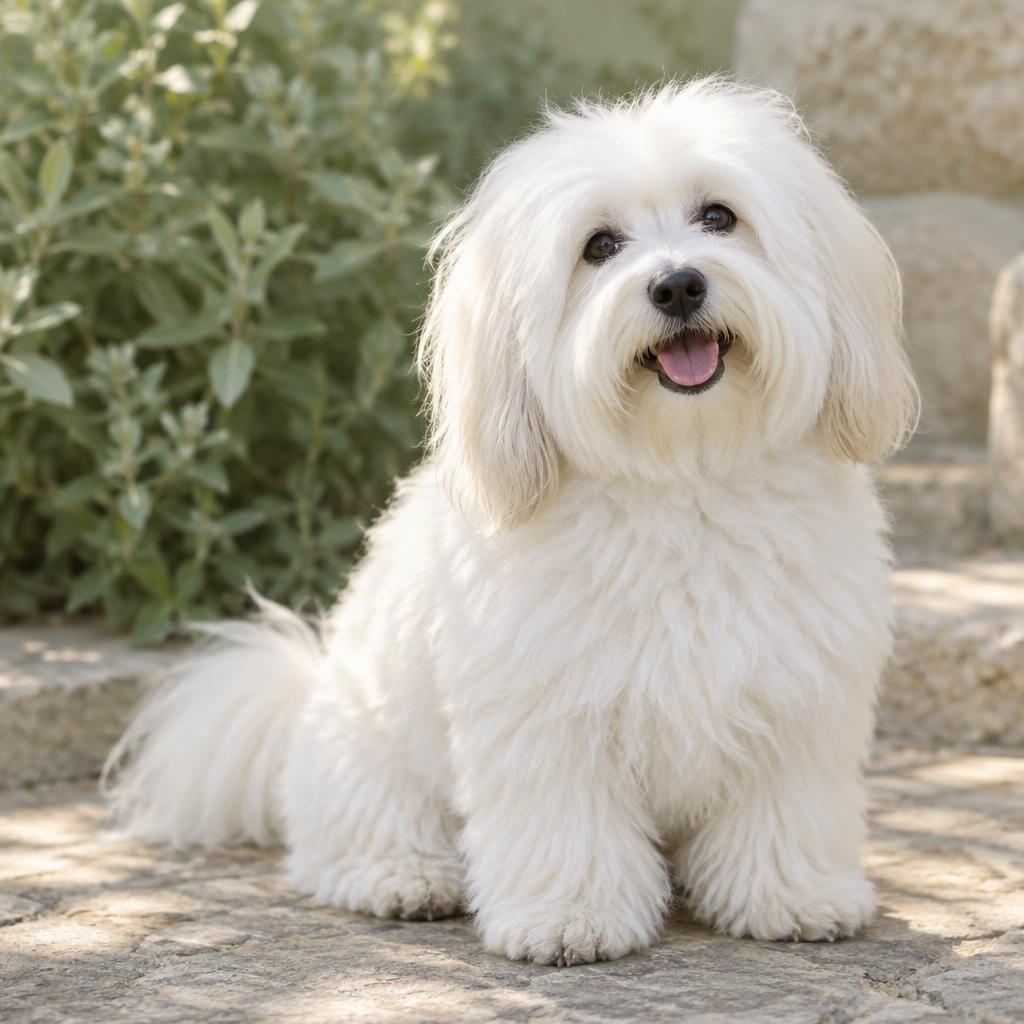
| Coton de Tulear | 3.5 to 6 kg | 5/10 | 7/10 | €94 |
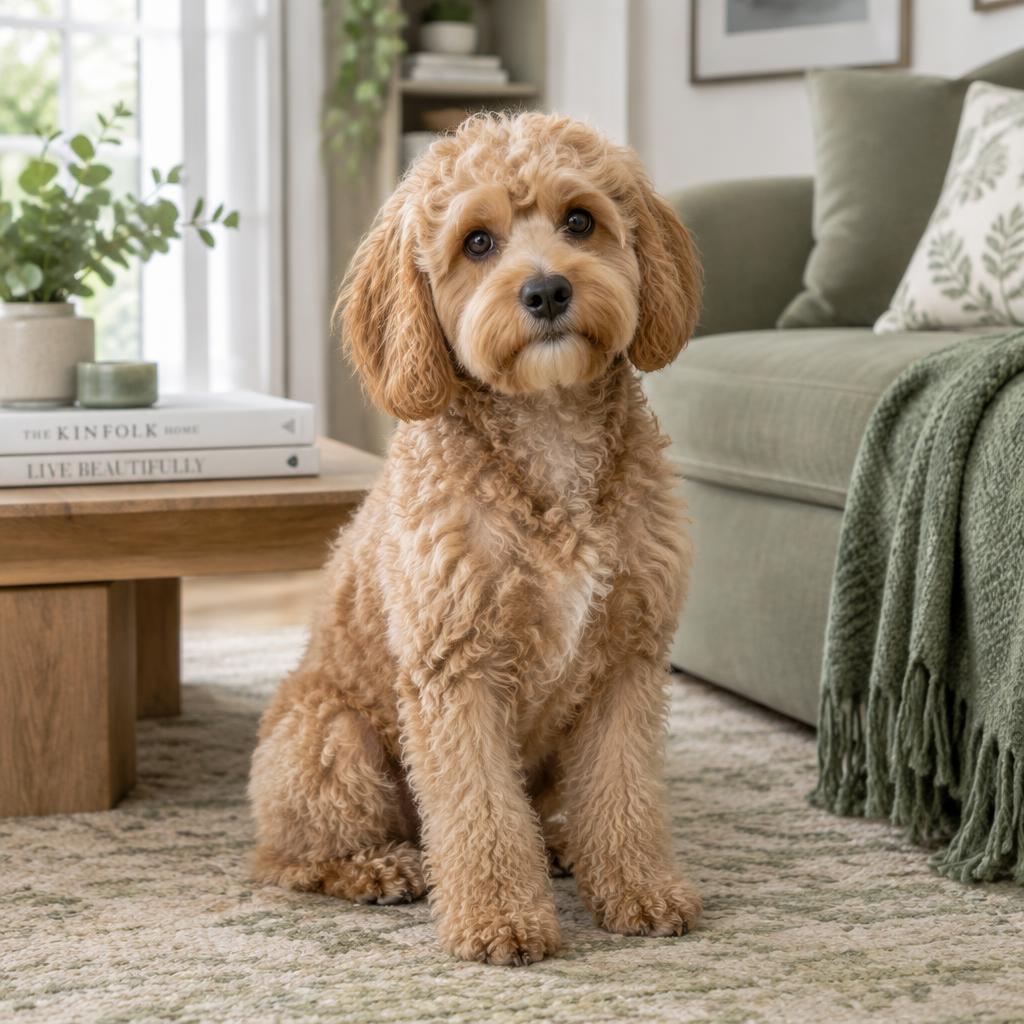
| Cavapoo | 5 to 11 kg | 5/10 | 7/10 | €77 |
Newfoundland questions, answered
What is the temperament of a Newfoundland?
Newfoundlands are gentle, patient and deeply affectionate, often described as a nanny breed because of their calm, protective manner around children. They are steady rather than hyperactive, and most show a strong natural instinct around water.
How big do Newfoundlands get?
Males typically weigh 60 to 70 kg and females 45 to 55 kg, standing around 66 to 71 cm at the shoulder. This is a genuinely giant, slow maturing breed that takes roughly two years to reach full adult size.
Do Newfoundlands shed a lot?
Yes, shedding is constant year round and becomes heavy during two seasonal coat blows, usually spring and autumn. Brushing several times a week, stepped up further during a blow, is essential rather than optional.
Do Newfoundlands drool a lot?
Yes, drooling is a daily, consistent feature of life with this breed, especially after drinking or in warm weather. Owners who cannot tolerate wet sleeves, walls and furniture will find it a genuine ongoing inconvenience rather than an occasional quirk.
How much exercise does a Newfoundland need?
Around 45 to 60 minutes a day suits most adults, ideally including supervised swimming, which the breed is built for. Exercise should be timed for cooler parts of the day given the breed's genuine heat intolerance.
What health problems are common in Newfoundlands?
Subaortic stenosis, hip and elbow dysplasia, bloat and cystinuria are the main considerations, alongside heat intolerance and the joint wear that comes with carrying a large frame over time. Cardiac and joint screening of breeding stock are genuinely important questions to ask any breeder.
How much does it cost to own a Newfoundland?
Monthly costs typically include around 100 euros for food, 60 euros for insurance and 50 euros for grooming, alongside an initial setup cost of roughly 800 to 1500 euros for suitably sized equipment. Running costs scale with the breed's size and are a genuine ongoing commitment, not a one off expense.
Sources
- Newfoundland breed standard, The Kennel Club
- Newfoundland breed information, American Kennel Club
- Hip and elbow dysplasia schemes, British Veterinary Association
- Bloat and gastric dilatation volvulus in dogs, PDSA
- Newfoundland health survey, Newfoundland Club health committee