Utility group
Japan
Akita
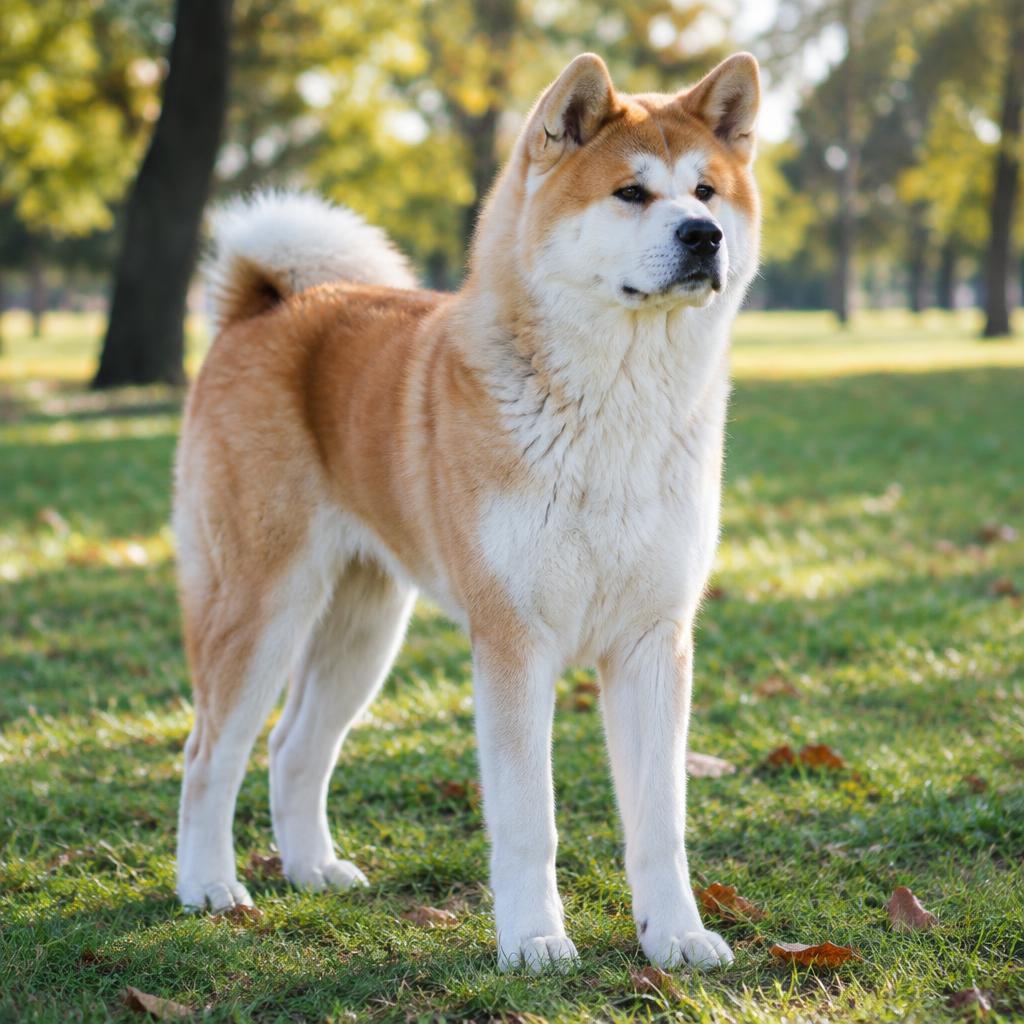
The Akita is a dignified, powerful Japanese guardian breed, deeply loyal at home but reserved with strangers and other dogs, needing early socialisation and an experienced owner.
Reviewed against Kennel Club and breed club health guidance
A dignified, powerful Japanese guardian that bonds closely with its family but needs serious socialisation and a firm, experienced hand.
The short version
- Akitas bond intensely with their family but are naturally reserved with strangers and other dogs.
- Same-sex aggression is well documented, making single-dog, mixed-sex households the safest setup.
- The dense double coat blows twice a year and needs daily brushing during that time.
- Hip dysplasia, autoimmune skin disease and hypothyroidism all warrant health screening in this breed.
- This is not a breed for first-time owners or households wanting a sociable, outgoing dog.
- Weight
- 32 to 59 kg
- Height
- 61 to 71 cm
- Lifespan
- 10 to 13 yrs
- Size
- Large
- Group
- Utility
- Coat
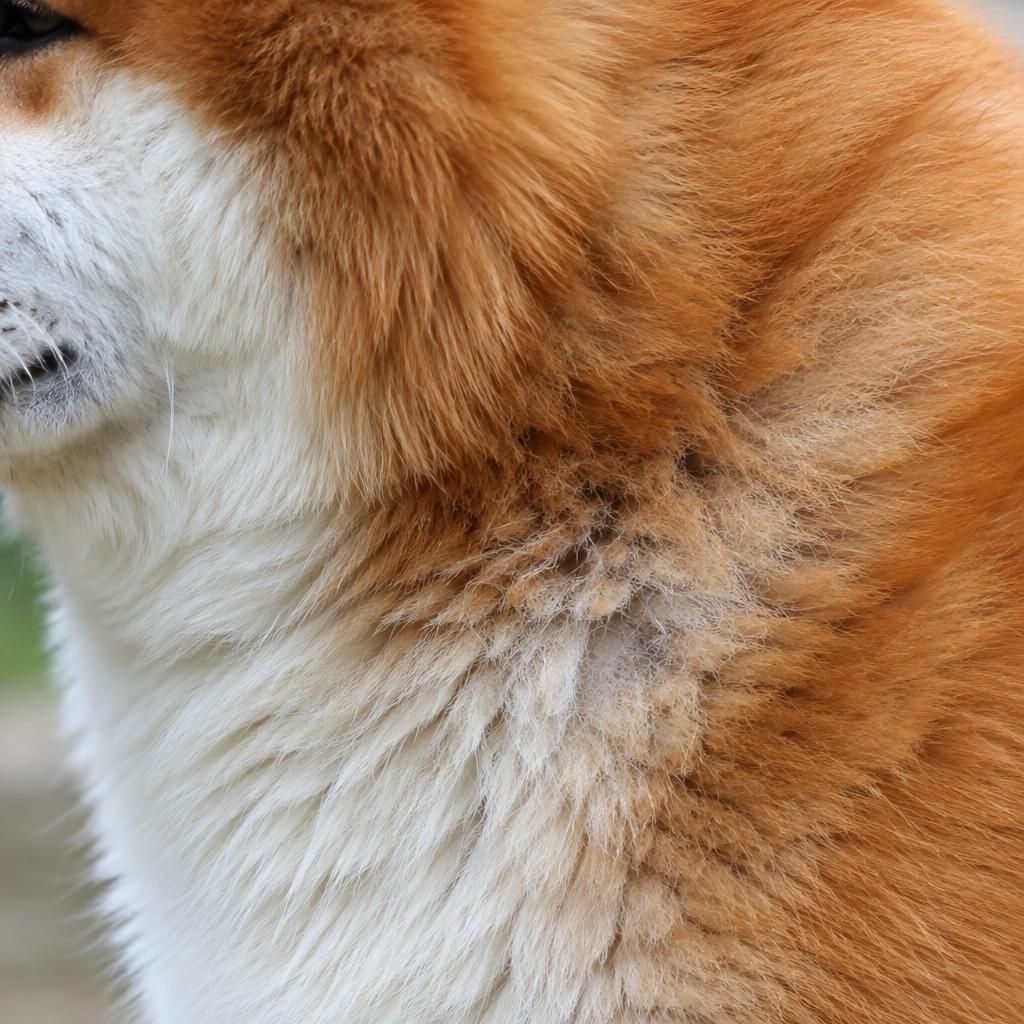
- Short to medium dense double coat, red, brindle, white or pinto
- Grown male
- 45 to 59 kg
- Grown female
- 32 to 50 kg
- Years to full size
- about 2
- One-off setup
- €700 to 1400
Get one if…
- Experienced owners confident managing a strong-willed, powerful dog
- Households able to commit to thorough early socialisation
- Families with older, sensible children and no other same-sex dogs
- Owners wanting a deeply loyal, one-family companion
- People able to provide secure fencing and a confident handling routine
Think again if…
- First-time dog owners
- Households with cats or other dogs, especially of the same sex
- Owners wanting a dog that is friendly and relaxed with strangers
- People with limited time for consistent training and socialisation
- Homes without secure garden boundaries
Trait profile
The Akita combines strong loyalty and courage with pronounced reserve towards strangers and other dogs, so early socialisation and confident handling matter more than for most breeds.
Space & setup. A house with a securely fenced garden suits the Akita far better than a flat, since it is a powerful, naturally territorial breed that benefits from having its own defined space.
Allergies. The dense double coat sheds heavily during twice-yearly coat blows and moderately year round, making the Akita unsuitable for households with significant allergy concerns.
Living with a Akita
The Akita is a large, dignified spitz-type breed from the mountains of northern Japan, originally used to guard nobility and hunt large game such as boar and bear. It is deeply loyal and affectionate with its own family, but its natural reserve with strangers, same-sex aggression and powerful build mean it needs early socialisation, confident handling and a realistic owner.
The Akita originates in the mountainous Akita prefecture of northern Japan, where it was developed to guard the homes of nobility and to hunt large game including wild boar and bear, work that demanded both courage and considerable physical power. The breed was designated a natural monument in Japan in 1931, and its most famous individual, Hachiko, became a national symbol of loyalty after continuing to wait for his deceased owner at a Tokyo train station for nearly a decade. The Akita arrived in the West in the twentieth century, partly through American servicemen after the Second World War, and over time two distinct types diverged: the heavier, more varied-coloured American type most commonly seen in Britain and the United States, and the Japanese Akita Inu, which the Kennel Club formally recognised as a separate breed in 2006. This page concerns the American-type Akita, which remains the type registered as simply Akita by the Kennel Club.
At home, the Akita is a breed of real contradictions. It is deeply affectionate and loyal with its own family, often forming an especially strong bond with one person, and it can be a calm, dignified presence indoors once mature. However, it is naturally reserved and watchful with strangers, was bred to guard rather than to greet, and shows pronounced same-sex aggression towards other dogs, a trait that makes it a poor match for multi-dog households of the same sex and for off-lead dog parks generally. Its low pet-friendly score reflects a genuine and well-documented predatory instinct towards smaller animals, including cats it has not been raised alongside. Socialisation needs to begin in the breeder's home and continue intensively through puppyhood, with calm, varied exposure to people, environments and other dogs under close supervision, because an undersocialised adult Akita is very difficult to retrain. Training should be consistent, confident and reward-based; this is an intelligent but independent breed that does not respond well to harsh handling, and it will test an inconsistent owner.
Exercise needs are moderate to fairly high, with around an hour a day of varied walking, plus mental stimulation through training and enrichment, suiting the breed well. The Akita is not a breed that thrives on being left to its own devices in a garden; without outlets for its intelligence it can become destructive or increasingly guarded. The twice-yearly coat blow is substantial, with the dense double coat shedding heavily for several weeks at a time, so daily brushing during these periods and a weekly routine otherwise keeps shedding manageable. Owners should also take seriously the legal and practical responsibility of keeping a large, powerful, naturally protective dog, including secure garden fencing, a robust lead and harness, and genuine diligence around visitors and unfamiliar dogs.
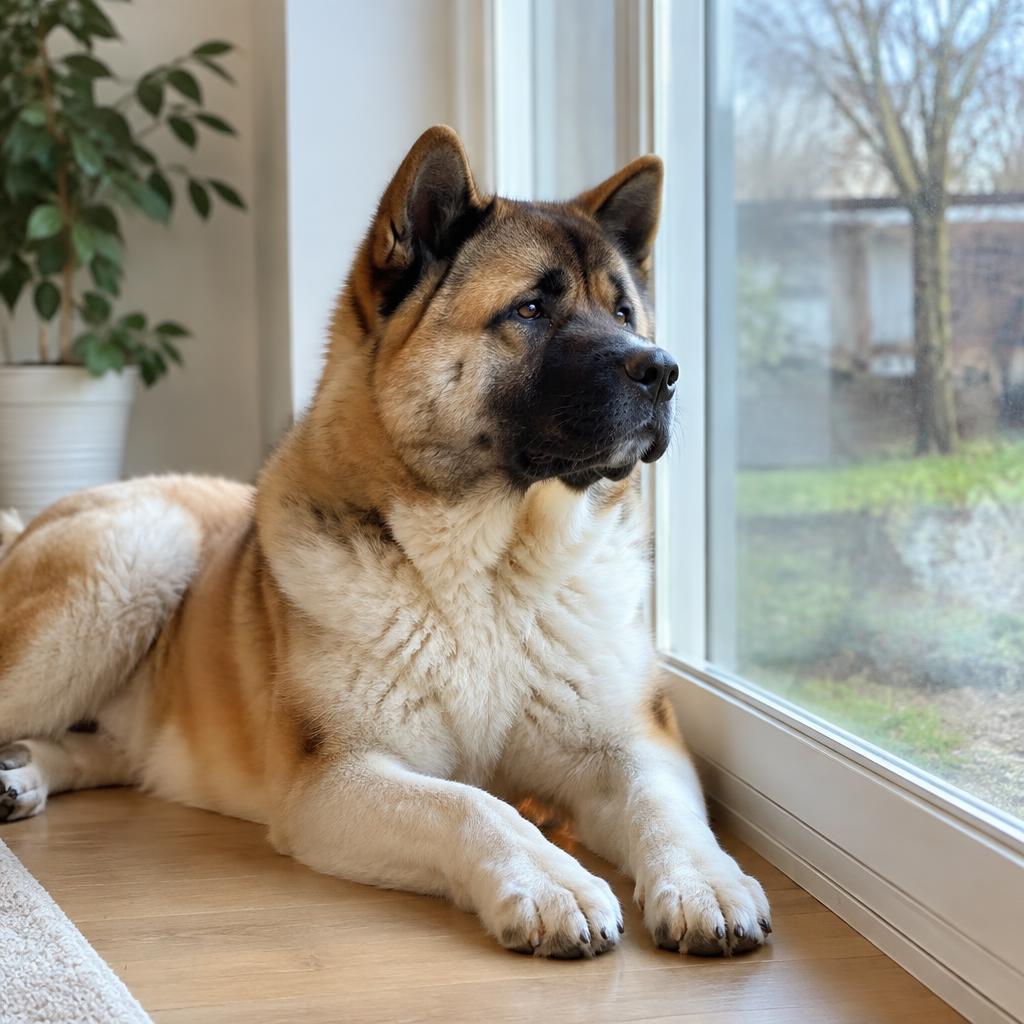
Health screening matters considerably in this breed. Hip dysplasia is common enough that breeding stock should be hip scored through the BVA/KC scheme, and the Akita carries a recognised predisposition to autoimmune skin conditions, particularly pemphigus foliaceus, which causes crusting and lesions and needs prompt veterinary diagnosis. Hypothyroidism becomes more common with age and is usually well managed with daily medication once identified through a thyroid panel. Progressive retinal atrophy occurs occasionally, so an annual eye examination is worthwhile, and cruciate ligament injury is a notable risk in a heavy, athletic breed, often linked to weight and fitness management. As with many deep-chested large breeds, owners should understand the signs of gastric dilatation-volvulus and avoid vigorous exercise immediately around mealtimes. A reputable breeder will be able to discuss health testing openly and will also have a clear sense of the temperament of the parents, which matters more in this breed than almost any other trait.
The Akita suits an experienced owner who wants a genuinely devoted, dignified companion and has the confidence, time and household setup to manage a powerful, reserved guardian breed properly from puppyhood onward. It can work well in a family with older, sensible children who understand how to behave around a large dog, provided socialisation has been thorough and consistent. It is not a good choice for first-time owners, for households that also keep cats or other dogs of the same sex, for anyone wanting a sociable, overtly friendly dog that enjoys meeting strangers, or for a home with limited time to invest in training and daily structure. Anyone drawn to the breed by its striking appearance or its association with loyalty in popular culture should spend time with adult Akitas and a responsible breed club before committing, since this is a dog that rewards serious preparation and can be genuinely unforgiving of a casual approach.
A dignified, powerful guardian breed that is deeply devoted to its family but needs committed early socialisation and an owner confident managing a strong-willed dog.
Exercise, day to day
- 1Puppies (8 to 20 weeks): short, gentle walks and structured socialisation outings rather than long exercise sessions.
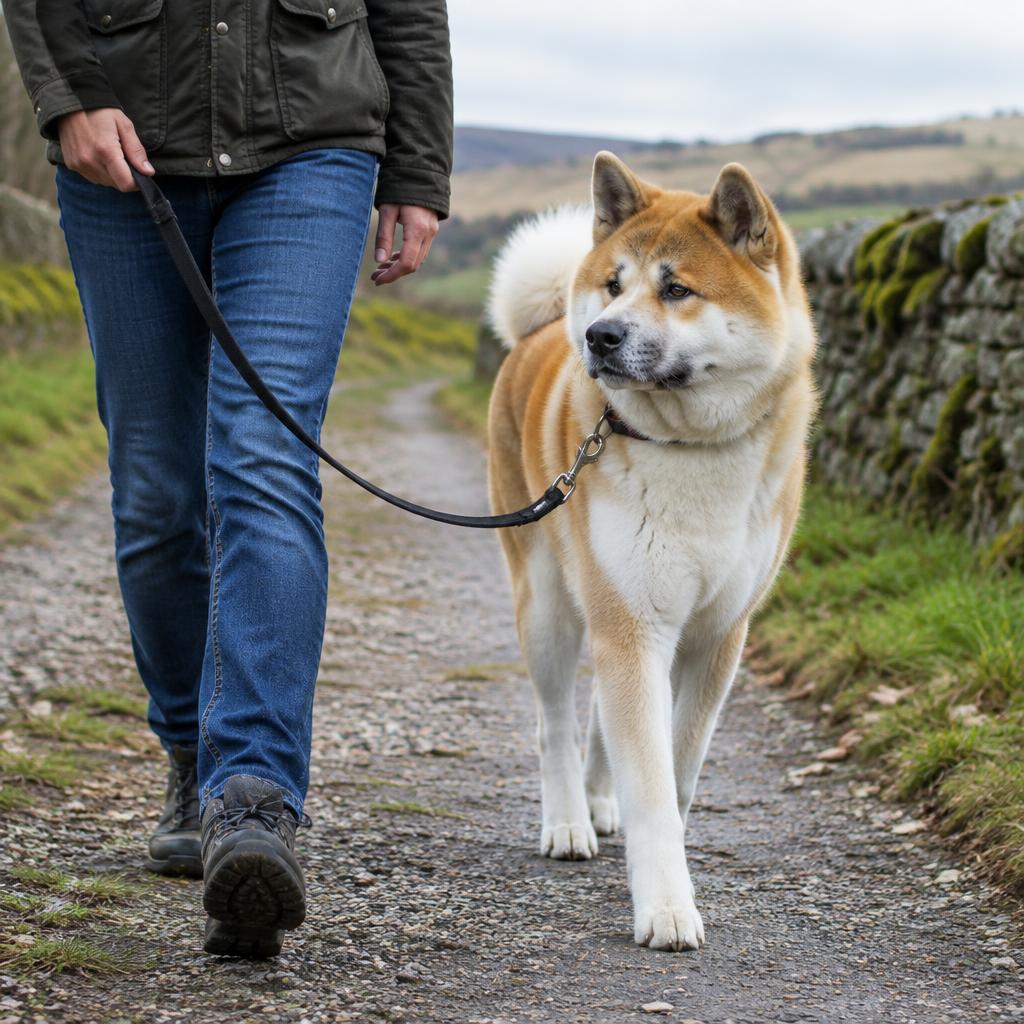
- 2Adults: around an hour a day of varied walking, split across two outings and always on a secure lead around other dogs.
- 3Mental stimulation through training, scent games and puzzle feeders to match this intelligent breed's needs.
- 4Avoid off-lead dog parks and unsupervised play with unfamiliar dogs, given well-documented same-sex aggression.
- 5Keep exercise calm around mealtimes to reduce the risk of gastric dilatation-volvulus in this deep-chested breed.
Grooming, realistically
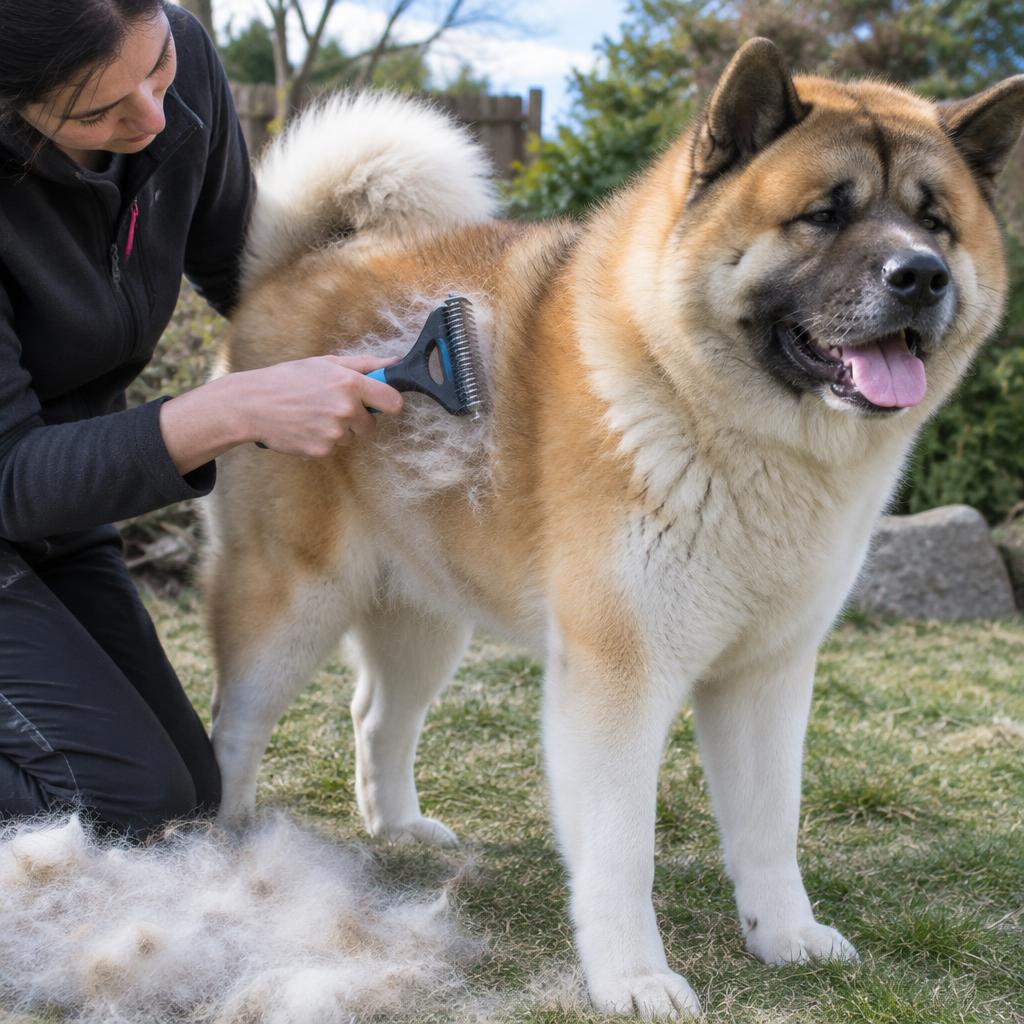
- 1Brush weekly with a slicker brush and undercoat rake, increasing to daily during the twice-yearly coat blow.
- 2Bathe only occasionally, since over-bathing can strip the natural oils from the dense double coat.
- 3Check and clean ears weekly to prevent wax build up and infection.
- 4Trim nails every 3 to 4 weeks to keep the feet comfortable and correctly shaped.
- 5Brush teeth several times a week to reduce tartar build up over a long lifespan.
What you actually need
- Slicker brush
- Undercoat rake
- Ear cleaning solution and cotton pads
- Dog nail clippers
- Enzymatic dog toothpaste and brush
- High-velocity dryer for coat blow periods
Puppy to adult
| Age | Male | Female | What is happening |
|---|---|---|---|
| 8 weeks | 6 to 8 kg | 5 to 7 kg | Solid, heavy-boned puppy build even at this early stage. |
| 3 months | 14 to 18 kg | 11 to 15 kg | Rapid early growth, with joints still developing and needing protection from excess exercise. |
| 6 months | 25 to 32 kg | 20 to 27 kg | Adolescent stage, often when temperament testing and confidence around new experiences becomes more pronounced. |
| 9 months | 33 to 42 kg | 25 to 33 kg | Substantial size reached, though the frame and muscle continue to fill out. |
| 12 months | 40 to 50 kg | 28 to 40 kg | Close to adult height, though the chest and musculature keep developing. |
| 24 months | 45 to 59 kg | 32 to 50 kg | Full adult size and mental maturity reached. |
Ranges are typical, not targets. Judge condition by ribs and waist, and check with the ideal weight checker.
What to ask a breeder
- Can I see hip scores for both parents?
- Has either parent had any history of skin or autoimmune problems?
- What is the temperament of the parents like with strangers and other dogs?
- How have the puppies been socialised so far, and what should I continue at home?
- How do you select which puppies go to first-time versus experienced homes, if at all?
Health tests to ask for
Ask to see results for both parents before you put down a deposit.
- BVA/KC hip score for breeding stock
- Annual eye examination for progressive retinal atrophy
- Thyroid panel to screen for hypothyroidism
- Thorough discussion with the breeder of temperament history in the pedigree
- Owner awareness of bloat signs given the breed's deep chest
Health watch-list
What to ask a breeder about, and what to watch for over a lifetime. This is orientation, not veterinary advice, anything you notice belongs in front of a vet.
Hip dysplasia
CommonMalformed hip joints can cause discomfort and early arthritis, so ask for hip scores of breeding stock before buying a puppy.
Gastric dilatation-volvulus
NotableThis deep-chested breed is at risk of a life-threatening stomach twist, so feeding smaller meals and avoiding vigorous exercise around mealtimes helps reduce the risk.
Pemphigus foliaceus and autoimmune skin disease
NotableThe Akita has a recognised predisposition to this autoimmune condition, which causes crusting and sores, so any persistent skin changes should be checked by a vet promptly.
Hypothyroidism
Common with ageAn underactive thyroid can cause weight gain, lethargy and coat changes in older dogs, and is usually well managed with daily medication once diagnosed through a blood test.
Progressive retinal atrophy
UncommonThis inherited condition gradually affects vision, so an annual eye examination helps catch changes early.
Cruciate ligament injury
NotableA heavy, athletic build makes cruciate injuries a genuine risk, often following vigorous exercise, so keeping the dog fit and at a healthy weight helps protect the joints.
What it costs to keep one
Realistic running cost
€133 / month
About €1,596 a year, or roughly €19,152 across a 12-year life, before purchase price, neutering and one-off vet events.
Before the puppy arrives. Budget roughly €700 to 1400 for a crate, bed, lead and harness, bowls, puppy classes, first vaccinations and grooming kit sized for this breed. Figures throughout are indicative and vary a good deal between countries.
Interactive · built for this breed
Is a Akita right for your home?
Seven honest questions about your space, time and household, checked against this breed's exercise need, coat, sociability and tolerance for time alone.
Fit with your routine
95%
A strong fit
Your routine suits a Akita well. Meet adult dogs of the line before you commit.
What to sort out first
- Needs more daily exercise than you have pencilled in.
Working in your favour
- Coat care fits the grooming time you offered.
Compare more breeds in the matchmaker, or plan meals with the portion calculator.
The verdict, by household
First-time owner
Not recommended
The Akita's independence, reserve and same-sex aggression make it a demanding breed better suited to experienced handlers.
Family with children
A good choice with realistic expectations
Loyal and protective with its own family, provided children are older, sensible and socialisation has been thorough.
Active single or couple
An excellent match
A devoted, capable companion for an experienced owner with time for training, exercise and structure.
Owner in a flat with close neighbours
Workable, with changes
Low vocality helps, but limited space and proximity to other dogs make a house with a secure garden a far better fit.
When to call your vet
- Lameness, stiffness or reluctance to rise, which may indicate developing hip dysplasia
- Crusting, sores or hair loss around the face, ears or footpads, which may suggest pemphigus foliaceus
- Weight gain, lethargy or coat changes, which can indicate hypothyroidism
- Sudden bumping into objects or reluctance to move in dim light, which may point to progressive retinal atrophy
- Sudden hind-leg lameness after exercise, which may indicate a cruciate ligament injury
Nothing here is a diagnosis. A swollen, hard belly with retching, collapse, breathing difficulty and sudden hind-leg weakness are emergencies: go straight away.
Akita vs the closest alternatives
Akita questions, answered
How long do Akitas live?
Akitas typically live between 10 and 13 years. Keeping up with hip, thyroid and skin health through life, alongside maintaining a healthy weight, helps give an Akita the best chance of a long, comfortable life.
Are Akitas good family dogs?
Akitas can be loyal and affectionate with their own family, including older, sensible children, but they are naturally reserved with strangers and have a strong independent streak. They suit experienced families who commit to thorough socialisation rather than first-time owners.
Do Akitas get on with other dogs?
Not reliably. Akitas have a well-documented tendency towards same-sex aggression, and many do best as the only dog in the household. Early, careful socialisation helps, but off-lead interactions with unfamiliar dogs should always be managed cautiously.
What is the difference between an Akita and a Japanese Akita Inu?
The Kennel Club formally split the breeds in 2006. The Akita Inu is the original, smaller Japanese type with a narrower colour range, while the Akita, sometimes called the American Akita, is larger and comes in a wider range of colours including white and pinto. This page covers the Akita.
Do Akitas shed a lot?
Yes. Akitas have a dense double coat that sheds heavily during twice-yearly coat blows lasting several weeks, alongside moderate shedding the rest of the year. Daily brushing during a blow and weekly brushing otherwise keeps it manageable.
How much exercise does an Akita need?
Around an hour a day of varied walking suits most adult Akitas well, alongside mental stimulation such as training and puzzle feeders. This is not a breed that does well being left in the garden with no structured outlet for its intelligence.
Are Akitas easy to train?
Akitas are intelligent but independent, and they do not respond well to harsh handling. Consistent, reward-based training from puppyhood, combined with thorough socialisation, gives the best results, though they will always retain a degree of strong-willed independence.
Sources
- Akita breed standard, The Kennel Club
- Akita breed information, American Kennel Club
- Canine health schemes, British Veterinary Association
- Hip dysplasia scoring scheme, Orthopedic Foundation for Animals
- Caring for an Akita, PDSA
Put it into practice
Reading that goes with this

Puppies
Crate Training a Puppy: A 14-Day Plan

Health
Dog Ear Infections: Signs, Causes and Treatment

Training
How to Stop a Dog Barking: A Practical Guide

Health
Why Is My Dog Shaking? Causes and When to Worry

Care
Dog Years to Human Years: The Real Science

Health
Why Is My Dog Panting So Much? Causes and Warning Signs